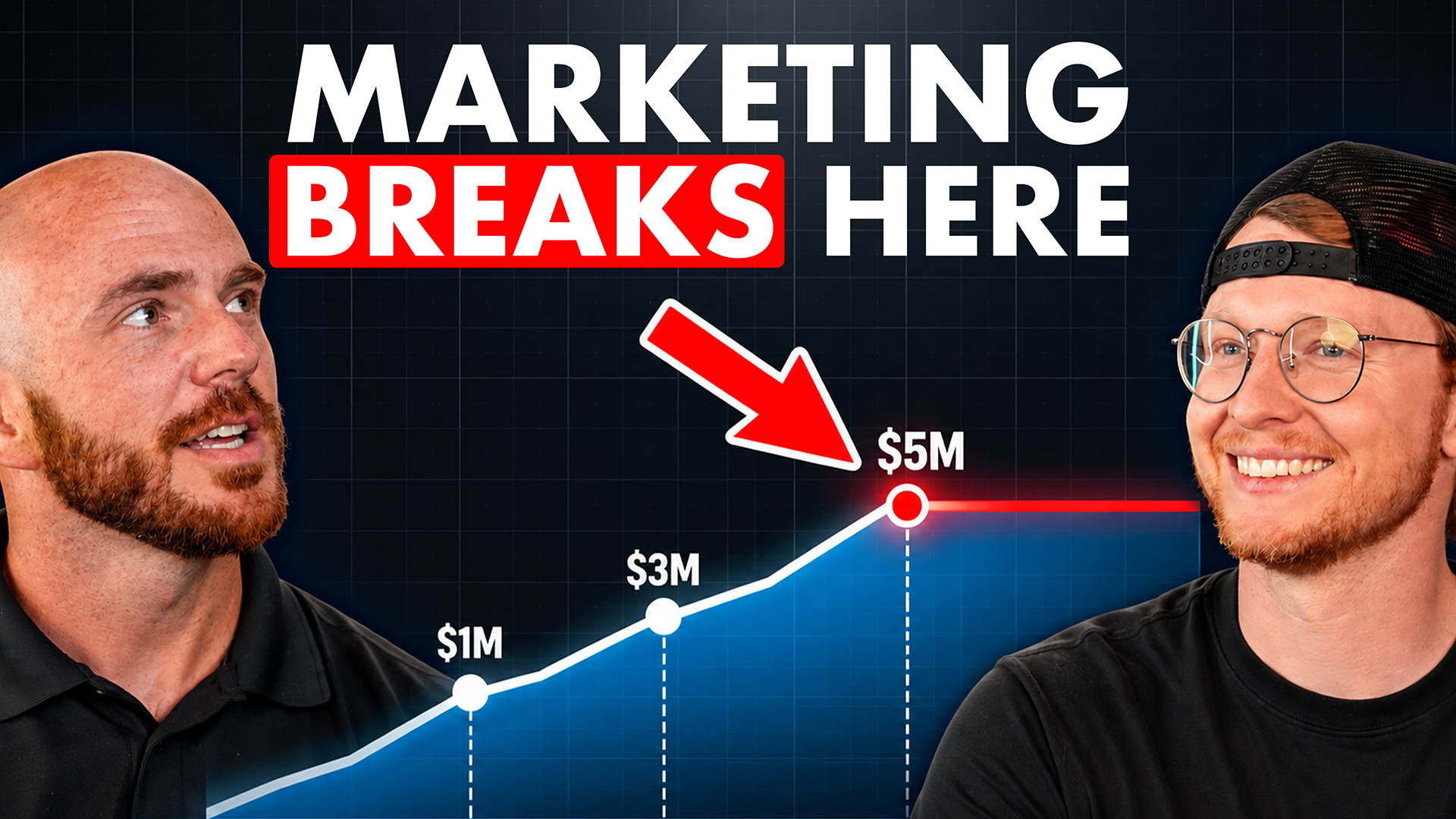


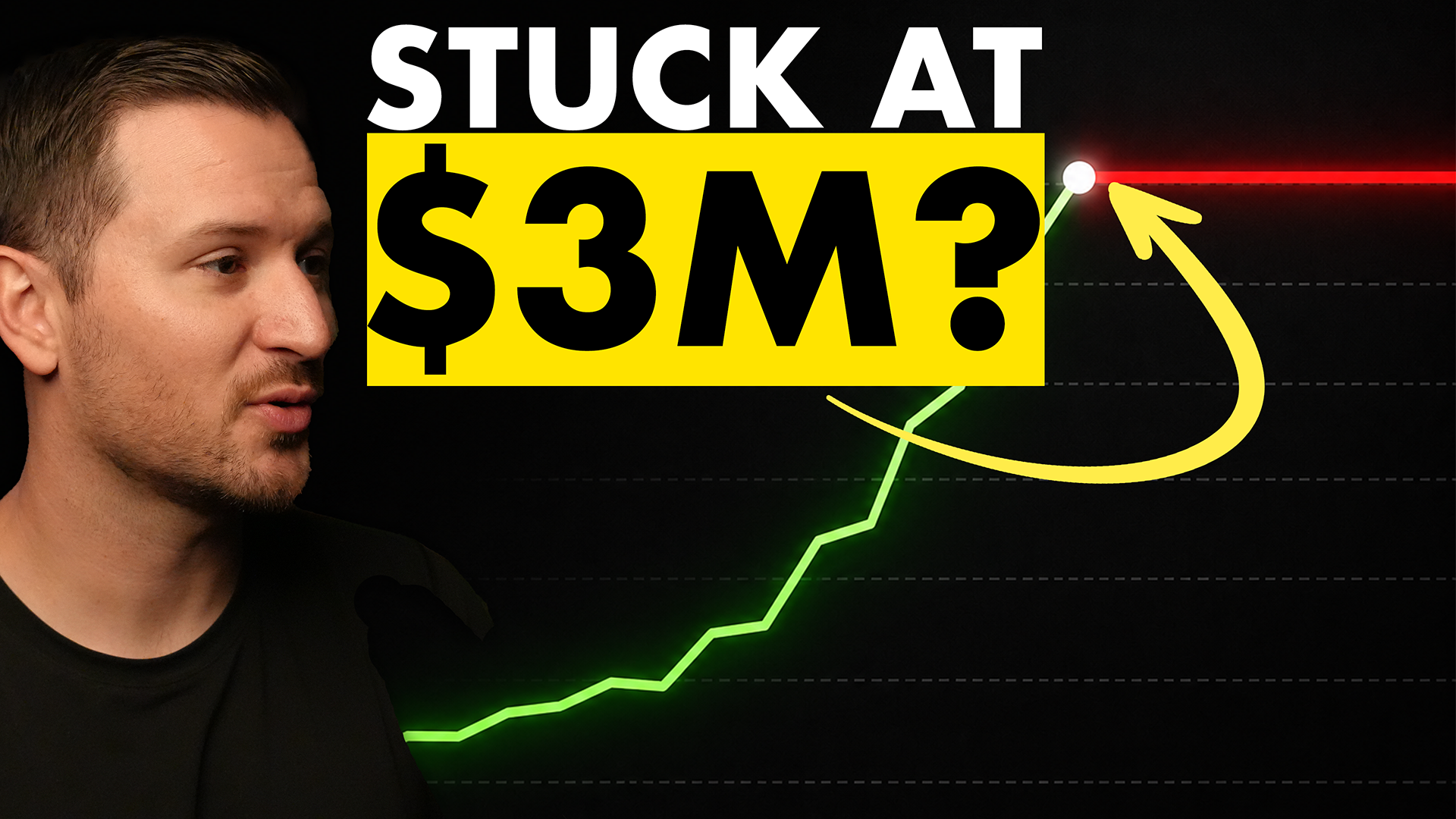
The strategies that get your home service business to $3 million will not get you to $30 million.
In this episode of Owned and Operated, John Wilson and Jack Carr break down why contractors stall at different stages of growth and how the owner’s role has to evolve as the business gets bigger.
They discuss escaping “hero mode,” building the right teams and systems, reinvesting in growth, and why the owner can ultimately become the biggest bottleneck in the business.
━━━━━━━━━━━━━━
In This Episode
━━━━━━━━━━━━━━
• Why the playbook that gets you to $3M stops working as you scale
• Why contractors commonly stall between $3M and $10M
• Getting the owner out of "hero mode" and building a real organization
• Reinvesting profits versus pulling cash out of the business
• The systems and positions you need as the company gets bigger
• Why adding trades and locations too early can slow down growth
━━━━━━━━━━━━━━
Connect
━━━━━━━━━━━━━━
John Wilson
https://www.linkedin.com/in/johnbwilson1/
Jack Carr
https://x.com/thehvacjack
Owned and Operated
https://www.ownedandoperated.com/
━━━━━━━━━━━━━━
Sponsors
━━━━━━━━━━━━━━
Avoca
See how Avoca helps home service companies book more jobs with AI that handles calls, texts, follow ups, and dispatching without adding more chaos. Book a demo: https://www.avoca.ai/partners/oao
Service Scalers
Get more high quality leads with marketing built for home service companies. Book a free strategy call with Service Scalers and see what's driving real jobs: https://os.servicescalers.com/go/oao_podcast/referral/podcast
The skill sets of people that I see running nine-figure businesses do not match my skill sets.
You feel like it's less valuable work if you're not in the field and you're not producing revenue directly.
But I think it's the same thing when you're a million. If I can't get out of the truck because I'm obsessed with being a tech, the business will never hit $10 million.
Three to five, man. It's a it's a beast.
When you get to three to ten million, that starts to become more pronounced. How do I delegate without lowering standards? Well, it is a hard thing to do.
It's very difficult.
What are some decisions that like you just wouldn't do again? Um welcome back to Owned and Operated, a top 200 U.S. business and entrepreneurship podcast. I'm your host, John Wilson, and on this show, we talk about my home service business and how to grow your home service business. It's pretty fun. Today I'm joined by my somewhat frequent co-host Jack Carr. Whenever he's not writing uh famous novels or playing country music in bars in Nashville, uh he comes and entertains us on the show. So welcome back.
Somewhat, the somewhat frequent. Like I haven't been here for three years.
Yeah, I know. Yeah. It's just I want people to doubt. You know, I want people to doubt it. And you know, you're famous now, you've got jackquisitions and oh, so famous.
So famous. Z-List celebrity.
Z List.
Z-List.
I'm double, I'm double B, so I'm I'm a little bit behind. Um, all right. So today we are talking about the home service playbook that stopped working. The advice that gets contractors from one to three million is not the advice that gets them to 30. Okay, that
resonates with me so far. At every stage of growth, the rules change, and what made you successful early on can actually become the thing that holds you back later, which I feel like that makes that makes sense to me.
Um we've all gone through it.
Are any examples you can think of in your business before we oh yeah, 100% hero mode?
I used to have to what got me to early on success was hero mode. It's Jack does everything. Jack is now a technician, Jack's helping out with the install, Jack's doing ordering, Jack's doing this, and it's normal for most small contractors because even more so if you started off as a technician that was a really good technician, right? You started off as an amazing technician, you moved into the business side of it, and you're still doing really well because it's just you and maybe a helper cranking out everything. Um but then at some point, probably close to around three million, you can't do that anymore. Like that's the worst thing you could do, potentially. Um and so you have to generate that uh separation, and it's really, really difficult, at least for good technicians and people who have been in the field for a while.
We actually had a um we had an interview in office, I think the interview just went live a couple of weeks ago. It was the ostracamps from Cincinnati. And uh they launched their business. I want to say it was in like the early 2010s. I'm trying to remember uh that part, but um, he ran it sort of like as a side thing for a while, and then it became a full thing, and then she left her job. She was working in healthcare. And um this year they're gonna do $9 million, which is really cool. And I think it's like 14 years, if I if I remember right, like the the total length of time. And uh, we spent actually a lot of time on this in the interview, where we were just sort of talking about uh like he his tendency, which is you know, I can think of other examples too. It's just like that's a one that we recorded. Um he's he was thinking a lot about, okay, I really like being in the field. That's where that's like my zone of comfort. Do I stay there? Do I hire an ops manager? Like someone has to do the business uh of work. Um, but I don't necessarily want to be that person. So do I have to like gain the desire to be that person? Do I have to suffer through it? Or can I hire somebody or like what's the right, what's the right direction? But that him being like this talented technician and like caring about sales and all that stuff is what got him from zero to three, four, five million dollars. Like his is exactly what you're saying, like his ability to like switch back and forth. But now, okay, we have to, we have to become more professional. And then after we become more professional, we have to build teams. And after we build teams, we have to build systems. And then it turns into this like uh then you have to scale it, you know, and that's the stage that we're in now. So we built, we became professional, we built teams, we built systems, and then we scaled those systems through acquisitions. That's that's what everyone's watching, witnessing this year as we've done our M ⁇ A this year is that's us scaling our system.
Yeah, and and I think it's ex especially hard for those kind of groups just because the going into office that comes with like this mental, um like this mental issue of you feel like it's less valuable work. If you're not in the field, you're not producing revenue directly, you're not actually uh doing anything, and there's a guilt association, at least from what I've seen and what I've felt. And so it's just a very interesting dynamic that you have to squash uh to get past that level, that three to five million dollar level. And so that that's one of the big things.
But there's a there's a pride thing too. So I remember, and this was uh God, seven or eight years ago, but we we subcontracted a plumber that uh that's local. Um, and I don't remember, I think he had a piece of equipment that that we didn't have. Um so I I called down to uh speak with the guy and he ran a business, and I want to say they had like four or five plumbers or something like that. So I called down to speak to the guy to be like, hey, can you you know come do this job for us? And I remember I still think about this. The the CSR with like pride in her voice said, No, he's not in the office, he's a working owner.
Yeah.
And it was so I I think it's more than just like it being odd. I actually think like she carried as a team member, unrelated, uh a lot of pride that this owner was like capable and out there with the guys, and like, you know, really like a part of what they were doing. Um yeah, and I think culturally for technicians too, it's there's a there's a hard. I remember somebody else when I was roughly that time um saying, like, hey, he was an owner and his business was three or four million bucks. And he said, you know, once a week I go out into the field just to show the show the guys I still got it, so I have their respect. And I'm like, I d I don't know. I mean, I I don't know that that gives your team more or less respect. I don't know. I don't know that that actually does what you think it's doing. Um maybe it's good, but like maybe it's not. Most marketing agencies will show you clicks, impressions, and maybe even traffic, but none of that really matters if the phone's not ringing. And that's why we partner with service scalers. They are built specifically for home service companies and they focus on one thing, which is driving real, high-quality calls and book jobs. This is a no-brainer. They're offering a 60-day money-back guarantee on LSA management, Google Business Profile Optimization, and website builds. If you don't get more visibility, more calls, and better leads, then you don't pay. If you want more book jobs without the marketing headache, click the link below and book a free strategy call with Service Scalers.
Yeah, I mean, I like I'm in the same boat as you. I I think it's
a it's like this uh ego machismo thing that reverberates to the industry. And it actually is one of those things that people think they respect, but maybe they do. For me, what I respect is like, hey, the board's full with great calls that you're gonna be able to pay your mortgage this month. Like, yeah, there's a portion of it where I'm like, hey, a well-run business where you show up and you're able to do your job well, you're able to get paid on time, you have it. Like, I take pride in the fact that we've never missed a payroll in four years, we've never missed a dang payroll in four years. Like, that brings me more pride than being able to go into the field and get pride from somebody who has to see me actually do the thing that I had done for two and a half years to get their respect. Like, I just I it doesn't it doesn't resolve for me. Like Magic the Gathering resolve.
Yeah, no, totally. Um okay, so why do so many contractors in your mind stall between three and ten million dollars? I have I have so many. There's a few reasons, man. Yeah, there's so many.
Oh my god. It's owner's hell, and it's owner's hell for two reasons. A, it's the first time you fucking make some money. It's you freaking make some money here.
I really I actually think that this is this is the biggest one. Like this, this, you could like start and stop with this.
You it's the first time that they make money, and the first time they can potentially take money out of the business. Because if you're running a th 10% net, which is doable, you take that 10% net, you're getting $300,000. Like that for somebody who started their business from scratch is meaningful to your life. And I see that, I understand that it's a decent sized business. You're not having to do everything. You have an install crew, two install crews, like it's your first you have an admin person that runs your life in a good way, like they handle all the stuff you don't want to deal with. The warranty, like you have enough of a office, you have enough of a team that you can do some level of management and not grueling hard work. And it's the first time you're able to take money from the business. And that's why it stalls.
Yeah.
And that comes along with then the opposite to getting past that three to five million is a huge step. You have to hire your first ops manager, your first service managers, you have to hire additional CSRs, you have to hire uh a bookkeeping.
Well, it's really that's the same that's the same decision. Like that's the same decision. Yeah. So if you've got, in that example, $300,000 to like reallocate, like the decision is do I put it back into the business with these things that reduce my free cash and I put money at risk, or do I pull it out and go like reward myself for my hard work? And that is the same decision, two sides of a coin. What most people do, um, and we've bought 15 businesses now, most of them in this range. Everybody has a nicer car than me. Like every single one of them, which I think like I always like find me. I always find hilarious.
No, uh you take that back, son. Okay, not me.
But uh, I do always find that really funny.
Yeah.
Um, because it's like it's it it is the best visual representation of the choices that got each of us to where we were.
Yeah, and and I don't, I'm gonna put this out there. I don't care how much you actually think you need the F350 for to I have to buy this because I'm a self-justified to myself because it's mine, but I use it for the business to haul the excavator. Bullshit. Bullshit, you didn't need it. That's some bullshit. That's some bullshit. You can roll rent that 350 to haul that trailer every time you need to do it. You don't need a 350 every single day of your life. Um, but like that's the justification I always hear. It's like I need this big truck because I have to, I'm the one who hauls the equipment at the company. And I'm like, yeah, maybe you do, but that doesn't justify a $100,000 a year or a hundred thousand dollar truck. Yeah. So I find that funny.
Yeah. Uh no, I I find I find it hilarious.
But with so yeah, I think it's like but with that, I also think like like that in conjunction with you have to learn the next step, which is the hard part. Like up to three million, it's hey, again, it's the easy stuff. It's like, um, see, I have to answer the phones, I have to run the call well enough. I have three or four guys who are like we've been buddies for a long time. I know they do good work. And then it's like, oh, I want to go to five to ten million. Now I have to start recruiting. I've never hired a recruiter before. I don't know how to do indeed posts. I've always just been like word of mouth, or hey, we have to open up a second channel of marketing, or have to actually manage a training program. And like, so it also three to five is like the new systems. It's the next, yeah. I don't want to call it managing managers, but to some level, it's like, hey, it's managing supervisors, but it's also like this this installation of new positions you've never had to manage before. And that's that's tough because you just don't know what you don't know. So, like, how do I manage recruiter? Like, what's the KPIs? Do I even have KPIs? Or marketing?
Like this is usually where businesses start trying to learn how to market for the first time, and they don't know the how to do it. So then they spend 200 grand on billboards and nothing else. Uh and then they're like, oh, it didn't work. So I guess I'm just stuck at this size forever. Like, I feel like I've heard that exact story a bazillion times. Yeah. Um, yeah, it's a state of learning. Uh, and it's it's a it's a time when like real capital is at risk. And I think between that three to 10 million, um, I I like the idea that being a CEO is like you are uh you're an active investor. Like your job is an investor. Uh yes, you're there to manage culture, you're there to like there's other parts of the job, but you are like you're making capital decisions every day. You're investing inside your balance sheet or your PL or your people or whatever it is, but like you're an active investor. And I think that when you get to three to 10 million, that starts to become more pronounced, where like people that have never had to figure out how to allocate a million dollars at a time are suddenly having to figure it out. Well, like, what is the right way? How should I think about this? Um, and they just don't know. So to me, it makes sense that they stall out because there's a lot of money at risk. They never learned the skills on how to deploy that money, and they probably get burned once or twice and don't want to do it again. And the alternative is you go buy a lake house, which sounds pretty freaking great. So uh just remember to invite me over. I don't have one. Um, so that way I can relax.
Yeah, no, I I agree. I mean, and like when at what point did you install like a great example is like EOS? Like what at what point did you guys start working EOS? 2021. So somewhere circa around that size? You were a little bigger than that. You're like 13 in 2021. Five million bucks. Oh, so then there you go. So and how much of that was a big portion of your growth? Like being able to have systems from an EOS standpoint?
Um, I think a lot. I mean, being able to like regularly communicate quarterlies and annuals and setting targets and weekly scorecards, like we already had some of that discipline in place, but it helped professionalize it.
Yeah, and so I think that's like that's the heart and soul of this is just like, hey, you have to go and do these things and professionalize your business. And like if you've never read scaling up or you've never, you know, read traction, like you just have no idea. And you don't even know you you've never needed it either, too. It's like it's brand spanking new. So yeah, three to five. Yeah, man. It's a it's a beast.
It is, and but I totally understand how people end up just like ripping the cash. Like they don't know, they're paralyzed, they got burned a couple times, they just start pulling the cash, but then five years later, the business hasn't grown, it's not worth as much, maybe it shrunk, and like yeah, that sucks. Yeah, what are some systems that do not scale?
That's I was that's where I was going. What doesn't scale?
Yeah, I mean, bottlenecks are tough. Um, what is kind of interesting is like what's a bottleneck versus intentional? Uh, but that this might not be the conversation for that. Um, I think like owners selling every job doesn't scale. I think that's a normal thing I see in small businesses. I'm the salesperson. I think the uh like micromanaging pricing. We actually have a business that we just uh partnered with last week. And uh the there the owners were absentee, but there's a GM. And uh he's pretty involved in pricing. So like that's we're gonna work on like unpacking that so it doesn't hold the business back because right now it does. Like it it slows down invoicing by like weeks, uh, which is kind of crazy. And then there's terms on top of that, so slows down cash quite a bit.
Purchasing. Purchasing is a huge one, I think. For us, that was a big one. Is we had everybody on credit card, so we had to rip that back in because that was a terrible decision. Um but inventory and purchasing and how that process goes, if you don't have something that scales, it will definitely bottleneck your entire business, either from a loss of cash flow perspective, and or you do it too much and you're approving every single order and you have no system, and so you're essentially sitting at a phone all day saying, Yes, you can buy that, yes, you can buy that, yes, you can buy that. Yeah, versus like putting in processes and POs and generation, having the admin necessary to control.
Has it been better?
Oh, yeah. Yeah, I mean, hands down, uh first month I told you we we saved thirty thousand dollars. Like that's crazy. Just because we were able to do that.
Just putting in POs.
Yeah, we don't we don't have eight to ten thousand sitting on a warranty shelf anymore, um, because we have somebody who's now dedicated to that. But it's all those little things around um something that really doesn't seem all that extremely important to the business. Um, but it will bottleneck you at that three to five if you don't figure out purchasing specifically and POs.
Yeah, even something like uh call scripts, you know? Like, hey, someone has to call script. Well, Susie's the one that's always answered the phone. Well, well, what happens when you have 20 CSRs? Like, there's gotta be a script, my guy. Like, I don't I don't know what to tell you.
Yeah, are you not taking after hours? Are you who's doing uh two phone calls at one time? Like the huge bottleneck is call center, having script, uh making sure that you can actually receive a abundance of calls as they come in because they're you're paying for them, and or there's potential uh revenue.
So yeah. What are some decisions that like you made during that like frame of time that like you just wouldn't do again?
Um we did we made decisions uh here this one's the hindsight's like 2020, right? But I probably would have just focused solely on HVAC versus going into plumbing as well. As much as I love plumbing, and plumbing is an awesome vertical and it's done well for us, it cost us probably you know $300,000 the first year and then slowed us down because we didn't understand that it's essentially even though it's the same business, you're running two separate business, two separate marketing campaigns. You need uh there's issues with LSA and Google GMBs and all this kind of stuff. So from a marketing perspective, running plumbing in HVAC is very difficult, and the congruencies that you would get or the s the efficiencies of scale are not as yeah beneficial as you think at smaller sizes. Um if we would have waited, we could have done it correctly. So like we wouldn't have lost $300,000 our first year doing it.
That makes sense. That makes sense. I mean, I I do feel like that and like new locations. Um this happens. I I hear more people talk about second locations between three and five million than like any other time.
Yeah.
And it's because they hit their they hit the cap and they just don't know what to do next. So they're like, oh, just do it again in a new location. I'm like, well, you kind of haven't figured out how to do the first location, uh, to be uh rude, but um yeah. So I think second trades, second locations, that that um we never, I mean, I made the same decision, just so we're on the same page. When I when we were three and a half million dollars, I thought we were capped. We launched a satellite location an hour north of us, it totally flopped. Now, granted, it I ended up buying a bunch of companies up there, so it made it successful, but like my original idea didn't work at all. It was a colossal failure
because I didn't understand how to drive leads at all. I had no idea how to do it, like which is a result of me not knowing how to run the first business. So, like, why would I do any better with two?
Yeah, I fully agree. I think that that's probably our biggest um blunder in that time frame.
I think another one, um we have uh we've bought 15 companies, and a lot of them have had like construction exposure. And a few of them we tried to make that construction exposure work. And that was something I would never do again. Uh because it's tempting when you go in and you're like, oh, I'm gonna lose this revenue. Am I ready to lose this revenue? The business needs it, they're used to it, I don't want to piss people off. Like, just piss people off. It just doesn't matter. Uh, it's dangerous to the business. Um I just yeah, it's not good. If you're a service company, like if you're an automotive service business, you have no build, you have no business building a car. And like for some reason, us fixing furnaces thinks that we should build a car.
So I think totally separate people, totally separate business, totally separate marketing channels, totally separate pay cash cycle, totally separate everything. So as much as it says plumbing as like the prefix to whatever the next word is, it is not the same business. When you go plumbing construction, plumbing service, those are wild. Wildly different. Wildly. Yeah. John John made fun of me on the we were talking uh about buying a company the other day, like probably like two months ago, and we're on the phone with a broker, and the broker made it seem like it was a service business. But then when we got down to it, uh they were like, No, we're like 85% new construction. John's like, All right, and then I go, Hey, uh, just to like save everybody time, we're not interested. Uh, thanks, bye. And John just goes, Yeah, Jack, that was a bit abrupt. And I go, Yeah, but we don't do construction, and it's like that level of that was like an earth-moving business.
They were like literally moving ground around, but they're like, We're plumbers. We're plumbers.
I'm like, No We we promise there's service. There's 20% service, and I bet I'd I bet when you open that book,
it's like two percent service.
Yeah, they like, yeah, they like fix the owner's water heater once or something like that.
Yeah. Yeah. But like that that's necessary, man. It's like if you don't, you don't.
Yeah. All right. There's um I'm gonna go, I'm gonna go through my little like list earlier because then I think we'll talk about like how the rules of scaling. But the way I think about this, I'm sure somebody has a better, smarter version of this, so but you're just getting John here. So you professionalize the business somewhere around five million bucks. Like that's five to ten. Um 10 to like 15, you're building teams, 10 to 20, you're building teams. So we've talked about that a ton on this show. Like, hey, you have to build your accounting team, your HR, your marketing, like you have to build the teams. What and then you're building the systems to support those teams, uh to like to set you up for scale. So, like, obviously, you need some systems in place, but you know, you're gonna bring on a smart marketing manager, and that smart marketing manager is gonna build you a series of marketing systems to make your growth scalable. Uh, same with HR and call center and everything. So you professionalize, you build teams, you build systems, you scale those systems. Uh, in our industry currently, like scaling the systems, let's say that starts at like 25 to 30 million bucks, you are prepped for like scale. You are platform stage. Private equity would buy you and make you a platform because they could just take what you've already built and pop it. Um so as you cross that 20, um a lot starts to change because it's sort of like now we're in the business of scaling it. And yeah, you're reinventing, you're constantly fixing and like messing with the stuff um that got you there. But uh you have to change your leadership. The owner's not the only one solving the problems. You have like your leading leaders, and those leaders are solving problems and building systems and hiring people. And I mean, for the most part, I'm not interviewing um I we have 270 people, and I think I am involved in like five hires a year, and it's like sort of the key hires, but like most of the hiring decisions are downstream, whereas that obviously used to be me. Um I solve problems, I help with problems, but for the most part, like most of our team is like dealing with their own stuff. Like, I don't have time, they don't have time, like they have to go manage their scope of control and ownership.
I think the coolest part about this conversation is that that key sentence that you said is like I remember having this conversation with you like a year and a half ago, like as you were crossing 24, like into this 20 to 25, like as you're as you're preaching. Like, I remember having this episode of a question, and like we deep dive like this one little topic for an hour, which is wild.
Just like what what 20 million platform stages or like which part?
It's the the what it was you coming to grips with like oh, I I have to trust my teams now to make the decisions and enable the teams to do the hiring for themselves. Um it was a big step for you just because it was new, like hey, you're not involved and controlled of everything anymore.
Yeah. So well, now it's even like it's even now you branch it, so it's even more like now we've branches, yeah.
Which is dangerous.
Very dangerous, yeah. I mean, but yeah, now there's like branches and regions, and we're trying to figure out um, okay, what's our scope? Like, how do I help Jack and Jeremy? Or like do I get in their way? Uh what are the things that like I need? What are the things they need? And it it is a totally different type of leadership than I'm used to. Um, I I don't I don't think I'm doing a good job yet. Hopefully in a like a year or so I'll do a good job. But like it's still like, okay, what does this team need from me? Yeah, yeah, not soliciting feedback.
Live feedback online.
Yeah, yeah, yeah. What does this team need from me? And like, what am I providing or not providing? But um, but yeah, it changes quite a bit. And like it changed quite a bit, like in that, yeah, when we were talking last year, like, yeah, we were like high 20s last year, one location, and now we're like, you know, five locations.
And uh it's just it's just incredible, it's just a cool conversation. It's very weird. It it's all it's all the same, just it's just me reflecting back on like it's when we go over AI, it's it just jumps, it's such a big jump in in these kind of conversations. That's it's fun to remember.
Um, I think as you scale, uh a lot of people. So with my dad, um, when he ran the business, um my dad liked control. So my dad was the typical owner that would have gotten stuck in the three to five. He got stuck in the one. Um, and he's like, he's incredible in so many ways, and I'm not like uh uh slamming on it. It's just like he really values having control over like every aspect of the business. So it was really hard for him when he sold the business and no longer had that control because he was used to it and he he really like had a tough time uh coming to grips with that. And it's a lot of the stuff that I think owners like think about now, like, oh man, well, if I don't sell, like, will they do a good job selling? What if they miss something or if we make a mistake, or if I don't install that, what if that guy makes a mistake? Like, I've I already know how to do this, I've made this mistake a hundred times, I don't want to make it again. Um, or like hiring a manager, and um yeah, it was it was interesting like watching him come to grips with like losing control, and I think in some ways it helped me to be more accepting of losing control because like you you we played off each other, you know. Like I was like, okay, in order to balance him out, I have to be the opposite. I have to be like out of control, you know, I have to like be more willing to take risks because he's so conservative that to land in the middle, I have to be a little bit more extreme. Yeah. Um, but I think like as far as delegating without lowering standards, this is something a lot of owners at three to 10 million have to deal with, but like I'm dealing with right now. Like, how do I delegate without lowering standards? Well, okay, we we bought a business last week, 8 million revenue business and uh 35 people on the team. They've got a talented GM, it's a great, great group of people. Um, and as I'm looking at that business, like I there's a few things that like are not up to my standard of how I would operate. And Brandon and I have this discussion of like, okay, well, how do we trust them to operate their business? How do we like not interfere with what they're doing every day, but how do we also like elevate them to like the level of professionalism that we expect without creating a ton of unnecessary churn? And uh it's it is a hard thing to do. Um, and I don't know that I have the answer to it. I think I'm in early stages of discovering that I don't totally know how to lead a team with branches, and I'm trying to figure it out. I don't think we've lost control, but I think if I don't figure it out, we run the risk.
No, I I definitely see that. That's that's a it's an exacerbation of, I mean, I know it's a very high-level problem for probably me and a lot of other of us listening, but it's an exacerbation of exactly what you go through at that three to five. You go through it again at that 10 to 15. It's the same thing. Yeah, I think that's my point is it's like it's the same thing. Yeah, after you go to branches. It's like you you hit this like four or five times throughout the the process. I've hit it twice now, tech to manager, manager to uh like I guess branch manager, branch leader, GM, whatever you want to call it. And it it's a very interesting process that you have to learn. Otherwise, yeah, everything's not off the rails,
but it can get that way pretty quickly if you don't figure it out.
So something I have found um is really interesting. I we've done I don't know how many, like 350 shows or something. Um we've talked to like most of the top of the industry, just like online or offline, just like they're my friends. And what I think is interesting is the more people I talk to on every every side of the scale, like humongous to small, like one, two man consistently uh the leader is the problem. Like in every case, like there's there's the leader is always the thing that holds back or supports the business. Uh so when I see a business doing incredibly, it's because of the the leader, whoever that person is. And if I see a business that's like clearly struggling, it's the leader, whoever that person is. And I just I find it like I'm I'm trying to connect the dots on like okay, well, what are the attributes of like that person that like will always succeed? So that way you can just identify them a little bit easier.
Let me ask you something though before you continue. Is are so are you look it are you saying that from a like extreme ownership standpoint? Like, because then of course, or are you saying that from like a no I think an actual to our to our point of like actual tangible?
Yeah, actual tangible. So like the um in in our example a few seconds ago of like scaling without can without losing control, and you you gave that example of like, hey, 12 months ago, you were like trying to figure out how to like delegate to directors, and today you're trying to figure out how to delegate to GMs. And and I have like long held the belief that personal development is the same thing as business growth. Like when you develop yourself, the business grows. And when I learn what the whatever like my new stage of career is, which it changes basically every year, uh, I have to continually learn and develop myself to know how to play in the new sandbox that I find myself in every year. And if I don't learn how to play in that sandbox, I will hold the business back. Like we will stop at 50 million, which is obviously a great business size. I'm excited about it. I'm officially big now, right? Um But uh but yeah, it's like, okay, what what what's the skill gap that I have between 50 and 100 million dollars? And like, how will I invest and develop myself to be able to cover that skill gap so I don't hold the business back? But I I think it's the same thing in a three million dollar business where the guy refuses to let anybody sell.
Do you feel that that goes that gets diluted though as you get bigger? Because like in my mind, right, we're gonna take this example to the the other extreme.
I actually think it gets more extreme.
So so you think that the CEO of PepsiCo has more in Okay, I get go ahead. Yeah, has more individual impact as the CEO on the entire company of Pepsi than I guess some you know somebody who hired a great middle manager who's running a location that is their number one location.
I talk to a ton of home service owners, and if you're anything like the one to five million dollar shops that I know, you're probably getting hammered with AI pitches right now. Most of them sound great until they hit the real world and just completely fall apart. The one that we keep coming back to is Voka. What stands out is they actually understand how contractor businesses operate. This isn't just another AI answering service. Avoca handles inbound calls, outbound follow-ups, texts, web leads, even dispatching, all in one system built specifically for service companies. If you're on Service Titan, then this is a big deal. Their integration is deep, so you're not duct taping together five different tools and hoping that nothing breaks during your busy season. I also respect that they're realistic about AI. When a call needs a human, they've got a 24-7 live transfer built in, so nothing slips through the cracks, and your customers don't get stuck in a bad experience or like an AI loop. Owners using Avoka are seeing hold times basically disappear and booking rates jump, some by 30% or more. If you want an AI partner that actually helps you book more jobs without creating more chaos, this is worth checking out. Book a demo at the link below. I think that the personality of the leader, like, are you ego, are you humble? Where exactly is your skill set? Is it sales, is it marketing, is it like finance and roll up? Sets the tone for the organization from day one. And there are a tremendous amount of operators at the top of our industry that are nine-figure businesses that are basically stuck at the size that they're at because the skill set of the founder will not allow them to go any further. Whereas if you and we know that Apex is four billion or whatever of revenue. So we know that you can get two billions, but the skill set of that founder has prevented them from getting two billions.
That that definitely is a good idea.
And I know like that's super common. Like, and to be honest, I have the same issue. Like when I look at some of the people that I see growing their business business tremendously, they either they have one of two skill sets and I have neither. Uh, so like I'm thinking a lot about this. Like, one of the skill sets is like, I am a sales-driven leader. I'm not a sales-driven leader. Like, I understand the importance of it, but like that's that's just not who I am. I would like to be, but that's not currently who I am. Um, or they're a marketing-driven leader, and like they can drive that mechanism like crazy. Um, but the people that I've seen like win the most is these sales-driven leaders that get so so far, but then what's really interesting is a best in class business is organic and inorganic. Like, most publicly traded companies are a version of a roll-up, right? Like a buildup. They're gonna buy, they're gonna build, they're gonna buy, they're gonna build. And when you're a one-trick pony and all you can do is organic, or or all you can do is MA, like that's not that valuable. Like it's valuable to a point, but like if Apex can get to 4 billion, why can't all of us get to 4 billion? Well, which part of this are we missing? Are we missing the finance? Are we missing the organic? Are we missing the combination? So, yeah, I'm I'm thinking a lot about it because like this the skill sets of people that I see running nine-figure businesses do not match my skill sets. So I'm trying to like, okay, who do I need on the team? Like, where am I gonna be short? Do I have the skill sets to get there? Because I don't match these guys. Um and so I'm yeah, I'm I'm trying to figure it out for myself.
It's interesting. It's an interesting thought.
I think it's the same thing when you're a million.
Yeah.
Because it it's the same thing. The owner always holds it back. If I can't get out of the truck because I'm obsessed with being a tech, the business will never hit $10 million. If I can't figure out how to drive MA and we're a nine-figure business, maybe we never hit a billion dollars. But like the owner and like the tone that they set is always the thing that holds the business back.
Yeah. No, I I can definitely see that because if you were to say, hey, we wanted to grow to the next step and go to a billion, you would have to learn how to raise money. You'd have to learn how to do different sets of skills. Do a different set of skills than it would take you to grow and do MA to 100 million. So that's super interesting. That's really interesting thought.
Yeah. So I think that like scaling without losing control and like personal development is business development, like it's the same problem. Every stage of your career, you're gonna have to figure out whatever the business needs from you next. Maybe the business needs me to get better at organic growth. Maybe the business needs somebody else to get better at MA. Maybe I have to like drive sales better than I am today. Maybe I have to drive mark marketing better or like be able to fill those gaps somehow.
Fill those gaps, find someone who can do that thing. Yeah, because that's that's the next step is like, well, what happens when a company doesn't have a leader, doesn't have a uh uh parent figure to to run it. It still does and inevitably does somebody hires a CEO or hires somebody who does have that skill set.
So that's and then the leader is the one with the skill set of do you have the skill set of hiring executives? So it it is all sort of the same problem. At at every stage, it's like, okay, the playbook stopped working. The advice that gets you from one to three isn't what gets you to 30. Well, the advice that gets you to 30 isn't what gets you to 100. And that advice isn't what gets you to 500 or a billion or whatever. Like the rules change every time. And I think the lesson of this is like you have to continue uh strengthening and getting better yourself.
What a great self-help seminar put on by John Wilson. I like it. No, but that makes sense. That really does.
Did you ever hear, did you ever listen to Jim Rohr?
Yeah, yeah.
I I always like Jim Rohr, and he had a line that reminds me of like running a business quite a bit. And it's you can only carry what you can lift. As in, like, if you're not getting stronger, if you're not like strengthening the skill set to run a business or manage finances or market or whatever, like you can never carry it and lead that team or business forward because you aren't strong enough to lift it.
There we go.
There we go.
Awesome.
Jim Rohr. Jim Rohr. You don't listen, it's a great listen.
Well, thanks everybody for tuning in. This was uh interesting introspection to John's career development.
Philosophical therapy with Jack and John Wilson.
That's right. That's right. That's right. Stay tuned next year when I cross 100 million and I'm trying to figure out how to get past 250.
This will be a fun conversation to look back on, though.
Yeah, yeah. I remember.
Yeah.
Yeah.
Sweet.
All right. Thanks, everybody. Make sure you like and sub.
.png)