

The biggest decisions in your home service business usually don’t feel big when you make them.
In this episode of Owned and Operated, John Wilson and Jack Carr break down the $1 million decisions contractors make without realizing how much they can impact the business over time.
They discuss hiring the right people, choosing technology that can scale, building a membership program, reinvesting profits, making smarter marketing bets, and why seemingly small decisions can shape the next decade of your business.
━━━━━━━━━━━━━━
In This Episode
━━━━━━━━━━━━━━
• Why small decisions can compound into million-dollar outcomes
• How hiring the right people can change the trajectory of your business
• Why your CRM, payroll, phones, and technology stack matter as you scale
• How membership programs create long-term customer value
• Why reinvesting profits can accelerate growth
• Why John and Jack prioritize executors over “strategic” hires
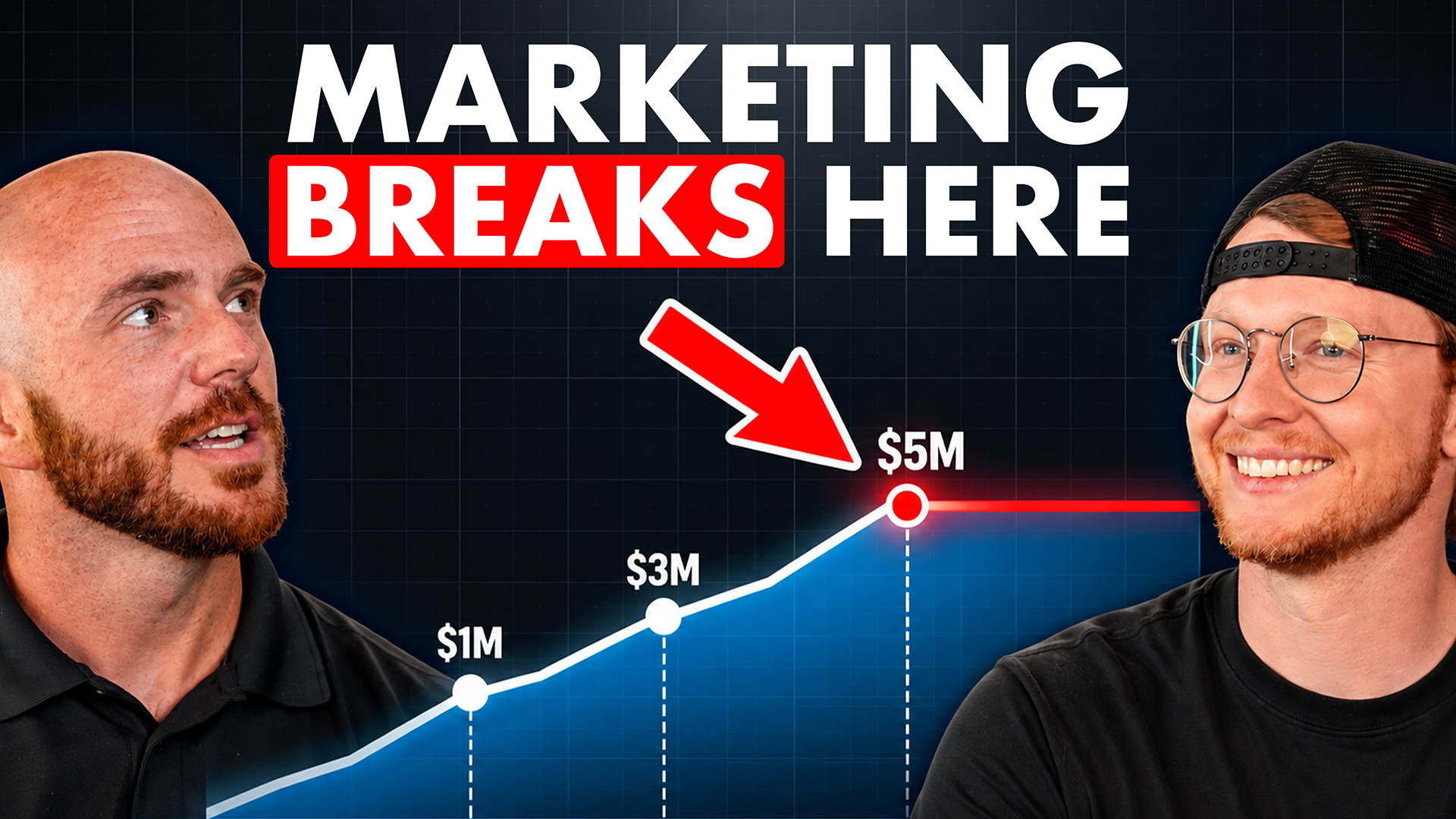
• The two areas they would focus on first at $5M: people and leads
• How training, KPIs, and better data create a long-term advantage
━━━━━━━━━━━━━━
Connect
━━━━━━━━━━━━━━
John Wilson
https://www.linkedin.com/in/johnbwilson1/
Jack Carr
https://x.com/thehvacjack
Owned and Operated
https://www.ownedandoperated.com/
━━━━━━━━━━━━━━
Sponsors
━━━━━━━━━━━━━━
Avoca
See how Avoca helps home service companies book more jobs with AI that handles calls, texts, follow ups, and dispatching without adding more chaos. Book a demo: https://www.avoca.ai/partners/oao
Service Scalers
Get more high quality leads with marketing built for home service companies. Book a free strategy call with Service Scalers and see what's driving real jobs: https://os.servicescalers.com/go/oao_podcast/referral/podcast
Most owners think the million dollar decisions are acquisitions or opening a new branch. They're not Jack.
The little operational decisions that have to also be right.
When I look at the biggest thing that I did differently, like I personally sacrificed tremendously. Whereas like everybody else was buying boats and trucks.
The biggest decisions are like the internal ones of you as the owner having and building a membership program.
I would put every single dollar I could back into the business. I would make that decision all over again. The million dollar decision that we did make was to welcome back to Owned and Operated a Top 200 U.S. Business and Entrepreneurship Podcast. I'm your host, John Wilson, and on this show, we talk about how to build home service businesses. I'm joined today by my good friend and somewhat frequent co-host, Jack Carr. Welcome to the show. What's going on, guys? We're ready. We're ready to we're ready to dial in. It's the first week of August. Everyone's depressed by the leads on the board. It's kind of hot, but we're not that busy. It's you know, it's August. It's it's this is the nature of August.
It's the end of summer, unless there's a HVAC specifically, unless there is a giant heat wave. If it was gonna break, it probably broke. So now we're circling back into like August, September, October is the grind again. The easy leads, the easy money is uh it might be gone.
She's gone. She is gone. She is gone. Yep. Yeah. So um, yeah, we're heading into August. August is usually fine. September is the pit of despair, but August is usually August is like you still have like a glimmer of hope. September, you're just like,
why am I in this industry? Why was I born? It's a lot, it's uh it's it's a heartfelt month.
Why didn't I choose SAS is the answer.
Yeah, why didn't I choose something recurring? Um, okay, so today uh we're talking about the $1 million decisions that contractors don't realize they're making. But before we do, uh I have been instructed in no uncertain terms to talk about breaking five. Uh so check out ownedandoperated.com. It's September 15th through the 17th. Uh and it is our fifth or sixth or something, breaking five. They pretty much always sell out. This one, I think we're already in the 20s. Uh, we usually try to end at like 30. So yeah, make sure you're signed up for it. I mean, we're only a month out, and uh, I don't know how many seats are left, but I don't think it's a lot. Uh, but it is a lot of fun. If you're above five million, like that's a-okay. Honestly, last time we had a cohort, half of the group was north of five million. So I really think we have to start calling it like breaking 10 or something like that. But um breaking five sells a great ring.
Yeah, yeah.
Yeah, yeah. Uh so yeah, we're looking forward to seeing everybody, and we'll we will make a bunch of new friends. Okay. Most owners. Million dollar decisions. Most owners think the million dollar decisions are acquisitions or opening a new branch. But they're not, Jack. They're not.
They can be, but they're usually not.
Yeah, they can be, but they're usually not. Um, I think this the the premise of today is we're gonna be talking about this how the small decisions compound into big uh decisions either financially or big decisions for like trajectory of the business. Um I I always I I reflect a lot on the show of like I remember back when, but uh I I remember back when it's funny to like look back at some of the decisions that we made 10 years ago and realize that those decisions, while we were a business that had no context of what we would be like today, like helped to shape Wilson today. Um, things like, hey, we happened to partner with the right CRM or we chose the wrong marketing company at first. Um, I don't know. Like it it I mean, even leases. I've talked about that a lot of like, hey, we signed up for a lease program, and seven years later, like we still utilize that lease program. So it's it's just kind of interesting how um you make these decisions in a vacuum, or not in a vacuum, you make these decisions like focused on the day, and uh they really ripple like a decade later, which yeah, I I think is kind of cool.
Well, even more so, I mean, if you start to get into one of the first and I think the most important spots to talk about is obviously the people problem, right? Is we run a service business that is based on people performing. Um, and I mean, I'm just thinking of like Brandon. Brandon's your number two, he's the GM of the business, you guys have grown it together. Like, I think that's the first biggest spot to start with. Like, hey, this is the million-dollar decision. And at the time, it might have been like, dude, I just need some help operating day to day while I do this, this, and this. But being able to find someone who can grow with the business. And I think you guys have the term ride the bus with me or be on the bus, be in the same direction. Um, I think like that is one of the most critical quote unquote million dollar decisions you can make.
Yeah, I I agree.
Um and it's not just Brandon, it's everyone in the organization. We know people who've been with us for three, four years since like inception, and some of the best employees that we could ever ask for.
I talk to a ton of home service owners, and if you're anything like the one to five million dollar shops that I know, you're probably getting hammered with AI pitches right now. Most of them sound great until they hit the real world and just completely fall apart. The one that we keep coming back to is Voka. What stands out is they actually understand how contractor businesses operate. This isn't just another AI answering service. Voka handles inbound calls, outbound follow-ups, text, web leads, even dispatching, all in one system built specifically for service companies. If you're on Service Titan, then this is a big deal. Their integration is deep, so you're not duct taping together five different tools and hoping that nothing breaks during your busy season. I also respect that they're realistic about AI. When a call needs a human, they've got a 24-7 live transfer built in. So nothing slips through the cracks and your customers don't get stuck in a bad experience or like an AI loop. Owners using a voca are seeing whole times basically disappear and booking rates jump, some by 30% or more. If you want an AI partner that actually helps you book more jobs without creating more chaos, this is worth checking out. Book a demo at the link below. What uh what's been kind of fun over the I've been, I think I'm I've been thinking a lot about like I'm in like a transition of my role and just like over the last six months. We've obviously obviously acquired a lot of businesses. Last week we acquired our fifth uh so far this year, and we're officially in the 50 millions. If you've been following along this year, uh that is yeah, that is kind of funny. Um, so we're officially in the 50 millions, and um I've been thinking a lot about my role. And when you start thinking about like your role and like, hey, what do I do every day and what should I be doing every day? Um, those are often like two different things, which first off, that's kind of funny. And secondly, um, if I think about the biggest decisions, like the biggest catalyst like change-making decisions inside our business, it was only like two or three decisions a year, and like one of them was Brandon, like hey, 2019, like we needed support and we decided to join Certain Path at the time and or SGI at the time, now Certain Path. And um so like those two big changes sort of defined 2019 and then leading us into 2020. Really, like you only have to get a couple of decisions right every year to keep the business moving forward, um, which is almost like, what do I do the other 260 days out of the year if really all that mattered was like two days?
Well, it's like so it's big change, is I think what you're referring to, but every day it's the little operational decisions that have to also be right. So it's like, yes, I need to be a good operator every day, but I think we look for silver bullets every single like what's the next big million dollar we're doing doing it right now. I texted you last night, I said, Hey, how do we get into sewers? Like, that's yeah, my next million dollar decision is pushing into uh uh you know sewers. But um and that's probably the opposite of what this this episode's supposed to be about, as like, hey, the small things are more important. Um but again, at the same time, you still have to operate daily at a very high level.
Yeah. Yeah, I'll talk about a couple of decisions I think that we didn't do right. Um like our payroll software, I think is a great example. Uh so that there's as as a business gets bigger, it it tends to get slower for like you want to be nimble, you want to be whatever, but like it is hard to you know, we're not as nimble as we were at $10 million. We're just we're just not. There's more people, there's teams, there's like people that own like that, you know. If I want to make a marketing change, like yeah, I guess I could go do it, but like it would just involve more conversation than it did three years ago. Um, so payroll is an interesting one. We're like, we made a payroll software decision, not really like thinking much about what we should have done, and we just sort of like chose the first one that came along. It's not that it's been bad, it's just that like we're gonna have to switch, and it's kind of annoying. And we should have switched when we were 30 people choosing that software the first time, and now we're like, we'll cross 300 team members later this year, and it is much more complicated to switch an HRIS and barrel solution than it was five years ago when we first got on this with 30 team members.
Um, do you do you think that that's a million-dollar driving decision, though, that you will lose or gain a million dollars if we're just staying with the theme of this show? Yeah, basically.
I I actually think that we will. Because if you think so, like, yes, I think we will. The if you think about like technology, like the purpose of technology is to remove friction as you grow. Like it's allow more throughput with less energy. So, hey, I can do more jobs every day, or I can hire more technicians or serve more customers because I have technology instead of a whiteboard and paper, right? Like that would take a lot of energy, therefore, like a sort of friction to scale. Paylocity is like sort of like a dumb version of that, where it is a million-dollar decision. We're like, how do we think about all of the time we have invested in payroll? How do we think about the three full-time payroll people? How do we think about the journal entries for so accounting team focused on it? Um, software cost, additional like time invested every day or week from our managers. Like it is, it stacks up quite a bit just from like this one decision, which probably not a million a year, but a million over like a couple years, absolutely, uh, very easily. Whereas we could have chosen a better tech solution that integrated all of our technology deeper, which like the industry standard for large companies is ADP. So ADP connects Service Titan, Sage together. Like ADP sort of like sits in the middle. So it takes your wages straight out of Service Titan, dumps it into Sage, and then like back. So that way you can cut down like a ridiculous amount of time that goes into processing payroll for going on 300 people. So yeah, I would say easily a million dollar decision. Um, and it's a bunch of these like micro little problems of like, you know, a couple hours here and a couple hours there and a couple hours there. Well, you multiply that by somebody's hourly rate, and it's a lot of money.
Yeah, definitely.
Yeah. I think uh some other ones are like um phone. I think phone choice is like a funny one, and then we can start like getting into hires and all that stuff, but I think phone choice is like an interesting one. Um I don't know why everyone chooses dial pad. I have never heard of a VoIP solution that has more problems than dial pad. Like, I feel like we're in a couple group chats where like once a month people are like, dude, dial pads down again. And I'm like, just move, just like get off of dial pad. Like, what are you doing? Like, that's easily a million-dollar decision of like, hey, your phones can't suddenly stop working. Like,
you we're a service business. You are, I don't know why you're on dial pad. Maybe it costs like a penny a month or something, but like that's too much if it goes down once a month and like you're missing calls. Uh, but like, easily a million dollar decision. And I I I don't understand, I don't understand. I've never looked at dial pad, but like I don't it it's like once a month, right? Like you're in that group chat. Like people are always like, dude, dial pads down again.
Very often, it's ridiculous. Why who who was the leader of dial pad in the first place, either? Like, who who who is selling this to businesses? Because I've never even been solicited for it either.
I have no idea, but apparently it is the worst. Um, so yeah, easy.
Yeah. Gonna get a seasoned desist from I was gonna say dial pads listening, right now it's all like just like have a better software.
Like, I this isn't my problem.
Don't go down, yeah.
Yeah, yeah. Dial pad, I have never had a relationship with you. Um, there's a lot of group chats that have opinions, so just you know, okay. Um, so yeah, I think easily a million dollar decision. Um, yeah, I don't know. What what are some other ones you can think of? And then we can dive into hires because I think that's an easy one.
Bad decisions or good decisions?
Either. Yeah, either. I think I focused on bad, but yeah.
I mean, some some good decisions we made early on was based on like model, like business model and structure. Um it was hey, we decided at an early, early time, like we were only going to do residential and we were gonna focus solely on residential, not we cut all of our new construction. I mean, that that's a bad slash good decision that ends up being a really good decision. But like I called you at one point and was like, hey, my plumbing company department is tanking because I'm running all this construction work. And you're like, dude, just cut it. I'm like, it's a million dollars a year in loss. And you said, just cut it. But that was probably one of our better decisions was to cut any of that kind of work and focus on what we needed to focus on. Um, so like that's a big one. I mean, having and building and investing in a membership program, like that was a million-dollar year decision. I know there's still companies out there that don't have that, they don't have a program, they don't have a way to lock customers in or encourage customers to continue and be repeat, like that alone. Uh, the the difference, the delta between uh the value of like emergency customers and customers who are on our membership program is like thousands of dollars per customer times three, four thousand members. So I mean, just right there, you're talking about four or five hundred thousand dollars a year in differential. Um if they we service all of them. But over the course of you know the last four years, definitely over a million dollar decision. And that was a basic, right? That's a basic change to our operations was hey, we are going to run a membership program and this is what it's gonna look like.
The it reminds me of a phrase, uh, you you overestimate what you can do in a year, but underestimate what you can do in 10. And I think that that sort of applies with some of these decisions, is we overestimate the impact, or or maybe it's the opposite. We underestimate the impact a small decision will make, like membership, because we think about it like, oh, in the course of a year, like maybe I'll get to 200 members. Like, what does that matter? Well, over the course of 10 years, like I think we have eight or nine thousand members, and we launched it back in 2019 or 2020 or something like that. I remember like selling the first membership in 2020, and uh, I remember celebrating when we hit 100 members, and today we're at 8,500 or something, and it's a huge, like, fundamental part of the business. Uh, this membership cohort. So, but like in that first year, I remember being discouraged because we just we didn't have that many.
Um, that's hard.
Yeah, it's hard. Yeah, it's hard, but I definitely underestimated the impact it would have. And I think that's kind of like most of these decisions are like compounding decisions. So, like, hey, are you gonna invest in an ops manager? Are you gonna invest in the right technology stack? Are you gonna invest in a program? Are you gonna invest in fleet? Well, okay, in the first year it's a PL hit, but what does that mean to you in 10 years? Well, for us in 10 years, it was a mid $50 million business. Like, I would take that trade any any day of the week. The problem is I didn't know that 10 years ago when we were making these decisions.
Yeah. Yeah, I mean, I just think that that all um that all continues to compound too, right? There, there's all these long-term decisions. And the ironic part to it is that some of these aren't even they're not even like actual operational decisions or marketing decisions or business decisions. They're kind of internal to the owner. So like people listening to this is highly specific to you right now. It was at one point we decided, hey, I'm not going to use the business as a piggy bank. Like, this is not going to pay for my personal car payment or my wife's car payment or my kids. And, you know, that alone is a million-dollar decision.
Um to me, I honestly think that's a $50 million decision. That is the same thing. I think when I look at when I look at the biggest thing that I did differently, because you know, you look around at all these people you grew up in the industry with, and you're just like, why did we succeed? And others didn't. And I think it's these decisions. Like, well, I think we made the right hiring. I think we brought on the right people. I think we enabled them. Like this wasn't, you know, the John show. Uh, but I also think like I personally sacrificed tremendously uh on the journey, whereas like everybody else was buying boats and trucks.
The other one that I find interesting from like a very personal level is this dedication to actually deciding that you wanted to grow a business. Because there's lots of people that are like, hey, I'm fine. And you and I argue about this. You said, Why would anybody want to do this? And and there's people who do, but it is a million-dollar decision is deciding my focus is growth, not comfortability. Yeah. Um, because like it's very you can run a very comfortable three to four to five million dollar business. Uh, you could run a really comfortable, you know, half a million dollar business where you just do everything. Um but that being said, like the growth is super uncomfortable, and that's another million dollar decision. It's like, hey, I want to grow to 10 million or 15 million or 20 million. Making that decision early on is what that literally changes between three million and fifteen. So, like the million dollar decision is obviously there. Um, but that one is so in my mind, so uh extremely important because it changes how you focus on the business, it changes how you network, it changes you said you joined SGI in certain paths, like that's a huge step. But the reason that you did that was because you were focused on growth, and so it was a real financial sacrifice, too. Super philosophical, yeah. Um, like the biggest decisions are like the internal ones of you as the owner trying to decide. And I know that doesn't help people from like a granular level, but maybe it does. And then the other one's Mavericks, just by Mavericks. Obviously, that is the
answer's Mavericks. I don't care what this episode is, the app the answer's Mavericks.
That is funny.
That is we we just had somebody up here and they did a show. Oh, it was uh uh uh Jolly. Uh Jolly, yeah, Brady Jolly, and they were like, dude, we're we're doing Mavericks, it's amazing. I'm like, let's go.
I I I was I was listening to that that clip he did. I was dying because he's like, I heard Jack talk about this, and I thought it was the stupidest beeping decision I've ever heard. And then we're like, Well, let's give it a thought. And I'm like, Oh, thanks. I appreciate that, buddy.
Yeah, just so everyone knows I am a Ford shareholder. Just I do benefit from this.
I should be. I wish that someone from Ford would reach out to us eventually.
Yeah, yeah, yeah. Me too. I'll take some swag and uh equity. Um, okay. Yeah, how do you how do you think like marketing and um oh marketing decisions ties in? What what I think is interesting is we've made decisions off and on about brand. Um, which obviously, like I've said my opinion on brand quite a bit on the show. Uh, but I I do think like a base amount of brand is helpful. I do not think you have to go crazy. And like we've made decisions off and on, and though those have, I think, easily been million dollar decisions or more in one way or the other, sometimes to our benefit, sometimes to our loss, depending on the decision. We've either cut, we've added, we've done it right, we've done it wrong. But like I've I've done a lot wrong with marketing over the years. Um, I've done a lot a lot right, but uh we've experimented a lot. But I think it's it's easy to make a million dollar decision right or wrong on marketing.
Yeah. Yeah, that's pretty accurate. I mean, we did million dollar wrong decisions in probably not million dollar, probably a couple hundred thousand in branding work that just never paid off or never at least is uncalculatable. Uh so we don't know if it actually did anything. Uh that being said, the million dollar decision that we did make in marketing was to go where others were not willing to go, being aggregators and really focusing heavy on aggregator. I mean, I think even you were surprised when you saw the internals into our business with how aggregator focused we are. Um, we focus a lot on aggregators and bringing leads through aggregators and building those systems to be able to handle that kind of wonky lead volume or specific type of customer, I should say. It's definitely not, you know, a Google lead, it's not direct. There's a little bit more work, there's a little bit different sales process. And so, like that that choice to go aggregators has made us multiple million.
So yeah, yeah,
I agree. Yeah, I agree. Yeah, that's interesting.
Yeah, I think there's there's other decisions, like those guys that were at uh your walkthrough of the warehouse, um the plumbers from down in the three young guys who are like, Yeah, we bought a we bought a blimp. I was like, hey, I don't know if that's a million dollar decision, but that's a good branding decision, maybe. Uh, but they they did go to what eight million off of yard signs. So like the only yard signs, too, right? I don't think that they did any kind of LSA, PPC, nothing, just yard signs. Yeah, and so like there there can be unique branding decisions that will drive you multiple millions of dollars, and you just have to focus on one channel, which is kind of unique.
My hope in this episode was to walk through how small decisions stack up on a daily basis, and things that you might not think of having a big impact kind of has like a really big impact over a long enough period of time. Uh, what I would encourage you to do, and then we'll do a little exercise, like if we were running a business today. Um, but what I would encourage people to do is when you're looking at a product or whatever, and this is just something now we do. So this isn't an example of like a bigger business getting slower. Um, but we just like we're a little bit more thoughtful, maybe a lot more thoughtful about like vendors, solutions, technology hires than we used to be. We used to basically like YOLO our way through life, and that did get us here. Um, but now 10 years later, we're like, hey, actually, that decision that we made eight years ago was the wrong decision, and it's gonna take us half a million dollars to redo it. So let's get the next version of it better to write.
I think that's that's actually, I mean, not to give too much away, but like that's our entire infrastructure conversation. We spend like two hours on infrastructure in the breaking five, and like the overarching theme is it doesn't matter.
Decisions you make now is your the next 10 years of your life.
It doesn't matter your technology stack. Like, I'm not gonna tell you you have to go service Titan or you have to stay house call pro, but just understand that that decision that you make on your CRM is going to affect you 10 years from now. Yeah, there is a cost to spending, and that's that's your CRM, that's your VoIP, that's your talking to each other via text message, Slack, you know, whatever teams, it's everything, it's technology.
Actually, teams teams for Schoogle ended up being a real pain point.
Yeah, yeah, right.
Yeah, it's kind of funny. You know, I will sorry, I will say one thing um about about CRMs real quick. Just like okay. I I don't I don't want to come off uh shitty. I find so we bought a business that has House Call Pro, and it is it is impossible to work. I don't understand it. And I'm like I'm a technologically capable human being, and I think I'm just used to like actual data being put in front of me. So like it's kind of ridiculous, to be honest. It is kind of ridiculous. I think that you should like jump up to field poles, you should do something because like house call pro, I like I can't work it. I can't figure out how much each tech did. I can't like I can see revenue and sort of number of jobs.
I got a cease and desist from house call pro and from Battlepad in one episode.
We we did our jobs, but like it is it is crazy. So I think my take is my take on that, and then we'll do this next part. If you are currently using house call pro, you should genuinely look at other options because I do think that house call pro will hold you back. Just like, hey, me running my you know 50 million something business. House call pro is like uh borderline non-functional for like our business. And like we have one branch with it, and it's a three million dollar branch. And like, I I actually can't even understand what that branch is doing on a daily, weekly, or monthly basis because the software makes it impossible to pull data out of. So I do think that that is a great example of like that will hold you back in the long term. It'll probably save you a couple bucks now, but like we
could never run our business on this.
There we go. Yeah, I don't know. You heard it here first. Yeah, if you want to stay small, house call. Damn, John, we're gonna get so much trouble for this episode.
Okay. All right, all right.
Um, sweet. Cool. To to end my thought, what I was just saying is any infrastructure has a reverberation. So yeah, like John said. Uh think about it.
Yeah, okay. If we were running a five million dollar business today, what are the first million dollar decisions you focus on?
Like super Mavericks. Yeah, Mavericks instantly. No, I mean, we you and I have a slightly separate uh idea on this, but but my my thesis has always been um HVAC service and HVAC install or plumbing, whatever, is there's two sides to the business. And so your biggest impact is going to come out of one of those sides, and that's people. Uh so hiring, getting your hiring process down. I'd focus heavily, heavily, heavily on the hiring process, what we have to offer, making sure that we're always hiring, that we're hiring the right people in who can generate revenue and actually do the work. And then the other side is leads, because you have leads in fulfillment, leads in fulfillment. Um, well, technically leads sales fulfillment, but but people is the first one, leads are the second one. So then focusing on marketing to ensure that the board stays full. And as we can continue to fill up the board, we can hire more people and then continue to fill up the board and then hire more people. That is, in my opinion, the quickest way to increase growth and increase millions. Everything else is um still relevant, but uh doesn't drive as much as those two items.
Most marketing agencies will show you clicks, impressions, and maybe even traffic, but none of that really matters if the phone's not ringing. And that's why we partner with service scalers. They are built specifically for home service companies and they focus on one thing, which is driving real, high-quality calls and book jobs. This is a no-brainer. They're offering a 60-day money-back guarantee on LSA management, Google Business Profile Optimization, and website builds. If you don't get more visibility, more calls, and better leads, then you don't pay. If you want more book jobs without the marketing headache, click the link below and book a free strategy call with Service Scalers. Uh yeah, mine would probably be marketing. You know what's kind of funny? Um, I should do a chart. I did a chart on this a couple years ago on Twitter. Um, and it was annual. Oh, it was monthly revenue. It was a chart of it was a chart of like so I've done it every time, every time I've had an anniversary of like the business ownership. I do a monthly revenue chart from the day I took over. So it's a funny chart. Um we're I think we're uh this month is probably our first four million dollar month. Dude, we hit three like nine, two or something. It's so aggravating how close we were last month, but we didn't hit four. Um, but uh where was I going with the man, where was I going?
Marketing, marketing, marketing.
Yeah, so marketing. So what was kind of interesting is um I am not advising that people do this. It has created a lot of stress in my life. I also won. So you know, you have to like do you want to stress and winning? Uh, but like we basically didn't actually pull net profit out of the business until like 2024. And I and then like I bought the business in 2016. Like, I think we took some small distributions, but like we ran a single-digit profit business kind of on purpose. Like we were kind of on purpose, kind of like we just had to improve. But I mean, we just reinvested absolutely everything back in until we hit enough of a critical mass that like we built something valuable. That was 20, that was 2024. Uh, so like a net profit over time would show like 4%, 5%, 6, 7, whatever. And then 2024, we jumped to 11, 2025, 17, and we're like low 20s here to date. But that was like nine years in the making. Um, so I think like if I were running a five million dollar business, I would make that decision all over again. Like, I would pay myself the least amount that my attorney tells me I'm allowed to pay myself to be a reasonable wage because we were an S Corp. And then I would uh put every single dollar I could back back into the business. Like over and over, I would do that every time. What mistakes would we avoid? You know, this is kind of funny. Uh the mistake I would avoid is when as we were making key hires, I kept thinking, I kept thinking, oh, the business is bigger now. I need to get someone who's strategic. That's like not a thing. So let me like, let me like help save everybody a million dollars. Like, that's not a thing. Uh all strategic means is they don't want to actually do any work. And so, like, when you're hiring.
I'm laughing because it's true. Dude, it's so true. If anybody tells you in the in an interview that they're like I'm more of a strategic I'm more of an idea person. Like I come up with ideas. It's like there's zero value in ideas, my friend. Like I've got 300,000 of them a day. Uh, I don't need a second person coming up with ideas.
Yeah, no, totally.
So I'm the visionary. You're not the visionary, you just don't want to.
Yeah, you know, I like to imagine myself in more of a strategic role, and I'm like, that's not a thing. That's not a thing. And I also think that will probably never be a thing. Like, hey, we're mid-50s, we have a hundred within line of sight. Like, we'll probably hit a hundred revenue next year. Like, we don't need a strategic person anywhere. Like, we're good. I'm good on that. Like, I'm strategic enough. I'm sure we can figure it out. We do need people to actually do stuff though.
Implementer, yeah. If it's someone says, Hey, I'm good at implementing and executing, that's your person. Yeah, actually, I I co-signed that a hundred thousand percent. The worst layers I've done were like, Yeah, I'm good at ideas. It's like, no, you just are good at being lazy.
All ours were like, Yeah, I'm strategic. You know, I can be strategic and yeah, they just they really like um they didn't have the like I want to get in there and roll up my sleeves attitude. So I would say, like, that's a big mistake I would avoid. Is like just because someone comes with a little bit more pedigree and calls themselves strategic does not mean that they're what your business needs.
Yeah, fully agree. That's too funny. That's a good way of putting it.
Yeah. All right, and then uh what decisions create the biggest longest term advantage over the next five years?
What business decisions make the biggest long-term advantage over the next five years? I mean, the biggest decisions or the biggest I don't know, you go first on this one. This one's tough. Um, like you said, it's a five-year timeline is a hard thing to to foresee. Like I wouldn't say the same thing that actually came to fruition five years ago. Because five years ago, I just bought the business and I would be like, hey, we need our first technician. Like, that's the biggest thing. Yeah. Um I think somewhere between training or in in reinvesting back into the people in the business currently. Some somewhere in that would be relay. I think that's like, hey, I want I want those people to continue to excel and you know, succeed with the business.
I think I I think that is right. I think um training is one of those like short-term PLLs, just like hiring an ops manager, putting the right technology in place. Like it doesn't look good the first year you do it, uh, but it becomes a moat.
And it becomes a muscle too, like being able to actually focus on doing it and how do you run it correctly and how do you drive the most value? Because we were actually having this conversation today, is you'll find that um I don't know if it's a personality trait, but like it's just something that has to be continuous, otherwise it gets dropped off and forgotten. And so not only is it a um short-term PL loss, it's also extremely difficult to maintain, in my opinion, just because yeah, you view view it as a low value item, but it's actually probably one of the highest value items there there is.
Yeah, yeah, I think so.
That andor my second answer to this is going to be to get your KPIs and metrics locked in. Like the changes in my business that have been driven from actually having good data have been so substantially more valuable than just you know, I'm licking my thumb and putting it into the wind for those listening, like guessing and checking. Um, like good data drives good decisions that drive your business. That's bar none, like another huge one. I cried. I'm a big man who cried the first time I got a good PL just because like I could actually make good decisions, and that took me three years to do.
Yeah. No, I I totally agree. Awesome. Uh, if anybody else has some million dollar decisions that they think would be pretty cool, I'd love to hear it in the comments below. We read them and we will talk about them, good or bad, on this show. Besides that, make sure you like and sub. It helps my mom know that I'm loved.
.png)