

Slow season doesn’t have to wreck your home service business.
In this episode of Owned and Operated, John Wilson and Jack Carr break down how they prepare for shoulder season when inbound demand slows, the call board gets lighter, and every lead becomes more valuable.
They cover how to fill the board with outbound calling, when to use specials and discounts, why sales KPIs can actually improve during slower months, and how tightening labor, marketing, and spending can turn shoulder season into a stronger cash-producing period. They also explain why preparing months ahead and building a customer contact list during peak season makes the slowdown much easier to manage.
━━━━━━━━━━━━━━
In This Episode
━━━━━━━━━━━━━━
• Why August and September can be some of the slowest months of the year
• How to use outbound calling to fill the board when inbound demand drops
• Specials, BOGOs, tune-ups, and other ways to drive shoulder season leads
• Why you should lean on proven marketing instead of taking new risks
• How to get more revenue from the leads already on your board
• Why average ticket and conversion rates can improve during slow season
━━━━━━━━━━━━━━
Connect
━━━━━━━━━━━━━━
John Wilson
https://www.linkedin.com/in/johnbwilson1/
Jack Carr
https://x.com/thehvacjack
Owned and Operated
https://www.ownedandoperated.com/
━━━━━━━━━━━━━━
Sponsors
━━━━━━━━━━━━━━
FieldPulse
Ready to ditch the whiteboard and spreadsheets? See how FieldPulse helps home service companies simplify scheduling, dispatching, invoicing, and more. Book a free demo: https://landing.fieldpulse.com/owned_and_operated
More Ways To Connect with O&O
John Wilson, CEO of Wilson Companies
Jack Carr, CEO of Rapid HVAC
📌 Disclaimer: Some links may include UTM parameters or affiliate relationships, meaning we may earn a commission if you make a purchase. Episodes may feature sponsors, but all opinions expressed are our own.
If it was gonna break, it already broke. And if it didn't, it's not going to.
What do you do during shoulder season? How do you prep the business? Are you maximizing like what's currently on the board? Because every lead becomes harder and harder fought.
As much as your hair's on fire during the summer, one of the biggest things you can do for yourself is think three months ahead and collect good contact information.
Slow season is something that you should survive. You should aim to try to like optimize every year, get a little bit better, get a little bit better.
What is the play to continue driving leads? The biggest one for us is uh welcome back to owned and operated with your host, John Wilson. We haven't done an intro like that in a really long time.
We haven't, and it's uh it's um it was totally good. Welcome back. Uh we're top 150 U.S. business and entrepreneurship podcast. People on the internet like what we have to say, apparently, when it comes to plumbing and HVAC businesses. Uh before we get too deep, I have been told, uh threatened really, that I have to bring up our newest event. It is in spring of 2027 in Akron at the Wilson headquarters. It is called Catalyst. And uh it's basically we're bringing together around 100 home service operators and we're gonna be talking shop, we're gonna be sharing what's working, we're gonna be building relationships with some of the best people in the industries. So if you want to be in the room, check out Catalyst at the link below. I hope you're there.
Should be a ton of fun. Today we're doing like sort of a summer roundup, prepping the business for shoulder season. We've done this a few times, um, usually because we're in the pit of despair ourselves.
Yeah, I think we're a little ahead schedule, which is okay. Um, it's also been a really warm August for us. I don't know if it's been warm for you, but we've just got done with the 100 degree weekend. That being said, though, is the on normally at the end of summer, I mean, everybody feels it, especially in seasonality businesses. If it was gonna break, it already broke. And if it didn't, yes, it's not going to. So you start to see a slowdown of calls. So um, are you guys feeling that now? How's your board looking?
Um well, I'm actually looking at that now. So we sold 36 grand over the weekend, which is like fine. We're basically pacing um like yeah, leads have been a little bit lighter. Uh, we have been pushing. Um, even if leads aren't light, like sales, you know, this is sort of like the normal gyration. I would say that uh, and I've helped like answer this question for a lot of people. For us in Ohio, there's a couple weeks that never do very well. So like back to school is definitely a thing.
Rough week.
It has always been a thing. Um week after Christmas is always a thing.
Yeah.
Uh honestly, Thanksgiving week is gonna say Thanksgiving for us. I I I almost giving is usually pretty tough. And everyone like jokes around like Black Friday are is gonna be crazy. It's Brown Friday, and it's like, no, dude, it's actually like usually pretty light.
Um I had a heart attack my first season when that happened because I thought I thought after Thanksgiving was gonna be popping because of that, and we were like dead. And I said, Oh, we're business.
Usually like about half the team takes off, and it's just not that big of a deal. Um, but yeah, back to school is definitely a thing. So, like, hey, we're we're basically in back to school week right now. Um, our kids are back to school next week, so we have like another 10 days, but like it's busy. People are spending their money, they're spending their time, they're you know, wrapping up vacations, whatever. So um I think if you're especially feeling August, August for us is typically a low time, and then September is like pit of despair, one of our two worst months of the year. Yeah. So if that's like where you are, and like mentally you're in a tough spot,
that's where we all are.
Well, why is September so bad, John? Generally.
Uh September for us, I'm assuming it's like there's a little bit of a back to school. People are buying how like there's a lot of house buys over the summer, and then they're you know moving in. And so like I think there's a lot of repairs that happen at that time or prepping the house for repair. So I think there's just more stuff in summer. Um, but it's also like very temperate weather. So it which is the same as like you know, February through April basically.
Yeah.
You know, last night it was 60 degrees, like it was kind of nice, and today it's 75. Like that's pretty temperate weather. So not much is gonna break on top of um not much is gonna break on top of uh just like a busy time for a lot of people's lives.
And I think the last bit to that is it's slightly too early to start uh heat maintenance. So like October rolls around, same thing, right? September, October, it's nice, it's sunny in 75 here, right? Nobody's thinking about summer anymore. They're thinking about fall and and winter. And so, but September's a little bit too early. Maybe towards the end of September, we'll start those heating maintenances.
For September, we're able to run it pretty hard.
Yeah, if if you if you guys cool down enough, you can, it just doesn't cool down enough in September here. So I'm looking at our um, I'm looking at our last 18-month trend, and September is only slightly better than February, March.
Yeah, yeah. That that tracks for us too. Usually it's like July, August, September, October. Yeah, yeah, that's exactly. October is like this whiplash where like you bounce like 50% up from whatever September was. Yeah. So it's like a slow bleed and then a woo.
Yeah. Yeah.
Actually, now I'm looking at like a month out. I'm now I'm just really curious.
October last year was our best month of the year last year. So you went from the second worst month to the best month on record within the 30-day uh period. But again, you start, I think we had some cold days in October last year, and so it's the start of cooling season or heating season, and it that's a big deal.
Yeah, I think people are gonna start turning heat on around here. I was freezing last night. So every night for the next uh two weeks is like 58 to 61 degrees, and every day is 75.
Yeah, you got that's some wild weather. That's crazy because usually we are close in our weather.
We are usually August is way hotter. Yeah, usually August is way hotter. We're we're going through something. I don't know. But all that to say, we're we are entering shoulder season and we're here
for it. Um, what do we do? What do you do? What do you do during shoulder season? How do you prep the business? I we're seeing this comment come up a lot in um like Facebook groups of like, how do you prepare for down season?
Well, how how do you round out your up season too? Like, how do you round out August if you've started to see closed calls, right? You're definitely not ready for winter maintenance unless you're in like Maine or, you know, yeah, like some some really temperate areas. Um like what what is the play to continue um driving leads?
The I mean, the biggest one for us is uh like out-bound calling is probably the most important mech like tool in our toolbox for the two shoulder seasons because there's not a lot of or not, there's there is a lot, but there's less inbound demand. Like things are still breaking, like you know, whatever. But it's just not the same as like peak season where everything was breaking all the time and everyone's overwhelmed. Uh so you really have to be way more proactive with filling that board, like email, SMS, maybe like specials running an equipment uh special of like, hey, you know, usually it's pretty normal to see a 50% off air conditioner um special in the month of September in order to keep driving leads for that, you know, 45-day period. Um so yeah, big discounts, tune-up specials, really proactive on the phones, just like pushing that stuff hard. One of the hardest transitions for any home service business owner is moving from running jobs to running a business. At some point, the whiteboard or the spreadsheet or that group text that you guys are doing just stops working and things start falling through the cracks. The office is going to lose visibility into the field, and you become the bottleneck for basically everything. That's one of the reasons that I like Field Pulse a lot. Field Pulse gives growing home service companies one place to manage scheduling, dispatching, estimates, invoicing, job tracking, customer communication, and reporting. It has the tools you actually need to run and grow your business without the complexity of a bloated enterprise software that your team's just not going to use. It's powerful enough to scale with your business, but simple enough that your team will actually adopt it. If you've outgrown the whiteboard and you're ready to build some better systems, check out Field Pulse using the link below. For a limited time, they're offering 20% off your base subscription plus 50% off premium support for your first year.
Yeah, that was my same answer. So it was outbounding, outbounding, outbounding. So we we've we've done some outbounding and some of the calls that I've listened to recently, which I found interesting, was we outbound into hey, I think this is wrong, but I'm not sure. So we've just kind of been putting it off. Um, and those are wonderful leads. They just like again, it's a service call that never happened, but they would have never reached out to us.
They yeah, they wouldn't have reached out, yeah.
We were in the right place at the right time, and that's what 200 calls outbound a day will do. It'll put you in that right place.
Yeah. Um, and it was like Which honestly, as a as a home service business owner, I always found that astonishing of like, oh man, like this thing's been broken, you just didn't like deal with it. But like as a parent, I'm like, no, actually, that makes a ton of sense. Like the amount of random shit that like if I just remembered to call somebody during business hours, oh my god. Right. So much stuff all the time. The one and I'm like, well, yeah, you're either working or like you get home with your with your kids.
And like the one this morning was um that why I bring this up is the guy, the guy's contactor was chattering, so it's going, but his system was still working. Obviously, not good for your system to uh lose power, gain power, lose power, gain power, lose power, gain power. But like when if it does it every couple minutes, it makes a weird noise. But if you, you know, you're putting it off, you're busy with work and life, like my cooling's still working, it's not the biggest deal in the world. Let me wait. Yeah. But we were able to get him on the board and be like, hey, let's take care of your contactor so you don't blow up your compressor. Um but that being said, we probably wouldn't have got that, at least not today, um, if that wasn't the case.
So uh but yes, so specials is a we've made we've historically every shoulder season, we make huge use out of like a BOGO type thing. We're like getting you know, get an air conditioner free is the um language that we've used. That's big around here. We've stolen that from competitors because basically in in like Cleveland, everyone runs that special, so you sort of have to. Um I saw someone doing $17 tune-ups in uh Phoenix, um, and I thought that was kind of interesting because like that's cheap. Uh I we've never personally run a $17 tune-up special, but I thought that was kind of interesting. I mean, your team has to be pretty trained to like go in there and make something happen, but um yeah, I thought I thought that was like aggressive.
Do you open up or close any uh marketing channels? Because I know some people said, hey, start doing mailers.
Um for me, I think that's not a great idea, but maybe for some industries or some you think mailers aren't a great idea, or you think testing something isn't a great idea?
I think that if you don't have calls on the board, ramping mailers isn't the play. But I I agree with that.
I think like you should roll with what's tried and true instead of like testing something brand new.
Well, I mean, you know me, I'm more of a lead ag guy. I'd rather turn on another lead aggregator than than try and do some passive mailers. Um but do you ramp any of your services that work really well, or is there anything that you turn on or turn off when that happens?
Uh we tend to ramp, like the problem is there's less inbound, so you have to figure out your outbound or like something. So we'll usually run Facebook ads against an HVAC special. Um and what else will we do? I mean, that's probably our the biggest one. We are testing mailers, but not as like a reaction to slow season. We're just like pushing on them to see what happens, basically. Uh, I think it's like five grand a month. Um, but we're mainly focused on our sewers
for that. Focusing on more leads. Uh I think the next best thing, the thing that like matters a ton is how can you of the leads you do get, how do you make sure you convert them? So, like what's your sales strategy? Are you offering more options? Are you spending more time on each call? Um have you are you maximizing like what's currently on the board? Because every lead becomes harder and harder fought.
I know the answer, but what do you see as uh like a really common thing that happens in slow season? Like what where's your KPIs or metrics that you watch to make sure that that's happening?
Yeah, like everything goes up.
Yeah, everything does go up. Yeah, it is. It's the weirdest thing. Are you like you we lock the guys down to three calls a day? You're only getting three calls a day. They're not the juicy calls of summer. I'm making air quotes for anyone not listening or watching.
Yeah, um, but everything's gonna be a little bit of a lot of people. You know what's actually been kind of interesting over the past couple years, a trend that we've noticed is it not it hasn't happened this year, but I I and I I'm gonna dive into it a little bit. Uh, I think we just did us a better job this year than we have, but in 2025, we actually produced more net profit in our shoulder months than our peak months because we were so overwhelmed and just like sort of like spending money to solve problems. Um and then like you go down to show like shoulder month and like every penny matters, and we got tight. And it was like it was just kind of funny looking backwards over that time period and being like, oh my god, like we actually produced more free cash during our shoulder months than our peak because we just ran a tighter ship because we felt like we had to.
Which is crazy when you consider that we just said, hey, you should be doing bogos and doing discounts. So, like ironically, exactly your material cost is going up, your labor should be coming down because you're not running OT, you're not running things like that. Um, but your net is what really gets focused on, right? You're only running the best marketing. Um you're making sure that the guys are slowing down, they're selling what they're supposed to, um, or at least offering what they're supposed to. Yeah. And then on the back end, like they're not falling through ceilings or they're not missing connections on pipes because they're actually spending the time to do it right. So you have you should have almost no um like warranty work.
Yeah, no, it's it's yeah, it is it is pretty funny. And I I feel like our peak season here this year was a little like we still they were peak months, but they were still like I would say a little bit muted. Um both June and July were record of all time months. I'm sure October is gonna be a record of all time month. But like it was um it wasn't like 30% you know, peaked a trough. It is also a little bit confusing with all of the acquisitions because it's hard to tell. Yeah, it's hard to tell. Like February, I think we did like 2.2, and I think August will do 4.3 or 4 or something like that. So like we're what we're trying to compare against is what did all of the businesses do last October or August or whatever, and how was our growth uh compared to that this year? So that's how we're trying to compare. So August was like a 15 or 16 percent growth year this year over last year, which is good, but it's just like to me, it's that's not heroic growth, you know. Like we've had like 40% years before. So like 15 is like, okay, like we did something, but you know, we didn't double. Yeah.
I mean, I mean, and you're when you say like growth year over year, you're referring to like the entire portfolio versus your entire portfolio last year, like all the Wilson companies versus all the Wilson. Yeah, so 15 is like you guys might have been able to do that by yourself. 15% maybe.
I mean, it's now granted, it's just a much larger number. Like we're about to uh August should be our first ever four years.
Oh, but you're you're including the their everybody's last year. So that's 15% includes like, hey, rapids last year versus rapids this year. Yeah, yeah, yeah. Oh well, if you wanted to know, we are on day 17. And we are I think you already passed we are at yeah, last year's uh number, so it's not our fault.
No, it's no, it's definitely not. Well, it is kind of funny because like some of the I think Wilson is like you know, like pretty flat basically. And then um I think Fort Wayne's like actually Fort Wayne's a lot. It's that's just not inside Service Titan because that's inside House Call Pro right now. Um but yeah, and then we just brought on that other one. So like it'll be huge. Uh but August should be pretty fun. All right, so we drive more leads, we focus way more on the sales, uh, and then the third one, and I kind of alluded to it, but we just really get tight on like dollars out the door. And we basically have like a no a no spend policy. Uh and because of that, cash gets just created pretty quick. Where hey, we're going to lock down our spending as tight as we can, and we're going to just not spend. We're going to save up our cash, we're going to prepare for it to get even worse. Because the the back half of the year is usually much stronger revenue. Uh, but there is some like weird days in there. Like we've got Labor Dave coming up, we have Thanksgiving week, we have Christmas week. So, like those weeks you gotta like plan around. And September is a tough month. So it's sort of like you batten down the hatches because the next six months tend to be a little bit of a ride.
Yeah. Yeah. And hopefully you you made enough, but why aren't you able to do that in June, July? Because idealistically, right?
You're so frantic. I think you're just there's so many opportunities. You're just running after the next one, you're trying to get it all in, you're having record sales days. So I feel like you just lose sight of it. I I mean, I think that's what happens to us. Every year it's consistent. There's like a 90-day period where we're just like running around with our hair on fire, and then that 90-day period ends, and then you have the next nine months to just execute.
Yeah. I'm my mind instantly goes to like, well, could you hire more people? Is it technician hair on fire? Is it uh back of office hair on fire? Where's the actual um ball? I know this is way off subject. This is probably a different conversation later on. Um, but very interesting because if you could solve that problem and keep cash high at all points in time, um, like the back half of the year would all automatically be really easy just because you have you've saved that cash in the summer at 10, 20% more than you naturally would have on those revenue breaking months.
But yeah, as an example, in July, like our percentage, our percentage of labor was like three points higher than it should have been. Whereas like in a slow month, like we are so freaking locked in on that number that like we never miss labor. So when we miss labor during peaks peak month, it's like, oh shoot. And three points is a lot. You know, we're used to doing like 22 to 23% EBITDA. So that takes us to like 19. Like three points is like a big dip. Yeah. Granted, record revenue, so it sort of offsets, but like it wasn't like we went to 30% EBITDA in July.
Well, we had this conversation. We had to slow down because in Jul June we had our record breaking month as well, and we we rocked out a what a 39, 40% gross margin. Uh material was way too high. We were giving out way too many discounts and just running around installing like crazy. And then June sorry, that was June, and then July hit, and we took uh I think a a cognizant, you know, hundred and thirty thousand dollar cut um to be went from eight eighteen to six seventy-eight. Yeah, eight eighteen to six seventy-eight, and but we raised our gross margin to forty-eight percent. So, like we that's nine points on gross margin, like huge, right? Um, yes, and that was really focusing on not giving out discounts, and we were turning down, unfortunately, like as much as we wanted it, four unit change outs, but the guy wants them at like five thousand bucks a pop. Where we might have thought about it two months ago, we did slow down and say, nope, we got to keep our gross margin where it's supposed to be. Plus the team was full.
So yeah, yeah, yeah, yeah. Yeah, yeah. You get get Jack out there slugging in units.
Yeah.
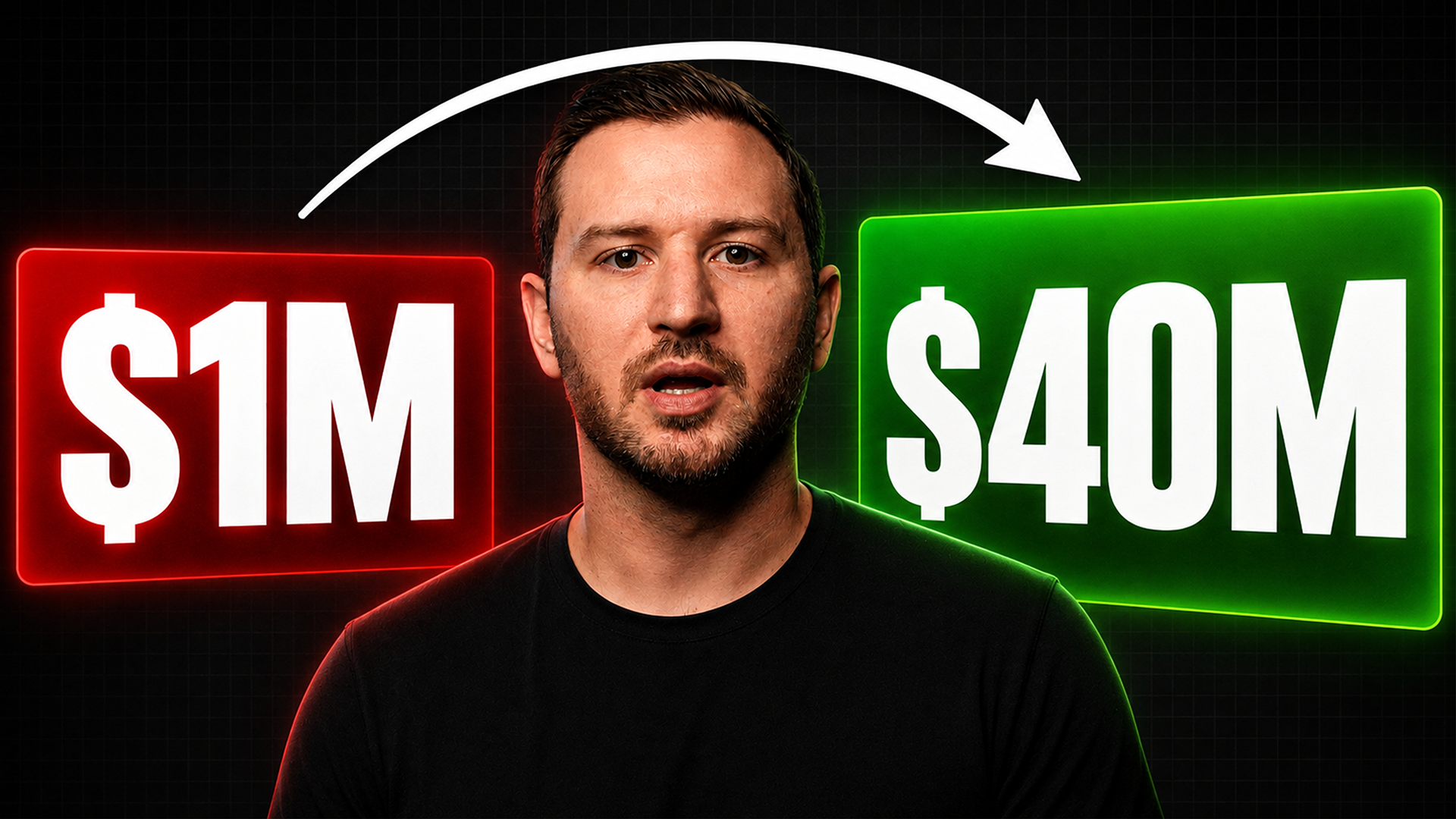
Um, okay. I'm sure I think I feel like that solves most of the slow season problem. I think what a lot of people, um, my my sort of like word of caution is slow season is something that you should survive and you should aim to try to like optimize every year, get a little bit better, get a little bit better. But I do think it it's not like the moment to take risks. I know a lot of people um that are earlier in their journey, uh, and they like I get a this is around the time of year I get a lot of texts and calls of like, hey, dude, what just happened? Like we've been running at full tilt, the call board just dropped off the map, like July was a million dollars and August is about to be $300,000. Like, what do I do? Um it's not the moment to take a bunch of like marketing risk or whatever. It's the moment to like batten down the hatchet, follow those three things that we just talked about, set yourself up for success. Cause it probably is like six months of like duking it out a little bit, and then you'll sort of rebegin the process.
Um yeah, it it is going to kind of happen where you go from nuts to really slow if you haven't spent the time building your membership base. That's always building your customer. Yeah. So I mean Yeah, my friend in Virginia, I think he had exactly that happen where it went from like a million dollars and it went down to three or four hundred. I don't remember the exact number, but it was it was a huge swing. And it was like, oh shoot, we should we this whole summer I should have been building membership base. I should have been getting better contact information so we could call people for tune-ups. There should have there was things to do, but now we just gotta like batten down and survive.
Yeah, as much as your hair's on fire during the summer, one of the biggest things you can do for yourself is think three months ahead and collect good contact information. You know, you run that BOGO deal.
Usually you're booking like a dentist, you're booking heating tune-ups in July. Like we start, we start outbounding for September, October a month ago. Because it it takes like that level of preparation to make sure that you're continuing to like thrive in your in your uh shoulder seasons. And we've just gotten like we get better at it every shoulder season, but we started putting a big emphasis on this like three years ago.
Yeah. Uh what I was getting at though is I think that right, people run these Facebook ads or they run TikTok ads or whatever ads they run, and then they call the customer, they don't win the bid, and then that that phone number email just disappears, right? They never contact that person again. We never did business with them, and then bye forever. But I think that like that's the time where you start collecting that. That you paid for that contact information. They asked to be contacted by you, yeah. Um, making sure that you continue that until they tell you, hey, we no longer want to be contacted by you. Like that is a thing that you paid for. So making sure that you grab that while the busy season, while they're flooding in, and then now it's September, outbound to those people first.
Well, I hope this helped people for like preparing for shoulder season. You're gonna get through it, my friends. We will all survive and we will have the joy of uh October. Or if you're in uh like somewhere very hot, like Texas or something, you probably have another couple months and then you just have like six months of misery.
Yeah, right. So or you're in Florida and you have a nine-month summer and you have a two-month shoulder sleeve season slash winter, and then you get a it is so funny to watch. It's so funny to like look at Service Titan. It's such bullshit.
It's crazy to look at their like their revenue. It it is uh yeah, it's crazy. Or like DFW too is um, I mean, it goes from like a million dollars to 200. Like it's so crazy. Just the it's amazing.
Well, what gets me is they have a nine, 10 month season, summer. Like it starts getting hot in March and it doesn't stop until November. And then like that's their summer is like this giant period of time. And I'm always like, oh gosh, I hate you guys. That's so nice. You don't know what it's like to actually have a shoulder season. Yeah.
They're like, Yeah, we just slowed down a little bit in uh February. It's odd. It's odd. Awesome. Thanks everybody. Make sure you comment your favorite shoulder season win down below.
.png)