

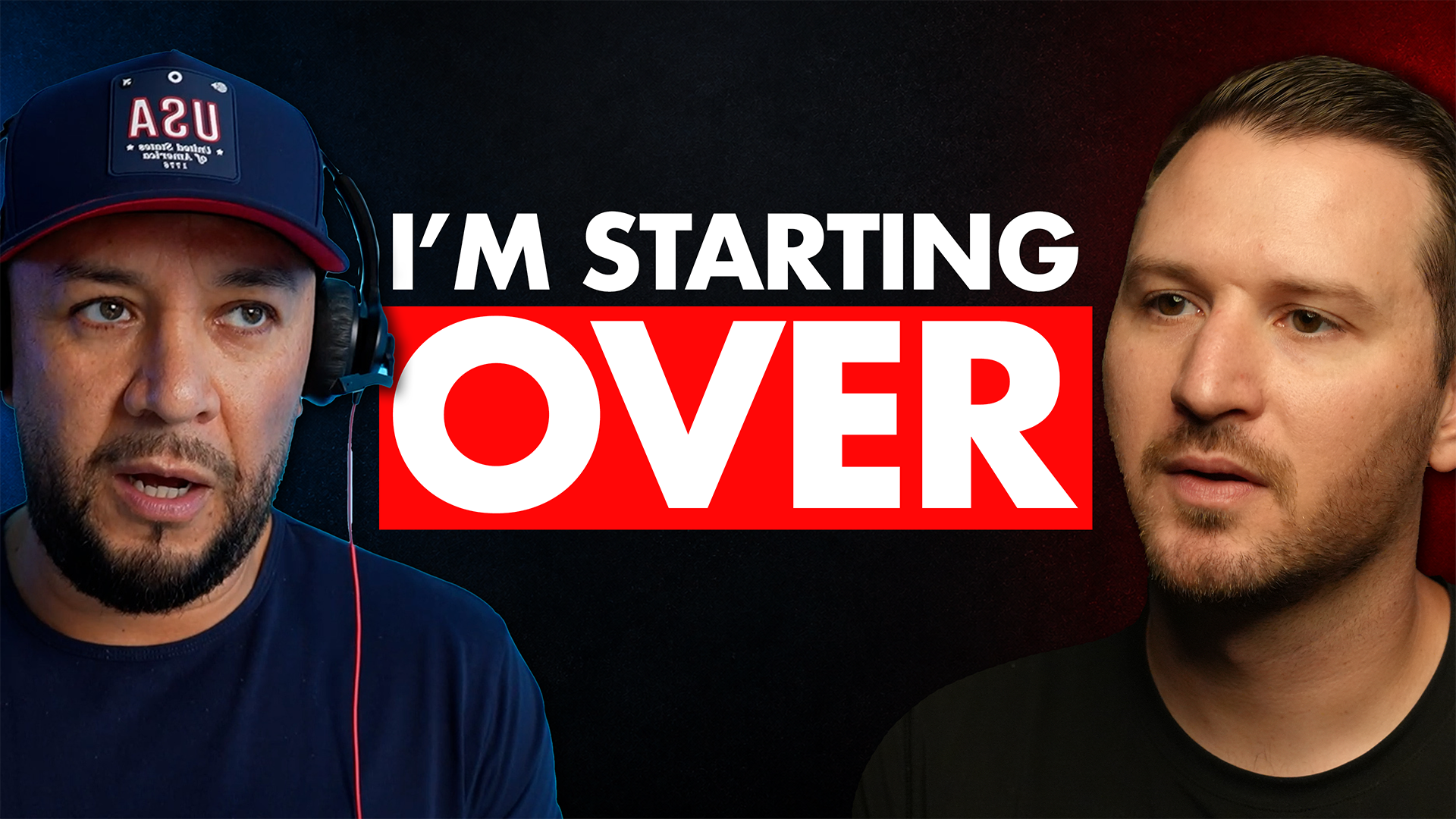
Ismael Valdez built NexGen Air Conditioning & Plumbing from $0 to $108 million in just 6.5 years. Now the HVAC and plumbing entrepreneur is back on Owned and Operated to break down how he scaled NexGen and what he’s building next.
John Wilson and Ismael Valdez break down the biggest lessons from building NexGen, why most HVAC and plumbing contractors stall below $2M, the sales and marketing strategies that drove their growth, and the mistakes Ismael would avoid if he were starting over today.
Ismael also shares what came after NexGen. He invested more than $22 million of his own money into Nuve, generated $15.2 million in first-year sales, and sold more than 110,000 units.
Now he’s turning his attention back to home services with a new goal: build an AI-powered, hyper-efficient HVAC and plumbing company capable of reaching $100M+ in revenue with a lean back office, higher close rates, and 40%+ EBITDA margins.
In This Episode:
• How Ismael Valdez built NexGen from $0 to $108M
• Why HVAC and plumbing contractors stall below $2M
• NexGen’s biggest wins and mistakes
• The sales and marketing strategy behind NexGen’s growth
• Building Nuve to $15.2M in first-year sales
• Using AI and automation in home services
• Ismael’s blueprint for his next $100M HVAC and plumbing company
Connect
John Wilson
https://www.linkedin.com/in/johnbwilson1/
Ismael Valdez
https://www.instagram.com/nuveceo/
Owned and Operated
https://www.ownedandoperated.com/
Sponsors
Quick Staffers
Hire trained HVAC and plumbing CSRs without the overhead of traditional hiring. Save $500 on your first placement with Quick Staffers:
https://www.quickstaffers.com/
Avoca
See how Avoca helps home service companies book more jobs with AI that handles calls, texts, follow ups, and dispatching without adding more chaos. Book a demo:
https://www.avoca.ai/partners/oao
More Ways To Connect with O&O
John Wilson, CEO of Wilson Companies
Jack Carr, CEO of Rapid HVAC
📌 Disclaimer: Some links may include UTM parameters or affiliate relationships, meaning we may earn a commission if you make a purchase. Episodes may feature sponsors, but all opinions expressed are our own.
What do you do after you exit a hundred million dollar business, right?
What's the temptation?
How are you thinking about that? The devil comes in and kind of whispers in your ear, it's like, hey, you don't need to work anymore.
How could I do anything other than like what I believe is the purpose I'm here, which is to build a billion dollar business?
And we came up with this product. We went from an idea to actually selling over a hundred and ten thousand units already. That's a lot of fucking third. The company's value is $170 million right now, as we stand. It's been a good two-year project.
What do you think the biggest thing you got right was? Welcome back to Owned and Operated, a top 125 U.S. business and entrepreneurship podcast. On this show, we talk about our own home service business and what we've done to scale. We talk about the industry, and we bring on inspiring entrepreneurs like our guest today to talk about what they've built so that people can learn from them. Today we are rejoined by Ishmael Valdez, and we're going to be talking about what comes after $100 million and his journey over the past couple of years since we brought him onto the show last, which I think was around a year and a half ago. Ishmael, welcome back to the show, man.
Bro, thank you for having me on, honestly. It's always good to do dope ass podcasts with people that know what they're what they're talking about. You know what I'm saying? People that are in the industry too. So thank you for having me back. Uh uh, let's give uh our audience a good show and let's make it fun for them.
Yeah, yeah, no, hell yeah. Yeah, it's uh no, it is it is a lot of fun to bring on people. Um, and I think your episode's gotten a tremendous amount of listens uh over the last year and a half. So I think uh you've got you've got an army of folks uh sort of following along. But for the folks that haven't heard of you yet, uh could you give a little bit of an intro story and then we'll start diving into um just what you've been up to for the last 18 months?
Yeah, so look, my name is Ishmael Valdez. Um I uh I've been in the home service industry my whole life. I think I I joined it when I was about 17, 18 years old. Um so it's been a uh a 20-year uh overnight success uh journey that I've had. Um I had a couple successful exits with uh in the home service industry. I, you know, um early age uh I co-founded uh uh an air conditioning uh company called Home Comfort USA with a with a guy named Ken Starn. Um we parted ways in 2017-ish, late 2017-ish, 18-ish. Um, and then I started and and founded a company called Nextion Air Conditioning uh and plumbing out of Southern California, which became one of the fastest growing uh contracting um um uh companies in the nation. Uh we went from zero to a little bit over 108 million dollars in revenue in a in a six and a half year span. Um we got acquired by uh wrench group in 2022 for um a lot of money. Uh and then we uh we just started a new venture called uh Nuvet, which is a uh a thermostat and and controls company that helps contractors retain their clients. So we've been at this new journey for about two, two and a half years already. Um, you know, been putting up some amazing numbers at Nuvet 2. And uh we're about to start our fourth venture called Prime Comfort Plumbing, which is going to be our our third contracting business. Um everything that I do is around the contracting home service industry. So whether it's a thermostat, a control, or a contracting business, it's always gonna be in the home service industry trying to help our our contractors become better operators and and and become better better uh businessmen.
Yeah. Yeah, it it's been a funny um it's it's been an interesting couple of years, I think, in the industry. I'm curious if this resonates with you too. But there's a uh I the word I'm using for it is replenishment generation. So, you know, back in like the 20 teens, all the legacy home service businesses were bought up and uh by whoever, you know, pick one, uh Heartland, Wrench, who whoever. Uh, and then sort of going into 2019, 2020, and like beyond, uh, I would consider yourself part of this. Uh these yeah, younger entrepreneurs started showing up. And businesses now, it the numbers that come off of businesses in like like my buddy Sammy in uh Columbus. Like this motherfucker is 60 million, yeah, he's 60 million dollars in like 40 months. And I'm like, dude, like this is crazy. Uh, but it's it's wild to see uh the industry turn from this sort of like sleepy industry, you've been in it forever, to like, I mean, there's some hungry young guys like coming at this thing, uh, which has just been a lot of fun.
Uh I think I think social media has gotten uh the attention of young entrepreneurs uh the uh and exposed our industry. Look, we've for the last 20, 30 years, we've been looked down upon as a as a dirty job or as a as a not sexy job, right? Plumbers, air conditioning, roofers, landscapers, you know, the what we call the home service industry has always been looked down on for young entrepreneurs or for business people in general. So it's good to see to see where we came from and where we're at right now and where we're headed to, and and seeing all these private equity and the VCs and banks get excited about our industry is is super exciting. And you know, it just it
reassures us that we're all on the same path uh and on a good path to making our industry uh an even better place for for more people to be welcome to.
Yeah, no, I totally agree. Um, I don't remember if we talked about this last time. I think you were just beginning the Nuve project, but can you catch me up to speed on Nuve? And I I mainly just have like questions, which I probably should have just reached out to you and asked you about. But like, dude, why thermostats? Like, can you walk me through it? Most home service companies don't stall because of demand, they stall because they run out of good people. Finding solid help fast is hard, especially in this industry. And that's where Quick Staffers comes in. They help home service companies build reliable virtual teams that actually understand how the trades work. Quick Staffers provides vetted, remote staffed who are already trained on Service Titan and use proven SOPs, the same as the ones that I use at Wilson. These are VAs you can plug in from day one to handle customer service, lead follow-up, scheduling support, and a ton more. They've been a huge help in scaling my team without the usual hiring headaches. Check them out at the link below.
Dude, so it was it was an interesting, um, it was an interesting problem that got that uh the that got handed to me, right? And and I sold my company in 2022 and I had a two year uh I had a two-year earnout where you know if I increase eBeta for next gen, I got a huge, you know, potential bonus. And out of the two years, um, I hit both years and I made a ton of money uh on the on both earnouts. And the third year was when things kind of really started settling in for me where where I was like, there's well, you know, if there's not gonna be another earnout or another huge bonus, it doesn't make sense for me to stick around when you know it's not my company anymore, it's their company, they're running it how they want to. They're you know, they're bringing in people, they're firing people, they're doing their own thing right there. So I had to make a tough decision on what like what do I what do you do after you exit a hundred million dollar business, right? Uh because there are two things happen. Um, temptation starts happening, right? Where where you see all this money and you see, you know, you could pretty much do whatever you want. You don't have to answer to anybody, you don't have to ever pick up a cell phone, or you're you you never have to take on a meeting, or you never have to really do anything, right? So, like that really started settling in like late 2023, early 2024. Um, when this idea about the thermostat came about, and you know, uh a buddy of mine uh named Tom Howard brought this idea to me and said, Hey, you know, um there's a huge problem in the industry right now with thermostats, and you know, I think we we need to do something about it. And we kind of started mastering or minding around it, and we came up with the initial concept of just putting the logo, uh, the contractor logo in the thermostat. Um, nothing else came about it. And then I I I kept like going back to it and saying there has to be more functionality inside a thermostat besides just turning on and turning off your unit, right? Um, and and that's when I kind of looked at the alarm company, uh the alarm company model, right? They have every every alarm company has their their logo and their and their and their contractor information inside their their alarm panel, right? So if you go to the alarm panel, you arm your your alarm, or if you click the ADT logo or the bell or whatever logo, you click on it, it gives you a 1-800 number where you can get service on it. Well, I kind of looked at the thermostat and I'm like, well, what how come a thermostat doesn't do that, right? Right now, if something goes wrong with the AC, um, the first thing people do is they play around with the thermostat. They don't feel cold there, they don't feel hot air. The first thing they do is they grab their phone and they look for a provider. Well, I saw a huge opportunity and also a huge, you know, uh uh problem that we've had for the last 20 years where where customers always do the same thing. They go to the thermostat, they play around with it, they don't get hot air or cold air, and they grab their phone and they look for a provider. Well, I said, well, why don't we just put the original provider that installed the system or that's been maintenance that system on the thermostat where it gives the consumer an easy access point where they can you know see who's been servicing it and and and go from from hey, I need help to a technician at your door from the original provider or the original uh company that's been maintenance in it. And that's when we came up with Nuve, right? We came up with the with the concept of it, we came up with the with the functionality, all the features. You know, we have five different patents that have been cleared, technology patents that have been cleared on Nuve. Um, we started in early 2024, late 2023, early 2024. We've been going at it for about two years already. Uh, first year we did a little bit over 15.2 million dollars in sales and thermostat sales, which you know, for thermostats.
That's actually that's crazy.
It's that's a lot of fucking thermostats. It's it's it's a lot of thermostats, and you know, for a thermostat.
This is all direct, right? Like this is all there's no, yeah, yeah. That's that that is that that's the hardest part about it. Oh, that would be crazy because you're not going through distributors to drive volume and like there's no inventory really direct to contractor. That is interesting.
And so we we took the harder out. So I saw what Echo B, what Honeywah, and what Ness did, right? They sell direct to the consumer, they sell distributors, they sell at Home Depot, they sell, you know, they put pricing online. So I saw that as a huge mistake that they did. They should have sold to us contractors and with no pricing online. And we, the contractors, since we're the ones installing, we should be the ones marking it up and making a profit on it. Well, that's the route I took, which is the hardest route going from from you know a B2C model to a B2B model. Um and and that's the route we took. We do we did $15.2 million our first year. We're pacing a little bit over $20 million our second year. Um, we just released a new product called Sophia AI, which is the first AI thermostat in our industry. Um it connects to Service Sign, it connects to HouseCop Pros and uh and and and we're making it easier for consumers to contact their contractor direct without touching Google, without touching Yelp, without touching social media, or what without them looking for, hey, who's been servicing our unit? Right. So I saw that huge problem in our industry, and I kind of took it as an opportunity. And we came up with this product. We went from an idea three years ago to actually selling over a hundred and ten thousand units already and in the first two years of being in business. So that's where we're at right now, huh?
That's crazy. Yeah, that is uh that is interesting. So eventually, do you think you eventually drive distributor relationship or like what do you think you do there?
Um, uh, you know, there's been talks about it. I know Home Depots approach us, I know there's been distributors come up to us. Um, I don't want to touch the the I don't want to go through distribution just because I'm I I promised myself from day one that I was gonna build a contractor-based uh product and and and only deal with the contractors, which is extremely tough for us because we could go to a distribution and start selling, you know, hundreds of uh thousands, if not millions, of these thermonsets that we take there out. The thing is that then, you know, then they'll start marking up the prices, and that's when our contractors pay more. And I promised myself that I was gonna build the product for the contractors and not go through it. So, you know, we we're still we're still in negotiations, but uh yeah, we're we're only going through through contractors right now.
Yeah, yeah, yeah. Yeah, that's interesting. Uh when as you think about, you know, this is sort of like a little bit of a two-year post-exit, I guess, conversation. But um, how much of your time is Nuve versus whatever else?
99% of my time is Nuve. Like I'm never I don't have any other ventures going. I own a roofing company. I have, you know, I have little um investments here and there in electrical companies, air conditioning companies, and you know, people that I mentor, but um 99% of my my time is Nuve. I come in here Monday through through Saturday. You know, all my content is about Nuve. Um, I'm fully focused on it. I'm fully dedicated to this product product. We are in the middle of raising our first round of capital right now. I've been bootstrapping it for since day one. I'm a little bit over 22 million dollars of my own money invested into this project. Um, you know, luckily we've had a good success with it. We sold over 110,000 units. I think the company's valued are close to 160 to 170 million dollars right now as we stand. So it's uh it's been a good two-year project. Um, I've been enjoying it. It's definitely a fucking learning curve, and it's definitely something way different than the contracting world where where you know it was a B2C model. That B2B model is a fucking grind, bro. It is uh it's a whole different learning curve, which I'm enjoying, but you know, I can't wait to to to take on a partner to help us out with some of the things that we need to get done.
Yeah, yeah, yeah. That's cool. As you think about uh a partner for that, is that like where would that fit in between in between like P and VC? And I mean that feels almost like VC-ish, right? Yep. Like it's like this is growth capital, right? That's how you would
define this.
Yeah, yeah. Yeah. So um we're probably gonna go through a bank or through a VC. Um, we're still not profitable, but we're at the midst of uh of of being profitable. So we might be able to take on a P partner here pretty soon. But um I'll my my estimate is that in the next 90 to uh 120 days, three to four months from now, we're gonna be extremely profitable where we could take on any partner that we want. So um, yeah, bro, it's been bootstrapping a product, a project this huge requires a fucking ton of balls, number one, but it also requires a ton of focus and dedication. So it's the only project I'm working on. Um, I'm fully dedicated to it. And you know, we keep innovating new controls. We're about to release a water sensor. We just released our temperature humidity sensor. We're you know bringing on the plumbing uh main to shut off out to all um uh be in one app and one one uh one one software. So it's exciting times for sure, man. It's exciting times.
Yeah, that is cool. All right, that's cool. All right, so uh you've sold uh next gen like this was four and a half years ago now. You built a thermostat, or like not even thermostat, you built a product business, like a direct uh contractor product business. Um, and you're thinking about getting big back into the contracting. Uh I guess what what do you think is gonna happen with Nuve then? If 90% of your time is in Nuve, like is that a part of bringing on a growth partner or like how are you thinking about that?
Yeah, so um part of being a growth partner is bringing on a CEO to take this public, right? I'm definitely not the face, and I'm definitely not, I don't have the brains to do something as complex as that. So um I'm actively hiring a CEO. Um you know, I'm trying to, you know, get one of these Echo B CEOs or Nest CEOs or somebody a high-level CEO to take us to IPO. Um, that's in the next 12 months. Um Prime, which is my fourth uh startup that's gonna that I want to start in April of 2027 when my non-computers open is gonna be my my my next big project. I'll still be here at Nuvet probably once a week just to you know give it some guidance and give it some vision on it. But um, yeah, I'm gonna be investing most of my time in Prime because Prime is not gonna be your traditional contracting business. Um, as you know, uh, you know, the one of the toughest things to do when you're building, when you're when you um sell multiple businesses and you acquire a ton of wealth is uh looking for the next project to keep you intrigued and keep you interested and and and really have your attention onto it because you know, as as you keep selling businesses and you keep acquiring wealth, uh a ton of distractions come about and a ton of temptations come about where you know a lot of people kind of lose themselves in in that journey once they see that kind of money in their bank account or see that kind of money um that that they acquired. So um I'm definitely bringing on, um I'm definitely building prime to be the next level of contracting. You know, the contracting world has been the contracting world for the last 20, 30 years. Nothing has really changed, right? Nothing has really changed. We've been doing the same thing over and over, whether it's you know, it's a Google-driven business to a traditional, you know, digital business into the home, into the you know, uh, the different departments of it. Um I'm I'm looking more to prime to building prime to be the autonomous model of the industry, where um we build the next $100 million business with little to no in-house support, meaning um no CSRs, no dispatching, no production, no accounting, nothing, nobody inside. Um, I feel like the next the next autonomous model of contracting, you're gonna be able to build, you know, $50 to $100 million businesses with like four or five managers, right? And everything's gonna be technicians and installers inside the home. Um, if I could prove that motto out, I think that that you know, number one, it's gonna be a very complex thing to do, which is why I'm so intrigued in doing it, because uh when it when the complexity is that high of a stake, it intrigues me even more and it and it and it drives my attention even more and and it and it brings out the best in me. So um I can't wait to figure that part out. Uh Prime is definitely gonna be a a learning curve, it's gonna be a trial and error uh company, but it's it's definitely gonna show the industry what's possible because if we can imagine if we could drive a hundred million dollar business with four or five managers and just a bunch of technicians and installers inside the home, right? Our EBITDA would be for 40 to 50 percent instead of 10 to 20 percent, and it would classify us as a tech-infused operation, giving us a bigger, you know, multiple or a bigger, you know, uh valuation than what these contractors are are used to see. So I'm I'm I'm looking forward to to building that model. It's never been done. Um, nobody's thought about it, nobody's you know, how did the boss actually execute on it, which you know tells me that there's great opportunity in in building such uh an immense project.
Yeah. There are uh people are starting to test the market with uh obviously not that far uh of like autonomous, but people are starting to drop that inside their sims, which is kind of interesting. Um there is a version of this uh in property management that is uh they're not public yet, but they're thinking about going public. And they got an extra five turns or they're hoping to get an extra five turns when they go public because exactly that they're hey, we're a tech-driven um, you know, PM business instead of a conventional. Uh so yeah, I it'll be interesting to watch over the next couple of years is some of these, like there's some big businesses out there, like hundreds of millions of EBITDA, driving this same thesis uh through, but it's it's more like they went from 20% EBITDA to 25 or 27. I don't think I've seen a 30 yet. Uh, but it it is interesting. So I think the next couple of years will sort of like walk us through what's possible uh from other industries, and then um like what credit do you get? That's probably which is probably the most important part. Like hey, is this uh is this a 10x uh 10 more turns or or one more turn?
Uh well that's gonna be that's gonna be an interesting conversation when we can prove out the model, Matt. Um, because you as you know, the SaaS industry um when they become profitable, they become you know 50, 60, 70 percent EBITDA. And that's why they're value so that that's why they're value so high. So if a contracting business could provide could provide about the same multiples as a SaaS business, then it wouldn't keep us away from being valued as a SaaS infused uh operation, right? Which which only makes the industry better. If if we can prove out a tech-infused model in the contracting world, it's only gonna make the rest of the platforms become you know more valuable. So I'm excited to do that because uh, you know, I feel like uh I can figure it out, and I feel like if I build a strong enough team, we can we can all do some pretty good things in the industry.
Yeah, accounting would probably be another example because accounting already has like 40% free cash, and I think there's examples of it getting to 50 to 60, and they're still trading full freight on that uh percentage of free cash, which is crazy. It's crazy.
Uh each department inside the operation is gonna be interesting to see how how efficient we could drive these businesses because if if we can if we can put this business on autopilot and it's just printing cash, and and uh you know PE or VC or a bank is gonna come in and be like, oh fuck yeah, I'm gonna pay you know 30, 40, 50 times the multiples, because at that time it just becomes a uh a timing game, right? If I could get my my investment back in five years instead of 10 years or 15 years, then of course they're gonna pay more for the for that operation.
Yeah, yeah, yeah. That makes sense. Uh you you've said this a few times. I just want to like click on it because we don't often have uh people that have exited their business on the show. It's a lot of like active contracts. Um, you talked a lot about uh you've used the word temptation, uh, but uh you know, I'll call it distraction, um, or really whatever you want to however you want to think about it. But can you can you walk us through like the post-close? Hey, we have liquidity, like what what's the temptation? What like what how how are you thinking about that? Because obviously you've spent a lot of time thinking about that.
Yeah, so look, the the the everybody asked me what's the difference between nection and and and and well, home comfort, next gen and newven, right? And and the only thing I could think of that that that makes it even more difficult now is that look, when we were building home comfort, when we were building next gen, we had to show up to work. Like I had to pay bills, I had to show up to to work. I had to like I had to do that. Post-transaction, you know, you get that kind of money in your bank account and you know you don't have to answer to anybody. It goes from you have to show up to work to do you really want to? And to me, it it requires more discipline when you have to, when you when you have an option of showing up to work or not showing up to work, than when you have to show up to work because you gotta pay the mortgage, because you gotta pay the the the rent payment, you gotta pay credit cards, you gotta, you know, you're living off this business, right? So you kind of have to show up to work, or otherwise you go bankrupt or you go homeless, right? And and it requires a different type of animal to come out of you when you have that money and you see that much money in your bank account, and you know you don't have to answer an email, a text message, a call, or you don't ever have to show up to another meeting. It requires a different type of animal to come out of you and a different type of discipline to come out of you to say, hey, I want to keep working, I want to keep showing up and building dope shit and building dope businesses. So the it has definitely been the hardest operation to build was Nuve because I didn't have to do it. I want to do it, right? And for me to and for you to want to do it and actually do it requires different a different type of discipline than when you're in the grind and you're trying to make make ends meet and you're you know trying to pay bills and and and and you're having to show up to work because of the immense responsibility. So that's been the big difference on it. Um that that that I've had the temptation of just saying, ah, fuck it, I'm done. Like I don't want to deal with this anymore. I don't want to, you know, answer my phone anymore. I don't want to wake up early anymore. I don't want to show up to these fucking meetings. You know, there's problems at Nuve every day. There's problems at Nection every day. There were problems at home comfort every day. And and I had to show up for nection and home comfort because it was, it was, it was a responsibility that I had, right? And and now at Nuve, there's problems here, and I still show up because I want to, because I want to be part of the team. I want to build the, I want to show these people that that they can create something special too. So it's it's it's definitely a different grind for sure, bro.
When do you feel like that hit its peak? Because I'm imagining you're you sell next gen, you've got two years of earnout, so like you're still locked in on it. Uh, and then you probably have like a wind down period. I it I my point is I don't think it was the first day, right? Of like new vey. It was probably like a year, a year in or something like this.
And like, it was the last it it was the last uh time they wired me my bonus for for my second year earno. I think they wired me like 12.2, 12.1 million dollars for my second year earno. And when that wire hit, I'm like, okay, cool. So what am I gonna do now? Right, like I'm definitely not gonna go work for uh I'm not I'm definitely not gonna stay at next for a salary, right? Like, you know, it's their business, they're run, they're making changes, they're doing that. So that's when it hit me. Like, hey, I gotta find my I gotta find something so intriguing and so complex that it's going to make drive me crazy to not want to solve it, right? It's gonna drive me nuts, literally, gonna drive me nuts to not want to work on it daily. And that's when Nuvet came about. That's when the idea came about. That's when we started the prototypes and we started investing into RD and we started really bringing the idea into into life. That's when it that's when it hit me, right? And look, I'm about to hit that next, the the the next hurdle right now. After we we we raise the capital on Nuvet and we hire a CEO. Now I'm gonna have to look for something so complex again that's gonna drive me nuts to actually want to do it because look, we're about to make a ton of money on on a on on this journey as well, right? So now you take the what I made at Nextion, what I made at uh at home comfort at Nextion and now at Nuvet, and it's a whole different ballgame, bro. Now it's gonna require a different type of um uh I don't know what I don't know what I what it's gonna require to to be able to execute on prime, right? Like I know that I want to do it, I know that I that uh I you know I kind of feel responsible to do it to show the industry what's possible in there, but I like I still have to go through that journey. And uh what I've done and what what I've done really well, bro, is that I time my my exits perfectly enough where I already have something coming in to intrigue me because that down period, whether it's a month or year or five years of down period, that is where the temptation, that is where the where the you know where where the kind of the the the devil comes in and kind of whispers in your ear, it's like, hey, you don't need to work anymore. You don't go back to drinking, go let it go party, go enjoy yourself. You deserve it. Like all those little thoughts start coming about when that transactional thing, uh that transition period goes in. So I'm I'm really, really fucking methodical of like, hey, okay, I've done what I can with Nuve. I need help with it. I need to hire a CEO that's way smarter than me that you know has thought about other things that I haven't thought about. I'm really methodical of doing that and transitioning into my next problem because I can't have I cannot have one day of zero of downtime because if I do, then that's when you know things start creeping up in my mind and that's when things go sideways.
Yeah.
Which which which you might classify me as a psychopath.
No, I feel like I feel like that's a pretty um I feel like that's a normal thing. We you know, we um we brought on uh a uh family office to help push our continued growth. We announced it on LinkedIn maybe a couple weeks ago. I don't think we've talked about it yet on the show, but I understand um yeah, I understand what you're saying. Uh I think I it it's interesting to just hear how other people think about it. Um and I'm I'm sure that my perspective will change over time. I think where I'm currently sitting is I knew I was never going to be satisfied with anything less than a billion dollar business. It's just that five years ago nobody would have believed me when I said it. But now they do. Uh and so I feel like it's still it's still like we haven't achieved the thing yet. But um yeah, personal liquidity is a little bit less of a concern. But it it it is uh it it is kind of funny because you just um I I didn't have the same uh but I think everyone's different. Like I didn't have the same, like, do I have to show up or whatever? Because it's like well, I'm not done. Like I'm we're not done. Like, you know what? I I how could I how could I do anything other than like the what I believe is the purpose I'm here, which is to build a billion dollar business. I'm good
at like two things, skiing and apparently building a plumbing and HVAC business. That's uh but but it it it is interesting. I appreciate you sharing the journey. It is interesting to hear how other people think about it.
Yeah, dude, it's definitely uh it's definitely uh you know, having this much success is definitely a been new, right? But it's also been a fucking huge learning curve of of bringing out even parts of parts in me that I didn't even know existed. Like I didn't even know how disciplined I could be. I didn't even know how dedicated I could be to something until all this started happening to me, right? Before I just thought I showed up to work and everything was fine. Now it's like, no, now you got to be methodical, now you gotta be disciplined, now you have to have consistent like there's different parts of me that keep coming out every time new successes and new new horizons come about. So that's been probably the most enjoying part for myself is is is is that.
You've probably been pitched a dozen AI tools a day by now. And most of them sound really great until your team actually starts using it. The one that I continue to come back to is Avoka. They built their platform specifically for contractors. It handles inbound calls, follow-ups, texts, web leads, dispatching, and even CSR coaching all in one place. If you're on Service Titan, the integration is rock solid, no duck taping together five different tools. What I also like is they're realistic about what AI can and cannot do. When a customer needs a person, Avoka has 24-7 live transfers built in, so nothing's gonna fall through the cracks. And the payoff is that contractors are seeing hold times disappear and booking rates increase by as much as 30%. If you're serious about using AI to book more jobs, check out Avoka at the link below. Uh I want to take us back to NextGen here a little bit. Um, and just sort of how we think about building Prime. So as you're thinking about next gen, I've got a couple of questions and we can rapid fire it. And but I I want to know biggest thing we got right, biggest thing we got wrong, and like most importantly, how do you think you're gonna do this differently? So, what what do you think biggest thing you got right was?
Biggest thing I got right at next gen, hmm, marketing. Yeah. Um I this is one thing that I tell all um uh all my contractors and and uh anybody that's close to me. Um there's three roles that uh that a that a CEO or startup has to have a CEO has to have, which is a CMO, a CRO, and a CEO all in one. Like you gotta be those three things as you start your business. I don't care if it's a contracting or I don't care if it's a a plumbing air conditioning or whatever type of business that you're trying to build. You gotta be a sales driver, you gotta be a marketer, and you gotta be a CEO, one that executes and implements, right? And um, and the one thing that I learned about myself is that I am okay at sales and I am okay at being a CEO. Um, I definitely thrive and enjoy more of the marketing side. So um what I've got right was the marketing side of it. I've learned about myself that I am a CMO at heart. Um I I I liked uh, you know, I don't I rarely uh compare myself to anybody, especially you know, great people in our in in in the business side of it, but I see myself more of a Steve Jobs type of uh type of uh operator where we're super marketed oriented, we're super marketing oriented. So I definitely got the marketing side of uh of Nection, right? Which which you know kind of trickled down to the rest of the success on it. And what I did wrong at Nexion, bro, I have a list of fucking things that I did wrong at Nection from here to fucking Mexico. You know what I'm saying? I think one thing that sticks out the most um that I did wrong at Nection was was um the lack of uh the lack of uh uh uh uh education, right? The business educational part of it was one of the things that I did wrong at Nection. Up to, you know, we were running $32 million of revenue on our third year of Nection, and we didn't even have a PL. We didn't have a balance sheet, we didn't have a cash flow statement. We were running everything based on, you know, is there money in the bank account or is there is there no money in the bank account? Right. So I think one of the big big things that I did wrong at Nextion is that I didn't educate myself enough on the business and the financial side side of it, which kind of, you know, kind of hurt us, but it also, you know, um helped us catapult that those big leaps into into the the growth that we had. But yeah, definitely I would I would say um the financial side of it, the accounting side of it, we've got really wrong for the first three years. Probably by the fourth, fifth year of of next year is when we started really fine-tuning the operation and and paying attention to KPIs, paying attention to gross profits, paying attention to all the the the different uh the different pain points and the and and the different numbers that really that really drive the business forward. So definitely um I could always improve on the on the financial and accounting side.
I think uh it's it's always it's interesting to look at business, other other people's businesses. And like this show has given us a really interesting perspective to be able to do that, where like I'm not as strong on the marketing side, right? Like I think there's all these, like people can only lead as who they are, is that is I think uh the point that I'm gonna attempt to make here. But um, like you have people who are really strong at marketing. I feel like there's some people that are just absolutely incredible sales machines. Uh, there's a guy down in Phoenix who I just admire a ton, and he's just like runs this sales organization that like I could never put together. Like I'm I'm that's just not the human being that I am. Um and uh and it it's it's it's just it's fascinating to watch. There's a million fucking ways to build a nine-figure business. Uh and um maybe just as like to the listener, I I don't know, bring whoever you are to the table. Um but I I wish that I I often find myself looking at people that are stronger at sales or stronger at marketing than I am, and be like, I wish that I was like that. And I'm like, well, if I'm like that, then I'm not like what I am, and I still put this together. Uh but it is it it the comparison game is really easy to get stuck in.
Yeah, I look, I try not to compare myself too much to it, but you know what I've noticed in the contracting world that um the the most successful businesses have been super uh sales driven, sales-driven organizations. And the and what I've noticed is that the the vast majority of contractors are really good operators, meaning they know how to take it from the point of sale to the point of collecting payment. Like they thrive on that, like they know how to get an install done, they know how to get a repair done, they know how to coordinate the equipment and installers and the material and getting the consumer involved. And they know that little side of the business, which is, you know, what I think what I what I know is one-fifth of the actual business is the operational side. And they and they and they live there on that, on that side of the which what we call the customer fulfillment. They live there because they're so comfortable there that they ignore the marketing, the sales, the accounting, all the operational stuff on the on that that matters. They ignore that because they don't feel comfortable with it. Or or or they don't want to take the time to learn it, or they're scared of it. So they live on the operational side, and that's
why the vast majority of contractors stay under $2 million because they live on the customer fulfillment department instead of focusing on the marketing, mastering the sales and delegating the operation, right? That's where that's where the the real hyper, you know, successful businesses uh um thrive, is that they focus on the marketing, they fucking, they, they fine-tune the sales process and they really, you know, have a sales-driven organization and then they delegate the rest of the operation, right? That's where most most contractors are missing.
We've talked about this a lot on the show, but yeah, people just don't understand the business that they're in. It's like it's like Ray Crock and hamburgers, right? Like you're in real estate, not hamburgers. We're in sales and marketing, not you know, insert trade here. Uh, but yeah, I mean, nothing else in the business happens unless you get a lead and then you sell it. Um I I totally agree. I think you have um you have events or you have uh, I mean, obviously, maybe it's through Nuve, but I know you've obviously there's a large Facebook group. So you sort of have access to a lot of small contractors. What are some of the other problems that you're seeing? Uh I mean, not understanding the business trend is a big one. What what are some others that you think create stall inside small companies?
Comfort. Comfort, bro. Comfort is one of the I think the comfort and lack of execution are the number two drivers that drive businesses to be under $2 million. So you got to put yourself in their place, right? Most of these guys are techs or sales guys or installers or office personnel or a manager that, you know, decided to take a chance and start their own business. Most of these guys have been making, you know, $100 or $300,000, maybe $400,000 a year. You know, having to check into an operation, you know, having a dick-headed boss and you know, having that shitty manager. Like they've been doing that their whole life. That when they detach themselves from that, they start their own business and they get to a million and a half, two million dollars, and they're taking home three to four hundred thousand dollars without having to answer to nobody. They stay in this thing called the comfort zone where everybody just stays below two million dollars. So I think comfort is the one thing that that most contractors struggle with. Uh lack of execution, bro. Which, you know, now there's so much social media and groups and and and uh and gurus and entrepreneurs have been successful, and they have so much content that they could that they could uh really learn from, but they overanalyze everything. So they they they the the the time even of execution and and the and the consistency of s execution they lack. And then and then the final thing that I think most contractors uh lack is the the personal development. They they are too scared to ask for uh they're not scared, they're too egotistic because they're they're making three, four hundred thousand and they're their own boss, and you know, everybody knows me in my in my city, and you know, I'm I'm I'm Ishmael Vald. They're they're that right that they forget to humble themselves down and so really say, hey man, how do I get to five million? Or who do I need to talk to? Or who do I need to pay to mentor me? So those are the three driving factors that I've seen contractors under struggling contractors um really, really um struggle with, which you know, is the it's the lack of execution, it's the it's the it's it's their ego getting on the way and asking for for help and really saying, hey, how do I, you know, what what's next, right? And then the comfort zone where everybody die where everybody dies in, right? They're just they're too comfortable, bro. They don't see why they should stress themselves growing it. And look what I've told everybody, not everybody's meant to have a 10 million dollar business or a 50 or 100 million or 200 million dollar business. Not everybody is meant to have one of those, but most importantly, not everybody is is is built to sustain that amount of pressure because bro, running and growing a 50 hundred, 150 million dollar empire is a fucking ton of stress. It takes away from your family, it takes away from your friends, it takes away from your from your everyday life. Like you live and breathe and die that operation. So you kind of get lost in in in the journey where where you're like, what the fuck am I doing? Or like, where am I at? Like you, you know, you you go at it for five, 10, 15 years, you come back out, and you're like, oh shit, like what happened to my life? I'm 40 years old now, I'm 35 years old, I'm 45, I'm 50 years old. Like, what am I supposed to do? You know what I'm saying? So I think uh I think there's a there's there's a lot that contractors could be doing to become a better operators, but it all it all starts with them actually like really looking in the mirror and saying, okay, cool, I need help. I need help. I need a mentor, I need guidance, I need, I need somebody to help me out with with X, Y, and Z. I struggle with this, right? It's hard for them to open up because they're the usually they're the big man. They want to feel like the big man in the operation. And and little do they know, like the best operators are the are the ones that are like, hey man, I don't know. Like, do you know? Like, can you help me? Like, where do I need help with? Or like, what do you guys need me to do? Those are the best operators, not the hey, you gotta do this, and I know this, and you guys don't know shit, and I'm this, like, those are the worst type of operators, those are the under two sub two million dollar uh operators, the ones that think they know everything. The best operators, the Tommy Mellows, the Aaron's, the Hoffman's, uh, the the hundred million dollar guys in our industry. You talk to them, they're fucking they got a notepad and a pen, and they're asking questions, and they're you know trying to figure out what they're doing wrong, and they're always taking notes, and they're they're always, you know, in their eyes, they're always doing everything wrong, and they're always trying to learn. Those are the best type of operators.
Yeah, yeah, I agree. It is um, it is we host a lot of events at our office, and it is it is funny. It it pretty much mirrors what you're saying. Um, there's a there's a like beat your chest mentality in the trades that is kind of funny. Um, we have a guy locally who he he really you really like we're pretty friendly, right? Like we run a show that's like top of the industry, help hundreds of thousands of contractors a year. Like, we're pretty open book on everything we're doing. Um and uh interacting with him was really funny and I would have helped him, uh, but the way he approached it was really odd. So I was just like, I'm dude, I'm out on this. Um, and but then he happened to come to an event in our office and uh found out that we were about 50 times his size, and he was like, Oh, I should. It's
like, dude, we would have helped. Like, like we're good. And like, just like I need help. Like, I don't know. Like the whole reason we run a podcast is literally to learn. That's why I launched this six years ago, and that's why I still do it today. It's like the best mechanism of learning ever. You can just bring smart people on and ask them whatever the fuck you want for an hour. It's amazing.
That's you know what I call that? That's a Tommy mellow pick. The Tommy Mello play was, oh, let me open up a podcast. Not for me. Let me open up a podcast so I could ask questions for from all these high-level entrepreneurs and successful people. Tommy's been running that play for you know 10 years already. Look at what he built. He built something special at A1. He's you know about to exit his company for over, you know, a ton of fucking money. Yeah. Yeah, yeah.
It's not public yet. Yeah. Amen. Um, yeah, awesome. So you're getting ready to go back into home services. Uh, so it sounds like part of the reason is interest, part of the reason is you're wanting to be mentally stimulated. Um, are you excited about the operating again? And like, what do you think you would do differently? Like, we talked about next gen, the good, bad, differently. Uh, like, how are you thinking about team formation in those first couple months? Like, what's it look like?
Um, just so my first uh I'm gonna uh I'm gonna order about 50 vans and trucks um from you know day one. Um, it's all gonna be techs and installers. Uh no, no uh comfort advisors no more, no sales guys. That high pressure bullshit inside the home is out the door. These customers are getting way too smart. They already know the play of I'm just a technician, they bring in their senior technician and sell them a new system. That shit's gone. Uh, most contractors don't know that customers are catching on to that, and and and that's why they have a very low conversion and very low closing percentage. So it's gonna be tech techs and installers inside the home and then little to no in-house support. Like we're gonna automate from the voice, from the voice agents answering the phones to the dispatching, to the accounting, to the production team, to our marketing, like everything's gonna be super autonomous where where there's little to no in-house people in it. Um look, one of the reasons, one of the things that I've always thought about is like, why don't we have a live PNL? Yeah, like why do we have to wait for 30 days to perform 30 days and then wait two weeks or 10 days to give us the result from the last 30 days? Like we are we have so many tools and so much software and so much you know um features and so much new things in our industry that why don't we have a live PL that tells us exactly every time we sell a repair, a tune up, uh install, or every time we close out a job, or every time we collect payment, or every time you know a technician clocks in and out, and commissions go out, right? What why don't we have something that's telling us how we're doing that day, that week, that month, instead of waiting 10 days after the month's over to find out, oh shit, we fucked up here, we fucked up here, and we fucked up here. Let's go work on it for the next month. And then and then implementing a couple changes and then doing it all over again. Like there's so many questions that I have that we've been doing wrong for for the last you know 20, 30 years, which look we haven't been doing wrong. That's the best of our capabilities. Like there hasn't been an there hasn't been an Elon Musk that came into our industry and said, Hey, why are you guys doing it like this? Or why haven't you guys done it this? Or have you guys ever thought about this? Or have you guys ever tried to cut this? Or like there's so many questions that we should be asking, but nobody's asking them because you know everybody's running a profitable or a sustainable or they're running an okay operation. So any huge changes they're scared to do. So that's where that's where I have the upside on building prime. I'm gonna start from scratch. I'm not gonna hire a CSR, I'm not gonna hire dispatchers, I'm not gonna hire office managers, I'm not gonna hire anybody inside the house. I'm gonna figure it out and I'm gonna go through the trial and error. And yes, people are gonna hang up, and yes, people are gonna give us bad reviews, and yes, but we're gonna learn from all that. We're gonna learn how to make that autonomous model that I'm trying to build better and better with all those mistakes that people are too scared to do right now because they already have a 10, 15, 20, 100, 500 million dollar business. I have the upside of coming in with a clean slate and really questioning everything that we do inside the operation. So, what am I gonna do different at Prime? I'm gonna question everything that we've done for the last 30 years and I'm gonna implement brand new ideas that that I've been thinking about for the last four or five years that I've been working on Nuve, right? There's a ton of things that I want to change. I want to I wanna build the first uh the first uh um uh subscription model instead of a membership model. Right now we you know we get we sell memberships that haven't even happened, right? So why don't we start monitoring all these systems and start charging the consumer to monitor the system just like the alarm company uh charges us, right? The alarm company charges us to monitor our our sensors and our security in our window. Why don't we charge the customer to monitor their air conditioning, their plumbing, their electrical, and their comfort and their safety inside the home? Why don't we pull out that model, right? Where there's little to no labor in the subscription right now. You sell a membership, there's labor and material and parts attached to it. Well, that membership you're losing money on. Why don't we sell, why don't we provide a subscription-based model to our consumers where we're monitoring their systems and their safety and their comfort inside the home with no labor attached to it, no service attached to it. Right? There's so many things that we need to do work on inside the operation that that is gonna drive the 40, 50, 60 percent EBITDA, which I which that's what I'm excited about, making sure we question that in the next couple of years.
I have a I have a thought, and I'm just curious how you're gonna react to it. Something that I've um noticed more and more, and this is on your sort of like uh, you know, uh homeowners I identifying gaps inside the sales process more. Um the big winners, I mean there's a lot of great examples of companies that are growing like crazy right now. Yep. Um and what has been really interesting to see is a lot of the companies that are growing at rates that are just staggering are they counter the legacy information. So like best practice is gonna say charge a premium. The companies that are the new entrants to nine figures are the low, like they're like basically the discount guy. Um I as you think about more of an autonomous back office, I'm assuming that like pricing strategy has been a part of that conversation. How are you thinking about like the discount guy versus the can we be the highest in market?
No, that this look so look at the the last 30 years of the operation has been you know, hire somebody, increase price, hire somebody, increase price, hire overhead, increase price, spend marketing, increase price. Like we've been increasing prices, pricing ourselves, pricing ourselves out of the market. Like that's why you have the next gen and the service champs and the ghettos and all these all these companies that that have been legacy companies for the last you know 20 years, they're charging 20,000, 30,000 for a system. They need to charge that because the way the operation is set up, because because that's the only way to make profit. They don't have an efficient right. So the way the way I see it is look, all these legacy companies that are a hundred million dollar plus companies all have a 20,000 plus average ticket to maintain profitability.
Yeah, right.
They are closing between 30 to 40 percent. That means 60 to 70 percent of the clientele they touch goes to their competitor. Yeah, well, they're like this right now, their price is like this, and their closing percentage is like this. They're too scared to do this because they don't know what's gonna happen. I believe there's a happy medium where the where the consumer will pay between $10,000 to $12,000 for a premium service and product, and your fucking closing percentage will skyrocket to 80, 90%. Now, imagine what that does to your marketing spend, to your retention, to the rest of the operation. But everybody's too scared to to actually pull the trigger on that because everybody's like this right now. Everybody, all the PE groups, all the the let's say 25 mil uh companies plus, they're all like this. They have a high average ticket and a low closing percentage. Nobody has done this. Yeah, nobody has increased the closing percentage and decreased the the the average ticket because everybody we've been taught that our price is driven, our profit is driven by by our average ticket, not by our closing percentage. And that's what I'm gonna question on. So, my goal is to build the autonomous model where I can sell $10,000 full HVAC changeouts and still make four to five thousand dollars on that ten thousand dollar change out. I can sell fifteen thousand dollar changeouts with ducting and IAQ and everything and still maintain 30, 40, 50% profitability on it, right? That's all the only way we're gonna accomplish that is by becoming hyper efficient inside the operation, not by pricing ourselves out of the ballpark. Make sense? No, make sense, or do I sound crazy?
Well, no, no, it uh it makes sense. There's also a couple of examples proving you right. Um, I can think of four examples right now that are a hundred million dollar businesses that um that do a version of this right now. Uh and it's all over the country. Like one's on the West Coast, one is on the East Coast, and one's like Heartland, uh like uh Colorado area. Um, but they're doing a version of this and sort of proving it right. And that's what has us thinking about it too, because um the companies that we see moving, and there's a lot of examples of companies that do charge their premium and are still growing, but 2026 is just a different market than it was in 2021. And uh price is becoming a strategic advantage. And if you have the ability to be half the price of whatever your local Apex shop is, uh that is a win. That's a way to win. Um, yeah, it's it's becoming a bigger and bigger conversation, and I think it should be because I think, yeah, to your point, we've all been told to just raise price for the last 30 years, and uh now the companies that are growing the fastest are taking the opposite approach.
Of course, bro, of course. Look, if you could mix in a a um a healthy average ticket, right? You where consumers look at the price and they're like, oh shit, everybody else is at 1520 and you guys are at 10,000, 12,000 for this amazing company, like you're gonna explode, you're gonna take market share. Now, the the the key is to become profitable at that average ticket, right? And that's what nobody's been able to figure out. Nobody, right? Like, even those companies that you're talking about, though, like they're still trying to figure out how to become more profitable or how to become sustainable, right?
I I won't I won't air their name online, but I'll I can tell you after. But one of them's nine figures at a 20% EBITDA with a sub-10,000 average ticket. So let's go. It's a hell, it's a hell of a business. Of course, what they could what would be interesting is way more autonomous work. And I think that is the you know, high teens, low 20s EBITDA to 30. Um, and I think it's I agree with you. I think it's achievable.
Yeah, look, um, yeah, look, my message has been the same since day one. Um, yeah, I got into this amazing industry when I was 18 years old. I've I've I haven't stopped working since I was, you know, 12 years old selling newspapers to, you know, building, you know, nine-figure businesses, about to, you know, uh trying to build my first 10-figure business. My message has always been the same. Let's expose the industry to the 18, 20-year-olds out there that are lost in this world and don't know if they should go to college or if they or where they should, where they should go to make money. And and my message is simple come and join the trades. If you are 18, 20 years old and you don't know if you want to go to college or you don't, you're not meant to go to college, or you don't see yourself going through college, come join the trades. Come join the trades because I promise you, there is great opportunities for any 18, 20 year old that is hungry, that is, you know, uh um uh respectful and and that has good work ethic that could come into our industry and make you know generational wealth for for themselves and their families. So that's been my message. That's gonna be my message for the rest of my life is trying to expose our industry to the masses of the worlds where they look at a plumber and they go, like, Dad, I want to be like that plumber, or how did that plumber get that you know, Rolls Royce Phantom, or how did that air conditioning tech afford that Lamborghini, or dad, who who owns this $20 million house, right? Like that's been my message and that's been my mission from day one, and I'm gonna continue doing it. So, you know, that's my closing statement for you guys.
Yeah, hell yeah. Awesome. Well, thanks again for coming back on. It was a ton of fun to hear your uh like what you've been up to for the past couple years. I'm looking forward to watching the plumbing company get built, Prime Comfort Plumbing. That's gonna be pretty sick, dude. And uh I hope that you guys are successful in your race for Nuve. That sounds like a that sounds like a huge learning curve. That sounds like a ton of fun.
It it is, man. It is, but I'm enjoying every day. So even though it's a stressful, you know, uh uh operation and there's problems everywhere that needs to be solved. And you know, the complexity of this of this business is what's kept me, I mean, you know, for the last two, two and a half years showing up for my people and my and our contractors.
Yeah. Hell yeah. Well, thanks again for coming on. And if you like what you heard, make sure you like and sub, folks.
.png)