

Are Facebook and Instagram ads an overlooked growth opportunity for home service companies?
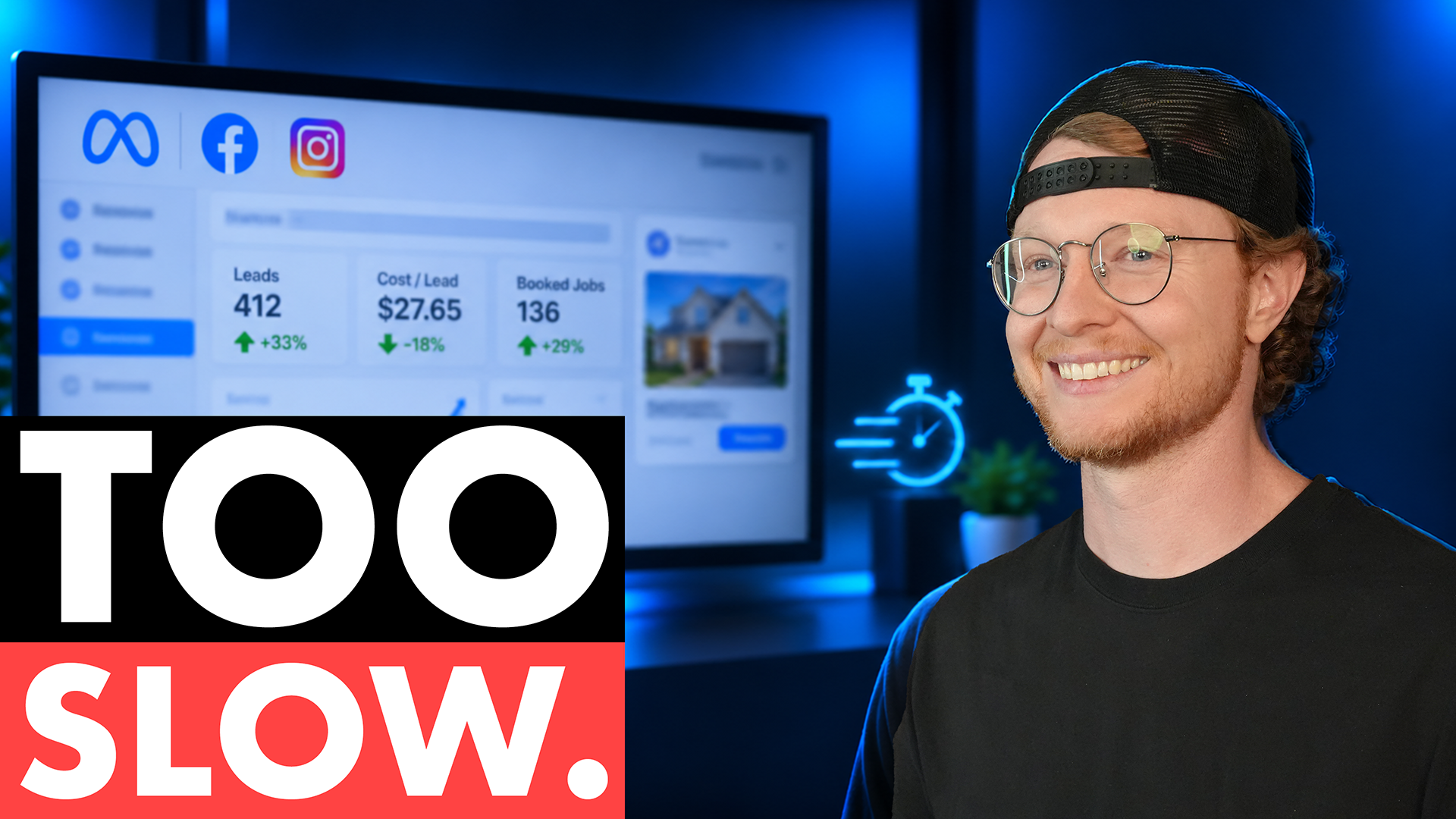
This week on Owned and Operated, Sam Preston takes over as host alongside Will Ramos, Meta Ads expert at Service Scalers, to break down how HVAC, plumbing, and electrical contractors can use Facebook advertising to generate leads and book more jobs.
They discuss when Meta Ads make sense compared to Google Ads, how to create offers that attract homeowners, and why strong sales teams and fast follow-up are critical to making social media advertising profitable.
Plus, Will shares how calling leads within 60 seconds helped him achieve a 92% contact rate and a 33% appointment booking rate, along with practical strategies for improving lead quality, setting budgets, and scaling successful campaigns.
Whether you're just exploring Meta Ads or looking to improve your existing campaigns, this episode breaks down what it takes to turn Facebook and Instagram advertising into booked jobs and real revenue.
━━━━━━━━━━━━━━
In This Episode:
━━━━━━━━━━━━━━
- Why Meta Ads are an overlooked opportunity for home service companies
- Facebook Ads vs. Google Ads: generating demand versus capturing existing demand
- When contractors should start investing in Meta advertising
- Creating offers that turn Facebook and Instagram users into leads
- Why speed to lead matters for booking more appointments
- Reducing junk leads with qualifying questions and SMS verification
- Starting with a $100/day Meta Ads budget and scaling campaigns
- Using retargeting to improve overall marketing performance
━━━━━━━━━━━━━━
Sponsors
━━━━━━━━━━━━━━
Service Scalers
Get more high quality leads with marketing built for home service companies. Book a free strategy call with Service Scalers and see what's driving real jobs: https://www.servicescalers.com/?utm_source=oao_podcast&utm_medium=referral&utm_campaign=podcast
Quick Staffers
Hire trained HVAC and plumbing CSRs without the overhead of traditional hiring. Save $500 on your first placement with Quick Staffers: https://www.quickstaffers.com/
━━━━━━━━━━━━━━
Connect
━━━━━━━━━━━━━━
Sam Preston
Service Scalers
https://www.linkedin.com/in/sam-preston-a682103b6/
Will Ramos
Service Scalers
https://www.servicescalers.com/
More Ways To Connect with OAO
John Wilson, CEO of Wilson Companies
Jack Carr, CEO of Rapid HVAC
📌 Disclaimer: Some links may include UTM parameters or affiliate relationships, meaning we may earn a commission if you make a purchase. Episodes may feature sponsors, but all opinions expressed are our own.
Why are home service companies suddenly talking about meta?
Even most of the home service companies that are running meta ads right now, they're not running them super well. Who is the right person to be running meta ads? The way that we want to think about meta is a way to get in front of new customers. Clients that have that strong sales organizations make us look really good. Some of our best performing ads, when we're talking about like actual fear-based, hey, notice you and your family have been getting sick a lot more. I wonder if there's mold in your attic. My wife bought into that one.
We got everything fixed out because of that. Let's say you got 20 grand a month to spend in ad spend. How much of that do you think should go towards Meta versus Google?
Yeah, so
what's up, everybody?
My name is Sam Press. I'm here from Service Scalers. If you're a regular listener, you're probably wondering who is this handsome devil and where the hell is John Wilson? Well, my guys, I have commandeered this podcast. He has no idea I am doing this. And uh I'm taking over. So if you do me a favor and just spam that like button and subscribe button, like I want this to be the most liked and subscribed episode so that I can just like shove it in his face and be like, yo, I'm better at podcasting than you are. So just like wherever you're at right now, if you're driving, stop, hit that subscribe and like button, leave us a five-star review, and uh we can that way, you know, I can uh do what good friends do and uh you know, boast about how good I am. Uh for those of you who do not know me, I run service scalers. We work with home service companies across the country, helping them with marketing and growth and making that money. Uh, so that gives us a really unique view on home service and what's actually happening across the different markets and the trades and advertising platforms. And uh, one of the biggest conversations that are happening right now in the world of uh home service marketing is meta-ads. And so I thought, what better person to bring in to talk about meta-ads than somebody that had a meta-ads marketing agency and sold it and now works at Service Scalers. So, introducing Will Ramos as our guest today. Welcome, Will.
Well, happy to be here, Sam. Uh yeah, just a little bit more about me. I sold my Facebook ads marketing agency in August of 2025. And since then, I have been working over at Service Scalers on meta ads and a bunch of other cool things that we're working on, but really excited to have this podcast today to talk about how Meta can work for home service. I think it's one of those platforms that maybe some people are scared of. Maybe some people have tried it before and it just hasn't worked, and they've gotten a bunch of junk leads that never pick up the phone and never actually want to buy. So I'm sure at some point in time in this recording we'll be able to get to the to those types of questions. But yeah, excited to be here.
Love it, man. Love it. Will's a really good friend of mine. We actually started our agencies six years ago together and just grew separately. Um and then he ended up selling his agency and coming and working with us, and it's been one of the best uh decisions we've ever made. Uh, you know, we I just like working with my friends, and so this has been fun. Uh, and Will is a very talented uh person. So if you've ever had the privilege of working with him, phenomenal meta ads, phenomenal ad everything he does here. Um so Will, let's start with the obvious. Like, why are home services service excuse me, why are home service companies suddenly talking about meta? Like I feel like the talk and the buzz is just going up right now.
Yeah. Um, so I think when why meta is really interesting, whether people realize it or not, is it's a lot less competitive than a lot of the other platforms that you're on right now, right? So when we think of anything Google, so PPC, LSA, GMB, SEO, all of those different channels, which are great, and which I highly recommend that you get those down first before starting Meta, um, they're competitive. And especially if in you if you're in a high competitive market, um PE's been a thing that's kind of making PPC harder to you know to compete in. Um and even the aggregators, right? You're still competing against at least four other people for that same lead. And Meta has a really interesting opportunity, has a moat around it where a lot of companies still aren't playing the meta ads game. Um, whether they're scared of it or whether they don't know how to do it correctly, or whatever those things are. But I think that Meta is one of those tools where if you want to separate and kind of look at a blue ocean strategy for home service, meta's the place. Because even most of the home service companies that are running meta ads right now, they're not running them super well. Almost, I would say 90% of the conversations I have with other home service companies running meta ads is without even looking at their account, I can look at their ads and ask them three questions and know if they're do like if they're having good results with them or not. And it's just an undeveloped, an underdeveloped platform or an under-the-radar platform for a lot of home service guys. So I think that the ones that are eyeing it are like, oh, I think that there's opportunity here, and there there is.
I've wasted a lot of money on marketing agencies that made pretty reports but didn't make the phone ring. And that's why we use Service Gailers at Wilson. They work exclusively with home service companies and focus on what actually drives leads PPC, local service ads, SEO, Google business profile, and everything you need to get in front of homeowners who are ready to book. The best part is that you know exactly where your money is going and what's producing
real jobs. If you're ready to stop guessing and start getting better leads, head to the link below, book a free strategy call, and let them know that owned and operated sent you.
Help sell me on meta ads. Because I, as a Google Ads guy, right? Like I've always done Google, um, I've always demonized meta because you know you gotta get the sell, so you gotta make something the problem. Why would you go with meta when Google has super high intent? So uh the the pitch that I always talked about is we like to lead thirsty horses to water. Someone's already having an HVAC problem and searching for it. And so you're just literally going, yeah, you have an HVAC problem. Great, we sell HVAC services. Boom. Meta, they're scrolling, they're not looking for HVAC services. They're they're trying to figure out what the sports uh or you know, the highlights of uh a sporting game, or they're they're looking through their their kids' uh albums or something like that, and you're interrupting them to sell them an HVAC system. Like, how does that work? Why would Meta work in that situation?
Yeah, I think what we'd want to do is first take a step back and say, like, when does it start to make sense to use meta? Right. And so I talked to a lot of different uh home service companies working with service scalers, and a lot of times people are like, Well, we really want to try out meta ads right now. And then we go in and we ask, like, okay, well, how many leads are you getting from LSA? How many leads are you getting from PPC? Are you using aggregators? And to your point earlier, it's like, yeah, we we kind of want to be in the place first where people are already looking for us because those are going to be our T balls worth of leads. If somebody types in, you know, AC replacement near me, right? Like we want to show up for that all day long. And if we're not showing up for that yet, meta's probably not the best place to start. Like you need to get those Google channels working and running to be able to take advantage of those hot downfunnel prospects. Now, where I love Meta is the aspect of getting in front of people who aren't searching for you yet. And this is the good and evil side of meta, right? Like you said, when people are sitting on their computer or on their phone and they're just scrolling and they see an ad, like they're not necessarily looking for you at that moment, right? Which makes them a lot cooler of a lead. They're probably, unless you have a great intro offer, like somebody isn't sitting on their couch watching TV, scrolling through their phone, being like, boy, oh boy, I hope I get an ad today for somebody that has a $16,000, you know, AC replacement that I can click on and give them my information and then call them right away. No, absolutely nobody like nobody's thinking about that. Now, again, are there certain times where when we're running ads, we can get in front of those types of people? Yes, absolutely.
But the way that we want to think about meta is a new or is a way to get in front of new customers and kind of get our foot in the door, right? So if we're taking the the idea that, hey, I'm a I'm a person on the other side of the screen and I just get an ad, what would be something that would make me click it to be interested in whatever this company's offering, right? And so one experience that I've had that we've had a lot of luck with was attic insulation. Okay, and an ad for attic insulation in and of itself isn't that sexy or fun or very clickable, right? Who nobody really is thinking again, man, I'd love to have some new insulation in my attic. That would be sick. Nobody thinks about that, like nobody cares. Doesn't matter how gross it is, right? Like they don't, and and most of them don't know, right? And I think that this kind of applies to a lot of home services that there's a lot of a lot of consumers that have no idea like what could be wrong, and they're just kind of living with it, right? So the way that I like to kind of frame meta ads when we're talking about offering a specific service like attic insulation is like we're not here to say, hey, get your attic insulated for $3,500. Like nobody will want to click that, and that's not interesting. But the way that we kind of want to use meta is to either help like push on a pain point or get somebody to where they want to go. And I think that home service is really positioned for pain points when we take it a level deeper and we say, okay, what would fresh insulation in someone's attic, how does that actually change their life, right? The easy one is your electricity bills. So it's like, hey, is your electric bill out of hand? If you have that on a meta ad, right, and somebody's scrolling through and they just got their electric bill within the last week, and it was absolutely crazy, and they're like, how is it this high? They're immediately gonna see, they're immediately gonna look at your ad and be like, what is what is this all about? How can this company help me reduce my electric bill? And they don't care at this point how that's done, right? It could be a new system, it could be addicted insulation, it could be whatever. And then we want to use the rest of our ad real estate after we kind of hit on that pain point to be like addict insulation can help lower your electricity bills by over 43%, right? Send us your electricity bill, and we'll say we'll tell you how much new attic insulation we think we could save, right? Or whatever those types of things are. I think that the energy one is often overplayed too. Like that's the easiest one for most of those types of services. Some of our best performing um ads when we're talking about like actual fear-based, is like, hey, notice you and your family have been getting sick a lot more? Question mark. Hmm. I wonder if there's mold or rodents in your attic. My wife bought into that one. We got all our insulation, we got everything fixed out because of that.
That right now.
Absolutely, right? Because what do people actually care about in their home? They want their home to be clean, they want their home to be safe. And so if we can make our services relevant to those types of issues that people are facing, then we have a lot better chance of getting them through the door. Way too many times I see home service guys literally advertising like a generator, just a picture of a generator. And it's like, nobody's like, oh, I'm gonna go buy a generator because I saw it on a Facebook ad. Oh, it's only $14,000? That's nothing. Like, that's not how the average consumer thinks. But if storm season's coming up and they're worried about being out of power for three days and how they're gonna keep their baby's bottles warm, a generator starts to make a lot more sense, right? Yeah, and so again, like these are the types of things that we need to when we're talking about meta ads, it's not again, it's not that you can't get just generic ads and get a response from it, but we it's such a great opportunity to let people know why they should be doing it, right? And that is like the example I gave you is a direct response example. Like what we're trying to do is we're trying to evoke a little bit of fear, we're trying to get them to fill out a form, and then we want our team to call them as soon as we absolutely can. But there's other aspects of meta too, which is again, you know, brand awareness that are a lot harder to measure. And again, I don't think that most companies under 10 million a year need to run brand awareness campaigns on Meta. But I mean, the impressions and how many times people in your local area will see your logo that will help feed again the other channels like Google, you know, PPC, LSA, all of those different things, like it makes a big difference. But I would say when we're thinking about meta ads, it you know, we could either do direct response, fear-based types of ads that kind of get people to take action and move on this service. Or the second thing is, you know, intro offers, right? So if you're you know an HVAC guy in the summer's coming, and again, um we if especially if the heat hasn't been on all year, there's a lot of furnaces about about to get turned on and it's gonna smell like something's on fire, right? So it's kind of like hey, get your fall heater checkup before winter comes, right? Winter is coming. Make sure that your furnace works so your family doesn't freeze to death. Now you probably don't want to put it out like that, but you know what I'm saying. Like, and it could be just a little intro, hey, this is an $80 tune-up. But when we're talking about these intro small ticket jobs, right, the goal of that meta lead for that tune-up ad that we put up is not to just go and make eighty dollars. It's to go get in front of a homeowner and talk to them, do the tune-up, and if they need anything else, that's your opportunity to sell them more, right? Meta ads are great at getting our foot in the door. And if you can get your foot in the door and then offer more services or stay in touch with your customers, so when they do have a problem, they're not going to Google, they just know, hey, we had this one company that did a tune-up for us, you know, three months ago. Like we have their magnet on our fridge, we're gonna go ahead and give them another call.
I think that was my first experience in in meta-ads was uh actually your client that we were we we started. I I came in as kind of like a fractional CFO. CFO. CMO. I did not do their numbers. You do not want me doing your numbers. Uh marketing, yes. Numbers, no. Um but I came in and the first thing I noticed is one, they were spending a huge amount of money on Google Ads, which is awesome. Um but two, meta was sitting there at 30k a month and they were closing, and it was a great return. Um, which a lot of my clients really struggled with it, but they were not struggling, they were crushing it. It was a primary lead source, they
loved it. Um so it kind of gets me into the question of like who is meta-ads like who is the right person to be running meta-ads, and who are the wrong type of companies to be trying meta-ads right now?
I think we kind of already hit on the spot of like, hey, you need to have your you know, your Google channels all firing before we like really take a deep dive into meta. Uh, and the way that I like to talk about like who it's for and who has success with meta, are organizations with strong sales teams or CSRs in place. Okay, so again, since these leads are not as high intent as they are coming from Google or even an aggregator, and we'll kind of get into that point in a little bit. But by the time they fill out the form, whether that's on your website or the lead form that you're using, if you don't call them within 60 seconds, they have probably seen another 10 ads go across their feed, and they might have filled out another couple forms for a bunch of different things, right? So if your team is not positioned to call a lead within 30 seconds or within 30 to 60 seconds of that form being submitted, you're not gonna have that much fun with meta ads because you're just gonna run into a bunch of people who don't pick up, who are asking, like, oh, did I actually submit that form? Like, that's one of the comp most common things that I hear from people that run meta ads. It's like, I'm gonna all these people, and they're like, wait, I submitted. Well, I I didn't submit anything. And it's like, yeah, it's just their attention span is about that of a goldfish because Instagram reels have fried all of our brains that they legitimately do not remember filling out the form. So then, you know, you just go and ask the question, it's like, well, what's the best way to help people remember if they filled out a form? Call them as soon as you can. And if you can do that, then you'll you'll make a lot of money with Meta, right? Um, and I always kind of relate it to aggregators, right? So, Angie, when you get a lead from Angie, they're gonna sell that lead to four other people. And if you don't call that lead within nine like 60 to 90 seconds, that phone number has been absolutely blown up. And they're that the homeowner on the other side is thinking about changing their phone number. Where meta's somewhat similar, it's just that we're not competing against other direct competitors, we're just competing against all of the advertisers on Meta to fight for their attention. So when you get that lead, you need to make sure that you call it quick. And if you don't, you're gonna hate it and you're gonna say you get a bunch of junk leads, people who never answer the phone, all of those types of things.
I kind of want to dive into that phone call real quick, uh, just a little bit more, right? Like, I assume that that your CSRs have to be trained a little bit differently on how to handle like a lower intent lead versus just somebody that is looking for an HVAC company right now. Um, can you talk, walk me through like that phone call? What is that like?
Yeah, so again, this is gonna be one of the first initial interactions that somebody has with your business, right? So I think that what what our main goal once we get on that phone call is to get somebody to the house, right? We don't we're not trying to upsell them or cross-sell them or anything like that. Is like, hey, if you're running that tune-up offer, you're saying, hey, saw you just submitted some info about getting a tune-up. I could have a tech out there, you know, by this time tomorrow. Here's what's gonna happen. Do you have any questions? Can we get that scheduled? Right? Straightforward and simple. And if they have any questions, you can kind of field those. But we're not, we're not trying to go into, you know, again, having a conversation about replacing any of their units or anything like that. It's like, again, that phone call's priority is to just get somebody to walk in the door, have a conversation with the homeowner, help them out with the tune-up or whatever that offer is, and then go in, you know, if we need to sell them more things after that point, awesome. That's great, and that's really what we're looking for. But the primary goal is to just get us there, right? We're not trying to get anybody to sign the dotted line right on that phone call because they're likely not ready. They weren't thinking about your service 45 seconds ago, and now they're on the phone with somebody. So we kind of have to respect that and just lead the customer to what the next best step for them is, which is booking that appointment and getting somebody out to the house.
Are you following up immediately with a text message as well? Like the text message going out to try to connect them and get an appointment and you're calling them?
Yeah, absolutely. Like, um, so I ran a test with meta ads with my own money. Tell the story. This is great.
Most home service companies don't stall because of demand, they stall because they run out of good people. Finding solid help fast is hard, especially in this industry. And that's where Quick Staffers comes in. They help home service companies build reliable virtual teams that actually understand how the trades work. Quick Staffers provides vetted, remote staffed who are already trained on Service Titan and use proven SOPs, same as the ones that I use at Wilson. These are VAs you can plug in from day one to handle customer service, lead follow-up, scheduling support, and a ton more. They've been a huge help in scaling my team without the usual hiring headaches. Check them out at the link below.
I had a client and we were running meta-ads for them, and it was actually a really high-ticket product, right? Or a high-ticket, yeah, high-ticket product. It was tiny homes. And um, the client came back to us and he kept saying, He's like, Man, none of my none of these leads are booking at-home consultations for my $250,000 starting at Tiny Home. And I say, hmm, that seems odd. So the first thing that we do is we go in and we are going through the different leads that we've been generating, and there's certain things that we do on Facebook uh that you can implement. It's called SMS verification. So it's kind of like uh if you're logging into Google and they make you they send That code to your phone, meta lead forms have that same that same feature so that you can make sure every lead that you get has a legitimate phone number. Like never get a bad phone number from Meta again, is essentially how that works, right? And so, all right, we know that they all have good phone numbers because if to become a lead, you have to do the SMS verification. And then it's like, okay, let's go through and like look at some of these addresses that we're getting through to see if the quality of these leads is actually good. So as I'm scrolling through, about one in every three leads had a two to four million dollar home. And so I'm sitting there and I'm looking at the lead sheet and I'm like, man, these are great leads. And he's like, nobody's scheduling. So I go back to the client and I say, Hey client, um, how soon are you calling these leads to get them booked for an on-site consultation? He's like, Oh, I don't call my leads. I said, Why don't you call your leads? And he goes, Well, if they were actually serious, they would just book it. And I'm like, My brother, my brother, they don't know what to do next. They just filled out a form asking you for more information. Like you were supposed to be the steward to your service for them. Like the client, like, again, nobody was sitting on their couch looking for, like, man, I hope I get an ad for a $400,000 tiny home that I could put up in my backyard. It's like, no, they saw it and they're like, oh, this seems interesting. Maybe I need more room for my kids, or maybe my mom's moving back in, or whatever that may be. Here's my information. I hope somebody reaches out to me to tell me what the next step is. So, anyway, I told him to call the leads. He didn't want to call. And I, this was like at a point in life where I was just kind of frustrated with this trend happening. So I said, you know what I'm gonna do? Is I'm gonna go run the same exact ads with the same form with a different logo in a way more competitive market, and I'm going to try to book consultations myself and let's just see what happens. Okay. So for the client that we have, we probably spent about $22,000 and booked maybe like four or five on-site consultations, and I think we sold a couple of them, right? One or two, which is great. I mean, still honestly a great return on investment. I do bad. And he wasn't even calling his leads, right? Like that was the other crazy thing. So I spent about eight or nine thousand dollars of my own money running these same ads in a different market. I made it a goal to myself that whenever a lead came in, I was going to stop what I was doing. It didn't matter if it was six in the morning, it didn't matter if it was 11 p.m. at night, I was going to pick up the phone and I was going to call and text my leads and try to book a consultation. So what happened? So with me having getting a calling and texting the prospects within 60 seconds, I got a 92% contact rate on every single lead, and I booked at home consultations for a service and for a service that starts out at $200,000 at a 33% rate. I was booking one in every three leads that I got for a $200,000 price tag service, and it was on my ads and on my form. So the people that I was getting in touch with already knew at least I was booking one in every three leads that I got for a $200,000 price tag service. I can confidently say, hey man, I'm not just telling you to do it. I did it, I spent my own money, and I booked a lot of consultations because of that. And this is on a product or service that costs 10 to 20 times more than the average home service ticket is. Dude, I tried. Comes to be there's a lot more about building tiny homes than just knowing how to do leads, but we were booking consultations.
We have the leads part down. So if anybody out there has tiny home, like they really wanted this to go, we got you on the leads. Um we'll call this for you.
Uh oh, dude, that's amazing. Yeah. Yeah. Pretty crazy story, but I think it goes to show just the importance of speed the lead. And it also kind of goes back to all of the clients that we work with. Who are the clients that make the most money with us and service scalers no matter what they what channel they're running from? They call their leads quick. They have a strong sales organization. Oh, yeah.
Clients that have that strong sales organization make us look really good. We are way cooler in that situation. And I also say people that run meta ads make us Google ads people look a lot better as well. Um, I remember uh I was running an HVAC campaign, and that you could tell like year over year we were doing better, but we started doing really good. And of course, because you know I I am who I am, I started taking credit for that. I was like, oh man, this is doing really good. Google, like all the optimizations are great, we're running it up, let's go. Um, and then suddenly it's the the the it started to drop a little bit on the performance. I was like, what the happened? And so I was trying to dig into it, and I realized during this time, this guy started running meta ads in the same period, and he killed it because it wasn't working. Realizing that Google and meta were playing that game, we were getting better Google results because they were running meta ads campaigns on the back end, they just didn't weren't good at attribution, they weren't good at sales, but it was still affecting how good the Google Ads campaigns were working. So I truly believe that once you get to a spin, like I don't know, I don't know what that magic number is, but I would say like if you're already spending 20 to 30 grand on Google ads, you should also be trying to uh allocate some budget to a meta ads campaign because all of your campaigns will work better because of that, and vice versa, right? Like if you're already spinning on medads, you have a really good meta-ads game uh game plan, running Google Ads, all both campaigns will feed off of that.
It's crazy because it's almost like advertising works, you know? It's almost like putting your company in front of people will lead to more people calling your company. It's weird that it works that way.
Whoa.
Um okay, let's talk budget, right? Like how much if you've got uh let's say you got 20 grand a month to spend in ad spend, how much of that do you think should go towards Meta versus Google versus um anything else?
Yeah, so this question I get all the time, and it's always like the classic marketing answer, it depends, right? And I'll kind of frame it like this. If you were running ads and you're just like, I only want to do, I only want to get people who knew who need new HVAC systems, right? $16,000, and that's all I want. I don't want to talk to people about an intro offer, I don't want to do any of that. Get prepared to pay a lot of money for a lead like you would on Google because there's not that many people that need it right now, and it's I mean, you're you're you're fishing in a big pond of people that may or may not be looking for this, right? So it's not like you're not gonna just start meta-ads on $100 a day for a $16,000 service and just think that you're gonna get $25 to $35 leads. Like the cost of your project is going to be semi-equivalent to how often it's needed, and or I'm sorry, the cost of your leads are gonna be tied to how expensive your product or service is and how many people actually need it at that time, right? Similar to how Google operates in the when like it's summer and winter, it's like, man, your HVAC ads are gonna be working a lot better, and your installation ads are gonna be working a lot better because there's a lot more people that need you right now. And then in the spring and fall, when it's more temperate, your HVAC ads aren't gonna be that great because people have the windows open and they're not thinking about their AC unit, right? So when we're talking about budget, it's kind of like okay, there's the seasonal aspect of like when are we running, what are we trying to do? But usually what I tell people is start with an intro offer. How can you get into somebody's home, do something valuable for them, and get the opportunity to sell them something else? And if you start with an intro offer, that's you know, around $100 for an inspection, a tune-up, whatever those things might be, I would start with a hundred bucks a day, right? That's $3,000 a month. And you're gonna be able to get clicks to your lead form. You're gonna start to, you know, generate some leads. You probably get anywhere between two to four leads a day, right? And you can kind of run that. And then as soon as you kind of find the flow, the ads, the offer that are turning into consistent revenue, meta's really fun because it's a lot easier to scale than Google too, because we can just get in front of more and more people in our service area, where on Google we're just relying on people searching for us, right? Google is demand capture, meta is demand generation. And so if you can find something that your homeowners really want that you can provide, it's like, man, what an opportunity to get out in front of them. And Meta, I don't know if a lot of people know this or not, is one of the cheapest advertising platforms to get in front of net new people. It's cheaper than radio, it's cheaper. How many people actually need it at that time, right? Similar to how Google operates in the win like side of your shop, you know, saying get your new AC today, or something like that, right? Yeah, or the little wavy noodle dudes. Those that might be cheaper.
Yeah, yeah. Um, dude, I actually love that. Um, like people talk about like putting up billboards all the time. You you you could put up a Facebook awareness campaign, get those cost per um view super low, way cheaper, uh, and just get a bunch towards um uh bunch of views and brand. I was even looking at it, I think it was Gary V who was talking about like you know, the uh Super Bowl uh commercials and how much they spend to get that many views and that you know 15 seconds on a Super Bowl commercial where you could just spend that same amount on Facebook ads and you would get significantly more views uh in that same time frame and probably more than 15 seconds.
Yeah, I mean to put some perspective on that the average cost to get in front of a thousand people, so to show your ad on a thousand screens on Meta is gonna be anywhere between twenty to forty dollars per 1,000 people. Right? So that's pretty cheap. It's a lot cheaper than Google, right? Like that's that's the truth. Um but it's also a lot lower intent, and that's why it's less expensive, right? Is because you're not you're not in a pool of people that are looking for you right now. And we're we're also just talking about cold traffic, net new customers from Meta. The other advantage of Meta too that a lot of people um don't realize is retargeting. So if you're running SEO campaigns and you're getting a lot of organic traffic through your SEO strategy and your Google Business Strategy and anything else that's bringing traffic to your website, Meta is a phenomenal tool to follow those people around Facebook and Instagram. You can you can say, like, okay, Meta, I only want you to show these ads, and maybe they're testimonial ads or review-based ads, or this is how we work, or about the company to build a little bit more trust with those types of people. But you can follow those people around, Facebook and Instagram, so that they don't only just see your website one time. It's like once they're on your website, you could have them on your audience list for 180 days. And you're just there. You're like standing outside of their house, half of your face that they can see through the window, you know, just always there, just waiting.
Uh and that's that's our aim, really, is just to be that person that you're always there. Always for your customers. Uh, it's worse than uh Jake at State Farm. Uh you can call, like you can call Jake whenever you want, but we are always there. Um yeah, no, love that. Are there any type of uh industries that like should or shouldn't be in meta, like uh fencing or you know, plumbing electricians or HVEC, like is there a type of company that you've come across, you're like, yeah, these guys really like appliance repair. Like, is there a type of company that shouldn't be on meta versus you know, really absolutely need to be on meta?
I think it's expectation setting, right? If you have a really high and in-demand service, so any of our mainstream trades, plumbing, HVAC, electric, insulation, you know, all of those different ones. It's like there's probably something that you could offer a homeowner that they don't know that they need. And meta's a great opportunity to do that, and I think that you should play that game. Uh, also, as a fundamental, I believe that marketing is never a bad thing. Obviously, we want to be able to track where our budgets are going and what type of ROI that that's bringing. But let's just say you do something that's pretty niche that doesn't happen a lot, like foundation repair, I think is a good example, right? Foundation repair, super high ticket, usually. Like there's a lot of work that goes into that and all of those things. But I wouldn't start a meta campaign for them and be like, hey, in your first three months of running these meta ads, that you're gonna make, you know, you're you're gonna get five hundred thousand dollar prod projects, right? Like, I don't think that that's how it's gonna work. Where if you're in one of those trades that's like less in demand, but it's high ticket, meta's a wonderful opportunity to get people on your email list, right? And I'm talking about guides for like um, is your, you know, is your basement wet? Right? Get our guide to figure out why these might be the things because you're likely like those types of things have to turn into really big issues before people are ready to take action. And one thing that's really hard for us to do on meta is time the market, right? We can't go into the back end of meta and say, hey, meta algorithm, go get in front of people whose foundation is cracked and they need it to be repaired, right? Like that's what Google is. Um, but what Meta is, is it kind of allows us to get in front of those types of people. And again, for any of those long sales cycle or need it, only need it, you know, in really far out increments and there's not that much demand, get them on a list, right? Because now you can get that person and you can market to them for free via text and email for eternity, right? So whether that's a PDF guide or whether that's those types of things, now again, I wouldn't recommend a foundation repair company start with that as their marketing strategy. It would be more of a, hey, you are, you know, you've you're hitting most of the volume you can in your area, you're on the aggregators, you're doing SEO, you're doing all of these different things. Here's another tool that we can use to increase the amount of people that you're getting in front of on a daily and weekly basis. But I think that I think that almost any home service business could use Meta. It's just is the timing right for you? And are you prepared and are your expectations set correctly that you know it's not gonna it's not it's just not it's just not Google. It's just a different game to play.
All right, Will, I'm gonna hit you up with five uh just quick hitter questions, answer one sentence, give them the deets without the fluff. Uh let's do this. How much should I start spending on uh Facebook ads?
At least $100 a day, more if you have a really, really high-ticket service and you want a lot of leads. How long does it take to get results? We've gotten results for some clients where we turned on an ad campaign and in two hours we were getting leads through the funnel. I would usually say 10 days. You know, 10 days is when you can start to get an idea of what your average cost per lead might be or getting close to that. Um, and then when we're talking about so that's lead results, and then sales results are you know, how long does it take you to figure out how to get a hold of the customer and then how to book them? Uh videos or still images? I love both. I love static images because we can get our offer across and a customer could ex understand it in less than four seconds because it's just words on a screen. I love video because it builds a lot of trust and also lets us communicate more about what we do and how it helps. So you should use both, but they both have different functions.
Love it. Uh, what size company should be thinking about meta? Is it one, two, five, ten million? Like where should we be thinking about this?
I feel like around five, because if you're around five million, then that usually means that a lot of your market, like your demand capture marketing channels are up and running, and then you're starting to look for new ways to get in front of more people. Uh, so I think that I would say, you know, between probably three and five million would be a good time to start looking at it. How to stop getting junk leads. Yeah, so junk leads, here's here's the rapid fire on this. Put your price on the ad somewhere. Then you don't get people who are surprised when you talk to them on the phone that it costs a certain amount of money. Number two, use the meta lead forms. Don't worry about landing pages when you're first starting off and do two things: ask at least two qualifying questions, kick out the people who don't have the budget, who aren't homeowners, who aren't any of those things, get them out of your funnel and add SMS verification on. Then what that means is that every lead that you get knows the price of your offer, is a homeowner in your service area, and has a valid phone number.
Uh, great. Anything else you want to make sure you talk about on Meta?
Don't be scared of it. It's not rocket science, and I think the biggest thing is our ads should be we should have a strong intro offer. We should communicate the benefit of what our offer does for the client in the ad. And we need to call our leads quickly. You do those three, you do those three three three things right, and you're gonna make more money. Like you're gonna make money with meta ads. If you're having a problem with low quality leads with meta, we'll fix it, and then I'll call the leads for you and I'll show you that you're just doing it wrong.
Love it, love it, love it. Will thank you so much for joining me today in uh the mutiny that has started uh on me taking over John's uh uh owned and operated podcast. Uh, if you were listening today, I really appreciate your time. You made it to this point. There's just so much love for me uh to you for listening. Thanks for being with us. Uh, we want to grow with you on and help you get to that next level in uh your home service journey. Uh, if you liked what you heard, hit that like button, hit that sub button, uh, let John know that I was the best host you've ever heard. You know, throw in a comment uh whether you like mine or John's better. You know, just like which one? Uh you're just gonna be all John, trust me. Like uh and uh yeah, I appreciate uh wherever you're at. Uh unless you're driving, please don't like and sub right now. Just you know, just keep driving. It's okay. We'll be fine. We'll be fine. Thank you so much, and we will see you on the next one. Peace. Thanks, Sam.