


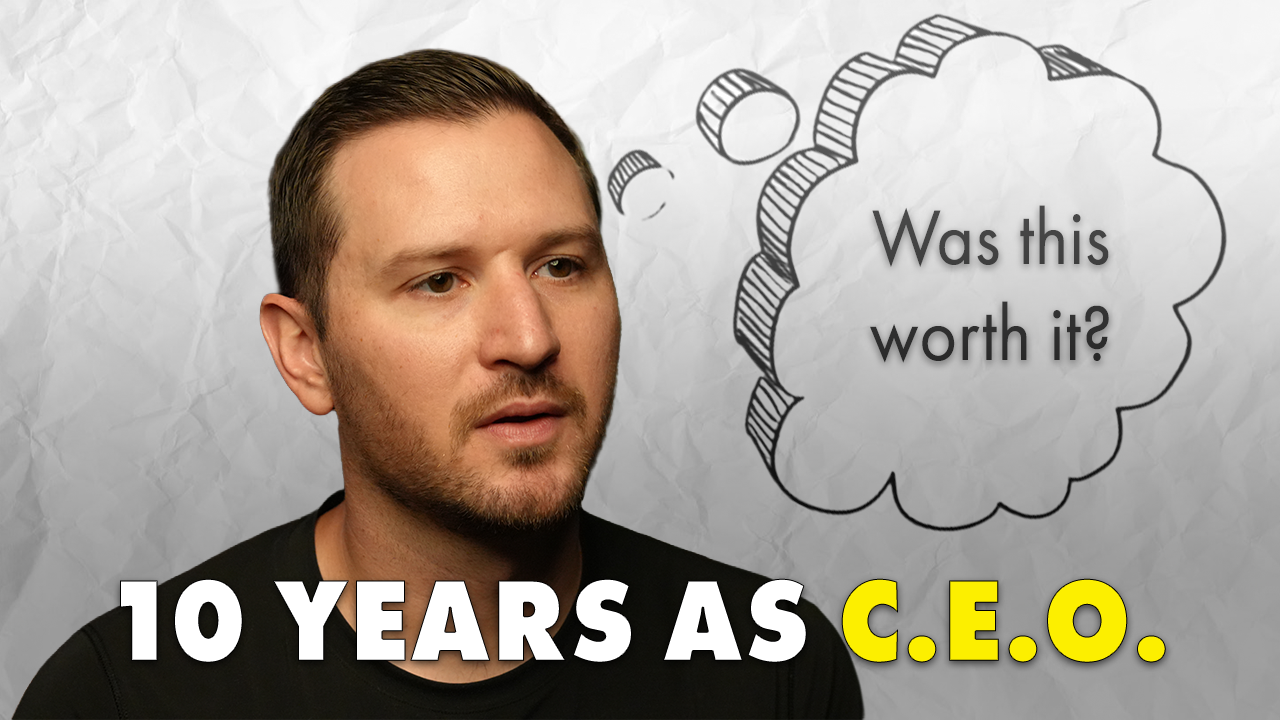
Everyone sees the wins.
Revenue milestones. New locations. Team growth. Industry recognition.
What they don't see are the decisions behind the scenes. The uncertainty. The sleepless nights. The moments where you're making million-dollar decisions with incomplete information and hoping your judgment is good enough.
I'm wrapping up my 10th year as CEO, and one thing has become very clear:
No one ever truly feels "ready" for leadership.
Here are 10 lessons I've learned that nobody prepares you for.
1. You Don't Feel Like a CEO
For years, I assumed the people ahead of me had everything figured out.
They didn't.
The more successful leaders I met, the more I realized they were experiencing many of the same doubts I was. They had confidence in their ability to solve problems, but they were still figuring out the next step just like everyone else.
I didn't really start feeling like a CEO until we crossed roughly $20 million in revenue. Even then, the feeling wasn't permanent.
There are still days where I wonder whether I'm the right person for the job.
The difference is that when I look backward, I realize we've consistently made the right decisions for the business. That's often how impostor syndrome works—you rarely give yourself credit while you're living through it.
2. The Problems Become Less Obvious, Not Easier
Early in business, problems are straightforward.
You need more customers.
You need to hire someone.
You need to improve sales.
As you grow, the problems become gray.
Should you acquire another company?
Should you expand into a new market?
When is it time to hire a CFO?
How much risk is acceptable?
These decisions often come with six- or seven-figure consequences, and you'll never have perfect information.
The best preparation isn't knowing every answer.
It's building a network of people you can call when you don't.
3. You Carry the Weight Even When Nobody Sees It
Owning a business looks exciting from the outside.
Freedom.
Flexibility.
Financial upside.
The reality is different.
Every employee is depending on you. Every payroll. Every strategic decision. Every mistake.
People often say they want to "be their own boss."
In reality, you become responsible for everyone who works alongside you.
That responsibility never completely turns off.
4. Leadership Means Disappointing People
One of the hardest lessons is realizing that leadership isn't about making everyone happy.
It's about making the right decision.
Over the years we've gone through layoffs, branch closures, and other difficult moments that nobody wanted.
Those conversations weren't enjoyable.
But avoiding hard decisions usually creates even bigger problems later.
Your responsibility is to make difficult choices respectfully while doing everything possible to reduce the impact on the people involved.
5. The Loneliness Is Real
Leadership can be surprisingly lonely.
Not because you're physically alone.
Because there are decisions that only you can make.
There are concerns you can't always share with your team. There are pressures your friends may not fully understand.
That's why having peers matters.
Whether it's fellow business owners, mentors, or trusted advisors, every CEO needs people who understand what they're carrying.
6. You Become the Bottleneck Before You Notice
Almost every growing business eventually runs into the same problem.
The owner becomes the bottleneck.
Every decision funnels back to one person.
It's easy to justify.
"No one will do it exactly how I would."
But growth requires trust.
The hardest hires aren't simply talented people.
They're people you trust to make quality decisions without you being involved.
If everything depends on the owner, eventually the business stops scaling.
7. Success Doesn't Feel Like You Think It Will
For years, hitting $10 million in revenue felt like the ultimate goal.
It consumed my thinking.
Then we got there.
My reaction?
"Okay... what's next?"
The goalpost moved almost immediately.
Ten became twenty.
Then thirty.
Then one hundred.
Success isn't a finish line.
It's usually another starting point.
8. You Have to Stay Human as the Company Grows
Leading a team of 15 people is very different from leading 150.
As organizations grow, connection becomes harder.
Employees can begin feeling like numbers instead of people.
This is an area I'm still working on.
Some leaders are incredibly gifted at building relationships at scale, and I continue learning from them.
Growth should never come at the expense of humanity.
9. Your Business Can Only Grow as Much as You Do
Businesses rarely outgrow their leaders.
If you're not improving your judgment, communication, resilience, and leadership skills, eventually the company hits a ceiling.
The business can only carry as much as its leader can carry.
Personal growth isn't optional.
It's part of the job.
10. Sometimes There Is No Good Decision
One of the biggest leadership myths is that there's always a perfect answer.
There isn't.
Sometimes every option is painful.
Sometimes every path involves tradeoffs.
In those moments, leadership becomes choosing the least damaging option and having the courage to move forward anyway.
You won't always have a clean solution.
You just have to keep going.
The Biggest Lesson: Lead as Yourself
For a long time, I tried to become the version of a CEO I thought I was supposed to be.
Books told me how leaders should act.
Podcasts told me how CEOs should communicate.
Eventually I realized something important.
I still needed to improve.
I still needed to learn.
But I couldn't become someone else.
When I stopped trying to imitate other leaders and leaned into my own personality, everything became more natural. The business accelerated. The team connected more deeply. Leadership felt sustainable because it was authentic.
You don't have to become someone you're not to build a great company.
You simply have to become a better version of who you already are.
Final Thoughts
After 10 years as CEO, one thing stands out above everything else:
Nobody has all the answers.
Every leader is navigating uncertainty, making imperfect decisions, learning from mistakes, and trying to leave the business better than they found it.
The companies that endure aren't led by people who know everything.
They're led by people who keep learning, keep adapting, and keep showing up—especially when the path forward isn't obvious.
.png)