


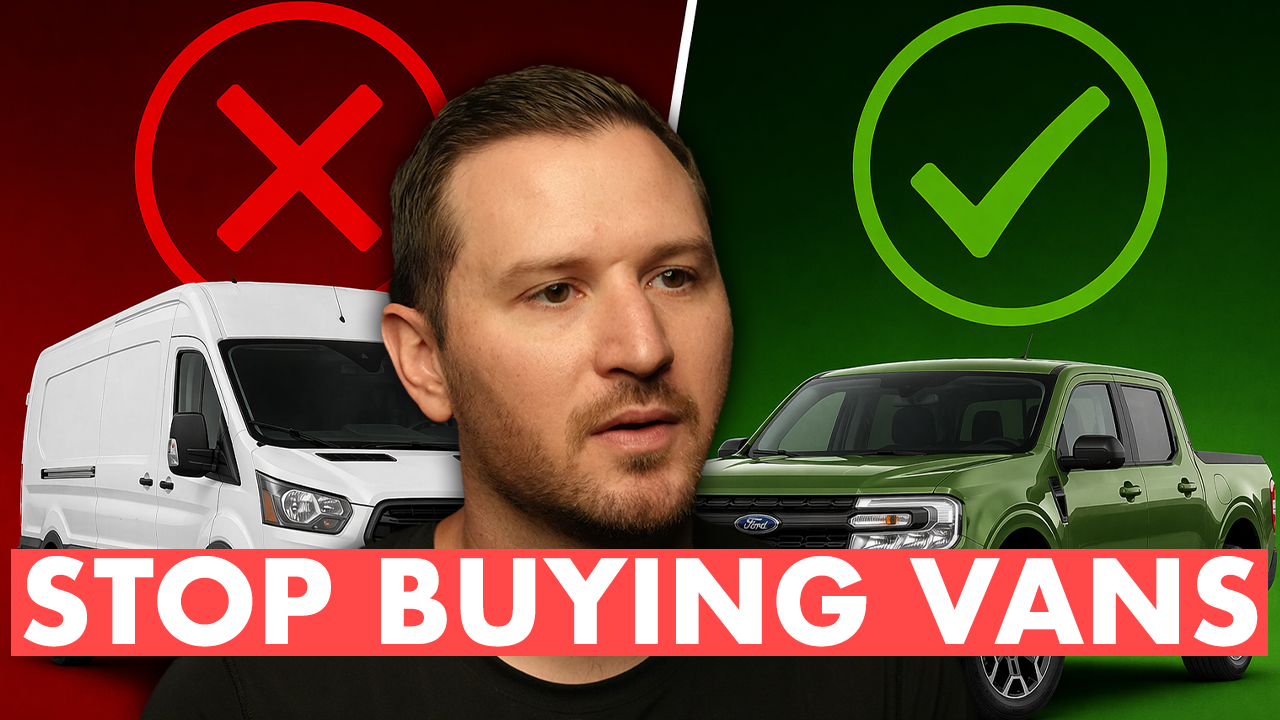
The best operators treat it like a strategy.
In this episode, John and Jack break down how to actually think about fleet management—from financing vehicles to choosing the right trucks—and why most businesses are overspending without realizing it.
They walk through the five main ways to buy vehicles (cash, loans, lines of credit, and leases), the real differences between operating and capital leases, and how programs like Ford’s line of credit can accelerate growth.
But the biggest shift isn’t financing—it’s vehicle selection.
Instead of overloading expensive service vans, they explain why smaller, lower-cost vehicles can improve efficiency, reduce unused inventory, and significantly lower operating costs across your business.
If you’re trying to scale your service company, your fleet decisions will either unlock growth—or quietly drain your margins.
In this episode, you’ll learn:
- The 5 ways to finance service vehicles (and which to avoid)
- The difference between operating leases vs. capital leases
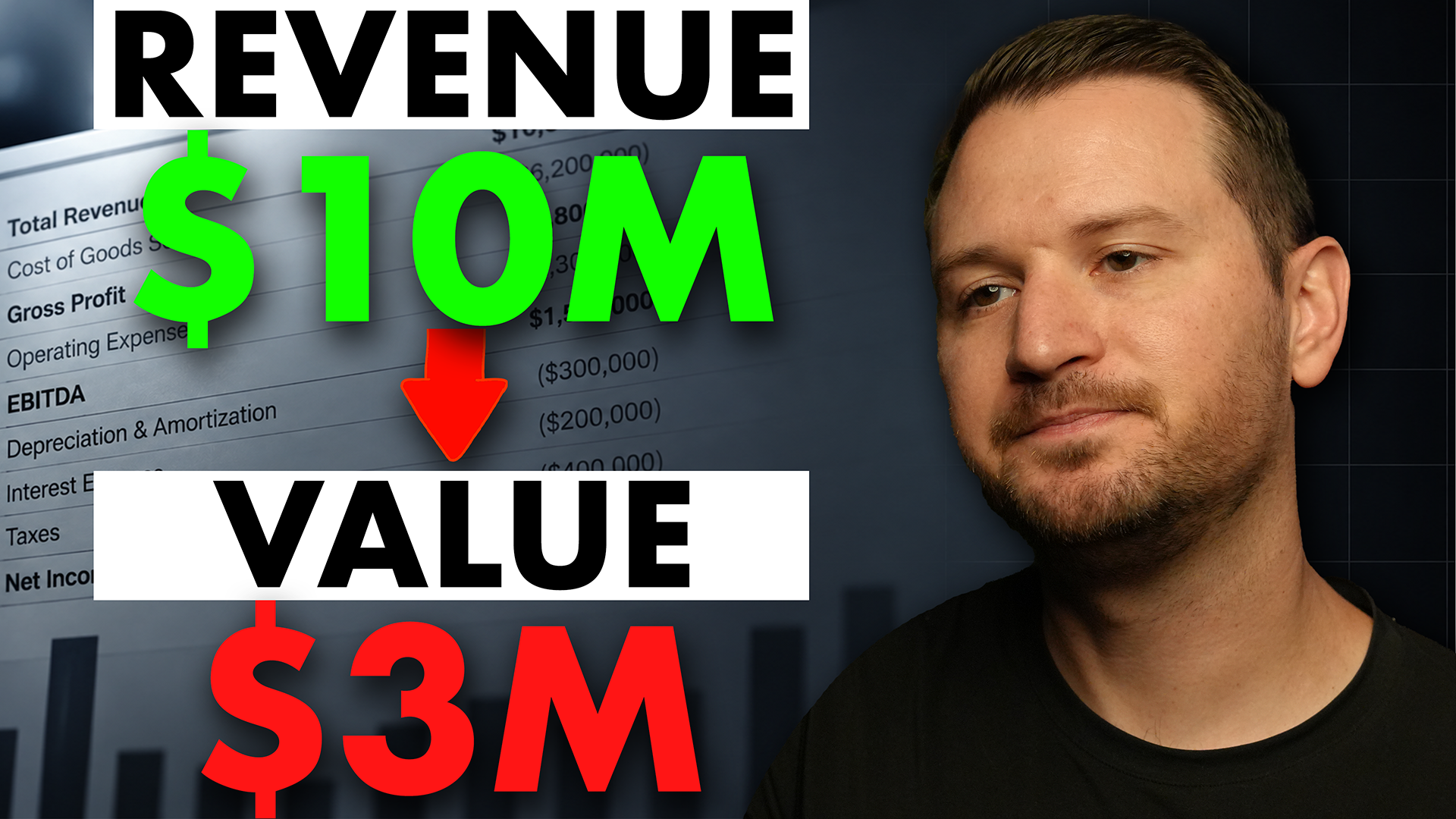
- How fleet decisions impact profitability, cash flow, and valuation
- Why smaller vehicles can outperform fully stocked vans
- How to structure your fleet for growth, efficiency, and flexibility
Whether you’re running 5 trucks or scaling past 50, this episode will help you build a smarter, more efficient fleet.
Host: John Wilson https://www.linkedin.com/in/johnbwilson1/
Guest: Jack Carr https://x.com/thehvacjack
💼 Extra Special Thanks to Service Scalers!
We’ve been partnering with Service Scalers to maximize our Local Service Ads (LSAs) and optimize our Google My Business profiles, and the results have been incredible. With hundreds of thousands in sales and 900+ calls in a single week, GMBs are now our top-performing organic lead channel.
Want to learn how Service Scalers can do the same for you?
🔗Check Them Out Here
⏱️Brought to you by The Military Veteran
If you’re running a home service business and hiring feels slow, risky, or you’re just not seeing the leadership talent you need, TMV can help. They connect companies like yours with exceptional military veteran leaders, people who’ve already proven they can execute, adapt, and lead under pressure. And they do it fast, with a white-glove process that saves you weeks and avoids costly mis-hires.
Want to see who’s out there? Book a Free Coaching session Below
🔗 https://themilvet.typeform.com/to/BDwkmCU0?typeform-source=www.themilvet.org
More Ways To Connect with O&O
John Wilson, CEO of Wilson Companies
Jack Carr, CEO of Rapid HVAC
📌 Disclaimer: Some links may include UTM parameters or affiliate relationships, meaning we may earn a commission if you make a purchase. Episodes may feature sponsors, but all opinions expressed are our own.
What to buy? There's only one answer, just fabric. The Ford line of credit, they freed up half a million dollars for us to buy vehicles, and because our vehicles are 20 to 30 grand, it ended up being able to buy essentially 20 vehicles. I was really shocked at how little information they needed to give me. Like $120,000 dump truck. They're giving a 2 million sub, $2 million contractor, half a million dollars to go buy cars. Million. It's wild. So our total fleet value is $3 million or something on enterprise. Our liability to them is a million and a half dollars. We pay them 60 grand a month. That's line of credit. The next one I would avoid if you can, and that is. Welcome everybody. Thanks for joining. We did a podcast episode, uh, that sort of inspired this webinar 'cause we had a lot of questions come up on Facebook group or dms or whatever that pod did. Numbers, which is kind of funny. Um, so we're just diving a little bit more into fleet strategy. We're gonna be talking about. What type of vehicles to buy, how to set them up. Uh, buy versus lease is one that's come up three times now inside the chat. Again, if you have any questions, just throw 'em inside that chat, and we're going to, we're going to get to them as we go. So I think we'll just start off with repeating a little bit of the core argument that Jack and I had on, uh, that episode. I don't know, was that like two weeks ago or three weeks ago or something? Yeah, a month ago. Yeah, so, uh, Jack and I, uh, both um, basically stopped buying service vans for our service businesses and we started moving over to Mavericks and I think it opened up, like we can talk about Mavericks if people have specific questions about that, but I think it opened up a broader question on fleet strategy and how to think about building your fleet in a way that makes sense. Um, most of us are probably bootstrapped, um, bootstrap businesses. Uh, so everyone, obviously fleet is a really big expense. Um, so like figuring out how to implement it and drive it and grow it as you're growing your business is complicated. So, Jack, you wanna walk through like the different ways that you guys have. Thought about fleet, you're four or five years into your business, like what have, what have you guys done? What have you not done? Yeah, I mean, the original way that everybody thinks about fleet, I think is, is really interesting. You, you, you buy a small business or you start a small business, you have a truck, you go out and buy a truck. You probably lease it conventionally through either personal loan or you get your first business loan. Um, or maybe you just go out and use some, some cash off the, the balance sheet to go buy. Yeah. And then eventually for growth purposes, you'll realize that that's unsustainable. Um, there's, there's multiple ways to do it, right. We've talked about you purchase vehicles that are under certain. Limited miles. Mm-hmm. Or you, uh, start to go through a leasing program like Enterprise, but Enterprise requires, uh, I believe it requires what, 15 vehicles to start. So there, there I that yeah, there needs to be a prior strategy before you even get to that point. And what we did is we kind of, uh, found an in-between where we weren't buying trucks individually. Um. Anymore. What we ended up moving into was we ended up buying, not leasing. Mm-hmm. Uh, through the Ford line of credit, which is a great program. Yeah. They, they freed up half a million dollars for us to buy vehicles and because our vehicles are 20 to 30 grand, it ended up being able to buy us enough runway to buy almost. Essentially 20 vehicles. Um, and that's a lot. Yeah. And we, it's kind of crazy actually. We opened that up to at a point in our business, which was a, I think a year and a half ago. So we were only in the two to $3 million in top line category while being able to pull a five, $600,000. Line of credit with Ford. And so the way we did that is we went and met with, um, a really, really strong local Ford dealership, which had a commercial fleet program. And so I think that's where the key is, is finding a, um, a commercial fleet program that will actually go through and do this with you, whereas a lot of dealerships don't actually have that, that availability. Um. Yes. The Ford line of credit. Michael. It, it's the, yeah. Ford. I think we're gonna break this out a bit because I think you just went, um, I think a good structure for this would be, I, I can think of four different ways to buy vehicles mm-hmm. For your business. So I think we'll break out each of those four, and then we'll talk about. What to buy basically afterwards, which is like the maverick, the the whatever. But how to buy is a big part of the puzzle. Yeah. I think the important parts here becomes is that gets you to a point, right? Whereas if you're a smaller. Uh, shop, you know, five, six trucks, like that's your avenue to actually get to a point where you could have this conversation of, Hey, we now have 15 trucks. Because we were able to pick up another 10 because Ford gave us a good deal. Um, and they, they were giving us 6% loans for a really long time. Yeah, that's actually pretty crazy. It was really crazy that their, their program. Um, yeah, but the point is you have to get to about 15 vehicles before you can even have a lot of these conversations. Yeah. Most marketing agencies will show you clicks, impressions, and maybe even traffic, but none of that really matters if the phone's not ringing, and that's why we partner with Service Scalers. They are built specifically for home service companies and they focus on one thing. Which is driving real high quality calls and book jobs. This is a no brainer. They're offering a 60 day money back guarantee on LSA management, Google Business profile optimization and website builds. If you don't get more visibility, more calls, and better leads, then you don't pay. If you want more book jobs without the marketing headache, click the link below and book a free strategy call with service scalers. I'm just gonna start from like no real order. But there's essentially four. One of them is a category of two, so five, five ways to, uh, buy your vehicles. There's, uh, there's two different types of leases and we can talk about both. There's operating lease and capital lease. Those are pretty different. Um, the next one is line of credit, which is what Jack just talked about. The fourth is individual loans, which would be a lot like you going and buying a car personally. Like you're gonna get one loan for one car. Uh, and then the fifth is cash, which is a, uh, reasonable way to do it. Um, which is kind of funny. I think I shared this story, but, uh, you know, I think everyone's all concerned about getting new trucks and like, you know, truck stuff. I don't know. We're in the trades and, um. But our friend RJ was buying used trucks for like $20,000 all the way up to a hundred million in revenue. Like buying cash and slightly used is a great, is a great thing to do. Okay, so for leasing, there's two different types of leases. Um, there is a capital lease and there's an operating lease. Jack, did you ever look into either one? Nope. Okay. Yeah, I mean, our line of credit was so good that we were able to get up to 30 vehicle that's a, that's 30 vehicles before we even even have it's downsides and we're gonna talk about that. Yeah. But yeah, so operating lease, an operating lease is what you think of when you go personally and you lease a Kia or whatever the hell you're gonna lease personally, and you pay someone a fixed amount of money to uh, you know, lease that vehicle. You have to return it at the end. Uh, so that's an operating lease. A capital lease, uh, is different in that you own the equity in that vehicle. Uh, so if you, it's still a lease, still classified as a lease, but if you go out and you lease, uh, uh. Whatever, a Ford Maverick or a van or whatever you're leasing, um, every time you make a payment, you're actually increasing, uh, the equity inside your fleet. It operates very similar to just a loan. Um, there's, there's a couple advantages, but, uh, it operates very similar to a loan. So the best way to think about a capital lease is basically a loan. Uh, now Dennis brought this up with leases, and we'll talk about each one of these leases a little bit more, but with one of the reasons. Um, anytime you're buying a vehicle, uh, the, what you should be thinking of is like, how does it add to the business value? Um. And does leasing impact or not impact your valuation For the most part, no. Uh, if it was an operating lease, that is something that would potentially impact the value because there's no equity and the new owner would, it's like sort of like leasing a, a, a property for the business where it's a liability coming in, like someone has to pay $500 a month or whatever that lease costs. If it's a capital lease, uh, you can refinance a capital lease. A capital lease is essentially a loan. So we have, um, so the two different comparisons just to really make sure we're driving home the lease program. 'cause four or five people asked about it operating lease. I'm gonna go lease a car for my wife and I pay them 500 bucks a month. And then I just turn it in at the end. I don't get any equity. It's my, it's just payments out the door. A capital lease is what Enterprise Fleet Management does. There's a few others, but if you've heard about Enterprise, enterprise does Capital Leases and it is essentially a loan product where it goes on the balance sheet as a loan, like it's a long-term liability. Um, it goes into ebitda. You actually depreciate. You depreciate it, which is kind of funny. Like it is essentially a loan. Um, and we lease something like 70 vehicles or, or in, in that, in that range from enterprise. So our total fleet value is $3 million or something on enterprise. Our liability to them is a million and a half dollars. We pay them 60 grand a month. Um, and that, like some of that's, uh, interest. Some of that's fees, some of that's depreciation. Uh, so a capital lease is essentially a loan and a capital lease because it's essentially a loan goes on the balance sheet. Those assets go on the balance sheet, and it does not detract from your enterprise value. Uh, gap accounting is really confusing for capital leases. They made some changes back in 20 20, 20 21, and they made you put it on the balance sheet. It used to be, you didn't have to put it on the balance sheet. So if you're listening to information out there where like. Someone to say, Hey, do, like, I've said this in the past, like, hey, do leases. It doesn't have to go on the balance sheet. It's like, you know, fake debt or whatever. That used to be the case five years ago, it changed. So just be, uh, thoughtful of that and make sure your accountant knows how to account for gap capital leases. And so essentially it's become the same thing as the Ford line of credit, but different mechanism Yes. In how it's handled. Yeah. From an accounting basis. So yeah, the difference and we'll like hit. So that's the difference between the two different types of leases. Yeah, there's, you basically have no reason to do an operating lease. Uh, yeah. As, as a business, it doesn't help you in any way. It actually re, it reduces the value of your business because it's a fixed liability. It's like renting a printer, you know, like it's a five year printer. If you sold the business, that printer someone would've to deal with that contract still. Um, we actually, we bought a business a couple years ago and they had a septic truck, capital lease. Yeah, that thing was, they bought it at 180 grand. They paid it down to 110, like three years of payments or something. Yeah. When we bought the business, they had to pay them 180 grand. Yeah. 'cause that was the contract value. So what the car dude, they got it was crazy. Uh, so, so no one in this chat has any business to do an operating lease and the way you know is you just ask them. Is this operating your capital? Do I have equity in this vehicle? And can I buy this vehicle for a dollar when my lease is up because it's your vehicle. And if I sold it, like if the vehicle's worth 10 grand and I sold it for 11, do I get the a thousand dollars or do you get the a thousand dollars that's operating versus capital? Do you get to depreciate that the same way as a purchase vehicle? Okay. Yeah, it, it's for all intents and purposes when that new gap. Accounting laws came out in 2020. 2021. It's a loan. Yeah, like just think of it like a loan. Um, the next one is the line of credit, which is what you're doing real quick. The only benefit here. Outside of like, so now I, I, and I, I know you're gonna dig into like line of credit versus it's, yeah. I'm about to compare this enterprise. There's a big difference. But I do want to like the, from an operating less about the, the accounting purposes, but from an operating, why would you choose a, a. Yeah. Lease. Yeah. Over a line of credit or a purchase. Um, yeah. So typically a capital lease, not an operating lease. And no one here should be doing those. Um, a capital lease is going to come with management. They're gonna take some burden off your plate. They're gonna do your renewals so you don't have to deal with it. They're gonna help you sell it. Like enterprise helps you sell it, they help you buy it. You can roll over your equity. So like, if I had. Uh, if I'm selling 10 vehicles this year and I'm gonna get $50,000 of equity to me, I can take that as a check or I can roll that equity into the next round of vehicles. Uh, so there's some management component, uh, which does make a different than a line of credit. Now, you could want that management. You could not want that management. Uh, the management's kind of expensive. Like you might pay 20 bucks a month per truck for it to be managed. Um, but. It's, it's up to you in like whatever your scenario is. Yeah. Sweet. Yeah. The other big difference, and I'm gonna contrast this to line of credit, um, again, with Capital Lease programs, it, it works very similar to a line of credit. I have an open amount of credit with Enterprise, let's say it's like $5 million and I can buy whatever I want up to $5 million as long as my equity position stays strong. Um, and I don't have to pg. And that's, that's a big one. I didn't know that. That is the big distinction between an enterprise or a capital lease product and the Ford or GM line of credit products. Yeah, those are the Ford and GM credit lines are awesome. Like you can go in and jack out a half a million dollar line of credit, like when frankly your business probably had no business getting a half a million dollar line of credit, to be honest like that is kinda wild. That is wild. That was it because upg it. Yeah. Yeah, yeah. Yeah. So, yeah. Sweet. So the, so yeah, next one's the line of credit. You can talk more about that one. But the bi, I mean, the biggest distinction between this and the capital lease is they're not gonna manage your fleet for you. There's definitely a pg Yeah, I mean, everything you said is actually extremely similar to the four line of credit other than the management side is we are in charge of all of our own management maintenance. Yeah. Um, any kind of warrant, not warranties, um, what, what, uh, recalls that come through. Yeah. Like it's all on us. Um. But at the end, like we, we haven't gone far enough that we needed to sell it, but there is availability in trade-in. You just get potentially less from a trade-in than you would if you went to market with Enterprise to actually sell the vehicle. So a lot of it is similar. I don't think that there's a correct way to cut it other than pg, which seems like a big one. And management. Um, yeah. That being said, extremely easy process, extremely easy to manage. Um, if you are rapidly growing, this is, you know that 500,000 too, that was, they were pushing it refreshes, right? Well, it refreshes, but they were pushing me to get more. So the availability to actually open up larger lines of credit is possible. I'm just a baby and I didn't want to open up a million dollar line of credit because I didn't need it. Um, that being said, so let, yeah, let's talk about the refresh part really quick. Yeah. So what that means. Is if I'm understanding this product for you, and if not, if it's not for Ford, other products do this. Yeah, Ford does it, but it's a half a million dollar line that reopens every year. Correct. So you could go by half a million of shit this year, at the end of the year that turns into a term loan and then you get half a million again, January 1st. There there's a, there is a level of, um. Like, it's not just 500 to zero then 500. Okay. Like there is, you get some portion of that back, you get some portion of that back. So it's a, it's a refreshable line. Correct. Like I think last year I got a hundred thousand back is what it was. Okay, nice. So like the availability continues to open up as Yeah. A line of credit. And as you pay down all the vehicles, right, you're essentially opening that lineup just like you would any other loan line of credit loan. Yeah, I think that makes sense. One thing I didn't talk about, 'cause I'm, I was thinking about this with, with the Ford and the, and the gm and the difference between a capital lease and this, um. With a capital lease. One of the things you're gonna hear when you're like hearing about the pitch from Enterprise or, um, Penske, I think does these, there's a lot of different, like, yeah, make sure you're doing research. There's a lot of them. There's a, there's a lot of, a lot of firms that do the capital Lease product. Um, so one of the things you're gonna hear is, Hey, we can, like, you'll save money on the vehicle. Uh, and the way that they do that. Which, which is like maybe, uh, I've been in the enterprise fleet program for seven years, and the answer is maybe, uh, so, um, the way that they save you money on the vehicle is they, they push you to factory order, which is good and bad. Um, so the, the good is you save money. So, uh, we're like, basically right now, in March, April, I'm gonna start getting emails. Hey, we have to order your fleet for 2027 so that it can be delivered in May of 2027. So you have to feel pretty confident in your planning because you're gonna, the only way to save money is to factory order it bare bones. Six months to a year out, depending on whatever the factory is. Like COVID, it was like 18 months. It was kind of ridiculous. And now maybe it's six months. I, I don't know. I think I, it depends, like the maverick is backed up, but the van isn't. So you, you know, it's product dependent. Um, but that's, that's how they save you money. Uh, and it's not that fancy or special, uh. That's how they save you money. The other big distinction is you can buy any brand, and I'm thinking about this specifically with Ford. Yeah. You can't go to a Chevy dealer. And use a forward line of credit. No, uh, that's true. So that's a, that's a big distinction there is you get locked into Ford, you get locked into Chevy, you get locked, you do whoever it is, but you get locked. That being said though, is I, when I ordered half the time, you're a Ford shareholder and, uh, it was like I ordered. Hey guys, we have someone starting, we just realized we don't have enough vans. Like we need to go get a new Maverick tomorrow. Yes. Um, like the availability and that's gonna be an awful lot purchase. Yeah. Like and that's the exact scenario that we have typically found ourselves in with Enterprise where, Hey, I need a truck. Yeah. I didn't know I was gonna need this truck. So you have to go what's called off lot, which means I'm gonna go to a lot and buy it off the lot. Which Ford versus enterprise. It's the same price. Yeah. Like maybe we negotiate like a shipping fee or whatever, but it, you know, the, the answer's maybe like, if you can plan a year out, do you get the same rebates though? Yeah. You do get rebates. Okay. Yeah. Yeah. So if you can plan a year out, it's really good. But o obviously often there's surprises. I'm sure everyone's experienced that a transmission blew and it wasn't worth repairing. And what do you do when you go buy a truck? Yeah, yeah. Um. Okay. You have to, so for the line of credit, sounds like pretty available. Um, I've actually roughly found this too. It was not that complicated. We didn't pursue it as much as you did. Um, but we like bought a dump truck from I think Ford. Mm-hmm. And, um, it was not hard. No. Uh, I was kind of astonished. Uh. But maybe car loans are just, I mean, they can repo it, so maybe they just don't care. I don't know. But I was really shocked at how little information they needed to give me. Like $120,000 dump truck. Yeah. Hey man. Yeah, I mean, like, like you said, they're giving a 2 million sub, $2 million contractor, half a million dollars to go by cars. It's wild. That is pretty wild. Um, so that's line of credit. The next one. I would just avoid, uh, I would avoid if you can, and that is individual loans. We've had to do this at times. So if we have to go buy a single truck again, I'm gonna contrast this with an operating lease. I need one truck. I'm gonna go buy one truck. Um, you're, you're not gonna have like relationship pricing. You're not gonna have good interest rates. Yeah. Uh, you'll almost guaranteed the pg it. Um, which like maybe you don't care about now, but you know, you'll start caring a lot about PGS when the fleet hits a hundred. Um, yeah. I'm trying to think what else. It's a hassle to, to be honest, once you get four or five of those, it's just a pain in the nuts to have to remember your fricking due dates every month. It's just so annoying. Um, so like, if you have to do it, okay. But, uh, I would be optimizing for the line of credit. Like just go to a Chevy dealer. Ford dealer and like start a relationship. And then when you need it, use it and when you don't, don't. Well, and then last would be outright purchase. Just cash. Yeah, just cash. And I think I, I honestly, I mean maybe people are thinking more about this now, but, um, it didn't, this didn't used to be a thing like, fuck you, five, maybe it just wasn't on my brain like five years ago. Um, but cash is like kind of a reasonable way to think about it. I mean, it's, it wasn't on your brain 'cause you were too small to think about dropping. Yeah. $30,000 on a, on a vehicle. Well, we were also buying bigger vans. Yeah. And I think what cash helps you do so, like me personally, if I was gonna go buy a Sunday driver, I would buy it in cash because the idea of taking out debt for a toy would drive me fricking nuts. And what that also means is I would buy a cheaper toy because I'm paying cash. Like I'm not gonna go get debt and like, you know, lever up. And I think it's the same here where like. We have bought vehicles in cash in the last 18 months, but the vehicles we bought in cash were $20,000 vehicles. Mm-hmm. Uh, but it helped us to think through like, Hey, what do we really need? Um, which that was sort of our second topic is what do you buy? But, uh, I, I think that cash is like fair game. I think you can buy good vans for 25 grand you can buy if you can do it like we have sales SUVs. And that's, we paid $23,000 for those and they were brand new off the lot. I think my, my big watch out here is if you're quickly growing and my take is if you have any kind of rapid expansion or you're growing, you're going to need vehicles. And this is one of those places where I don't wanna sink cash. I'd rather sink cash somewhere else. Take the $500, $600 a month payment and call it a day. Um. Like it's not best use of time in addition. Like it to get a good deal, to get a deal that you want. Like it takes time and energy. And I've heard of people flying down to, you know, two states away and driving it back. Like it's just, it can be a hassle if you can do cash, do it. Um, but you're not strengthening the muscle, in my opinion, that you need. And that muscle is those relationships either with the enterprise dealership or the Ford dealership Yeah. Or the company that's gonna be able to give you, um, that growth ability. Yep. Like that's it. Yeah, that makes sense. Um, but again, you don't have that monthly reoccurring payment, which is juicy, so I get that part too. Well, I, I also think it makes you buy a cheaper truck, which like maybe was the right decision in the first place before we transition over to what to Buy. Did we, I'm gonna just go through and like circle up on all the questions, make sure we answer, answered them all. So answered and then we'll start talking about like what to buy and how to think about vehicle strategy. Um, alright. I'm just going, uh, down to up. Uh, Michael, if you recently bought a business that meets the minimum vehicle threshold, do you think you could qualify for the enterprise fleet program? Yes. Yes. Or do you think that you need some track record first under the new entity? Uh, so yeah, good question. Um, and I'm gonna answer the question that you didn't ask. Uh, so first off, ab Yeah, absolutely. Um, and secondly, uh, the minimum is pretty negotiable. Like when I got onto Enterprise, we had like eight or nine vehicles and they said, um, you know, minimum is 15. I said, cool, I have nine. And, and here we are. I, I think a big part of it is like, what's the story? What's, what's the growth? And uh, fleet is like re relationship driven, whether it's Ford Line of Credit, or Chevy or Enterprise, or who, Penske, whoever you use. Um, they wanna know that you can get to that minimum in roughly, you know, a year or two. So if you can start off at nine. They're, they're gonna be fine and they're gonna work with you on it. They'll also do a vehicle buyback. So you just acquired a bunch of vehicles. We did this and we had the conversation with them after we bought a plumbing company and it had like 10-year-old beaters. Terrible. Yeah, they're old. They were rough. They're rough. Well, we only have one more and we can't get rid of the thing. It sucks. Oh, oh my God. Uh, but they'll, they'll buy that back and then give you credit towards whatever you're going for. Yeah. So it's, it is a nice program, especially. Especially during acquisitions when you get a fleet that you do not want because it's old and rough. Beat up. Josh Martin, when you say capital lease, does that also mean open-ended lease? Uh, that's a really good question. Um, I think so, but let's look it up. In the meantime, um, what's the best approach to start, buy or lease? I mean, I think that you have to know Open brand lease is pretty much a capital lease. Oh, there you go. You got the answer fast. Yeah. Now the only different, yeah. Capital leases are kind of weird. Uh, 'cause they, they basically, it's like it's a loan. It's a fucking loan. Like the liability goes on your balance sheet, the truck goes on your balance sheet. I'm like, we really overcomplicated a loan. Uh, but you don't have to, you don't have to personally guarantee it. And that is, that's really cool. Um, okay. I think we, I think the better questions to ask for like the first four. Is there any, is there any buy versus lease questions that you didn't get answered? 'cause y'all have the same question. Um, I. Yeah. Yeah. I've got Josh Jordan, Armando and Dennis. What up Dennis? Good to see you. Um, Dennis, I like best approach on buy versus lease 'cause everybody, uh, really talked about that a lot. Um, leasing is probably a little bit more expensive. They do charge you lease fees, like management and, um, there's a software fee to like track your mileage. Uh, so there's, there's definitely a little bit of burden. Um, overall we have felt like it was worth it. You know, it's a loan. Either way. You owe the money either way. So the big advantage is, is yeah, there's a management fee, but they can connect shit. So like our WEX fuel program. Mm-hmm. Um, and there's another fuel pro coast, uh, they connect to, um, so a fuel program can connect to your. Uh, fleet software and then it can tell you how much gas you're using a month, a quarter or whatever. So you get a good sense of like usage. Uh, they help you with like aggregating your repair bills. Um, that's some great CRM systems. It reduces the burden of fleet. They have some great CRM systems or vehicle. Yeah, vehicle maintenance systems. Yeah. Management systems that are amazing. Um, yeah, so we will probably convert at some point. Into a, a lease buyback, uh, to get off the Ford program and get onto Enterprise at some point in the near future. Again, it was a, Hey, we didn't have the amount. No, totally. And then we grew super quick. So like all of this that you guys are mentioning is, is, uh, very valid. Good, good points. The other way I would think about it is you probably get more money with a, uh. Uh, capital Lease program. It's just a little bit more sophisticated. Uh, I think when we started, we, like, they didn't even talk about credit limit with us, and we bought like 15 vehicles in the first year, so I'm sure we had a million and a half credit limit or something, which similar to Jack story, like is, it was an irresponsible amount for a company our size and we didn't have to pg it. Um, now granted maybe like COVID and seven years later, like maybe that's a different story, but, um, and then no pg. So I think all of that is really sick that Josh, now, Josh just added some context at the bottom here that he's a track lease. It's TRAC, is that how you spell that? Yeah. Like I'm just making, I'm gonna write that down and I'm gonna circle up on that. But he has a track lease with Ford and they're open-ended leases. No pg. So that's, uh, that's fucking awesome. It'd be interesting to see if they would do a buyback with, uh, the, their own, uh, line of credit program. Yeah. Yeah. Yeah. And I think the other thing you can think about, um, is how flexible is the program that I'm in. Uh, if you got into a capital lease program, I could go refinance that program tomorrow because it's a debt. I would just go buy them out. I get to keep the equity, whatever. Um, I, you can go the other way. Like your vehicle enter, um, capital lease provider can buy out your fleet and lease it back to you. It's a little bit more complicated if you have debt. Uh, like if you don't have debt, it takes two weeks. If you have debt, it takes a hundred days. Uh, we're doing this right now. We have a couple vehicles that have like 10% interest rates. Mm-hmm. And we're just like, you know, let's slide it over here. Hiring great leaders shouldn't be a guessing game at the military veteran, they act home service businesses with proven leaders, military veterans who know how to execute, adapt, and inspire their clients have scaled faster, hired smarter, and built stronger teams like the one HVAC company that grew from 50 million to. $3 billion in just five years. With t v's help, they move fast, handle the details, and bring you exceptional talent that you won't find anywhere else. If you're ready to hire real leaders who can drive real results, click the link below. You'll get one free 45 minute executive coaching session with a successful home services entrepreneur. When you select owned and operated as a referral, what to buy? There's only one answer. Just Mavericks. Just mavericks. Mavericks. Honestly, there's nothing hap on on our, our, uh, our weekly meeting. There's nothing that makes me happier than driving in and seeing all of our Mavericks parked in a row. That's funny. And then there's one man that I bought a long time ago, and I'm just allowed beer, ma. Yeah. We don't even need you. Um, but for anyone who didn't listen to that episode, to, to kind of start from the beginning, um, not to. Beat the dead horse here. But the idea is that I was born on May 1st. The thesis is when I bought my first Maverick. Exactly. Um, the, the thesis behind all of this is that what we have found personally through our, um, inventory process is that the larger the vehicle that we are. We are allowing our technicians to utilize Yeah, the more inventory that's unused stacks in that vehicle. And so we, we end up seeing something crazy, like about $30,000 in wasted inventory per vehicle that we allow to run. Um, and it's just, it's inevitable as the, the vehicles have the space. They fill the space. And so what we've done is we've come up with very good. Um, truck stock lists that allow us to minimize the amount of inventory needed and balance that along with, um, like the potential to have to go to a supply warehouse. 'cause that's als also, uh, uh, something that definitely you need to keep in mind. Um. And so on the back end, you have to take those two items. And then the third factor is the difference in vehicle price. So what we get a lot back is people saying, Hey Jack, why did you choose a maverick? What if you need this motor? What if you have to drive to the warehouse? Well, if I have to drive to the warehouse, you know, three or four times a week, and it's X amount of miles and cost me X amount of gas, that still doesn't equal the difference between a 50 or $60,000 van and a $30,000 maverick. Um, and then to, to make that position even more strong as we are looking into alternative ways to be able to carry. Um, larger units and more stuff if need be in certain situations as packouts. Yeah. Um, and so what we found is we, we run a very simple system is hvac, electrical and plumbing all run this exact same system. Um, with the one caveat being that plumbing actually has the hardest time fitting in the vans. And I give that to them just because their machinery tends to be bigger, right? So if you have a, like drain equipment or something, full size drain equipment, um, they can carry that. Um, but it takes up. A significant amount of room or if they want to do a water heater installation, uh, again, it doesn't fit in the back of a covered bed Maverick, so. What we look at is we kind of try to take all those into account and then we build out our fleet. And what it generally looks like is we run the, uh, we run the straight gas maverick just because the hybrids can have a bit more, um, recall issues. Historically, we've seen more recall issues. Out of the hybrids, they get better fuel mileage, like 700 miles to a tank versus 400. Yeah. Um, but it's not worth the downtime. So we do straight gas mavericks. We do an A-R-E-D-C-U bed topper with a rack. Um, you should throw a, I don't even tell you. You should throw a link to that in the chat. Uh, I'll do it after. And then we run, we used to run the rat packs, which are like slide out drawers so that they could fill everything. Yeah. We switched over to, now we, well, we're switching over in the process. We have three or four out of our. 12 trucks on, um, packout kits. Yeah. So essentially we fill all the, their truck stock into a series of Packout kits that now can fit inside the bed a lot easier, which makes more room. Yeah. But from a psychological standpoint, the, the guys were very resistant to it initially, but now they all absolutely. Love it. Um, every single one of them wants a maverick. Uh, they're mad when they have to switch vehicles at any point in time. Yeah. So it's amazing. Carter wants picks. Yeah. I'll, I'll, I'll throw some picks in there. Picks and links. I think, um, the way I think about. Uh, vehicle strategy is similar. Uh, inventory is like a really big part of it. I think you can go a couple steps past that though. Um, what's wear and tear cost? You know, it's gonna cost less than a $25,000 truck than a. 80. Um, gas is gonna cost less. It's less of a heavy vehicle. Mavericks get like 30 to a gallon or whatever. Uh, they're less to insure 'cause they cost less. So it has a lot of ripples outside of just the CapEx for the business. It a, a funny one, which is kind of obvious is there's less accidents. Like the trucks are smaller, they back into less shit than they did in a truck that they couldn't see the back. So it, there's a lot of like external. Um, we've also put most of our trucks, most of our technicians in, uh, Mavericks at this point, we've started moving more installers over. Uh, so our, our, our strategy for fleet is roughly, um, if you're an installer, we want, uh, and we've done the whole spectrum, so like we've had box trucks, but the problem is box trucks are 90 grand and you can get a high roof ProMaster for like. 50 now. So if we need a high roof ProMaster, like that tends to be our go-to. If we need a van is the high roof ProMaster? Um, there's high maintenance but they're cheap. Uh, so high maintenance, as in they always go through a transmission and you burn through tires. Uh, but we have like, I don't know, 40 of those or something. And then we have a pile of these small SUVs. It's the Chevy. It's basically like the tracks. But you know, you can get a Chevy Trax for, I mean, I'm looking at 'em for like 20 grand. Uh, so those, we bought four or five of those in cash a couple years ago. Um, because they were cheap. We needed sales vehicles. You could also use them for service if you wanted, like they're a decent sized little car. Uh. Josh asked Maverick really can't handle as much weight. Why not pick a ranger pickup? We actually do have a number of rangers. Um, I think we have like 20 Mavericks, 10 rangers, eight Tacomas, and some F1 fifties. I think rangers are 10 K more. They're, yeah, they're about $10,000 more. That's the only reason. That's ultimately our only reason too, and I, I think the way you should be thinking about it, obviously Jack's going like fully on Maverick. I think there's like a composition that people should be thinking about where, how can the majority of the fleet be the cheapest vehicle I can get, and for the specialized cases I'll invest in that. Yeah. Right. Like, hey, if I have a hundred vehicles. Or 120, it's, it is like in that range. So can 50 of them be small pickups for service guys? Whatever. My sales guys don't need pickups, so like, can I put them in an affordable SUV? So let's get 10 of those. And then, so I'm at 60 and then installers, excavators, like, I need two dump trucks for excavation. Uh, and I need probably a lot. Trucks of some capacity for install, but it doesn't have to be high roof. You know, the Chevy Express vans, dude, those things live forever. It's kind of amazing. What I think we're gonna actually start moving back to those vans because they have the least amount of maintenance and they last 15 years, like it's just crazy. Uh, versus the ProMaster burns through tires. You will go through a transmission. So I think you should just be thinking about composition and always opting for the majority of the fleet being very cheap, easy to replace, easy to grow into so that when you go get that line of credit or capital lease or whatever, I mean, you can just like, we bought 20 Mavericks last year and like. It was easy. Yeah. I mean, and that's the key, right? Having something that's, that's readily available as you scale. Yeah. Um, like, like I said in the beginning of this, we needed two and we needed them in two weeks. Like the ability to get two capped and ready to go in two weeks is absolutely wild. Uh, to be able to maintain growth. Yeah. And whatever capacity that you have on, on hand, because a, a good technician, like a Allstar, a plus technician is not going to wait and run. As a helper in a van for a month while you try and get a second vehicle, it's just not gonna happen. Yeah. They're missing out on sales. They're missing out on money, so. Like, why would they do that? Alright, we've got two questions in here. Colin asked about Colin. Well answer that one going And enclosures, you Bri him. We are, we really bri him to say this. Colin, put your Venmo in. Jack owes you 20 bucks. We are in the process of trying to get this to work. Uh, like it's, it's physically possible, but what the pushback I get in every single scenario, uh, is you're letting technicians tow. And to what John said earlier is, yeah, like the goal is to minimize any kind of insurance becomes such a bitch. Like, dude, I've got friends my size paying a million dollars a year in insurance. Its crazy. So we are trying it. Until like we have an accident or two accidents and then we're just gonna like burn the program down. Um, because insurance is like, if it can work, insurance does not scale with revenue. Just as you guys think about this over the next couple years, like fleet strategy and insurance are like the same thing and insurance scales maybe like 30% a year. You're growing while revenue scales at 15. Like it is not an equal. Uh, it's not equal. Uh, so like last year we, we felt like we got a hell of a deal at a half a million dollar premium. And, and then we go buy a company at like, you know, five times smaller than us and, and their insurance is like 20 grand a year. Yeah. Like that's the level of difference. Yeah. Like more fleet on the road than just it, man, it just ramps so hard. Uh, so yeah, we're, I'm very cautious on, on towing maintenance we manage. So, Dennis, we're not skipping over your question. I just don't know anything about the GM electric van product by, we've skipped all the Yeah. We've looked a lot into vehicle, uh, electric vehicles under the assumption that we would save gas. Like gas is 30 grand a month. We'd love to. Not spend 30 grand a month. Um, the issues with electric, their mileage has always been really low. Like it doesn't go very far between charges. It's like 110 miles or 130 or whatever. Um, and I, I agree with you. A lot of 'em seem like flops, like the Ford Lightning, like. You know, when it first came out, it was selling for 90 grand and I think you can get 'em for like 30 now. Like it's crazy. Uh, how much these did not work. Yeah. I mean, I know how many miles we put on the vehicles a day. I just don't, I don't see on a 200 mile cab. Yeah. Our service area is just too big. Yeah. It doesn't make sense. And then being in year, in Vegas, I think Vegas does, does it have cheap power? I mean, I know. Um, I could imagine that even though gas you climbing, you just pumping out, pumping out power, I guess hydro some hydroelectric, but point being is that, I mean, to, to recharge all those, you have to go ahead and install, you know, uh, two 40 volt chargers and get them all to hook up and put 'em at your text house or put 'em at the shop and Yeah. And then if you don't, they end up complicating it quite a bit. If they don't sell or if they don't fill 'em up. Properly, then you have to find a charging station somewhere. Like that's my nightmares be really having to drive all around and like recharge vans all over my service area. Just 'cause guys overran them. Alright. Dennis added some context. Yeah, it's a small valley and electric is cheap. Gas is $5 young. Here's a funny pitch. I, it would be, it would be hilarious to see how this actually works. What if you go buy a generator? I just say and use the jet. Yeah. I wonder if you would use less gas? Uh, just like recharging every day full-time on a generator. Uh, that'd be kind of funny. Uh, Gary, we manage maintenance. Uh, I mean, we have our own fleet maintenance that we utilize. I don't know if you mean like a software or just like in general in. For our software, we are super rudimentary in the sense that we use Excel and then Sheets to continue to watch everybody's mileage and when the last maintenance was and all that kind of fun stuff. Essentially just a vehicle management sheet and then on the back end we have mobile maintenance company that comes in during our meetings and does tries to do about 10% of the fleet. Every week. That's nice. So that's our goal is like, hey, they do one or two oil changes. Like last week we had a break, some, someone changed out the brakes on one of their vehicles. Um, and they just show up during the meetings and try to knock it out. Uh, minimizes most of the downtime and they're actually super competitive. Like they're, I think $10 more per oil change then like Jiffy Lubes, um, yeah, like Fleet program. And I went, why would we drive? It's gonna cost me $10 to drive that far and have a tech wait around. Yeah, build your own hybrid. Yeah. I mean, D Dennis does, I'm pretty sure Dennis runs a, he runs an electric company, electric contract, so like he can figure it out. You're good, Dennis. There you go. You got this dog. Um, solar. No, that'd be hilarious. That that would, yeah, that would be hilarious. Um, okay. So we talked, I don't know. I'm trying, trying to, oh yeah. Sorry. I, I got distracted by the hybrid comment. That was funny. Um, the way we manage maintenance tactically are, uh, we have a software, we built it with lovable. You can build it with cloud code, you can do whatever. Uh, softwares are like seven bucks per. Truck per month, which I felt like was a lot of money. And I am a broke boy. There's a lot of songs about me. I'm a, I'm a broke boy. And um, so we just built our own with Lovable, and it works like great works perfectly. We connected it to Slack. People can put in their maintenance request, it pings over that. Uh, so you can do that. Um, and then, uh, repairs. I just recommend having like a repair ticket system where somehow you're. Being notified by your techs about cracked windshields need oil. Um, if it's not easy, like your guys will burn a vehicle out 'cause it's not their vehicle. They don't like, they don't give a shit. Uh, so make it easy and do like quarterly checks. Uh, we've had a ton of different positions, own maintenance inside the, um, inside the company. It's gone from warehouse to. Special projects to, I don't even know where, to be honest. I think right now it sits inside the service managers like just, you know, watch the pings. Uh, Joseph asked, do you need fleet software? If you use enterprise. Uh, you do? Um, yeah. Why do we I think it's easier to use. Uh, I think it's easier to use and it might, there might be an upcharge or something if we use enterprises full suite. And again, we're cheap. Uh, so ours is probably like halfway between Jack's Google sheets and like a functioning full thing. But it works great. Like you can build a hell of a hell of a thing by. All right, so we covered today. We covered, uh, the five different ways to buy a vehicle. It was lease cap, operating lease, which people should try not to be doing capital lease, uh, which is like basically a loan. Enterprise, Penske, that type of thing. Uh, you can go get a line of credit from gm, whatever downside is you have to PG it and it's also brand specific. Upside is they give you more money than they probably should, which that's a pretty cool upside. Individual, individual loans, you can just go, I mean, this is similar to operating lease. It's just like the most cumbersome way to grow your fleet. Like every time you're applying for a new loan, it's probably going on your personal credit. Like, you know, you're gonna look crazy. I actually, I have a personal thing from Huntington from like five years ago and every time I'm looking at it, I'm like, what the hell? I don't, I don't have a car loan for Huntington. And I remember I bought this one pickup truck on an individual loan back in 2021 and here we are still paying it. Uh, and then the final one is cash, where you just go buy cheap vehicles. Now there was a comment up here, which I'm gonna hit real quick. Um. On that, Kathleen, thanks for commenting about this. Sh uh, Kathleen says that she's bought her 20 trucks and vans in cash, but her repair bill is uh, 60,000, 60,000, sorry, 60,000 yearly. She's limited commercial debt until now, but is considering moving to a new way for buying vehicles moving forward. And enterprise seems to cost average 1400 month per cargo van. I'll try Ford and others. Um, so like a few things to unpack here. Uh, that first off a hundred percent, if you're buying like used cash or used cars, like the maintenance bill, uh, will be higher. Um, I would just ask your accountant about capitalizing those costs. That is something to think about. That's, if you're thinking about selling in the future, like a new transmission is technically not an expense. It would go on the balance sheet as a capitalized cost. So just talk to your accountant about how to capitalize your large fleet repair. Um, and also, uh, Kathleen brings up an awesome point about. Hey, vans are expensive. Like $1,400 a month is insane. When I first was buying Vans, like via Fleet program, they were like $600. Oh. And yeah, I know. I'm like a, yeah, yeah. Where's my walker? But like, it is crazy how much it's expanded. So, you know, a, a big part of why we're trying to find Mavericks in these Chevy Trax and all these other solutions is because $1,400 a month is unaffordable. Uh, when you can just go get a maverick for $300 a month and like, that's $1,100 a month of just pure cash in your pocket. Um, so yeah, so it, you said you'll try Ford and others. What I would encourage you to do is also examine what you're filling in your fleet because you don't like, maybe fors 1200 bucks, but the reality is you don't have to spend 1200 bucks. You could go find a pickup for significantly less. Uh, but yeah, a good couple, a good couple issues in there. Yeah. And Josh, Josh has a question. Yeah, yeah. Walk us through the typical service call where a service plumber shows up and a maverick, an installer, shows up in blank, et cetera, et cetera. Another maverick. Um, another Maverick. Yeah. A third Maverick. Least somehow. There's a fourth Maverick on site. I mean, typ typically, this is such a, a large question, but, um, yeah. 'cause there's so many opper options here. Uh, but what it looks like for us is, hey, we, our service plumber shows up. Uh, they go through their typical service call. They're checking for whatever is broken. Is it a re-pipe? Is it a, you know, a dig job? Uh, for this, I mean, we can do a water heater. Um. Oh, I water heat is probably not applicable. 'cause it would be another maverick showing up with water heater in the back, maybe through Maverick. Um, but it, the delivery maverick, if it's a dig job, like again, like you said, it's, it's, um, they show up, they walk through, yeah. The customer, Hey, you need a new drain line, here's this cast iron, blah, blah, blah. Well, I don't have a. A, uh, excavator with me wherever I go. Yeah. So we're gonna set this up for the future. Let me be the project manager on this and help you understand walkthrough, get deposit, and then somebody else shows up with actual vehicle carrying a, which is usually for us, it's a box truck, 3,500. Um, so like we do have other vehicles, they just have different rules set to them because we. Our, our people live very far away, so we don't allow box trucks to go home with people. Uh, yeah, that's, that's pretty much it. If it's a smaller job, like let's say, hey, replacing three toilets, which is, I think probably, maybe where you're getting at the answer is actually somewhat similar, is like, Hey, we'll sell the three toilets. Say, Hey man, we don't have three toilets on us. Neither would a bo neither would like your average box truck though. Right? So like the difference real like tankless or people over, over, um. The over worry about, like the differences, there really isn't a huge difference. The the big difference is like, hey, um, I don't have this specific cartridge that. You know, maybe somebody else carries 6,000 cartridges. Um, totally. That being said, that's the explanation to the customer. It's, Hey, we don't have, this is a very specific piece. We don't have this piece. We're gonna order it in, or we're gonna go send our parts runner to go look at Home Depot and see if they can find it. We'll have someone come back and get this installed for you today or tomorrow, depending on availability. Um, we don't run into issues with this. Like, uh, this is a question we get every single time when people talk about Mavericks. Um, it's not an issue for us. We just change the verbiage and change the, the framework of like how we communicate with customers to let them know that, hey, you're, this is a specific issue. We don't carry everything under the sun on, on a van, but neither would a van. Um, yeah, in most instances, yeah, I think a maverick, um, or small vehicle, 'cause I'm actually kind of advocating for. Uh, I mean, a maverick's basically a minivan as far as size. Like it's got a backseat, you know, you got stuff, you, you could put stuff in there. Um, but I'm advocating for like those small SUVs for electric too. Like, I think electric service could very easily go inside a small SUV, like it does not need a van. Um, and I, you can get like 70 to 80% of what you would need on a daily basis inside one of those things. And it's the stuff that people worried about are like, oh, what about the garbage disposal? And I'm like. There are a hundred different options for garbage disposal. Like, yeah, you can put one on, but you're not gonna put like, maybe you put like the seven 50 or the badger five or whatever, but like, what are the chances you're gonna put the one on that they actually want? Um, so I, I agree. I think that people try to index too hard around like having everything right there at their, at their whim. Another thing you could do, so like h on the size of the job is you can just Uber parts. Yeah, that's true. And we do this. Often. So we ended up switching out our parts runners and we ended up Ubering our parts. Uh, and I'm using the, the word Uber lightly. Um, sometimes it literally is Uber. Yeah. But there's a bunch of delivery, uh, services that work exactly like Uber or Lyft or some food delivery thing where they come to our warehouse, they go to a local supply house, Ferguson, whatever. They pick up the part and they run it to your job and it, it would, it cost like 20 bucks. You, you, and for us, it would actually cost more to have a part runner on staff with our vehicle, our fuel, our wages, our burden. Um, so you can also just uber it generally too. You, I know we dispatch from home and dispatch from job to job, but generally, you know what the call is gonna be prior to getting out there anyway. And so there is some level of, um, our dispatcher does have communication with the team on what they would need, if there's anything extra outside of what. They know is on the stock list. So like there's, there is extra steps, but to me the extra steps aren't worth the same value as a large expensive truck with expensive gas and the, all the et cetera. So we used to run a great example as I'm looking at them right now is we have. 1214 rescue motors that are sitting on the shelf over here. Yeah. And they've been sitting on the shelf for the last three years. Yeah. Because we needed rescue motors on every single truck, just in case one time. Yeah. And it's just like, you never use them. We've never, like if they need them, they're here, but, um. Again, it's one of those things that I think people over index, uh, parts, lists, like really condense it down to what's needed. Um, and then, yeah, it's a, it's a bit of a different beast on install itself. Like you gotta make sure you have what you need on install, but that that can be fixed through, um, packages. This was awesome. Uh, if you have a last question, you're welcome to throw it in. We can answer it real quick. Uh, if not, I really appreciate everyone's time. If you want to see Mavericks in action. We have a Breaking five workshop coming up at some point. Which date? I don't know. Uh, May 6th. May 6th. Oh, hell yeah. Oh, that'll be nice. May, uh, I could be completely wrong. Okay, well we, Monday have a breaking five workshop. This is our fifth workshop. It's been a lot of fun. And, uh, basically if you want to get past that $5 million threshold. Uh, may, fifth through the seventh. Thanks Kristen. Um, that's right. Check out, uh, bring five and you go to owned and operated.com to check that out. Uh, we did have a couple more questions pop in, so we'll answer those real quick. Uh, John, our electrical techs running resi service calls in Mavs or pickups, both. Uh, we basically won't buy any more pickups. We're really only doing Mavericks. Um, so. If they're in sweet, if they're in, uh, a pickup, it's only because that's just 'cause where they are like in, we basically are only buying Mavericks. And, uh, from now on, uh, Josh said, do you feel your billable efficiency is negatively, isn't negatively? Impacted by having multiple vehicles travel to a job. A 60 K van would've, uh, been one stop. So this is a bigger question that which we cover for hours in breaking five, but this becomes a question of sales more than vehicles. It's how and who you're putting in place in these. Positions that drive your billable efficiency to a point where it's not negatively affected. Having the right guy in the right vehicle showing up at the right time is more valuable than sending a guy that isn't just 'cause he can install in one stop. Yeah, well, I, I'll also, uh, kind of a funny contrast. We bought a business, uh, at the end of December and they had a service plumbing department with vans, like seven vans, eight vans. And these man, they're beautiful. I actually, I actually actually bring one, or maybe we'd like do the workshop over there because it's only like 45 minutes away. Uh, but they're stocked to the gills. I mean, they're, they're beautiful. Everything you could ever need. Dude, half of their job is take a second visit and this is like immaculate. I've never seen a truck. I've seen a lot of businesses and I've never seen a truck stock system as good as this. And they still take two visits for most of their calls. Uh, so it, it is kind of funny 'cause they like, they have everything you could think of, but like, is that the right faucet? Is that the right garbage disposal? Is that the right size of this? What if they didn't have enough elbows? Um. So I think we try to plan truck stock around this like perfect. And uh, I think we've just come to terms with like, that doesn't exist, but yeah, I think we also have like a shop tour sometime in May too. Check out owns and operated.com and you, you can check it out and or just like visit jack randomly, uh, no warning at all and ask to look at his trucks. Yeah, I've had a few people come down in the last month or two. It's been fun. Stop by if you in Nashville. Awesome. Thanks everybody for your time. It was great hanging out with everybody today. Appreciate it guys.
.png)
.png)

