

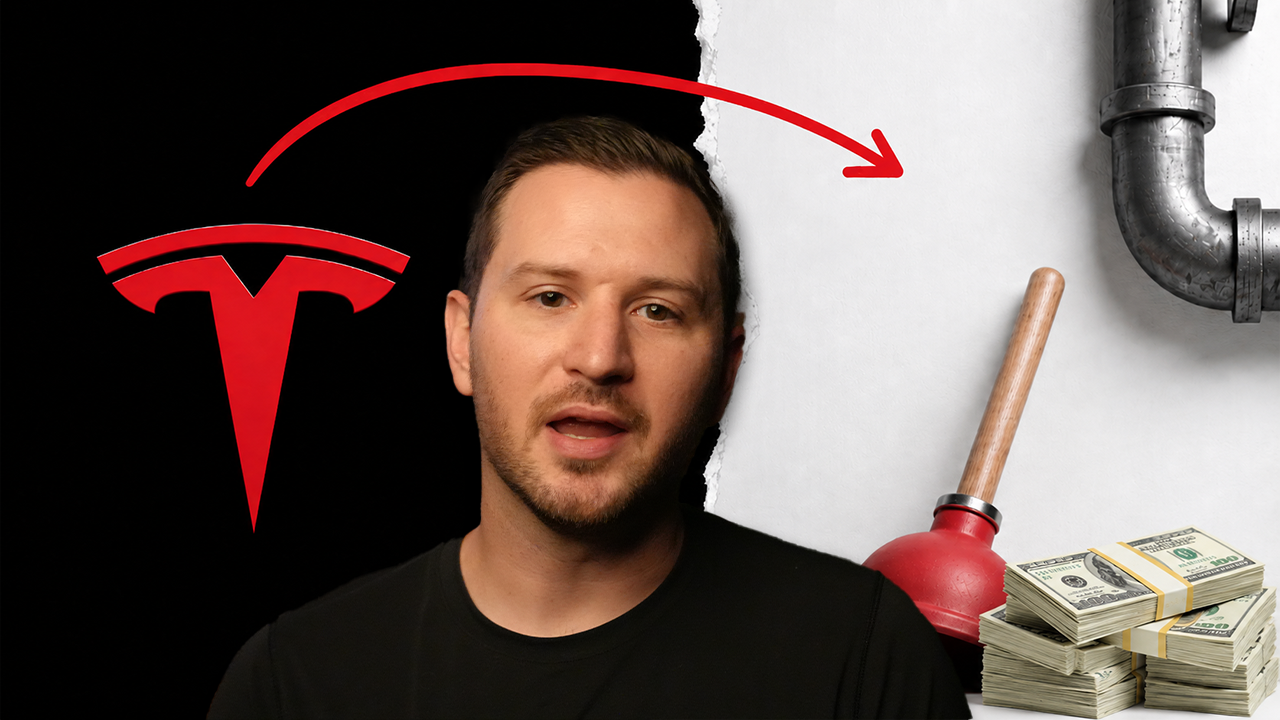
How do you go from Tesla to owning a plumbing company?
In this episode of Owned and Operated, John Wilson sits down with Jared Worthen to discuss buying a plumbing business, transitioning from tech into the trades, and what it's really like to acquire and operate a home service company.
After building his career at Tesla and ServiceTitan, Jared spent years searching for the right acquisition before purchasing Drain Doctors, a plumbing and drain cleaning company on California's Central Coast. He shares the realities of business acquisition, SBA-style entrepreneurship, scaling a small service business, and the lessons he's learned during his first 120 days as an owner.
From due diligence and deal structure to hiring technicians, implementing ServiceTitan, improving Google reviews, and building a growth-focused culture, this episode is packed with practical insights for anyone interested in buying a business, running a plumbing company, or growing a home service business.
What You'll Learn:
→ How Jared went from Tesla and ServiceTitan to plumbing business ownership
→ The process of buying a plumbing company and negotiating an acquisition
→ Common mistakes first-time business buyers make
→ What surprised him most during the first 120 days of ownership
→ How ServiceTitan, Google reviews, and marketing are helping drive growth
————————————————
🔗 CONNECT
————————————————
John Wilson → https://www.linkedin.com/in/johnbwilson1/
Jared Worthen → https://www.linkedin.com/in/jaredworthen/
————————————————
💰 SPONSORS
————————————————
💼 Extra Special Thanks to Service Scalers!
We’ve been partnering with Service Scalers to maximize our Local Service Ads (LSAs) and optimize our Google My Business profiles, and the results have been incredible. With hundreds of thousands in sales and 900+ calls in a single week, GMBs are now our top-performing organic lead channel.
Want to learn how Service Scalers can do the same for you?
🔗Check Them Out Here
💡 Yelp — A Smarter Way to Win Leads
Google costs are up. Lead quality is down. You’re paying more for less.
Meanwhile, Yelp generated 125M+ home service leads last year—and powers results across ChatGPT, Google AI, Apple Maps, and Alexa.
Less competition. Higher intent.
👉 Book a call
More Ways To Connect with O&O
John Wilson, CEO of Wilson Companies
Jack Carr, CEO of Rapid HVAC
📌 Disclaimer: Some links may include UTM parameters or affiliate relationships, meaning we may earn a commission if you make a purchase. Episodes may feature sponsors, but all opinions expressed are our own.
Today we're talking about why going from tech to plumbing, which obviously is the most radical move ever.
You know you're gonna get punched in the face.
You don't know what angle and how hard.
A lot of wins, a lot of punches in the face. When we bought this, we just kind of said make sure we have the war chest.
Any dip that can buy a business, it's the running it profitably. That's the actual like skill.
You want your team to go to grow, you want your team to have opportunities. And I think that's something that I strive for. The team has given me a ton of trust. They've jumped right in, which has been awesome.
What assumptions did you have on ownership that were just like totally wrong? I think I I welcome back to Owned and Operated at Top 150 Business Podcast. I'm your host, John Wilson. During the day, I run a plumbing HVAC and electrical company across Ohio, Indiana, and Tennessee. And for fun, I run this podcast where I talk to my friends about how to grow their home service company. Today I have my good friend Jared Warthen on. I met Jared four years ago at one of our breaking fives. Today we talk about his transition from Tesla to owning a plumbing company. Jared, welcome to the show.
Thanks for having me.
Yeah, this will be this will be fun to reconnect. Uh you were out at our first breaking five, which was in 2024 or four.
I think March of 24, yeah.
March of 24. That's crazy. And um, yeah, today we're talking about like your background. We're talking about why going from tech to plumbing, which obviously is the most rational move ever. And we're talking about the plumbing and drain industry and just like your journey in ownership uh since you've acquired your business. So welcome. I'm excited to dive into this with you.
Excited to be here.
Awesome. Well, how about you get us started a little bit? Just like give us the background on Jared.
Yeah, I was born and raised in the Pacific Northwest, and I um yeah, first generation college. So I came from a family of tradespeople, went went to work for some construction companies, a pool service company in Served Pro during college to kind of pay my way through through school, and then graduated and I moved to Silicon Valley because there's opportunity and and uh people are doing cool stuff. And so went down there and I I started at Tesla and spent about four years on their sales and business side. So it was when they were selling the original roadster or a few hundred of us in uh in an office. Dude, that thing is sick.
That thing is sick. Supposedly they're making a new roadster, and like I do want it.
It's uh yeah. So that I mean that honestly, that's a great tie to the next part of my career or next path there. So I spent four years on the business and sales side, but I had studied manufacturing in college, so it was always like, how do I get to the engineering side of the company? And um, so I was, you know, I sales manager for the ninth store that Tesla ever opened, which was fun. And yeah, was there for four years and then I got coaxed away by an old boss to to a little fintech startup. Spent about a year and a half there, and and I saw the the runway running out there, and so I jumped, I got recruited back at Tesla and and actually got an opportunity to manage operations for our design studios and rapid prototyping. So the night that we revealed the roadster, that was secretly built in the shop I was managing in uh in combination between the Bay and LA, which was pretty fun. And um, the very first semi-trucks that rolled across the stage. If if you ever saw a prototype vehicle, it was built in the the CNC shops, the fab shops, the the 3D printing labs that that were part of my team. So um super cool job. Um and then COVID hit and my wife and I we moved back to her hometown, and I was able to go remote for a while, and then eventually Tesla started calling people back. And it was it was at the same time I had I had been given uh by a buddy the buy them build book, and and I'd always wanted to do something on my own, and it just didn't didn't make sense to start a car company on the central coast of California, and so was was looking at what what are my other options, and we're in a a smaller college town, it's you know on the coast, smack dab between LA and the Bay is where we live. And and so you just start looking around, and it's you know, kind of the the core three plumbing logical and HVAC, those aren't gonna go anywhere. Having grown up in like a family of tradespeople, having worked in construction for a while, having managed machine shops and fab shops. I love I love the people in it, I love the the culture in it, and so it felt natural to go back to. Um and then having the tech background, having the the comfort with applying technology to some of these, you know, kind of more traditional business models, um, was intriguing. You know, it's a it's a whole it's a whole set of tools. I don't think I don't I think too often tech is wrapped up as like the solution, and I think in reality they're just tools. And so if you're good at wielding those tools, they can be really powerful. And if you're cumbersome and and not, you can do a lot of damage. Um and so I felt like there was an opportunity there for me to come in and um and maybe do something. And and so I I started searching while I was at Tesla, and then like I said, the the the writing on the wall was there that if you're not willing to move back to the Bay or LA, like your time is limited at Tesla.
Yeah.
And I didn't have any hot prospects yet, and I had a wife and a couple kids at home, and so I said, okay, what's a good what how can I work remote so I can kind of keep searching on the side but but pay my bills and and and all that at the same time. And so I actually applied for a job at Service Titan and and joined the team. And so I went came on as a technical program manager there. I we were rebuilding the kind of the back-end architecture for marketing pro at the time. Um, they had bought Aspire and Field Routes and realized we couldn't quite get all the customers on the platform on the back-end piece of it all. So we were we were rebuilding that. So I spent about a year and a half there. I thought I would learn a little more about the industry. I learned a lot about software tech and and that side of stuff. And then, yeah, and then my wife and I were just kind of like, this isn't the right fit, this isn't really getting me closer to where I want to be. And so we were in the spot where she came in one day and she's like, Why don't you just go do it? Like, we're we spent two years chasing this, you know, this shortcut to save two years. Like at this point, just jump in, yeah, got on a truck and and see what happens. And so after some some conversations with a number of companies locally, I I got an opportunity to work for a plumbing company and um and got my time towards my license, and I was able to get my license, and then I actually oh you have your license now. Mm-hmm. So I got my license, and then yeah, so in California, if you have a college degree, it shortens the amount of time, and and so I was able to work towards that and and get it, and then probably the biggest key was I was able to build relationships in industry. So our local supply house, the the guy who runs kind of the biggest shop around, I had built a rapport with him, and yeah, when it kind of got to that final stretch where I need we need to make this happen, I I called him up and said, Who do I need to meet? You know, it's it's the you know what I'm trying to do, you know what my long-term goal is, what who can you put me in front of? And had a few interviews set up and and met the owner or the I guess now the previous owner of drain doctors, and and the rest is I guess four months history.
So okay, yeah. So you so you just did this thing. Yeah. We're talking to you in the first four months. I love it.
It's uh yeah, we had a had a kid January 17th and closed February 1st, and so it's it's my wife is a saint. It's it's been uh it's been exactly like we drew it up, you know.
So Google keeps getting more expensive and affiliate leads are getting worse. And somehow you're paying more for fewer, lower quality leads, and that's pretty much the game right now. So here's something that most operators are missing Yelp. I know what you're thinking, but Yelp is way more than just a restaurant rating app. Last year, over 125 million home service leads were generated on Yelp, and almost 50 million homeowners are searching there every single month. Here's the real kicker though. Their data powers answers across ChatGPT, Google AI, Apple Maps, and Alexa, basically everywhere people are searching before they even know your company name. So instead of fighting over the same expensive Google clicks, you're showing up where customers are actually discovering and deciding who to hire. One company few serviced out in the Bay Area, HVAC Plumbing Electrical, does 20 million a year from Yelp alone. They're closing 75% of their Yelp leads, and about 70% of their entire customer base comes from the platform. So if you're serious about leveling up your lead gen, go to business.yelp.com slash owned and operated and book a call.
All right, so we've been interested in the trades for a while. Make makes and what was attractive and just to understand like from your background, like what made I think you said they're not going anywhere, but I'm sure it was a lot more than that that made you change your life fundamentally. So, like, what made plumbing or HVAC or electric the attractive option? Versus like you had a clear path in tech.
Yeah, part of it was working remote for a few years. Like, I don't I sat at this chair for you know, when I was at service time, I was on calls with Armenia at three in the morning to, you know, so I was in this this office, this one little room by myself, and I'm just not wired that way. I like being around people, I like working in an office with with a team. So though that part of that was a big part of it, is is I want to give I want to invest back in the community. I feel like business ownership is one of the best ways you can do that. If you can run a good business, if you can provide head of household income jobs, um I think that's really powerful. Um and then um the other piece of it for me was going back to the pool maintenance and like the service and repair job I had in college, relative to stage of life. That was one of the most fulfilling jobs I probably ever had. You know, I was a 19-year-old kid making two or three times minimum wage. So like, you know, the the money wouldn't support a family now, but it was something that at the time I you know I felt like I had all this financial freedom. And then there was something about like being on a truck. You you clock in, you get on a truck, you go out there, that pool was broken and now it's fixed, or this pump was broken and now it's fixed. This pool was dirty and now it's clean.
Um I miss that too, to be honest, of like you get to like step back and like be like, I did a good job today. Like this water heater or boiler or furnace or whatever I installed that day looks good.
Yeah, you show up on July 2nd for someone who's having a 4th of July party and their pool's green, and you're able to you're able to get it fixed. You know, maybe it takes a day or two, but you're able to get something fixed by their party on the 4th of July, and you just you know, there's just very real, um, I don't know, maybe it's ego stroking or whatever, but it's um there's just it's it's satisfying. You you you see the satisfaction you can give customers. Um and so that was fun. So that there was always kind of that nagging in the back of my head of like that was the most fulfilled I've ever been. And then part of it was when moving to a small town like this, a college town, I just kind of said, What's here? We have we're right north of Vandenberg, so there is there is some like there is some AeroTech manufacturing and some of that. Um those just felt a little, I don't know, they just were less appealing to me. There's just something stable about the trades. And then when I honed in on the trades, it was 2008 hits again. Plumbing HVAC molecules aren't going away. The the game will change, the game will get harder. You know, you have to but your toilet doesn't flush, someone's still calling you out. You know, you're they're they're gonna repair the water heater, fix the water heater if they don't have hot water. They they're gonna repair the HVAC unit even if they don't have the funds to fully get it because they need heat for the family. Landscaping might not be as bulletproof, some of the pool cleaning, you know, those are the things that people might cut if if money gets tight. And so I just felt there was stability in these three. And then plumbing was kind of a luck of the draw. I mean, I I built an ex a Google Sheet with about eight, you know, I went from Paso to Santa Maria and I said, okay, what are the HVAC plumbing analogical companies here and who are the owners and how do I get a hold of them? And it was cold calling, it was showing up, it was you know, scouring LinkedIn to see if there was a an an introduction that could be made, and and took longer than, you know, I don't know. If I knew it would have taken three and a half, four years to get across the starting line, I don't know if I'd had uh had the had the boldness to continue down the road, but ignorance helps a lot.
So yeah, yeah. I think um you're what I would classify as uh like obviously you you it was a search process. So if people aren't familiar, um search is like we're gonna go search and buy business. Uh did you bring did you have investors or did you guys do this yourselves?
Okay, yeah.
Um so but you you're a part of what I would call the replenishment generation. Uh so I I have this like idea in my head, and it seems to only be in my head, but I am getting more and more confirmation of it every day. That all like all of the and this is a known the first part's a known fact. All of the big companies sold before like 2021, 2022. And uh so a lot of like consolidators and like uh financial backers in the industry believe that the industry is like there's not much left. It's like, oh, it's overpicked or whatever. But what I always think is interesting is the amount of people that I know that bought their business the first time, like they didn't exist in 2020 or 2021 as a competitor. And they run like some of the largest regional platforms four years later. Uh and I can think of like a dozen people off the top of my head that are millennials that bought their business between 2020 and 2022, and that business is now a 30, 40, 50, 60. I know a guy who's 80, and he literally didn't have a business in 2019. And I think it's crazy. So I think it's a part of this uh it's a different competitor now. And there's like millennials coming in. It's not what the business used to look like 10 years ago, uh, but they become these like they're replenishing the large regionals that were gobbled up by private equity. So uh yeah, I I would sort of put you in this bucket because you're like you're bringing sophistication, you're not a like a former plumber or something. You you're you're bringing like a technology background to scale this business. So it'll be interesting to watch. I think it'll be fun. But yeah, you're a part like in my head, I'm like, yeah, here's another, here's another one, another like replenishment generation member.
Well, and it's it's interesting. Locally, we don't have a ton of huge shops, and so pipe dreams came. Pipe Dreams has come in and bought a few of the the bigger ones out.
I thought they've had some real challenges at Pipe Dreams. Am I making that up?
Uh you know, I I I obviously never worked in any of the companies, but we we see a lot, we see a lot of techs both at the last shop I worked at and then now now here we we have a lot of techs looking um when we post positions. Um yeah, I I think it's uh uh from my viewpoint, it it's a little bit of the running it from running a business from a spreadsheet and not not necessarily from the office or for or from the from the the front lines or whatever. So that it's interesting. I mean, they bought a business, you know, the they bought a business that'd been here since like the 40s or the 50s, and in a matter of a couple years, it's amazing how quickly you know, I remember my parents tell me, you know, it takes a lifetime to build trust and and you know a minute to lose it. And I think extrapolate that out to a business, it's it's very similar. And and it was one of the things that appealed to me about drain doctors is they'd been here since the 70s. Sometime there's arguments about when exactly it started, but they've been here for a long time and they've served their customers the same way for a long time. Yeah. And one of the one of the things that I caution myself on is I think it's tempting to come in and say, I can buy leads, I can put all the software in place, and and I I think again, it's a tool, and when applied correctly, it's gonna be incredibly powerful. But if you go too far or you don't do it right, I think you can quickly alienate the the people who got you there and the and the customers who got you there. And we're not I'm not a three million you know person metro in northeast Ohio. I'm yeah you know, I'm maybe a half a million people stretch stretched across a 80-90 mile you know stretch of coast. And so I think the the path for us is is what is it? Uh what's the one in Tennessee Nat Jack always talks about um dairy berry or something? But it's uh yeah, dairy berry. Yeah, it's it's how do we stay focused? How do we stay focused and go really deep? And so you know when I got into it, I think when I came out, probably for the first breaking five, it was oh we're gonna get to we're gonna get to three, and then we're gonna bring on HVAC, or we're gonna bring on electrician, and we're gonna we're gonna do this, we're gonna be everything to everybody. And I think, you know, a few years of you know being in it and getting punched in the face, and you kind of see how hard it is to build one, you're kind of like, you know, I I think we could probably build bigger than I think we can on the Central Coast, but at the same time, it's like I want to do this one real well before we before we add more headaches because it's yeah, it's a small town, and and so if you if you burn too many bridges, that can spread really fast, and it's hard to come back from that. So I'm proceeding with caution, um, but also pretty aggressively, I think, for for the market.
So yeah, yeah, that makes sense.
Uh what assumptions did you have on ownership that were just like totally wrong?
I think I I I think I knew it was you know you know you're gonna get punched in the face. It's just how do you kind of stem?
You don't know what angle and how hard. And and so I I think that's fine.
You know, I I had I had at my last job, and kind of last job I worked at, I got a chance to kind of test drive, so to speak, and I learned a lot. Okay, the operations are actually a very small part of the business, and you know there's HR, you know, all these other things. And uh, I'd say the biggest this the biggest miss I had coming in here was workman's comp in California is a is a nightmare. And so I'm a I'm an asset sale, I'm a legally different entity than than the guy I bought from. But in the state of California, your work they have a workman's comp X mod is what it's called, and it's basically your safety score relative to all other you know, residential service and repair plumbers, how safe is your business? And we learned that that can that can I I learned the hard way that that can follow you. Um and so there were that can actually follow you for the listener.
That can follow you in most states.
Yeah.
And so that's we've had uh we have history follow us in Ohio.
Yeah, so that was hard because there's like an impossibly narrow gap that you can that you can shoot to to dodge it. Um but it it was about a five percent of revenue hit for us in like the you know that's crazy. You get in and you're like, all right, sweet. We've you know, we feel like the dust has kind of settled on the deal. And then I more aggressively than our revenue would justify, we had you know, I'd kind of I'd brought in some capital right away to to bolster a website to kind of build an online presence and do some of these things. And so we had of course we we go and we sign some of those contracts, we get some of those things going, and then we get the letter from from the uh the workman's comp board here in California. It was like, hey, you know, we Hey there, buddy. Yeah, hey, how you doing? So I got Hey, how you doing?
Yeah, hey there, who there. You owe me a shitload of money.
Yeah, it's uh that multiple that multiple is wrong by a couple factors. So it was uh that that was tough. You know, you just you think you do your due diligence, and then it turns out there's always a couple more stones that you need to turn over. Yeah, luckily, you know, I'm very aware of there's a lot I don't know. And so just we my wife and I were in a position that when we bought this, we just kind of said let's let's make sure we let's make sure we have the war chest to get kicked, you know, or I guess punched in the face is probably the more uh more yeah you know podcast appropriate term, but uh getting kicked somewhere. Yeah, getting kicked in the nuts quite a few times.
Yeah, I mean we're we're explicit on Apple for better or worse. Um there we go. So can you walk me through like in whatever you're comfortable sharing, like the deal a little bit? Like I for a lot of listeners, I think people are interested in acquisitions, but they don't really know where to start. Um so just like what was negotiating like? Like what what's the specs on the deal?
Yeah, so it was doing uh I I I went off like last three years, and uh so it was doing about one three top line and and about two in seller discretionary earnings, something like that. I think I okay we we closed at right around a three, three and a half. Um and so it was yeah, times times SDE. And so it was fine, it was solid deal. I think I had gotten to the point where I don't know if I'm glad I guess I get the the seller would hear this after the deal, but I I was to a point where you know I had I had turned over a ton of stones searching here and and I was pretty geographically constrained, and I just I wanted to see to the table, and so when the last deal I was when the last deal was kind of fell through, I was running in tandem on okay, if I can find another deal, that's my preferred route. But if I need to buy a truck and start out of my garage and go that route, I will. Um and then like I mentioned to you, yeah, I was talking to one of our local vendors and just said, you know what I'm trying to do, who can you introduce me to? And and I got put in front of Dave, and and then it's so Dave and I connected personally really quickly, met his wife and you know, and him for coffee, and yeah. Universe the timing was perfect, but he's never bought and sold a business, and and candidly, neither had I. But I'd I'd at least studied a whole lot more on on it and how to price it and how to value it. And so he's got a he's got a CPA who also is not necessarily in it day in and day. Out and so then it became his CPA threw a number out and I threw a number out, and then it unfortunate for the seller kind of put him in a tough spot where I think you know we had ridden together on a truck for a few months, he liked me, he wanted to sell to me. But his CPA is saying, Don't take any less than this, and I'm saying I don't know how that math works. And so we spent probably a month. I was lucky enough to have enough of a relationship with Dave where I felt like I could kind of say, Hey, here's the I'm not trying to just be a seller undercutting you, but here's here's what I see. Here's here's what scares me, here's what excites me, here's how I get to this number, and and eventually we were able to, you know, kind of come come to a good agreement and and they were willing to they were willing to carry a note for a while, which was nice. So but between cash and a seller note, we we got it done and and uh yeah, and like I said, he's stayed on now and and he's you know stayed on as a tech for me and and yeah, enjoying, I think, not having to look at numbers and HR stuff and figure out who's gonna take that truck now that's sitting empty and all that fun stuff.
So yeah, we um just so just to unpack that a little bit. I'm just gonna like sort of summarize it for the listener for people that are thinking about MA. Um and and this is a lot of like how we've done deals deals too. So uh it was uh cash down plus a seller note. When we go to offer, uh we give three options. Here's your cash price, here's the price if I go get a bank loan, here's a seller note price. Um, seller note price is obviously the highest, cash is obviously the lowest. Um I'm trying to think what else we do. And then I think an important note, just like as people think about this, is yeah, most people have never sold a business before, and obviously most people have also never bought a business before. And I think that it is um there is no right or wrong price for a business. And I think that that's an I mean maybe there's a wrong price, but like a a business, you know, the market's pretty illiquid and it's pretty hard to see what other people have paid. And um like the right price is whatever two people can agree on, and it makes the math work. And I I just think like people get really caught up. Valuation is much more of like an art than a science. And like the same business could be worth two and a half million dollars to one person and a million and a half to the other, and like both of those people could be right. Uh, so I just think um just an important note, as people like think about valuation. I think people for the first time they just get so like, well, what's the value? And it's like, well, the value is whatever the fuck you can get the other person to agree to, and it it doesn't really matter, like there's no like right, you know.
No, and that might I mean my wife is a great sounding one. That's where she came in. She was it's not free to sit here, it's not free to search. And and so that was yeah, that was helpful when we talked about it. You just sit down and you say, Okay, so we're here, he's here, and it's a little more than we want to pay. It's probably a little more than my ex my Google Excel spreadsheet says it's worth. Um but at the same time, I've been searching for a while. I feel like Jaran gets back. I feel great about it, and I feel like yeah, the set the seller feels great about it, I feel great about it. And um, and we got there, and and the biggest thing for me is I I wanted to get I wanted to get in the game. Like, you know, I spent a lot of time studying, spent a lot of time learning, and it's like, okay, let me see if let me see if I can do this or not. Like, like let me see if let me see if I can do that.
I think that's like the most important step. Uh, because if you're trying to like grow a business and if MA is like on the roadmap, I think that the most powerful thing you can do is exactly what you've done. We're just like, hey, it almost like do the smallest deal you can do. Um, because you just have to get in there at some point, and then the doors open for you so much more because now you're the owner of Drain Doctor's Plumbing, and you're not just like Jared from Everlasting Capital, you know, whatever.
Yeah.
Uh so yeah, I yeah, I think that's great. I think that's
great. So like you're 120 days in. Walk us through it. Like, what's been the big stuff? What have you done? What have you not done? What opportunities are you seeing?
A lot of wins, um, couple, you know, a lot of punches in the face. We um like I said, I so I started working for them in the summer of last year. I went on as you know, as an apprentice and got to know the owner, got to know the team a little bit. So I think that helped me expedite. We actually slid the the clothes because of the birth of a third kiddo. Um but it allowed me from day one, I I knew everyone's name, they knew my name. Um by that point, they had seen me work. I'd been out on the end of a shovel with them for a little bit or under a house with them. So there was a little bit of a head start there that I I think uh other people might not have. Um so that was huge. And then the office manager was, you know, I I had had conversations with her quite a bit about here's as we were working through the deal, here's what I'm hoping to do, here's what we're gonna roll out. And and so, you know, they were working off of effectively the an Excel spreadsheet for dispatch and paper invoices and um yeah, you know, uh how a lot of companies ran for a long time. And clearly it's it's it's working for them. Um but if we want to do if we want 10 text, if we want 15 text, 20 texts, that's not gonna scale. And so it's a little bit of the mix.
We've just last week went live on our CRM. Um so that was uh you know, we're we're in the the fiasco of that where you're getting calls and permissions are wrong and trying to teach Pricebook and all that.
What would you guys end up using?
We ended up going Service Titan. Um, you know, we we came down to field routes and service titan and um field routes. Um and so my my comfort level with Service Titan, having implemented it before, it's more expensive, but it was just something I knew, which at this point, you know, something that was you know relatively stable.
Yeah, one less thing to learn. That makes sense.
Exactly. So I I decided I'd pay the premium to go that route. Um, so we're doing that. We're overhead in California is expensive. And so you look at we have a great deal on a rental uh on a lease for our building, but it's still expensive. And so that's currently you know, it was currently being spread across three techs when I started, and so we have a couple, you know, a couple guys starting here in a couple weeks, and so we're gonna be um, you know, we'll have almost doubled, you know, obviously it's it's it's a small team, so we're doubling the size of the team, which is cool. Um yeah, sweet. And so we'll be at um six techs here by yeah the end of June and and chugging along and our calendar is slammed. We I think we had 20 Google reviews when when I when I started at the company last last you know June and or last yeah, June or July, and and so we're working on that. Again, it's a a small market, so we have one company over a thousand. I would say we have like four or five companies in the two to seven hundred range, and then you know, now we're sitting there at a hundred. And with kind of some of the with some of the changes where there's you know frequency, we're actually catching up pretty quick. And um you know, we're we're staying crazy busy. We're I think we've got to keep these six texts busy, and we're showing up 20th if you search water heater repair, water heater install in San Luis Obispo. So um, you know, we have it's great. You know, we we're we're busy and we're also doing a lot of the like how do people even find us stuff wrong? And so if we can get some of those things fixed, I think it's uh a pretty pretty positive outlook. Like I said, you know, it's it's the structure around scaling that kind of scares me. So it's how do you you know how do you teach the software? But then how do you put again, how do you put the systems in place that really allow you to thrive, allow you to succeed? And so it's are we closing out jobs right? Are we, you know, not from a the pushing buttons perspective, but like are we actually installing water huge correctly? Are we doing it the way I want to do it? Are we a lot of that cultural stuff? Is they had a few really good techs who had worked together for 15 years, and so they didn't write a lot of things down because they all knew it, but now as we're bringing new people into the fold, how do we start to communicate clearly and make sure that information is is disseminated effectively and and clearly, um and and bringing in a culture of training, bringing in a culture of you know open communication and and just continuing to build trust as as we're pouring gas on the fire while we're you know trying to build it at the same time.
So most marketing agencies will show you clicks, impressions, and maybe even traffic, but none of that really matters if the phone's not ringing. And that's why we partner with service scalers. They are built specifically for home service companies and they focus on one thing, which is driving real, high-quality calls and book jobs. This is a no-brainer. They're offering a 60-day money-back guarantee on LSA management, Google Business Profile Optimization, and website builds. If you don't get more visibility, more calls, and better leads, then you don't pay. If you want more book jobs without the marketing headache, click the link below and book a free strategy call with Service Scalers. I mean, that sounds like that sounds huge. I mean, doubling the first couple like doubling text in the first couple months is awesome. And it sounds like I mean, 20 to 100 reviews is big, I would have to imagine that really moved the needle. Um on like map, like showing up on map, which you're saying, yes.
Yeah, and we're we're seeing there was on a lot of searches.
There's still some ones I'd like to like to be more competitive on, but yeah, it's I think have you seen the list of like all the things to improve on your GBP?
Yeah, so I I jumped on and did the like big reputation thing, and um we you know we're on Cinemuck.
There's like 270 things or something you can do with your Google business profile, which is kind of like ridiculous.
And they had used it was I forget who they were paying a few hundred bucks a month to um to manage their site and their um and their online presence. And I during my due diligence period just logged into the back end of it all, and there were like I think it was 88 broken links on the site, and all of the all of like the red flags that like don't get you to show up. And so it was yeah, you know, it was encouraging to me during due diligence of like, man, I I've worked there, I know they're busy, I know the phone is ringing off the hook, I know they're saying we can't do that job, and they're turning people away. And I and now I'm also seeing that they're not even they're invisible in the eyes of Google. Um so there's it's gonna take an investment, but there's opportunity there, um, which which was exciting. I think I think I thought I'd be a little more calculated and uh you know, for a bad pun, a little more surgical coming in, like, oh, we'll take some time and we'll let it go. And then I I don't have the self-control to to not be like, nah, let's just go for it. Just just do it, like send it.
And so we're we're just going and yeah, I there's like two different philosophies on what to do when you buy a business. Like, one is like do no harm. So I'm gonna go in. I you know, hey, if you bought something, you know, don't fix what's not broken. If you bought a good business, and the other is like do a lot of harm. Like just like get in there and like fix fix shit. And I I do think the bigger the like if somebody bought Wilson tomorrow, they should do no harm. Like, this is a machine, you need to figure out what the fuck's going on before you start like doing shit. If you're buying an owner-operator business, you like get in there, like get your hands dirty, make changes, because the there are low-hanging fruit that you can just double the business. So I I think I I yeah, people are always like, Yeah, I'm just gonna let it sit and like fuck no, like get in there, like double it. Let's go.
It's been fun because it was like, you know, you get feedback from the team, and it's like we've never had like it's we've never had to market, we're staying busy. And it's like that is awesome, that's phenomenal. Like you you have a reputation and you have customers coming back, but what if you did? Like, and that was kind of the question.
No, totally, totally.
But what if we did? What if we did that too? Like, it's not either or it's also, and so it's been fun. They've the team has given me a ton of trust, probably well, not probably, way more than I deserve early on. They've just kind of said, let's I guess fuck it, let's send it. Let's go for the ride. Yeah, they they've jumped right in, which has been awesome, and from sure frustrating at times, and I'm sure difficult at times. Um, but it's been cool. We had like we got a call from so again, we're in a college town, so there's a ton of apartments, and we got a call from some guy in Baton Rouge, Louisiana. And she's you know, my office manager's chatting with him, and we went out and camera and you know, inspected a bunch of laterals on this like 70 apartment complex, whatever, 70 unit apartment complex. And how did you how did you find us? And it was like a absolutely rewarding moment for me, just totally selfishly. But he was like, Oh, I find you on Google. You have you guys got great reviews. And I was like, See, see, there's value, and it was like a cool, it was a very tangible. She came to me and was like, Hey, those reviews matter. Like, we showed up, and he's he saw the reviews, and and so it was you just gotta find like for for me when you get kicked in the nuts, it's like finding those, like, no, but like, but but we see the value in reviews now, we see why I'm handing out business cards with a QR code, like finding every way that it matches our our culture right now to like you know, kind of ask like we've never asked, and so now to softly ask is a big step. And so we're not aggressive, we're not sending a bunch of text messages yet, we're not sending a bunch of emails yet. I don't know if we will, but if we can can tactfully ask at the end of it, if we've earned it, awesome. And you know, two to three reviews a week would be a game changer for us. Like that is very doable across a team of six techs and some office staff. And so you you you know, we kind of made it bite size, and now we're seeing some wins from it, and they're seeing some wins from it, and it's just kind of snow, not I wouldn't say snowballing yet, but you can see that momentum building.
Yeah, you're getting traction. Yeah, yeah, that's awesome.
Have have you what are you thinking next about like in implementing and driving into the business? What's on the horizon? What's the opportunities?
I think we've sort of we've we've with these new couple texts coming on. I think we're gonna kind of get a little bit big. I think we're gonna get big and a little bit unstable, and so it's probably gonna be maybe a little bit of a like stabilizing phase. Like let's yeah, let's get our footing a little bit, and then I I think it's driving some training, driving even just the we're trained plumbing professionals. We got to somebody's house, you see something that's wrong, say something, and and teaching them how to not be salesy, but like if if we see that their pressure is crazy high up, give don't ask if you can send them an estimate, just give them an estimate for a PRV. Hey, I noticed this, it's wrong because it like it concerns me as a plumbing professional because of X, Y, and Z. If you'd like us to take care of that for you, here you go. Like, that's the sales approach I'm trying to build at this point. And and if we can get that culture, again, in addition to Google and some of these places, we'll keep ourselves busy. So teaching that culture, kind of teaching some of those things, coaching some of that, and then uh and then I've I think it's you know, we we've got some really strong people in the organization, but we're so small, we're flat. Like we don't we don't need leaders yet, but it's trying to figure out okay who's who's gonna be a good service manager, not just from a plumbing technical expertise perspective, but from a manager of people perspective who who who can fill that role? It's a lot of what you described where you're from day one you tried to build yourself out of the business. Um I've been on a truck more than is healthy for drain doctors, and so um the the the best for drain doctors' long-term health is for me to be again working on it, not in it. And so, how do we build that kind of core team that can help me help me stay here and and they can be running the day-to-day operations? And it we're small enough that like I have no no illusions that I'm gonna be you know out of it for a while. Um but but from an aspirational perspective, how do we start to build that over you know, if by the end of the year here we can have some of those trainings, some of that structure in place, you know, we're starting to get some some not chain of command, but like um a little bit of that, you know, or org structure as well. You you at breaking five talk about generalists becoming specialists, the two girls in the office, they they both do everything right now. And so even starting to separate out CSR and dispatch, separate out AR and AP and all of those things, and and and showing them these you might still do all of these, but do you understand that it's not one role? You're wearing seven hats, and at some point I might take some of these hats from you, and then you'll be left doing these five hats. Um yeah, and so just even getting you know, reframing the way they think about the business, they think about how it's structured.
Yeah. I um I was talking with someone the other day. This is gonna sound self-serving, I promise. There's a point. Uh but that they they asked, um, which was a question I don't think I've ever gotten before. Uh, which is like what makes Wilson unique? As like uh like why are you having growth and other companies are not having growth inside the same industry, same year or whatever. And it honestly kind of stumped me for a little bit. And it's back to like you building out your leadership team and like what to work on. And like my initial answer was um I do think it was partially true. It's like we're generally stubborn. Like we're stubborn and like we can see we can see we have a vision of um I'm messing up my I'm messing up my words. Basically, like we can see an un uh an unseeable future. So like we can see like, hey, when we first said we're gonna be a hundred million dollar business by 2030, we were doing two and a half billion dollars.
Yeah.
So like we can see a vision of like what's ahead of us and we're stubborn enough to continue. And I I do think that that that is like partially real. I think the other thing, because I I sort of like let it soak in w for like a couple weeks, like what is the thing that allows us to keep doing that? And I I was back to, hey, when I set that vision of $100 million by 2030, it was 2021, and we were doing like five or four or three or two, something like that. And like we had no business setting that goal. We had no business like seeing that our future could potentially be that in nine years. And I I think the real superpower is a near-vertical learning curve. Like as I think about what has set us apart over the past like four or five years, I think it's the fact that we can like see this uh uncertain future, even potentially a future that we have no right to be seeing. Yep. We can kind of stubbornly figure out a path there. And as a leadership team, we have a learning curve that is so steep that we are able to learn and figure out our way how to get there. And I think that that third piece is probably the piece if I was thinking about who is the who should be on my leadership team today, or who should I be thinking about for a service manager, or like how to think about that, I would be optimizing for learning curve. Because I think like the the farther along in my career that I've gotten, that's become a bigger and bigger differentiator. Like, cause it's it's a it's basically Peter principle. Like, when will this person hit the top of their learning curve? When will they hit their Peter principle? Um But yeah, anyways, I don't know if that helps or not. But that was something that like over the past like few weeks has really been ramble like running around in my brain. Because like this year we're gonna do, I think we'll break 50. Uh and like we're well on pace for this hundred million by 2030 target, which is ridiculous given our starting point for that target was like $2 million. Like it doesn't make sense. We had no right to set that target, and yet we're going to achieve it.
Well, that's huge. I mean, I remember when I was at Tesla driving to the Bay or driving to LA, I'd listened to the early, you know, John and Brandon episodes of Owned and Operated, and I think there's a weird, there's like a gap in the middle that I see in just kind of contracting or the trades in general. You have private equity and they're ran from a spreadsheet, and it's yeah, impersonal and it's known that growth overall. And then I think you have these like small mom and pops where it's it's often maximizing for the the contractor's lifestyle, right? Like I'm gonna build a business and I want to get to a few hundred thousand dollars, I want to be able to buy the boat, and I want a vacation, you know, I want to be able to go ski in Tahoe, and and so they kind of get to that size where they make a good living and then they kind of park it, but then it's not it's not enough to like really feed, you know, feed the beast down below. And I I guess you know, I I I agree with what you're saying. Obviously, I'm not a a a Wilson expert, but f having followed your journey, I also think there's something very real and very unique about a business that that preaches the like we want people to be able to grow here, we want people to be able to like part of your vision is like you know, it's it's not about your success, it's not about you know, I mean your name's on the trucks, but you you've proven it time and time again that you you want your team to be able to grow, you want your team to have opportunities, and I think that's something that I I strive for, probably at a different scale just because of the market that I'm in, but it's how do you build something on the central coast where you can say like no, you as a tech coming in, you can make a way, you can make a wage where you could actually buy a house here and put Roots Down. And yeah, don't be wrong.
And there's advancement. I think we we had uh we have these once a month leadership huddles, and I sat in I sat in one a couple months ago, and it was really interesting because you kind I kind of forget the impact that because I'm like like, yes, I know we're making an impact, but it's different hearing people's story. So we had this like we had just acquired a company, and the leaders from that company came in and we had some of their techs come in too, and people. People sort of gave like uh uh almost like their they gave their story inside Wilson. And these were people that like, hey, I started off in the call center and now I'm a supervisor or a director, even, or a manager, and hey, I was a plumber and now I'm a man. Like and it was really interesting to see like the yeah, this vision that we set as a group of like, hey, we want to grow from within and we want to like do these things, and like hearing people walk through their story to new people, like that they're bringing into Wilson, and they're like, Yeah, like this is real, like this is where I started, this is where I am today. And they're just like so proud of their ability to drive, which was awesome. And like we got to give them the vehicle to do that.
That's huge. I I was 22 when I started at Tesla, yeah, a couple months removed from college on inside sales, and after I was six months on inside sales, and they said, Are you willing to move to open a new store? And off I got sent. And so at 22, I was running the ninth store for Tesla, and you know, and it was somebody gave me a shot before I deserved it, before I had the skills to do it, and said, I think you have what it takes to figure it out. And um some things went well, so some things you know you learn. But um I guess for me, it's you know, I'm not I still have a lot of career left in front of me, but how do you look, how do you turn back now and say, okay, who are these, especially I feel like in the trades, who are these kids that maybe traditional school has said you know, kind of brushed off or kind of left on the on the side, and you say, No, this is a yeah, this is somebody that's very sharp, that's very hardworking, has a good head on their shoulders, but maybe doesn't I and I kind of relate to it, school was never my strong suit, school was never what I enjoyed. It was a it was a means to an end. Um, and so in a similar fashion, how do you find these, you know, these people that can that can come in and build something really cool? Um I'm not gonna do it myself. Um and I I think I see it as a differentiator for ourselves. And so in interviews, you just you hear a lot of people talk and they start out somewhere and they you know the money's a little bit better because they got a couple bucks an hour better than the last shop they were at, but then in a couple years, it's kind of it's more of the same. It's it's the own the owner's pulling up in a new lifted F 350, and I'm you know and I'm struggling to make rent, or we lost a ton of text at the last shop while I was at people leaving California and going to Idaho and Texas, and and it's they they can make the same and and and live a whole heck of a lot cheaper. And you know, selfishly you're not you know a mile from the beach, but how do we how do we provide that path? How how do we provide that opportunity for the for the people who are gonna come in and bust our ass and and yeah and help the team? You know, it's not it's not gonna be a handout, but it's it's an opportunity to say, hey, you want to come in here and work work hard and build something together. It's it's gonna be hard, but we'll have fun doing it. Um and so that's what we're trying to build, and and I think that's uh I'm sure you're gonna do it. A unique thing in the market.
So yeah, I'm sure you're gonna do it. I'm excited to check in in like a year and be like, how'd it go? How's it going? But yeah, I think uh yeah, bit building is um it's fun. Welcome to the game. Thank you. Four months in, welcome to the game.
So girls are dead at this point, I think they say.
So yeah, yeah. If if as we sort of like approach our ending here, how what are some like what's a message you'd want to give for somebody that wants to follow your path?
It's a grind. Like it's it sounds sexy on it's it's it does sound sexy. It sounds sexy. I'm gonna buy this thing.
I bought a drain business. I can't think of I literally actually can't think of anything sexier.
But it's like it's you know, the the whole SMB world, it's like especially if you're on Twitter or you're you know you're on some of these blogs, it's like go get an SBA loan and you'll buy a business, and you'll be you know, you'll be uh walking your kids to school at nine and you know working four hours a week running, and it's just yeah, I knew that reality wasn't I knew that wasn't gonna be the reality, but even even just getting across the starting line was a was a trudge. Um and it was a lift, and and it's a whole different set of skills in a lot of ways, I I think, to to find and buy the business than even to get in and run it.
And and so what I like to say is basically any dipshit can buy a business. It's the running it profitably. That's the actual like skill.
Yeah, and it's like I mean, you're yeah, it's you're somewhat therapists as you're like you're somewhat educators, you're like we're often working with sellers who you know we don't have great brokers locally, and so it was I knew I was gonna have to meet somebody and convince them to sell me their business and convince them to do it at the right price and not sound like I'm shady and trying to you know uh undermine them or or take what they built, you know, but it's also hard. You work in a business for 40 years and you find out it's you know it's only worth you know in California.
That's always the tough news to deliver.
It's like, hey, here's your you know, to a certain degree, you're saying, hey, here's your life's work, it's not even worth half a day, you know, it's not even worth a down half a down payment on a house in California. Like good luck retiring. And so how do you how do you communicate that without being, you know, while still being able to close the deal? Um but then it's just been fun. Like it's it's been the the the search got to be a grind. And like I said, I mean I've gotten kicked in the nuts, I've gotten punched in the face since we've since we've come in, but it's been I don't know, at least personally, if it's it's like it feels right. It fits like a glove. And so you're like, nah, this is where this is where I'm supposed to be. And again, we've we've had a ton of wins. I I joke about the punches in the face and stuff, and and they're real, but we're we're making some real progress, and we we've got a a great team, and and yeah, I I hope it a year and four months we're we're chatting again and and different problems, and that's really all it is, is you know, it's a new set of problems at a different scale.
Thanks for coming on today and sharing your story. This was a ton of fun.
Thank thanks for having me. It was uh it was a blast cat catching up again.
So if you like what you heard, make sure you like and sub.
.png)
.png)