


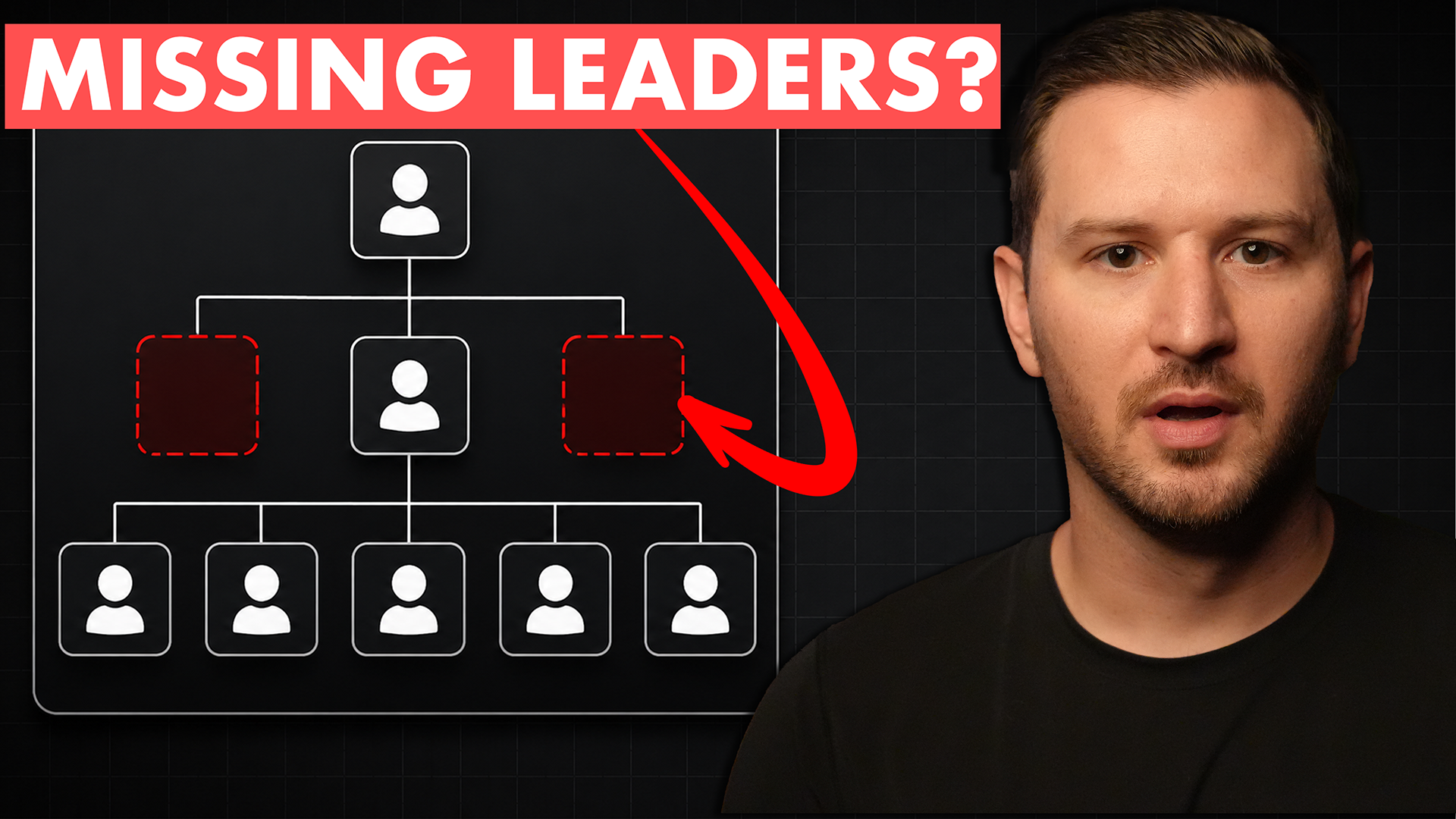
The fastest-growing home service companies don't fail because they run out of demand. They fail because they run out of leaders.
In this episode of Owned and Operated, John Wilson sits down with Jim Lose of The Military Veteran to discuss what separates great operators from average managers. They cover how to hire executive talent, build a structured interview process, identify red flags before making an offer, and create leadership systems that scale with your business.
From scorecards and reference checks to compensation, coaching, and military leadership, this episode is a practical guide to building the team that takes your business from operator-led to professionally managed.
In This Episode:
• Why leadership becomes the biggest growth constraint
• How to identify and hire A-player operators
• The interview mistakes most owners make
• Building scorecards that drive accountability
• Coaching vs. replacing underperforming leaders
• Compensation, incentives, and equity for key hires
• The next executive hire growing businesses should make
————————————————
🔗 CONNECT
————————————————
John Wilson → https://www.linkedin.com/in/johnbwilson1/
Jim Lose → https://www.linkedin.com/in/jimlose/
The Military Veteran → https://themilvet.org/
————————————————
💰 SPONSORS
————————————————
Breaking $5M Workshop
Join John Wilson and Jack Carr in Akron, OH for a hands on workshop built for home service owners ready to scale past $5M. Get the proven playbook, tour Wilson's operation, and connect with other growth minded contractors. Register here: https://www.ownedandoperated.com/upcoming-events/oao-workshop-breaking-5-million
FieldPulse
Ready to ditch the whiteboard and spreadsheets? See how FieldPulse helps home service companies simplify scheduling, dispatching, invoicing, and more. Book a free demo: https://landing.fieldpulse.com/owned_and_operated
Quick Staffers
Hire trained HVAC and plumbing CSRs without the overhead of traditional hiring. Save $500 on your first placement with Quick Staffers: https://www.quickstaffers.com/
More Ways To Connect with O&O
John Wilson, CEO of Wilson Companies
Jack Carr, CEO of Rapid HVAC
📌 Disclaimer: Some links may include UTM parameters or affiliate relationships, meaning we may earn a commission if you make a purchase. Episodes may feature sponsors, but all opinions expressed are our own.
The biggest challenge that we've had is placing leaders. Someone's like, what is your key to success? Hire Marines. We were really guilty of holding on to leaders for far too long. We have now adopted like a much more okay, we've seen this story before.
I mean, that's why we're we exist to still filter through that messiness. The number one thing I took away from the Marine Corps was get it done. Alright, let's talk about hiring mistakes. Two things generally to look for will and skill. But if there's no will, you're not going to coach will.
Any other like big red flags we should be thinking of? I would, I would absolutely uh
welcome back to Owned and Operated at Top 200 U.S. Business Podcast. I'm your host, John Wilson. During the day, I run a plumbing HVAC and electric company in Ohio, Indiana, and Tennessee. And for fun, I run this podcast where we talk about the industry and how to grow your business within it. Today I'm joined by Jim Lois from the Military Veteran. And today we're going to be talking about hiring operators for your home service business. Thanks for tuning in.
Jim, welcome to the show. Thank you very much for having me, John. It's a pleasure to be here.
Yeah, this is going to be a lot of fun. We had you guys on uh episode 290 and 291. It was your counterpart. And uh I think we spent a lot of time then talking about his background, talking about military. And it was worth like we had a lot of people asking more questions about it. Uh, I think as businesses grow, we're all thinking about like leadership and you know how we level up. Uh so I'm looking forward to this. This is gonna be really great.
I am too. Thank you.
Yeah. Well, as we get into this, I would love it if you would just give us your background uh and then a little bit about what you're doing here with Melvet.
Absolutely. Um, so grew up in rural, rural America, uh Pennsylvania farm country. Um really had no direction other than I knew I wanted to be in the military. Uh didn't know exactly how to get there or what it looked like, um, thought about the academy, but really, you know, just wound up from college, signing up with the Marine Corps. And and that was at that point in my life, the best decision I ever made. Um went through OCS in the summers in college.
What's OCS?
Uh Officer Canada School. Sorry about that. Down at Quantico, Virginia, uh, where, you know, making Marines and Marine officers. Uh every single they call it the crossroads of the Marines because every Marine officer will spend some time in Quantico. And so after graduation, I was commissioned as second lieutenant in the Corps intelligence officer, which meant essentially I was with an eight per 800-person organization. And for them, I was trying to give them the enemy picture, uh, how weather enemy terrain affects our friendly forces. And at the time, in that role, I also was in charge of a scout sniper platoon, which is about 40 Marines, motivated, motivated youngsters who uh ultimately are, you know, the eyes and ears of that battalion commander, an internal asset to go do scouting, do recon, and of course sniping when that moment happens and is needed. Uh, and then after the fleet tour, which is usually you spend about three to four years in the fleet leading Marines. After that, I did one more tour in the Pentagon and the Joints, Joint Chiefs of Staff and their intelligence directorate. Uh, and then at that point, decided, you know, eight years was enough. I really was a citizen soldier, wanted to serve the country and then get on with life. Um so leaving active duty like a lot of the people I worked with and placed over the years, I was trying to figure that out too, uh, ran into a business that had just worked with and placed a buddy of mine uh called Lucas Group. Talked with them, and it really felt like a fit as far as this headhunting business, recruiting, you know, and working with vets as they transition out. And at the time, these were young, young men and women like myself, you know, 27, 28. They've done five to eight years in the military after the Naval Academy, after West Point, and they were trying to figure out their next step in life. And so while I was at Lucas, I placed about 3,000 of that, you know, that service member and uh helped them with their careers. And then after about 20 years, pivoted, uh, went to Corn Ferry with an acquisition, was a principal with Corn Ferry, which is a large international um executive search firm. Uh, and then two years ago I left, I joined the Mill Vet. We were a startup, we were John, we had two people in the business when I came and joined. Um, so very different. How many today? Today we have 11 full-time employees, and then probably right around the exact same number of 1099s. So about 20 of us working in the business on a regular basis. That's amazing. It's been awesome. Yeah. Uh so yeah, help the help the mill vet where and where where they were when I joined was they started almost as a community organizing arm, like getting vets together, getting helping them build their networks, reclaiming.
Yeah, I think I remember Brandon talking about like a an annual conference or those uh get together, and yeah.
Yep, and we hold meetups all over the country to help them build their networks. Yeah, but then it quickly morphed into an executive search business. Uh, and so where we where we are in the recruiting space is we primarily help early stage high-growth businesses build out their leadership and go to market teams with veteran executives. And for the veterans, we serve as a pathway into those executive careers. Our mission is clear-cut and it's based on data. And the data, the number one indicator if whether a company is going to hire a veteran is having a veteran on the executive leadership team. So our mission is to put more vets into those roles. Not only, I mean, it's good for the community, but it is great for business, and we believe it's great for America at large.
If you're trying to break through the $5 million mark, this is the workshop that I wish I had when I was growing Wilson. From September 15th through the 17th, Jack and I are hosting our one of our famous Breaking Five workshops at our headquarters in Akron, Ohio. You'll see our operation firsthand, you'll sit in our live sales huddles, you'll tour the shop, and we'll break down the exact flywheel that we've used to scale. Every workshop that we've done has sold out. So if you're serious about building your business, grab your spot now at the link below before it's too late. I think Brandon said the same thing. And I'm now I'm going through the process again of like, do we have a veteran in our leadership team? And I don't think we do. But for some reason, we have a huge amount of veterans in the business. I think the I think blue collar is a natural transition. We have people in like frontline leadership who have an armed service background. Makes sense. But no one in senior leadership. But yeah, I mean, we we've done it the math before, and it was like north of 20% of our total team members was like at one point served, which is a lot.
Overrepresenting the population.
I mean, I would imagine, yeah, that I think that's a lot. Um one of the fun things about having a podcast over the years, and really it's very selfish. You know, I I liked uh I a friend of mine messaged me the other day, and I'm giving him a shout out now. His name's Dustin. He sent me a really nice message, and he said, uh, he just like thanked me for like, you know, putting on the show and helping the industry. And it was kind of funny because I was sitting there like, yeah, but I mean I've gained a tremendous amount. And one of the most important things I've gained is I get to just like bring on people that are smarter than me and ask them whatever I want. So that's what we're gonna be doing today. Um I challenge you on that point, though. I mean, we'll find out in the next you know,
hour. Uh so one of the this is like a fun topic for me right now because it's it's really it's high um it's of high urgency and high importance for us. So this year we just finished our fourth acquisition. Congratulations. It's I've got some grace. My wife actually told me the other day. She's she's like, hey, I am starting to see them. And I was like, no. Damn it. Damn it. Uh and we're getting ready to complete our fifth, and we have number six, seven, and eight under contract. Incredible. So it's it's a lot for just a plumber from Akron. Um, but as you can imagine, the biggest challenge that we've had is placing leaders. Like it's a it's a big and like ever-looming challenge. Uh, we're starting to think way more than we ever have. Hey, we have this awesome pipeline for technicians. We have this uh like a uh internal uh training program to take frontline team members like plumbers, electricians, HVAC techs, or uh administrative staff and turn them into supervisors or frontline managers. So we have a pipeline to bring in frontline, and then we can turn them into frontline managers. We don't have a pipeline or like a good strategy on senior leaders. And it's starting to be a bigger and bigger gap. Uh, you know, uh you you and I spoke a few months ago about a CFO search we were about to go on. And just like, well, how do we think about this? Um, we're starting to think about HR now and like what should the head of HR be for 400 team members? And uh yeah, it's it's just becoming like a bigger and bigger thing that I'm thinking more about. So as I look through the questions that I have lined up for you today, I just need you to know that they're selfish in nature, and I will be taking a tremendous amount away from this. Always happy to help. Yeah, yeah. Hopefully the listener gets something too, but I'm really focused on me. Um Aren't we all? Yeah. So uh so today, I what we're gonna be doing is we're gonna be breaking down like what makes an A player different. We're gonna be talking about how to find them, how to think about interviewing them, and like, you know, what to break out of those uh conversations and how to bring them into your organization and allow them to win. So you want to start with like why they're hard to find.
I mean, you've kind of nailed the reason they're hard to find. It's uh in the and and I'll also say I I I hear a little bit the technicians can be hard to find too.
But uh you've heard that once or twice. A couple couple couple companies looking at it. A couple couple people just muttered it.
But um, like there are there are technical schools, there are vocational pathways into becoming a technician. You talked about the training you have from maybe taking somebody with a ton of will, light skill, give them the skill, and then let them go. You really don't have that as much for leaders, unless there is either a formal training program someone came out of, think enterprise or one of the ones that's widely known, um, or the military, where at every phase of one's career, to include even that junior phase, you're all trained. Uh, whether you're an officer, whether you're enlisted, you're trained on how to lead at those levels throughout your career as your career advances.
Yeah.
And it's really hard to find in the private sector.
Oh, it is.
Outside of a formal leadership development program that someone might step into. So that's I think what makes it really hard. And then even when you do find a leader who can do the job, then it's all the other things that you care about that can make a bad hire, and that's culture fit.
As you think about so, like uh the examples you gave of companies that have these sort of fully fledged uh programs make sense. Um, I think an industry in industry example, like Apex is known for theirs. They have this like uh like program to be yeah, basically turn untrained uh in GM into general managers. Uh, C is another one, Sherwin Williams, like you know, there's there's a bazillion of these. How do you think about like I think that uh so from a timing, this is just a brief interruption, but I think that we did the timing for turning frontline team members into frontline managers. I think we did that at the right time for our business, like it was very useful. I don't know when the right timing is to do that frontline to senior leadership training cohort. It feels too early at our size, but like what's your perspective?
It how many do you need? And how many do you do you expect to need would be the question. Like Apex with their hundreds of year, yeah, yeah. Yeah. So it's a different need. Um, and they also Apex had the benefit of a chief people officer who you know might was one of the early architects of the enterprise training program in the 90s. And Enterprise was a sleepy, you know, rental company before they were an international multi-billion dollar juggernaut that they are. You know, he helped develop this program and uh and then you know did it all over again a decade or so later with Apex Service Partners. So they they really benefited from somebody who was like best. He had a path, yeah. He did.
Yeah.
Yeah. Steve McCarty. Amazing.
Um so we were talking about how they're hard to find. There's not really like a training program built out there, and yeah, yeah.
So you so at that point you're left with a few few options, you know. And I guess also that whole leadership decision is also based on if you're doing an acquisition, John, you're evaluating the leadership of at the acquisition. Yeah. What do I need? Is are they gonna stay? Is the intent to roll out after you know, six, twelve months? Is there a strong number two? Okay, awesome. There is. Well then, you know, problem solved. If there isn't, then that's when oftentimes that uh that you know we we are then called to find that strong leader. Uh or some of our clients, no matter what the situation is, they will have their their person on the scene to make sure that the integration is going smoothly, playbook is being adopted, the tech stack is you know, also that integration is going as well as possible, and and that culture is a 10 out of 10.
Yeah, I think um as we've started, it's been an interesting like separation. We've been growing obviously a lot. And the at one point we were multi-location back in the like 2021 to 2023, and then we consolidated down into the building that we're in now. Um, but we had four or five locations, all of them very small, like two million or three million of revenue. So we didn't really like uh deal with what we're dealing with now. And what we're dealing with now is like exciting and good, but I don't feel like we're set up properly to do a good job. Um but today we have five branches, and in like ten days we bring on our sixth. And um they all have a general manager, they're all large enough to support a general manager. I think they're uh the smallest is maybe like seven million or eight million. Um so I but where uh where was I going with oh scorecarding. So like now now it's down to like, okay, how do we like yes, we put in this talented person. Um, and I I was thinking of this in response to your culture 10 out of 10 comment because I it's really interesting as an owner operator, like I've been an owner operator my whole life, right? And uh basically have never had a job except for this. Uh so it's really interesting to suddenly think of culture as like, hey, that's a scorecardible uh thing, and how should I be measuring my general managers? Because like I can't run that business for them. Like that is what I'm paying them to do. And it it's just a really like weird uh moment that I'm having in my career as I'm trying to figure out like how to sort of replace what we've built here in other locations.
For sure. Yeah, iterate on uh the success you've had. Scorecard is a good way to do it. I mean, that's for every interview process, we we highly encourage our client if they don't use a scorecard to kind of uh adopt that. If one, it it makes it even better for for everyone to assess talent during the selection process. They can measure against the scorecard, and so can we. Yeah, as we're evaluating you know, people to put in front of them.
What so what like what would be what would be on there?
Like uh Um typically you're going to have your in very as clear as you can state it, a two to three sentence max what is the mission of this job. You know, so that there's no doubt whatsoever. And then you get more into your the traits, the attributes, the culture around what is, what are we identifying in this this role is going to look like success. Yeah. And what is what is are other leaders in this role who are successful, what are their traits, attributes, that sort of thing, and what is the business culture? And then the other leg is outcomes that are expected, not just job description, but more so this is what you will be measured on in a quarter, in you know, for the year, but everything is clear cut so that holding accountability, the KPI piece, you can develop those right out of the scorecard. I mean, they're there for everyone to see, but there is nowhere to hide.
Yeah. This is I'm I keep giving you like tangential questions, so sorry about this. But as you think about scorecarding inside a business or like for this general manager, this is like something I'm actively learning and trying to figure out. I've I've heard like conflicting opinions. I'm just curious from your perspective which works best. I always imagined scorecarding and like performance management. I guess the performance management part, get rid of that. But the scorecarding to come from like the CFO or like the financial arm of the business. Like, hey, these are the results that we need. That's what I've always imagined. I'm hearing more and more that like that's completely wrong. And it is almost always from the HR management side and the performance management side of the business, which I feel like are just uh the difference might sound subtle to the listener, but to me, like completely different. Uh as like because how you think about it, how often do you communicate it? How do you hold accountable? Um, and like how do you align two totally different departments on like scorecarding? So, like what what have you seen work best?
The the executive leader, whoever it is that is doing the hiring. So if it is a CFO's hire, they own that scorecard.
Um I'm thinking like a GM.
So that would be like a COO or like whoever they're reporting. They should be the pro because they know the job better than anybody. Yeah, they know it better than HR will. Yeah. CFO, of course, is gonna help as far as you know, these are the targets financially, but it's a lot more than just financial targets.
That makes sense. Yeah, the scorecarding, it's just started to become more real as we have these like uh geographically separated business units. And it's like, hey, we actually really need a tighter like accountability process than we're currently running. Like the vibes are good right now, but what happens when they're bad? You know, like we we do need something. So we're trying to elevate that part of our business. And we're we haven't done we haven't gotten there yet.
You're in good company, you know. It's a new new novel idea for a lot of folks. It was for me. Yeah, we have a scorecard, I have a scorecard, everybody on the team has a scorecard. Um the so we coach our and it's it's kind of borrowed from other companies that we've seen use it, but a common like structured interview process is laid out in a book called Who? Yes, by Jeffrey Smart, Terry Street, the GH Smart founders. And that it begins with a scorecard, but it lays out a structured interview process that if you want to know what is best in class, that is what is best in class, and a lot of the competition is using interesting.
Okay, that's really helpful. As as we think like the a lot of the listeners, we have listeners from like half a million to hundreds of millions. How do you think about on the operator hire? Like, what's the size that like makes sense for that general manager? I I was in a group chat yesterday and convenient timing, but they were it's a four million dollar business, and they're like, I'm thinking about hiring a GM. And I'm like, I don't I don't know if that's what you need in your business. Uh just from like a like a base salary, it's too heavy probably for the business to carry. So, like, what do you think?
Probably. Um when that leader, let's say founder, owner, when they get to the point where they are spending an inordinate amount of their time on low ROI activities or or or they have higher ROI activities that they want to get after, bring in a bring in a leader to run that business. Uh especially if you were doing acquisitions and you want to you know grow the business, you know, inorganically makes a ton of sense. We've worked with a lot of companies um that the the business owner also has some other ventures that they want to spend more time on. So that hire is is you know not only just expanding and growing, but it lets frees them up to focus on a completely different company.
Can you uh we talked about this with Brandon, but I'd love to just like talk about it again and just spend a minute or two here. But I I get and I we we sort of did touch on it as far as like, hey, the reason that ARM services is a great background is because there's uh consistent and continual training through it. What are the other like big reasons that that this labor uh pool is like so perfect for this?
No doubt it's part of the training. Yeah. But you know, there's uh there is this near perfect intersection that we are at as a business between this white. Collar leader who might have gone to a top service academy, who may have then gone into in business school, and um, and maybe are even coming out of an industry that is is nothing to do with home services, but they they have an affinity for a blue-collar technician workforce because they they led a blue-collar team for years and years in the military. And and there is no like getting away from the leadership that you build in the in the camaraderie when you are like months on end in a combat zone, sleeping on the dirt with everybody else. Like it is a different sort of servant leadership that is developed. Um, and so like how do you replicate that elsewhere, John? Like, I I don't know how you replicate it elsewhere, yeah. But you know, that's those sorts of like working together as a team.
Yeah.
And also just this attitude. The number one thing I took away from the Marine Corps was get it done. Like just get it done and how to how to have that attitude and you carry it with you throughout life. At least I certainly did. And so, you know, this is a this is a population that has been held accountable for getting very hard things done and figuring very hard things out for a large segment of their life.
I I think the the veteran like talent pool started to um well, I think it got trendy a couple of years ago, which I think is good. Like it's a good thing. But I started noticing more and more people. I'm not, you know, I don't have a background in armed service, uh, but I started noticing more and more of the people in my life, like some of my peers do have that background. And it started clicking a couple of years ago. The more people I talk to, and to be honest, they're all Marines. I don't know what that says about you guys. I just I'm gonna I'm gonna put that out there. You can take that whatever you want. But but it is uh it has been really it's been really interesting of like, oh wow, okay, yeah. Like the Marines produces that's pretty funny.
Brendan tells a story that uh, you know, he was into the events and and the the leader will remain unnamed, but he was an Air Force officer, uh running a real big running a real big company. Okay, yeah. And some and and meteoric success, rocket ship sort of thing. And someone's like, what is your key to success? And he didn't flinch at all and just said, hire Marines.
That's funny. The Air Force guy, yeah. That's funny.
Yeah, I mean, the Marines get it done. If you're talking about a uh a trend in business, um, going back to, I was in fact, I wrote a wrote a piece on LinkedIn yesterday highlighting like where this whole trend came from. Yeah, and it is the apex experience. You know, those early operators who were spectacular that Apex brought on board, and by spectacular, like special forces guys that the you know went to business school with some of the early leadership at Apex, and just they brought in their friends and those guys, their performance at Apex led to Alpine, you know, the sponsor, Alpine investors hiring more of that profile. And then the success of Apex and Alpine doing so has spread like wildfire throughout private equity, lower middle market, distributed services, hiring these leaders who again can lead a technician workforce and inspire. It is a specific skill. Yeah. So yeah, so that is a trend that we've seen. And then on the conversely, you'd all have all these consultants, all these bankers, one that that you know went into it out of business school and it's not for them necessarily. They want to be in leadership roles again, driving a team forward, having a mission that's not spreadsheet, you know, driven, and uh, and also something that's not going to be AI'd out of existence. So I think not only has private equity and and private wealth woken up to this candid pool that really can can execute next level, but that cannot pool is standing in line for these sorts of roles. Yeah. They're fired up about them.
Yeah. Yeah. Yeah, that that is great. Well, and I I think your point about uh it it is a unique intersection of like blue collar and white collar because I think um there's obviously like people that have done differently and many that have succeeded more than I have. But I do think that one of the unique advantages that I've had in my life is that the first 10 years of my career was blue collar. I was a I was a plumber, I was a hands-on technician, and I happened to learn enough to be able to like cross the bridge. Right. But I do think that is it's a gap for a lot of people that that holds them back. They're either too far on one side where they can't communicate with their team, or they're too far on the other where they aren't ready to professionalize their business. Right. Yeah. Yeah, that that is that is interesting. I haven't thought about that one before. Three thousand placements. That's a lot. I mean, it sounds like a lot. I guess you tell me, is that a lot?
I'm getting older, John.
Okay. So so you've been at it for a long time. You don't even need to say you don't even need to say your age. You just I've done 3,000 placements. I don't know.
But uh yeah, I've been at it for a while. There was there was a 20-year group of officers that if you had gone to West Point or the Naval Academy, they for their first eight years of their service obligation before they kind of aged out of in their career the sort of things that I represented, those guys heard from me four times a year.
Oh, really?
Yeah, like mass marketing, regular marketing. Yeah. So uh so you do get to know a lot of people and luckily, you know, it was able to have some impact.
Yeah.
Have you ever bought enterprise level software and realized that managing it really just became a full-time job? Well, that's pretty much exactly why my restoration business switched over to Field Pulse. We were tired of software that promised efficiency, but came with endless training sessions, onboarding, and frustrated techs. And using it began to feel like it was a job all on its own. Field Pulse was built for owner operators who don't want more dashboards. They need scheduling, invoicing, and job tracking, and they needed all to live in one place without the chaos or the learning curve. Field Pulse is simple to roll out, it's easy for your team to actually use, and it was 75% cheaper than the other titans of software we were using. Right now, if you book a demo with Field Pulse, you'll get an exclusive partner offer. It's 20% off an eligible annual subscription and 50% off premium support for your first year. If your software upgrade has turned into a time suck, it might be time to make the move. Book a demo with Field Pulse and see if it's a better fit. We I'm I'm having something sim similar. I'm not 3,000, but uh we this year has been a really funny year for me personally, for like a lot of reasons. But like this is my 10th year of of uh like leading this business. I bought it in 2016.
Awesome.
And in October 1st, I hit my tenure, which is kind of fun. And there's uh I I think there's something to be said about the longer you stay in the game. Like, some so this this example of like, well, I communicated with all these guys quarterly for you know 20 years, and it's like, well, that's incredible. And uh something that's happened in in my life this year is like I said, we've done four acquisitions. We're we'll likely do eight before the end of the year. But um, of those four acquisitions that we've completed, and then including the one we're about to close in like 10 days, uh, the first one I've been talking to for eight years, we're finally closing. Uh, the second one I've been talking to for five, the third I was talking to for three, and uh the fourth, that one, that one was new. But most like uh, and this is the thing that really bought like I started reflecting on, but the one that we're doing in a week and a half, I he 20 years ago, we he we started talking, and I was with my dad. Amazing, and that the gentleman was considering buying our business. And it was over about an 18-month period of lunches every week with this this gentleman who I'm now buying his business, where I learned MA and like how to how to do due diligence as a 17-year-old, and just like started like really unpacking like, okay, how can you do this? And it was just sitting alongside lunches with this guy who we're about to buy his business. So it was kind of funny as we're like approaching closing date. I was like, wow, yeah, the longer I've been in the, you know, we said five deals and four of them I've been working on for like a long time. That's awesome. Which it was it was funny to see all these like seeds that I put out there start to come.
Full circle. Yeah, sure. I mean, that's our business, John. Uh yeah. I've planted a lot of seeds. And yeah, and now, like, so I got into executive search from more of that junior leadership placement, mostly because that population over time aged in their careers and they grew into leaders that you know and they needed recruiting help, and there weren't a lot of headhunters out there who understood like uh what a special forces officer could do or you know, parts of their background that are critically important to the individual. Um, you know, harder to explain if you if you didn't have that background yourself.
Yeah. No, that makes
sense. Um, I just want to walk through like interviews and how to think about interview. Like sure, you've done more interviews than I have, right? So can can you walk me through interview? You've got the book recommendation who. Totally. Yep. Yeah. Um how about you start us off? What are some first good signals that a candidate gives? Like, hey, this person could be right for this role. Like, how do you think about that?
Yeah, so it will we'll be delving you know into performance a lot in an interview. I mean, it is has to be performance-based, has to be results-based. You're trying to get to know them as well, but you have a very, you know, a lot of ground to cover in a short, finite amount of time.
Yeah.
So I strongly encourage having your questions you know aligned, keep bringing them back to that question so you can get them, you know, answered. But as you're going through it, really, I mean, I'd recommend holding for like if you're if I'm interviewing a sales guy, John, and they can't tell me what their performance was. Like, I can tell you my performance every year since I've been in the business. Yeah. You know, and if I'm talking to a sale, exactly, exactly revenue and even that's my scorecard. So, like, I can give it to you from 2016 on. And and so, like, you you talk to a sales guy and they they can't give you like their numbers. Yeah, it's like clearly they're they were not a good sales guy. They can't speak to their stats, or at least they don't have the DNA that I'm looking for. I want somebody who's going to immediately speak to their stats and is proud of them.
Yeah.
You know, and then also I would I would highly encourage double-clicking on reason for leaving. You know, why did you make I see you have five moves and it's only been five years. Help me understand what went on at each and every move. Uh, who did you work for there? That's also important. Because, you know, one of my favorite questions, and it's a recent favorite question, um, but you know, from who is okay, now when I talk to this boss in a reference check, tell me what is he gonna say that's great about you? And then what isn't he, what's he gonna tell me that an area that you need to work on? And it's not if, it's when. And and then that's information that when you do reference checks, which never ever skip those, yeah, you're bringing in. So John told me in in our interview that you'd probably tell me that this this was what he was really good at. Um, could you could you tell me more about that? You know, so you're pulling out information in that first interview, in the second interview, that you will use if you're doing things, you know, and really want to dig that you're gonna be using a reference check. And and I'll and I'll just say I I made a comment, never skip them, but on reference checks, if there's any hesitation, you know, like you're talking about performance, and and there's any hesitation, that is a clear indicator to move on, no matter how much time you've invested in this individual cut bait.
Yeah. Yeah, that makes sense. I think the um on the sales hire, I I see this happen a lot internally, as like we you know, as hiring managers are talking to people um how to train on like exactly that idea. So like the salesperson that comes in that doesn't know his numbers, or the salesperson that comes in that wants a base comp. And it's like, well, you know why? Like we we should unpack that, or maybe not even unpack that, because we're already misaligned. If somebody's looking for a safety net before they've even been given leads, like we probably this is probably not who we want. Uh and it yet it's interesting to like train some of our new hiring managers on like, hey, how to think about this. And even though the request might sound reasonable, you need to think a layer level or two deeper. Like, why did this person ask for this or why did this person talk about this? And what does it tell you about like them as a candidate?
For sure. It's that's a very hard hire to make, sales hires. Yeah. Because they can sell pretty good in the interview. Yeah, most sales reps.
Yeah.
That kind of BS, why should we hire you? Sort of question, like they nail that question. Like they they're gonna be, you know, winning winning a gold medal with a response to that question. But when you know you dig a little and if there's just fluff, yeah.
Yeah.
Outside of the pause during the uh reference check, any other like big red flags we should be thinking of? Like not knowing numbers, the pause?
Um, I would I would absolutely uh it, you know, it is there are trends that are different now than when I got into the business, and that is multiple short stints. And they're in post-COVID, you know, you do have to give people a little bit of grace. It was a weird period. But if that if it continued, a I mean, a pattern is a pattern. So if you do see a pattern of multiple stints, I would dig into that no matter how great of a technician they are, no matter how awesome of a sales rep they seem like they could be, or a general manager, and then of course, you know, it's reference checks again. And honestly, better than a reference check is you backdooring if you happen to know someone. Or you could do the um uh the group that does all the security clearances and put blanking on their name, but they usually would get you know your references and then get other references who who worked with you from the reference. Yeah. You know, and so it's like, hey, could you give me a couple other names that you worked with at the time sort of thing? But just try to backdoor them as much as you can.
Yeah. Yeah, that makes sense.
Other option is, and it's not uh suitable for everybody, but you could also do a 1099 hire for 90 days if the person's you know, because that's a 90-day interview, like in reality.
I've heard um well, with sh with short stints, I feel like it that's a mixed bag. I'm just curious what your opinion on this is,
because I I think uh and and may I'm not I'm not really thinking about like technicians in this case, I'm thinking more like um general manager, like a a leader, a leader that we would place. There's definitely a danger of short stint, like 100% that's a red flag. I think it's maybe not a red flag, but certainly yellow, if it's too long or too few places, because I I don't I could be wrong, but like from my perspective, have you learned, have you adapted, have you been given new challenges? Like, how will you handle uh the challenges that we have to throw at you if you've only ever been inside one like environment? So do you think that's legitimate or do you think I'm being silly?
There's an argument to be made for that. There definitely is an argument to be made for that. I mean, and it's coming from a guy who like stated his first company for 20 years. Yeah. Uh, you know, like hey, would there have been other opportunities elsewhere had I left and you know tried another recruiting firm or two before? Um so I definitely I definitely see that. I I probably would be more wary of the individual that because we both know year one, you're especially as a sales rep, you know, you're you're figuring it out. Yeah, you know, but and then you're doing all the hard work year one that is gonna get results year two. I mean, that was us last year, my first job in the seed or first year in the seat, excuse me. You know, a lot of a lot of planting seeds, like you said, for the future. Um, and then year two, you sort of see those seeds start to sprout, and then year three, ideally, that's when things take off. So if a guy can tell that story, like that's a everybody wants to hear that story.
Yeah.
But again, multiple one, one and a half, two years, it it's a sign that something is up.
Yeah, I I I agree with you. That was actually we we we just hired a CFO. We're really excited for him to join. But that ended up being one of the deciding factors was uh we got to down to a really great pool of candidates. And the gentleman that we ended up uh move working with is he he had like just long enough and like promotions within that I was like, okay, like talented, good, like has a career path, all this makes sense.
Yep.
He was there for eight years, makes sense. That's not too long, that's not too short. Um, whereas like we were interviewing some other senior people, and it was every two or three years, which is probably unfair for a CFO because I do think that's a pretty transient role. Uh, just with private equity, like the first role you will replace is private equity CFO. So I do think that's a little unfair, but um it it was a it was an important part of the hiring decision.
I mean, you you're making a judgment call and you have only so much data, even after several rounds of interviewing.
Yes.
You know, so there are going to be discriminating factors.
Yeah.
What is uh what's a question that people ask that like doesn't actually do anything or like give us any information.
Uh tell them definitely the why should we hire you?
Oh my god.
Yeah, that that does feel like it's just like if you can't answer why should we hire you? Like I remember because I'm good at it.
Yeah.
Uh I was I was coaching, you know, did a lot of coaching with that transitioning veteran crowd, you know, on interviewing his stuff. And it's like, man, they really threw a curveball at me. Why should they ask me why they should hire me? It's like you should have like 20 reasons why. Yeah, that seems pretty basic. But uh yeah, that just it just seems like a throwaway.
Yeah.
Yeah, it doesn't really get to the heart of anything relating to the job.
Yeah.
Just they practice it.
Yeah, that is that is really funny. How do you how do you feel about um sort of like last question on the interview topics, but uh what's the what's the book? Uh top grade. So sure um there's a concept. I'm pretty sure I'm pulling this from top grade, but the the best uh the best indicator of what someone's uh like future will be is what their past was. Like basically, if you look, it's unlike the stock market, past results is pretty indicative of future. So like do you feel similarly?
It's exactly what we screen for, John.
Yeah.
Their military background, you know, what did they do?
I'm hearing people talk about high school, which I think is like, hey, tell me tell me about yourself in high school. Like, well, I was a whatever athlete, and I did and and people like I don't know, it's kind of interesting. It's like, what's the story of this human being? Uh have they always been gritty and strove for success? Okay, well, sure. That and that they're likely to continue doing that.
Definitely. Yeah. And the high school piece, you know, oftentimes is whatever they did is what led them to the naval in our our world, yes, the naval academy, West Point. At 18, they obviously had a lot on the ball. Uh, but then once they're serving multiple levels of difficult selection, like what did you do? Like becoming an F-18 fighter pilot or special ops, you know, Green Beret SEALs, or the Navy nuclear pipeline is extremely challenging. Um, so what did you do there? And then post-military, if a company is evaluating talent and B school is of of interest to them and something that they're looking for, then of course, what did you do? Where'd you go? That kind of thing. It's just another screening, another layer that's difficult to get into, depending on you know where the individual went. And then where did what did they do early career? And in early career, did they have any magnificent success? Were they a guy who took over a six million dollar plumbing business in Indiana and you know uh did 150% of revenue year one, and then by year four, they were in charge of 100 times the revenue and people that they were, you know, like that's a pretty darn massive move early career. So that sort of thing is it's a telltale of future things to come.
Yeah. My my funny aside on this is I think that um like if someone asked me that question of like what was I like in high school, like I would not get the job. You're right.
Well, I hope I hope people don't judge us on our high school selves. Let's just leave it at that.
Yes.
All right, let's talk about hiring mistakes. What's next? What you got a big expensive one? I have a few in my mind. There there are certainly there's a couple.
I mean, yeah, yeah. Uh A funny story was in fact, the guy who who did the hiring was a veteran uh who did really well. Post-Marine Corps. He was the Marine Corps when he was in on active duty. You know, every branch of service is going to have a guy at the Iron Man race. Okay, sure. And this was of all the badasses in the Marine Corps, like this guy's the guy the Marine Corps sent to Kona to race and represent the Corps. So hard as nails, good dude, has an insatiable capacity for pain and drive. And he wants guys like him. He's like, I need infantry. I want, you know, hard charges. It was a really, really tough business. Like almost only harder environment I can think of is like a steel plant, you know, working.
Yeah, yeah.
US steel or something. So tough environment. He wanted just a butt kicker.
Like three months later, it's hey man, we're a non-union shop, and now everybody wants to unionize. Oh my gosh. Like we got a problem, buddy. That is funny. And so yeah, he got a guy. So he asked it. He did a little bit too much.
That's funny. So that was they had to go into non-union sort of act actions and education and that sort of thing. So that was a costly, you know, hire. Oh yeah. And he didn't work out clearly culturally.
Yeah.
Yeah.
So yeah, we've had I think it people are hard. Yeah. You know, I I think um I yeah, I've I don't know. I don't even know how many. Not 3,000, but hundreds of hires. And um everything can look perfect, and everything can pass every interview, and you, you know, you sort of now maybe in this case I think misaligned on like what he was looking for. Um you know, we've we've brought on people that had the right credentials and the background and the experience and the team and the reference checks, and they still come in and do some random bullshit. And it's like I know. Yeah, it is tough. We're just humans, man, and it is messy.
It is, it is, it is. I mean, that's why we're we exist, kind of to to so filter through that messiness. But yeah, you you will it also is depending on where you're catching that individual in life sometimes, which I've seen in our hiring. Yeah, uh, someone who might have been all that just has had a couple hard knocks. Uh, I've seen, you know, like alcoholism come into play here and there with a hire, yeah. And that's not anything you really can filter out unless it's like a dinner interview and the guy goes crazy or something. But you know, very hard to filter out when everything's buttoned up in the interview, but yet there's a problem uh of substance which happens. Um, I I place one guy into what is my favorite role to work on, which is the chief of staff for a business. I just I think it's awesome. Uh that person can have such an impact and really be a force multiplier for whatever leader they're supporting, could be the CEO, CEO, whoever it is, but that chief of staff, and it's something people do in the military, like it is a military role. And so I placed a chief of staff in his restoration business out in Hawaii, and the leader was a a vet, also. You know, we talked about it, knew what he was looking for, put a guy that had been, you know, strong undergrad, coming fresh out, general's aide, and he just really couldn't show up on a regular basis. Whereas you know, to like to be a general's aide, they're pretty much saying this is a guy we want to we want to like make into something better so he can be a general's general someday. So it's an indicator.
Yeah.
But sometimes people just don't show up at all. And this guy, like it was almost like he forgot how to execute, which is not normal. Um, so yeah, we get you get surprised now and then. And then you're in the replacement business, you know, finding another leader usually when that's the case. Sometimes we can coach.
Yeah. Um Yeah, I was gonna ask that. Like, when do you think about coach? When do you think about replace? Because I feel like that happens a lot. Yep. I mean, and over the years, um I well, part of it's like, well, how do you find a new? You know, how do you find a replacement? And that's but that is like a hesitancy. And I think uh we were really guilty of holding on to leaders for far too long earlier on in our journey, whereas we have now adopted like a much more okay, we've seen this story before, right uh mentality.
Yeah, you you will try to convince yourself otherwise. Oh, yeah. But it's futile.
Yeah. Well, I mean, the the thing is, it's like maybe it's just being a decade in, but like, hey, I've seen this movie. Yeah. Like I know where this is in 90 days. Like, you're my tenth one. Exactly.
Yeah.
Yeah.
Yeah.
So like when do you think you coach versus like move to replace?
So evaluate what the problem is. You know, of course, if it is anything like ethical, you're done. Uh so we're not talking about those sorts of problems. Yeah. But let's say, uh, and we just we are just coming out of this sort of situation of coaching versus replacing. Um, but if if the person is showing, like you can, there's two things generally look for like will and skill, you know, and that skill, if it's an early career hire, you're assuming that that they're gonna, you know, the will's gonna make up for it until that comes along.
Yeah.
But if there's no will, like you're not gonna coach will. Yeah, you're not gonna coach like in soccer or or whatever sport, speed. You know, you can train, try and get faster, but to a degree, I'm left with whatever I'm gonna be running. And yeah, same thing with will and and uh or like grit. Yeah. How are you gonna coach grit? Yeah.
Um, so if there's got to be more in the Midwest for that, yeah, exactly.
I think that's what it is. There you go. Corn Fed. Yeah. Or go on the Marines. Yeah. But uh so if there's something that is, you know, co a coachable, what I would define as something coachable, like they're struggling with their finances.
Yeah.
And that is something that you can train someone on, then go for it. Uh in the situation that we just came through was really messy, John. Uh, it was a roll-up um commercial services. Uh, we're working with a veteran CEO, um, you know, knew what he wanted, all that sort of stuff, going through the process. And then before we and so we're placing his head of service. So the guy who's going to be head of service for like a $70 million business, real big placement, president title, uh, CEO is replaced. Um, so our guy, head of service, is working in a business now that for a while doesn't have a leader. Um, at the same time, the sponsor decided to cut cost, meaning head count. So there were some significant problems like, hey, we don't have a fleet manager and we have cars driving around with old tags. So our fleet's not even like legal and stuff like that. And so, plus, not to mention, with all the head cutting, all the leaders who were acquired, the former business owners were wondering what's going on here, you know, and it was a revolving door. So that was a situation where the new CEO's like, look, if I if I cut this guy, you know, which I don't know exactly what to do with him, his performance isn't there, but it's going to be more turnover.
Totally.
So we said, let's get let's coach, you know, let's try coaching. Uh, we have a coach on our team who's a former, he's he's a marine special operations command leader, combat vet from Fallujah, amazing leader. Built a veterinarian clinic from one to 50, brought in private equity, exited. Amazing individual. He's our coach. So he's a veteran and he's an operator. So six months later, great reports. The guy's doing well, and and we saved that CEO from just more turnover.
Yeah.
So felt really good about that, not only saving a guy's job, which really was no fault of his own, directionless, uh, real messy. It's like how not to do an aggregator situation. So you see a little bit of everything.
Yeah, yeah, I would imagine. Yeah, that is interesting.
What um outside of like grit, because I feel like grit is an interesting one. Uh my my wife actually made this joke. Um we were talking about I don't even remember what we were talking about. It was like large companies in the Midwest in our industry. And she was like, Oh, it's because they're all in the Midwest. And I'm like, Well, maybe. I mean, maybe there is like a grit thing there. But outside of outside of like uh grit and you know, perseverance capacity for pain, any other traits you think like we should be identifying for future leaders?
Uh 100% servant leadership. You know, this is bigger than me. This is not about Jim Lowe's, it's not about John Wilson. I'm part of something bigger than myself. Yeah, you can identify that and have somebody who really, you know, has that attitude, and along with that attitude, they're driven to take care of their people, like you'll be in real good shape. Uh another thing, certainly the the pace of like you're on a real fast pace. And so identifying someone who has operated at a fast pace of play.
Yeah, I got I got that feedback from someone I really admire, RJ uh McGee from Sierra. And he gave me that. Sorry, I wasn't trying to interrupt. He gave me the same feedback as we were like, I was like, you know, I taught my way of like learning is exactly this. I talk to people smarter than me on the podcast, or I call them. So RJ, I was like, walk me through. I should be thinking about hiring a CFO. And I talked to like 10 people, and and his was really good. And he gave me that exact feedback is like, hey, you're used to running fast. You should be looking for someone that thinks your pace is slow. And I'm like, okay. Right. That is interesting. And honestly, that was really helpful because as we went through the interview process, that was a big part of it. Like, okay, hey, how many times have you taken the company from 10 million of EBITDA to 100 and been on that ride? Because like that's the ride we're on right now. Right. Uh, and like how fast? So it that was a yeah, important part of the process.
Definitely. Pace of place, can can they keep up? Yeah. You know, um, and then execution, you know, it's all about execution in the end. Can this person execute drive results, hit the KPIs, lead a team, and inspire the workforce to get out there and kick butt and represent you the way you want in front of your customers?
Most home service companies don't stall because of demand. They stall because they run out of good people. Finding solid help fast is hard, especially in this industry. And that's where Quick Staffers comes in. They help home service companies build reliable virtual teams that actually understand how the trades work. Quick Staffers provides vetted, remote staffed who are already trained on Service Titan and use proven SOPs, the same as the ones that I use at Wilson. These are VAs you can plug in from day one to handle customer service, lead follow-up, scheduling support, and a ton more. They've been a huge help in scaling my team without the usual hiring headaches. Check them out at the link below. The lead a team one was interesting too. I think it's very obvious for operational roles, but as we as you think about non-operational roles. So to I'm I'm focused on the one example, so I'm sorry I keep bringing it up. Not at all. So we so we hired the CFO, and I'm again I'm like aggregating opinions from all these different people that have hired CFOs because I've never done it. And um uh what one of them was like, hey, how much have you asked about their leadership skills? And I'm in in my head, I'm like, Well, it's a CFO, like it's an eight-person team or nine-person team. And I was like, hold on, it's an eight or nine person team. This isn't like one or two people. This is actually like a real, like, I actually have to think about that. Whereas like I that was not on my radar at all. Because I was just thinking of like, oh, we're managing the books, we're managing our like a systems of finance and accounting. And um, but there's also a very high, like, what's the EQ of this person and their ability to drive a team?
They're part of your executive leadership team. Yeah, you know, that CFO. Yeah, you see it a lot. Uh I I would imagine in your business to a degree, but like in sales, you'll see somebody who's an awesome rep. Like they they're kicking buttons taking names. And then so what happens? Hey, we need a new sales leader.
Yeah.
This guy's doing it better than anybody. Let's promote him.
Yeah.
But without any leadership training, and a great sales rep does not equal a great leader every single time. This is one of the things I loved about placing vets as sales reps because that dude is promotable. They don't for the next leadership hire, they don't need to go to a competitor and poach them. They can develop them internally.
Yeah.
Um, and so, you know, that's a that's a huge part of it too. That that great technician maybe not be, you know, awesome at leading a team or been trained to.
Yeah, yeah, that makes sense. We talked a little bit about um when to hire a GM. I think you said like four million is too small, but like I don't know, eight, ten. I guess what's the compensation like in our industry that most GMs make like that makes sense?
Yeah, it depends on the kind of GM that you want to hire to, like the level of experience and really that experience being are you going after somebody who has been there, done that, they have had that story I was talking about, that year over year growth in the PL, that's a more expensive hire than somebody who's an ops manager who's ready to fleet up and they are promotable, they've done real well. So a little bit of a different hire. Um, but generally, I would say if you're looking at a total cash compensation at, you know, uh upwards of the high 100s on the low end, and then on the high end, depending how big the business is, if that total cash comp base and variable, if you are in the low to mid 200s, you will get a beast. You're gonna get somebody who absolutely has done it before and uh and and has success doing it before.
Yeah. Yeah. I think that sets a good tone for like what size. How do you feel about um we've talked a little bit about like hey, you can sort of grow them internally, but uh promoting internally or hiring from the outside. Uh we had a we had a uh a group of peers in maybe I don't know, two months ago now. And uh it's this exercise where for two days they come in, it's uh I think six other business owners, and they like it's open book. They interview your team, they see your financials, they do whatever they want for like two and a half days, and then at the end of it, they present their findings. And one of the findings that they presented was a problem that I have never really thought about that much, which was you promote too much from within. And I was like, okay, well that like walk me through it. Uh but but the it it was obvious once they said it of like, hey, you're not bringing in new ideas, you're bringing in um like yes, it's good, but like potentially you are too far into it. Like you do need to bring in external to just help continue to support and drive uh new leadership. What do you think?
And elevate to a degree. Yeah. Um so on every deal we work, I I want to win. Like I I I mean, I am already in my head, like, okay, you know, we're gonna work our butts off, but this is this is a in the W column almost, you know, kind of feeling. And uh and so I hate losing. It drives me crazy. I don't know anybody who likes losing. Um, but when I lose and it's an internal hire, it doesn't sting as much. Just because that they they promoted somebody from from within, they're giving that person the opportunity. They decide, you know, that person earned their stripes, so to speak.
Yeah.
So it doesn't sting, you know, nearly as much that if they found someone through another channel or something. So I'm a proponent of it, but I do understand like if you in a lot of what we are getting called on to do, especially after a private equity sponsor is involved with an investment, is leveling up, like elevating the leadership across the board. The PE sponsor is looking at very closely at the branches or and and is assessing underperformance from where they should be. And that's a leadership problem. So we we're we're doing a lot of that right now.
Inside our compensation structure, comments a couple minutes ago. Uh there's a base variable, like as people think about bringing on like a GM or service manager, I am I guess I'm really focused on like that senior leader, but like how do you think like base versus variable? And then second question, how often is like phantom units or equity like presented? So I guess two questions.
If it is an investor owned, you know, asset and an acquisition, oftentimes it is going to be part of the of the compensation package. Not all the time, but that very that other than the cash variable, that equity RSUs, you name it. Um so it's pretty important.
I mean, it's does it replace the variable? Because I hear conflicting thoughts on that, of like, hey, the base plus the awarded bonus is X, but it it's almost like there's a variable, there's a cash bonus, or there's an equity grant or phantom or RSUs or something. Is that normally how it goes, or is it base plus cash plus equity?
Yeah, a lot of times it is the latter. Like it's it's not it's not necessarily one is replacing the other. The I mean, what the equity does, and it's it's hard for a business owner, a founder to think about this. Yes, but like who do you want to hire? Like, do you want to GM with an employee attitude, or do you want to GM with an owner attitude? You know, you want the owner attitude, and if you want that, the way to do it is have at least something you can speak to, even if it's not a form like, hey, we don't have that right now. Yeah, but we're putting it together. And this time next year in 12 months, we are gonna have a equity reward that is based on performance or something like that. You know, if so, if even if a company doesn't have it when we're starting a search, if we're able to describe, and oftentimes even your large PE shops, they don't have that in the beginning. You know, it takes takes time, they don't have benefits in the beginning when they're starting a company from scratch.
Yeah.
So it takes time to put everything in place.
Yeah, that makes sense. That makes sense.
But it's a big component, and uh, and the word is out that it that it is a possibility. But we worked recently with a company started by Marines, they're out of Virginia. They they're doubling in size every year, and we'll we'll break, you know, at this point, realistically, a hundred million uh this year, six years into the business.
That's amazing.
Uh, and they were adamant about like we put our blood, sweat, and tears into this thing night after night. Like, we don't want to give up equity for a very big hire in the beginning. It's not a signing sort of equation, but then they did come around to and understand that they're gonna keep a long-term player, they gotta have long-term incentives.
Yeah, that makes sense. That makes sense, and I think um the way most you know, I it's complicated because it's yeah, it's complicated. Because all the different ways you can do it is like, okay, is it Phantom that activates with the liquidity event? Is it real equity? Do you grant it? Is there tax? Probably. And then how do they pay for it? And it yeah, it just takes a lot of thought. But it all overall, I agree with you. Like, we've had a plan for four years where we've allowed people to like participate, and I think it's been an important piece of the puzzle.
It definitely is. I mean, you're you're then hiring a partner.
Yeah.
So we're we're doing the same thing. We're going through it right now, figuring out our cap table and stuff. Yeah, I have not done before. Um, so for the exact same reasons. Yeah.
Yeah. As we close out, I've got two questions for you, but I'm gonna paint a picture. If you were coaching a contractor doing, I don't know, fifty-four million with two branches in Fort Wayne, one in Homeland, Tennessee. I'm just I'm spitballing. I'm creating a scenario here. Uh what do you think the first leadership hire like they should be thinking about, or like what do you think they should be thinking about on the journey from 50 to 100 that you've seen?
Uh, if they don't have a COO, that'll be that right-hand man hire is critical. Oh, yeah. Because then frees them up again, kind of what I was talking about at the GM level for a smaller business, frees them up to do that higher level, you know, ROI producing activity and lets that CO run the day-to-day. And that COO is, of course, at that point, they are their job is leading through others. Uh, or if it's maybe COO isn't the title to start, maybe you have like regional operations, whatever, if you didn't want to go straight to a C-suite title and let somebody grow into it. But having that that you know person at your side who you know will be taking care of things that are critical, but you just can't take care of. Yeah. Uh that I mean, it's a force multiplier.
Yeah.
And so that at that point, I would think is pr is coming down the pike for sure.
Yeah, that makes sense.
Do you all have a COO?
We do. Um I'm I'm I'm very blessed with my partner, Brandon. I think um one of the interesting like CHRO is the one that we're really starting to like put some thought into.
Sure.
Um but I I don't know if we're at the right time for it or not, but I I think like it's approaching. I can see it. Because I think the path that we're on we're we're acquiring businesses, but those businesses are growing significantly organically. We're basically taking the playbook that we've built over the last decade and like boop, and then they grow a lot. So like our run rate for this year will likely be like mid 80 million by the end of the year, and next year like mid-100s. And it's like it's really escalating quickly. So we're like, okay, well, I I mean, HRs will become a bigger pain point for half the reasons we're talking about for the last hour. Yep, right. Uh so that one I think is is like coming soon. Legal, I think, will be interesting just because of the amount of like contracts and it, you know, it's expensive. Yeah, 400 and some grand into legal this year. And I'm like, man, should I have just hired an attorney?
Right.
Um, yeah, so I I don't know, but I think uh yeah, HR seems to be like an upcoming one.
It's it's also, you know, I would not put pressure on yourself to find that like a CFO is a little bit different, but that C H R O, you could also start and like VP of HR and see what you get and see what give that person also a place to run and a place to grow into.
Yeah.
And let them know, like from the start, like, maybe this is the intent, you get it done, and you you do you're the person we think we you are when we're hiring you, then this is the the path.
Yeah. Yeah, that makes sense. What is a mistake that you'd uh beg a contractor such as that or any contractor not to make as they're sort of like beginning their process of hiring operators?
I mean, without a doubt, if they are hiring based on gut feeling, they are gonna have a 50-50 chance at best. Yeah. Yeah, have a structured process. You know, starts with a scorecard, starts with a solid pipeline, and then a structured interview process for getting through, and it ends or close to ending with reference checks. Yeah. And don't skip any of the steps.
Yeah. That's it. Yeah.
You always want to. Yes. So that awesome, incredible person that you're just dying to hire, don't cut corners.
Yeah. I appreciate you coming on today, Jim. This was a great conversation.
Thank you, John. My pleasure. Yeah. And uh really enjoyed being here. Great to get out to Ohio. Loving it.
Yeah.
Uh, so thank you.
Yeah. If people want to get hold of you, how can they find you?
Uh, websites themillvet.org. So themillvet.org. Email is Jim.los l o S E at themillvet.org. And you can't miss us on LinkedIn.
Yeah.
Terrific.
Thank you. Yeah.
My pleasure, John. Thank you very much.
.png)
.png)

