

What is EBITDA, and why does it matter so much when building, financing, or selling a home service business?
John Wilson and Jack Carr break down EBITDA in simple terms, including how it differs from net income and SDE, what a healthy EBITDA margin looks like, and why buyers, banks, and lenders pay so much attention to it.
They also explain how EBITDA impacts business valuation, why maximizing profit doesn't always maximize company value, and the other financial metrics buyers look at during an acquisition.
Plus, John shares the 50/30/20 framework used at Wilson: 50% gross margin, 30% SG&A, and 20% EBITDA.
━━━━━━━━━━━━━━
In This Episode
━━━━━━━━━━━━━━
• What EBITDA means and why it matters
• EBITDA vs. net income and SDE
• Healthy EBITDA margins for home service businesses
• How EBITDA impacts business valuation
• Using strong financials to access capital
• Why higher EBITDA doesn't always mean a better business
• The 50/30/20 framework
━━━━━━━━━━━━━━
Sponsors
━━━━━━━━━━━━━━
Quick Staffers
Hire trained HVAC and plumbing CSRs without the overhead of traditional hiring. Save $500 on your first placement with Quick Staffers:
https://www.quickstaffers.com/
Service Scalers
Get more high quality leads with marketing built for home service companies. Book a free strategy call with Service Scalers and see what's driving real jobs: https://os.servicescalers.com/go/oao_podcast/referral/podcast
━━━━━━━━━━━━━━
Connect
━━━━━━━━━━━━━━
John Wilson
https://www.linkedin.com/in/johnbwilson1/
Jack Carr
https://x.com/thehvacjack
More Ways To Connect with O&O
John Wilson, CEO of Wilson Companies
Jack Carr, CEO of Rapid HVAC
📌 Disclaimer: Some links may include UTM parameters or affiliate relationships, meaning we may earn a commission if you make a purchase. Episodes may feature sponsors, but all opinions expressed are our own.
What the hell is EBITDA?
EBITDA, let's do it.
It is probably the most important number in your business because when you go to sell your business, this is how you value it. Also when you go to get financing.
You want to go and get these items and get these lines of credit and get these financing availabilities when you're doing well and when your EBITDA looks good.
Eventually your vendors, your banks, your lines of credit, your credit card facilities, like if you are able to build a big enough business, you will have to display this.
No, I agree. What's a healthy margin, Jack? I've always heard.
Got through that. I'm your host, John Wilson, and on this show we talk home service. We talk about the industry, we talk about our business, we talk about buying some businesses, starting them. Today I'm joined by my frequent co-host, Jack Carr. Welcome back to the show. Welcome back to Owned and Operated. I don't know why I don't know why I ever do the intros. Yours are better than mine. All right. Before we dive in, quick pulse check. How are we doing?
Pretty solid. Uh we did awesome the summer. We are on track to double. Seven to eight million. Yeah. Which is just a quick freaking doubler.
He's the doubler.
Um, which is awesome. Like it just feels good. Yeah. Um, if we just match numbers for last year, it's like, hey, we're like 6.3, 6.5. Like it's crazy. Zero growth.
Yeah.
So really pumped on that. Uh it's still hot in Tennessee, really hot, so sport's still full. That's crazy. Um, but it is what it is, man. We're and then like all the uh I'm hoping weather reports are right. Like all the modeling and everything, people with the Super El Nino is like Tennessee's supposed to get more snow and ice than ever before. And I'm like, please just destroy everything where I live. That's so terrible. Just a converse relationship with the weather.
It really is. August was weaker than we would have liked, uh, but shoulder season started seemingly early in um in August. Also, uh all of the like sort of uh big like PE groups around us started doing their like breakeven. I Cleveland, I think, is a unique HVAC market compared to other parts of the country. So like it would be actually really interesting. I gotta get somebody out with like industry data, uh, either a wholesaler or um Service Titan apparently has this data, and uh they occasionally give it out. Um, but they'll tell you like, hey, this city grew or didn't grow. Uh because they have all the all the data, uh, which is kind of funny. But um it'd be interesting to see in like some markets how they've responded. Because like Denver two years ago, everybody in Denver said it was just like a bloodbath.
Um and that again actually going into this year, which is wild.
Yeah, but Denver this year seems to be going better. Like the guys that I know in Denver are like kicking ass.
It's going a little better, but it's still like was it's still. Well, they had no winter. They had no winter at all. Yes. Yeah. So it's it's just wild in there. Yeah. Um, but yeah, no, I I agree. Denver has been a hit or miss market where like some seasons they just get absolutely killed.
Yeah. Cl Cleveland, anyways, to my point, Cleveland's been kind of interesting. Um, and what I use as a metric is what does like Sela or Apex or Heartland or any of the bigger aggregators do? Like, what does their pricing look like at their branches and how fast do they go below break-even? Uh so, anyways, like first week of August, everybody's below break-even. So I don't know what data they're using. I, you know, if you're if you're working at SELA, let me know. Because I'm I'm actually kind of curious, like, how we determine to go below like at what point do we decide to do that? So yeah, kind of.
I think I think that there's there's some stuff that you can do, um, and we should look at it into it a little bit more, um, where there's uh tools online now where you can see it, like you can pull data from Google to see the number of leads that are being sent to certain businesses. And so you can actually look at entire markets by kind of lead volume, which I find interesting.
Who's that?
Yeah. Uh I have to look. I somebody sent it to me. I haven't dug in, so like this is half baked. I have not dug into like how the software actually works, but that was the pitch that they sent me. So I'll dig in and release that. Maybe it'll be down in the the show notes.
Yeah, that's really interesting. Yeah, that would be interesting. Um, okay, cool. Today, uh, well, before we get started, um I think I'm supposed to shout out breaking five, but like we sold out and it's next week. So maybe catalyst. Yeah, yeah, yeah. You're right. We're not doing a breaking five next spring. This this breaking five was actually kind of fun. Um I'm maybe this is just because we're doing the fifth, like this is the fifth or sixth one, but like I think we sold out like a month ahead of time. So I don't even know what they're doing with people that because people keep signing up, but usually there's like a hey, come in six months. Uh, but in six months, we're doing catalyst. Uh, should be a ton of fun. Check it out, it ownsandoperated.com. It'll be a bigger event, much larger than breaking five. We're gonna have some great speakers, probably some great food. Uh, Jack will be doing bodybuilding sessions. Yeah, yeah, yeah. Here's a good one.
It's it's still in between, though, like some of these big events where you don't have that connection. You're not gonna get to walk through the site. Like they're still gonna get to see your your warehouse and your shop, and there's a shop tour. So, like, it has a lot of the cool aspects of breaking five, but with a lot more of our friends, our speakers and and bigger businesses that can talk about it. So, yeah, really cool event. I'm super pumped for it. Yeah, no, it should be tough.
Most home service companies don't stall because of demand, they stall because they run out of good people. Finding solid help fast is hard, especially in this industry. And that's where Quick Staffers comes in. They help home service companies build reliable virtual teams that actually understand how the trades work. Quick Staffers provides vetted, remote staffed who are already trained on Service Titan and use proven SOPs, the same as the ones that I use at Wilson. These are VAs you can plug in from day one to handle customer service, lead follow-up, scheduling support, and a ton more. They've been a huge help in scaling my team without the usual hiring headaches. Check them out at the link
below. This will be potentially one of the most boring topics that we've ever done as far as content. So Jack will be doing his best to spice it up for all of us. But if you listen, this will be the single most valuable episode that you have ever listened to on Owns and Operated. Because this is going to tell you how to get full value for your business when you sell it. Uh so what we're talking about is what the hell is EBITDA? EBITDA. EBITDADI. Let's do it. Yeah, or EBITDA, depending if you're talking to someone from Manhattan. They love calling it EBITDA. Did he really say that? Uh yeah. That's weird. Yeah. Well, it's interesting because different sections of like the finance, like the guys from Chicago say it slightly differently from the PE guys from New York. Oh, damn. And I I do think it's a graduate school thing. Like, where did you get your MBA? Well, how do you pronounce EBITDA? Yeah, right. That's how you know. Oh, he's an HBS kid. Got it.
Yeah, exactly. So what does EBITDA actually stand for, John? Let's start at the basics.
Yeah, so EBITDA, uh, which is how we're going to refer to it, D A. Yeah. And so that's how uh that's how you know uh that I was a plumber. That's that's my graduate school. Um all right, EBITDA is earnings before interest, taxes, depreciation, and amortization. It is probably the most important number in your business because when you go to sell your business, this is how you value it.
Like not only sell though, it's also what the numbers they look at for banks. Look at it for financing for financing, cars, for everything. Like this is a big portion of like any type of institutional money or capital that you'll ever try to get. Yes, uh, this will come into play.
Yeah. And it's uh so it's a way to measure profit. So when you're looking at like net operating income at the bottom of your PL, uh, you subtract things for tax, like depreciation. So like your vehicles, you depreciate them over time, your interest payments, um taxes, like sales tax, or Ohio's got a cap cat tax uh program. So you pull those out, uh, as well as like capitalized expenses, if you're gonna buy equipment or tools or computers or whatever, uh, you pull those out and you display EBITDA. And the difference is kind of a lot. Like your net income could be five to ten percent and your EBITDA could be 15 to 20. Like it can be a really big difference. Um, and basically, just to like sum this up, because actually I have this conversation almost every day with people that we're talking to about buying their business, they're like, Well, hot, what is it? When you sell your business, this is the number that the buyer is expecting to pay. So if they're if they pay off your vehicles uh and so there's no more debt, then the interest payments go away. Uh if they, you know, they're they're gonna restart the depreciation on the vehicles, uh, but like that depreciation is yours for your tax. So they're expecting that cash flow to come from your business post-close. The reason they use it uh to value is because depreciation is a non-cash expense, which I think is arguable. But like that's the re that is the that's the why. And interest is a non-tack or a non-cash expense post-close because it goes away.
So real real quick though, there's a lot of small
operators, right? They may have bought their first business or whatever that they have probably heard SDE or they're running off SDE numbers rather than EBITDA because in the lower, lower, lower middle market, including myself when I originally bought, it was a multiple of SDE. And so they might be familiar, but what's the difference between SDE and EBITDA?
Uh usually just owner salary.
Yeah, seller discretionary earnings, owner's salary, owner's personal truck payment that he's been doing, yeah, phone, things that you know, his wife's car, the things that are going to be a benefit or cash flow back in the business once he is gone. Right. He or she. Right. Um that being said, why is SDE not a good measure of some of value, in your opinion?
I mean, it depends on the business, but usually like the owner needs to be replaced.
Bingo. So that I mean that's where I was going with it, is the same thing as like a lot of times SDE becomes extremely inflated because they say Well, I pay myself, you know, a bajillion dollars. Yeah, 200, so I can add all that 200 back. Yeah, but I still need to go back in, and now I need to hire an operator or manager level or whatever. And eventually um, that gets eaten up anyway. So EBIT is a much, much better um metric to measure valuation off of.
I I agree. I think when you're going to uh so that I'm gonna click on something we said earlier. When you
go to sell, but also when you go to get financing, just so people understand the why, because then we'll talk about like what's good, what are people looking for. Even if even if you're listening to this and you're like, I never really want to sell, or like that's not currently on my brain, eventually your vendors, your banks, your lines of credit, your credit card facilities, like if you are successful, which I hope every single listener is, and if you are able to build a big enough business, you will have to display this. Like, we started having to give some of our vendors quarterly financials because they were looking at EBITDA, they're looking at free cash, they were trying to understand the business. Well, hey, we now like we've extended Wilson multiple seven figures of credit on 30, 60, 90-day terms. Hot like we have to know that they can repay it. So they underwrite you to EBITDA. They want to know your debt, they want to know the full financial picture. Are you running a good business? Um, which when you're a smaller business, you're not used to showing, or at least I wasn't. I wasn't used to displaying my financials to frickin' everybody that moves. Um, but uh you you sort of end up having to do it really often, to be honest. Uh, because more and more people have to know because you've been successful, and the business now does 50 whatever million a year, and these vendors have offered us a lot of money and credit. So we have to show them that we are credit worthy.
Uh, and again, it's something to get a hold of early, just because the sooner you get this financial acumen, like the better it is to be able to have that ability. Because, like we've said, we've said it on the show a hundred times, and I'll say it again is you want to go and get these items and get these lines of credit and get these financing availabilities when you're doing well and when your EBITDA looks good. So then the next year when it maybe doesn't look as as amazing, like that's when you pull in your line of credit. That's when you have the ability to pull in extra financing for the short term when you actually need it, rather than doing like a what is it, MSA or merchant service uh loan or whatever those things are. Like you you want the best financing available.
Yeah, no, I agree. Yeah, access to capital becomes like a huge growth constraint.
Huge growth constraint.
What is good EBITDA? What is good EBITDA? What is it? What is it?
What's a healthy margin, Jack?
Healthy margin, and so this is where it gets interesting because profits in EBITDA are vastly different, right? Um, I've always heard okay, and I've what I we always tried to shoot for was 10% net, 15% EBITDA.
Okay.
Did we ever hit that is another question. Usually we we came in about six to eight percent net, um, and probably ten to thirteen percent EBITDA historically. Um that is for a high growth lower size business, not terrible in my opinion. Uh, but when you optimize the business, obviously it gets a little bit better. I'm actually looking at mine right now, or I'm trying to. 2024 though, let me tell you, we had negative. No, it was 2023.
What was the EBITDAS? It has eluded me. All right.
Um R I mean, what's the rule of thumb though? Is there a rule of thumb?
Yeah, so rule of thumb, it I mean good is 10%. Uh great is 17 maybe.
Um 15 to 20.
Yeah. Holy shit, that's crazy, is like 25. 25. Yeah. So for us, it's like variable by month. I actually I can't pull year to date by percentage. I guess I could pull year to date and just do the percentage. But um August was a low month for us at 16 and a half percent. And that is a low EBITDA month as a percentage. Year to date, we're in the low 20s, like 22 to 23. Um, which is really good. Like, to be honest, like that is really good. Uh, and we are proud of that. We're excited about that. But uh, I I would think that you should be aiming for 15 at a minimum. Like for years we had a 17 EBITDA target, similar to what you just said. Like, we didn't hit it until 2025. Uh, but like we got closer every year and we advanced towards it every year. And today, like, which is kind of funny, like, I'm disappointed if we hit 17%. And that was a target for like five years, and now it's like, oh god, 17%. Like, oh, just 17%. What did we where did we completely whiff? Yeah. Yeah. Uh, which is you know, that's a fun change.
Uh but yeah, he I mean, so I mean, I think there's an important portion of this though, is like that that's a pretty big differential because your net's probably much smaller, right? Because your net's gonna be your cash.
So net is 13.3 okay for August.
So I mean that's a yeah. It's a three percent delta. Three percent delta? Yep. Yeah, so there's a there's a healthy difference in there. What is that like where where's the how much of a differential should that be normally? Or is it I mean are you three percent not bad? Is it seven percent not?
It's hard to say. Uh because I mean, so much of it's like how much debt do you have? Did you because if there's depreciation, is there amortization from like buying these companies and goodwill? Did you get there purely organically? Like if you're just an organic uh business, no MA, like there might be almost no difference at all, just vehicle depreciation. Yeah, um, so it really like what's the story of the business? Uh so it's it's hard to say. Like, 10 points could be totally normal. My three points could be totally normal.
Yeah, there's always gonna be a few points, the difference because of things like interest as well, though, correct? Taxes and if you have debt, yeah. Uh I mean there's a lot of people that have taxes is not debt.
Yeah, yeah. There's there's always gonna be something.
There's always gonna be something. Uh-huh. Yeah. But depending on how much debt a business has and how much they're amortiz amortizing and how much capitalization they're doing, that changes. Um great conversation to have with your CPA, by the way. Uh we had ours too late. Definitely have it earlier than you think you should.
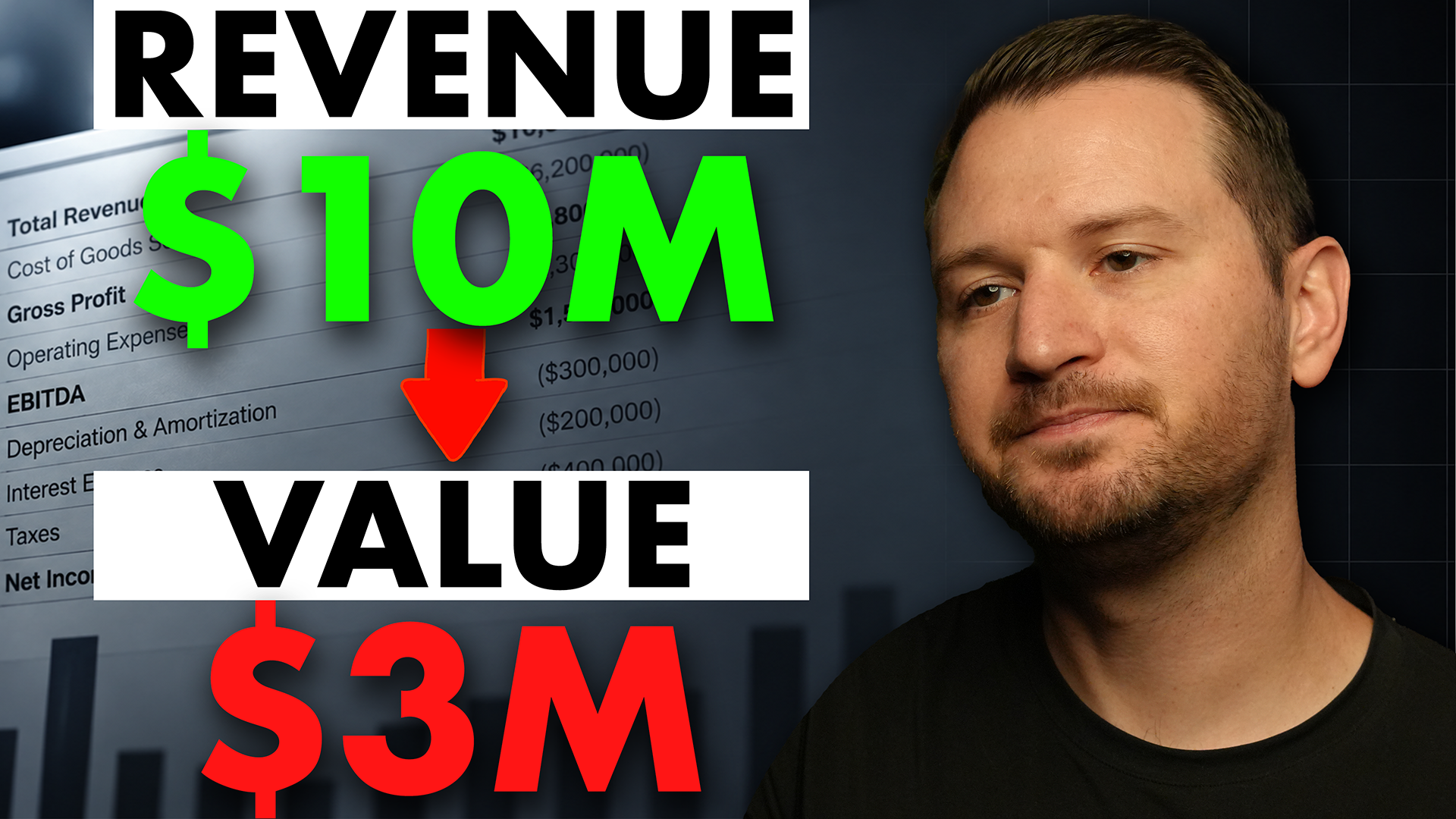
Yeah. Yeah. So I think like what's good, um 17 to 17 to 20 is like awesome. Uh 15 is a good target for most companies. And I would say that that's for most companies at scale. Uh like we're 50. You know, like that's we're at scale. Uh if you are sub five million dollars, you I don't think you should be that concerned about EBITDA unless you're prepping to sell right now. Like a 20 or 30% EBITDA, like you should just grow the business, is I think like what what would have a greater outcome for you. Um, uh like you should run a healthy business, like don't run that thing down to zero. But I wouldn't be worried about like a 30% EBITDA. Cause like we've seen, I mean, I've seen some companies on market and they're like, yeah, dude, we have 30% EBITDA and it's you know, we do 7 million of revenue. So, you know, EBITDA's like two or 2.1, and they're looking for like a nine times on that, and it's like, dude, no one's giving you that. Like, that's crazy uh for your size of a company. And it's because they just over-optimized on EBITDA thinking that um like that was the right decision, which like it wasn't. Maybe if they continued to own it for a long time, that'd be awesome, but now as a sale. That is sort of my next point here. So with with EBITDA and revenue, um a million dollars of EBITDA. The way to think about it is a million is a big threshold. So the greater your EBITDA, the higher a multiple you get when you sell your business. There's some of the largest transactions in our industry. One just happened at 23 and a half times, which is pretty cool. Uh, but most of them are like 18, 19, 20. So and the high end, that's the multiple that could be achieved if you're like a hundred million plus of EBITDA. If you're doing 300,000 of earnings, then you might get a two to three times. So, like that's sort of the difference. You know, what is kind of funny and interesting is sometimes I like comparing public companies as uh like what multiple are they trading at versus what multiple do plumbing and HVAC companies trade at? So just for perspective, yeah, Lululemon, whose pants I wear every day, is currently trading at an 8.2. Uh now they're not doing well, but it is it is kind of funny, it is kind of funny. Uh Nike is also trading at like, you know, and I wear Nike shoes half the week, and they're currently trading at like uh 15. So yeah, it is it is kind of funny to compare. Um, but yeah, so if you're a million of EBITDA, but you're a two million revenue business, your million of EBITDA is not worth like market multiple because it's 50%. It's not realistic. Somebody's gonna have to reinvest a ton into that business to get it to be better. If you're a million of but you're on 20 million of revenue, that's a really attractive opportunity for somebody because that is very low performing. That's 5%. And they someone knows that they can walk in and they can make that two, three, four, maybe five million of EBITDA with some changes. Maybe it's cuts or price negotiations or sales training or whatever, but they know there's a lot of opportunity there. Um, so a million of EBITDA is worth different amounts depending on the size of the business.
And and that's a balance too, because obviously, right, a twin twenty million dollar company with a one per $1 million in EBITDA, like there's issues in that business, which also throws up red flags to buyers and saying, like, hey, why are you running a 5% EBITDA and why are you selling? Like, optimize this a little bit and then exit.
Yeah.
Um, so it is definitely a balance. Again, shooting for that 10 to 20%, I think, is much healthier. 20 million with a Two million in EBITDA is a lot more like we'll get a better multiple, most likely, than 20 at one, even though I just want to be very clear on that. Like it's not necessarily the fact that it's lower, it's it's the fact that it's within that healthy range where it's optimizable yet uh still has the size necessary, the revenue necessary to gain that.
I've wasted a lot of money on marketing agencies that made pretty reports but didn't make the phone ring. And that's why we use ServiceGalers at Wilson. They work exclusively with home service companies and focus on what actually drives leads PPC, local service ads, SEO, Google Business Profile, and everything you need to get in front of homeowners who are ready to book. The best part is that you know exactly where your money is going and what's producing real jobs. If you're ready to stop guessing and start getting better leads, head to the link below, book a free strategy call, and let them know that owned and operated sent you. EBITDA is not the
only thing that matters to a buyer. And this is something that I've seen a lot of uh like we have conversations like this where like, hey, EBITDA is the most important number. Like EBITDA probably is the most important number. There are also other important numbers though, but like it's weighted, right? So like let's hey 50 to 70 percent of the value of your business is probably EBITDA. But that last 30 to 50 is still a lot of percents, right? So like, hey, what's the revenue? What's your headcount? What's your turnover rate? What's your average ticket? What's your conversion rate? What's your gross margin? Like, if you're a million EBITDA business at a 20% gross margin versus a million EBITDA business at a 50, those are totally worth different amounts of money. So the the qualitative of are you running a good business? Are you effective? Are you serving the right customers? Do you have good Google reviews? Do you have a lot of Google reviews? Like all of that stuff does matter when you go to value the business.
Uh, what should people be looking for? I mean, should even people be looking for, like, what should they be focusing on to drive EBITDA in their business if they're thinking about this for the first time?
Gross margin is like basically the way to start. Like in plumbing HVAC at electric, you have to control your gross margin. You should be above 50%, and then you control your SGNA. Uh, but gross margin is uh what's your labor, what's your material, what's your equipment, what's your commissions, what's your rebate program with your OEM. Um, but you want to be north of 50% gross margin, and then you want to control your SGNA. For Wilson, we like a 50-30-20. So 50 uh 50% gross margin, 30% SGNA, and uh 20% EBITDA. That's like a good, you know, mark for us. Honestly, we do we try to beat that, obviously. We're we're in the low 20s, but that is like the how we think about it.
Well, it's yeah, it's such an easy rule of thumb.
50 30 20, maybe?
50-30-20.
Yep. Sweet. Sweet. All right, thanks everybody. I hope you got a ton of value out of that. Bookmark it, listen to it once a quarter. Be reminded that your business sells off EBITDA, not revenue. Uh, and revenue only matters if your EBITDA is like overinflated. Great way to end that episode. Dude, I've seen too many deals. I've seen too many deals. Yeah, we have 70% EBITDA. Yeah, there are actually three specific people that I'm thinking of right now.
Thanks everybody like what you heard. Yeah, give us five stars.
Subscribe, share.
Give us five stars. All right, guys. Bye.
.png)

.png)