

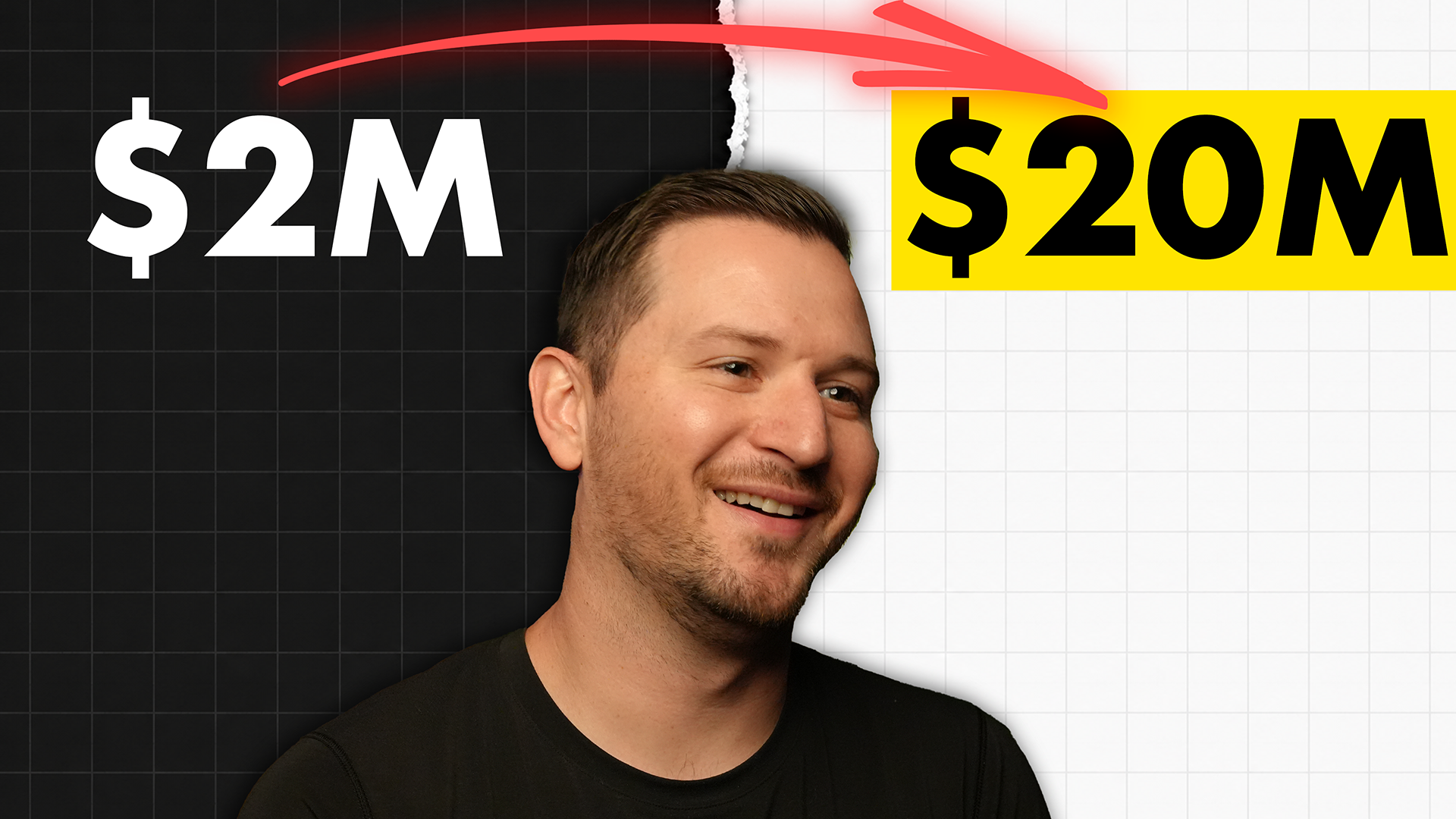
Every growing home service company eventually hits the same wall. The systems that got you to $2 million will not get you to $20 million.
In this episode of Owned and Operated, John Wilson sits down with Brady Jolly and Scott Sharrock of Jolly Heating, Air, Plumbing & Electric to break down what it actually takes to scale a second-generation home service business. They discuss moving from commercial to residential, building a leadership team, using acquisitions to accelerate growth, creating a culture people want to stay in, and the management systems that help businesses continue growing without relying on the owner.
The conversation also dives into scorecards, leadership development, AI, private equity, and why investing in people often creates a bigger return than investing anywhere else.
In This Episode
• Growing a second-generation plumbing company into a multi-trade business
• Why residential service changed the trajectory of the company
• Lessons from acquisitions, launching roofing, and adding new trades
• Building leaders before you need them
• Creating a culture that people actually want to be part of
• How scorecards and KPIs improve decision making
• AI, private equity, and where home service businesses are headed next
Connect
John Wilson
https://www.linkedin.com/in/johnbwilson1/
Brady Jolly + Scott Sharrock
https://justcalljolly.com/
Reimagining Home Services Podcast
https://www.youtube.com/@ReimaginingHomeServices
━━━━━━━━━━━━━━
Sponsors
━━━━━━━━━━━━━━
Yelp
Looking for more qualified leads beyond Google? See how contractors are using Yelp to reach homeowners who are ready to book and diversify their lead generation. Learn more: https://business.yelp.com/campaign/ownedandoperated/
The Military Veteran (TMV)
Hiring a VP, GM, or C-suite leader? The Military Veteran (TMV) specializes in executive search for home service businesses, connecting you with proven veteran leaders who know how to execute, build teams, and drive growth. Select Owned and Operated as your referral source when you schedule a consultation: https://themilvet.typeform.com/to/BDwkmCU0?typeform-source=www.themilvet.org
Big Reputation
Get more from your Google Business Profile with Big Reputation. Automate reviews, improve local visibility, and turn more Google searches into inbound calls. Learn more: https://www.bigreputation.ai/oao?utm_source=oao&utm_medium=paid
More Ways To Connect with O&O
John Wilson, CEO of Wilson Companies
Jack Carr, CEO of Rapid HVAC
📌 Disclaimer: Some links may include UTM parameters or affiliate relationships, meaning we may earn a commission if you make a purchase. Episodes may feature sponsors, but all opinions expressed are our own.
Just had this realization we can create tremendous, insane value with this business in life.
We can blow this thing up. What were the big trajectory changers for you? I think it was really understanding that we can't do it ourselves. I think that's really good, but it's just not gonna get you to where you want to go. What were the biggest mistakes you guys made along this journey? I think trying to fit the wrong people into seats. Oftentimes we don't need an ego, but we also don't limit yourself what can really happen. Yeah. What do you guys think makes uh great contractors different?
Bad. I think it's like welcome back to Owned and Operated at Top 175 uh U.S. Business Entrepreneurship Podcast. I'm your host, John Wilson. On this show, we talk about my own business in plumbing HVAC and electric, and I also bring my friends onto the show where we bullshit about how to grow our home service businesses. Today I'm joined by my friends Brady Jolly and Scott Shirac from Jolly Heating
Air Plumbing and Electric in Northern Kentucky and Cincinnati. Guys, welcome to the show. Thanks for having us, man. Glad to be here. Yeah, this will be good. Well, yeah, what time did you guys have to get up here to get up to drive here this morning?
Oh, we were Scott was up at probably 3:30.
Yeah, 3:30 this morning. Scott, you look like someone that would wake up at 3 30 regardless. Four morning is my normal. Exactly. Exactly.
I pinned you immediately as a four o'clock guy. He's got the look. Oh, yeah, he does have the look. Yeah. Just the bald hair giving it a wag.
No, it's the it's the level of alertness. You know, that's that's what it is. All right. So uh an easy drive up. It wasn't bad, right? Yeah, it was straight up three and a half hours. Awesome. Today we'll be talking about the journey of Jolly over the past couple years. You guys are a second generation business. I think you took over from your dad. What when was that?
Okay, so I took over management in 2014. Okay. I was like 21. Um, didn't know what the heck we were doing. Yeah, right around that time is when um we brought Scott on. Me and Scott met each other playing poker.
Oh wow, you guys are listening. So you've been at this together for like 12 years.
Yeah. That's sweet. We were playing poker together, and um, we thought we wanted to grow our commercial business, and I was looking for like a commercial salesman. Oh and he's like, dude, I'm your guy. You know? So we're just who won? Who won the poker? There's more stories than that. He's a shark. So uh, anyways, yeah, then I bought the business for my parents in 2017. Um, and yeah, so been at it since then, man.
Oh man, that's that is awesome. Okay, so you guys have really been working together for a while. So 2014, Scott, you joined the business. Yeah. Okay. Wow. All right. And then how big was the business at that at that point?
We were about two million bucks um at that time. And uh we were, it was about 75% commercial revenue, yeah, commercial service. We didn't HOAs, property managers, a lot of that, yeah, multifamily, like industrial park type stuff. Yeah. Um, all plumbing at that point. Um, so you know, at that time we were about 500 to 700,000 bucks of residential plumbing revenue.
All time and material, like a hundred bucks an hour. Oh, yeah. No markup on your material, just extremely old school. Probably pretty familiar. Exactly.
I'm like, oh, I'm familiar with this.
Yeah. Yeah. So it was uh, you know, it was an awesome business, man. It was it was an awesome way to grow up. My parents were very entrepreneurial, like, you know. Um, and I kind of I just always thought the business was that's just how plumbing businesses were. It was like, yeah, this is gonna create a really good living for my family. I'm gonna take it over. It's like what I wanted to do since I was yeah, can remember. But like So you did want to do it because I wanted to do.
Yeah, so funny. But I I was the I was the opposite. I've heard that. I've heard that. I don't lie. I have no idea. I I really don't. I think um, I mean, now I'm like, I'm so grateful. Uh, but yeah, growing up, I think it was probably because there was pressure to do it. Yeah, I was like, no, I don't, I I can't do that. And then I, you know, I ended up here sort of on accident, like I had a health thing in my late teens. And then, yeah, I mean, the rest is history.
I'd say it worked out all right. I'd say it worked out all right.
Yeah.
But it that is funny that you wanted it. Yeah, I think that we have pretty similar, uh, you know, I'm probably similar background in like growing up in the business and stuff. But you know, I don't know if it was like that for you. I just always pictured the business like gonna be a lifestyle business and to fund like other investment opportunities, like maybe make some cash and go invest in commercial real estate. I thought that for a couple of years. Then I'm like, dude, this is yeah, it was really around the PE boom, like yeah, 2019, 2020. I was kind of chasing this commercial real estate thing and I thought that was gonna be kind of like my career. And then it was like, man, these businesses, what they're being valued at, what you know, what they're selling for. What's going on here? How's this even possible? You know, and that was really like 2018 is when we joined Nextstar, just started learning about residential model, um, really how you should run a home a home service business. You know, we were cowboy in it before that. Um, so I think really like we started at this at 2014. I think we started figuring out the path we wanted to go on in like 2018, 2019. Yeah. Yeah. I mean, I feel like that sounds right. Yeah. And in five years, you're probably gonna, if we talk again, I'll probably be like, you know, like 2026. Yeah, that's where we're gonna do that. Yeah.
Well, I mean, we've talked about this. We've talked about I I've I always imagined, and I I wonder if you had the same like imagination, but I always imagined um you're bigger than Apollo, which Apollo's like a big dog down in Cincinnati. They're actually bigger than us. No, but uh, so like five years ago, Apollo was like 20 million dollars. Yeah, yeah, yeah. So and I think you guys are or there are close or something. 22, yeah. We're at like 22 with our roofing business that we bought. So like low 20s. Yeah. And I I've said this a lot, but like there was a company here that hit 20 million, like well before anybody else. They were like the big dog in town, and they were a next star shop, and yeah, they were they were sort of like the villain in my mind that I had to chase. And I always imagined that at 20 million, like I would feel like we knew what the fuck we were doing. Yeah, and then we got there, and I'm like, dude, we don't. We literally don't. And um, well, as of like 10 minutes ago, like we just bought another business, so now we're like 54 million. Dude, that's insane. Like I still don't know what I'm doing. I still don't know. Let's get another one. I'll take one of the now.
But like, when do I know what I'm doing? 54 million. 54 million. Congrats a lot. That's exciting. Congrats, man.
Dude, I feel like I was listening to an episode literally that was recorded this year that you said you were like 25 or 30 or something. It's just did you officially skip the 40s? That did actually happen. I did actually skip the 40s.
Yeah, I might have actually skipped the 30s. Let's do that's insane. Because I think we we came in last year like 28 or 9 or something like that. And then yeah, I mean, this was uh what's today? What is today? Uh 29th? Yeah, 29th. This is our fifth acquisition this year. Here's a stat about Yelp that I bet you didn't know. When millions of people ask AI like ChatGPT, Perplexity, or any of the others what the best home service provider is, Yelp recommendations show up three times more than Angie, Thumbtack, Home Advisor, Better Business Bureau, and Nextdoor combined. And here's why that matters to you 91 to 97% of those searches do not include the business name. The homeowner hasn't picked anybody yet, and they're deciding right now. And Yelp is where they're getting their answers. These aren't low-intent browsers. Over half of Yelp's 76 million monthly audience earns six figures and owns their home. Jose Varga started five-star HVAC on his own in Dallas, and he turned on Yelp ads, and they hit 30% year-over-year growth with $650 revenue per call, and he grew his monthly leads by 444%. If you want to own the moment when homeowners are making their choice, then you should be checking out Yelp. Start earning your share on Yelp's 350,000 daily home service leads by going to business.yelp slash owned and operated.
Yeah.
That's bananas. That is it's absolutely bananas. That's absolutely bananas.
Uh, but yeah, all that to say, when when we hit 20, I was like, we're totally gonna know what we're doing. No, absolutely not.
It's so easy to set these targets in your mind. Like, man, if like I remember thinking, if we could only go hold companies up on pedestals, $10 million company, dude. That must just be crazy. And then like we blow the doors off 10. It's like, you know, we gotta, I think 20. Like it then we'll and now it's like, man, I don't know. I think you know, now we're looking into the like, I think when we get to 30, we're gonna be like, yeah, it's gonna be really sweet, you know. But I know that that bar keeps moving. So we're but you were talking about not knowing what you're doing. We bought a roofing company in it in April. Okay, so April. Yeah, that's very much how we that's where we're at right now with roofing. It's called Madewell, but we're just figuring it out, man. It's super fun because you know, I talked about like 2018, 2019 was kind of when we started finding our direction in the home service business, starting thinking about starting HVAC and into other trades. Roofing, like right now, we're just trying to figure it out. A new industry, like we we really, as we sit here, don't know much about it at all. Yeah. So just trying to figure it out. It's been it's been fun. It's like startup land again.
Yeah, that is pretty blessed. That is pretty funny. How's it done so far? Have you you bought a roofing business?
We bought a roofing business, yeah. So it's good. It's um, it's like a well, it was like an eight, seven or eight million dollar, seven and a half, eight million dollar business, um, but a lot of new construction. Oh, that's a lot.
Yeah.
That's a big okay. Good business. Yeah. Good business. They grew a great, great business. Um, but we're scaling it back. I think they got in a little bit of there was just the classic issues you run into with new construction and then multifamily AR, cash flow. Yeah, just challenges with it. So they were able to scale revenue. Um, and it was challenging to make any money because of what we all know about new construction. So we're scaling it back, hoping to do about five million bucks this year. Okay, true, clean residential, more like our model, retail. Try to not mess with insurance all that much. Just good, clean roofing business. Yeah. We'll see if that's the way to go. Yeah. I do like the name.
Was that the name, or did you just made well?
It was the name. Yeah. Really good brand, cool brand, great operator. He's staying on as a partner, card owner. That's really good, dude. His name's Joe, just awesome. So, yeah, we're looking forward to it, man. Sweet.
Yeah.
And then how how many times have you guys done MA or was this the first one? This is the second, both this year. So we did a tuck in in January, a small. Um, they were like half a million bucks of revenue. Of revenue. Yeah. Yeah. For us. Um, I think we'll be able to do around a million bucks with them with their are they running separately or tuck in.
Just right in essentially a customer list. They call the referral base. Yeah. We let them know we partnered with this company and we will be taking care of their customers. Yeah. Had them become a part of our membership. So we gave them Jolly Home Plan membership to for free, essentially. Or if they are a paid membership, we brought it in. Yeah. And then we run the recurring services. Okay.
It's been really well. Dude, I was uh I mean, some of those are great. I mean, we've done like six or seven of those, um, and they're terrific. I like it. Dude, I was having easy, yeah. Like it's like a Monday. You just like do it. It's not that complicated.
Yeah, no. I was having uh lunch with the owners, which side story, I pull in to meet the owners and I clip the guy's mirror, raised his mirror.
That's a great start. I'm like, hey, what's up, man? I'm ready. Sorry about the mirror.
Uh hope we can make this deal. Yeah, yeah, dude.
I'm an idiot. We'll have to add, yeah, yeah.
We'll have to add some money for that. Yeah, but we're sitting there talking to these guys, and like this guy gets a call from the customer. He's one of the two owners, and he's like, Oh, dude, she wants a she wants a new system. Like, I really don't want to replace this system. Like, yeah, it's he hangs up, he's like, She's always wanting a new system, like all our customers. We just like repairing stuff. I'm like, dude, this is a gold mine. Oh, this is awesome. I'm like, so you guys don't like doing new like new installs, like you don't swap outs. He's like, No, we just like fixing stuff, man. We're too old to do new, like to do new installs. Like, I'm like sweet. Yeah, sweet. So we that's what we found. It's a lot of aged equipment. Yeah, yeah. You know, we're like it's going really well. So yeah, a good one.
Yeah, that is really funny. I think um who I talked to somebody else that had that experience, and then all that they had to do was like make sure they got so basically like you have like twenty-four months where you extract the value of the replacements that never happened, and then you have to like get them on deplumbing as fast as possible.
Yeah, sell them a service agreement, yeah. Yeah, yeah. That that is sweet. That's kind of the game plan. Yeah, yeah. It's been going good. So, yeah, we did that one in January, and then we did the made well in um April. Yeah, and then this year we did a rebrand. Um, so it's been and we launched Electric this year, too. So it's pretty good. That's a busy year. We've had a busy year, not as busy as you've done like 25 acquisitions, but we're gonna grow by 30 million in three days, but we're getting there.
Yeah, okay. All right.
I will look back on this year with some question marks. Yeah, that's insane.
Did I do that? Why did I do that? Yeah. Uh well, we set out, I we did our annual planning. So, like my job this year was three to four acquisitions, like total. And I was like, hold my athletic, you know, somebody hold my coffee. Um, okay, I feel like I've got a good background. Does the dad does your dad still work in the business? Okay. He doesn't. He's been retired since 2017. Okay, so full bio. Yep. Okay. Yeah, yeah. Cool. Yeah. So you stepped into the business, you're 21. You bought it at 24. Yeah, that's hilarious. Uh so then you so what you're 34 then. Yeah. Okay, yeah. Are we the same age? Uh I'm I think I'm a year older. Okay. I see. Yeah. Maybe next year it would be 54 million then.
Yeah. That's it. Yeah.
Yeah. That's it. Well, it it is kind of funny. There's a bunch of like there's a bunch of these multi-generation families, like Hoffman, oh yeah, and Peter McKee. Yeah, a bunch of us happened in the mid-20 teens. And I think that like there's there's, you know, there's some talent and there's a lot of luck. You know, like of all the times to enter home service, mid-20 teens was like kind of the moment.
Yeah.
Um Google reviews did you started to matter, Service Titan came out, advertising. You started to be able to like actually scale it, and you had this five-year window to be able to pass whoever the legacy winner was. And PE started coming in, and P started coming in like a lot of things. Good and bad, but yeah. Really interesting time. Really, really interesting time. Um, so it was sounds like it was like 2019 when you felt like, okay, how big was the business at that point? Probably like five million. Okay. And it was at that point you were like, okay, I can like we can do something.
Yeah, like I said, I was kind of chasing some other stuff, doing like commercial real estate and running around. Scott was running the business at that point pretty much. Oh, yeah, Scott. Um, and I mean, still is for what it's worth. But yeah, I was like kind of just messing around with a lot of other stuff. I thought like my career was going to be like commercial real estate developing, selling, leasing. And then, dude, like in 20 around 2020, just had this realization like we can create tremendous, insane value with this business and like impact so many lives, like impact all of our employees, our customers. Like we can blow this thing up. Like it can be, it can be crazy, you know. And and I never had that, like I said, I thought it was just gonna be this little, you know, home hometown business, like we always do. You only know what you know, you know. Yeah. And it's it next door really opened my eyes to that. Like, I'm going sitting there with these people. I'm like, you're going how much revenue? Like, what I didn't even know that was possible, you know? Yeah. Um, so I think we just got energized by seeing people around the country. Yeah, we knew we wanted to do something cool and big, but we didn't know exactly at all what it looked like. Yeah, we were just like, Oh, yeah, we'll take care of customers and try to optimize some stuff, and you know, but then it was like, okay, we have a plan.
I think this is the like we've talked a lot about shop tours on the show of just and just like you just have to go witness. Yeah. Because if you don't people don't understand, I would have never understood what Wilson today would look like. Uh and it would have, yeah, given me five years of inspiration had I walked into Wilson today at the beginning. Shop tours is like one of the best things going.
I mean, that's one of the best things about because like just today we walked through your shop, we saw your cool little light system.
So you've got three ideas to go home.
Like, send a picture immediately to our tech guy. Hey, dude, we should have set up. Yep. Probably gonna do the lights like in the next few weeks. Like it's an easy one. It's awesome. Yeah, and it seems like every time you do a shop tour, like you get to there's something. Yeah, there's something. Yeah, but the power of the network, you know? Yeah, power of just networking and meeting people across the country. It's just it's just like a small industry. Like, you know, you said you just rattled off a bunch of names, guys our age that are. I mean, everybody knows each other, connects, any one of those guys. Everybody knows each other.
It's a it's a wild, um, yeah. I mean, the bigger we've gotten inside the industry, and just like the more people we've met through the podcast, it really is like, oh wow, we all just know each other. Yeah, there's like 300 people, and we all just know each other. Yeah, it is it is pretty funny. I I had the same journey, I don't think it was 2019, it might have been like a year earlier, but um we were doing like we bought the business, and then my dad's like so the plumbing business was the side hustle, like second generation 50-year side hustle, but like his main business was real estate. So he and it was like residential and some light commercial, but just rent. Uh so when um I think at one point he had like 120 doors, which like Frank and Ohio, single landlord was like kind of a lot. And then he also had this plumbing company that basically doubled as the maintenance company as well as like retail plumbing. So probably yeah, probably probably really similar. And um, so like, yeah, when I entered, like I immediately started buying real estate, got some duplexes, got some apartment buildings, and then I don't remember it might have been like 2018 or something, but it must have been because we bought a business in February of 2018 and it was the first acquisition that I'd done since ownership, which was October of 2016. And we doubled the business, like overnight. Wow, and I I remember like sitting there and being like, hold on, I just doubled the business overnight. I just doubled the business overnight, and I think I need to do more of that. And then probably
a year, so maybe around the same time, a year later, I started to understand the value. Yeah, okay, now I'm now backing into this. I think it was the same time because someone called me and said, Hey, do you want to sell? And I'm like, No, not really. Like, and if I did, like, what would be the price? And they explained to me how businesses are valued, and it became so clear that any dollar because of like multiple multiple ARP, any dollar that I put towards real estate, I was literally losing money compared to that same dollar into the business, uh, which was like such a huh same.
Yeah, I thought of like real estate as like the great the way to build great wealth, and yeah I'm like, I'm losing money by investing in the real estate because if I invested my business, it's yeah. So I sold all my real estate 2020. I had six um commercial or five warehouse uh industrial buildings, sold them all, and that's when we started HVAC. Yeah, because like I don't know about you, but when I bought the business, like I didn't have that, I didn't have like really any money. And I was nervous because it was like a decent sized business. I was paying my dad off. And I'm like, dude, if I fail here, I don't have like a backing. I'm sure he would have helped me, but like I don't have like a personal backing of like to like really be super aggressive. Yeah, you know, so when we sold the real estate that helps and I was like, yeah, sweet, now let's start HVAC. And if it fails, hopefully weather a storm, you know? And it it just gave so much confidence to like so the whole thing, like I'm really glad I went through that phase because it gave me so much confidence and backing to be able to like go get it a little bit more aggressive, yeah. You know, and I feel like we're in that phase now where like we talk about it now that we've been had some profitable years, like how aggressive should we get? Like, how much more should we dump into marketing and market share? And yeah, it's fun.
Yeah, that is fun. That is fun. I the way I think of it about like the last 10 years and two of my life, and probably yours is similar, is like I remember what's the right way to start this? Of every day is so filled. But if I look back at each year, there was like one or two things that actually made a difference. Uh, which I think is kind of funny. But like when you think about a decade of your life, it's like there's actually probably five things that that like made the difference. Like, what were the big trajectory changers for you? So I mean, obviously deciding to like all in on the business. Oh yeah, off real estate.
That was what were the other ones? You know, honestly, joining Nextar, and which for us set a direction with residential. Yeah, we're gonna be a home service company. We're not gonna try to be good at both. We're gonna get really good at providing like incredible face-to-face home service for customers, white glove, like all in on that. Um and just like chase that. That was that was a big one. That was like twenty 2018, 2019. Um, and then honestly, like our commitment to people, um, yeah, and you know, realizing we kind of much might, I don't know if it was like this with you growing up, like the old school way of business. It was like we were burning and churning our plumbers, and they were working 70 and 80 hours a week, and they were young guys who could do that. And then they'd be like, Man, I just can't, I like working here, but dude, this is crazy. Like, I I can't sustain this. I can't have a family, like I can't work here if it's gonna be like this. Yeah, it's like, all right, well, we'll find somebody else, you know? It's a really hard way to grow a business, yeah, you know. Um, so just doubling down on culture. I really don't like the word culture, but really just building an awesome place that people want to work, you know. Um, that was something early before we even knew what we wanted to do. We just like leaned in on. I think that was like 2015. We were right after I took over and managed business the business. We were we were going from a 4,000 square foot little office, and there was a 28,000 square foot building across the street for sale. And at that time I didn't know the business, but I'm like, dad, like we have to move across, like we liked our area, like we got to try to find a way to get in here. So that building, we leased it out to a bunch of tenants, but we put a basketball court dead smack in the middle of our office. That's funny. Um, and built the office around the basketball court. So, like when you walk in, the first thing you see is a basketball court. And we're like, I want to do that because I want it to be different. Like, I want people to be like, why? Does this plumbing company have this? Like, why does it look cool like this? Why is it? What are you guys doing here? You know, I want to be like drawn to it. The um one of the cool things that happened there is we use that as an event center for like eight years. So on the weekends and in the evenings, the community would come in and they'd rent our space and we'd have signage about Jolly up. So like we got multiple people, we hired multiple people because they're like, dude, I was in your space over the weekend for like a birthday party. It's sick. Like it's sweet. What's going on? You know, maybe that's a place I want to work, you know. So that was that was something different focused around people. Yeah, it worked really good. Yeah. What would you say?
What are some of the other like term the main big things we built? Yeah, yeah. I mean, adding other traits, heating and air was a massive one. I was that was 2020. 21. Yeah, 21. Wish we would have done it sooner.
Um, you know, for we were seven million, six million at that time.
We're like five and a half, yeah. Five and a half close to six. Um, I think it was really understanding that we can't do it ourselves. And that's two people like me and Brady, we're cowboying everything, saying yes to everything. We're the entire leadership team. There was no department heads, um, there's zero delegation. It was like, say yes, let's work really hard, let's cowboy and get through it. I think that's really good, but it's just not gonna get you to where you want to go and scale. So for me personally, I actually had the opportunity to go work at Nextstar. So I was a coach at Nextstar for a few years. Um so when we had added other trades, I think we could run a business well, but how can we run a business to be able to acquire? How can we be able to take what we're doing here, go in these acquisitions and apply it? Yeah, that was the pivotal moment. It's like, oh my gosh, I can now have the access to a hundred companies that I coach and train, and I learned more from doing the job than teaching. Yeah. Um, not to say there wasn't value there, but that is when, like, okay, here's the playbook. I've watched the film, now let's go execute. So that was like a pivotal moment. I've been back for almost three years. Uh, and and Brady and I have, you know, we've been best friends through all this. And what was really unique when I was at Nextstar, I was actually able to coach Jolly. So it was like I never left. So it was just this really cool dynamic. Um, so I would say multiple trade, next star platform, yeah. And then the connections, like we mentioned it before, but we just have great friends in the industry where we can shoot out of text or you know, have a vendor relationship that we were helping with us on pricing. You know, we've done that multiple times, those small things. So just people connection, um, definitely culture. Like we mission, vision, values was a big thing for us. Not just the rebrand, but restructuring those. Um, and there's a lot there. We got a ton of conversation. I want to dive into that.
Yeah, like so, like you we've built a aside from the basketball court, which that is pretty great. Like, what else have we done to build a company that people don't want to leave?
We realize that like having a cool basketball court and having a like good snacks at the vending machine here or the at the snacks shop for free in our office. That's not how you build a good culture, right? Like, I'm like, we're gonna put a basketball court here and it everybody's gonna love this place. Yeah, they can play basketball on their breaks or before work. Well, we had a horrible culture like around that time too. So don't like, it's not like we did all this and we've always had a great culture. For us, it's been like tracking the culture, literally, like really tracking it. You know, the engagement survey that goes out for quarterly surveys, annual surveys, having meetings with the team and getting true, real feedback. Yeah, um, one dedicated off-site per year with our leadership team, all about the results from the annual survey, and then tracking against exactly making action items, exactly what we can do to improve the culture based on what the team's saying. Then going in front of the team, telling them our plan and saying, like at a town hall, saying, what do you guys think? Here's what we're thinking based on your feedback. Here's some things we might need more of. Let's do a group exercise to find out what we can do to continue to maybe it's about pay, maybe it's about communication, whatever it's about. What can we do to level up? And then throughout the year, constantly getting more feedback and reminding them of what we're working on. So, hey guys, back in March when we did the annual survey, you said that you wanted us to give better, more meaningful recognition. So, here's some of the things we put into place to do that. Tell us how that's working. You know, is it is it working well? So, like in 2018, it's actually was 2019, we had a 56 out of 100 engagement score on this. It's basically 56 out of 100 cultures, how we look at it. That was what our team ranked us on an anonymous survey. This year we had nine, we were 93 out of 100 every year leveled up. Um, and like seriously reading the comments that are at the end, they have an anonymous part for comments. And not that they're all positive, there was some, you know, room for improvement in there too. Like, probably brings me more joy and excitement than anything I've ever done in in this business. Just because it's it's awesome when your employees are like raving about anonymously. Yeah. You know, and we're not even it it's really cool, you know. And I think that that's something that we've um finally feel like we're really good at. Like even three years, three years ago, we'd say we had an okay culture. We we wanted it so bad. Like that's why we did the basketball course. That's why I've done some cool, but it's finally catching up, and we've learned it's so much more than just the space you provide people. Yes, yeah, it's like actually how you interact. What I I go like Scott's really good at communication rhythms and setting up rhythms to communicate. Will you talk more about that? Because I think that like our culture, it's it's built on that, like one-to-one communication.
Yeah, yeah. And I think one, there's a couple things you mentioned there. As we're talking about culture and plug-engagement, we took the stance of we were way too hard, we burnt people out, we were 24-7, everyone was on call. Yeah, went to we're way too easy. You can take off whenever you want, you can do whatever you want, you don't have to wear your uniform. And that was the worst culture possible. Yeah. So when we went to these new mission, vision values was these are expectations. If you can't follow them and you can't do them, you can't work here. And that to me was the pivotal point of like, okay, I'm gonna buy in and then celebrate each other because everyone at that point knows we're held to this expectation. So that was just a good learning curve, and that was only over like six years. Yeah, so that happened pretty fast. Um, but communication rhythms, we talk about our mission, vision, and values and all of our hiring, that's massive. And like we go through it, and not only do we just read this is the core value, and this is what we're supposed to do, it's demonstrated behaviors, non-demonstrated, and then overdone. So we're showing them what these behaviors look like. So when the day is one of our core values, we're having a new interview, we're gonna tell them, hey, we will be reviewing your conversion rate and average shell, we will be talking about your performance. 20 to 30 percent of your pay will be based off performance, depending on the position, right? Sales is 100%. Um, and then here to serve. We expect if we don't have full capacity of plumbing, you may be helping an HVAC install. And those small things have built a culture of where we'll have a sewer install technician go help an HVAC install in June and July, and we'll have an HVAC installer go help sewer install. And it's built that like camaraderie of this is Jolly. You're not just in heating and air, or you're not just in plumbing or sewer or electric, like you're working for Jolly, so that's been big. But cadence is um interview, hiring, uh, weekly trainings, we talk about it every single week. Um, we're very intentional on making sure everyone knows our mission statement. So we try to end in our mission statement, which is reimagining how the world experiences home services. Um, we also do our weekly one-to-ones in there, very simple, but what core value are you demonstrating this week? And why? So it's very simple, it has like the six core values. You check a box and you just say like how you're demonstrating it. So it keeps it front and center. Um, we do a monthly all company, which is most of the time I facilitate it'll facilitate it, but it is an absolute blast. So, how we open every all company every single time is three people that you've seen act our mission, vision values, and why. And then we share, we we like break up next to our style, everyone up, find someone not in your department, and it's just contagious, like it gets super exciting. People are constantly talking about other people, other departments, mission, vision values, um, quarterly town hall, same thing. We do our big, huge core value wards. Um, so it's it's front and center of everything. Uh even our daily aspect, we have a recognition board. We use Discord, which is uh typically a gaming platform, but we've transformed it to our business. And every day there's 40 to 50 messages from employees of recognizing each other in a core value, and it's just live all day long. So that's the culture of that. And it's the people, it's not us, it's it's the people have bought into that.
We found that recognition from peer to peer is so much better than like when we're just forcing recognition. You know, I mean, you know how it is. Like we used to pick managers would pick the awards every quarter, the quarterly awards. Now we let the team pick it, but they have to write why. So each core value has an award. So like the winner's work award, the here to serve award, you know. So they write why, you know. I think Scott should win the Here to Serve award because he helped me with this or that. And then we read all those nominations at the town hall. So it's it's sweet. People are like, you know, puffing their chest out, like, yeah, look
what my team's saying about me. This is awesome, you know. Um, it and that I think is so much better. It's authentic. It's it's it's way more authentic than we're just saying, like, we want to pick this guy because he sold 400,000 last month and you know, win the day, you know. That's you know, let's help. Scott mentioned the we had like an easy culture for we thought culture was gonna be make it easy on everybody. Well, I think uh it's you went from one extreme to the other.
Yeah.
We talk about now like a sports analogy. Like, if you think about the best sports teams in the history of American sports, like the Patriots and Tom Brady, the Bulls with Jordan, Jeter and the Yankees, like I like the Spurs growing up. Like, think about those teams. Like, if you go to any of the of Tom Brady's teammates and said, Hey, what do you like about working for the Patriots? I guarantee you they are not gonna say, Easy job, man. I just come in and punch the clock and you know, I come and go. And no, they're gonna be like, we win championships here, we're dialed in, we make each other better. Yeah, we love working here. Yeah, we empower each other, we're here to like better this franchise. Like, yeah, that's like, dude, that's I want that. You know, I don't want the place where people come in and say, This is really easy place to work. I'm punch the clock and leave. Yeah.
Yeah, I agree. I think it's hard to drive like in achievement culture. Um, because I think what where a lot of people get lost in the sauce is they go way too deep on achievement culture and it becomes just as toxic the other way.
Yeah. Uh we just talked about that. So we our last haul company was we were talking about the customer journey. Yeah. And we were talking about the importance of the customer journey and that high performance does not give you the right to not give the customer journey that we're stating. Oh, yeah. And like you talk about mission, vision, values, and culture. If you aren't holding your high performers to that expectation, yeah, it is toxic. Yeah. Like just because you're a high performer doesn't give you permission to do whatever you want and treat people however you want. And I think that's that's what can happen if you're performance-based only.
Yeah.
Is you have really good performance and you're burning and churning your customers. Like it's it can be short-term success.
Yeah. What I think has been interesting about this topic, um it's because of all the technology in the trades now, it's so easy to measure more than ever.
Oh, yeah.
Uh individual performance. And because of the values of the businesses that are being built, it's it's uh like intoxicating. But what's been really interesting is in the past year there's been some really public blow-ups from sales that were about to happen. So like a business went under contract, it's a huge one in Florida that like happened uh earlier this year, like a big business uh north of 50. And they went under contract, I think, with like two or three buyers sub subsequently. And the thing that killed the deal was exactly this problem. They were way too performance driven, they burned their customers like crazy. And I think because there's been um some examples out west of a few companies that had like way too uh way, they went just because you can doesn't mean you should. They had way too deep of like a toxic sales culture, and those businesses exploded. Like they went from like nine figures to eight. And um there's a few of them. So so now like buyers are putting way more attention on like, hey, we're gonna secret shop your process. Yeah, we're gonna send someone and we're gonna sit through your sales presentation because just because you've been growing fast doesn't mean you're gonna keep growing fast. Like, if this is really pushy sales, like you'll probably explode. Uh, they want to understand your price to market. Like it used to be, hey, you want to be the premium, and now like I don't know, you want to be the premium. Like, I actually think there's an argument to like not quite being there. Um, so it it is interesting because I'm hearing that conversation more and more from like private equity buyers of like, yeah, here's the qualitative things that we're looking for in a business, which like five years ago, I don't think I heard anybody talking about. But now they're like, hey, we want to understand these 150 bad reviews that said your salespeople were pushy. Yeah, because we're concerned that this turns into an explosion in a year. Hiring the wrong executive is one of the most expensive mistakes that you can make. It's gonna cost you time, it slows growth, and it can send your entire company back. That's why we partnered with
the Military Veteran. They specialize in executive search, connecting home service companies with proven veteran leaders who built teams, they've executed under pressure, and they know how to drive results from day one. Their team has access to one of the largest veteran leadership networks in the country and personally vets every candidate for both operational excellence and cultural fit. One of their clients used TMV to build its leadership bench while scaling from 50 million of revenue to 3 billion over five years. If you're hiring a VP, GM, or C-suite leader, don't leave it to chance. Click the link below and tell them about your hiring needs and be sure to select owned and operated as your referral source.
I couldn't agree more, man. Yeah, you know, we we were really nervous about our engagement survey this year. We were thinking, like, man, we've been pushing. Like we've been like really pushing our team, yeah, accountability, like, not like not like we talk about sales culture. Yeah, like selling it's part of our values, is like, you know, do the right thing and only sell the customer what they want or need, you know. But we're definitely pushing on our team, you know, to perform. So we're like, man, it was the highest growth year we've ever had since running the business, 40% growth.
It's a lot.
We're like, dude, I think the team might feel burned out. And we got the best engagement score we've ever got at 93, which what told me was it was like, oh, great, the people we're hiring and how we're talking to them in our hiring process, it's working. It's like I think about the crew that we took over when we took over the business. It would never have worked how we're doing this now. And that's that's a mistake I made. I tried to drag on. Yeah, you tried to convert. And it just doesn't work. Yeah, it does work. There's like one guy left from from those days. And he's he was my dad's first ever employee. He's worked for us for 47 years, and he's the last last of the movie. That's funny.
Yeah, no, it doesn't work. I feel like we've we've tried that a number of times too, and um mainly just through acquisitions because now it's like we we re- we had to relearn that so many times. We inherit a team, we bring them on. For the most part, we have a very good hit rate for like keeping people on for that first year, but then it it's like, hey, this is what we're about, and we just can't really bend it. Like, I think as of today, we're 275 team members. Like, this is it. This is five minutes ago. As of like 25 minutes, let's go. Yeah, yeah. Um, but yeah, it it is hard to bend. It's hard to bend anymore. What were the biggest mistakes you guys made along this journey?
Well, I kind of just touched on one. I think trying to fit the the wrong people into seats, you know, we did a lot of that. Um, and Scott touched on it too. We I think that's a hard one. Yeah, it is because you know, I wanted uh like the feel-good story, like, hey, I took over my parents' business and then grow it like crazy with the same people that they had. Yeah, and like now I've made those people even more successful financially and everything. But what I found, like the the people that were working for the little two million dollar hometown shop with not a lot of systems and processes and no technology and stuff, that's what they wanted. Like they they didn't want to work for a company that where they had to use an iPad and do paperless billing and like you know, as simple as like punching a clock. Like, literally, when I took over the business, they're punching a clock. And one of the first things is like, hey, let's just go to like where you can lock in on your phone. It's like people literally quit over that, you know? Wow, like they didn't want to work for a company that's doing any technology, you know. So why are we gonna try to make that? I wish we just wouldn't have tried to make it work and had more of like a real conversation early, you know. Um, Scott touched on the leadership thing, but I think it's really interesting with your breaking five that you do, because five was a we got stuck there for like two or three years. Yeah, it's a big number. It really is. And it was because he and I were the only leaders, you know. We we really just hired, just we promoted a um a plumbing service or a plumbing tech to a plumbing service manager in 2019. Yeah, and he's still our plumbing service manager today, but I was like our first manager. So we did it for six or seven years, where yeah, it was just us trying to be the managers, and you can't grow a business like that, you know? Yeah. And of course, you're looking at the bottom line, like, man, when do we invest in that? And how? And so um when we finally committed to that, we had some less profitable years than we would have liked, but in the long run, it's just it's really paid off.
Yeah.
Yeah.
What do you think?
Yeah, for me, I I the first one is developing leaders, being able to delegate and and truly developing, not just saying, hey, you're a manager, it's like teach these leaders how to facilitate one-on-ones, teach them how to read and understand gross margins and the lever and what job costing means, um, and how I know the difference between high material and discounts. So is your material a negotiation with the vendor, or is it because we're discounting it by 25%? Yeah, um, or is it because we're using the you know membership to show the discount? Well, what what is it in in teaching that leverage then also I think early on, it's interesting how you overcorrect. Like early on, we had basic KPIs, but our financials weren't what they should have been. And our live weekly scorecards, yeah, that is our compass now. Um, so early on, we made healthy assumptions. We probably were right about some, but maybe that 20% could have changed a lot of decisions that would have saved us. Um, so I think those financials and understanding the gross margins, specifically having that weekly scorecard. Like we need to know.
Walk me through what's on that.
Yeah, for us, uh, it's our each department. Um, so I think plumbing electricity. All of our leadership. So it's a live document. We review it in our ops L10. We call it Ops L10. It's our weekly L10. Yep. And all of our leaders in there, and we do IDS, identify, discuss, solve, but we start with our scorecards. Each department head has uh their revenue, basic KPI. So conversion rate, average sale, turnover, um, same day camera rate, all those things. And then it gets into the gross margins and we want to know uh revenue, and then we go minus subs finance fees, and we have net revenue. Then our margins are based off that net revenue. So what's your labor, material, sales, permits, others? Yeah, then what's our gross margin? And we're tracking that to the budget, baby. Like our service managers, they're you know, bullseye is gross profit dollars. How do we get there successfully? How do we really run more calls, increase converged rate, average sale? This is our goal. Uh, and that compass has really allowed us to have great, like middle level leaders. And yeah, I'm proud of them. Like just the growth they've had over the past three years has been exceptional. So it's it's like fuel, and they're balled in, yeah, they're engaged.
Yeah, yeah. How many, how many uh KPIs are on that scorecard? Like 10, 12?
Way too many. Yeah.
Um, like more than 10 or 12, or yeah, per department.
I mean, some of them we break down. So, like, for example, you have your basic your so I would say like your fundamentals are 10. Yeah. And then we do some subcategories. So, like, for example, plumbing service, we want to make sure we're tracking how many water heaters we're running, yeah, and what's not the conversion rate on those for repair, what's the replacement rate? Yep. So we're tracking those, and then what's the material specifically on water heaters? Yep. And um, what number of water quality systems? So we track, we want to know exactly how much revenue in plumbing service is coming from water heaters and water quality systems. This allows us to make sure that we're seeing if our material is high, yeah, why? Yeah, and our labor should be lower and those things. And we also, those are high-ticketed items, right? Those are high hot leads. So um, do you want to add anything?
Yeah, we have our scorecards are vast. Like if we showed most like we overcorrected. Most consultants.
I mean, uh, us two. Yeah. That's why I'm like digging into this. Because like I think one of the problems is this is uh just because you can doesn't mean you should. Yeah, no. We can measure anything in the world that we would want to measure inside our business, and that means we did. Exactly. Yeah.
Yeah. And I think like where we're at, where we have to be super intentional because we have so many KPIs, yeah. It's it's how we coach the managers to communicate those. So the story. We we don't want them to go down, conversion rate was 58%. Like and then down to the water heater section. We sold this many water heaters. Like, no, that would be unproductive for everybody. Tell us a story about your week in the L10 in the ops review, and you have about three or four minutes to do it at most. So if water heaters are an issue that week, well, let's talk about it. If they're exceptional, brag on your team and talk about it. It other weeks where it's just normal, skip over it and focus on another KPI. Yeah. So because we've been down that path where our scorecard to the portion of our L10 we've reduced it. Yeah. And it really, but one of the other things, like it's not just the business unit managers, like the department managers. We have for you know for call center for employee experience for accounting. If if you're in an L10, um, so we have an ops L10 and a biz L10, the biz L10's every three weeks. That's like senior leadership. If you're in an L10, you have a scorecard that you're going to report on to your team, you know. And it might be as simple for um employee experience of just like our turnover retention rate, you know, hires and fires, whatever, you know. It could be simple, could be vast. Um, so some of them accounting might only have three lines. Yeah. Some of them, if you're filming service, you might have 40 lines. Yeah.
Yeah, yeah. Yeah, that makes sense. We we've done the same, uh, we've done the same. One of the projects we're working on is uh we have um I think seven locations. And um, I'm trying to do the math. It was this morning, like change my uh yeah, change my it's either six or seven. I've got to say gotta work on that. Hold on. And one of the challenges that we're having is like leaders, like how do we talk to those team members uh in a way that's productive? Because right now um we're we're doing we're very effective with our daily huddle, and that's like call it eight eight lines. Yep. Um, but we had uh Ken Goodrich on uh the show, I think last fall. Uh and one of the things we talked about there was like exactly this problem like how do you scorecard a branch and how often do you talk to them? And how do you like because we were trying to unpack it in our brains, even though we weren't there, and now we're here and we're like we still haven't unpacked this. Uh and he had his framework was they have a every the twice a week, 90 minutes, I think, which to me sounds very long. And I'm I'm remember I gotta go back and listen, but I'm remembering his reasoning for that 90 minutes was like it should be long enough to be inconvenient. He wasn't trying to make it easy, he was trying to like pull them out of the business and like let's talk about the business. Um and so maybe that does mean it's more, but like it was twice a week, and I wanna I want to say it was like uh Monday and then Wednesday or Thursday, and like, hey, we're diving into financials. We want to know like EBITDA for the week, EBITDA pacing for the month. We want to understand like the key drivers behind the business for that branch. So we're in this, like right now, where we're starting to try to our next big project, basically August, is okay, we've you know doubled in the past six months. We've gone from one location to six. Now, how do we run this again? Like most of our like framework is like built, so it's not like we're like losing anything, we're just not as optimal as we could be.
Yeah, we were just talking about that on the drive up. Like we have this really good communication rhythm right now with everybody in office and it's our team here, but as we we're even having that with Madewell, so we have Madewell roofing, we have another L10, you know. So, what if we did have to layer in three or four or five more? Like, I don't Scott can't be in all those L10s.
I mean culture, like I was imagining that as you thought about how you were talking about culture and communicating, and um that becomes a pain point. You you can't really it's hard to manage culture remotely as minutely as you're doing.
So tell me how you guys are doing it with all of your locations, like from uh whether you call it an L10, weekly management meeting, whatever you call it. Like, how how do you do that?
So the way that we're doing this now, and uh I would not hold this up as the gold standard, right? I just like I just identified a couple areas that we need to improve. Um, so like what we're doing now is there's a daily huddle, and on that daily huddle, there's some shared service, like call center participates, marketing participates, and then whoever's like on the ground from each branch. So that's gonna be the uh local GM, um, maybe a service manager if they have a service manager. But the branches all all the branches now except for one are like more than six million of revenue or seven. So like they all have some structure there. Um so yeah, so they have a daily huddle, the shared service team participates just through Zoom, they run through a scorecard. Like, are we set up to win today? What's our call gap? Do we have to change marketing? Are we outbounding? What's conversion rate from yesterday? What you know, revenue sales, just sort of like the 10 to 12 things that we need to know. Um and then once and so then there's no weekly, and that's the thing we're trying to solve for now. And then the the next big one is a monthly we fly everyone into STO. And we go over like here was the month, here was budget, it's a day and a half. Um most of it is training, like exactly the problem that you were just talking about. So we have a leadership development program where we help take frontline team members like technicians, call center, perhaps administrative uh personnel, and move them up into like a service manager, install manager, or supervisory role, uh, lead tech. Really, there's like 10 different ways that they can land. But we have a program to do that. We're on our third cohort um of that. It's a 12-month program. So they they learned a ton in that process. What we didn't have was continuing ed for a manager. So it's like we spent like a year training these people how to like talk to people and what what is gross profit and you know, just all the basics of being a leader, and then they become a leader, and then our training stopped. So we're like, okay, well, this this isn't good, this isn't good. So now we do a day and a half every month. It's the second Wednesday of every month, um, because that's when closed financials are. So then we uh we train for a day on a topic that's relevant to the business. Uh Brandon leads all those trainings, and then I come in and we go over performance by branch. Uh, and then each branch leader leads the conversation on performance by level. So it's like, hey, here's what happened, here's where we won, here's where we lost. And then at a branch level, do they do any weekly cadence or anything around? No, we're if if they had it prior to us walking in, they're doing it. Um, but that's something that we're working on now is L10's by branch. Man, I really like the commitment though to a day and a half with everybody here. I mean, that's a that's a financial commitment. It's a financial, I mean, it's been it's been good. Uh it's been really good. And I think, you know, the last time so we went our journey was we went multi-location in 2021 and we ran multi-location for two or three years, and then we consolidated into this building that we're all here, and it's for a lot of reasons. Um, like imagine your size of not the not the roofing business, but just the jolly side. Imagine that size of revenue, but being spread across four locations, all an hour apart. Like it didn't make any sense. Um, so we consolidated down uh and then like basically built our infrastructure. But the challenges that we had for those two years that we ran multi-location was like three big issues, and it was leadership, leadership, leadership, and like almost nothing else mattered. Uh, so when we went this time, like a year and a half ago, we were prepping to go multi-location again by developing this leadership program cohort because we knew there's one issue that we have to solve for multi-location, and it is leadership. Yep. Um, and then as we as we started bringing on locations, we immediately we we've had this like uh leadership ongoing leadership training forever, but it was only it was every Wednesday for an hour. So as we did this, it was like, okay, that's no longer enough. Now we need a day and a half or two days in office all together. We're gonna perform activities, we're gonna like understand more about the business, how to have hard conversations, how to measure success. Yeah, man.
I mean, I think that the it's just such a challenge identifying leaders in the business that aren't in the leadership position yet, and then putting them in leadership positions. That that's that's something we're working through right now. I think you have your first training on leadership. Right away, right? Whole new thing that Scott's doing for leadership development and identifying those people. But it's so easy to be like, you know, we do it occasionally, like, let's just write on a whiteboard or write down who here could be a leader. It's so easy to dismiss. Like, oh, that guy, I don't think so. Um, I don't think they have what it takes. Like, we'll do that, and we literally haven't even talked to him about it. Like, do you want to? Do you, you know, is it a your desire? What do you think would be good? Why would you be good at it? Like, yeah, I'm like literally basing how he acts in front of a customer on if he can be a leader, and they're two completely different skill sets. You know, so it's you you gotta be very diligent about having those conversations, I think. And we're like at the baseline of starting that because we look at where we want to go. We have to what you said. We have to build them.
That mid-level management can be overlooked. It's like they are controlling the dial, like they're they're having the relationships with the frontline employee, they're controlling the culture. If they're not bought bought in, their team's not bought in. So, like that is the the bridge from senior leadership, obviously, to frontline. Um, and it doesn't matter how great of a senior leader you are. If your your middle management is not balled in, your middle leadership's not bought in. Um, and if they're not, that's on the senior leadership. You're not training them, you're not giving them the effort, you're not teaching them who taught you, or um, and I think that's the hard part because like a lot of times like we sit here and talk, oh, like we were 2002, we had 10 years of failing. Like right now, we're not gonna fail at all. So we have these middle level managers, we're holding the higher standard than we even hold ourselves. Like, we didn't give ourselves one year to we didn't fire ourselves, right? Um, but we give them a small window, and I think we just have to support them, like you're mentioning. Yeah, uh, and we're excited, like we were fired up Jolly University, it's in the first first volume. We were definitely like once a once twice a quarter, we'd have a leadership training and we'd dive into books and we'd do good things, but now we're gonna really like I think we have all of our mid-level management in there, and then we're gonna have three frontline employees that have interest, yeah, and we're just gonna show them everything and tell them everything and how we coach and train. And I'm I'm fired up for it. Yeah, good.
The the if this helps, the thing that we did to like get buy-in was for someone to join that leadership cohort, uh, three things have to happen. Your peers have to recognize that um you could be a leader, which is important. That's great. Because if they're about to be promoted over those peers, like you need them to buy in. Yeah, the manager has to agree, uh, which like that one kind of gets question marks, like I've seen you after my job, kid. You know, yeah. So that one we've had some challenges with. Um, for the most part, that also helps us identify the culture of that leader. Yeah. Of like, hey, is this if this manager is like concerned about this guy growing, is the manager, the person that we want to be here? Uh so that's actually helped us like have some good conversations. Um, and then the third one was you have to go through an interview process, and it's like a three-step interview process with uh Brandon uh personally. So I love that. So those three steps, uh, the peer one has been really, really helpful.
How do you get that out? Like, is it a just a survey? You know, how how are you getting that information?
So what we do is uh we're we just notify it's basically every November and every June, I think. Now we're on our third one. We just filled our third one. And uh what we do is we we just start talking about it in Slack. We start talking to it in the monthly leadership thing, like, hey, we're bringing on the next cohort. Um, is there anyone like you'd like to nominate? Also, we just post it inside Slack, like, hey, we're doing the next cohort. If you want to be involved, here's how you get involved.
Yeah.
Um, and then what'll happen is uh because we post that, like team members, like technicians, will start reaching out and saying, like, hey, this happened with our most recent one. We just promoted someone to our electrical service manager. And before he even applied, we had two of his peers say, I actually think that Kyle would do like an incredible job. That's great. And it was it was awesome. And for us, like, I mean, that's a big deal because we need to know that that team wants to be led by that person. Yep. Uh, would you, you know, 100%.
So yeah, having like peer buy-in was really, really and peers see things we often don't. They see the the day-to-day customer interactions, uh, you know, garage talk, how clean their shop is, if they're taking their uniform off in the truck and throwing that, you know, hoodie on or whatever. That's that's good. Um, that's good to do that. I really like that. Yeah. Yeah.
Thanks for sharing. Helped a lot. What do you guys think makes uh great contractors different?
We touch on data a lot on this call or on this podcast. Um, but man, I think it's like data tracking and yeah, being able to dial it in, get accurate data. Um, that I think so many people say, like, yeah, we're tracking everything. And then they're like just tracking the boilerplate reports out of Service Titan that if you pull them three different ways, they look three different different, you know.
Yeah.
Um, that was us forever. Like we thought we knew our conversion rate average sale, and like until a few years ago, we really didn't, you know. So I think good contractors know their numbers like really well. You can go up to any manager and say, Hey man, what was your conversion rate last week? And they know it. Hey, what's this tech's conversion rate average sale? They're probably going to be pretty close to it. Like, yeah, I think it it's getting really close to the numbers and knowing them like the back of your hand.
Yeah. Yeah. Yeah, I think that's up there. And I think, you know, comically, not going too far. Sure. Because we definitely have. Oh, we like actively are. I think our scorecard in our L10 is like, it's like a hundred lines long. And I sit through this every third uh Thursday, and I'm like, this is the worst. Like it doesn't, it's it's not actually giving us the information that we need. But then you I remember why
we added each line. And you're like, well, if we take our eyes off that, yeah.
Yeah.
Yeah. We do the same. It is, it is it's report versus scorecard. Like, you need a report for everything, and you need a scorecard that's minimal. And like the report's got to be able to see the extra layer. Um, and we have a lot of stuff on our scorecards we hide and that we can unhide if we like, oh crap, you know, we need to look at this KPI. Um, and why, you know. For for me, I think what separates it is training the frontline employees. I think oftentimes we expect something we've never even trained. So we'll talk about customer experience, customer journey, how we agree. And and oftentimes you can send someone to you know a service system and they're gone for three or four days. But like what really I'm proud of at the Jolly Culture is how well we were at training. And these are from mid-level service managers, yeah. It's every week, we're skill practicing, we're developing our fundamentals, and it's customer focused. It's not in none of those meetings are we talking about conversion or out of a shell. We are talking about the customer experience and what we want to provide. Yeah, that's a separating factor. Um, we need to do more technical. I think we're exceptional at customer experience. And there's companies that their superpowers technical. I'd like to have a little bit of blend both. So that's an opportunity for us, is more in the technical as well. Um, but I think training the frontline employees to provide the service that you're saying that you're giving, you're promising, right? Your branding, your marketing. Um and and I think also on the backside is like recognizing the frontline. Like one thing I'm intentional about in all of our one all of our monthly all companies is the people in this room is what makes it space place special. Like, let's not forget that. Like the plumbers, the electricians, the heating and air, they are doing the hard, they're having the conversations every day. And I think having that appreciation and recognition to them is is very important. And I I haven't always had that. And it's good to feel grateful, you know, it's good to share that love because it's important.
Yeah.
Yeah.
What uh what trends are you guys paying attention to over the next five days? Where's your heads out?
Yeah, man. I mean, obviously we're in the AI. That's the easy answer. We're in the AI boom right now. It's it's what tools work, what tools are just noise, um, what is good customer service and what's not. You know, it's so easy to onboard all this technology and then give your customer really bad experience. Um, like the things that got us here are giving customers in our community really good service and making them feel good when we answer the phone and it's a live voice, and you know, so making sure they're getting that same impact, yeah, maybe a different way. Um and I also just, you know, the PE stuff's always gonna be uh that's something we really pay a lot of attention to. You know, there was a grocery store in our town for years and years, it was the best grocery store in town called County Market. Walmart came in and offered to buy them. Kroger came in and offered to buy them, Meyer. They're like, no, no, no. I mean, I knew the owner, great guy. And then years later, they go out of business and there's all these other grocery stores in town. Like, it's easy for us to say, no, we're not doing it, we're locally owned. Like, and that's what we want. Like, we want to grow this thing locally owned, and you know, who knows what will ever happen. But we also don't want to do it, and then all of a sudden everybody on our company is out on the street because we couldn't keep up. Like so, just staying close to what that is and making sure that we know, like, we really know what are the advantages of being locally owned, uh, you know, me owning the business versus what are the advantages of if we brought on a partner and we could continue to scale. Like, truly, what are they? And I I don't even know if I know the exact answer to that right now. Yeah, but we want to stay really close to that so that we don't get passed up. And we don't want to be, yeah, we don't want to let our ego get get in the way of growing a successful business.
I think it's so easy to happen. I think like right now we're like obviously in an MA spree. And the amount of owners that I've talked to just this year that did let their ego get caught up. And I think I say this so often on this show, but like businesses only do two things they go out of business or they sell. That is that is the only two options that any of us ever have. And the second option, yeah, you could maybe sell to your kid, you could do an eesops your team, you could sell to a third party, but like those are the two options that we've got. And people they're like, I'll never sell. Well, that's literally not possible. Like, we all die, yeah. Like we all die. So eventually this is gonna do something. Um, but yeah, I've talked to like I I want to say it's four or five people this year that and the the story has been the same. We're like, I have this offer back in 2021, I didn't take it. The business is worth millions of dollars less today than it was four years ago, and they're desperately trying to claw back to that value that they had because their family relied on it. They like, and it sucks. Yeah, it sucks. And there's like, yeah, one of them's got health stuff, and it's like, dude, like this is literally worth eight million less than the than the LOI that you have in your inbox from 2021. Uh and you should have taken that, like you just should have done it.
And it's hard to swallow the pride and sell for eight million dollars less than you had that total for.
So yeah, I mean it's it's a real it's real, yeah. But yeah, I've had a few of these conversations. We have one right now that we're talking to, and um, it's not as dramatic, but the they got, you know, it was like four and a half million was their offer a couple years ago. They didn't take it, it's worth like high twos now. And it's like I don't know, sell you like the business shrunk and then values aren't what they were two years three years ago. Yeah, so I agree, it's worth paying attention to, and I think um be thoughtful, not you know, first answer. Of course, yeah. Your Google business profiles are either printing money or they're losing it, and that's where big reputation comes in. Big reputation turns your GBP into a true lead machine without adding more work to your plate. It runs in the background with automated posting, review generation, and fast responses so that your reputation compounds over time. And this is huge if you're multi-location. They make it dead simple to manage and scale your reputation across every branch. So every location shows up and wins in the map pack. I'm actually using Big Reputation right now as I grow and scale my newest acquisitions. Plus, you get real insight into what's actually happening. You get to spot gaps with location health monitoring, track reviews and sentiment, and see which zip codes you're winning and which ones you're losing. Better insights, stronger trust, more calls from an asset you already own. Go check it out at bigreputation.ai slash o a trend we had to steal from you is Operation Maverick.
So replacing all of our interests.
What is kind of funny? So that that episode, uh that episode did some numbers. Yeah. And um, so now we'll like a lot of our I mean, a lot of people listen to this show. Yeah. Which is kind of fun that we like made a dent in the industry. But um, a lot of my direct competitors listen to this show. So what's been kind of funny is like we'll watch some of the private equity-backed companies, like literally, you know, those uh the vehicle moving trucks that have like 20 trucks on them. Yeah, like we saw one a month ago, and it was a guy that he's like 20 minutes north of us, and I know he listens to the show, and it had like 15 wrapped maprics on it. And I was like, okay, I mean, I made an impact. You did, but Luke was home.
Ford is happy right now at the matter.
You need to get Ford to sponsor the show after that. Oh man, I mean I've been a shareholder, so I'm winning in some way. There we go. Um, okay, a couple closing questions here. Uh, what's one lesson every contractor should learn earlier? I'm gonna go back to numbers.
Um, I know I'm hammering that, but it's just so easy to just be flying by the seat of your pants and like you become a bottleneck to your business, and kind of depending on how what you have going on that day or how busy you are, it like dictates how you answer questions. Yeah. Like I want every leader in our company to, when they get asked a question about a direction to go, you know, a decision about hiring, a decision about firing, a decision about job type, whatever it is, to be like, let's look at the numbers and see if we can figure it out there. Not this is how I feel for my experience, and I'm just gonna feel my way through life. Yes, because that's like how we ran our business for five or six years. And the last five or six years where we're running it based on the data is so much better. Yes.
Yeah, yeah. That's a good one. Yeah. For me, it's you're not as good as you think you are, and you're not as bad as you are either. Um, and your business runs the same way. So, like oftentimes we we don't need an ego, uh, but we also don't limit yourself. What can really happen. Yeah. And then your business is the same way. What I mean by that is dig back in those SOPs and those fine process because things that you think are happening really aren't. We recently just had an experience where we're like audio on a customer journey. We're going through, we have technicians not hitting dispatch.
Yeah.
Like the most basic fundamental thing of sending the great profile picture and the, you know, summary. It's like that is so, and they're hitting dispatch when they get there, but it's like we want to give the customer a heads up. But, you know, and I think that's important. I try to remind myself that at all times is like, you know, highs and lows, how are we doing the fundamentals? And um, that's what I would offer. Yeah.
The other one for me is like, it's so easy now to get caught up with, you know, you hear the crazy stories in our industry, like how they went from zero to 20 million in like three years. And then, and you know, yeah, and you're like, what?
Like we're we're behind. There's all what it's always, you know, there's the there's always a bigger fish. What I've what I've learned is like there's always a faster grower.
Yeah, there is, yeah.
Like sometimes I'm like, uh, and it doesn't diminish like what you've done or what I've done. And I have the same thought. Yeah, I have the same thing.
So it's like sometimes I look at like what happened in a year and I'm like, man, that just that's like we I wish we would have grown more. You know, we grew at 20, we should have grown at 30. And then I look at what we've done over the last five or six. I'm like, I'm really proud of that. Yeah, you know, so a lot of times we underestimate what we what we can do in the long term and overestimate what we can do in the short term.
Well, yeah, what's the phrase for that? We all overestimate what we can do in a year, but underestimate what we can do in 10. Yeah, exactly. I mean, we're both hitting our tens. Yeah. Yeah. Yeah, yeah. Exactly. Yeah, that's funny. All right. Final question for you. What's something you guys are trying to get better at as a leader?
We've spent a lot of time on it. It's just developing other leaders and sharing what we've learned and um also developing yourself. Like there's a lot, like even being on here, I've already learned a couple things from you and just continue to network. And um, I forget what it was. Someone was just talking about it. I think it was uh Peterman, Chad Peterman. And it was like, you can't be the same leader as you are. So as 20, 50, 100, 200 million, you can't be able to get the other thing. You're a different human being. Yeah. And I think that's knowing that is like, I'm not done. I'm not done with myself, and I'm not done with with helping a lot of other leaders grow. Yeah.
That's it, that's my exact answer. I mean, my team needs a way different, um, they need a way different experience of me now than they did when we were at 2 million, 4 million, 8 million, 10 million. Like I have to, I have to be able to adapt to that. And I have to be able to adapt to what what am I not offering my team that I might need to hire somebody to do or lean on somebody else with that skill set to do? Like, yeah, there's no ego in it. If I'm not the best guy to lead this company or lead this part of the company, like let's let's figure out who is so that the company can thrive, you know?
Yeah.
Um, and and just like being able to figure that out is hard.
Yeah. Yeah.
Yeah, I agree. Um, mine just for fun. Uh like I where I'm in that journey where it's like, okay, what the company needed from me at like 20, 25, 30 isn't is uh not what they need from me today, mainly just because of scope, right? Like we had um 140 team members last year, and today I think we're in the 270s. And that's like we'll we'll see. And uh but like how that how those hundred and I haven't met most of those hundred and thirty new people. Yeah. So like and what they need from me is like any semblance of leadership at all, which so far I've like, I basically don't think I've given them any. So I think um a lot that's a lot of where my focus is at. It starts to me with this scorecarding problem of like how am I talking to their leaders, how am I interfacing, how am I helping them grow. And then for the team at large, like when do they hear from me? What are they what are they hearing when they hear from me? Um, so we're working on like it's inspired a little bit by chat, but like a weekly like Monday update. Um, because it's it's hard for us to do an all hands when we're in three states. So um yeah, that that's what I'm working on now, is like my communication rhythm out to the whole uh company.
That's man, I just want to say like what you've done for the industry, this podcast, what you guys are doing is really cool. Megan inspired.
Yeah, it's awesome. I appreciate it. It it's it is fun to look back. So it's fun to look back and know that we made a dent. Yeah, that's pretty cool. I appreciate you guys coming on and sharing your story today about Jolly. Uh, if people want to get a hold of you, uh, how can they find you?
Yeah, so we actually have a podcast of our own. It's called Reimagining Home Services. So it's on Spotify, YouTube, um, anywhere you find a podcast. So look us up on our podcast. It's me and Scott. We do a lot of things. Yeah, we'll link that. Yeah, that'd be great. Something similar to you. You can find us both on LinkedIn. That's always a good place to hit us up. And then our website's just called Jolly.com. Awesome.
Thanks, guys. Yeah, it's great. Thanks for having us. At the end of September, we have our sixth rendition of Breaking Five, which is a workshop where we help contractors break five million bucks. It's here at our office in September. Make sure you check out ownedandoperated.com for more information.
.png)
.png)