

What does it actually take to buy and grow a roofing company?
Nicholas Riley left Deloitte to buy Driftwood Builders Roofing, a 20-year-old roofing company in Austin, Texas. After reviewing roughly 2,000 businesses, he finally made his first home service acquisition.
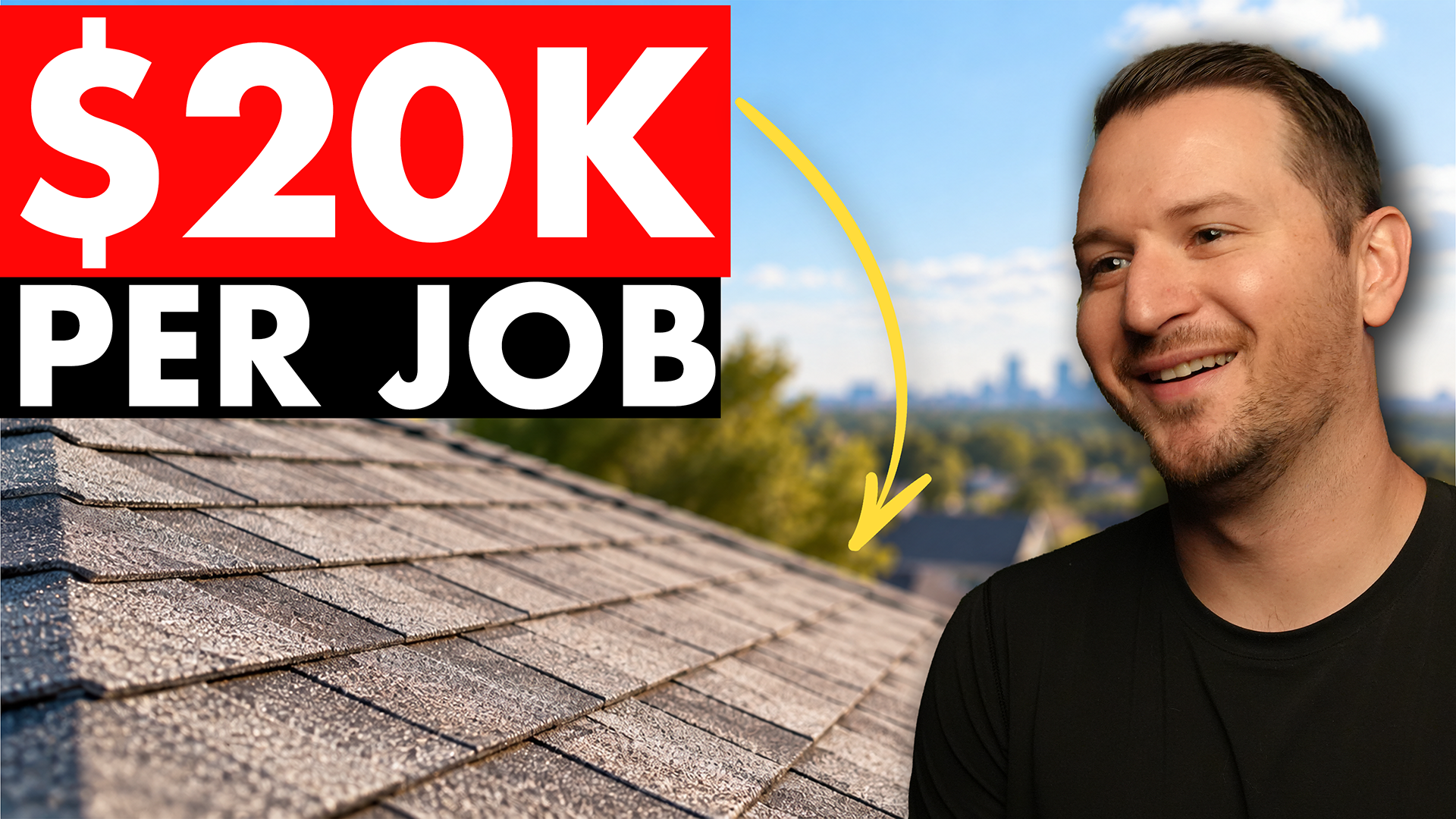
In this episode, John Wilson and Nicholas break down the economics of the roofing business, including $20,000 average roof replacements, cash vs. insurance margins, roofing marketing, direct mail, referral partnerships, and competing in a market with more than 1,000 roofing companies.
They also cover Nicholas' biggest mistakes during his first year as an operator, what buyers should look for when acquiring a home service business, and why roofing ultimately comes down to two things: marketing and sales.
━━━━━━━━━━━━━━
In This Episode
━━━━━━━━━━━━━━
• Buying your first home service business
• The economics of running a roofing company
• $20K average roof replacements
• Roofing marketing and direct mail
• Building referral partnerships that generate leads
• Why seller integrity matters when buying a business
• Competing against private equity and local roofers
• Why roofing is a marketing and sales business
━━━━━━━━━━━━━━
Sponsors
━━━━━━━━━━━━━━
The Military Veteran (TMV)
Hiring a VP, GM, or C-suite leader? The Military Veteran (TMV) specializes in executive search for home service businesses, connecting you with proven veteran leaders who know how to execute, build teams, and drive growth.
Select Owned and Operated as your referral source when you schedule a consultation: https://themilvet.typeform.com/to/BDwkmCU0?typeform-source=www.themilvet.org
Big Reputation
Get more from your Google Business Profile with Big Reputation. Automate reviews, improve local visibility, and turn more Google searches into inbound calls.
Learn more: https://www.bigreputation.ai/oao?utm_source=oao&utm_medium=paid
━━━━━━━━━━━━━━
Connect
━━━━━━━━━━━━━━
John Wilson
https://www.linkedin.com/in/johnbwilson1/
Nicholas Riley
https://www.instagram.com/nickriley2/
Owned and Operated
https://www.ownedandoperated.com/
More Ways To Connect with O&O
John Wilson, CEO of Wilson Companies
Jack Carr, CEO of Rapid HVAC
📌 Disclaimer: Some links may include UTM parameters or affiliate relationships, meaning we may earn a commission if you make a purchase. Episodes may feature sponsors, but all opinions expressed are our own.
Roofing is kind of a beautiful business in comparison to any other trade. It is marketing and sales.
So one big mistake I made is like paying third-party marketers. Every single one of us has just taken our money and just been terrible. The first couple of months is a beautiful show.
I think a common challenge that people do is they try to like fully delegate their marketing. It is the most important part of your business.
What I should have done is I should have like waited a little bit too hard in the sales process.
What do you think the endgame is? Like, what is your hope for this one? I'm planning as new. Welcome back to Owned and Operated, a top 150 U.S. business and entrepreneurship podcast. I'm your host, John Wilson, and on this show we talk about home service businesses, how to buy them, how to build them, and whatever else we're talking about that day. Today I'm joined by my friend Nicholas Riley from Driftwood Builders Roofing, and we're going to be talking about roofing. Welcome to the show.
Awesome. Well, thanks so much for having me, John. I've been a huge fan for a long time, and it's a huge honor to be on the show finally.
Yeah, I I think it's I think it's fun. And I will insert this for anyone listening. Uh, if you have a home service business, if you're engaged in the community, we'd love to hear from you. I think one of my favorite parts about this show is just meeting and engaging with people that you know buy and build home service companies. I get a ton out of it. So uh I'm looking forward to hearing your story, and I'm looking forward to you know continuing to hear stories of as we bring people on. But this is a ton of fun to have you on, man.
So can you as we kick this off, can you walk us through um walk us through Nicholas Riley a little bit here? Uh give us the backstory.
Yeah, so I grew up in Montana and my dad owned a landscape construction company, and my uncle owned the masonry company. And so every summer since I was eight years old, I'd work for my dad doing landscape and my uncle doing masonry. And they worked me so, so hard. I was like, I need to go to college, get really good grades, so I never have to do home services again. That's funny. Um, I remember like on my uncle's crew, like I used to weigh 300 pounds back in college. I was an offensive lineman, and like there were some giant rocks that like the tractor couldn't get to. And so, since I was so big, my job was like to pick up these giant rocks. Oh my goodness. Yeah, so it was like incredibly tough physical labor, but it very much inspired me, like, get really good grades so you don't have to be in home services. That's so funny. And so, yeah, so that's what I did. And so after college, um, I was a strategy consultant for Deloitte. Um, and I got to work on a lot of Fortune 100 companies, uh, and it was definitely a great start to my career. Um, I learned a ton. I got to work with some really cool and smart people on some really interesting projects. But after a while, I just realized it wasn't for me. Um, you know, I grew up in a small business and I've always loved uh business and you know, like entrepreneurship and just carpet America, you know, was a lot of bullshit, you know, a lot of red tape and just was not for me. And so I originally thought about like, you know, real estate investing and becoming financially free that way. But after a while, I just realized like being a landlord is super boring and not very fun, and the margins are so slim. And so about four and a half years ago, I found out about buying an existing business, which I thought was really interesting. So I started to read a bunch of books. Uh, I listened to the Acquired Minds podcast a bunch, heard your episode like two and a half years ago, it was great. And then yeah, joined a community here in Austin, and then kind of just learned about it for a couple years because I wasn't really sure. And then two years ago, I was like, I'm doing this, you know, I'm starting my search, like I'm gonna buy an existing business. And then yeah, and so um I started searching while still at Deloitte, but I was you know 30 hours a week, and then after six months, I found this great roofing company on Biz Buy Sell, and we closed a deal 10 months ago.
On on the searching side, um, are you was it like a conventional search process where you had investors, or was it all you? Or like can you just walk us through how that worked?
Yeah, great question. So it was pretty much all me. Um I launched an LLC called Ponderosa Capital since the official treaty of Montana, and I had one investor. Um I didn't need to bring him on, but he's like a local like Austinite. He owns a bunch of companies here, you know, been here for the last 20 years, and so I thought he'd be a good value add investor, which he has been. But yeah, I mean, it was pretty much just you know all me going on biz by sell and you know figuring things out as I came up.
Yeah. Yeah, that that has been um I think that would be like a fun thing to look in the next chat, whatever the next chapter of my life is. I think it would be fun to be that investor. And like uh like how can I add value and how can I like help contribute? I think I think that sounds like a lot of fun. All right, so one guy, and I conventional, uh this is just to like educate the listener. I our our podcast is like an interesting intersection between like the ETA community and then like home service operators. So to help educate the listener, um a normal like conventional search process would be like 20% economics or something for the searcher, right? Or 15 or 30 or something like that. And then the lion share goes to the investors. Uh, but like your setup sounds like you got a better situation than that. Hiring the wrong executive is one of the most expensive mistakes that you can make. It's gonna cost you time, it slows growth, and it can sense your entire company back. That's why we partnered with the Military Veteran. They specialize in executive search, connecting home service companies with proven veteran leaders who built teams, they've executed under pressure, and they know how to drive results from day one. Their team has access to one of the largest veteran leadership networks in the country and personally vets every candidate for both operational excellence and cultural fit. One of their clients used TMV to build its leadership bench while scaling from 50 million of revenue to 3 billion over five years. If you're hiring a VP, GM, or C-suite leader, don't leave it to chance. Click the link below and tell them about your hiring needs and be sure to select owned and operated as your referral source.
Yeah, I think so. So like from uh from my understanding, like there's kind of two ways to search. One is like an individual like searcher, like I was, you know, just like with my own stuff. And the other is like more like a search fund, like entrepreneur.
Yeah.
And they get like a bunch of enough hesters who like sponsor them and pay them to go search full time, but I think they only own like 30% of the company or something. So like they're you know playing with the investors' capital and like they're getting paid to search full time. Uh, and to be honest, I don't really know that much about that particular space. Um, I know they have a lot more money than I do. Yeah, but yeah, for me, it was just kind of you know Cohen Rogan doing it by myself. Yeah, yeah. That that that sounds like fun.
Um okay, and so you bought the business, I think you said 10 months ago. So you're about to wrap up first year. Yes, sir. That's crazy. Can can you tell us a little bit about the business itself? Like what was it like before you walked in, size, employees?
Great question. So Driftwood Builders um has been in business for almost 20 years, or I guess when I bought it, you know, 10 months ago. And yeah, um, it was owned by this phenomenal, phenomenal roofer, uh Todd Hunsinger, you know, took a lot of pride in his work, did a really, really great job of roofing, but you know, was not social at all, didn't like to work, you know, so he used handwritten estimates. And so I met him, and he's a really, really honest, you know, genuine, down-to-earth guy. And yeah, and so I really, you know, so we hit it off, and then there was one office administrator, and then three existing sales guys, uh, and then like we have different crews that we subcontract. So we have one crew for asphalt shingles, and then we have one crew for metal, uh, entire roofs, and then now we have a new crew for siding and windows.
Okay. Uh, and then what was revenue?
Um, so revenue over the last four years has been very like up and down. It's obviously very correlated with hail. But yeah, last year it was three. Um, the year before that in 2024, there's a bunch of hail, so it was eight point five. Wow. Yeah, the year before that it was two, and then oh my gosh. And then the year before that it was four point seven.
How do you even like come up with a value? Like, you don't have to walk me through what you paid. You can if you want, but like how do you even walk through a value of something like that all over the place? I I that seems tricky.
Yeah, it is tricky. So, like what I did, uh like I had the financials for like the last four years, yeah, and I supplied a weight to each year, but since like 2024 is like a huge hail year, you know, I discounted that weight, you know, more than the others. So I think what I ended up doing is like for four of the years, I gave it each, you know, I think like I guess I'm I'm trying to think, but I just put like a percentage, like multiple on like the EBITDA for like every five years. And I'm discounted 2024 with a greater value since it had a crazy hail year.
That's interesting. You know, there's a guy I met, um Sean, and I met him, I don't know, six or seven months ago, and he was looking at this tree business, but it was like it was like a disaster tree business. Yeah. And it it sounded almost exactly like this, just times 10. So like a good year would be like 80 million dollars, and a bad year would be like seven. Like it was the craziest fucking swings. And he's like, Yeah, dude, I'm thinking about buying this. And I'm and I'm like, I maybe he did. I actually gotta check in with him. But just like, how do you even come up with you know, I don't even know what it's like.
Yeah, it's yeah, sorry, I uh I remember now, so I had the financials for the last five years, and for the four like normal years, I assigned like a 22.5% like weight factor. Yeah, and then for 2024, which is an outlier hail year, like where they did way more than usual, I just assigned a 10% weight factor to that. Yeah, okay, that makes sense. Oh, yeah, I mean it is definitely not straightforward there.
Yeah, yeah. And what what market are you in?
I'm in Austin, Texas.
Okay, and Austin, that is a hail market, right? Like they have a decent amount of hail.
Yes, yeah.
Yeah, yeah, yeah. Okay, because I know there's like I know Denver's a big hail market. Yeah, Denver's huge. Honestly, Akron Cleveland, I don't I don't we're probably not a big hail market, but we do have one or two crazy hail storms a year. But like how many does so compare that to Austin? How many does Austin have a year?
Uh we have like about three a year on average.
Okay. All right. So yeah, maybe Akron Cleveland is good, but I don't know.
Yeah, definitely. Well, I guess like so like the huge thing I've learned is like it really depends on like the size of the hail. So if this hail is like three inches, then like you're gonna get a ton of new roofs and ton of insurance claims. But you know, if there's ten different hailstorms and each hailstorm is like half an inch, then it won't do anything to the roof, so you're you're kind of SOL there.
Yeah. Three inches crazy.
Yeah.
Like I mean, people have to get injured if they're outside.
Yeah.
That's yeah, like you're getting shot with rubber bullets when it's ice. Okay, so you bought it 10 months ago, uh three million. And it's like, can you walk us through seasons of roofing a little bit? It's not like 250 a month. Like, how does this usually look?
Yeah, um, so the uh seasonality is really dependent on like how much hail there is or how much rain. But usually in like December and January, those are like the slower times overall. Okay. And then starting from March to mid-July, it picks up a bunch, and then like the second half of July and August, it's a lot slower since you know everyone's going back to school, taking a break. Yeah, and from September to like the end of November, you know, it starts to it gets fast again, and then you know, I'm in December, it slows down again. Interesting. Yeah, so that's like the overall general like seasonality, but you know, obviously, if a hail storm hits tomorrow, then everything, you know, changes.
Yeah, you guys you guys roll. Yeah, yeah, yeah. All
right, so you bought the business 10 months ago. What did what did the first couple of months look like?
What would you get into? Uh the first couple of months was a beautiful shit show. Yeah. So um, so one big mistake I made is like I tried to start things way too fast. So like in I was in consulting, and like, you know, we get on these projects, like like you spend like one or two months doing research and coming up like with a strategy. And so I finished my last engagement like last July, and I was still getting paid by Deloitte, but I was like, well, I'm gonna buy the street company so I'm not gonna do any work. And so I essentially spent like two months just like you know, trying to research the best like roofing marketing ideas and things I should implement at this company. And so uh day one, I walked in, and our biggest marketing spend had been postcards, which achieved a row ass of eight in the past, and so I came in and I was like, day one, we're trying all 10 ideas at once, and we're gonna see which ones work and which ones don't, and then we'll pick the best ones, and yeah, so it was like day one. I was like, uh what I should have done is I should have like waited a little bit to learn the business more, you know, learn the sales process. But I think I came in too hot and I was like, we're trying all these 10 at once. Uh yeah, so it was it's been a beautiful shit show, but it's been a lot of fun, and there's been a lot of things about Driftwood that have, you know, even been better than I thought doing due diligence.
Yeah, like what? Like what was what was better? Um yeah.
Oh yeah, so one thing that I got super lucky on is when I was analyzing the revenue uh before I bought it, uh a five percent of the revenue came from ABC, they put down, and so their supplier's name is ABC. And so what I incorrectly assumed was that you know people were calling up ABC supply or going in, you know, trying to buy roof supplies, and then realizing, okay, like I don't want to get on top of a roof in Texas and do my own roof, and then ABC refer them to driftwood. So that's what I thought. And so this is it was only 5% of revenue. I didn't you know ask about it. And then I bought this company, and it turned out that ABC is also the name of ABC Home and Commercial, which is a huge home services company in Austin. They're by far the biggest home services company here, and so they they do everything besides roofing. And so for the last 18 years, like they give us our they give us uh roofing uh referrals, and so those are like consistent, you know, like really high quality sales, and yeah, like they're a great partner for sure.
Yeah. How do you encourage more of those partnerships? Like, is it a spiff or like how do you make it a win? You just treat their customers well, or how does this work for them?
Oh, yeah, definitely. So we pay them uh for referrals. Uh so like in the past, like how that worked is like they would give us a referral, and if it resulted in a four-woof replacement, we give them two hundred dollars. But like we created a program where we get paid like $50 right away, like regardless of what happens, and an extra $250 if the referral us results in a four-woof replacement, and then like we have a contest, like we go in every three months and we have a contest and give us the most referrals, and like the winner gets an extra $500. Yeah, so we try and gamify it as much as possible.
Yeah, yeah, that makes sense. So you came in and you aside from the postcards, was there anything else that you just like sort of blew out of the water way too fast?
Uh no, no, just that.
Okay, that is that is kind of funny. So yeah, direct mail, like what what did the postcards even say for a roofing? I'm trying to imagine like how that would generate such a strong row as.
Uh yeah, so like I think so. The thing we do on our postcards, like we have our uh faces on them, and so each individual postcard, and I can share my screen or send you one, and each individual postcard is like, hey, like this is Nick, here's a picture of him, here's his area. Uh and then you know, we just consistently send those areas, you know, every six weeks during the spring and the fall, and then you know, take the summers and winter months off. But yeah, just consistently like show our faces, and that's what's worked for them.
Yeah. And it's it's less I think you said you said this at one point, but what was the revenue breakdown again? There was roofing, windows, siding. But how did that break down again?
Oh, so in the past, Drift4 did 100% roofing.
Okay. And what do they do now? Uh we do roofing, siding, and windows. Okay. And then what's the revenue split of each of those?
Um, I'd say like right now it's like 70% roofing, 20% siding, and 10% windows.
Got it. Okay. So when you're sending mailers, I'm trying to imagine like sending a mailer for a roof. Like, I guess that worked. Like every every you're saying every six weeks. Um and the ask is like, hey, have let let us come check out your roof, or be top of mind whenever they do replace the roof, or are you sending it post-hail damage? Like, I know they had a storm a year ago, or like, how do you how are you thinking about that part?
Yeah, exactly. So at a high level, we have three different postcards. The first one is an introduction, like, hey, this is our sales guy in the assigned area, like this is like a little bit more about him. No ask, no call to action, just like you know, specific, like here's his face, kind of non-salesy. And then the second type of postcard is hail damage postcards, which like after hair hits, like we'll send a bunch of those postcards and say, Hey, like, we found hail in your area, and then the call to action is schedule a free inspection. And then the third type of postcard that we do is like if we complete a bunch of jobs in a certain area, like we'll send postcards there and like show that's like specific jobs on a map and say, like, hey, like neighbor's all got new loops. Like, if you want, you know, if you want a new loop, let us know. And then, yeah, and then kind of the fourth one, which we've recently tested out, is that like since we have 20 years of customers, like I created a map that shows like where we've done all the jobs. Oh, yeah, that's right. Send a postcard to like Westlake, and I'll be like, Hey, these are 78 jobs we've done. And so that's the fourth that's the fourth postcard we started to test out uh last month.
So yeah.
And has has Roaz still been like eight times or um this year, it's honestly been like a lot slower since there's been no hail. But yeah, okay. In the past, yeah, you know, we've had eight, you know, overall obviously in hail years it's faster, you know, it's it's higher, and then in less hail years it's lower. But yeah, kind of stick with postcards for the time being until they stop working.
Yeah. And then do what else did you add? Like are they using LSA or Angie's or are any other lead channels, or is postcards like that's the driver of the business?
Oh no. Uh so for lead channels, like we added Google like LSA, we added Google Pers uh PPC, we started going really hard on SEO, which didn't which took like six months to get going, but now it's starting to kick off, which has been super good. Uh we use thumbtack, it's it's okay, it's good, not great. Uh, and then kind of our big thing is just more overall partners. So like we have this great overall partnership with ABC, and like yeah, I think the simple strategy is just take that and copy and paste it as many times as we possibly can.
Yeah, no, I agree with you. I think that sounds really good. I think uh I mean restoration businesses would be interesting for fires or yeah, I mean, there's just so many different ways you could take it. All right, so as you think about um well the direct mail's been interesting. I've so we've started testing more direct mail recently, um, and it is interesting to see it work. I think what ultimately makes direct mail make which this is like it should be obvious, but it's a lot of people like tell you to do the opposite. But direct mail works the bigger your ticket, right? Like, hey, if you spend 10 if you spend $10,000 on mail and one sale is $15,000 for a roof, but you only need two, and then you did a three times ROAS, you didn't need three, and you did a four and a half times. And um it just is easier, but like all these uh like best practice groups have conventionally in the plumbing HVAC electric side told you like, hey, everyone's going for the equipment, you just gotta go for like the service jobs. I'm like, yeah, but the down, but like the problem with that is you get ROI with the equipment. Like it just makes sense. Um so I I just want to insert that as people like think about adding direct mail, just make sure the ticket's big enough. I think like once the tickets like five to ten thousand dollars, like it makes total it's like a clear no-brainer that you should be doing direct mail.
Yeah, definitely.
Outside of marketing, uh and like what else have you been been identifying as opportunity? Like it's pricing an opportunity, vendor contracts, like what what else have you sort of been thinking about as far as like enhancing the business?
Yeah, great question. So the first thing we did is set up a speed to lead uh system. Uh we use LeadTruffle, they're a local local awesome company. They're super, super helpful. Uh, then the second thing we did is kind of enhance our sales process. So in the past we had one sales buck for asphalt shingle roofs, but now we do yeah, we have one sales book for asphalt shingle, and then another one for you know clay tile and um had a roofs, and you have a siding and uh window sales buck. Yeah, and kind of the other thing we did is add more uh revenue streams. So yeah, in the past we did roofs, now we're doing roofing, siding windows, and cutters too, I should add. But yeah, and then you know, kind of like our fourth biggest one uh is just develop as many like reform partnerships as we possibly can. So like there's you know pros and cons to every business, but like you know, like so with roofing the pros is like super high ticket, but the cons are there's no recurrent revenue whatsoever. But kind of like how we think about it is like you know, if you develop a relationship with another home services company or like a top referring realtor and they consistently send you, then it's Mark recurrent in nature. So that's been kind of a big strategy, just the partnerships.
Yeah, yeah, that makes sense. I mean, honestly, what I've seen people do is I've seen people adding roofing to plumbing in HVAC. Oh, okay. Because you have like um I'm seeing more and more like, hey, my recurring base of work is HVAC. Like you're in twice a year, there's a membership, and then like people are adding in roofing as an example. So that way, like, hey, that one lead that I bought for $250, that customer that we acquired for $250. Well, I can spread that across HVAC plumbing, electric, roofing. Um, I know like five guys who have done that now uh in order to make make it more cyclical, uh or uh uh sorry, um repeatable.
Oh, so I guess question for you like with your customers, like are you seeing a trend where customers want one company to do more things now?
I mean, I think that's a general twent trend. There's some big examples of this uh milestone down in uh DFW, I believe, does roofing, appliance, garage doors, plumbing, HVAC, electric, water treatment. Like they do a ton of stuff. Um the big, I don't think it's Hiller. Might be Hiller. Whoever the whoever the governor of uh Tennessee is, his does like commercial facilities, garage door, roofing. They do like everything. They're this all-in-one home service shop. Um, which is there's pros and cons. Yeah, definitely. There's pros and cons. But there is a way to like add value to it. Another interesting one for like roofing is I would I think my point is like you can make it repeatable. So chimney sweeping would be interesting because chimney sweeps, you could buy a chimney sweeping business, maybe not in Austin, Texas. Yeah, I don't know how many of those there are. Uh, but you could buy a chimney sweeping business and it would give you like a repeatable base because you're probably people clean their chimneys like once every two or three years. Um, so that gives you a repeating base. Power washing would be interesting because it's still kind of exteriors. You're probably you're probably gonna power wash their freaking roof, you know, once a year for people that are all about it. So I think there's a bunch of different ways to like you can build this customer base and then just start mining it for roofs. Yeah, definitely. But all that said, it is a distraction versus just like building a hundred million dollar roofing business, which is totally totally fair game too. But I think there's ways to solve for that problem.
Yeah, definitely.
How like what do you think the end game is? Like what what is your hope here? Uh what is your hope for driftwood?
Yeah, my hope and plan is you know, to keep growing it for the next 20 years and own it and you know, eventually hire GM so I you know can be more of an owner and less involved in every single thing. But yeah, you know, for sure gonna hold it for the next 20 years and have no plans to sell ever.
Yeah, yeah,
yeah. So as um what do you think that buyers miss inside uh inside like small business acquisitions like this?
Yeah, great question. So I think the number one thing that buyers get wrong is they think about it quantitatively instead of qualitatively. So I'm a huge uh Humbers guy, I'm a licensed CPA, I built you know 32 tab Excel models, but when you sm buy a small company, like at the end of the day, it depends way more, in my opinion, on the seller's like reputation as a person and like the quality of a person they are. Because like, first of all, like they know way more about the business than you ever will, like no matter like how much due diligence you do. And then second of all, if that seller is like a high integrity person, that means they've treated their customers well, they treated their employees well, they treated their partners well. And so if you buy from a high integrity seller, like you're gonna inherit all that, but if you buy from a low integrity seller, like you're kind of fucked. Yeah, and so I'm just like you know, as much. I think people get really in the weeds of does it add 88% recurring revenue or 87? But I think the integrity of the seller is 10 times more important.
Yeah, I I think you're right, and I think um this is something that I'm coming to appreciate more and more. Yeah. Um like my background is I was a plumber and then I bought a business and then I bought 14 more. So like I didn't have the ability to like have a background where I was trained in anything other than just like doing it, like I learned by doing it. Um so it's always been like to me, it's always been like clear that the seller and like the team is the important thing, but where I was uh wrong, and like I've learned a lot since, is that doesn't go away. And I for some reason I thought like the bigger the business, it's totally different. And and I think as we've gotten bigger, and then as we've started to look under the hood of like much larger businesses than us, like it's always exactly what you just said. It's always the founder, it's always the CEO, it's always the integrity of that human being, or like how they lead their team, right or wrong. That is like the success or failure driver of that business.
Yeah.
And like it could be a billion-dollar business, it could be a $10 billion business, or it could be your plumber down the road. And like it's always like the who's driving the bus and like who is that human being? Um it's just been interesting to see that because it you you I think you I always wanted to believe that you could just build this business that like it didn't matter, but like it always matters. It's always the humans inside the inside the four walls.
Yeah.
Yeah. Which I I think that's been kind of like a funny uh, I don't know. It it's been funny as we've started to like we're we're looking at like partnering with more like businesses my size or much larger. And it's just been interesting to meet other owners and uh and be and looking at it through those lens of like, oh, okay, yeah, like this would totally work because of this person and this team, or this would not work because of this person and this team.
Yeah.
How do you think you would diligence that differently next time? Or maybe you felt like you did it perfectly. Like, do you think you nailed were knocked this out of the park? I don't have the time to base it all of our Google business profiles, so we started using Big Reputation. It keeps your profile active by managing reviews, responding quickly, and giving Google all the signals that your business is active and trustworthy. In our first 30 days, calls from our Google Business profiles jumped nearly 27%, and jobs booked through Google were up 27% too, without our team spending more time managing it. You also get a clear view of what's actually happening. You get review trends, customer sentiment, and which text and locations are getting talked about the most. So it's less busy work, it's more visibility, and it's more inbound calls. If you want your Google business profile working harder without creating another job for your team, check out Big Reputation at the link below.
No, no, I definitely uh didn't diligence it perfectly. Uh, you know, I was very eager to buy a company and like after Stella and like gained his trust, I just you know, so I hired an attorney for the you know, legal diligence and a CPA for like Q and B. But I was like, you know, I didn't do a ton myself. I was like, I'm buying this. But yeah, I mean, I guess if I had to due diligence it differently, you know, I would, you know, ask more about like the partnerships of the company. I kind of asked like how long have the employees been with the company? Yeah. I kind of asked like how long have the crews been with the company. So that was like one thing, you know, I got super fortunate. Like, we have our asphalt shingle crew leader has been with us for 13 years, and then a tile and metal crew leader has been with us for 10. And I was like, all right, like the old owner has to be doing something right if we can keep these guys for over 10 years. Yeah. But yeah, I guess overall in general, I would you know, ask more about like their partnerships, you know, and then ask more about like how long have the employees been there. I think those are two good questions.
Yeah, no, that makes that makes a lot of sense.
Uh what can you give me some of the um like stats on the roofing industry, like average ticket or closing rate, or like what would what what does a bit what do the KPIs of a roofing business look like?
Yeah, great question. Um, so right now the average roof for a son is about twenty thousand dollars. Um we do like repairs and replacements, but like 85% of our profit is on four-roof replacements. So for four-roof replacements, like the average roof we sell is about twenty thousand. Um, our margin on cash jobs is thirty percent, our margin on insurance jobs about fifty percent. And then insurance is higher. Yeah, insurance a lot higher.
That's it. I always thought um is it because you're selling cash jobs for cheaper than insurance?
Yeah.
Got it. I always heard that retail roofing was like much more profitable than insurance. So can you walk me through that?
Yeah, great question. Uh so in Austin, uh, it's definitely not. Um, you know, obviously, like, you know, there are some high-end, you know, homeowners that we can sell at higher margins for. Uh, you know, but overall, like, you know, like let's just say like you you own a house in Austin, Texas, you know, and State Farm approves your roof, you know, they're gonna pay, like, they have a set price like they're gonna pay based off like exact mid pricing. And so we just bill like this standard like insurance price, and you know, and then that's how we make our margin just off those. But however, like with a cash job, like let's say like your hair, you know, your your roof did not get hit by hail, and like you just need a new roof, then most likely like you're gonna get at least two other bids, and you know, kind of compare prices, you know, and then for those jobs, you know, so we make about a 30% margin on those. Yeah, but like, yeah, like the cash versus insurance is is very, very interesting.
Like, yeah, no, that that is interesting. And I guess the benefit of cash is you get paid it faster. Um instead of insurance is like 30, 60, 90 day payment terms, which will drag out of working capital.
Yeah, okay. Yeah, but I mean I mean still though, like I'd rather wait and get the 50% margins on insurance.
Yeah, yeah. I mean that yeah, that makes sense.
How many leads a day do you guys go to? Typically like three leads a day. You know, sometimes like in January it's way slower. Uh, you know, in the spring, like when there's a bunch of rain, you know, it'll be like you know, six or seven leads a day. Yeah. I guess on average is about three a day, you know, so at least one for each sales guy.
Okay. And you're like you're selling one roof a day. Does that feel reasonable?
Or is it two roofs a day or um I'd say we sell about four a week on average? Like three to four. Yeah.
When you think about like gross margin improvement over time, like you're at what size do you do you feel like you start to get like um the ability to drive shingle pricing better or something like that? Like, is that a thing? That has to be a thing at some at some scale.
Yeah, there is definitely a thing. So, like, right, you know, like the big risk about roofing is that like a lot of people think it's like a commoditize a product, you know. So it's so like you know, like obviously no one goes on the roof to like check the shingles to make sure like you do a good job. And like the truth is that like everyone buys from like the same supplier, and like there's obviously JF versus Tamco, but they're really not that different, and so kind of like we are so like how we sell is like we're definitely not like the cheapest, but like we are the best, and so we really sell ourselves as like the value guy, like we've been in you know, business for 20 years, like our crew leader's been with us for 13 years, like he's not just some you know, Home Depot crew leader. So, like we really like try and build trust, like through like our years of experience, you know, and kind of like relationships and kind of like use brand, you know, to sell like at a higher price, which works sometimes, but not always. Yeah, but yeah, I guess like the like the tricky thing that I've kind of thought about is like you know, when we sell like a higher price from our competitors, like a big thing, like a big sales pitch of ours is like if you buy driftwood quality roof, like you won't have to worry about you know your roof for the next 20 years. Like I always say, like, hey, like I'm the owner, like I just bought this, like you can call me anytime. But then like we've thought about it adding like maintenance plans for like the recurring revenue, you know, down the road, but then like you know, if we did that, like we get the recurring revenue, but then like we couldn't use that as a sales pit, so it's like you know, kind of a pros and cons thing. I'm trying to balance with that.
I don't know that recurring revenue matters that much, yeah. Uh I think it sounds nice, yeah, but I think like I think it could end up being a distraction. Roofing is kind of a beautiful business in comparison to any other trade because it is the most straightforward to me. Yeah, it like it is marketing and sales. And I don't know if you W-2 your installers or not, but like yeah, like you run a marketing and sales business. Yeah. And um, and like that's it. And it's kind of like it's kind of beautiful that it's it's like it's so clear that that's that's what a roofing business is. And I think that it could it could distract you from the core of like, hey, do we need recurring revenue? I like I don't think it matters. Like, I think you could build a 10 or 20 million EBITDA roofing business doing only roofs as a marketing and sales organization, and like that would be more valuable than spending a couple years like tinkering around with a membership is is like my per perspective. Uh, but I think if you spent all of that energy, like building a like fully flushed out marketing uh like mechanism inside the business, and then a sales mechanism inside the business, like you'd be far further along than if you spent that energy like trying to put together a recurring maintenance program.
That's good advice. Thank you.
Yeah, the the business is marketing and sales, yeah, it's not membership. Whereas like HVAC, it's it's a little bit different in that like it is kind of membership.
Yeah.
Uh because you eventually hope to get that. But uh for you guys, like you can build a mid-eight-figure, nine-figure roofing business just getting leads and selling leads. It's it's kind of awesome. It's it's yeah, it's it has like a and I'm obviously not calling it easy, but it is simple. It is like those two things, um uh, which is kind of great. Like, I I uh I'm sure I'll get into roofing one day just because like I'm kind of jealous of it. I think it's awesome. Okay, if you bought another business tomorrow, what would you do? What would you do differently? You're like about to be one year in. What do you think?
Uh yeah, I guess so. Like the plan is trying to grow organically as much as we possibly can. So I don't want to buy another business, but like if like it made sense to buy one, um, you know, I would for sure like assess a seller and like the partnerships a lot more. And yeah, uh, to be honest, I try and buy at a lower a multiple, you know, like so I've heard like you know, it's a mile to the first, like an inch to the second. And now since I've already bought one, I think buying a second one could be a lot easier because people view me as like not a tire kicker, he's like a legit player. Yes, but yeah, um, I mean, I would I think I would only buy an other one if it was like a specific service, you know, that I couldn't grow, like maybe like an electrician thing that like you need a license for, or yeah, you know, something more specific like that. Yeah.
Or maybe like a property management company, you know, I could just, you know, get them as a think about what you want to build. Uh are you thinking of like I you said you want to build it for or like own it for 20 years and like do your thing. But a lot of the conversation that we've had today has been around like um I don't know that I want to call it durability, but like durability, you know, like hey, let's like the property management one is interesting because it's like clearly a totally different vertical, but where your head's at is it's a lead source. Makes sense. Uh same as like um the membership program. Like if we add like a recurring so like you're obviously thinking about like how do we make the swings less intense, which makes sense to me. Um so as you think about like the highest priority for you right now, is is that the highest priority? Like making it more defensible, more durable. And have you started thinking yet about like raising enterprise value or like not that's not even in your mind at the moment?
No, that's not even mine at the moment. Yeah, I like right now. Like I have one thought, it's like make the phone ring. Like if I you have one, it's like I have a great sales team already. So my one like singular focus is you know, sell at least for a week and make the phone ring. But yeah, that's not thought about anything else than that.
Yeah, yeah. No, I mean, I think that makes sense. You're 10 months in. I think it'd be um, I think that makes sense. I think that's the right way to think about it too. I think if you were already like thinking EV, I think there is like a danger to thinking EV too early. Um where like I think you get stuck in this like EBITDA optimization phase when like there's no point. Like there's just you know, just like go get to 10 million of EBITDA and then like start optimizing EBITDA. Um yeah. Yeah, that okay. All right, that that that makes sense. That makes sense. The property management thing is interesting. Uh, I have a couple friends in that industry, and um I mean it's a hell of a business.
Yeah, definitely.
I think you said it was a mile to the first one, an inch to the second. And that that means just so I can sort of like contextualize that, the first acquisition is the hardest. Like, that's what I mean. Okay, got it, got it.
All right, so um how are you feeling in Austin? Like, what's the competition like? Uh is it a lot of private equity? Is it a lot of independence? Like, how do what's that look and feel like?
Yeah, so there's over a thousand roofing companies in Austin. It's incredibly competitive. Uh yeah, and like the last um year or two, a bunch of like the really big firms like JMR have sold out the private equity. Yeah. Yeah, and so like our business is very correlated with hail. And I bought this this year, there's been no hail. So it's like competition is fierce, which has been like super, super fun, like in my first year. Because like I originally bought it, you know, and there's like an existing team, and I was like, Oh, like I don't need to learn how to sell roofs, and then in January it was super, super slow. So I was like, Holy fuck, I gotta learn how to sell roofs. Yeah, yeah, yeah. Um, so back to actually answering your question. Um, I think the number one thing we position ourselves for as competitors is like we're more involved in the community. So, like, I guess, like, in my opinion, there's like at a high level the there's over a thousand roofing companies in Austin, but I would categorize them into three separate categories. The first would be private equity-owned firms, uh, the second would be tier one family-owned businesses like driftwood builders roofing, and then the third would be like the chuck and a chuck, you know, roofers, like some guy who doesn't have insurance. And so, kind of how we categorize ourselves is like number one, we're super, super uh locally involved. And so what private equity firms do is like they're gonna go and spend a hundred grand a month on Google LSA, which I obviously can't afford. But like what I can do is go network every single night and become friends with all these real estate agents and insurance agents, and we're also building this new roof for this old blind uh coming in need who can't afford it. Yeah, and so we'd be super, super involved in the community, like you know, get really close with ABC, you know, so we get like requires from them. And that's how kind of like we beat private equity because like their owners live in New York in a suit, like they're not gonna be in Austin, you know. Yeah, people are freeing their roofs, and yes, like that's kind of how we beat out private equity, just by you know, being very community involved. And then the second is it like on pricing, like we're definitely not the cheapest, but their pricing is way higher than us. And so we can't get them out there. And then the third reason how I beat out private equity is kind of like when you buy a roof, like you pay $20,000, and the average life expectancy is 20 years. So like you want to pay for protection for 20 years, right? And so how the private equity business model works is like you buy a firm and then you grow it for roughly five years, and then kind of you know, you sell it and transition on. And so kind of like my sales pitch, you know, if I'm going against private equity, I'm like, hey, listen, like, you know, they could be in year three or five of a hold. And so if you buy a new roof with private equity, and then three years later, like something happens and you have a problem, you need some help, you can call them and like they might have sold to a different private equity firm. Or if we call it Driftwood Builders Roofing, I'm the owner, I'm the owner for the next 20 years, and like I'm I'm still gonna be here. And then that's kind of how we sell against private equity, and then how we sell against a truck in a truck is like, listen, like they won't be in business for you know in three years from now, like, so you know, call us for a higher price. But yeah, so that's that was a super long rant, but yeah.
No, I think that I think that makes sense. A thousand is crazy. I mean, that's crazy.
Yeah, yeah, it's super crazy.
That's yeah, that's kind of funny. Um, all right, I'm gonna bring us to a close here. I have a couple closing questions. Uh, best decision since buying the company.
Best decision since buying the company. It's not big making any big personnel changes uh after I started.
Yeah, that is a good decision, especially new to the industry. Uh that's a good move.
Thank you.
What's been your most expensive lesson?
Uh the most expensive thing I learned is that like paying third-party marketers, you know, like I thought like you could pay a third-party service provider and they'd come in and do all your marketing. Uh, and every single one we've used, minus our SEO team, Keihan marketing, which has been great, has just taken our money and just been fucking terrible. And so, like, you know, I really wish I didn't marry that like in-house. But yeah, be very careful of marketing agencies and third-party service providers. They will just take your money and yeah, it's not good.
Yeah. I think uh we talk about that a lot on this show. Um and I I think this also does come back to like what business are you in? And you're in the you're you're in the marketing and sales business. So which means that like marketing is first. Like you're basically in the marketing business. Um and I think a common challenge that people do is they try to like fully delegate their marketing. It is the most important part of your business. It is the most important part of your business. Like, and it's the most important part of your business if you're a one million dollar business, it's the most important if you're a billion-dollar business. Uh, but like leads are the most important thing.
Uh yeah, definitely. And you back off that. So there's an episode of this podcast I listened to like a week or two ago.
Yeah.
And I think size has a factor into it because like, you know, if you are a $10 million company, like you can afford a marketing agency that gives you a good like ROI. But if you're like in the three and fours, like we are, then like you can only afford, you know, Joe Smell, the marketer, and they're just gonna take and they're just gonna take your money and not be worth it. So I think maybe size can play in a factor there too. But yeah, like 100% marketing is first.
Well, I size could potentially be it. I think the biggest where I was going with it was you have to treat a marketing agency like it's an employee. Yeah. And they need like specific targets. Like, hey, I need five leads a week uh in order for me to hit my target, and I need them under $250, you know, customer acquisition cost or something like that. But it has to be like there has to be a scorecard the same way that you would treat an employee. Uh and I think once you can drive a scorecard into whatever that relationship is, it does get a lot easier.
Yeah, definitely.
Um, all right. Advice to someone searching for their first home service acquisition.
Uh yeah, so two pieces of advice. One, um, even though the business buying community is super competitive nowadays, I really don't think it's nearly as hard as people think it is because it's just simply a numbers game. So in the business buying space, 90% of people, in my opinion, are just pretenders. Like I used to be involved in that space a bunch, and people would say, Hey, like I'm a searcher, you know, I own ever going to be a yeah, yeah, yeah, yeah. And I'd say, Well, how many like LOIs have you sent? And they'd be like, Oh, I haven't sent any yet. And I'm like, All right, dude, like you're not serious. And so I think it's super competitive, but like it's not like so many people aren't serious. So if you'd like to identify yourself as a serious searcher, I think you will definitely be successful. And then the second thing I would say as a searcher is like at the end of the day, it's just a numbers game. You know, like I reviewed like 2,000 deals at a high level. I think I signed like 400 like sims and just like looked over those, like not that much time at all. Sent like 80 IOIs, sent 10 like IOIs, got three accepted, bought one business. So it's like if you are really serious about it, like it's really not that hard. It's just a Humbers game that you have to reverse engineer.
Yeah, you gotta get out there. Yeah, you got you gotta actually do shit. Yeah, definitely, yeah. And then yeah, the last thing I would say. I think that's a life lesson in general. Yeah, I think that's just like Yeah, you just gotta actually fucking do shit. Because like I think to your point, like I'm just like a dude, but like we've bought five this year, and I'm just like a dude. Like it's not like I don't know. Like, yeah, you can just do shit. Like you can just do it.
Yeah.
Hell yeah. Okay. And then are you a final question for you? Are you a better operator today because of your consulting background or in spite of it?
I would say yes, I'm a better operator. And so I always make fun of the consulting a profession. You know, I think a lot of people think they're adding a bunch of value when they're really not. So I like to make fun of consultants all the time. But the good thing about consulting is that we would work on a bunch of different projects. So it's like we go to Pfizer and we do one specific thing for a month, and then we go consult Meta, and we do a completely separate thing for a month, and we go a lot of exposure. Yeah, exactly. And so, as an operator, like you have a lot of exposure to all these different things. And so I think consulting, you know, definitely gave me that good preparation. Yeah, no, yeah, that sounds awesome.
Well, thanks for coming on today and sharing your story. I appreciate it getting to know more about you and Driftwood, and this has been a ton of fun.
Awesome. Yeah, John, thanks so much for having me. Huge fan of the podcast, and thank you so much. Awesome. If you like what you heard, make sure you like and sub.
.png)
.png)