

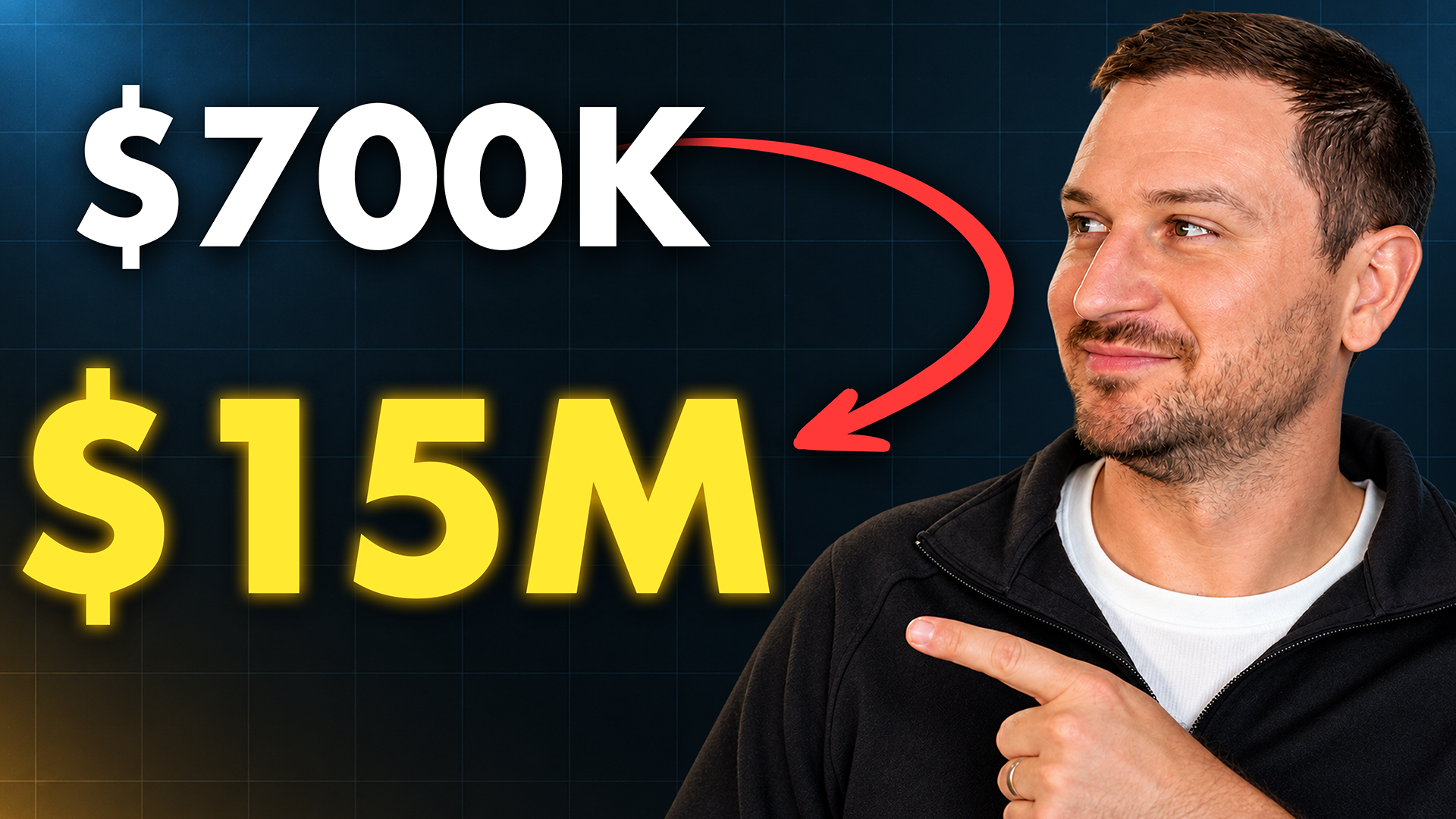
From $700K to $15M in just five years. Shane Viggiani has nearly doubled his electrical business every year, growing from one truck to a 50-person operation in Las Vegas.
John Wilson sits down with Shane, owner of Ampere Electric, to break down the strategies behind that growth. They discuss how Shane built over 3,000 Google reviews, structured technician commissions, developed his management team, and maintained roughly 15% net margins while scaling.
They also get into the mistakes that nearly derailed his early growth, why hands-on technician training has been so effective, and how he's thinking about acquisitions as he works toward $30M in annual revenue.
━━━━━━━━━━━━━━
In This Episode:
━━━━━━━━━━━━━━
- Growing an electrical business from $700K to a $15M annual revenue pace
- How 3,000 Google reviews became a competitive advantage
- Hiring managers, building teams, and scaling operations
- Technician commissions, sales training, and incentives
- Maintaining profitability during rapid growth
- Buying vs. building a home service business
- The path from $15M to $30M
━━━━━━━━━━━━━━
Sponsors
━━━━━━━━━━━━━━
FieldPulse
Ready to ditch the whiteboard and spreadsheets? See how FieldPulse helps home service companies simplify scheduling, dispatching, invoicing, and more.
Book a free demo: https://landing.fieldpulse.com/owned_and_operated
Service Scalers
Get more high quality leads with marketing built for home service companies.
Book a free strategy call with Service Scalers and see what's driving real jobs: https://os.servicescalers.com/go/oao_podcast/referral/youtube
━━━━━━━━━━━━━━
Connect
━━━━━━━━━━━━━━
John Wilson
https://www.linkedin.com/in/johnbwilson1/
Shane Viggiani | Ampere Electric
https://ampereelectricnv.com/about-us/
More Ways To Connect with OAO
John Wilson, CEO of Wilson Companies
Jack Carr, CEO of Rapid HVAC
📌 Disclaimer: Some links may include UTM parameters or affiliate relationships, meaning we may earn a commission if you make a purchase. Episodes may feature sponsors, but all opinions expressed are our own.
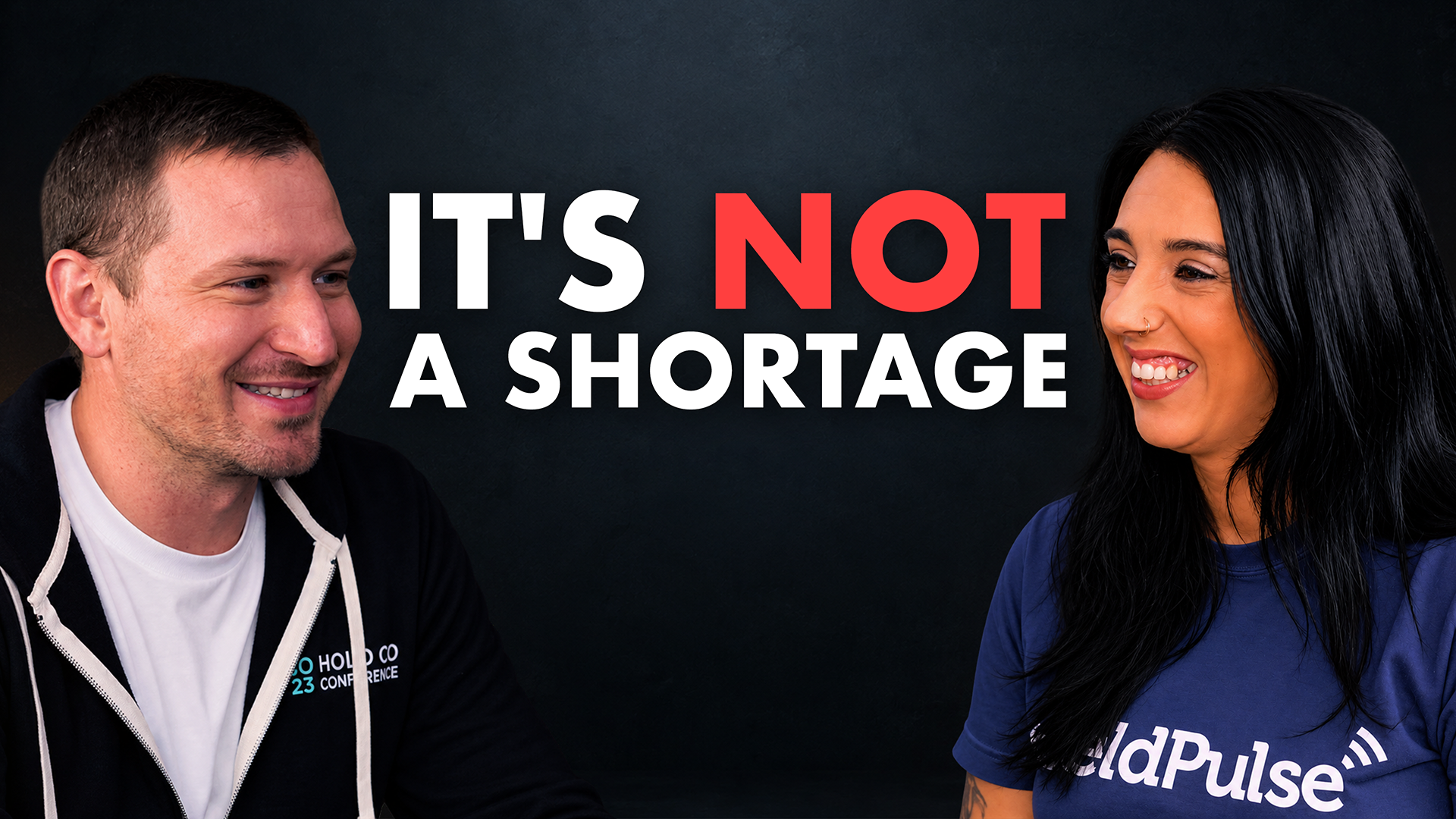
Became the highest review company, that really just feeds the machine. We have three thousand reviews. The next guy has like twelve hundred. I was like cash flow and profitability. Cash flow is tough for a long time, having barely enough money to make it buy.
You've got an aspiration to be 30 million bucks.
What's your timeline to get there? I mean, if the trend continues, we'll be there next year because we've doubled every year. Nothing can stop us as long as we have our head down and if we keep showing up every day.
What were the big things that broke along the way in those first couple of years? Like, what were the things that like you wish you would have done different? Um welcome back to Owned and Operated. On this show, we talk about home service businesses, how to buy them, how to build them, and what we're doing inside our own home service business here in the Midwest. Today on the show, I'm joined by Shane Viggiani from Ampere Electric, and we're going to be talking about his journey from growing his business from a few hundred thousand of revenue to nearing 16 million of revenue over the past few years. Thanks for tuning in. You're you're the owner of Ampere Electric. You've taken the business from 700,000 in the first year to 15 million this year. I'm excited to dive into that story about what you've done and how you've gotten there. Um, but how about you start us off a little bit with a little bit of backstory into Ampere Electric and your story?
Got back into the trades around COVID, started a handyman business on TaskRabbit. Okay. Yeah, parlayed that into electrical, got my electrical contractor's license, and started my company in 2021, named it after my dad's company, Ampere Electric, and uh been rolling now. This is year five. So we've done some fun stuff. Um not a lot of electrical companies are able to reach a decent amount of scale. So I figured maybe I'd come on here and be a voice for the electricians.
Yeah, no, I love it. I think um there's been I I can think of maybe four. I was having the same conversation with somebody uh maybe a month ago, couple a couple weeks ago. And they were running an electric business, and I want to say it was like right around the same size, like 15-ish million. And there's just not many. Like to your point, there are just I don't feel like there's that many, at least in residential service. Maybe there's some like gigantic commercial or gigantic industrial or something like that, some MEP guys, but like not like, hey, I'm a you know, I'm touching homes. Uh so it is really cool when you see it because I just feel like it's it's uh really uncommon.
Yeah, for sure. I've hunted the country trying to find bigger shops to go tour, and there's there's maybe a handful of them. A lot of times they'll add plumbing HVAC and they'll go three trade. We don't have ambitions to do that. I think we have a lot of runway in electrical. I think that we can get 20, 30 mil in electrical in the next few years. Uh so I'm just head down focused on electrical.
Can you describe just uh before we get too deep, can you describe the work type that you guys do just so I understand a little bit more? Residential service, uh panels, generators, electric car, podcasts.
There are a lot of generators in our market, our grid's really stable, but like panels, EV chargers, yeah, uh smoke detectors, GFIs, all your common service stuff.
Yeah. Do you know average ticket? Average ticket, average sold ticket is around 2,900. Guys are probably doing what, one or two jobs. I'm trying to like understand uh this is roughly how ours looks too. So one or two jobs a day, is that like roughly what this looks like?
So we have a pretty robust install department and we like to move fast and we like to keep our sales guys in front of people, talking to people, and we like to keep our installers on the tools. So yeah, we'll have the guys running three, four, or five calls a day and passing a lot of it out out to install. So we'll have like right now we have about 11 service technicians and about eight lead installers with an apprentice.
When in your first year you launched it in 2020 or 2021?
21. 2022 was our first full year.
Okay, okay.
And in that first year, was it 21 or 22? I think 22 was our first full year.
Yeah. All right, and in that first full year you did 700,000?
Yeah.
That feels baller.
That uh and how much of that was on like Task Rabbit or Thumbtack or whatever versus like I was off Task Rabbit, uh, jumped into Yelp right away, and then I saw that they hide the reviews, and I didn't like that because I'm a big reviews guy. So I got onto Google right away, it's kind of when LSA was coming about, um, and really built it from Google. And then we just doubled every year. We went 700k, then 2.3, then 4 mil, then 7.75 mil, and this year we're pacing 15 mil.
Yeah, that's awesome. That would mean you're what, like 12 into the year? Does that seem right? We're mid-October. Uh right around there, yeah. Yeah, yeah, that's crazy. What so what's been the biggest, like um I just want to unpack that a little bit more. So you you doubled each year. Can you walk me through? Like, I'm sure there's a couple big things each year that like helped you get there. One of the hardest transitions for any home service business owner is moving from running jobs to running a business. At some point, the whiteboard or the spreadsheet or that group text that you guys are doing just stops working and things start falling through the cracks. The office is going to lose visibility into the field, and you become the bottleneck for basically everything. That's one of the reasons that I like Field Pulse a lot. Field Pulse gives drawing home service companies one place to manage scheduling, dispatching, estimates, invoicing, job tracking, customer communication, and reporting. It has the tools you actually need to run and grow your business without the complexity of a bloated enterprise software that your team's just not going to use. It's powerful enough to scale with your business, but simple enough that your team will actually adopt it. If you've outgrown the whiteboard and you're ready to build some better systems, check out Field Pulse using the link below. For a limited time, they're offering 20% off your base subscription plus 50% off premium support for your first year.
Yeah. Um, I mean, first of all, I'm not gonna pat myself on the back. Electrical is a lot easier than plumbing in HVAC. And I feel like it was a good time in the market, not a lot of competition. We have to look at competition when we're looking at these businesses. I feel like so, like the competitive landscape was favorable. Um, and then I came in and I'm a small guy, like no idea what I'm doing. Uh so let me look bigger than I am so that way I can become bigger than I am. So got the nice wrap truck, nice truck design from the beginning. Uh, had the technicians in button-up shirts, um, get a lot of reviews. I saw that we should become the highest reviewed company, electrical only, in like two years. So we did that, and it's just it's just asking for the review, right? Like, let's just make a point to ask for the review, do a good job, and ask for the review.
Yeah.
I knew if we just stayed disciplined with that, then we'll look like we were somebody that people can trust. So we did that, we became the highest reviewed company, and then that just that really just feeds the machine. And now we're we have 3,000 reviews. The next guy has like 1,200. So I always think about it like when I'm looking at Yelp, looking at restaurants, and I see a restaurant with 5,000 reviews. I'm like, what are they doing? Do they have fire dancers or something? Like, I gotta go, I gotta go, I gotta check them out. So uh that's been huge for us.
Yeah.
Um, and yeah, at the beginning, like I hadn't I didn't have plans to grow big. It was just me in a truck. Uh, and then I hired my first apprentice, and then after a few months, I trained him up and I can go sell more work, and he'd stay and finish the install. So he followed me around like that, and then that's when I realized it was scalable, and then just started adding pieces from there, more technicians, CSRs, get into management and just start creating more of these layers in the business. And uh every step was a big step, relinquishing trust.
Yeah.
Okay, am I gonna have enough work for these guys and putting myself, putting my back against the wall to figure out how to make it work and relinquishing trust and giving people opportunities to better their lives? Um, and it's always paid off. So the more I do that, you know, just I just keep doing that.
Yeah. What's the team look like today? Like how many people on the team, how many managers, what's the call center look like? Let's break the business down.
Yeah, so it's about total 50 employees. It's me. Uh, then we have an operations manager uh who's fantastic, brought a lot of the old school knowledge and and and stuff like that to the business. Um then it's our install manager and our service manager. Install manager oversees the installers, service manager oversees service technicians, and then we have a call center manager and an office manager, and then a warehouse manager, and uh that's that's the work chart.
What what's the what's an office manager do? Because you versus like call center manager. Usually I hear those as like the same thing. So what's the difference there?
It's a little unorthodox that position. It's more managing like processes and stuff like that as opposed to people. She's kind of like the office mom, is kind of how it is.
That's funny. Uh and then warehouse, I think the rest of them make sense. Uh that makes sense. When when did you hire your first manager? Uh at two million. Which one was it? Like ops service install.
He's now our ops manager. He was our service manager. And that was huge. That was huge.
Yeah. Yeah. That's a you know, we have this workshop, and um, that's one of the more common questions is when do you bring on your first manager? And like two million always felt like the right time to me, because that's like four or five guys. Like, there's you know, enough call center stuff going on. There's like a there's a back office now. There's enough going on in the business that like someone's got to run the field.
Yeah. It seems so small now, two million, but like, yeah, it was the perfect time to do it.
Yeah. When when did you bring on the ops manager? When was that position like really necessary inside your business?
Yeah, so once we had we knew we wanted to bring up a service manager and have a service manager and an install man, we already had an install manager. Yeah. Um, and then now we promoted him up to ops manager, which gave him an opportunity to again increase his life and bring another guy up from the field up to service manager. We had also brought our install manager from the field up to install manager. Nice. So, yeah.
What what sort of what were the big things that broke along the way in those first couple of years? Like, what were the things that like you wish you would have done different?
Pay pay structure. When I first started, I I understood the commission, I understood that you gotta dangle the carrot, you gotta have incentives, but I built it wrong, where the installer was getting like, because we pay a percentage after materials and stuff like that, and he was getting the full percentage as if he sold it and installed it. Got it. So when when I figured out that no, these guys have to like go sell the work, I can't keep selling all the work. Um, that broke that went from we went from four guys down to two guys, and then we rebuilt from there.
Yeah, that feels like a big one. How are the managers like incentivized?
So our managers are incentivized on reviews, um, gross profit, revenue, and we're still tinkering with it. We want to put something in there for growth as well.
Yeah, just like percentage of growth year over year or month over month, or how are you thinking about it? Probably probably year over year. As you've grown through the business, I mean, like 15 in what is that, 15 in four years? This is year five. Yeah, year five. Yeah, that's obviously fast. Like, that's freaking
awesome. Um, as you've grown through the business, like how is like cash flow and profitability, like, how have you been able to maintain that as you've like sprinted?
Yeah, cash flow is tough for a long time. Uh just having barely enough money to make it by, and and then we dabble with some commercial projects that would just bleed us out waiting on AR. Um, and now we're at a a healthy point where we have a good amount of money in there. Um net margins have always been good. It was 19%, now it's down to like 15%, which is uh right kind of where I want to be. Gross profits been 53%. Uh, I don't think I'll ever get to like the 60% uh or 65% just because we pay our guys really well. But uh I'm happy to be at like the 55%. We might be able to squeeze up some like to like 67, 68 if we can tighten up the material stuff.
Yeah. What what is percentage of labor and percentage of materials? Like you're saying you're paying your guys well. Just so most people don't see electric businesses this big, so I I'm trying to understand the KPIs a little bit more.
Yeah, we have some problems in materials. Materials are higher than they should be. They're about 18%. We would like to see that under 15%. Um, and then labor is 25%.
Yeah, that makes sense. All right, and most of your most of the team is like service or sales install. Any service guys at all?
Um, yeah, they're all service sales techs. So if it's something small, like an hour or two, they'll stay and do it. But uh beyond that, we'll pass it off to the installer.
I don't know if you've noticed this, but we've noticed this. But recruitment for electrical over the past few years has only gotten more challenging, primarily because we're competing with like a whole new segment that we've never had to deal with before, which was like all these AI data centers. Like that's becoming like a real pain point for us. Uh so how are you guys thinking about recruitment and how are you able to like keep the pace with hiring guys?
Yeah, luckily we haven't seen too much on the data center side. Um, we like to build our own technicians. Uh I'm a big incentives guy, and we we we give the guys great incentives to make a lot of money. I think that's another area that a lot of electricians uh fall short on. They're still on hourly. So a lot of times, like we have to break the mold with these guys and show them how uh commission can be better for them. And so we've seen a lot of success just having the right incentives in place.
Yeah. What what are the incentives, just so I understand it? Like, convince me, how do I come work for you?
How do I make a ton of money with you, dude? Yeah, it's uh you get paid a certain percentage if you sell the job, you get paid a certain percentage if you install it. Um, so if you wake up and you crush it, you'll make more money. If you wake up and you choose to let that fight you had with your girlfriend ruin your day, you'll make less money. So uh from a management perspective, it's just a lot easier to grow the business because I don't have to sit there and crack the whip. The incentive just dictates the behavior. Um, so when the guys are out there and they're doing the right things with the homeowners and offering them all the different solutions and and being nice and and coming with all the soft skills, they're gonna they're gonna make more money. And we show them like now we have a lot of uh cases that we can show them. We have guys selling a million, two, three million a year, and these guys are making a hundred, a buck fifty, two hundred plus K a year. Uh it's it's a good place to be.
That is cool. So the and there's you said 50 people, like 35 of them in the field, right? About that, yeah. How many of them did you grow yourself versus like hiring external?
Lately, we've brought in more external people, but we're probably 20% homegrown.
For the homegrown, can you walk us through how you're training?
Yeah, so that's evolved a lot. Um I would imagine, yeah. Yeah. At the beginning, it was here, go go follow around for six months, and then we kick you out and put you in a truck, go figure it out. Um now where we're at is we'll bring them in for apprenticeship, we'll have them right around along with the installers for like a year or two, and then they'll test out and get voted out into a lead installer position.
Yeah.
Uh we'll have them as a lead installer for a year to two years before they can move over to service technician.
As you're building more of these uh team members, like do they have their own dedicated manager? Like the service guys report to service, the install guys report to install. And you train both of those, right?
Yep. Yep. So right now, just one service manager for the the service technicians and one install manager for the installers.
Are you guys running like an EOS or like how are you thinking about team leadership and like driving accountability? And like what are you doing there?
Yeah, we've had a lot of guidance over the years. We started out with Service Excellence. Uh, they did a lot of technician and management training with us. We still do management training with them, and then we moved over to Nextstar in April. We started with Nextstar in April, and we're we're running the Nextstar playbook, and we do uh we use a third-party ride-along training uh service that comes and rides with the guys in the truck and teaches them in the field. We find that to be the most successful way of training as opposed to.
Like someone like physically comes out, or it's one of the AI tools.
Yeah, no, he physically comes out, he's an electrician by trade, comes out, rides in the truck. Um, if you want to talk about that, we could talk more about that. I think he's great for any business, and I'm happy to refer him.
Yeah, yeah. So we'll like walk walk me through what this is a little bit more.
Yeah, so he'll come out, uh ride in the he'll do a morning session with the technicians for like an hour. His classroom stuff is awesome. And then he'll hop in the truck with the guy for one one or two days and show them how the process is done, uh, and then let them run it and kind of observe them and coach them that way on the second day. Um, and with that, we just see the guys like a hundred percent increases overnight, like crazy stuff. Because when these guys are technicians, they learn by doing, and when they see it in the field, uh it just clicks for them.
That is interesting. How many times a year, month, or whatever? Like, how often is this coaching program coming out?
Yeah, so year one, he was coming out once a quarter, and then year two, it was every two months, and now we're in year three with them, it's every month, and then next year we'll be doing every month as well. Mainly just because like you have more guys, more guys, and then they need to pick me up every once in a while, so we like the guys to write again every quarter, every six months.
Yeah, yeah. No, that makes a lot of sense. I heard about um we had somebody on the team, and this was like a couple years ago, but they had something like this, but for plumbing, and it was really interesting. Honestly, I tried to look into like what the service was. I mean, now we have our own internal stuff, but like um it was a cool idea.
Yeah, we love it. We we think it's the best way to go.
I I actually don't know what service excellence is, but you are in Nextstar. So like your service excellence, which I'm assuming is like a business practice group or program or something. Okay, got it. Um so you've got service excellence, you've got Nextstar. Is this guy coaching to like whatever that looks like? Because I do think it can be confusing to bring in conflicting coaching.
For sure. No, he uh he came up through Nextstar, he worked at different Next Star companies, so he trains on a lot of the Nextstar stuff. So we'll we'll we'll use all our Nextstar agenda cards and all that, and we'll have him train on that.
Yeah, nice. That's sweet. That's really
cool. Um, are you doing any trainings for like sales or performance outside of that? Like are you like regular ongoing weeklies or dailies or what does it look like?
Yeah, so as a part of our service with the ride-along trainer, we get one classroom session a week, a digital one over Zoom. So we'll do that on Mondays, and then on Tuesdays we'll do an in-house training, just trained to like next our stuff.
Yeah.
That's for the sales tech side, and then on Thursdays we have our install meeting, and we're training the installers on Thursdays.
What do you feel like you've got an aspiration to be 30 million bucks? What's your timeline to get there?
I mean, if the trend continues, we'll be there next year because we've doubled every year. I don't see how that's possible.
Um doubling every year does get harder the bigger the number gets.
I'm sure. Yeah. Yeah. So two or three years.
Yeah. Would what do you think is like what do you think is in the way of you getting from 16 to 30? Like as you look over the next couple of years of your life, like what's on your mind?
Yeah, nothing nothing can stop us as long as we have our head down and and and you know, we keep showing up every day. I don't see anything stopping us. Um We're moving more into like the becoming the household name for electrical. Um, so we feel like we've got most of the low-hanging fruit on digital. So now it's Billboards and Radio. We're working with the raise with the Wizard of Ads on radio. Um, maybe, maybe throw some TV in there. We keep getting a lot of repeat customers and a lot of referrals and more advertising. I think that if we just stick with it, we'll we'll get there.
Anything you have
to add? Like before we got on air, you were talking a little bit about acquisitions. Um like any new stuff you're thinking about. Like, do you think 30 million in one market? How are you thinking about that?
Yeah, just here in Vegas, we have three million people here in this little uh you can get from one side in of town to the other side in 30 minutes.
That's crazy, actually.
Yeah, we have three million people in that area. Um just staying here, maybe some acquisitions, but I don't think it's necessary. Um and I think we'll get there like that, yeah.
Well, you you brought up acquisitions earlier. So, like what was your mind at for that? If it's not going to stop you from your 30, why why think about them at all?
Uh just looking for any growth levers that I can, trying to just keep my mind open to all different options. Um so if you don't mind, I'd like to run just a hypothetical case by you think through this. Yeah, yeah. So there's a few companies. There's one, let's say they've been in town for a long time. Um they never really did a lot on the marketing side, but they have a Yelp account with a lot, a few hundred Yelp reviews, which we know Chat GPT is leaning heavily on Yelp now, and a lot of the AIs are are looking to Yelp. Um, plus, I think that we can spend some advertising dollars with Yelp to take advantage of those reviews. They have an aged GMB or GBP now that they didn't do a whole lot with, so maybe we can sprinkle some some SEO dust on that and get that crank in. Um a phone that rings, a loyal customer base that's been rocking with them for 12 years, some guys that didn't have the right incentives in front of them and they didn't have the right process to take advantage of the revenue that they did have. Um so really I'm looking at it from like the marketing uh assets standpoint. But if I let's say I pay 800K for 1.2 in revenue, and I go to SBA, and SBA loans me the rest, I put 80K down, I'm paying 10K a month, and I'm I'm just drilling in on the marketing assets. Is is that a good way to look at it, or or can I go just make other GMBs? Or I know you've said one time go try to buy GMBs from people. I think that's a great idea. Um, how should I be looking at that?
I've wasted a lot of money on marketing agencies that made pretty reports but didn't make the phone ring. And that's why we use ServiceGalers at Wilson. They work exclusively with home service companies and focus on what actually drives leads PPC, local service ads, SEO, Google Business Profile, and everything you need to get in front of homeowners who are ready to book. The best part is that you know exactly where your money is going and what's producing real jobs. If you're ready to stop guessing and start getting better leads, head to the link below, book a free strategy call, and let them know that owns an operated censure. When you're doing an acquisition, like you always have to be acquiring something. It's like, what are you gonna get? Um, and then like you have to walk backwards into like, okay, is that price uh worth it? And I do think the smaller you're looking, like the more it becomes a buyverse build really quick. So like if someone's doing a million dollars revenue, um if you went and got eight hundred thousand dollars from any, you know, okay, yeah, you go SBA, you go buy this thing for 800 grand. 800 grand is a lot of money. Um could you if you took $800,000, could you rebuild that business in a shorter amount of time? And like looks like just looking at your background, like, yeah, the answer is like absolutely. Like you probably started with significantly less than 800,000, and in a couple years you were at a couple million dollars, and five years now you're at 15. So um that is how I would be looking at it. Uh, is if I'm taking on it, might not be 800,000 out of cash today, but it's still 800,000 on your balance sheet. You're indebting yourself, you're bringing on 10 grand a month of debt or whatever that's gonna be for that amount. Um you really need to be walking through like what are you getting and is it worth it? Um yeah, so I I think like it is worth it to buy that shit. Like totally. I just don't know if it's worth 800.
Just spitballing, what would you put it at? A couple hundred thousand, half a mil?
Yeah, like a couple hundred thousand. I think uh price can change a lot depending on um price changes a lot depending on uh like hey, is is it a new market for me? So do I serve this area? Is one of the things I'm getting new access to customers? Uh is the customer list gigantic? You said 12 years, but like I don't know how big that customer list, you know, it could be it's not very big. Yeah. So um so is it getting me a new market? Is it getting me uh cut like customer list expansion that has never been marketed to? Is it giving me a new service? That that's always like a one to think about. If I'm predominantly electrical and this is HVAC or plumbing and it allows expansion, then okay, like that I don't think it's worth 800 still, but like that can amp up the price. Um, do they have something great, like uh 1,500 Google reviews that we know can turn into millions of dollars uh over just a few year time period? Um, or is it like 200 Google reviews, which still has a lot of value, it's just it's not the same value as 1500. Uh so I would be working backwards on like what is it getting that's different than what I have today? Um and just like sort of running this back for you, like, hey, you've got the ability to create 3,000 Google reviews. Like you could be spinning up GBPs once a week at that case. Um, like you're probably doing like a hundred to two hundred reviews a month. Like that's a lot. Uh that's a new GBP once a month. Um for like not much money, uh, which would be pretty cool.
For for my existing business or other businesses that feed it, like for yours or or for for uh others.
I mean, people have done both. Like there's examples of like I don't know any of the towns in like uh in Los in Vegas, but there's uh there's a bunch of companies that do um I don't even know what they fucking call it, like sub brands basically. Where like it'd be like instead of Ampere Electric, it'd be like Jimmy John's electric, and it would feed to you. Um I mean, there's a big business in Ohio that does that. It's like 50 million of revenue. Uh, and I'm pretty sure they have like 70 GBPs, and it's like basically every neighborhood has a GBP, and it's like this neighborhood name, electric, this neighborhood name, plumbing. Uh, it's pretty interesting. Um, there's another one that they did that with websites too. I feel like that was probably a little bit more uh it was like a six or seven year ago hack, but like it was a hack where you could do it was like hacking SEO, but SEO today is just so different with AI. But it'd be like, hey, Akron Plumber near me or Akron Plumber, and so they would go by Akron Plumbing.com and then you know set up a uh like a form fill. Um, so you can do all that stuff. I do think if you like acquisitions are fair game. I'm just saying for $800,000, you might be better off choosing a larger business.
Um, how do you look at GBPs like for for my company? I have three GBPs in this area. Should we add more? How how how do you think about that?
Yes. Um like you can basically always have more. Uh I think we have like nine. Every market that we're in, we have multiple. Uh so I don't actually know how many we have total, probably close to 20. Uh and um I don't think we have any markets that have under two. Uh and we're in five markets.
So how big are the markets?
Uh big I mean the smallest market is maybe a few hundred thousand, but like Cleveland's three and a half million, Nashville's two and a half million. Um we're looking at mid-Ohio and mid-Michigan right now, and those are in the millions.
So those ones that have like two, three million, how many GBPs?
Uh like nine in Cleveland.
Wow. Okay. So yeah, we're barely uh at the tip of the iceberg.
Yeah, I also think the GBP game is a little bit different than it was uh two or three years ago. Like AI is obviously much more of a thing. Um, but it still works. Like our GBPs produce a lot of revenue. Um, I think that what could be helpful is like I would lean into some of those sub brands. I would just make it, I would just have a clear strategy around it. GBPs are harder to do now because it takes so much longer to get approved and so much it's like harder to maintain. Um, you know, it used to be you could spin one up and it wasn't that complicated, but now it takes like two or three months to go through the Google approval process. Uh like we had one that got approved this morning and it was seven weeks.
Okay. Yeah. So back to the acquisition thing. Like, imagine this guy's has two big expectations. We're not going to agree on price, but I'm itching to throw some money at something and go the more the build it instead of buy it method. How would you be looking at that if I'm just itching to spend money? Where would you throw the money?
Well, I think one thing first. I think that every business that's best in class can grow organically and buy. Uh, so I think inevitably you do want to figure out acquisitions because it is a very powerful lever. Um, there's something called brownfielding where like, hey, you want to be in a new market. Um, I don't know what's adjacent to like is a Reno close. Uh we're on an island out here.
I mean, the nearest market's like an hour.
Like anything, yeah. Yeah. So like say you want to be in a new market and I don't even know where, but it's a couple hours away. Um, brown fielding is when you buy a small business, like that guy that so that example of that 1.2 with 800,000. What I would potentially be like, hell yeah, to that price for is if it was in a new market and you got to like, hey, this gives you this gives you geo expansion with team members. That starts to make a lot more sense. And then you take that 1.2 million of revenue and you turn it into three, four, five or whatever in the first couple years by bringing more resources. You can bring all the marketing resources that you've you know grown your business with. You can bring your sales training, you can bring that ride-along guy, you can bring your technology, you can bring all that stuff, and you can turn 1.2 million into five in a you know, short, somewhat short order. Um I'm I'm well to to sort of, I guess, close on that point. Best in class does both. Uh, you want to be like a balanced business. Um, there's a lot of businesses that like have gotten to nine figures and will never go much further because they don't know how to buy. And there's a lot of businesses that have gotten to mid eight figures or nine figures, and all they do know how to do is buy. They don't actually know how to grow the businesses or drive organic marketing process or hiring or training or any of that stuff. Um, so you I I think that this is a I'm seeing this a lot more as some of these like larger businesses are starting to trade. You are seeing businesses that like are kind of one trick pony in my mind, where they don't they either only know how to grow organically, okay. Well, what happens if we hit like a challenging period to grow? Like as much fun as it would be to brute force our way through everything, like economic conditions do exist. So, how do we continue to grow inorganically by adding MA? Or if we're only doing MA, are we really making the businesses better? Or can we add our next art process or you know, whatever? So, best in class does both, and a bunch of companies have gotten big just doing one or the other, but then they eventually cap out on what their team's capability is. So you just want to solve you want to solve that problem sooner than later because it is much easier to solve at your size than it is like these companies are like a hundred million dollars. Uh, there's an example of a company like this, and it's uh it's 50 million, and all they knew how to do, all they know how to do is buy. And it's like they don't actually know how to make this business better once they buy it. And like it's really hard to figure that out at 50 million versus like 15.
For sure. Yeah, that's good stuff.
But yeah, all that's say you should you should try to figure out both. Um for this guy, yeah, maybe his expectations are too high. Um there's a lot of deals. You know, what what I uh I don't want to say endless, but like pretty close to endless. Like the there is there's almost an infinite supply of businesses below two million dollars of revenue to acquire. As an example, your business uh five years ago launched, and in the first year it was 700,000, and then the second year I think you said two million or two point three.
Yeah.
Yeah. So what's kind of like beautiful about our industry is this I I think of it as like replenishment. So guys like you launch a business. It goes from zero to fifteen million. I mean, that's unusual. Like that's really cool. That's ball or cell. But like zero to fifteen million in like five years, uh, but there's always fresh supply, is my point. Like your business just launched a couple years ago. Um eventually your business gets sold, or some guy doesn't like working with you or whatever, he leaves and then he goes and launches his thing. And we're back at zero again. There's a new replenishment. There's this guy starting at zero, he's gonna go build a new business. And it's so it makes it so the the the bottom of the industry, like the the small, not the bottom, but like this the smallest of the contractors, the uh you know, sub one million or or sub two million, there's always more and more and more and more of them that could ever be bought. Uh and my point in saying that is if it doesn't work out with this guy, there are so many opportunities still inside your market to go find someone else if you're itching to spend money, as you said, um, to partner with.
And then you're thinking price point on these 100,000, 200,000 for a million-dollar business.
I think it depends on the business. Um, you but back to my point of like what are you getting with it? Uh, do you get an awesome GBP? Like, if just to like run that comparison for you, I've seen million-dollar businesses that have a thousand Google reviews, and I've seen a million dollar businesses that have 10. And the one with a thousand Google reviews is obviously worth much more.
For sure.
Uh, same with like you could say Yelp reviews, you could say that with trucks. If the customer list is gigantic in the mill in the in one business, but 2,000 in the other business, like those are just very different um values. So I would like, what are you getting for it? Uh I've paid a million dollars for a business doing a million and a half of revenue, and I've also paid like $300,000 for a business doing a million half of revenue, just depending on like what's it coming with? How good of a business were they running?
And you're, I think you're more on this train of thought than I am, where we're really looking at the marketing assets because we don't expect like operationally, we don't expect a lot there.
Yeah, I mean that you get team members, which that is really valuable. Um, like what matters there is culture. Like, is it are they gonna come along? Are they gonna build? Are they gonna want to learn our systems and processes and be receptive? Um, or are they like smoking cigarettes in the homeowner's basement? Right, like those are two very different cultures. So you just want to like make sure you get the one that you'd prefer. But marketing assets are the most permanent thing that you can buy, and like like physical assets, like are the trucks nice? Equipment, like you can get equipment, but the marketing assets are the I think the real thing of value. Like we've had we've had GBPs. I've I've used this example before, but like we've had GBPs, we bought a business for 800,000 uh back in 2021. Um, I think it was doing like two million of revenue or something like that. That Google business profile has produced millions and millions and millions of dollars. Like it has been absolutely outrageous. And that's just the Google business profile. That's not even the website or the customer list or anything else that came with that business.
Like just the GBP.
Yeah, it had like 800.
Okay.
Which which was a lot. I mean, you know, yeah. Yeah. So um, yeah, the marketing assets are, I think, the most important for a business that size. When you get into a business like five, 10, 15, 20 million of revenue, uh, the team, the management, the like the functions of the business matter much more. Um, but when you're uh like we were looking at a a business a couple weeks ago, it's like two million dollars revenue. And honestly, we were just like we have a $20 million branch like next to it. So we were just gonna sort of merge them together. Like it was just gonna go away, and we were gonna use the marketing
assets.
Um unrelated, but I think you recently made a move, and you can talk about this online or offline or not at all. Are you gonna do an episode about it or talk about it at all? Oh, working with Titan? Uh yeah, I think you had a liquidity event or something.
Yeah, yeah. Um, we have not done an episode on that yet. Uh we probably will at some point. Um, it honestly has been a ton of fun. Uh basically, we we're trying to build the next big platform that's not private equity. Um so as of today, uh, well, maybe tomorrow, because we have something we have somebody joining us tomorrow. But I think we're at 35 million of EBITDA total. I think at the end of the year we'll be mid 40s, maybe 50, depending on like a few uh LOIs that we're prepping to close. Um by the end of next year, we'll I think we'll be like, I don't know if we'll be top five in the whole industry, but we'll be really close. Uh so yeah, so we've we're actively building the next great American platform, uh, which I think is it's been a ton of fun, uh to be honest.
It's been a ton of fun. Have you taken any chips off the table yet? Or is that maybe in the future?
We yeah, we sold like a we sold a portion of the business to like partner with this group.
Yeah. Okay.
Yeah.
Nice.
Yeah, no, it's been a lot of fun. And how are you thinking about how are you thinking about your like overall goals?
Yeah, we'll see. We'll see what the future, what the future holds for now. I'm just having fun with it.
All right. So then in the next year, you guys are focused on like we're gonna chase after 30 million bucks, where sounds like we're we're MA curious. So that's great. You're thinking about it. It's on your brain. Um what else is on your brain and for like the next year or two? Where are you focusing?
Um really just trying to stay grounded with the basics, keep serving our customers, keep making our customers happy. If we're making our customers happy, everything will work out, keep our technicians happy, um, and really just focusing on doing the right thing and doing all the little things.
Yeah.
And then uh we'll see, we'll see what comes from that.
All right, Shane, I appreciate you coming on today. Any lessons learned that you could share with somebody that wants to launch that electrical business and get it to 15? Like if someone was like, hey, dude, I want to do what you just did, like what are some tips for you?
Yeah, just like, all right, so one, build the right incentives. People move with incentives, scratch the hourly, build the right incentives. Uh for two, obsess over reviews. Uh, for three, make sales not a four-letter word, embrace sales as a fundamental part of the business and get good at it, get right along training. If you guys want, I can put you in touch with my guy. Empower your people, lift your people up, treat your people great. And uh and if you do those things, it'll go a long way. And then, too, I'm a I'm a resource. If anyone wants to reach out to me, I'm happy to help. I don't charge or anything like that. Just happy to hop on a phone call and help any way I can. Yeah, find me on Facebook, Instagram, Shane Vigiani.
Yeah, we'll toss a link to your socials below. That way people can find you.
Awesome.
Awesome. Well, thanks for coming on today, Shane. This was a ton of fun getting to know more about you and more about the business. Awesome. Thank you for having me.