

.jpg)
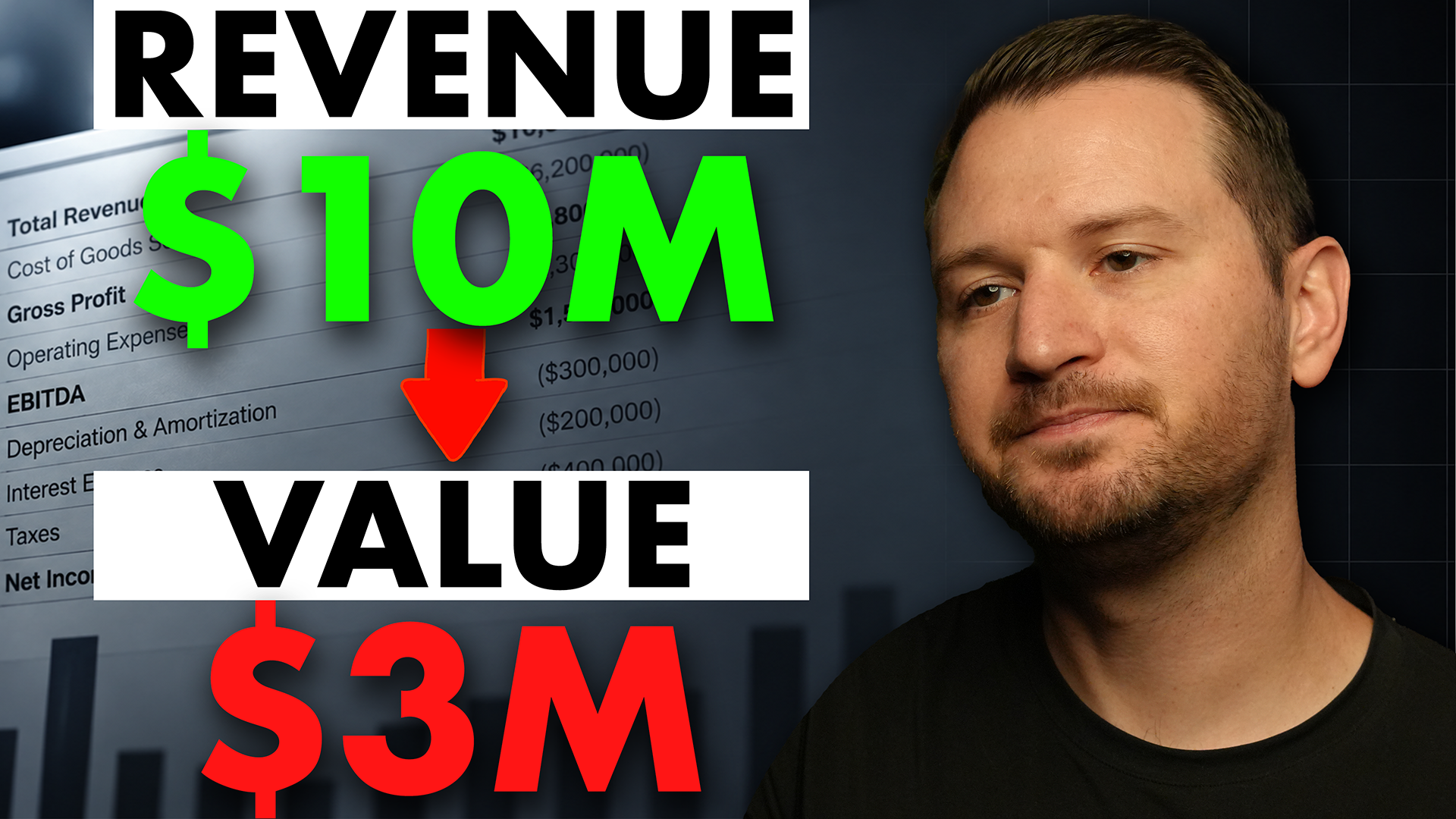
Most business owners think selling a company comes down to one thing: profit.
Hit a strong EBITDA number, keep revenue growing, and when the time comes, buyers will line up with big offers. That is the story many owners tell themselves. It is also where a lot of disappointment begins.
The reality is much different.
Buyers do care about cash flow, but cash flow is only the starting point. What they really care about is whether that cash flow will continue after you leave. That question shapes everything about what your business is worth. It is the difference between getting a premium valuation and getting discounted like a distressed asset.
I have seen this play out over and over again.
Two companies can generate the same profit and receive wildly different offers. One gets multiple interested buyers and a strong multiple. The other gets picked apart in diligence, negotiated down, or struggles to sell at all. The difference usually has very little to do with headline revenue or EBITDA. It comes down to how the business was built.
A business that earns strong valuations is predictable. It has healthy margins. It has repeatable systems. It has leadership beyond the owner. It has a reputation in the market that creates trust with customers and confidence with buyers. Most importantly, it can continue operating at a high level without one person holding the entire thing together.
That last point matters more than many owners realize.
If your company depends on you to close major sales, manage key relationships, solve operational fires, or make every important decision, a buyer sees risk. It does not matter how profitable the company looks today. Buyers know transitions are fragile. If too much of the company lives inside the owner's head, value drops fast because the business feels harder to transfer.
This is where systems become valuable.
Well-run businesses document how they sell, hire, train, dispatch, price, and manage performance. They build processes that can be followed by other people. They create scorecards, accountability, and consistency. That makes the company easier to understand, easier to integrate, and easier to grow. Buyers pay more for businesses that feel organized because organized businesses feel safer.
Margins also matter more than owners think.
Revenue gets attention, but buyers look deeper. They want to know how efficiently the company turns revenue into profit. They study gross margin, pricing discipline, callback rates, customer acquisition costs, financing adoption, and revenue mix. A company producing strong margins through disciplined operations is more valuable than a larger company producing weak margins through volume alone. High revenue with weak fundamentals creates concern. Strong margins with operational control creates confidence.
Reputation plays a role too.
A company with strong reviews, consistent customer demand, and a trusted brand has an advantage that extends far beyond marketing. Buyers see a reputation moat. They see recurring demand. They see easier hiring, stronger conversion rates, and greater pricing power. A business that customers already trust is easier to grow than one constantly fighting to win credibility.
Timing matters just as much.
Many owners wait too long to think about selling. They assume there will always be another opportunity. Then life changes. Health becomes a factor. Burnout creeps in. Personal circumstances force a quicker exit than planned. Once the owner's energy leaves the business, the business often starts slipping. Employees notice. Customers notice. Revenue softens. Buyers see downward trends and immediately price in risk. What could have been a premium exit becomes a discounted one because the business was sold from a position of weakness instead of strength.
The owners who achieve the best outcomes tend to approach things differently. They build with intention. They strengthen operations years before an exit. They tighten financials. They develop leaders. They reduce owner dependence. They treat the company like an asset that one day needs to stand on its own.
That is what buyers want.
Not just profit. Not just growth. Not just a nice story.
They want a business that feels durable, transferable, and built to keep winning long after ownership changes hands.
If you want a premium exit one day, start there.
Build a business buyers would be excited to own.
.png)
.png)