



If you think you have a lead problem, start by auditing what happens after a prospect raises their hand. In many cases, fixing the process produces more growth than increasing your ad budget.
Here’s an example:
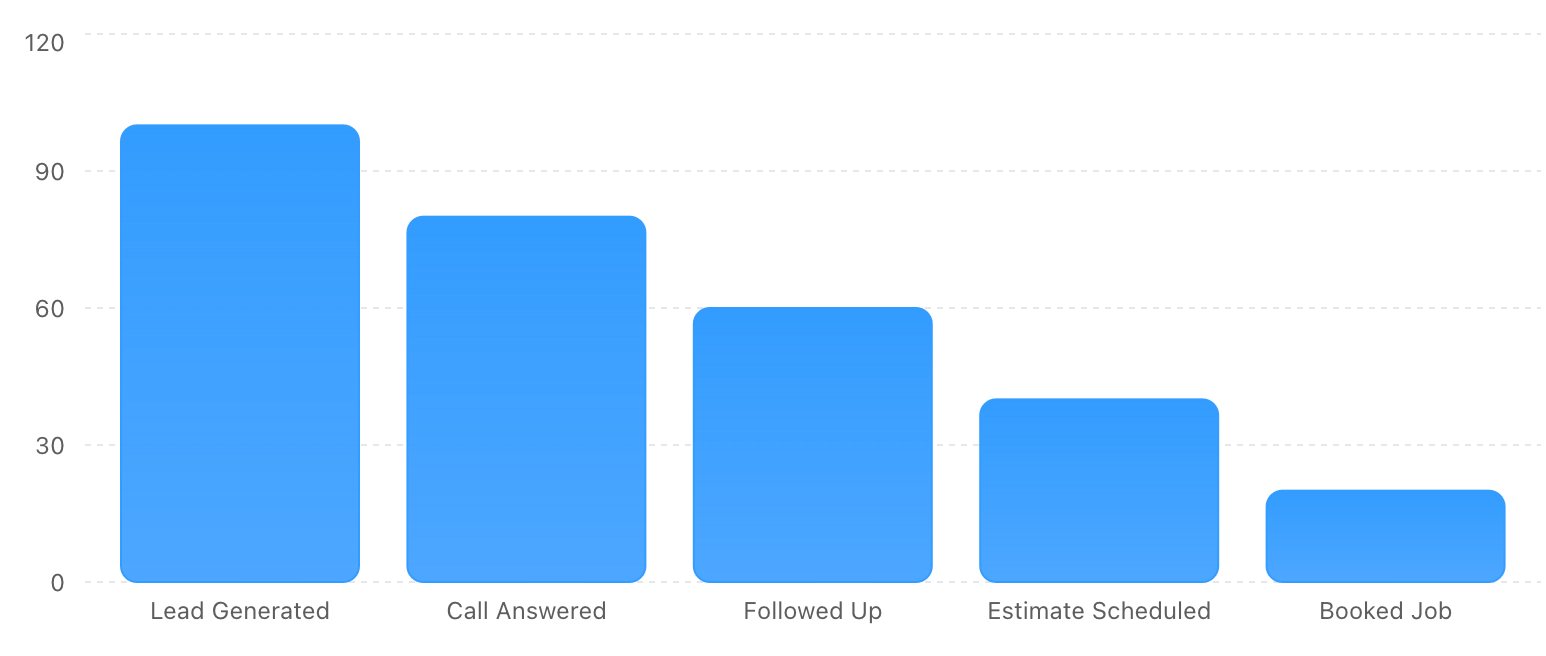
1. Track every inbound call
- Measure total calls, answered calls, and missed calls.
- Listen to call recordings and identify where prospects are dropping off.
- Set a goal of answering every call during business hours and returning missed calls within minutes.
2. Build a speed-to-lead process
- Create automatic text responses for missed calls.
- Assign ownership for follow-up so every lead has a clear next step.
- Use a shared inbox or CRM so conversations don't get lost between team members.
3. Measure your lead-to-booking rate
- How many calls become estimates?
- How many estimates become booked jobs?
- Where is the biggest drop-off occurring?
You can't improve a process you don't measure.
4. Prepare for demand spikes before they happen
- Identify the seasons when search volume increases.
- Add temporary staffing or extended phone coverage during peak periods.
- Increase ad spend when intent is highest and pull back when demand softens.
Marketing dollars are more productive when they're deployed at the right time.
5. Stay visible even when customers don't need you
- Post consistently on social media.
- Keep your Google Business Profile active.
- Attend community events and build local partnerships.
- Invest in branding that keeps your company top of mind.
People often remember the business they've seen five times before they remember the one running the cheapest ad.
6. Build a single goal around booked jobs
Every lead source, marketing campaign, and operational process should answer one question:
Did it create booked work?
If the answer is no, the issue may not be lead generation. It may be that your systems aren't converting the demand you're already creating into revenue.
.png)

.png)