


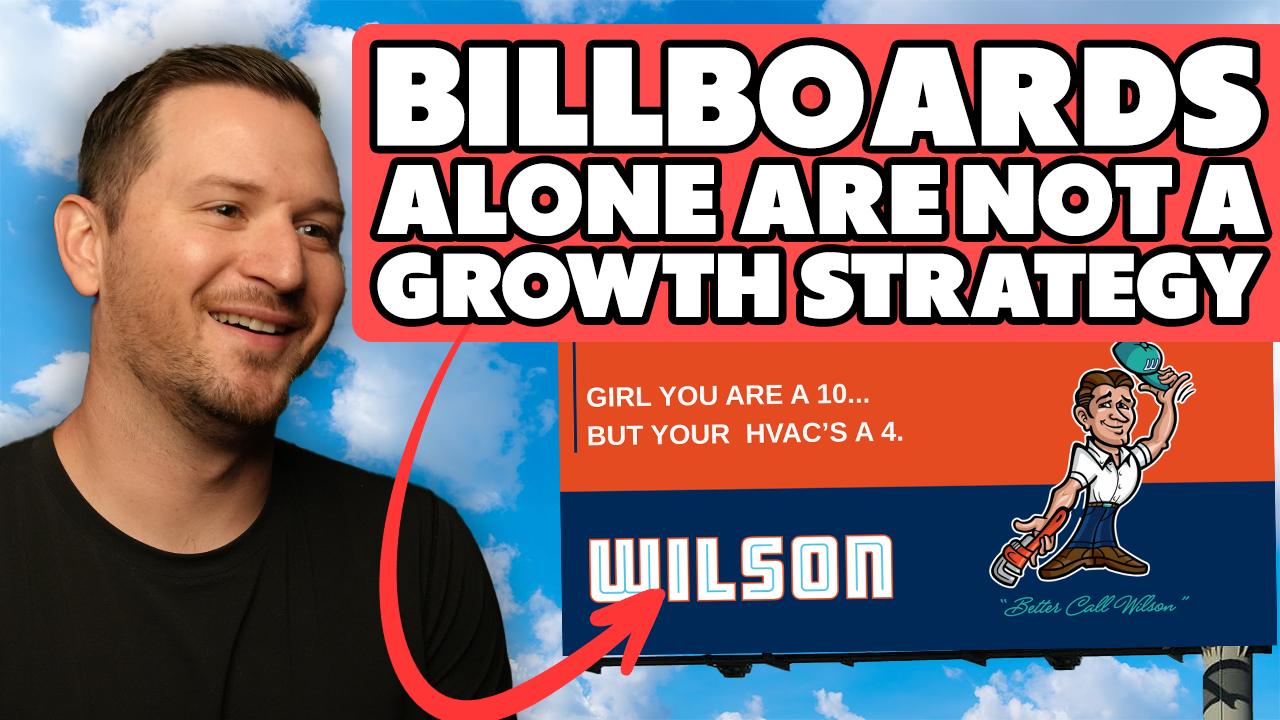
Billboards work best when they are used with intention. Most of the mistakes happen when owners put one sign up, hope for calls, and never connect it to the rest of their marketing. If you are going to spend money on out-of-home advertising, the goal should be repetition, recognition, and support for the channels that already drive leads.
The first decision is timing. Billboards make the most sense after your lead generation is already working. If Google, LSA, and PPC are not producing consistent calls, a billboard usually will not fix that. Brand advertising multiplies demand that already exists. It does not create it from scratch.
Budget size matters more than people think. One board in one location rarely moves the needle. What works better is running multiple boards in the same area so people see your name over and over during their normal commute. When someone passes the same company five or ten times a week, the brand starts to stick.
Placement should follow traffic patterns, not ego. The best locations are the roads your customers drive every day. Commuting routes, major connectors between towns, and high-traffic corridors tend to outperform random highway placements. Visibility over time is more valuable than a single expensive location.
Message strategy should stay simple. Drivers only have a few seconds to read the board, so long explanations do not work. The most effective billboards usually have a short phrase, a clear company name, and something memorable enough that people recognize it later.
Good billboard creative usually follows a few rules:
- Keep the wording short and easy to read
- Make the brand name obvious
- Use humor or a strong visual when it fits the brand
- Avoid clutter, phone numbers, and too much detail
- Tie the message directly back to the company
Consistency across marketing channels makes billboards stronger. When the same name appears on trucks, online ads, streaming ads, and billboards, the brand feels bigger than it really is. That familiarity often shows up later as branded searches, direct calls, and higher conversion rates on digital leads.
Billboards can also work in specific situations where you want to grow in one area. Running several boards in the same zip code while also advertising digitally in that same area can help increase recognition faster. The combination of online ads and physical visibility makes the market feel saturated even with a smaller budget.
There are also times when billboards are the wrong move. Smaller companies sometimes use them because they want to look bigger, not because the strategy makes sense. When the budget is limited, the money usually performs better in channels that can be tracked, tested, and scaled quickly.
The companies that get the most out of billboards treat them as part of a system. They buy enough placements to create repetition, keep the message simple, support the boards with other marketing, and give the campaign enough time to build recognition instead of expecting instant calls.

.png)
.png)

