


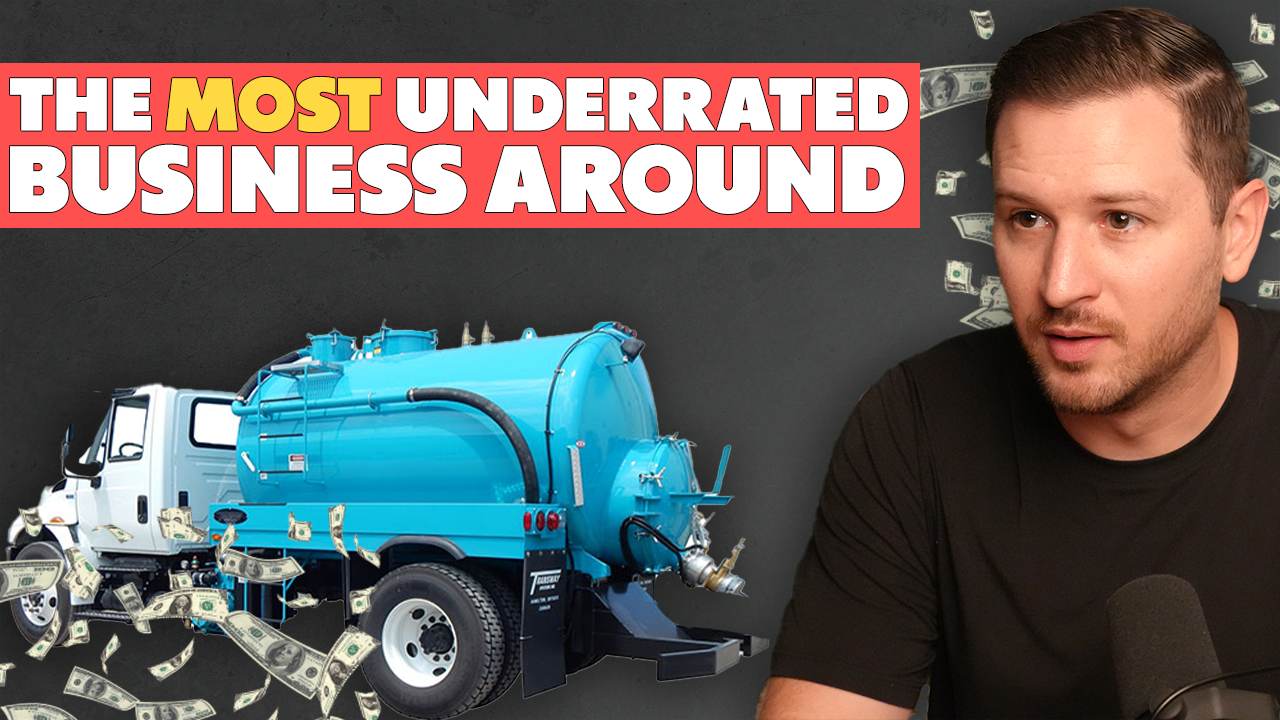
When you look at the data behind the septic business, the opportunity becomes easier to see. Compared to other home service trades, the cost to generate leads can be lower, close rates can be higher, and many markets still have very little real competition.
In some regions, pay-per-click costs for septic are around $10 per click, which is a fraction of what many operators pay in HVAC, plumbing, or roofing. In those same markets, calling competitors showed that close to 90% didn’t answer the phone on the first call, and many didn’t return the call until the next day or later. In an emergency service business, that alone creates an advantage.
Ticket size can also add up quickly. Pumping jobs may start in the hundreds, but repairs, jetting, and system work can push the average visit much higher. In some cases, the goal is to average $1,000 or more per stop, with additional revenue coming from maintenance, repairs, or replacements identified during the visit.
Margins are another reason operators are starting to pay attention. Pumping work can run very high gross margins, and overall net margins around 20% or better are achievable in well-run operations. With that kind of profitability, even a business doing $2–3 million per location can become meaningful when multiple branches are combined.
The structure of the industry also makes scaling possible. A platform with 30 locations doing roughly $3 million each can reach $100 million in revenue, and with strong margins, that level of scale can create significant enterprise value.
When the lead costs are low, the demand is steady, and the industry is still fragmented, the numbers start to point to the same conclusion.
Septic may not get much attention, but the metrics make a strong case for taking it seriously.

.png)

.png)

