


Most home service companies don’t fail because they scale too slowly — they fail because they scale too early.
In this episode, John Wilson and Jack Carr break down the biggest scaling mistakes contractors make between $2M–$5M, including second locations, new trades, over-hiring, and broken systems. They share hard-earned lessons on leadership, KPIs, operational bottlenecks, and what actually makes a business ready to scale.
If you want to grow without destroying profitability, this episode is for you.
In this episode, you’ll learn:
- Why most contractors expand too early
- The hidden costs of adding a second trade or second location
- How poor systems destroy scalability
- Why revenue alone is a misleading metric
- The KPIs every home service owner should know
Host: John Wilson https://www.linkedin.com/in/johnbwilson1/
Guest: Jack Carr https://x.com/thehvacjack💡 Yelp — A Smarter Way to Win Leads
Google costs are up. Lead quality is down. You’re paying more for less.
Meanwhile, Yelp generated 125M+ home service leads last year—and powers results across ChatGPT, Google AI, Apple Maps, and Alexa.
Less competition. Higher intent.👉 Book a call: https://business.yelp.com/ownedandoperated
⏱️Brought to you by The Military Veteran
If you’re running a home service business and hiring feels slow, risky, or you’re just not seeing the leadership talent you need, TMV can help. They connect companies like yours with exceptional military veteran leaders, people who’ve already proven they can execute, adapt, and lead under pressure. And they do it fast, with a white-glove process that saves you weeks and avoids costly mis-hires.Want to see who’s out there? Book a Free Coaching session
More Ways To Connect with O&O
John Wilson, CEO of Wilson Companies
Jack Carr, CEO of Rapid HVAC
📌 Disclaimer: Some links may include UTM parameters or affiliate relationships, meaning we may earn a commission if you make a purchase. Episodes may feature sponsors, but all opinions expressed are our own.
Today we are talking about when to scale, why to scale.
I'm two million. I'm thinking about starting plumbing. What do you think? And my answer was don't do that.
If you haven't scaled one location, you don't know how to scale the second. So like let's stop around with it.
Trying to stay in a singular vertical in a singular location is going to be the strongest business.
They're still not running an optimized business and they're trying to scale a broken system.
So you're saying that a lot of times the issue at around two to three million for scaling is that they are. What's going on, man? I like the new ring of that business partner. Wow.
Business partner. A little bit of a range of things.
If you want to be a business partner as well, reach out to John.
Yeah, yeah, yeah, yeah. I do need like a Google number to just like text me. Text me at X. And I you too can be and can partner with us. That actually has been kind of fun. We've gotten um at like 10 inbound inquiries, which is kind of fun over the past uh month of just like yeah, let's check it out. So appreciate you, and hopefully we can make it all happen. All right, today we are talking about uh scaling, scaling, talking about scaling, talking about scaling your business, uh, when to scale, why to scale. Um, and I think we're talking uh primarily about like the pitfalls of making certain decisions too early. This is on the back of we had breaking five last week, which is our workshop that we've host every six months basically. On here's the sort of the path on breaking past five million bucks. We had 40 some contractors in office last week. It was awesome. Uh, but I you know, we see a lot of people sort of making scaling decisions that might not be the right scaling decisions for their size. So that's what we're talking about today.
Yeah, it's interesting as we have gone through is our fifth or sixth one. Um, yeah, is that the trend of the scaling mistakes and the trends in general are, you know, yeah, they don't change. So it it's very interesting. Yeah, yeah. We hear this year after year. Same stuff every time every time. Which I mean is not like I'm not punching down at all in any way.
It's the same mistakes I made. Exactly. So like I have no I've no rocks to throw at it.
Like there's changing, there's a lot of change in this industry, but that being said, like the problems ironically are still the same. So it's really, it's really kind of interesting to see that and to be able to now put um you know, to put more behind like these specific issues.
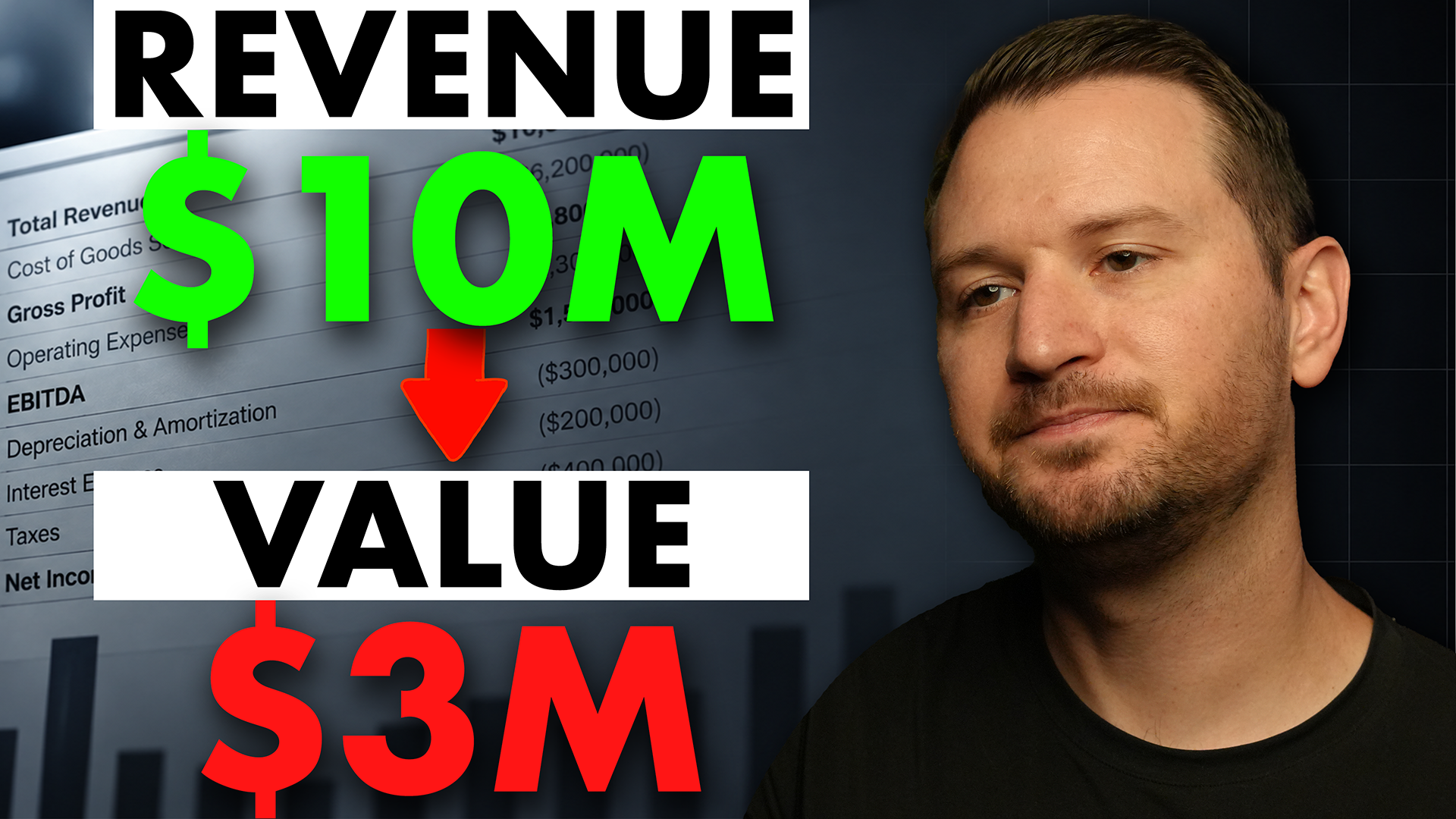
Well, first one, well, I think we just have a couple of uh we got a couple quick hits here. Um headcount, fleet, second location, that's a huge one. That one shows up all the time. Uh, and then leadership. So those are our four. I think before we like dive into those four, um a good something that came up last week, um, and I just pay more attention to now, probably more than ever, is how much of a uh vanity metric revenue is. Uh I did a show, I did a show, uh I was interviewed on ServerSitans podcast a couple weeks ago. And this topic came up, and it's kind of funny because you there's some there's some companies in the industry, and I'm I'm not gonna like toss any rocks here, but there's some companies in the industry that have huge revenue and less EBITDA than I do, like multiples times of my revenue less EBITDA. And um as you think about that, I think I think you just want to be really careful on like who you take advice from and like who you're listening to. And uh as you as you think about scaling and as you think about the direction that you're taking your business, if you're looking to podcasts and books and like publicly available resources or consultants or whatever, like that was another one. There was a consultant that like a few people that of the group used last week, and like his track record is rough, like publicly rough, and they're paying they're paying money uh to this person, and it's it it feels a bit odd. So I think just like revenues of anti metric, fact check who you're taking advice from. Like, just because someone says something on the internet does not mean it's real, including me. You need to fact check it, including me. And like that was just a common theme last week. Was like, oh, well, this guy does that. And I'm like, okay, well, I know I have more context on on that guy's business, and I think that you should avoid what he what he told you. Um, or like this guy, um, we're paying him monthly to consult. Okay, great. That guy's track, like, I recommend you Google his name because I think a lot will show up. So I think um be real just really careful on who you take advice from, especially as you approach scaling, because uh revenue like doesn't actually matter that much. So as you get as the business grows and as you as you scale, uh revenue is something that contractors get really into because it's sort of like a big, you know, juicy number, rah-rah, let's bump our chest type thing. But the value of the business is EBITDA, it is your profit, and like that's that's what actually matters. So there are companies much larger than the company that Jack and I run, much larger than Wilson, and we are worth more than them as a business because we run a more productive business. Uh, so pure vanity, and it it's it's not actually valuable. Google keeps getting more expensive, and affiliate leads are getting worse. And somehow you're paying more for fewer lower quality leads, and that's pretty much the game right now. So here's something that most operators are missing: Yelp. I know what you're thinking, but Yelp is way more than just a restaurant rating app. Last year, over 125 million home service leads were generated on Yelp, and almost 50 million homeowners are searching there every single month. Here's the real kicker though. Their data powers answers across ChatGPT, Google AI, Apple Maps, and Alexa, basically everywhere people are searching before they even know your company name. So instead of fighting over the same expensive Google clicks, you're showing up where customers are actually discovering and deciding who to hire. One company fused service out in the Bay Area, HVAC Plumbing Electrical, does 20 million a year from Yelp alone. You're closing 75% of their Yelp leads, and about 70% of their entire customer base comes from the platform. So if you're serious about leveling up your lead gen, go to business.yelp.com slash owned and operated and book a call.
Yeah, I do think though, I mean, like there's a reason we call it breaking five, and there's a reason it's because I agree with what you're saying.
I guess I'm talking about the top of the industry. Yeah, I think first five.
When you're when you're kind of on the smaller end, like you have to scale, so revenue is a big metric on like, hey, like how I'd rather kill my EBITDA early on, reinvest all of that, have a zero dollar EBITDA business, but be able to grow so that in three years, um, I'm going 100% versus five percent. So yeah, like I I agree with you that I I agree with that up to like a couple million. Exactly. And so as we're talking about the the lower end of the spectrum in terms of size and and uh newness, um yeah, like I do think that revenue i is important, but you are correct with everything you said. Uh I just it it just it's a sizing thing, right? Because early on you need some level of revenue growth to be able to not only compare yourself to other companies, but it's like the same thing. Like I used to compare myself to to companies that did 50% new construction, and you don't ask them about that, you just see that they do, hey, 20 million in revenue, and you're like, oh wow, but then you dig in and it's like oh 20 million revenue, but 15 of that is new construction, like yeah, when the new it's just different models. Like, why would you wouldn't compare an HVAC company to a you know roofing company in the same way? So it it's very yeah, ask questions, um, Google any kind of mentors, yeah, Google names, and um Google names before you pay someone multiple. So there's a there is a focus on making sure that you're profitable as a company, yeah.
Cause like at the end of the day, that's what you're actually building. Like, revenue doesn't provide anything. Like you could be a hundred million dollar company with no money. There was um well, uh like AirPros was a great example. AirPros did 200 million of revenue and was worth scraps. So yeah, just be cautious.
Uh do
your research. So, in terms of premature scaling pitfalls, where I want to start, because this is the one that I get asked a lot just because of got head count, fleet, second location, and leadership. I'm gonna start on second location just because it's a really easy one.
Yeah, this one's crazy. Um so yeah, you can I'm gonna expand on it too.
It's second location, second vertical, right? So a lot of times we look at when when and including myself. So, like this is something that I made the mistake of early on. Uh probably fool. I'm a fool, like like we all are. You know what the best part is? Is everybody told me that this is a bad choice, and I did it anyway, and it was a bad choice.
Yeah, um, yeah, like so everyone has to learn this lesson on their own. Like, there's no no amount of logic that we present is gonna stop a single soul from doing this.
Uh that's my favorite part, though. Is I get to be the person that says, don't do it, and then everybody's gonna go do it anyway, and then they'll be like, Yeah, Jack, you're right. I know. Just like I'm doing now to Rich Jordan, you, like all of my mentors who told me, hey Jack, don't go into plumbing just yet. Like, stay in HVAC, grind a little longer, get to like five million mark instead of the the base minimum three million, um, and wait. Like, just grow the singular entity. Um, that being said, I think it's a huge mistake for a lot of uh new newcomers or people trying to grow their business past two to three million, is there's this idea, and this I think also goes in like verticals in what I just talked about, is they're doing service work or they're doing uh commercial work and they pick another like new construction or they pick uh something else internally inside whatever trade they're doing is they get squirrely with their what they're the type of work they're doing, and if it's not an industry change, like if you're doing new construction and new construction's failing, yeah, switch to uh service. Um yeah, but uh trying to stay in a singular vertical in a singular location and building those muscles to be able to grow inside that singular vertical, singular location is going to be the strongest business because it's the same type of people, it's going to be the same systems, it's just going to be turning knobs rather than flipping switches. Whereas when you switch to multiple multi-location, it gets so much more complicated and it absolutely eats all of your overhead. Um, you have to run multiple marketing campaigns from multiple geolocations, you can't go as deep in a market. Now you're driving farther. Like there's just a slew of issues that come when you're trying to run multi-location or multi-trade businesses. And so for sub-five million dollar companies, Rich used to say three million is like minimum. I'm I'm saying five. Like as somebody who's done it, I wish I waited till five. Um, not only because I would be a better HVAC, sole HVAC operator, but because the I probably lost, I mean, I called you on the phone a few times, like, dude, I don't know if we're gonna make it because like I probably lost 250, 300k um trying to get plumbing up and running. And that was that was one of the number one questions that we had in this last one was like, hey, I'm 2 million, I'm thinking about starting plumbing. What do you think? Yeah, and my answer was don't do that.
Don't do it, yeah. Well, I think I think what people get stuck on. Um, I'll describe what I perceive to be the problem. And I experienced this too. I was talking to a company, um we were considering acquiring them three years ago, four years ago, back in I think 2022. Plumbing only business, uh like good amount of drain cleaning and uh sewer lining and that type of thing. Let's say they did two and a half million of revenue, maybe three million of revenue, like somewhere in that, you know, in that zone. And I remember the the seller was adamant that he had like 15% market share. I directly compete with this person. At the time, we were 10 times their size, and I'm like, I think I have 3%. And that's not me tossing rocks. I think my point is, and I had the same issue when we were a smaller contractor. As you're growing, it's hard to imagine what really big looks like. And that's why I encourage shop tours and visits and workshops and any exposure you can get the better. Because I know when I was a two to three million dollar contractor, I legitimately thought that I was at the cap of what our market could do at two to three million dollars. And obviously, today we're in the mid-40s, but I really thought this is as big as it gets. And so did this seller. This guy was like, This is as big as it gets. I know the path from zero to two. I'm just gonna go do zero to two again. And I think that's where people get stuck, is they are convinced that they're at the cap of their market. And I can guarantee you, you are you are not at the cap of you. I don't know where what you're at, but you're not at the cap of your market. There's a guy in New York, so it's it's comfortability.
Like I know how to get a business from zero to three or zero to two. Yes. I'm very like, you get all your systems in place, you haven't had to re break or step change. And so you're like, okay, well, I can get zero to two in HVAC, let me do zero to two in plumbing, zero to two in electrical. Yeah. Um, versus having like to learn two to five, five to ten, ten to fifteen. And so, like in their mind, it's easier to do a secondary vertical or same with location. Like, hey, I did zero to two here, I can do zero to two over there. Um, which is, I mean, to some extent is I agree with what you're saying.
I think the problem is when you break five, that's when you actually start building a business. And I'm saying that like kindly. Um, I'm not trying to say under five isn't a business.
40 million isn't a business.
Yeah, I legitimately do still feel like a very small business, but I understand that that's not a popular opinion. Um my favorite. But yeah, I mean, like, if you compare me to the top of the like Apex is four billion dollars.
Go back, go back to I'm less than one percent accepted, John.
Like it's yeah, I'm less than one percent. But that doesn't mean yeah, yeah, maybe more. So I think like uh see, now I got now I got the strike.
Now we're arguing about now we're arguing about relativity. If you if you're worth a hundred million, you're still very rich, even if you're comparing yourself to Jeff Bezos, you're still really rich to the normal public, even if Jeff Bezos is massive leaps and bounds ahead of you. You're not comparing yourself relativity to the top, you're just comparing yourself relativity to the average or the mass. So, same with the business size.
I like my I like my math better. It makes me hungry. So yeah, I'll I'm chasing. I'm out here chasing. But it's not to say that you're not a business under five. Obviously, you are, but you you begin the process of professionalization at five. You have managers, you have call center, you have roles, you have KPIs. Like you're starting to really build the business instead of potentially being the business. So yeah, I agree with you. I think it it does look easier to go launch that second location instead of like figuring out the hard stuff, like how do I hire managers or how do I market or whatever. But my my example was that there's a guy in a population of like 40,000. Uh, he's like four or five hours away from here in western New York. They do 35 million dollars in 40,000 populations. So, like whatever market you're in, whatever you think you're at cap-wise, like you're not at the top of what you get.
I told that story about Dairyberry in Gallatin all the time. They do 24 to 30 and they're in 50,000. It's a city of 50,000 and they have extreme depth, and they're able to get yeah, multiple tens of thousands, tens of millions, excuse me, in revenue.
Yeah, yeah. I think people they they just can't like conceptualize that because they're working so hard to get leads now. They're just like, well, there's no possible way I could be 10 times my current size. And like the answer is you can, like, you absolutely can. Unless you're already doing a hundred million in one city, then like that's about the only excuse that I'd be like, okay, maybe, maybe you can't. Um, but I agree. Like, second location. Uh, can the business run without you? Are systems documented? Do you understand the path to scale? If you haven't scaled one location, you don't know how to scale the second. Like, you just don't. So, like, let's stop fucking around with it. Most companies, when they are ready for the second location, is like 20 to 30 million dollars. That is when most businesses prepare for their second location.
What if um this is this is a big what if, not to to uh off track you again, but there's lots of situations where I talk to owners and and it's like hey, I have this great deal and it's an hour and forty-five minutes away.
Yeah.
What's your take?
I mean, depends on the current state of the headquarters.
Headquarters, same size. So it's a five million deal, and there's another five million deal. Five million in size, five million deal. Because that I mean that's generally what we see. Uh I've seen before, is like a lot of times people know this this idea and and they're not planning on doing some kind of crazy um window time thing. Uh, but a deal comes along and just says, like, hey, as as an operator who bought, like, you you know when a good deal's there, and so it's really hard to pass that up.
Yeah, I mean, I have two reactions to that. Like, one, me personally, I would do it. Like, that's what I did. Like, I would do it. Two, it is a bad idea. Like, like both of these can be right, but like that's basically like I did it. So, like, I'm warning people, I'm not like pulling up the ladder behind me. Like, I acquired the scale, it was rough.
Yeah. It it how much uh how much uh ability do you have for pain? Is the question.
Yeah, yeah, yeah. Do you have a high level of pain tolerance? If so, you're gonna do great. Um, but yeah, second location. Um, you know, we actually to share our story on multi-location, we actually uh we went multi-location, and then because it was such a bad idea, we actually shrunk back down and we went to one location and we ran that way for three years until we hit mid 20 million, and then we added second location again, just to sort of like refresh it. So, like, yes, I did do that, but then we also course corrected because it was such a bad idea. Uh, I know a lot of people that have divested second locations so they could focus. Like, they got their second location, they're three or four million bucks, and it's like you don't have a marketing person, you don't have accounting, you don't have HR, you don't have managers, like you literally don't have the fundamentals to run your core location, let alone the second location. So, like, how is this really gonna go? And you're just how it's gonna go is you're gonna pull your hair out. Yeah, uh fleet. I think this one's just like KPI. Um, people get really worked up about revenue and not like are we currently producing at expected production? Is each truck doing their job? Are our guys producing at this at the amount of revenue they should per month? Which, like, let's say that's 30 to 60,000 a month. Um, do we have a demand problem? Can we currently fill our existing trucks with techs? Can we currently fill our text boards or do we not know how to do that? Uh so I I feel like that's a big one too, where people are sort of like they're getting over their skis on like they're still not running an optimized business and they're trying to scale a broken system.
So you're saying that a lot of times the issue at around two to three million for scaling is that they are rather than getting systems optimized, sales process optimized, they're throwing more people in more trucks to try and grow through the problem.
Yeah, I see it a lot where um like they they're like, dude, revenue's so low, I just need more people. And then you look at like their headcount and like they're driving like 150,000. Revenue per year per tech, which is like half or less of what they should be doing per tech. Well, it's like, okay, actually, like, yes, your revenue is low, but like it's not because you need more people. It's because you don't have a good sales process, you're underpriced, you aren't measuring your team, you're not holding them accountable. Like there's something broken in your system of doing business, it has nothing to do with headcount.
No, I think that's a good one.
That's a hard one for people to like get their heads around because it requires you to focus on the fundamentals. Whereas like hiring is easy, it just doesn't solve the problem.
The ironic part too is is all these kind of tie back to um actually knowing your data and knowing your numbers and having that that good consulting and working with people who can help you actually drive what you're trying to achieve. Um that's interesting. I didn't realize that that would all it would all kind of f flow back to your initial point. Good opening. Well, I just mean like because like the problem is we've made that mistake. Well, my point is like I guess what I'm getting at is I g I guarantee if you asked any of those 40 people like what is the optimal revenue per truck for a tech's uh selling tech. Like what is it? I don't know what's what's my what's my expected revenue from a CA that I know. What's my expected revenue from a non-selling tech? I know that, but like I don't know what a selling tech's truck is. Yeah.
So like I think I mean there was a company last week that their average tech brought in 15 grand a month per tech, which like that is half of what it should be. Like it should be like 30 to 60, depending on the trade. But like 15 grand a month, that's not a lot. Like, I don't know how you're paying anybody any amount of money. How do you recruit on that? How do you pay for overhead? How do you market? How do you pay for your trucks? I mean, twelve trucks are twelve hundred bucks a month if you're buying like vans. So, like what nine percent of your revenue goes to your truck payment? Like, that's crazy.
Yeah, no, I I fully agree. I my I guess what I'm getting at is like actually knowing these KPIs and set points is part of the pitfall here to begin with, even like stepping back before second location, stepping back before headcounting fleet and leadership. It's like, how do you find that data to be able to compare yourself to benchmarks and to industry?
Yeah, I actually I have a funny project for this. Um, did I tell did I tell you about that?
Is this your your text message thing? Yeah, this is this is awesome. I love this, by the way.
So, yeah, so this is this is funny. So this is a funny idea. So I bought huge.com.
Yes, you did. Yes, you did.
Oh my god, dude, it was like 10 bucks. So I bought huge.com. And what we were looking for was exactly like this this solution where how do we compare, like, how do we compare industry benchmarks? And like Next R has a report, and like you can get it, but like, how do you compare it live? So we built it. So I had a friend of mine build it, and like I think we're just gonna like ask people for donations and like give me like I don't know, 50 bucks, and like you can join. Like, but we're trying to get, I already have like 10 contractors that are starting to use it, and uh, so we're all live every single day, starting to see each other's teams, KPIs by job type, by market, by average ticket, closing rate. Like it's kind of wild. And um, like the big the big funny part of it is like we we're gonna make it very like Trump meme focused. It's huge. Like, hey man, your numbers are huge, and then like some Trump dance memes. It's it's gonna be fucking awesome. Uh, anyways, if you want to be a part of huge, shoot me a message. Uh, we are just like letting people in. It it's hilarious. I mean, it would be it would be amazing to have like 200 businesses in there feeding data that like it's just public data. Like, here's average tickets, here's whatever. Um, so I I think it's gonna be a really valuable tool as more and more people get in there. But yeah, it's like a funny pet project of mine. We had to solve the problem for the business, and so I just started texting friends to like get their businesses in there. Um, okay. The next the next transition. Yeah. I know, I know. Yeah, yeah. Um, well, I want to make it so much worse. Just like buy a bunch of like red hats and like Trump dancing shirts, and but like I'm being told that like if I make it too political, it's not gonna land. But I'm like, guys, this is funny. Like, this is just funny. Everyone should find a Trump dance meme funny, regardless of where you are in the political spectrum. Hiring great leaders shouldn't be a guessing game. At the Military Veteran, TMV, they connect home service businesses with proven leaders, military veterans who know how to execute, adapt, and inspire. Their clients scale faster, hire smarter, and build stronger teams. One HVAC company even grew from 50 million to $3 billion in just five years with TMV's help. They move fast, handle the heavy lifting, and deliver exceptional talent you won't find anywhere else. If you're ready to hire leaders who actually drive results, get a free 45-minute TMV executive coaching session with a successful home service entrepreneur when you mention owned and operated. Click the link below to get started.
So next is all right.
Headcount. Uh headcount feels kind of similar.
Um it's almost exactly the same as fleet, right?
Are we fully utilizing text? So I think the way I would approach this one is uh our like utilization rate. Now, this is not something that I expect most people to be measuring it, and it's a-okay if you don't. Like, let's just use common sense for a second. During slow periods, what do you do? Are they clean in the shop? My dad used to have us uh during like Q1, uh, he would flip houses. So we would all go work on houses. We would paint, we would do bathroom models, we wouldn't repipe. Yeah, it is. Yeah. I mean, so I think I've said this, but like uh obviously a third generation plumbing and heating business, but like my dad, like real estate was his main profession, and like this was sort of like the vehicle that he used to build his real estate uh business. But um obviously 10 years ago that changed, but like even when I bought it, like uh real estate was a pretty big portion of like what we were doing. So so yeah, we would flip houses. Um, so like our utilization rate was low. Like, that's not a that's not us learning how to build a business. If your guys are running a lot of shop time and they're organizing and painting and doing whatever the hell, like you have not yet figured out how to run a business. So are you fully utilizing your techs? Do you have a good marketing system before you add headcount? Uh, do you know how to do that? So yeah, I think that'd be my take there.
Yeah, and that's from the tech side. I mean, obviously, headcount from the staffing side is similar. Are you blow over bloating the office and eating up you know, all of your overhead? I mean, the number one overhead spend is usually what fleet and headcount. So you can really shoot yourself in the foot arounding two to three million by overhiring um office staff to be able to handle um as they move from generalist to specialist, like you're you're just overhiring. Um, and so there's a few ways around that that we've talked about before. We've hosted giant lives on it. Uh really just making sure that your office staff to technician ratio is good, as well as your office staff to revenue is good. Yeah, I mean it's pretty simple. Like it's just hey, you can't as a two million dollar business, like you you have to figure out some level of leverage. You can't have 10 CSRs, like it's just it's obvious unless you're utilizing leverage from overseas staffing or AI or some kind of um other leveraging platform, like um call center.
Leadership. Can the business financially support a GM? Are you hiring leadership before systems exist? I mean, I think this is where people really this is where people fuck up in my mind. Like, hey, I'm gonna go launch a second location and our core location's a couple million bucks. Okay, well, you probably don't have somebody running your core location, let alone this new one. Like, if you haven't mastered hiring that ops manager, GM, like however you want to think about that role in the in the business you walk into every day. I'm not sure how you're gonna do it at an off site. One like our business really started scaling. If I could draw a chart, maybe I will draw a chart. I'm gonna draw a chart. Woo! It's just a big J. If you can't see this, oh, can't even see it. Can you see it?
It's a J curve chart for anybody who can't see it.
It's a big J curve. It's just I'm flexing my ego right now. But Brandon, uh, like I hired ops managers pretty early on in the journey because I was really determined to never be operationally important to the business. I didn't want to have like functional roles, I wanted the ability to step back and do whatever fuck I wanted. I wanted to work on the business. So uh I always had that from like a million and a half on. I had someone in operations that wasn't me running with operations. The business scaled pretty quickly because of that. Now, granted, obviously, we had to put the right people in, and uh branding came in at like three million or 2.9 or 4 or something, like somewhere in that range. And uh obviously we've really like moved a lot since, but um the leadership component like if you look at every business out there that got big, it wasn't one dude like ripping, you know, it wasn't one hero or champion or whatever, it was a team of human beings coming together, and you need a strong second, you need a strong third, you need other people inside the organization that are gonna lift you up. And if you haven't done that yet, you shouldn't be thinking about scale. Like you just shouldn't, because you're you don't have the people that you need, you don't have the A players that will move the business to scale.
Yeah, I mean, I uh we're the same story, so like I don't disagree whatsoever.
I mean, Jeremy's really moved the business in the last like six months.
Our last GM, even though the ending wasn't so great, uh, we hired him about 1.5 million, and he allowed me enough time to put some pieces together, yeah. Put some pieces together on the back end while handling, you know, service manager slash ops manager kind of early on roles. And so I do think that's important though, is is that this position should getting really good at this position, at hiring this position is going to be understanding the value of this position. And that value of the position is to be able to back you out to do other things, marketing, sales, whatever. Um, whatever you're not currently, whatever you're good at, whether maybe you're the ops person and then you need to hire a number two who's good at marketing sales and all that kind of stuff. Yeah. Like it could go the other direction as well. But my point is, out of all that, is understanding though that the value of that position very early on is to drive revenue. Like if they are not driving revenue, then that position on either side of the coin, whether it's marketing sales or operations, um, is a bad hire. So like we has we saw a jump in revenue from that hire specifically and being able to back out and then do the things that really matter.
Here's what scale ready, I think, looks like. Um, so as a philosophy, I want to break this out for people because I don't want people to think I'm like shitting on their dreams. The reason 20 million makes sense, we we actually did a show on this like a couple months ago, and I and I was like, I get it. Like I understand why 20 to 30 is the size that private equity likes to buy. Because it's it is large enough that you have a full leadership team, you have every discipline covered inside the business, you have accounting, you have marketing, you have HR, you have call center, dispatch, install coordination, sales, install, purchasing, warehouse. The business is a business. And it is big enough that you have operating procedures, you have training in place, you can replicate your systems. And I think that's the important part. If you try to scale before you're ready, you don't have the systems to scale. And scale like is the is the process of a system. So Jack and I just partnered, and we're bringing some of our systems to Jack. So like we're actively working on bringing our speed delete and call center and dispatch systems to rapid in Nashville. And like these systems work. And on the back of those systems, Nashville can get to 15, 20, 25, 30 million because they did the same thing here in Stowe. But like it is a system that works and continues to cycle. And I think that's where people get tripped up, is like they're trying to scale ahead of their system. And often they don't have a system. Like, I'll have we'll talk to people at these workshops, they're like, I'm ready for my second location. And I'm like, okay, well, how do you get leads now? And they're like, actually, we don't know. Well, I'm like, well, you're definitely not ready because marketing is a system. And if you don't have that system locked in, how do you think you're gonna do it two hours away? Like, that doesn't even make sense. Whereas, like, for us, marketing is a system, and like leads are a product of the system that we've built.
Same with recruiting, same with everything across the board. Yeah. Totally. Yeah, no, that that totally makes sense. The hard part, I think, that comes into play is your systems at two million, or what you imagine your system that you're building is uh at two million is vastly different than the system that's probably going to be in place at 20. And so the ability to actually modify systems on the fly as well, as you're starting to scale, you put the system in place for two to five, and then at five, you realize, hey, my warehouse now actually doesn't work with this PO system. We need to scrap it and go back and redo the entire thing. Ask me how I know that. Um, I I do think it's important that you understand how to build those systems and build that muscle early so that when you when you are in the middle of scaling, that you're able to actually flex that muscle pretty quickly.
You can adapt.
Yeah.
Yeah, you can adapt.
And that's like that's the benefit of being a business, is like you can you can bob and weed.
You can move. Yeah, you can move. You know, we brought on three businesses so far this year into Wilson, and like with each one, it this is becoming like just more and more proven. Like with each one, like we have a system. We have a sales system, we have an install system, we have purchasing and hiring and marketing and any anything that we currently need. Like, we have that system because that's how we got here, and we're just actively deploying these systems into each of these partners, and it is working, like they're growing, they're getting more organized, they're removing friction as they scale. Um, it is beautiful, but it does take a while to get there. And obviously, you can scale multi-location before 20. Like, there's a lot of examples of people doing it. It's just gonna be a lot harder than it maybe needs to be.
Yeah.
Instead of just like, let's learn how to run a business today, and then we can scale later.
Yeah, I mean, so are you telling people though? I I guess what I'm I'm getting caught up on a little bit is when you're when you're thinking about scale, are you telling people not to scale and just don't focus on scale, just focus on your systems and scale will naturally come out of that?
Uh I mean, I think that's a big part of it. Like, if if we think like what what is uh what is scale? What is scale and how does it happen? Okay, uh you get more you get more inputs, like let's say it's more leads, but even to get more leads, you need a system to can drive an ever increasing amount of leads. You have to be able to book them, you have to be able to send a tech out, sell that lead, install that lead, do the accounting for it, hire more people, and just like go in this consistent, you know, uh cycle of growth. And I think um from what we've seen, like bottlenecks are what prevent scale. So the bottleneck could be the owner in the wrong seat uh or actively holding the business back. The bottleneck could be your current leadership, the bottleneck could be some system. Um, but as you resolve bottlenecks, the business naturally starts to scale. And I think what's kind of funny about um about our industry in general is if you look at some of the fastest growers in the industry, first off, like what's your aspiration? Like if your goal, if your dream is like a $20 million business, then like maybe ignore this advice. But like if you want to build like a multi-hundred million dollar business, then this is for you. Most of the most of your growth, it starts to compound like crazy past, let's say 20 million bucks. Because the first like 20, I get that I was impatient too, but like you are building the system to scale. Tommy talked about the same thing at like 25, 30 million, they had to slow down, put a ton of systems and processes in place, and now they're 250. And that was like seven years ago.
Yeah, he talked a lot about the SOPs that he had to build.
Yeah. Like it scale is a system, like you can rah-rah your way to it, but it's also like systematic. And to me, I find that kind of like exciting because we can solve it. Like it's a puzzle that you have to solve. Uh, but what you what you'll find is these businesses that have gotten huge, like nine-figure businesses, they get to 20, 30, they like they work on whatever their friction point is. Maybe it's multi-market at that point, maybe it's their leadership team, maybe it's the sales process, whatever it is. And then the business goes from like 20 to 40 to 80 to 120. Like, it's so like I can point to like 15 examples of this where you spend five years building the business, 10 years building the business up to 20 million, like getting it to minimum scale, and then in two years it's at 80 million. Like it it because you built the system.
Yeah, yeah, yeah. No, I've I've definitely seen that as well. It's very interesting when you see somebody's business actually become a business and then like the scale portion becomes a business. It just explodes. Yeah.
It explodes. Yeah, it explodes. Like, and and the question it the question that we think about, like, are we getting better as volume grows? And will our will we continue to like see the same, sort of see the same results? Um, but yeah, if you're trying to cap out at like 15 to 20, then like not not super useful uh advice, I guess. But like if you if you're seeing yourself at nine figures one day, um, spend the time to build the system. A couple like closing questions as you frame this for yourself. Um is scaling the goal or is lifestyle? I think that is a really important question. Jack and I have been talking about that a lot over the past couple days because we've just like interfaced with owners that like have good sized businesses, but um they're like happy with that size, which yeah, or like it's like, hey, we're at three million, we want to get to 10, but we want lifestyle on the back end of that. Uh because they think that's which like I have absolutely no interest in. So like ignore my advice if that's what you're looking for. I pay myself as little as possible. I don't care. Um are operational problems being mistaken for growth opportunities. I I think that's a big one. Like, oh yeah, we're capped at two million, let's go launch a new location. Probably not. Like the the real answer is you probably have much more to go inside your core location. If you've already done it, I don't know, like focus up, grit, grit through it, or divest um and focus. But um yeah, and then are you are you being strategic or are you just being impatient? And this this is probably the one that I struggle with the most today. Like, I'm taking my own advice here. Like, hey, am I in what I'm I'm impatient to be at 100 million? Like, I want to be there. I want to be there five years ago. And as the as I make day-to-day decisions, am I making them because it's the right decision or am I just being impatient?
That's a good one.
And like probably both is is the answer. Thanks everybody for tuning in. If you like what you heard, make sure you hit that thumbs up button, sub it up, and leave us any comments uh for barriers that you've had to scale. Thanks everyone.
.png)
.png)

