

Entrepreneurship is changing.
More operators are skipping the “start from zero” phase and buying existing businesses instead. Why? Because buying a business gives you something that startups usually don’t:
Revenue on day one.
Customers on day one.
A team on day one.
In uncertain economic periods, business acquisitions often increase because people still need essential services and experienced operators see opportunities where others see risk.
For home service businesses like HVAC, plumbing, and electrical, buying instead of building can shortcut years of growth.
Buying vs. Starting a Business
Starting a business from scratch means building everything yourself:
- Hiring your first employee
- Getting your first customer
- Creating systems and processes
- Building brand awareness
- Managing cash flow with no stability
That “zero to one” stage is often the hardest part of entrepreneurship.
Buying a business changes the equation.
Instead of spending years building infrastructure, you acquire a company that already has:
- Employees
- Customers
- Vehicles
- Revenue
- Brand recognition
- Existing systems
You are not starting from zero. You are stepping into an operation that already works, even if it needs improvement.
Why Buying a Business Can Accelerate Growth
One of the biggest advantages of acquisitions is speed.
If your goal is entering a new market quickly, buying an existing company is usually faster than launching from scratch. Instead of spending heavily on marketing while building operations behind the scenes, acquisitions allow you to start with infrastructure already in place.
That is why many operators prefer acquisitions when expanding geographically.
The playbook often looks like this:
- Buy an established business in a target market
- Install better systems and processes
- Improve operations and marketing
- Scale the business faster than the original owner could
For experienced operators, this approach can remove years of trial and error.
Buying a Business Is Still Risky
Acquisitions are not shortcuts without problems.
When you buy a business, you are also buying:
- Existing debt
- Operational inefficiencies
- Employee issues
- Customer complaints
- Weak systems
- Potential cash flow challenges
The key difference is that these problems already produce cash flow.
Many successful buyers specifically look for businesses with operational problems because fixing those problems creates upside.
Broken businesses are often opportunities.
The goal is not to find perfection. The goal is to identify a company where improvements can create significantly more value.
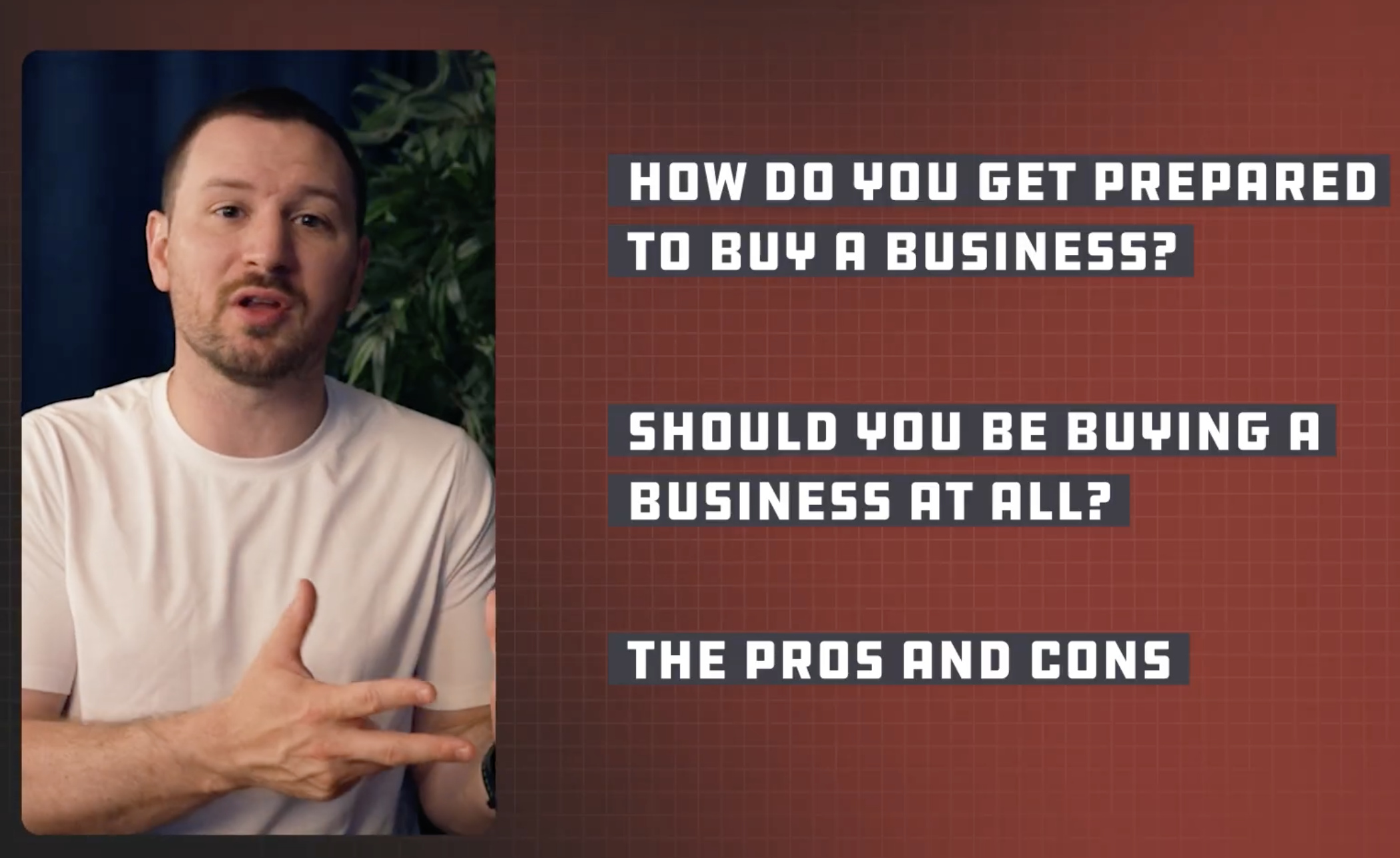
Are You Ready to Buy a Business?
Before acquiring a company, there are several important questions to answer.
1. Can You Lead the Business?
Leadership matters more than technical expertise.
You do not necessarily need to be the best technician in the room, but you do need someone who understands how to operate the business and lead people effectively.
2. Do You Know How to Get Customers?
Marketing is critical.
If you are entering a new market, you need confidence in the channels that drive growth, including:
- Meta
- SEO
- Paid advertising
- Local brand positioning
Without customer acquisition systems, scaling becomes difficult.
3. Can Your Business Handle Volatility?
Expansion creates pressure.
Revenue fluctuates. Employees leave. Unexpected costs appear.
Your existing operation needs enough stability to absorb those shocks while supporting the new acquisition.
4. Do You Have Access to Capital?
Buying a business almost always requires additional cash after closing.
You may need working capital, marketing spend, operational upgrades, or emergency reserves. Access to capital matters just as much as the acquisition itself.
5. Do You Actually Want to Run the Business?
Owning a business is different from passively investing.
Even if you hire operators, the responsibility ultimately falls on you. If leadership gaps appear, you need to step in and solve problems.
When Starting From Scratch Makes More Sense
Buying is not always the right move.
Starting organically may be a better option if:
- You have more time than money
- You want to learn every stage of the process
- You are comfortable growing slowly
- You want full control from day one
Organic growth teaches valuable lessons, but it usually takes longer and involves more trial and error.
The Best Companies Do Both
The strongest operators rarely choose only one strategy.
The best companies combine:
- Acquisitions for speed
- Organic growth for market expansion
- Strong marketing systems
- Repeatable operational playbooks
Acquisitions help them enter markets quickly. Organic expansion helps them fill gaps where acquisition opportunities do not exist.
That combination creates long-term scale.
Final Thoughts
Buying a business is not an easy button.
It is simply a different type of risk.
For operators with leadership, marketing knowledge, operational systems, and access to capital, acquisitions can become one of the fastest paths to growth available today.
Sometimes the fastest way to build something great is improving what already exists.
.png)