


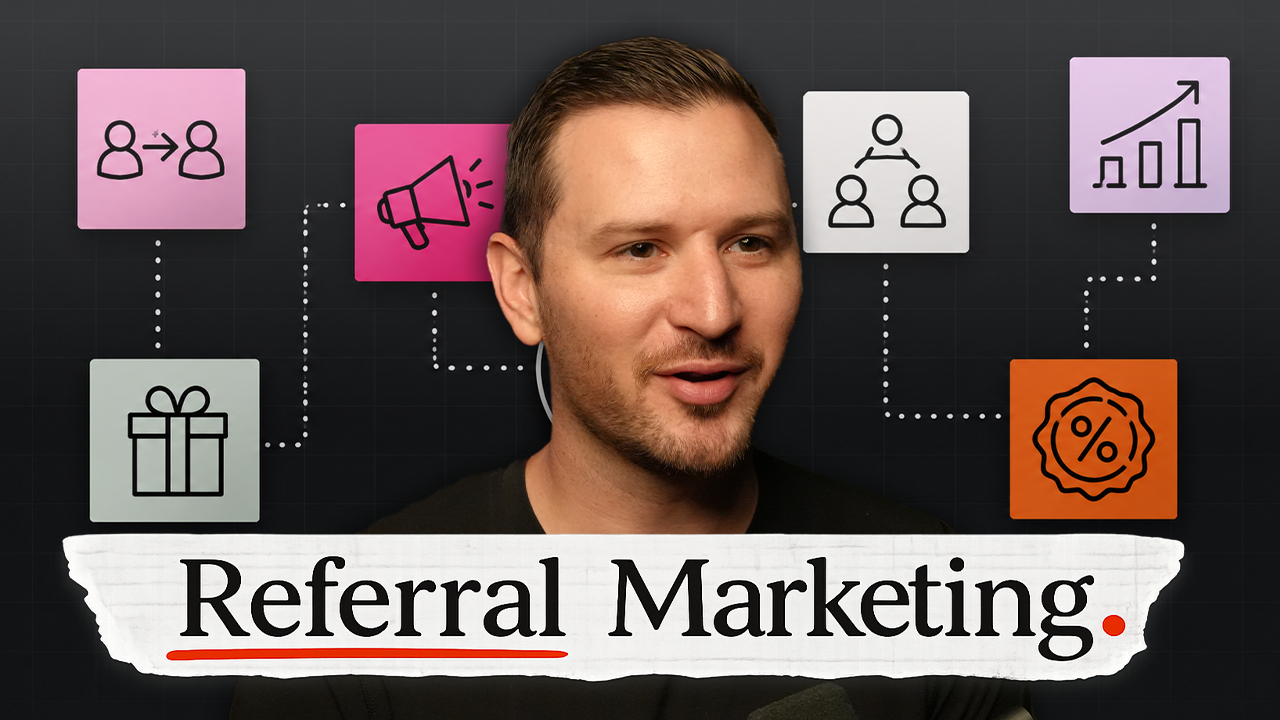
Home service companies are leaving serious money on the table when it comes to referrals.
In this episode, John Wilson sits down with Murphy Nadauld from ReferPro to break down how top HVAC, plumbing, electrical, and roofing companies are building scalable referral engines through lifecycle marketing, automation, and AI.
In this episode, you’ll learn:
• Why referrals are underutilized in home services
• How lifecycle marketing drives repeat revenue
• Why referral incentives increase conversion rates
• How contractors are using referrals to recruit technicians
• The role AI and automation play in customer retention
• How affiliate partnerships create new lead opportunities
Host: John Wilson
Guest: Murphy Nadauld (ReferPro)
💼 Shoutout to Quick Staffers LLC
Need trained HVAC & plumbing CSRs at a fraction of the cost? Quick Staffers LLC specializes in placing top-tier global talent with the best SOPs and scripts.
🔥 Get $500 off your first placement here
💼Shoutout to Avoca AI!
Looking to train your call center and improve technician performance? Avoca AI helps teams identify issues, improve call quality, and drive results from start to finish.
🔗 Schedule a demo
💼 iWallet — Cut Payment Fees & Simplify Your Cash Flow
Running 5+ trucks? You know payments are a mess—slow checks, high fees, and disconnected systems.
iWallet is built for home service businesses, combining cards, ACH, and digital checks into one platform that plugs into your CRM.
We’re currently cutting our processing fees from 3% → 1.5% using iWallet.
👉 Book a demo
More Ways To Connect with O&O
John Wilson, CEO of Wilson Companies
Jack Carr, CEO of Rapid HVAC
📌 Disclaimer: Some links may include UTM parameters or affiliate relationships, meaning we may earn a commission if you make a purchase. Episodes may feature sponsors, but all opinions expressed are our own.
Talking about how to drive referrals into the business. 83% of homeowners are willing to refer your business, and only 29% actually do.
Hey, the biggest companies in our industry are hiring teams just to run this process because it is so important. That's what most people don't realize.
There's so much more meat left on the bone. It's administratively burdensome to like track those referral engines. You can either build trust or you lose trust. And most businesses that do that manually, it's easy to lose. You have to have automation. If it's manual, it just doesn't work. The referral engine's really real.
Welcome
back to Owned and Operated, a Top 200 Business and Entrepreneurship Podcast. My name is John Wilson, and I am your host. On the show, we talk about how to grow your home service company and generally just bullshit on the internet. Today I am bringing back Murphy Nadal from Refer Pro. Yeah, we just had Jan a couple months ago.
Yeah, this is good to be back in uh in Cleveland with you here. Yeah.
Yeah, no, this is fun. We had uh we're we're at our breaking five workshop, and we've got uh two folks from your team. Uh it's Parker and Clint. Yeah. Clint. They're out there. They're out there. Um, and they're just slugging AirPods like nobody's business, which was pretty fun.
Yeah.
Um, but yeah, no, welcome back. This will be a lot of fun. Uh it was a fun conversation. So we we yesterday at the in our workshop, we're talking referral marketing and we're talking uh this is our fifth breaking five workshop. And I promise that this will become relevant. It was our fifth breaking shop uh breaking five workshop, and we're so two and a half years because we host it every six months. Yeah. And what's kind of funny about it is how we started and like the conversation was like, hey, there's some pretty like clear guidelines on you do this at this time in your business cycle, and you know, uh, but over the last two years, technology is like totally different. Yeah, and so suddenly all these like kind of set in stone rules on like, hey, here's CSRs, here's how you think about dispatch, and um, a lot of it has gone like gotten way more flexible. And referral technology, I think, is a really interesting version of that, where you've got like it is a high automation, high lead gen source for the business that didn't even exist, I don't think, three years ago when we started this workshop. So, anyways, it was it was fun to have the guys out because they were like sort of explaining it, and uh yeah, yeah, it's great.
You got a great crew in there at the Breaking Fives Million Workshop, it's awesome. Yeah, it's funny. Yes, 40 guys, 40 guys this year. Yeah, 40 guys and gals. It's growing, it's growing, it's a good crew, lots of energy in there. It's fun to yeah, talk referrals. Yeah, I mean you say it's changed in the past three years, 100%, like zero to a hundred, even the past six months with the technology that we have now with AI and automation, it's changing daily at this point. So it's pretty exciting.
Yeah, yeah. The uh uh another fun thing that was just it, it'll be interesting to see like how it lands, but the um this is probably our this is our largest cohort through the program, but it's also the largest average business size. It's called breaking five, and there's like 10 people in that room at above 10 million. We're gonna have to move it to breaking 25. I don't know what we're gonna have to do. They're growing because they all come to the conference. They're like, hey, so we're at 9 million, and I'm like, all right, what are we doing here?
It's because they've come in the past years. Yeah, you're helping them grow. You gotta raise the ceiling now. It sounds like that's good. I guess so. I guess so accomplishing its goal.
So today we're talking referrals, we're talking about how to drive referrals into the business. Um, where do you want to start? I talk to a ton of home service owners, and if you're anything like the one to five million dollar shops that I know, you're probably getting hammered with AI pitches right now. Most of them sound great until they hit the real world and just completely fall apart. The one that we keep coming back to is Voka. What stands out is they actually understand how contractor businesses operate. This isn't just another AI answering service. Avoca handles inbound calls, outbound follow-ups, texts, web leads, even dispatching, all in one system built specifically for service companies. If you're on Service Titan, then this is a big deal. Their integration is deep, so you're not duct taping together five different tools and hoping that nothing breaks during your busy season. I also respect that they're realistic about AI. When a call needs a human, they've got a 24-7 live transfer built in, so nothing slips through the cracks and your customers don't get stuck in a bad experience or like an AI loop. Owners using Avoka are seeing hold times basically disappear and booking rates jump, some by 30% or more. If you want an AI partner that actually helps you book more jobs without creating more chaos, this is worth checking out. Book a demo at the link
below. You want to start?
Yeah, I mean it's in the name ReferPro. That's what we do. It's our bread and butter.
Yeah.
It's uh it's a fun space. I mean, we're not reinventing the wheel. Everyone that listens to this knows the power of a referral.
Yeah.
Um, I think that there's there's a lot of uh opportunity meat left on the bone with referrals, right? I think most people think of referrals as an organic opportunity. Yes. There's this stat that 83% of homeowners are willing to refer your business, and only 29% actually do. So that's crazy to me. 83% are willing, only 29% actually do. So there's essentially this 54% referral gap of happy customers, this database, this gold mine of people who you've done the hard part, you've built the trust, you did a good job, you answered their, you know, they gave you a five-star review, whatever it is. And 54% of them aren't referring you. So we know exactly why that is. We've got tons of data, tens of millions of homeowners, A-B testing. There's a lot of data that goes into this. Three main reasons. One, your business isn't front of mind, and your referral program's not front of mind. So one, they've got to remember your business six months later, 12 months later. They need to know that you have a referral program. That helps a lot when they understand, hey, there's a referral program they're offering up to $250 for every successful referral. They need to know how to submit that, what the process is, it needs to be frictionless, right? So, number two is it needs to be easy, no friction. Yeah, that's manual the way that we do it today, sending a two or three-way text, and then that lead gets lost becomes very tricky. Third, there needs to be an incentive in place and it needs to get paid out. So what we see is staying front of mind, easy to do and incentivized. That closes the feedback loop. But yeah, what happens is most people aren't even staying front of mind. It's kind of lifestyle, lifecycle marketing piece.
Number two is traditional way you just define life.
So we've started talking way more about lifecycle marketing on the show. Yeah. Uh, you want to just spend a second and define that?
Yeah, I think there's probably a few different ways you can look at it, but in my mind, it's it's staying front of mind with your customers. So, whatever that is for for your business, it might be you want to get um service calls or you know, it might be repairs or installs, it might be um membership requests, reviews, whatever it is you're trying to target, shoulder season, it might be something different, right? Weather-related events, but basically dripping and staying front of mind with your customers. I think it's SMS and email is what we're really good at uh as part of that kind of foundation to drive referral business, but there's other channels as well. So staying front of mind.
I'm gonna click a little bit more just to help the listener because I I think this is where the uh one of the things I hear the most about like referral technology or like contacting our customers basically, yeah, is I don't understand the point of it. So we're just like we'll focus on this for a second. Yeah. Uh I think it was Wrench Group, it might have been Redwood, but they just hired uh director of life cycle marketing. And so to sort of like, hey, this is uh this is its own thing. So as we as we talk about marketing on the show, it's usually like how do we get that customer file inside our software, inside our CRM or whatever? How do we get their name, their phone number, their email, and get that first job? And lifecycle marketing is taking that first contact, first job and turning it into a repeat customer, uh, which makes that first $80 that you spent to get that lead way more impactful. So I just want to like help click on like it's real. Uh the biggest companies in the industry are focusing even more and like even separate marketing teams for lifecycle marketing versus like lead gen marketing. Um, and I think we think about the same way internally.
Yeah, yeah, that's interesting. I think another way to put it too is that that lifecycle marketing helps improve the lifetime value of that customer. You said that that initial $80, that's great. You go get the one job. Yeah, it makes sense. But how much more valuable is that $80 over the next five years if you attack that properly? And I think 95% of companies don't do that properly. So a year later, that same customer that you paid for last year is now is now spending money on Google with another business and you just lost that customer, right?
So it may and it it it makes your lead gen way more effective. It makes uh like it allows the business to become more and more um immune to like uh algorithmic changes from Google. Uh so yeah, our a big part of our success over the last like three years, we we didn't know the term lifestyle cycle marketing until late last year. Like a big part of our success has been that. So app on calling, app on texting, app on email, and just like constantly trying to stay top of mind as people have a need. So I just wanted to like spend a second on that because I think that's where people get lost in the sauce on this is hey, it's not a lead today, you're not telling me how to use Google better. And it's like, hey, the biggest companies in our industry are hiring teams just to run this process because it is so important. You can go get all the customer files in the world, but like what do you do with them?
Yeah, yeah, exactly. You guys have done a good job of that. And I mean, Tommy, Tommy and his team at A1, they call it Army of Advocates. Yeah, they've got this, whether it's your customers that we'll talk about, it's your employees, your technicians out in the field, you've got affiliates, other businesses, you're creating this life cycle, lifestyle market, lifecycle marketing that is building the foundation for everything you're doing. Whether it's now there's immediate results that come from that. There's also that builds momentum over time if you do it right. It's more powerful a year, two, three years later. Yeah. If it's done properly and personalized, I think that's what's changed so much in the past six months, year, even since last time that we were talking at this table.
Yeah.
Is the ability to personalize that. Your customer Jane and your customer John are totally different people and they have different profiles. So if you treat them the same and you send them the same message, it's fine, it still works, right? It's not that you know, brute outbound doesn't it, it still works, but it's so much more efficient and you can get so much more revenue and ROI from that if you touch base with them with specific touch points. So that could be who is the technician, what kind of service do they have done six, twelve, twelve months ago. With ReferPro specifically, it's how do they redeem their reward? Did they use that on a charity? We know what motivates them intrinsically if they did that, or did they use it on a Delta flight, or do they take their family to Disneyland, right? So, or do they do it Venmo directly to their bank account? So there's ways to motivate people, and every single individual is different, whether it's a technician or a customer. And that's I think the value here of this foundation of lifecycle marketing is if you treat everyone the same, you're still gonna get results, but there's there's a huge lever you can pull with personalization, and that's where AI and this automation and this foundation data foundation layer and how to accurately organize that uh can bring a ton of results.
That's interesting. I think uh we haven't like pressed as hard on this as we need to, um like internally, like specifically the referral side of the business. And every time I start to think about it, I'm like, God, we have to like we have to push harder on this. Because it it's uh the easy win, and it's probably like from your perspective, the easiest win is like, hey, you can pitch revenue to like a me or like another contractor out there, because it's like, yeah, you'll get your money back.
But um I think it like recruitment would be fascinating, like getting referral in building a referral program inside your own team. We have a restoration, and I think I brought this up last time too, but like we have a restoration company and like a referral engine based on that for like home inspectors or whatever the B2B side of that is would be fascinating because you can pay $500. Yeah, you can use it for internal. Like, um there was a uh it's kind of administratively burdensome to manage internal referrals. So I'm a plumber and I go out to a job and I notice a like HVAC system that has a bunch of condensate on the water or uh like a condensate water on the floor around the system. And like I feel like all of those are like really easy applications of the same product. Yeah, like are people using it that way or am I just like making shit up?
Yeah, no, Apex, I mean we work with Apex, they they love that. They're obviously a big a lot of these PE platforms have hundreds of techs, it's not scalable. Uh there they need to find more scalable ways to bring in technicians. That's a big problem, right? Yeah, one side you've got, hey, we need more revenue. I think that's true for every business, that's the goal. But also in order to get that, sometimes their their techs are actually too busy. That's a great problem to have, but it's a it's another choke point that you've got to go higher for that. So yeah, absolutely.
So some of the biggest in the industry are using this technology to drive.
Yeah, I mean, that was that was direct feedback from Apex is hey, this is what we want to do. I mean, it makes total sense to me.
It makes total sense. It's like anything that's anything that there is like an action, it's almost affiliate, right? Anything that there's an action that can be tracked and is worth being paid out for, which like there's kind of a lot. Like, yeah, there's the customer referral component, but like recruitment alone, I mean, this is a hell of a drug.
Yeah, 100%. I mean, we look at this as referral wedge, like last year at this time we were dominating referrals, and we still are. That's a huge use case with customers. But that's the great thing about working with all these great companies. Yeah, HVAC Plumbing Electrical Roofing across the country and internationally, is they tell us, hey, this is great. We're also using it for our technicians. Great. That's a huge product line for us now. We're also using it for affiliates or B2B. We're able to source referrals from other businesses, right? Like for your restoration company, I think a lot of that business comes from plumbers, I would imagine. So it's it's the ability to transact B2B on leads that wouldn't otherwise be service and they can then be taken by that. Yeah. And then, yeah, recruiting all these different areas, lifecycle marketing, staying front of mind with your customers and all the different value ads. So it's win back, right? It started as referrals, but when you're staying front of mind with lifecycle marketing, we're getting almost just as much revenue now from people coming back two, three, four years later that that we're gonna go to Google and find this business elsewhere. But they with the lifecycle marketing, they were able to come back and say, Hey, I don't have a referral today. And our AI triage can say, hey, we'll get a tech out today to get this taken care of. We need XYZ done. So yeah, I mean, there's there's a lot of different use cases for when we talk about that personalization at the foundation that opens up tons of opportunities. Referrals being, I think, the biggest opportunity because it's it's such high efficiency. You need that out there, and there's such a big gap. That's what most people don't realize is they think, hey, referrals are working. We get a ton of referrals in word of mouth, and that's great, but they're only getting that 29%. There's so much more meat left on the bone for referrals specifically that they're not taking advantage of. And so it's cool. I was just in a shop last week. They in their first five months hit their million dollar mark on refer pro, specifically through referpro. It's crazy. Incremental revenue.
How big is a business?
They're they're similar size to you guys. They're uh yeah, they're part of the guild group, they're a garage door location, part of the guild group. Is that A plus? That's A plus, yeah.
So and they're out of Salt Lake, they're out of Salt Lake, yeah.
Yeah. So I was just I was just stopped in there the other day and I was talking to the team. And um, yeah, I mean it's just cool to see that, right? Like that, that's a million dollars in revenue that they were like, hey, referrals are great, but now that they're taking advantage of it, they're driving meaningful revenue in in a short amount of time that they didn't think was possible. And that's that's not a a weird case study. That that's very, very common across every business, obviously, depending on the size, but that's a common a common thing that happens.
Yeah, what how many customer files do you think this makes sense?
Yeah, as far as like homeowners in the in your database?
Yeah, like homeowners, uh I mean, I like a couple questions on it. So uh yeah, I'm I guess homeowners is probably the big one. Or um I mean, do you have anybody using it as like a B2B? I'm imagining so we've got somebody here today, and he's uh he's running a foundation repair business, basically. And uh almost all of his work comes from real estate agents. Yeah. So I like and again, I'm just I'm trying to imagine I think the more you like think about all the different ways you could drive this, it it get it like more hairbrained shit starts coming out. But like my I think you could run like meta ads at a landing page to like, hey, you want to make an extra thousand dollars a month? And I'm sure meta has rules about that, but uh, and then like drive referrals to this foundation repair if you're a real estate agent. And I think um, like are people are people using it like that yet?
Absolutely, yeah.
Like almost affiliate, it's like an affiliate program.
It's like ease is an affiliate program as a contract. We have a whole affiliate platform on the refer pro platform. So the number one is is this customer database, this gold mine, which is which includes post-service strips after the job is done, as well as database.
And I didn't, I guess I didn't finish that question. What is a good amount of customer base?
Like a thousand or five thousand or yeah, I think like the folks you brought up so far, like Apex is huge. Yeah, the bigger the better, right? Uh obviously the bigger the better. Referrals are numbers game. So we can bring, we can take the 29 to the 83%, we can close the gap. Yeah, that gap is much different for a truck and a truck and a and a private equity backgroup. So your results are gonna vary depending on the size of your business and the foundation of your customer base. With that said, this this lifecycle marketing, the sooner you start it, the better. Even if you only have 500 customers, it's better to get that started. You might not see incredible results from referrals specifically, but if you don't do it now, you're never gonna see that in the future. So uh I would say the the gap is the same, it's it's proportionate to the size of the business. So yeah, it can work for everyone at different varying stages. But yeah, you've got your customers. And I would say start the lifecycle marketing with your customers early, then lean into our second and third buckets, which are technicians, employees, and affiliates. If you don't have a lot of customers, you can still have a lot of affiliates. So we can track that. Like I think the stat is 30% of calls that come in across the board. This is all home services. Uh, they're unable to service, whether it's because they're calling for a different kind of service that that business doesn't do or it's out of territory or resume, or they're they're moving or something. And so we're able to help cycle some of those leads to other businesses that they can't, and then the business that gets the call can still get the credit for that. So yeah, there's a lot that can be done there. I'd say start early, utilize the tools that you can utilize as you grow your customer base. But I mean the bigger the better, obviously.
Yeah. So the uh I'm back on the affiliate thing because I just want to like I want to spend some time on that. So, like the the the first way that you guys are probably like pitching the referral is like your own customer base, but the opportunity of external to your own customer base seems just as big. Yeah, you just have to figure out a way to get contact information, which I don't know how easy or hard that is, I guess. But um, so can you yeah, walk me through the affiliate thing?
Yeah, I think there I put the affiliate side in two parts. One is already known and established relationships. Okay, you may have other like you might get a bunch of real estate. This guy's referred me stuff before, yeah. And and it becomes much easier to manage that relationship when you're tracking. So one, it's the same thing that motivates your customer, is motivating this affiliate. So if you have a realtor who is sending you business, if you give them a link, a tool, they can use that, they can save it on their Apple wallet, they can save it in a batch, whatever. However, there's many different tools they can use, NFC technology, it's front of mind for them. They have it as an app on their phone. Anytime they talk to somebody, it's front of mind. They're gonna refer more people to you. Two, if you take care of them and automatically pay them out after, they're much more likely to think you're good and stay an affiliate, right?
Which this has been a like a real um like acute pain point for us. We have a uh we're launching this sewer sales department where we're selling linings, and we've talked about it a little bit on the show, and we had Isaac Zimmerman on in October, if like the listener wants to check that out. But we've been working through that, and home inspection companies are the big drivers of those leads, and we've been manually tracking it, which is kind of a pain. And we lost like 50 leads. Uh, and so and I see the guy because I I drew and he's a really cool guy, and thankfully he was really patient with us, and like we gave gave him some grace and we ended up paying him. But um, but I see him like twice a week because our kids go to the same preschool. Yeah, so he was like, hey man, I'm like, damn it. I thought we totally delivered on this. And uh so I was really discouraged by it, but it's administratively burdensome to like track those referral engines. Most home service companies don't stall because of demand, they stall because they run out of good people. Finding solid help fast is hard, especially in this industry. And that's where Quick Staffers comes in. They help home service companies build reliable virtual teams that actually understand how the trades work. Quick Staffers provides vetted, remote staffed who are already trained on Service Titan and use proven SOPs, the same as the ones that I use at Wilson. These are VAs you can plug in from day one to handle customer service, lead follow-up, scheduling support, and a ton more. They've been a huge help in scaling my team without the usual hiring headaches. Check them out at the link below.
Yeah, 100%. I mean, this is the case across affiliates, customers. I have seen this as a business owner, as an operator at ReferPro with our partners and myself as a consumer. When someone tells you, hey, when you send a referral to a business and then they drop the lead, they don't handle it correctly, you then go from a place where you can build trust in that business and refer again and build momentum to a place where I'm not going to refer to that company again. Yeah, yeah. The second piece of that is if they promise you a payout, this has happened to me many times, they don't pay that out after you send the referral and you don't get paid out, now you're much less likely again. So there's two steps in that process where you can either build trust or you lose trust. And most businesses that do that manually, it's not intentional. They just it the business is busy, there's a lot happening, and so it's very difficult to it's easy to lose. Easy to lose. You have to have automation.
If it's manual, it just doesn't work. It's easy to lose. Like one is just just making sure your affiliates feel taken care of, they have a clear system, they're getting paid out. The other is and tell me. What you think about this idea, but we're we're proactively building this marketplace where you can find these affiliates. So one side is you already have the affiliate relationship. Yeah. We're providing technology and AI to help facilitate that and automate it from start to finish. So you don't have to worry about it. That's great. That's that's happening today all over the board. The second is moving more and more into the ability to find these affiliate partners for you with AI and say, hey, here's a business that has these kind of leads available. They're in your area. Here's how much they're willing to sell these for. You can pay, do Rev share, whatever that looks like. So there's a huge opportunity to one make a bigger piece of the pie.
I think that's probably the bigger opportunity here. Uh because I think, and I I think I said this last time we talked too. I think one of my concerns, not even a concern, it's just like as we think about life cycle marketing, we're very effective at it, and it drives a lot for us. So we're really cautious now. It's not like we're going from zero to one, we're going from like five to whatever. Like, I don't think we're best in class at it, but we're like we're fairly far along in the process. And uh, so like, okay, what's one more thing, and how do we not make that disruptive and like are we bothering our customers too much? I think the bigger I mean, yeah, I do think like life cycle marketing is important, and if you're not doing something, you definitely need to be doing something. But the like the ex to me, as I think about this technology, so much of it is like, dude, I I mean you could run meta ads and fill up like a hundred realtors in like a wine and learn night about some random bullshit. I have no idea, just give them wine. Realtors love to be fed, and then like, hey, here's your affiliate thing, we can't wait to make you more money. So that feels like huge to me.
Yeah, it is
huge. I think this person, the the lifecycle marketing you talk about bothering your customers, I think this is why what's changed in the past six months, yeah, with for ProPro specifically, and with uh AI in general, is the ability to personalize that. So the difference between bugging your customer and them saying, Don't talk to me again versus saying, hey, one, I need job, I need a job completed and I have a referral for you, is understanding their personalization, referring to them as a real person, knowing their background, these the AI makes it possible to personalize that. So there's a huge difference, and this is where refer pro is powerful is this database of not only those customer profiles, but also how we how they interact, tens of millions of homeowners. What time of day is the best converting for certain types of lead campaigns? Uh, what kind of messaging, what kind of trigger words have a higher booking rate? We can A B test that across tens of millions of homeowners and messages, emails, texts, what time of day, what the cadence looks like, and personalize that to that human. So they understand, hey, this business isn't spamming me, they're they're touching base. And it's organized. So if you're asking for a review right after the job, we don't want to hit them right after for referral and right after for a membership request. We want to space those out. And so we know, hey, the ones who submitted a five-star review, they're 20x more likely to send five plus referrals over the next year. So let's change their cadence based on that behavior. So every single trigger that we can track updates the behavior for future outreach. So that can take this lifecycle marketing from a good baseline of staying front of mind and creating awareness. That's positive. Everyone should be doing that. So this engine that essentially learns from itself over time and becomes smarter and smarter. That's that's the unlock here. That's how you go from getting decent results and having it be a good baseline to something that most people can't even believe is possible because of that personalization effect. Yeah. It's huge.
Yeah, that is interesting. How do you track the Google review part?
Yeah, so there's different triggers. It does depend a little bit on what CRM, FSM they're using, right? We have a lot of partners in that space. So whether it's service time or job name is or Aculinx, depending on what the business is using, what vertical they're in. There's different triggers available to us. So a lot of that data we can track in Refer Pro.
Okay.
A lot of that's in the CRM. So we can tap into different resources. If we can track when those Google reviews are coming in, we can we can reference that as a data point for that customer.
Collect their name or email or yeah, yeah, exactly.
We track all those different yeah, name, email, number, can be other other data points, but those are the easiest ones to track.
Yeah, yeah. Yeah, okay. That's interesting. That's interesting. All right. So we're and and the the technician thing, Apex is the big one using it. Who else is like using this successfully?
I mean, I'd say we're we're across most of the big platforms now. Okay. Um yeah, Apex, uh, you've got the guild group, champions, yeah, Stone Grove, uh, Vertex. I mean, they're they're across the board. So yeah.
Um what's the like walk me through like best in class referral for techs?
I'm I'm fascinated. Yeah, for uh for technicians, you're saying, or for text messages.
Yeah, yeah. Technicians, yeah, there's it depends on the volume there. But one, we want to get them involved in the process. So they're in the number of techs I have. Number of technicians, yeah, back to the same point is like we can close that gap, it's just dependent. If you have two, it still works and it's and it'd do X amount for your revenue. Well, I mean for recruitment. Oh, for recruiting, yeah, exactly. I mean, if you look at your technicians, the most likely place to hire more technicians is in their sphere of influence. So if you've got a technician who's out at the bar or a church or with their neighbor at the barbecue.
They worked with them. Like we just hired a rock star, I think, uh, this morning, and he was working with one of our other rock stars at a rotor root or down the road. Yeah. And like, we would have never just gotten that candidate. Yeah.
Our ref the referral engine's really real. Yeah, it's totally real. And I think it happens naturally. Again, back to this same point of like 29% will do it naturally. Yes. Most of those technicians, if there's not an incentive, they're not thinking about it when they're barbecue.
If they're saying this came, this came up yesterday. So we're we're talking about recruitment. Yeah. And it's like, hey guys, was your average technician drive in revenue a month? And like, you know, it's I got like 35 and 40 and 50, and then one dude was like $85,000 a month. And I'm like, like, fuck yeah. All right, like dude's like rolling in it. Uh, so like that's a lot of money. Yeah, that's a half a million a year to a million a year. Yeah. And so immediate next question is incredible. Like, that dude's driving a half a million to a million a year. What are you paying to like drive new technicians to come into your business? Yeah, like how are you thinking about recruitment? And and one dude was like, first off, 40 people in the room, four people were paying a referral fee to bring in new technicians.
Yeah, what was that? What was that average they were offering in that?
Like one was a hundred dollars. Yeah. And I'm like, a hundred dollars for a million. Yeah. Has anyone ever referred anyone? That's too low. No, we've you know, it's like, yeah, no fucking shit. And uh, yeah, I think the other ones like it was $200. Yeah. Um, so then we made fun of everyone for the rest of the day. But it it is like it's such a it's such an easy block and tackle. Like, dude, if you went to Vegas and you had an 80% chance to drive half a million dollars, what would you put into that machine? And it's like a couple grand should be like the no-brainer answer here. Yeah, like you might lose, but you probably will win. Yeah. But yeah.
Yeah, I mean, it's obviously all about the team. And if that's the value of a new technician, I would say go up to and same as a job, go up to a thousand, go up to $2,500. And then you look at, hey, the technician, they have a link to track it, they have the tools, they have badges, NFC technology. It can be in their in their phone wallet on their app in their phone wallet, right? Ready to go. Then they're at the barbecue in the back of their mind, they're thinking, I make a thousand dollars for everybody I bring. They're jumping at every opportunity to tell someone. And so they're they're trying to proactively recruit people now. So you might go from a couple recruits every month at a big shop to 10x that, right?
You're getting laughing because I'm pretty sure we're making a pyramid scheme right now, and I'm I am all about it. I'm all about it.
Yeah, I mean, and we have a referral instead of internally or pro, we have it with all of our customers. I think it's one, you're you're making them a hero too. So I think with your customers, you're giving back. You're saying pay it forward. So you're paying the customer, but you're also saying 10% off. You can do the same thing with technicians, right? You want to give, they want to come, they want to be the hero to their friend at the barbecue and say, hey, sure, I make money by recruiting you, but I want you to come because it's a great place to work and here's benefit X, Y, and Z, Y you should come here. But they're not thinking about promoting it unless there's something an easy way to track it. If they don't know they're gonna get credit for it in the system, if they're a cog and a wheel, there's 500 techs in the in the field and they recruit somebody and they never get any credit or a shout-out, like that goes a long way. So just the recognition piece alone goes a long way to recruit people. The incentive is also great, but it's even just recognizing them is half the battle. So yeah, it's I mean, it's a big opportunity there.
Uh but this this reminds me a lot. You know, we started off with like, hey, are you keeping it top of mind? So one of the challenges we've had and is like, yeah, we have this great program, but like we also have medical and dental and life and all these other benefits. So like it does get lost in the shuffle if it's not top of mind. Same with like the restoration leads or all that stuff. So yeah, I think the ability to drive that in is uh helpful. Yeah, really helpful. Yeah, 100%. Um, I think you guys do all that the right way. I think success is very good. We're not doing this, right? Yeah, we're not doing this very well. Yeah, yeah, yeah. Yeah, every every time we talk, I'm like, dude, what am I doing?
And now it's that's what's cool about uh I think the home service space in general. Uh you look at the trades and success leaves clues. I think the trades are very generous to share good ideas. Yeah, they don't they don't keep that. Uh I think in tech it's the it's not the case, right? It's like, hey, this works for us. We don't want to tell everybody. I think in the trades, everyone's like, hey, this works for us. So I think that's what's been cool is to see all these businesses share these best practices that they're doing with ReferPro and then see that make a difference at another shop, whether that's customers, technicians, affiliates, you know, whatever it may be, the referral amounts.
And we're also able to capture that data and share best practices across the board of hey, this timing and this messaging and cadence and this amount of incentive makes a huge, I mean, we have conversion rates from you look at this incentive amount in that in that group you're talking about for technician recruiting, $100, $200, like it's not a heat, that's not a lot compared to what that technician's bringing up. It's like forgot lay balls. You look at that from we have the data on a customer perspective, the conversion rate when you offer up to, you know, say up to $100, because you're paying different on a replacement versus repair. So you say up to $250 on a when we have rule base. Yeah. If it's an install, it's $250. Some people are going as high as $2,000 on the roofing side, right? So go up to up to $100, then you go up to $250, there's a massive conversion rate difference between just that $150 alone. So from what to what? From $100 to $250, that's a huge gap. $250 to $500 is another significant gap. So interesting. That's what businesses don't understand.
They're saying quantity or like in conversion rate. In conversion rate.
So if you were to say, hey, this month we generated 100 referrals. Yeah. If your if your incentive was 100 versus 250, yeah, that would almost double from that range. So 250 to 500 is another referrals. Yeah, exactly.
Or quantity.
That many more people are willing to submit referrals. Um, yeah, I mean, you look at that uh from and then you just look at this from an ROI perspective. That's our big our dashboard draw ROI focus, right? So if you're paying whatever your ROI is on your meta and Google Ads, that's great. We don't want to replace that. We're building a funnel on top of that to say let's get repeat business. Yes. But if that's you know five to 10x, whatever it may be, um 37.1 was the last one I looked at, right? Like referrals are just that much more efficient because it's built on trust. Like they converted a higher ratio. So if you can fill the top of funnel with referrals by saying $100, yeah, let's start $100. But if you know the conversion rate from $100 to $500 is X, it's easy math to say, let's do the $500. It's still going to be way better payout than any other marketing channel we could do. And instead of paying that to a lead aggregator, we're paying that to our customer, which builds loyalty and lifetime value. They're much more likely to come back to us now, too, because we just paid for their kids' Christmas, right? We get those letters all the time of like, hey, I made X amount this month, you paid for my kids' Christmas or trip to Disneyland because I referred 10 people successfully, which wouldn't have happened otherwise had that not been a carrot to Dinkle, right? So it's it's it that data is really interesting.
That is really interesting, yeah. What's the most unique use case you've seen from a contractor? Like, give me some weird ones.
Oh man, that's uh that's a good one. There's a lot. Um I think that they're I don't there's not really weird ones, right? Like they're all revenue generating activities, so it's hard to like make fun of it. I think people do. Well, let's make fun of it.
I'm like, I'm like, I'm trying to stretch my brain here.
Yeah, I mean, I'm trying to think. I wish I had the whole team here. All of our all of our uh account managers have have a lot of those good stories of of cool things people are doing to to leverage the platform. And really what happens is we turn those into products in the future, right? It starts with one person using it for something weird, like some weird use case.
Well, I'm sure that's how affiliate and like recruitment started was you guys started with like lifecycle marketing to your own customers, then it's like, well, hey, this technology, like you can anything that is worth paying out against and you need to track, this makes sense.
Yeah, 100%. I think what we've tried to do is bridge the tech world with home services and say our most valuable feedback is from our customers and our partners. So over the past three years, it's been, yeah, that might that might seem like an interesting use case, not something we have ever thought about before. And then a year later, it's like being used by thousands of other businesses. So it's yeah, it's funny how that works. And we we want to bridge those two worlds because I think it's so powerful to, I don't know, let let the builders build, right? Like let these business owners who are busy doing all sorts of things, like I've got 10 things that I know need to be fixed in my business. I just don't have the time and the ability to go automate those, let alone build a system to do it. So we take that feedback, and that's where all those different those different products and features that we've been rolling out come from. So awesome. Yeah, it starts as a one-off and turns into a system, yeah, big thing. Yeah, yeah.
That's awesome, man.
That's awesome. So, what's next for refer pro?
Yeah, there's a lot. I mean, we've talked about some of it. Uh, I think the key here is this foundation piece of personalization.
Yeah.
You need to understand not just what's their customer, what's their name and number. That's great. That's gonna bring a lot of results, but yeah, you need to have the AI and the ability, and there's there's different ways to accomplish this. Refer pro is one of those ways, but you need to have the ability to personalize that data and compare it to other industry standards. So you've got your customer data, you've got what works in HVAC, you've got what works in roofing and plumbing. Yeah, those can be very different. And so, this data and this personalization layer that is possible with AI creates this feedback loop, which is where we're sprinting now and running with all these different ways to ultimately generate revenue. That's our goal. So generate revenue, and then by that, you know, you're you're bringing tech, you're incentivizing tech, you're recruiting tech, you're bringing in affiliates, you're taking care of your customers, you're getting win-back leads, you're getting referrals. Yeah, all those things are so valuable. So I'd say the end goal is always new revenue, making the back office and the team more efficient in doing that, which brings your cost down, which ultimately helps you compete in today's world. I think you're seeing a big gap of businesses who do that and who don't, it's gonna get bigger and bigger.
So if you're I think lifecycle marketing, like you know, I'm talking to a lot of people whose marketing spend is like 10 to 13 percent. And like that's one thing if you're growing like 50% a year, but they're growing like five. Yeah, and lifecycle, like we spent five percent last month in April. And I think I'm convinced that's a total robas. That's total like marketing spend. Yeah, that's including like salaries for my marketing team, that's including spend, that's including field marketing salaries. Like there's a lot in there. Yeah, five percent's tight. We were on tight ship. And uh, but like we're still we're still moving. Uh, and I think like that lifecycle to me is the difference between an effective five, seven percent and still growing and 11 and 13. Like, I think it's that powerful for us. I mean, almost every day our board is filled, like 20, 30 percent of our board is filled with like our own energy and life cycle.
Yeah, it's powerful. And then if you compare that to any competitors you're working against, if they're paying 7% more in marketing, yeah. I mean, that's yeah, that's gonna catch up, right? That does that's not sustainable. So if you're able to make the back office more efficient with tools, AI tools, uh, you're you're that much more capable to compete against the next lead and to grow your business. So you can be efficient and operate like that and still grow. Or if you need to go into growth mode, you can do it and get a lot more out of it. So I think the baseline for all of that though, with ReferPro is this this personalization layer, this lifecycle marketing, staying front of mind, automating the process so your customers all have a good experience, they feel heard and taken care of and personalized. Um, and then closing the loop so your team doesn't have to take care of that. Yeah. The last thing you want your team doing in a referral program is at the end of the month, you've got 700 referrals, 45 of those were new installed jobs, you owe them X amount of money, and your finance team is accountable for cutting a check to each one of those. It's not gonna happen. And then those, you know, those 50 people who you had a successful referral from that just drove 500k in new install revenue are now much more likely to not refer you in the future because you made them mad, right? So what you want to do is get them paid out the next day automatically. Your team doesn't even have to worry about it, and then they're looking for the next proactive opportunity. So I think it all comes down to this power of technology and AI, though, the ability to personalize that with the data layer and then to close the loop for the team. So the team can focus on face-to-face interactions, the back office systems are running themselves, making the team more efficient, letting you operate at a 5% instead of a 15% marketing budget. I think that's that's the big picture. And there's a lot that goes into that that we're working on, but we're excited. That's awesome, dude. That's awesome.
Any uh any quick tips as we close out here on like how to drive referral tech into your business? If you're running a home service business with five or more trucks, you already know that payments are a mess. Checks are slow and credit card fees are high, and nothing talks to each other. And that's where iWallet comes in. iWallet is a modern financial operating system built specifically for the trades. It combines cards, ACH, and even digital check processing into one simple platform and it plugs right into your existing CRM. In my own business, we are currently slashing our credit card processing fees in half using iWallet. If you're serious about scaling your business and cleaning up your cash flow, check out iWallet. Head to iWallet.com slash demo to learn more.
Yeah, I think don't don't give up. I think a lot of people um I mean that's been top of mind for us. Yeah, I think I think a lot of people see quick wins month one. It's that's easy. That's that's the norm. But some people get in and they might be a smaller shop, they've got a hundred thousand customers. It's like, hey, let's go turn on referrals and let it what happened in the first month. It's like it's not meta ads. You've got to build life cycle marketing takes some time. Yeah, it builds momentum over time, it gets stronger and stronger. So I'd say whether it's um with refer pro specifically, whether it's with your lifecycle marketing, whether it's with your brand awareness, yeah. Like that, build a foundation. Don't don't pull the plug on that. Re-optimize, try new things, let it play out. The data builds and compounds upon itself, and your value and your ability to build your brand in front of your customers only get stronger. So let it sit, right? I think someone in there in the in the breaking five, yeah, like, hey, give me a give me a three-month pilot. Um, it's like, hey, we can, that's no problem for us, but here's here's the here's what you're missing out on is the ability to say, psychologically, we're gonna go, we're gonna go commit to a referral program. The last thing you want to do is send out personalized links to every one of your customers, every one of your technicians. Two months later, you're like, hey, never mind, customers. They go to their link and the link is dead. And they're like, well, yeah, that's that's what you've been doing for 10 years is this manual referral program where they don't know where to go, they don't know what the system is. Yeah, so it takes this layer of trust built in. So I'd say stick, stick with some of these things. I think some contractors are quick to give up on different kinds of marketing channels. And so I'd say stick with lifecycle marketing specifically. Uh let the personalization build, build your brand, build your awareness, let that sit. The leads and the revenue will absolutely come and they'll build momentum over time as your business grows.
Yeah. Oh yeah, man. Well, thanks for coming on today. This is great.
Yeah, thanks for having me, John. It was good to be back. Thanks, Murphy.
.png)
.png)

