


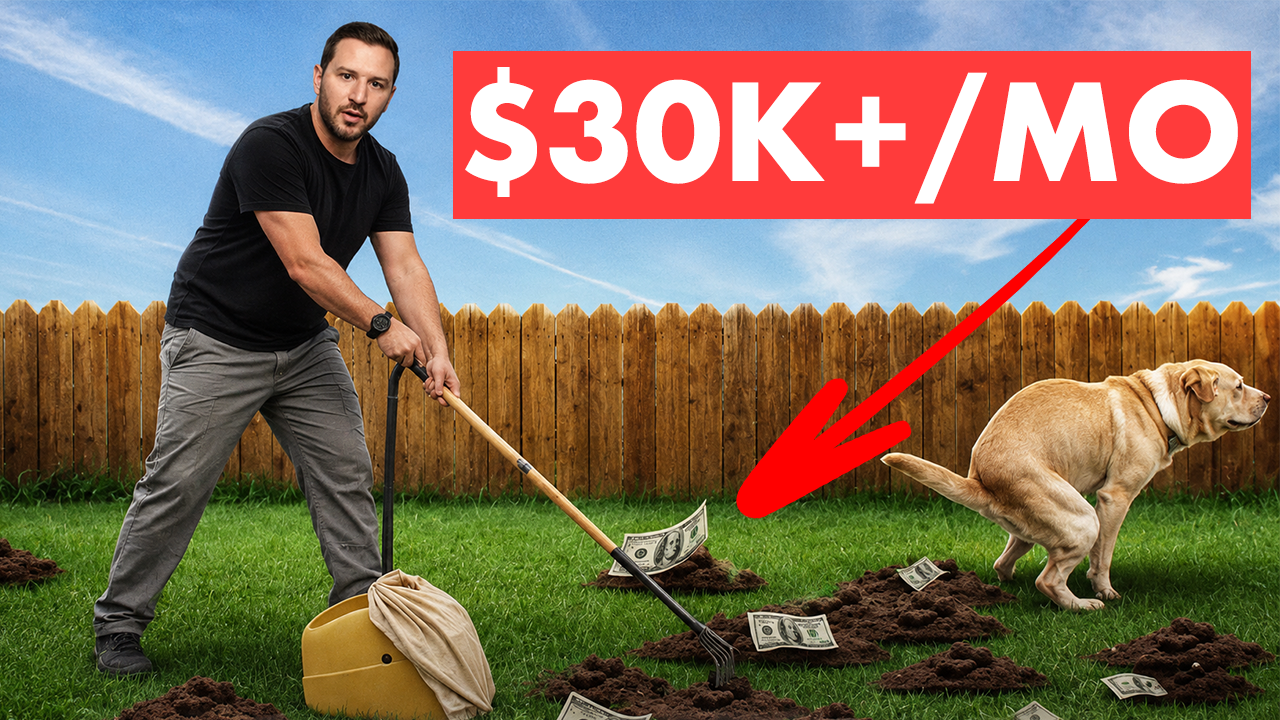
Most people think pet waste removal is a side hustle. Erica Krupin built a real business around it.
In this episode, John Wilson sits down with Erica Krupin, founder of Kroopin's Poopin' Scoopin', to break down the surprisingly scalable world of pet waste removal. From starting with a bucket, rake, and a 2007 Chevy Cobalt to building a recurring-revenue service business with hundreds of customers, Erica shares the hard lessons behind growth, leadership, hiring, marketing, and surviving a year that nearly put her out of business.
They dive into customer acquisition, churn, pricing, recurring revenue, sales systems, and why answering the phone may be the highest ROI activity in your company. Along the way, they uncover lessons that apply far beyond poop scooping—from financial discipline and resilience to building systems that can scale.
What you'll learn:
→ How Erica built a pet waste removal company from a side hustle into a six-figure business
→ Why 2024 nearly broke the business—and what fueled the comeback
→ The economics of recurring revenue in the poop scooping industry
→ How spring rush can double a company's size in just a few weeks
→ The hiring, training, and retention challenges of running a service business
→ Why missed phone calls were costing thousands in lost revenue
————————————————
🔗 CONNECT
————————————————
John Wilson → https://www.linkedin.com/in/johnbwilson1/
Erica Krupin → @KroopinsPoopinScoopin
————————————————
💰 SPONSORS
————————————————
📞 Sponsored by Quo — The Modern Business Phone for Service Pros
Missed calls mean missed business. Quo (formerly OpenPhone) is the AI-powered phone system that logs calls, creates summaries, and automates follow-ups — keeping your team connected and customers happy.?
🎁 Start your 7-day free trial and get 20% off your first six months HERE
Shout Out to FieldPulse 🚀
FieldPulse is an incredible Field Service Management platform that helps you save hours each week while keeping your operations running smoothly. If you're looking to streamline your processes, stay competitive, and focus on what truly matters, FieldPulse is a game-changer!
💼Shoutout to Avoca AI!
Looking to train your call center and improve technician performance? Avoca AI helps teams identify issues, improve call quality, and drive results from start to finish.
More Ways To Connect with O&O
John Wilson, CEO of Wilson Companies
Jack Carr, CEO of Rapid HVAC
📌 Disclaimer: Some links may include UTM parameters or affiliate relationships, meaning we may earn a commission if you make a purchase. Episodes may feature sponsors, but all opinions expressed are our own.
Scoopin' Spoopin' Scoopin, Erica speaking.
Hey, it's John, my dog everywhere. I need so much help.
2024 almost broke me. So I had to really get back to like baseline, like bad things are gonna happen. How fast are you gonna get back to it so you can keep moving?
I've lived that variation of that story like a hundred times.
We like doubled the business this spring rush.
That's crazy.
You have to put in the work and be willing to grow as an individual.
Like at 106, if you're on the higher end of the market, you could go to the mean. It would stall churn.
Now that you're talking about it, it actually sounds really silly that I haven't implemented it.
If someone was new to this industry, how hard is it to start inside the scooping industry?
But the hard part is people think it's going to be.
So this will be a ton of fun.
I'm excited. Yeah, this will be good.
Before we get too deep, you do have a podcast. So like let's give that a shout out real quick where you break out the industry. So if people want more information on you or the industry, they can go to check out your show, which is Kruppen's Spoopin' Scoopin on YouTube.
Yeah. So it's Kruppen, Spoopin' Scoopin' on YouTube. And then the podcast is called The Scoop Podcast with Erica Krupen.
And in there you sort of explain the industry uh for aspiring scooping entrepreneurs.
Yeah, I share like tactical tips of you know how to do things within the industry and within your business. Yeah. And then I'm also just documenting my process because that was the main reason of why I started it was just to like show what I was doing. And so you could see it all the good, the bad, the ugly. Um, and it's been it's been really cool.
Yeah. Yeah, I think sharing uh like I think we've you've said five years. I think we've been doing ours for yeah, five. Like I think March or February of 2021. And um you definitely get back a lot more than you give, but it is fun. I mean, you've made a dent, a dent on your industry. Yeah, so like that's really cool.
Yeah, when I I had recorded a video, I was I left my hospital job. I had put in my two months after being there for 14 years, and I'm going all in on this poop scooping thing, and I quit. And on the way were you scooping part-time? I was. I started super part-time just to, I don't know, just make extra little extra little bit of money and just try something different. And then once it finally surpassed my hospital income, I could have retirement, I could put money away for insurance and all of that stuff. I was like, okay, I'm gonna quit.
Sure.
And I just decided to turn on my little crappy Android phone and recorded a video and upload it on YouTube. And so that's how this social media journey really kicked off.
Yeah, yeah. Mine started with a tweet.
Oh, tweet, tweet.
Yeah, yeah, tweet, tweet, yeah, yeah, yeah. Okay, so you, yeah, I want to, I want, I want to hit that a little bit more. So you started this part-time. How many hours a week in COVID?
It sounds like it was before COVID. So I started it in 2000. The business started in 2018.
Yeah.
I was doing all sorts of things. Like I was working at the side hustling, you mean?
Always.
Like I've always I've had side hustles ever since I was like five, right? It's always just been like in me. But my dad was also a business owner and he struggled. And so he said, baby girl, you have to get this job at the hospital. You're gonna have health insurance, you're gonna make good money, it's gonna be stable, stability.
My mom told me that too.
Right. So I was there, but like I was a terrible employee. I should have been fired. Like the only thing that kept me there was my personality and the fact that the boss had like a she had like a soft spot for me. And she's like, Erica, you gotta get your attendance figured out because if you call in again or you're late, I'm gonna have to let you go. And so it was fine. Like I figured it out. And then I had asked him, my husband, I said, Um, can I start that croup, that Krupin's poopin' scoopin thing? And can I use the name? And he said yes, because my husband, his name's Krupin, and they had joked around about Krupin's poopin' scooping as like kids and teenagers. Sure. And I've known him ever since I was like four or five. Like we go way, way back.
Yeah.
And I asked him if I could use the name, and he said, sure. So the next day I went and filed for a DBA, started doing some research online, and really just started piecing everything together.
Yeah. What do you remember like first month revenue or like what it was like giving that first customer?
Yeah, I remember I posted on Facebook. Uh, I charged her $20.
Like a Facebook group or like your personal personal Facebook. I just said, Hey, I'm doing this now.
Yep. Um, I did like a soft launch. Like I'm a pharmacy technician, I'm selling premiere designs jewelry.
I what's is that uh what's premiere?
It was just a multi-level marketing jewelry thing, which I was like the top, the top sales lady every every month, month after month.
Erica's a fucking ball. Got it. Received.
I loved it. And so I just threw it out there. I was like, these people are gonna think that I lost my mind. And a lot of people did. Even my dad was like, I don't think she's well. I'm like, this is that's gonna be great. I'm gonna do it.
Dude, totally worked. So who cares? Yeah.
And so Lori was like, Well, I need some poop scooped, and she was one of my premier premier design sisters, is what we call them. And I went over there at like 7 p.m. late at night on a Wednesday after she had worked, and I went and scooped uh an hour's worth of dog poop on this massive property for $20.
Yeah.
And I was like, I just made $20 scooping dog poop. We're going places, like this is great. And then I it just snowballed, and then I got my first 12 within that first like first 12 clients, yeah. First 12 clients, and that carried me into like the like the uh spring season, and then I was at a premiere designs event, and I just decided to post a before and after picture in a bunch of Facebook groups, like this is before all the rules, you know. My phone was like what crazy and the business just really blew up, and I was we were doing $50 cleans for everybody, and we were doing like a thousand dollars a day in dog poop.
That's a lot, yeah. That's a lot.
We were tearing it up, it was great, yeah, yeah.
Okay, and and how soon was that, or like how early was that?
So I started in August officially in August 2018. Okay, and then 29 2019 was my first spring rush, and that's when the business got up to like 50 customers or something like that.
Like, can you explain what us? You've used the term a few times off camera. What's spring rush?
So spring rush for us, because we're located in Michigan, we get a bunch of snow, sure, and it gets really cold, and so the poop just keeps piling up, and it's like snow and poop, and then people don't do their leaves, so it's like snow, leaves, poop, all of it, and then it melts, and people are like, Oh no, I need this picked up. Yeah, and then the phones, as long as you're visible, right? They can find you, your phones just start blowing up and interesting. It is a very intense six to eight weeks.
Really? We had starting in like March when it starts melting.
So this year was February. We started to melt the middle of February, and we had a solid eight weeks, and we had over um a thousand calls that came in and over eight hundred leads that came in within that's crazy eight-week periods.
That feels like a lot.
It was that's why I had to get quo. Because I'm like, I need something to answer my phones because it can't just be me. I can't have a physical phone. Like I need I need a team because I was putting, I knew I was gonna put $20,000 into ads for this spring rush. Yeah. So I was like, okay, what are we doing? How are we gonna handle all this?
You don't need more leads, you just need to stop losing the ones that are already calling. And that is exactly what Quo fixes. Quo brings every customer conversation, whether it's calls or text or voicemails, into one shared thread that your entire team can see. So whoever jumps in next has full context instantly. There's no more scrambling, no more crosswires, and nothing slipping through the cracks. It's gonna keep your team aligned, speeds up your response time, and makes your customer experience field dialed in every single time. If you want tighter communications and to lose fewer leads, check out quo at qo.com backslash owned. You'll get a seven-day free trial plus 20% off your first six months. Yeah, that's crazy. So, okay, all right, so spring rush is like it's our super bowl.
Got it. It's like that makes or breaks us, right? So we have to get as many customers as possible because now we're starting to go into summer and our churn is starting to go. It's starting to dip down because uh July and August, you think your business is falling apart. It's it's awful. You're like, my whole business is just disappearing. Yeah, but it's just it's just uh nature of the business, and then it'll pick back up in fall.
Yeah, and and you said uh it was because like more vacations, just people aren't in their yard as much.
Yeah, people aren't well, no, they are. That's the thing. So people are in their yard more, so they see it. So they want it.
So they're just grabbing it.
Yeah, they're gonna get it, or they're gonna have their kids do it or in their keep. Sure. Right. Yeah. Or the they're on vacation, so the dog is on vacation.
Okay. And fun fact or like more walks, I would imagine that's a thing.
More walks, allocating funds elsewhere, so they're trying to reallocate the budget. And then also, dogs eat less in the summer because it's so hot. So they they their consumption starts to go down.
Yeah, I eat less in the summer. That makes total sense. All right, so you 2018. So you're eight years in.
Yeah.
Okay, yeah. Like what was the most formative year for you?
2024 almost broke me.
Okay. Why? Honestly, me too. But why, why, why you?
So I had big dreams, right? I reinvested in my branding. I got new wraps for the vehicles, I got nice vehicles for everybody because I started this with a cobalt, a 2007 Chevy Cobalt and a cargo trailer. Yeah. And so I was like, okay, we have vehicles. I'm gonna um put money in advertising. I'm gonna get an office. I got an office that was like way above my means for like poop scooping and the podcast studio. And I was like, yes, this is gonna be great. And then I had a staff member that not only totaled about one company car, but two within six months, completely totaled them out. And I was just off the heels of I think I was just getting sober. I was just not drinking anymore. And so I was going through all of this trying to figure out how to handle all these emotions with like nothing to cope with but myself and literally God. Like, I had I was in my husband's garage, just like omini is crying, having probably like an adult tantrum. Like, I don't want to do this anymore. This business is terrible. If somebody wanted to give me a dollar for it and be like, I'm gonna take it off your hands, I probably would have because I'm like, I don't even know what to do. Like, I'm gonna be broke. How am I gonna afford this office? How am I gonna get another staff member? Like, what all of it? Like, there it's all in my head. And so I just had to dig really deep and figure out what I wanted to do move moving forward and get finances right, come up like with a plan. And so that's what I did. I started planning because I knew if I stayed in business, 2025 was just gonna be like a like a rebound year just to get me back up to where I was in preparation for 2026, which that we that's where we're at right now.
Was revenue down in 24 as well?
Oh, when it it went down to almost $9,000 a month, which is very low.
Yeah, like and what was it in 23?
It was closer to 20. Okay, 20,000, maybe like 19. Like it varies, it goes between like 17 and then up to 20. Like it toggles. Yeah, for example, like right now, we're at like 30, I think 32,000 per month.
Yeah, right.
And so to drop down right, like right now, right now, currently.
And is that this is spring rush?
No, we're out of spring rush now.
Okay, so this is just gravy.
That's just recurring butter money.
Like, oh yeah, yeah, I like that.
Like on the first, we'll start hitting those cards, and like you know, but between like 28,000 will get hit right away, and then within the second week, we'll get the rest of it. But yeah, it dropped down to pretty much nothing because that's crazy. Not only did that happen, but I was trying to hire, and I didn't really know how to hire properly. And I was walking down my stairs with new socks on, and my stairs were super slippery. I fell down the stairs, blew my back out, uh, threw out two discs in my back. Couldn't my leg was hurting, so I couldn't really walk that well.
Yeah.
And so I needed to get uh somebody to work because I was like, I can't even do this and work now.
Yeah.
And Charles came to me, and he pretty much carried the business, like scooping wise, while I got my head right and got things right behind the scenes. And I just started to piece things together.
Is Charles still with you? All right, we love Charles.
Charles says this is the best job he's ever had. Yeah, I love Charles too. He's great.
Yeah, I mean, that's yeah, that's a lot. So so the business was cut in half.
Yeah, yeah.
And and why?
I it was me.
I this everything so from the injuries, from the hate, like this is challenging, like totally responsible. So at 20,000 a month, did you have other scoopers, or were you scooping 20,000 a month?
I had someone, she was like a tech and a half, man.
Okay, she was pumping, dude.
She was pumping. Yeah, and it was so painful to have to let her go.
But I mean, two, two trucks, two, right?
Two complete totals. Yeah, and then there were other issues that were starting to arise. And like I knew I could tell, I could tell that stuff was going on, but I was just so blind to it because I it's hard. I didn't have the skill set to really hire. And I was kind of honestly I was kind of lazy. I was being lazy with stuff.
Well, I think when you start to rely on people, it's really hard to like change that because you know, hey, if I let go of this person, like it's I have to do it. Yeah. And like I rely on them, they understand the system. So I I feel like it, I don't know. I've heard that variation of the story, and I've lived that variation of that story like a hundred times.
Yeah, and you develop relationships with them because they're such a key person. I talk to her like every single day. So yeah, um, it was hard to just emotionally it was I was very emotional. And so that that time really like helped me leveled up because it was either gonna make or break me. So I I had to really get back to like baseline, like what is the baseline? Like, bad things are gonna happen. How fast are you gonna get back to it so you can keep moving? It took 2024.
Yeah, yeah, yeah. Okay, so we're we're back up and moving. 2025 felt better, worse, mid, like what do we think?
No, 25 was good because I was like, all right, I'm getting the emotional thing figured out, I'm getting aligned spiritually, like I'm getting um a closer relationship with the Lord, which I because I couldn't do it on my own. I'm like, well, we're gonna figure this stuff out together. And then my husband and I, we got really serious about our finances, and we had a lot of debt, like we had a way too much debt, and we just had to have some honest conversations on the business or just like personally, just like he had a business um that he had started, and that acquired a lot of debt, and then we also had personal debt, and so we just decided that we were going to get rid of as much as everything. Like, yeah, we I was selling everything on Facebook Marketplace, and people were messaging me. They're like, Are you okay? Are you well? Like, are you doing fine?
You're like, No. They're like buy my truck.
Seriously, yeah, and they're like, You're not being normal. I said, Being normal is what got me in debt. I don't want to be in debt anymore. I have a plan, so we're gonna eliminate as much as we possibly could. I bought we bought a uh like a Colorado beater that was like, I don't know, 3,900. I still drive that thing around. I still kept all my company vehicles, like everything stayed good with the company, and I acquired more vehicles. But yeah, we just eliminated what we could so we could take that money and put it into what I needed for this spring rush for 2026.
Yeah.
So like six months of preparation goes into six to eight weeks.
I think um on Twitter like a couple years ago, it's X now, I guess. But um I think the living below your means thing is like probably one of the most understated um like how did you make it for the a story we've told a lot on the podcast is uh I took a I paid myself I think twenty dollars an hour until the business crossed might have been twenty million dollars. Like I took almost nothing from the business uh because it wasn't like that wasn't the point. Like the point was like, you know, I basically paid enough to cover my mortgage. And then when the business crossed 20 million, I think I I think I paid myself like 90 grand or something, like which is still like I'm happy with, but at 20 million dollars is a big fucking business. Yeah, so it was kind of funny. Um, because I think like the living below your means and like we a better way to think of it is like burn rate. Like, what is my personal burn rate? What do I cost um the business? Because any dollar that I take outside of the business to like waste on my own consumption is like I'm burning. I'm burning potential investment dollars. Uh so yeah, I I think you're doing it right. I think most people it's we've bought 15 businesses in like Plumbing HVAC Electric. And the funniest thing I usually see is I'll walk in and this company is like a two or three million dollar business. The guy's driving a nicer car, his boat's in the shop next to the business where I'm driving. Like, and it's it's funny to watch someone's lifestyle and like I'm like, my business. I I chose the opposite of these decisions, and we're the ones buying you. Like, yeah, this is we did the right thing. So I think you guys are doing the right thing.
Yeah, we did, yeah, we had to make a lot of a lot of decisions, and it was all part of like trying to get the finances right. And then I'm not I'm not a money person. I don't understand, I don't understand this stuff. So I have an accountant that's holding me accountable, that's actually explaining to me how to calculate payroll, how to like, and I learned man hour rate, budgeted hours. I didn't I didn't know any of none of this stuff. I had no idea. I'm like, my payroll is awfully high. So now I have people that's helping me and explaining it to me, which I wish I would have done sooner, but I you don't know what you don't know.
You have to get punched in the face to know you don't know it. Yeah.
Happened twice. So yeah.
Yeah, yeah. Yeah, that makes sense. Um, I would love to dive into the industry itself a little bit. I th I'm pretty sure that we did, I think I told you this, an episode on this industry five years ago or four years ago, but I don't remember much uh of it. So industry, like how new is pet removal?
Okay, so there was uh there's a franchise that started back in the 80s, okay, right? So it's been it goes way back to the 80s.
Yeah. When I got what do we want to name them?
No.
Okay, yeah, fuck those guys. No, I know. Yeah, all right, hell yeah. All right, all right, so someone was in the 80s doing this thing, doing this thing, and then the people were doing it as well.
And I honestly, I have no idea how my husband and his brothers like knew about the industry. I just know that I had heard about it from them. And funny enough, a friend of mine.
Well, so you like that that was the family joke before. Okay.
Yeah.
So this was before the side hustle of like let's start Krupin's. Okay. And I was just I mean, really, you're you're completing like the um fulfill, you're fulfilling the prophecy. So like someone had to do it. I had to. You're fulfilling the prophecy. Okay.
I had to get in there and do it.
Okay, that's even funnier. That's that that's that's that's really funny.
So I would I had talked to him about it, and then a friend of mine that I used to hang out with, and we all used to party together. Yeah, he had started a pooper scooper business as well called Turd Burglar.
Okay. So I was kind of like watching him on the show. Honestly, the best part about this industry is the names of like burglar.
My friend's is uh uh turd nerd. Oh god, these are Swoop Scoop. These are good, yeah, really good ones. These are good, and so I was kind of watching him, and then I was like, okay, had the conversation with him. We were watching our dog go to the bathroom outside. I got the approval from my husband to go go with the name. I went with a couple other names just in case, like that name wasn't available for the DBA, and then I did message my friend and said, Hey, Jamie, I know that you have a poop scooping business. Yeah, I'm gonna start one as well. And I just I think it is in good taste to just let you know because we will be servicing the same market. I was nervous, I was really nervous. I thought he was gonna be mad about his reaction, yeah.
Yeah, okay.
And he was like, Welcome. You know, it's a it's a great industry, it's a dirty industry, but it's good. Like, welcome. If you have any questions, let me know. Yeah, and I think actually, I know his openness with me really set a tone for how I was going to move with my knowledge throughout the industry. Um, and yeah, I just started piecing things together and started reaching out to people, and I found uh one Facebook group that had maybe 300 people at that time because it was such a small industry of pooper scoopers all over the United States, and it was called the Scoop Club. And I just yeah, learned.
Yeah. So, and do you think it's become more popular over the last decade? I mean, I feel like I didn't see much of it a decade ago, but I feel like it yeah, I see a lot of it now.
Oh, it's expanded a lot.
Yeah.
So there's big players that have moved in. So this is what I've noticed. When I first got into it, it was very basic. There people really weren't using CRMs, people weren't using marketing agencies, people, it was just very basic. A lot of owner operators, like, yeah, you have your franchises, but it just wasn't as polished, right?
You feel like it's polished now.
Well, that was one of my main focuses was I see yeah, I seen this industry. I wanted to up the standards. So it was okay, billing, we're not gonna build a customer after the service has been provided. We're gonna do recurring billing beforehand to. Secure their spot. So that's kind of where I came in and creating content. And then other people that have done businesses before came in, like my buddy William. He owns some other companies. He started a pooper scooper business called Swoop Scoop. And now I think they do like four or five million dollars per year. And he started a Poop Scoop Millionaire, which is on the school platform that teaches people how to grow their business. So yes, the industry has leveled up like drastically.
That's interesting.
It's been it's been crazy to see just really over the past four years.
Yeah what's happened. Yeah, yeah. Who do you think um so four or five million uh might be a good example? But like how big can these get? Like, what's the biggest one you know of?
Oh, it's in Colorado. We went and visited them. Pet scoops. We did a we did a shop tour. They so graciously invited us in. They have over fit like over 50 scoopers, I believe. I mean, like they have it's massive.
It is do you know revenue on that? Or like what should I expect per scooper?
I didn't ask revenue. I I dropped the ball when we were talking about that.
That's okay, but like there's probably like an industry metric, like 100 grand per scooper per year or something.
So it's like typically 120 or 130 per scooper, like seven million dollars.
Yeah, it has to be.
I mean, they have a massive facility facility. They even manufacture their own uh scooping supplies in like their own bucket and their own rake.
Yeah. What's the what's the benefit? Um maybe manufacturing. Because I'm like, why would someone need a massive facility? Because it's very uh I don't know.
For vehicles, for supplies, for training.
Okay.
Um, I got to sit in on their onboarding process where everybody kind of comes in and they they do all the training all at once. Because this is very high volume. And when you hire, you overhire because you know they're gonna trickle down. So I'm sure when they do hiring, they hire a lot more. Yeah, they hire five, they're hoping to probably keep one or two.
Yeah. All right, 50 scoopers.
Yeah.
One location, or did they have multiple?
I think it's just one location.
Okay, so seven to eight million bucks, one location. That feels like a lot in Denver.
Yeah. Yeah.
Where else is in there? Yeah. Colorado, I guess. Okay. That's a lot. Yeah, that's a lot. And you said 120 to 130,000 per scooper per year.
Yeah. It's like yeah, typically you can generate that as a full-time scooper. I mean, you're running a you're running a pretty full route.
Yeah.
Um, you're doing anywhere between 120 up to 150 houses per week.
Yeah.
Yeah.
Yeah. Because you said it was like uh 1200 or something a year per home. So you have a you know, 130 homes or something to achieve that. Okay.
And then that's not including those initial cleans during like when they first onboard with you because you want to do an initial cleaning. Yeah, yeah.
Yeah. And then your spring rush fee. So that adds another. It depends if you if you're offering a free spread and clean to get people in, no dollars. But out we were charging anywhere from 120 for that one-time clean up to 170.
Yeah. All right. So 78 feels like pretty big to me. Like that feels like really big. Uh I I don't know what I thought they got to. Um, so this year you guys are gonna do like four to five hundred, sounds like with my company, yeah.
Uh well, we were over three hundred customers, but I just looked with the churn happening. We dropped down below 300. So we're at like 395. And I was sad.
Oh man, yeah, that's so close.
What wah wah.
Yeah.
So I Nicole, she's my she's in the office, and I was like, let's work on a summer special while I'm gone.
Yeah, I was gonna ask you that. Like, what is the special to keep it pumping?
I don't know yet. I'll I'll see what she comes up with.
Yeah, $9.99 or something for one month or something to reduce churn. I don't know.
Yeah, I don't know what it is. Or or offering uh for our weeklies, we could upsell them to twice a week.
Yeah.
That that will add extra income. And then anybody that wants to drop down, try to downsell them to buy weekly for like a summer, like a summer special rate. Sometimes like $50 or $60 is more digestible for people during the summer than a month. Yeah, per month. Yeah. Instead of um right now we're priced at $112 on average for a school yard for the month.
Yeah. And is $112 like is that high, low? Like what's what if I was if I you're you don't service Akron. So like if I'm like, hey, I need a uh scooping services, like is $112 higher, lower, mid? Like what do what do we think?
So in my area, I would have to say I'm a bit on the higher end area, but it's based off my man hour rate. So we're operating at a 110 per man hour rate.
Yeah.
And our average time in a yard from start to finish, from the moment we pull up to that property, we scoop, we we sanitize the equipment, we send the text message, we close the gate, we are back in that vehicle, 14 minutes round trip. And so that supports that 27, I think it's like no $28 per week. That supports the 110 per man hour based off of our um man hour rate.
Yeah. Okay. That's interesting.
What what typically do you guys have smaller backyards or larger ones in this area?
Uh both. Um, I think our yard. I have no idea how large our backyard is.
So one eighth of an acre is considered um a small yard for us. So it'd be one eighth or less.
So our whole lot is like 0.9 acres. So the backyard's maybe a fourth of an acre.
So a fourth. So that would be $200 a month because that is priced.
That's a lot of space. I mean, it feels like a lot of area to look for poops.
I think I want to say we could do that. It's um priced for $20, maybe $22 or 22 minutes.
Yeah.
Or 18 or 22 minutes. I'd have to look at my spreadsheet.
Okay.
But that's the kind of stuff that I was working on this past year, was dialing it in.
Sure.
I went into every single one of my customers, pulled the last 10 um entries for their time to get an average of how long we were in those properties. Then I was able to see, like, okay, what's our average time? What's our average ticket price? Where do we need to be?
When someone calls in, so like I call in and I'm like, hey, I want services. Do you quote over the phone? Does somebody have to go look at the property? Like, how does that part work?
Let's role play. Call me. Bring, bring.
Hey. This is great. Hey, it's John. My dog shit everywhere. I need so much help.
All right, I guess.
What do we do?
All right, cool, John. Uh, what city do you live in?
Akron.
Akron. Okay, perfect. You're within our service area. Do you have a couple minutes? I have a couple questions to ask you.
I absolutely do. I absolutely do.
Okay. Um, you said you have one dog?
One dog, 90-pound golden.
Perfect. What's his name?
Bosco.
Bosco. Oh, he's such cute. He sounds like a hefty boy, is he?
Yeah.
Yeah.
Have you seen him yet? Yeah. Yeah, he's but yeah, yeah. He's a hefty boy. Yeah.
All right. Well, thank you. And then by any chance, you know the size of your yard.
I don't know.
Okay. If it's not too much ass, do you mind giving me your address so I can type it up on Google?
Okay. Beep boop. Beep boop.
Perfect. All right. It's looking like you have a medium-sized yard. Um okay, now now I got nervous.
I thought you did great. So there's a software or like Zillow or something where you're looking up yard size.
Yeah. So what I'm trying to do when you're going to give me a price.
Yeah. So you're going to be like, hey, it's 200 bucks.
When somebody calls in, I have the questions. I need what I really need to know is one, I want to know your dog's name. Because if you're going to give me your dog's name, there's a lot of times that I'm going to close you because we developed the report. Totally. Totally. Wanna get your dog's name?
You said he was cute. Yeah, totally.
And if we're texting, you send me a picture, I'm closing you 95% of the time.
Totally.
So I need to know that. How many dogs you have, the yard size, and I like to get the address. That way I can put it into my CRM. So even if I don't know. Yeah, then we're gonna we're gonna remarket to you. But I go and I can measure it off of uh just Google, Google Maps. But I've been doing it for so long, I can just look at it. I know what a small yard is and what a medium-sized yard is.
Okay.
So I do some discovery questions, and then once I have uh I know the motive, what's going on? Did your husband die? Like, did you break your hip? Sure. Your kids lazy, you know, blah, blah, blah, blah, blah. Um, then I just deliver the price to them. Yeah. And I shut up.
Yeah, yeah. Silence.
And then I just wait for them to have a conversation with me.
Yeah. Uh I would have to imagine that there's like, is there pricing on your website?
You know, currently I don't remember. I've done it, I've taken it off, it's been back and forth.
Yeah.
I don't I I didn't like to have my pricing on the website because there was one time where I forgot to change it. Yeah. And it was old pricing. They're like, you gotta honor this. And I'm like, that was from like two years ago.
Yeah.
And I honored it. I did, but I I think at this time I removed my prices off the website.
Yeah. What'll be an interesting? Well, you don't you said Nicole is answering most of the calls now.
Right now. Okay. She is. Um, up to a certain amount because Phalane told me I can only afford so much. So once Nicole's out of hours, I have to get back on the phones. So Phaline's my accountant. Okay, okay. And Phalane, because I go over on my hours, my like man hour, and my payroll is too high. So Phalane's like, Nicole can only work this many hours. Britney can only work this. And then when that's done, like you have to hop in until you can bring in more revenue to pay them more.
How do you think you're gonna do that?
Summer specials, and then when fall rush happens, because we have another fall rush. I'm gonna put some more money into ads, uh Facebook and Google.
Yeah.
And then also planting the seeds right now. So um we do yard signs, we have the company vehicles out and about. Yeah, we're gonna go to the events, we're gonna shake the hands, we're gonna have the conversations because when the people need us, we want them to not only find us, but know like this is who we're going with. Yeah. I had a great interaction with them.
Yeah, how long does it take to train a scooper?
Like to actually physically do the job, just I don't know, maybe six houses a day, but to train them efficiently, how I want them and how I need for them to be and be efficient, I would say three months to be hitting the the um, you know, the numbers that I need for them to do. Charles did say it took him about six months to feel like super confident, like he would do a yard, but then he would like second guess himself. Now, when he goes into the yard, like I think I was telling you earlier, extra.
Yeah, he's got vision. Yeah, yeah.
It's like a hawkeye, right? It's like as soon as your foot hits grass, it doesn't even matter if you're not scooping. As soon as your foot hits grass, your eyes just start scanning. Yeah, it's sick. Yeah, like not in a good way.
That's
funny. All right, so um, and like how does how do we pay scoopers? Like, how does that work? Is it like percentage? Is it or like what's compensation usually look like? Um if I'm starting a scooping business tomorrow, because like this is amazing. Like, I think we have to do this.
So if you want to pay your scooper 20 bucks an hour, which they're working outside, they're taking care of your vehicles, they're handling stuff. You, your business needs to be bringing in at minimum $80 to be able to sustain that. But really, uh where I'm at is $110 with like the true labor burden. I mean, it's probably closer to like $30 an hour that they get paid when it's all said and done with like taxes and bonuses and all of that stuff. So I have paid $11, $10 an hour when I first got started. I don't know. I'm like, I got cash money. Here you go. Who wants to help me? And I I had a woman named Barb that she was just there. Like she was down. She let me use her truck and everything for my first spring rush. Um, and then as time has gone on, I've been able to bump them up to like $14 and then $15. And then now my the starting pay is $17.
Yeah.
All the way up to $22.50 an hour.
Yeah. Uh, and like, do people usually want this part-time, full-time? I would have to imagine that staffing. So I'm coming at this from like, I run a licensed, so like staffing is just a little bit different because like someone has to come with license or like 10 years of experience. So I would imagine that obviously staffing is hard, and I'm not saying that staffing's not hard for you. Uh, but because you're training them, it feels like this is a job people would want.
Yeah, it especially especially how I run it. And this is something that my husband. Yeah, you seem chill. I don't think I've ever heard that.
I don't know.
No, I am. I keep things and as chill and respectful as possible with the people that I have working with me. But when I put out a job ad, I can't even remember what it looks like, but it just basically lists everything out that we do. And I get a lot of people that apply. I mean, hundreds of people will apply. Because not only is it an interesting job posting, but also like the brand itself.
You said hundreds?
Hundreds. Like every time I post something on Indeed, I have hundreds of applications and I just start going through them. Like, if you don't upload a resume, yeah, no, if you don't answer a couple of the questions, no. And I have like little fun, funky ones in there. I cannot remember them off the top of my head, just to see if they have attention to detail. Because this job isn't, it's not hard, it's not rocket science, it's attention to detail with everything. It's attention to detail with sending that text message to let the customer know that you're on the way. I have been a homeowner where um a contractor just showed up in my house. Where's why don't you give me a heads up? Like, I need to get stuff prepared. I don't like that. So in my business, I want to give people a heads up. I actually walked in on a guy who was pulling, like, he was pulling up his pants, and I seen him in his bloomers, and he was shocked. I was shocked. And so he's like, I didn't know you were coming. So that's the reason why now we send text. Right. So now I do the text, and then obviously we're there, we're scooping. You have to pay attention, you have to make sure you're getting all the poops. Yeah, you have to really be locked in because their five-year-old is gonna find it with their shoe if you miss anything, and then I'm gonna get a call. I don't want that. And then when they leave, that gate must be closed. It is a non-negotiable. If you leave a gate open and a dog gets out, you're you cannot be with the company anymore.
Yeah, yeah.
Um, and so it's just those little things with the text messages and the communication that makes everything, I don't know, just run really, really smooth. And the staff likes it because they they know what's going on. They're not wondering like what what's to come today. It's like you know exactly what what the standard is.
So we talked comp a little bit. So it is it is it 30% like that's what we're we should like, field labor is gonna be 30% of revenue.
It should be. But I will say that mine creeps, it creeps over 50%. Yeah, definitely during spring rush. And if I'm not paying attention to it, it was getting closer, almost 60%.
It was like total payroll or field?
With me included.
Well, you and Nicole. Is Nicole also scooping, or is she Nicole's in the office?
And I don't know. Now I see I'm I'm still trying to learn this stuff. No, that's okay. Still pretty new, but yeah, with Nicole included. And I also had a uh a VA that was yeah answering, well, supposed to be answering phones and doing other stuff, but she didn't work out, so I let her go.
Yeah, that's okay. All right, so 30% is ideal. Obviously, that's like that's the target. And then it what's the what's like office target for payroll, like 5%, 10%?
That I don't know. I haven't got that figured out yet.
That's okay.
This is it, this really truly is my first season where I'm You're dialed. I'm trying well, I'm working on getting dialed and locked in. Next year, it's like when I get asked these questions, I want to know these answers and be able to confidently answer them.
Well, so some of it, some of this is like um so there's there's like what is my number? Uh, which like you're gonna know most of them. Like you already know your payroll number, like maybe not the details of it, but that's fine. Uh, but then the next one is what should it be? And I think that's the harder one because like, hey, I know what my payroll percentage is, but like what does the industry tell me it's supposed to be? Like, hey, yeah, I know it's 35%, but what if it's supposed to be 20? Um It's definitely higher. I don't really know.
Like the payroll, it's it's always higher because we're mostly labor.
Yeah, I'm trying to imagine most of your costs. Like, can you walk me through your cost? So, like uh vehicle insurance, there's insurance on the business, I guess.
Yeah, like the general liability.
So that can't be very much like can't be much.
No, the general liability is not.
Okay.
So your your payroll is gonna be the highest.
Yes. Highest, and then your insurance 30 to 40 percent of total revenue.
Could go up to 50 if you're not watching your number.
Could go up. Yeah, maybe up to 60. Hey, who knows? I'm just spitballing.
Right.
And then your insurance. I mean, I'm on a high-risk policy from 2020.
Because of the cars. Yeah, that's the worst. I know. Yes. It takes like it takes three years. Yeah, it's so shitty. That's yeah.
That's so sad.
No, it's tough. I mean, it well, what it forces you to do is put in good driving policies um and like cameras, GPS, like it forces you to put a lot of stuff into play. And then it it limits your ability to hire, which I don't know if you're already doing that or not, but like you basically are are not able to hire people with a bad driving record.
Yes, and I actually uh encountered a woman that had a bad driving record. She had some issues, and she was yeah, she worked for another pooper scooper company. Yeah, you don't you don't really see that, right? In my industry, like nobody really has worked for other companies. Well, she had, and so I was pretty excited, but yeah, there was just some things on our record. Um I actually pull a detailed um what is it called?
Like background. I do.
I yeah, and people are like, that's insane. Why are you pulling a background report? I'm sending somebody to a mom's house with kids. Yeah, yeah. No funny business over here.
So I pull the driving record, I pull I think you probably have to because as your as your industry starts getting professionalized, like Google requires every tech to be background checked. Like, yeah, you have to.
I'm already ahead of it because I was a vehicle, incredibly important to me. Yeah, uniforms, like all of it. Um, and so yeah, the insurance, general liability is not so bad. It's when you start to get in the workman's comp when there's claims, you start to um insure all the vehicles.
Yep.
That's when things start to get really high.
And mine's yeah, how much is insurance a month?
So I pay it fluctuates between like like my last one was two, it was two thousand dollars.
That's workers' comp.
It's everything, it's like the whole like contract or package all in one. Yeah, I want to say it's gonna be like either 19 or 20,000 this year all together. Yeah, and we're operating. We have um we have four company vehicles on the insurance. Yeah, no, five.
So that's like eight percent of revenue.
It's a lot.
That's crazy.
It is crazy.
Yeah, that is crazy.
I need a shop, I need a shop around, I need another insurance.
Yeah, that's interesting. Most home service companies don't stall because of demand, they stall because they run out of good people. Finding solid help fast is hard, especially in this industry. And that's where Quick Staffers comes in. They help home service companies build reliable virtual teams that actually understand how the trades work. Quick Staffers provides vetted, remote staffed who are already trained on ServiceTitan and use proven SOPs, same as the ones that I use at Wilson. These are VAs you can plug in from day one to handle customer service, lead follow-up, scheduling support, and a ton more. They've been a huge help in scaling my team without the usual hiring headaches. Check them out at the link below. Um, okay, so insurance is $20,000 a year. Rent. I loved your rental thing. Can you just because we I don't think it was on camera, so can you explain like the rent part?
So my rent now, it's like $500 a month. I get to park my vehicles there. I have a couple bays, and it's at a doggy daycare that's so good. And it's a big doggy daycare in the area. Yeah, it's so good. And I have uh dumpster access too. So for commercial, we do haul the waste away for commercial, so I can use that dumpster for residential. We do not, we double bag it and put it in the homeowner's trash can.
Like I'm trying to imagine what the commercial application of this is.
Your HOAs, so your HOA communities that have those dogway stations on walking trails.
Sure, sure, sure.
Those apartment complex condos, uh businesses that are dog friendly. So, like your office could have some stations outside, and we'd come and we'd refresh them, we'd swap bags. Yeah, get all over.
How big is that in your business?
Right now, it's probably it's under 10%. Maybe it's probably under 5%. It's it literally is a whole, it's a whole separate total division.
So totally different sales process, different everything.
Yeah, yeah, and it's a different um relationship building type deal. That is I want to expand. I would like for that to be up to 20%. You don't want it to be too heavy because your commercial is going to be your net 30, net 60. Yes. So you need your residential to cash flow your commercial.
Yeah.
Yeah. For um I uh look. Love the renting. I think that's amazing. Like the renting the doggy daycare uh thing. I don't know how like how many doggy daycares are in. I'm I don't know. I'm I'm doing this question horribly, but like I'm struggling to think how many doggy daycares exist. Probably a lot. Like anyone that runs this could go find a doggy daycare. Because I do feel like that's a crazy customer acquisition hack.
Yeah, yes. And you you have to find this is what I'm learning is partner with other companies, but partner with ones that are in align with your values and where you want to go. It wouldn't, it would not be a good idea for me to partner with a doggy daycare that's operated out of your home because I I can't park my vehicles there. Like, yes, I want to have connections because we're gonna tag each other on Facebook, we're gonna be rooting for each other. But where I'm at with the doggy daycare with Stacey, she's got connections. She can mentor me. She has a facility.
So what's a connection? Like what connection would be helpful?
Well, she's connected in the community, right? So she does a ton of events. So she'll tell me about events that I need to be at or people that I need to talk to. Um, she also has she's been in business for like forever. So her website is so seasoned. So backlinks, yeah. I'm on her website now. And then also the just the referral. She is so well respected, right? As a as a as a woman, and she's involved with like the government, like the local government or whatever. She's so well respected that if she recommends me, that carries so much weight.
Yeah.
And she's watched me. I mean, she's pretty much watched me since I get got started. And the fact that she was willing to allow me to come into her business and her tie brands together.
That's a big deal.
I was, I was just blown away and so honored. And it's like what we're doing here, it's like people are seeing it. It's real.
Yeah.
Makes me a cry. Yeah.
Well, I mean, that is cool. Like, I can understand how that would be, yeah, aside from just a good business decision, like it's validity.
Yeah. And it's it's it's aspirational too. Cause it's like I hope to be at that point when I see a young female entrepreneur that is trying to do the same thing, and I've been there, and I'm able to lift her up and be like, okay, I can help you. I've been there, I've done that. So that's kind of what the hopes are eventually to be able to do that for somebody else that wants it and is eager and willing to put in the work.
I want to dive into customer acquisition a little bit.
Sure.
So we're advertising. Yeah, you've got some stuff. What do you got?
All right.
Well, what do you want to know?
What do you what do you got?
Let me pull up my my sheet.
Yeah. So there's a couple funnels, like meta-ads and Google. I think you said were the big ones. Like is it like pay-per-click, Google?
I don't know. I'm not sure. Yeah. I I don't run my own ads. I do have an ads person that runs them for me.
Okay.
Um, I tell him what my budget is per day. Like in spring rush, sometimes we're up to $300 a day. And for you, that's probably not a lot, but for me. It doesn't matter.
Yeah. I remember as a percentage of revenue, like that's a lot.
I remember wanting to, I'm like, I'm gonna spend I'm gonna spend $10 today thinking I was just gonna blow my business up, right? You're not gonna get anything from that. And so then I really realized like how much money you needed to put into ads. That's a lot, yeah. And so that's why I was like, okay.
I think that's 12% of revenue for you. Like that's a big investment.
During spring rush, that's the only time I would do that because that's when the search volume is so high.
Yes.
If I were to try to put that money right now, it would it would just burn. Like it's not a good idea to put that money in.
People aren't looking or not on Google.
Really?
I could put it into Facebook because I would imagine that's feels yeah, pretty consistent.
Yeah, because then you're creating awareness and you're you're blasting that out. And because my branding is so, it's so out there. Not only are we creating awareness about the industry, we're creating awareness about the business, but we're also like becoming a local celebrity, right? Because people are like the pink vehicles, this is crazy. I see you online, I see one of your yard signs, you're scooping my neighbor's house, I see you at the grocery store. Like, ah, I can't get away from you type deal. And they might not need me now, but something's gonna happen. They're gonna break their leg. Their husband's gonna lose their sight because they had a stroke. Who are they gonna call? They're gonna call cropin's poopin' scooping. One, we're gonna answer the phone.
This name is so good. This name is so good.
So if we go to average ticket price, um, if we want to start in January, average ticket price was 105.
Okay, and just to clarify, average ticket is monthly charge for visits. What happens if you're like snowed out? What happens if it's three, is my point.
So we're on a recurring model, basically. So it's it's it's a recurring subscription. So they pay on the first of the month for a month's worth of dog poop. And the if if it's four weeks versus five weeks, because we've like figured out our pricing with it.
Doesn't matter.
If we have to skip, which we really try not to, like it's few and far between. We really try to make it up. The only time we really skip is in the winter.
Yeah. And if it's like a foot and a half of snow, yeah.
And people aren't super pressed about it, and they know that we're just gonna be back the following week to do double snow.
Do you just get lake effect?
Uh yeah, yeah, sure.
Yeah, yeah. Yeah, okay.
Yeah, so and it says in our terms of service that we do not we do not credit, we'll be back the following week to be to do double duty.
Yeah.
We there is some pushback. Some people are like, Why you didn't show up? And I'm like, Well, did did you scoop the poop while we were gone? They're like, Well, no. I'm like, it'll be there. That's we'll be there to do it. And if it's somebody's first time with us and we're just having that conversation, I will honor it by let them know next time moving forward, um, we don't credit you back. So it's kind of like a it's a pull and tug, but it's also about communication, being super upfront with people and reading the room too. Like, you know, we'll we'll negotiate, we'll do what we need to do. But standard, it's it's subscription model. We're gonna show up. We're and that's the thing, we're so consistent. And I think this all comes down to what you're charging, who you're hiring, how you're paying them, and how they're showing up. These people show up, like they don't call in. Their big toe hurts, they got something going on. They're like, okay, I'm gonna figure this out, and I'll still be in. And so I'm very full-time. Did I ask that? Um, two people are full-time.
Like, usually in the I don't remember if you said their name, the one with 50. Is that 50 full-timers, or is that like 30, 20?
Or it's full-time, it's part-time, it's really whatever the need. Pretty flexible. Yeah, whatever the need is.
I feel like that's one of the cool things about this industry is it feels like uh giggy, like in a way, like gig economy style, where like one people probably want to do it because it involves pets, it's outside, like there's some good stuff here. Um, and then it can be flexible. Like, do you run calls at night? Someone like scooping at 8 p.m.
No. So with me, which a lot of people, I guess, have some pushback with this. I personally understand that my technicians, they have a family. So I want them to start at eight, the latest at nine o'clock, but I really want them to hit their first property by eight, eight a.m. And then I don't want them at a property after five. Like I don't want them smelling a customer's dinner. I want them to smell their own dinner with their family. So that's kind of how I have things structured. And also selfishly, I want to be able to shut my brain off at by five and spend time with my family. I don't want to have to be worried about if something's gonna happen because I don't have that coverage yet. I don't have an ops manager.
That's how many problems happen in this industry? Like, what would be an example of a problem?
A dog bite.
Okay. Um like I'm imagining gate open would be probably a really big one.
Yeah, if but we doesn't happen a lot. No, because we they have to take the pictures. They take a picture with a closed gate. Um, vehicle, vehicle issues.
Yeah.
Um, they can't get into a yard. So but I kind of have that figured out now that there's an SOP that's like if you can't get into a yard, here's the policy.
Follow it.
You don't have to message me.
Yeah, yeah. Um, okay, so we we uh uh Google Meta, what what else did you have there? How much was an average customer to bring on? Are these annual contracts or just like month to month?
I do month to month. I haven't done any annual contracts.
What's your vibe on that?
I like month to month because some people are just, I don't know, man. I don't want to deal with them. I can just terminate them. So I personally just didn't want to be locked into a contract, and so that's the reason why I never did it. Um, I have done specials, which this is this is a really steep special, where it was like buy three months, get one free, which it was a pretty steep discount. So I knew it was gonna lock them in for four months through the winter, but it also pulled some cash flow ahead so I could put that in a spring rush marketing money.
Yeah.
So for the month of January it was 180. February was 80 per customer. That's my that was my CAC with my churn rate and everything.
Yeah.
Um February was 84, March is 151, and um April was 177. The industry's getting more saturated, and that's between Facebook and Google. And I had somebody on the phones doing sales that and texting, they were texting instead of answering the phones, and so my close rate was definitely a lot lower than I had anticipated. But I learned, right? So I'm excited to see what these numbers are gonna look like next year when I have like a proper sales process in place.
So 150 to 180. And how long? Do you said you had LTV? So what was LTV?
So my churn was 0.66 in January. So my LTV was at um 15,900. That's not accurate, that's too low. Then we uh 1500. 15,000 because my churn rate I lost one customer.
Okay, out of 390.
I think I that no, I think I only had one, I think I had 180 or 170 in January. So I we like doubled the business this spring rush.
That's crazy.
Um, it was great. So then um LTV for February was 4,775. Um, March was 1600, and then April is eight eight sixty-nine, but my churn is so high. My churn was at 12.12%.
Yeah. So bad. Why not annuals? I mean, I know you said why, but like it feels like that solves the churn problem.
I I have to implement that. Tell me, I'd love to know more about that.
I don't know how the industry works, but it does, it would solve churn.
Yeah.
Yeah. Uh I mean you could even charge less, to be honest, probably. Which I don't know if that's the goal, but like I would imagine a part of the like at 106, if you're on the higher end of the market, like you could go to the mean. Maybe that's like 80 to 90 a month. And but if you knew that that customer was a thousand dollar a year customer, like it's kind of easier. I would I would imagine.
You're absolutely you're absolutely right.
Yeah.
It's it now that you're talking about it, it actually sounds really silly that I haven't implemented it.
I don't know about silly, but I feel like it would it would completely get rid of churn.
Yeah.
Yeah. That'd be, I mean, you could also do like some prepays, which would be kind of interesting. Like $700 takes care of the whole year. Um so what is that, like nine months or 12 months for the price of nine? I don't know. I think you could do a lot of interesting. I think you could do a lot of interesting things. That might be the thing to do at the end of the summer, too. Like because then it carries them through to the next summer.
Yeah, I like that. I'll definitely keep that in my head. And that's something.
The contract thing feels feels
good. All right. So you've been, you've talked a lot about how you've been like diving into the business over the past six months, prepping it. Like, what are some of the systems, softwares that you've like implemented that have made this a big one?
I learned how to build out an Excel spreadsheet. I learned how to do that and actually utilize it. So that for me, I was like, oh, I'm like really leveling up. And then the phones, because I knew that I was gonna have to like have more people answer the phone.
Yeah, you sounds like you doubled the business. Yeah, that's crazy.
And so I'd reached out to a friend of mine, Justin, and I said something about phone systems. And he's like, I use Quo. And I was like, What's that? I think it was formerly open phone. He said open phone.
Yeah, yeah. We had her on the show in January, and it's like built for like the small contractor.
It's amazing.
It's designed for it.
It's amazing. Well, at first it was like, because I'm not really good with technology. Technology is a little difficult. So at first I I had it, but I wasn't really utilizing it. And I'm like, okay, we gotta lock this in. So started going through all of it, started figuring it out, and then it was just crazy to see like how many text messages we were getting, how many phone calls we were getting, and how many phone calls were being missed. Oh, yeah.
It's like why I'm sickening the first time you see it, it's like, oh my God.
And I'm like, I hired somebody specifically to answer the phones. Yeah. Why are my phones not being answered? Like I was mad, you know, like because if you think about it, right, if we have a lifetime value of twelve hundred dollars and you know, 50-something calls are missed, and my close rate, let's say my close rate's at 40%, yeah. How much money just went out the door by us not answering the phone?
Yeah.
And for us, like my demographic is changing because the the boomers, like the husbands are dying, or they're having strokes, or things are happening, and they did everything for these women, and now their husbands can't do it. So they're trying to figure out mowing, they're trying to figure out this poop scooping thing, they're trying to figure it all out. They don't understand technology, they want to talk to a warm voice because AI is scamming them and they're nervous because we're coming to their house and they they see our branding. So we get them on the phone, they hear the sweet voice, we're asking the questions, they feel comfortable and confident with us coming to their house.
Yeah.
Because they're not used, they're not used to outsourcing these kind of services. It's a whole new ballgame for them. So getting on the phones and being able to listen to the phone calls through Quell.
So it like records it?
Yeah, records it. And then I'm able to listen, like when Nicole has like a stellar sales call, she'll be like, listen to that one. That one was fire. So I can go and Nicole commissioned? She's hourly in commission.
So what's the commission?
Uh she does it's $35 extra per sale. So when she closes something, it's $35.
Is that included in your CAC?
No, I don't know, actually.
Okay.
I can't give you an answer on that.
That's all right. All right.
So something I need to ask.
Okay, so we bring on, we bring on quo.
Yep.
Okay. We're booking, we're booking shit like crazy. You're able to record, you're able to coach. And you're on the phones too. Yeah. So like you have like intimate experience with this.
Yeah, too. And I can listen because like, I mean, I get attitude, right? I'm burnt out. Sometimes I get really snooty or I have a really bad call. And then I'll be like, oh man, let me listen to that one. Like, see where did it fall apart? What happened? Um, and then we can all just and it's transparent. It's the transparency, so we can all just kind of learn together. Um, and also what's cool is when a customer is like, you didn't tell me that.
Yeah, yeah, we did.
And I did at five minutes and 32 seconds. Yeah, yeah. Yeah, we had that conversation.
Yeah. How long does it take to book or like sell this service on the phone?
I can usually get a card on file within like seven or eight minutes. Okay. That's fine. Discovery, having the conversations, we're connecting, address, card on file, deposit done. Because my deposit is actually their first like months of service.
Sure.
So say you come to me and you're like, okay, I need initial cleaning, and then I want to start service. So we're gonna scoop you today. Let's say we'll scoop you today. We have one week left in May. So I'm gonna bill you for an initial cleaning at 120 for May, and then a full month of service for June.
Yeah.
So then you won't have another bill until July. I want to lock in that first month.
Yeah. Yeah, that makes sense. So one of the I'm remembering our conversation. Um and it's uh it's like app based. Like, what was app based? So, like, are you out in the field? Do you ever go out in the field?
I I've been out twice in the past six months.
Okay.
So before I was totally in the field, but it is app based. Like while we were I was coming here to drive, the phone was ringing.
And uh you were like, Nicole!
Hey, it didn't hit the third ring, so I was very happy.
All right, good, good, good, good. And then like CRM, when did when did you get on a CRM?
I started with Jobber in 2020, 2019.
Okay.
I was having routing issues, like sure. It to do like 14 houses, it was taking me all day because I'm just hanging all over the place.
That's a lot.
So I have a paper map, I'm trying to figure that out. I'm asking my husband questions about routing. He's like really good with directions. Yeah, I'd get lost in a paper bag, I don't know where I'm going. And so I had a couple like ones where you kind of manually like you would manually put in the addresses. Yeah, you could only go up to like 15 or 20. At this point, I'm at 25 houses. I'm like, this is incredibly inefficient. So I just started doing some research on YouTube and I found the landscaping community. I was like, whoa, there's this whole YouTube landscaping community.
Oh, yeah.
So I totally did a deep dive and made a lot of really good connections. And then I heard about Jobber, which led me to a couple other CRMs. Um, I tried one other one, and then there's one specifically for the poop scooping industry. Yeah, it's been a hot topic that I haven't I didn't go with that company, but it was a lot different back then. Like Jobber was great, it was easy to use. Yeah, that's the reason why I went with it. Yeah, I've been with them, I don't know, six, seven years.
Yeah, yeah, yeah. That's awesome. So, all right, so we got I'm trying to imagine the flow here. Uh, who did I talk to? Power Washing. So I talked to somebody from Power Washing. Anyway, so he came down from New York, he's like Westchester, I think, uh County. And they had a software. I'm trying to imagine the flow of your business. So, but they had a software that helps them sell over the phone. So that might be something to might be something to think about. But because I think it and roofers have this too, and I think landscapers, uh, where it's like it measures the square footage of the yard, and then you input your whatever your data is. But for power washing, it measures the square footage of the driveway and the walkway and like the house siding. Roofing is a square footage of the roof, and then landscaping is landscaping. Um yeah, that was interesting. All right, so you have like phones taken care of, and that's like a new development.
Yeah, because it was just me really answering the phone.
Here's the cell, like the number that went to your phone or whatever.
Yeah, it was just and then a lot of times I wouldn't even answer because I mean, as chatty as I am now, I don't I've really struggled on the phone.
Sure.
I went through times where I was really good, and then times where I didn't really have a script. And so that was the other thing is like developing the this sales script. Everybody's saying the exact same thing, so it doesn't matter who is talking to them.
Yeah.
Um, but yeah, uh let me know how you want me to walk walk you through it.
Well, I'm just thinking I'm thinking through it. So, what did you end up doing with the amount of missed calls? We or is that like a new problem that we're discovering?
So we were calling them back.
Okay.
Well what happened is I was drowning.
Sure.
I was drowning. And the person that I had hired, I mean, no fault to her own. Maybe I didn't guide her right, maybe the expectations weren't there, maybe I didn't enough training. I have no idea. But I reached out to my friend Nicole, which she had nothing to do with this business. I said, I need you. Can you answer some phones? And like, do you need some money? Because I have some, I can pay you. She's like, That sounds great. Um, and so I brought her on and she just she hopped right in.
Yeah.
I I did not I did not understand the value of bringing in an A player until I had an A player that was like inefficient, inefficient. This is what's happening. And I got to listen to here, I got to listen to a person that answered the phone with a smile on their face. It it like it blew my mind. And so I was like, okay, this is where we need to go. Yeah, this is what needs to happen.
So, how many missed calls a day were there?
Uh, I think one of my analytics said there was over 20, like over 28 missed calls on one day. Yeah, I was I was mad.
How how many calls in a day is normal for you?
During spring rush, I mean there could be like 30 or 40.
Okay. And then so you missed 28 in a day, or what was that time period? A week.
That was like sometimes in March. I think it was like one of the days when I was scrolling against the analytics. There was like 28 missed calls. Because you know, I'm on the phone too. Yeah, totally. Somebody else is on the phone, yeah. And sometimes I'm just I'm like, man, I'm on the toilet right now.
Yeah, yeah.
That's why I don't want to answer this phone. Yeah, yeah, yeah.
Yeah, that makes sense.
Right now, it's like I think maybe three or four now that we're going into the slower season.
Yeah, yeah. That's a big that's a big difference.
It's nut. It is the craziest thing. And every every year, I'm like, it's so crazy, and it's just gonna keep getting you could lock that up so hard.
I know.
I want now. I I have like the vision.
When I first started this business, honestly, it was just to keep me busy.
Yeah.
I mean, I was just my husband makes great money, he pays all the bills, he takes care of our home. Like, my money is just like it was extra money. Really, I'm expensive to maybe pay for a little bit of part of myself, but it was just really to have something to do.
Yeah.
Which sounds crazy to think about. And people were both like, what was your why? One, I wanted to get out of the hospital, and then two, just stay busy. And then I was like, okay, where are we going with this now? Like, what is the purpose? And now that I have Nicole and I have a Britney and I have a Charles, I don't wake up every day like sick to my stomach. You know, when you have somebody that is in your company that has like bad vibes, that it's like everything's negative, yeah, everything like they're a victim. It really just brings it, it makes it so heavy. It's like I have all these problems at $100,000, at $200,000. What is it going to be like at a million or two million? I don't want those problems. But getting around other people, and they're like, no, no, no. Like you still have problems, but they're not like as bad as that. So now I'm like, okay, I want to scale. I want to have multi-locations. Like, I want to have a picture of the Michigan mitten with just like a bunch of pink poop emojis all over it because it's just so saturated with crepins, poopin', scoopin'.
I mean, it feels possible. Like it feels like um, I don't know. It feels it feels possible. I think it'd be really interesting if there was, I think the 12-month contract thing would solve a lot. Like I'm imagining like 30 calls down to three is like really big, way bigger seasonality than I would have thought this business has.
I also dropped down my ad spend too. Sure.
Yeah, that makes sense. That makes sense. But I mean, if you could have if you could lock up like 400 customers in 30 days, like you went from 400 to 800 customers. Yeah. And then you just do it again next spring and do it again next spring. And it's and then I think it would be like it's the 12-month contract thing, even if it's six months, like, hey, you're in in between Detroit and Ann Arbor, like you could go to I'm trying to remember what the city is on the west side that I'm remember forgetting. But there's a city like halfway down. Um, but like you could go there and you could just like pre-sell contracts and then go there once a week. And like the the I think the contract thing seems to be I bet I bet that's like the five million unlock. Because then the moment because all you have to do is start advertising. If you develop the phone script thing to like sell that contract on the first ring, we're like, hey, for the next 12 months, I'll take care of your yard, your yard. Then all you have to do is like meta ads in this zip code, and then you get 20 contracts and you have a location. Like it feels like that is the thing holding it back. Because otherwise, I think you're just chasing churn for the rest of your life.
Yeah, and I don't want that.
So I mean it's a recurring business. I mean, it's the same as pest control. Like pest control is recurring. Like the whole idea is you go get a fuckload of contracts and then you just keep going. Or pools would be another one.
I met um what is his name? Joe, I think Joe Olson Olson. He's a pet or pest pest waste on millionaire or something like that. I got his book, I haven't got a chance to read it yet. But it's called like zip code kings, and he specifically talks about how he grew his pest control business to like millions and millions of dollars. And so after having that conversation with him, I think it was last October. Yeah, that's that's when I was like, my eyes just kind of opened. It was like boom, it like hit me. I'm like, okay, I have clarity now. Yeah, okay, I know where I want this to go.
Yeah, I think the only thing that would be interesting, um, like the skill set of building this type of business is similar to pest control or pool. Um so what that might be like something to add on, or like the doggy daycare is kind of interesting. But I do think eventually, like a business can only sell or shut down. Now, you can sell to your employees, you can sell your kids, your spouse, whatever, or you can like sell it to an outside party. But like really, those are the only two options. Like, you either die and it shuts down, or you sell it to somebody in your life or outside of your life. So I think as you think about like the five years from now, eventual sale, or 10 or 20 or whatever that is, like um, I don't know how mature the MA like market is for scooping yet.
What's that? What's the MA?
Like who's gonna buy you? At the end of all of this, who's the buyer? Because when you start getting clear on that picture, it helps, it helps like you back into like the right decision. So, like, hey, if I wanted to, if I was, if I broke my hip tomorrow scooping, and I'm Erica, then I would go like sell it or if I had to move or whatever, right? Like, okay, well, what would the buyer want to see? Well, the buyer would want to see contracted revenue. So, like, that's a part of why like that feels like the easy button here is because the buyer needs to know that that revenue is gonna keep happening. Uh, so okay, a buyer would want contracted revenue, got it. A buyer would want like good software. Like, you you've done that part. So, like, that feels great. Uh, they would want a good sales process over the phone because that's the whole driving. So you've done that part. Um, but then it helps to envision like who's the buyer at the end of it. It's like that example with the pest control guy. Pest control is a very mature, uh consolidated industry. So, like if you build a pest control business today, you could get it to a million of revenue and you could sell it for like $2 million, like almost immediately. Just take a year or two, get it to a million of revenue, sell it for two million bucks, and move on to the next one. Because there's Terminex and Orkin, like huge companies that will just buy your contracted route. Uh, so I don't know who is there's probably somebody. I just don't know who they are because it's not Terminex or Orkin, but that would be something to like chase down because when you start like building for the eventual, like whatever that looks like, even if it's hey, I want a franchise, hey, I want to go multi-location, hey, I whatever. Like when you design your business to be sold, you end up just designing a better business.
Do you have some recommendations to like a book or I think the book that you're about to read is probably gonna like do a lot of the work.
I don't know your industry very well at all. I just I know a little bit about pest control and yeah, very mature. Uh like as far as its consolidation. So like easy to maybe not easy to start, but like someone will buy that business in a year for like a lot of money.
I think off off air, we had talked about like the pooper scooper business or industry doesn't even have a its own Google listing yet.
Yeah.
So we still have a lot. We have a lot of work to do. And so that's been kind of one of my biggest focuses, and that's the reason why I've created the content and I've been so loud. It's like, yeah, it's creating more, it's creating more competition, but it's warming up the market, and then we can start to level up because for the most part, I spent the majority of my first like four years of business is just creating awareness, warming up the market. And so now it's I mean, we have competition, but it's also like I don't have competition. I don't know, it's hard to explain. Like they will go with somebody cheaper.
So it's an unprofessionalized industry, yeah.
Yeah, and then the cheaper people don't show up or something happens, and then three months from now they're coming back. Hey, Miss Jones, good to see you back. You know, how did the other company work out? Yeah, because I put that in my CRM, yeah, so I can have a nice conversation build rapport. Yeah, I I love having those conversations, they're the highlight of my day.
That's funny. That's funny. All right, and how would you rank when we do business model breakdowns? Uh, we like to rank if someone was new to this industry, like how hard is it to start inside the scooping industry? Like one to ten, what like what's your take? Your Google Business profiles are either printing money or they're losing it. And that's where big reputation comes in. Big reputation turns your GBP into a true lead machine without adding more work to your plate. It runs in the background with automated posting, review generation, and fast responses so that your reputation compounds over time. And this is huge if you're multi-location. They make it dead simple to manage and scale your reputation across every branch. So every location shows up and wins in the map pack. I'm actually using Big Reputation right now as I grow and scale my newest acquisitions. Plus, you get real insight into what's actually happening. You get to spot gaps with location health monitoring, track reviews and sentiment, and see which zip codes you're winning and which ones you're losing. Better insights, stronger trust, more calls from an asset you already own. Go check it out at bigreputation.ai slash o.
I I mean, it's low. Revenue-wise, I started with under a thousand dollars. Um, I it was like a bucket and a rig and a cargo trailer. If you if you are smart enough to figure out how to file for a DBA and open up a bank account and go to your local state farm and be like, I need a general liability.
Yeah.
I mean, it yes. I I would say maybe a three.
Yeah.
It's it's so easy. What the hard part is is people think it's going to be easy long term and they don't understand this as a long-term game.
Yeah, you're building a business. Right.
And so I have people that reach out to me and they're like, I've been in business for two years and I haven't got any customers. What what should I do? Shut down, go get a job somewhere. Because if you haven't gotten a customer in two years, I don't, I can't do you.
I agree. Yeah, I agree. Okay. Yeah, I think um, I think three feels good because like you could drive um, you could start it sort of like uh yeah, Facebook groups next door, you could just talk about it. Um the advertising thing's kind of weird that like that Google doesn't have a category. Like, I'm curious about Thumbtack and the other ones, but um I'm so getting leads and getting leads, honestly, that's kind of expensive. Like 150 to 180 cac, like that's way more than I thought. I thought it was gonna be like 10 bucks.
No, I'm maybe four or five years ago for sure.
That's really interesting.
But like you a lot of people.
So that's another sign that like the industry is being professionalized and consolidated. So I was just start looking around for like who's the big dog and like what are they doing so I can steal it and build a big business.
Oh, that's uh William and Levi from Swoop Scoop. They're the big they're the big dogs in the industry, like they are leveling and they're teaching people and they're doing amazing. I mean, I eventually they will eventually probably I could see them buying other companies. I could I could totally see that happening, like where they want to go. Yeah, might as well just do it.
You guys should do it for sure. That'd be sick.
I don't know how to do it.
Yeah, you could figure it out. I'll learn. Yeah, you'll figure it out. Yeah, all right. So um, yeah, but I I think I agree with three. Like I could go, I could use any car because like you're not really like you rakes and stuff, like a maybe a truck is preferable, but like you could do it out of an SUV or car if you needed to.
I had a 2007 Chevy Cobalt, and I put a cargo trailer on the back of her with a hitch. Yeah, and that's where I put my bucket when I used to haul the waste away.
Yep.
Other people, they just they put it in their trunk. It's nasty, right? But you can do it. Yeah, but you don't have to do it.
There's no certification. Um well, the leads thing, I think that sounds like the most complex. So I might say like a four, just because like the leads 150 is a lot. Like that's really that's way more. I know I already said this, but like I'm still really surprised by that.
Well, it depends too. Like you could do organic, right? I'm at the point now, like I'm tapped. I have no more time. So I had to start putting money into it. Like I built the business to the first 100K. Like, I don't know if we discussed this, but I was at $100,000 in my first full year of business just solely off Facebook, organic content.
Yeah.
Like Facebook groups, yeah, anywhere and everywhere cards. So if you want, if you have the time to post in those um those groups and develop those connections, you can get your first 20 customers, you probably even your first 50 customers free. It's just gonna take sweat equity and time. I don't commit, I'm done. I got I have no extra time.
Yeah.
Try to come with my pocketbook.
Yeah, yeah, that makes sense. All right, if you had a if you had a message to the folks listening to this show that are thinking about starting a poop and scooping business, what would it be? Round us out here.
I would say if you want, if you want to get into a business where you can one, make excellent income, you want to pour back into the community, you want something that you can enjoy and you're willing to put in the work and learn and grow. This is an excellent business to get into. But just know it's not like it's not get rich quick. It's not your business isn't just gonna explode overnight. You have to put in the work and be willing to grow as an individual. The person that the person I was when I started this business, like I don't know her, I don't even know who she is. It is far different today, just with like the the personal development that goes into um owner, owner, operator, and business entrepreneurship. So awesome. Just if you want to do it, it sounds interesting, do it. Why not?
Yeah, nothing to lose. Maybe a little bit to lose.
I mean, not really. It's not like you have to take on a bunch of debt, it's just start scooping poop.
Yeah, hell yeah. That's awesome. All right, if people want to find out more, uh, what was the name of your YouTube channel again?
My YouTube channel is Kroopinspoopin's Scoopin'.
Yep.
And then I have the Scoop Podcast if you're over on Apple.
Yep.
And if you're hanging out over on school and you're a female and you're an entrepreneur, I have She Built That, which is a female entrepreneur group where we get together and we talk lady stuff in business.
That's cool. And then uh your company's website is poopinscooping.com, which is like the most epic domain name ever. Awesome. Well, thanks so much for coming on today. This was a ton of fun to get to know you and the industry a little bit better.
Yeah, this is great. Thank you.
.png)
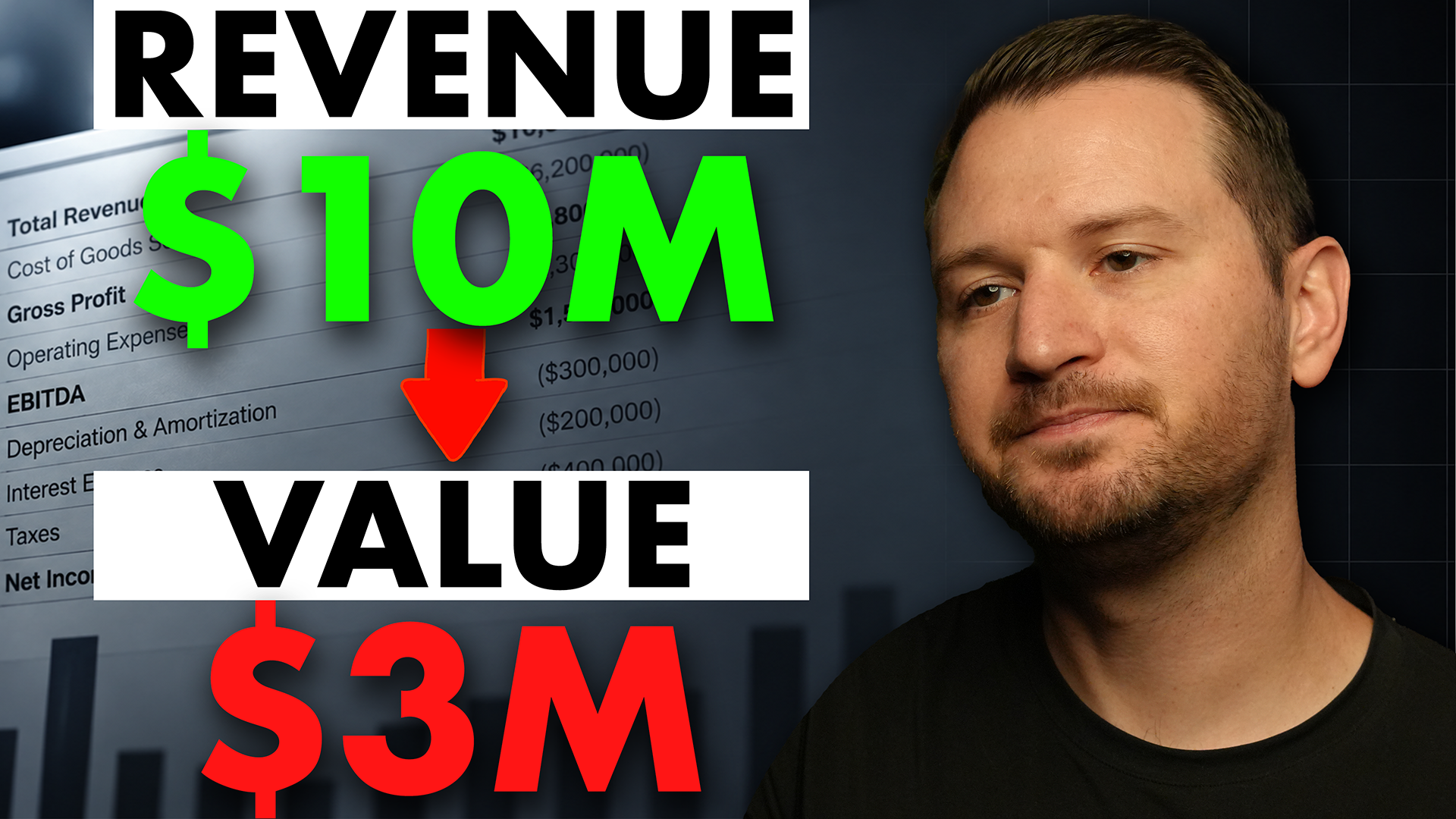
.png)

