

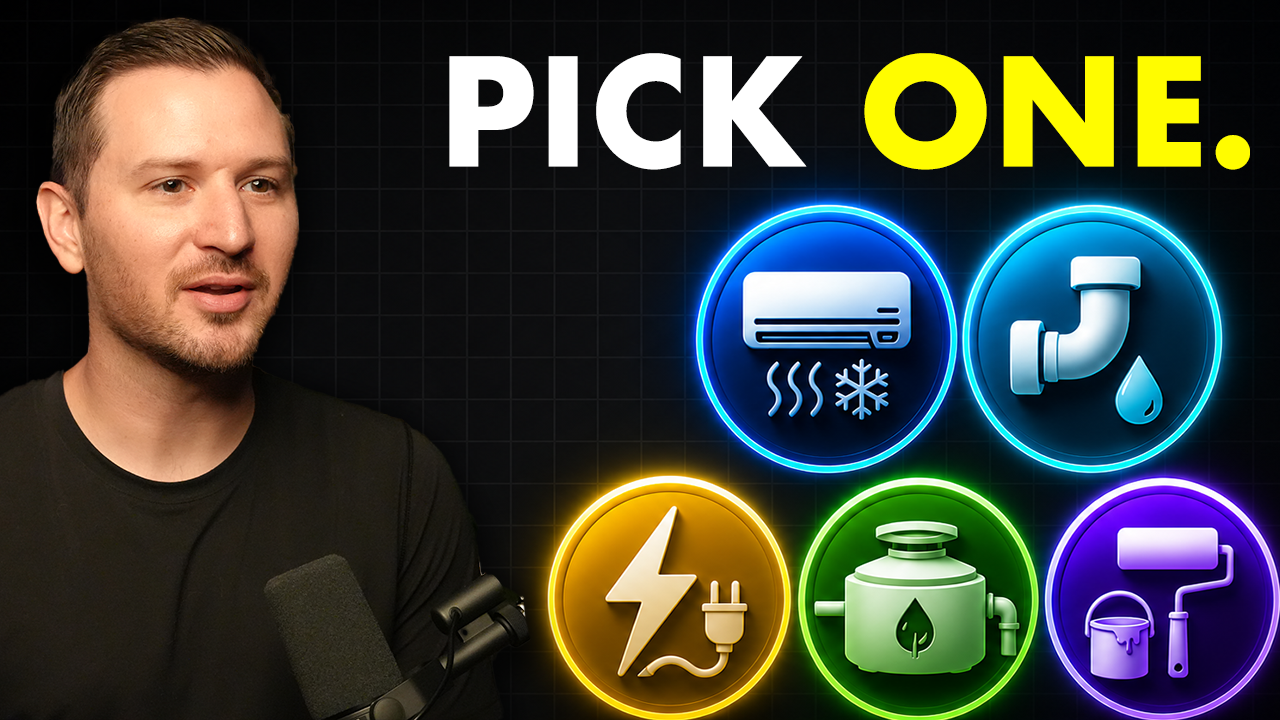
If We Started Over Today, These Are the Home Service Businesses We'd Buy
What's the best home service business to start in 2026?
If you're looking for the most profitable home service business to start, buy, or scale in 2026, the answer isn't as simple as picking the industry with the biggest market size. The best home service businesses combine strong demand, recurring revenue, healthy profit margins, scalable operations, and long-term enterprise value.
In this episode of Owned and Operated, John Wilson and Jack Carr break down the home service industries they'd personally invest in if they were starting over from scratch today. From HVAC, plumbing, and electrical to restoration, roofing, landscaping, septic, pest control, and even trash collection, they explore which businesses offer the greatest opportunity for growth over the next decade.
Whether you're researching home service business ideas, considering buying a service company, or trying to decide which trade offers the best return on investment, this conversation provides a practical framework for evaluating the opportunities that matter most.
Instead of focusing solely on revenue potential, John and Jack discuss the factors that actually determine business success: recurring revenue, customer retention, hiring challenges, operational complexity, cash flow, and eventual exit value. They also share lessons learned from building, acquiring, and investing in service businesses across the country.
If you're wondering what home service business to start in 2026, this episode offers a realistic look at the industries they believe are best positioned to win.
————————————————
🔗 CONNECT
————————————————
John Wilson → https://www.linkedin.com/in/johnbwilson1/
Jack Carr → https://www.linkedin.com/in/jack-carr-home-service/
Owned and Operated → https://www.ownedandoperated.com
————————————————
💰 SPONSORS
————————————————
💼 Big Reputation — Stop chasing reviews and watching competitors outrank you. Big Reputation is the AI-powered review + SEO platform built for home service pros. Automate review generation, respond with AI, track local SEO, and integrate with your CRM. Setup is free, and your first month’s on the house.
👉 Book your demo: https://www.bigreputation.ai/oao
📞 Sponsored by Quo — The Modern Business Phone for Service Pros
Missed calls mean missed business. Quo (formerly OpenPhone) is the AI-powered phone system that logs calls, creates summaries, and automates follow-ups — keeping your team connected and customers happy.?
🎁 Start your 7-day free trial and get 20% off your first six months at https://quo.com/owned
More Ways To Connect with O&O
John Wilson, CEO of Wilson Companies
Jack Carr, CEO of Rapid HVAC
📌 Disclaimer: Some links may include UTM parameters or affiliate relationships, meaning we may earn a commission if you make a purchase. Episodes may feature sponsors, but all opinions expressed are our own.
Today we're talking about if you had to start over today, what home service business would you choose?
I mean, those are hard answers.
It's very easy to like just complicate your life with a bunch of small sh what I would look for is recurring revenue as a base. Dude, I actually might do restoration.
That's a good one, yeah.
Should we go buy a bunch of Great Clips franchises? People are always gonna freaking get their hair cut.
Not me, son. Not me. Never again.
You're out of the market.
I have one that you'd have not mentioned. This is probably the direction that I would go if I started over from scratch tomorrow.
Welcome back to Owned and Operated, a top 150 business entrepreneurship podcast. I'm your host, John Wilson, and on this show we talk about the home service industry and how to grow your business within it. I'm joined by my good friend and co-host Jack Carr, the host of Podcast Jackquisitions, which I think today is 113, bro. 113.
We're gonna break back under 100.
You and you and uh I keep I keep wanting to say Grant Cardone, but it's like uh who's the Tony? It's you and Tony Robbins.
Tony Robbins. That's like my uh he's the guy I'm chasing right now.
Yeah. In addition to beating me on the internet with a podcast, I you put it on the fucking whiteboard. Yes, okay, this is cute. Okay, in addition to beating me uh currently in our podcast rankings, uh, unofficial game, Jack. Uh his sales at his company were larger yesterday than the sales at my company. And um Jack's company is smaller, so like there's no reason that that should be the case. So uh double egg in face today. Double egg in face.
It it's a big win for me because on one side it's hey, you set a record in sales, on another side, it's also more than you did. Yeah, it is.
Yeah, it is dude. Yeah, I mean, you guys killed it.
Yeah, we did really well.
You guys killed it because this was all-time record, right?
Yeah, we had three people in HVAC absolutely doing amazing, then plumbing stepped up and electrical stepped up, like it just was a day. So that's awesome. We're we I'm I'm more excited, like just because again, from a numerical standpoint, like a hundred is just a big chase point, and we were 14 away, which is like really one sale, like you were basically like one sale away, yeah. One sale away from a hundred, which is I mean, if for people, I mean, everybody listening, you guys understand. Um, the amount that we've done in a day was like one eighth of my first year, one seventh of my first year.
Totally.
You know what I mean? Like in a week, we are doing our first year's revenue now and four years later. So it's like, you know, I you get excited about this stuff just because like when you compare it to itself four years ago.
Yeah, it's a very clear progression. Like this this year or this month, we're gonna do more revenue than we did in 2019.
Yeah, like that's wild.
That's cool. Um, all right, hell
yeah. So today we're talking about this. Is actually uh, we did this episode a couple years ago, and it has, I'm being told, is our most popular post on our website.
Oh, that's cool.
I can't even think of a good joke. Uh okay, so yeah. And it's the best home service businesses to start in 2026. So we're talking about uh I think we're it's like a bunch of different opportunities. We're gonna rank them, which are kind of fun, and then uh ones that we totally hate. Um, okay, if so our the concept here is if you had to start over today, what home service business would you choose?
Okay.
Or just the one with the best chance of building a great company over the next 10 years, either one of those prompts.
So you just did an episode on um poop scooping? Poop scooping. Is that is that your answer?
That is a great business.
I'm honestly business. I hate that business.
Oh my god, I loved it. Uh, I think it's I think it's such a funny business. I think um no, I honestly I was into that business. Like, like after that episode, I texted like four friends, and I'm like, we gotta do this.
How many how many people actually were how many people were in your camp and how many people were in my camp?
Dude, everyone was in my camp. Like, no one was like, no, this is a terrible idea. Everyone was like, absolutely we're doing this.
You need to get some better friends.
Apparently.
Sweet. Do we have to start with like name it off a few, or do you just want to start with the what makes a great home service business?
Like, what are the sort of the attributes that we that we like? So, what do you think? Your Google Business profiles are either printing money or they're losing it. And that's where big reputation comes in. Big reputation turns your GBP into a true lead machine without adding more work to your plate. It runs in the background with automated posting, review generation, and fast responses so that your reputation compounds over time. And this is huge if you're multi-location. They make it dead simple to manage and scale your reputation across every branch. So every location shows up and wins in the map pack. I'm actually using Big Reputation right now as I grow and scale my newest acquisitions. Plus, you get real insight into what's actually happening. You get to spot gaps with location health monitoring, track reviews and sentiment, and see which zip codes you're winning and which ones you're losing. Better insights, stronger trust, more calls from an asset you already own. Go check it out at bigreputation.ai slash o.
You know, I have the I have this like continuing um like want or need to end up going B B2B, but I know like that's not where I want to go.
Um I mean, landscaping's really nice, B2B.
So that's where I was actually heading with this is like the ava availability to do something that's B2C, but also B2B. Um like if I had to start over again, I'd I think I'd go B2C still, but I'd choose an industry where it would be easier to do B2B. Like the I don't think that the difference in landscaping, for example, to do a commercial contract versus a residential contract is a different person. Yeah, I could be wrong, but I think it's I think it's the same person.
Probably the same, yeah.
Mowing the lawn, doing mulch, doing you know, some landscaping doesn't matter if it's a at a house or at a commercial site, like an HOA. Um, so that gives you more availability. It's an obviously a different marketing system, but I think I like that option to be able to go into multiple styles of marketing there.
Yeah, yeah. I I mean I think that makes sense. Well, I think we should probably like break this down a little bit further. So are you getting ahead of myself? Well, first off, it was home service, and you're like, you like were just like fuck that. Let's talk about B2B. Uh so maybe we'll dive into that for a second. Uh, revenue versus profit, maybe profit percentage, like how likely is it to be profitable? Is it recurring revenue or just high-ticket jobs? I do think that's kind of an interesting one because like the dog uh like poop pickup business is a very recurring revenue, which I kind of like the sticky, the contract. I I like all that part. Um, but roofing is like one time every 20 years high ticket. So I think that is kind of an interesting uh how would you think about that? Uh ease of hiring or ease of selling. How easy is the labor pool? Um, and then cash flow or enterprise value. So I feel like those are some good. So just like between those four, like what do you think? How are you thinking about each of those? So revenue versus profit, recurring revenue or high ticket, ease of hiring, ease of selling, cash flow or EV.
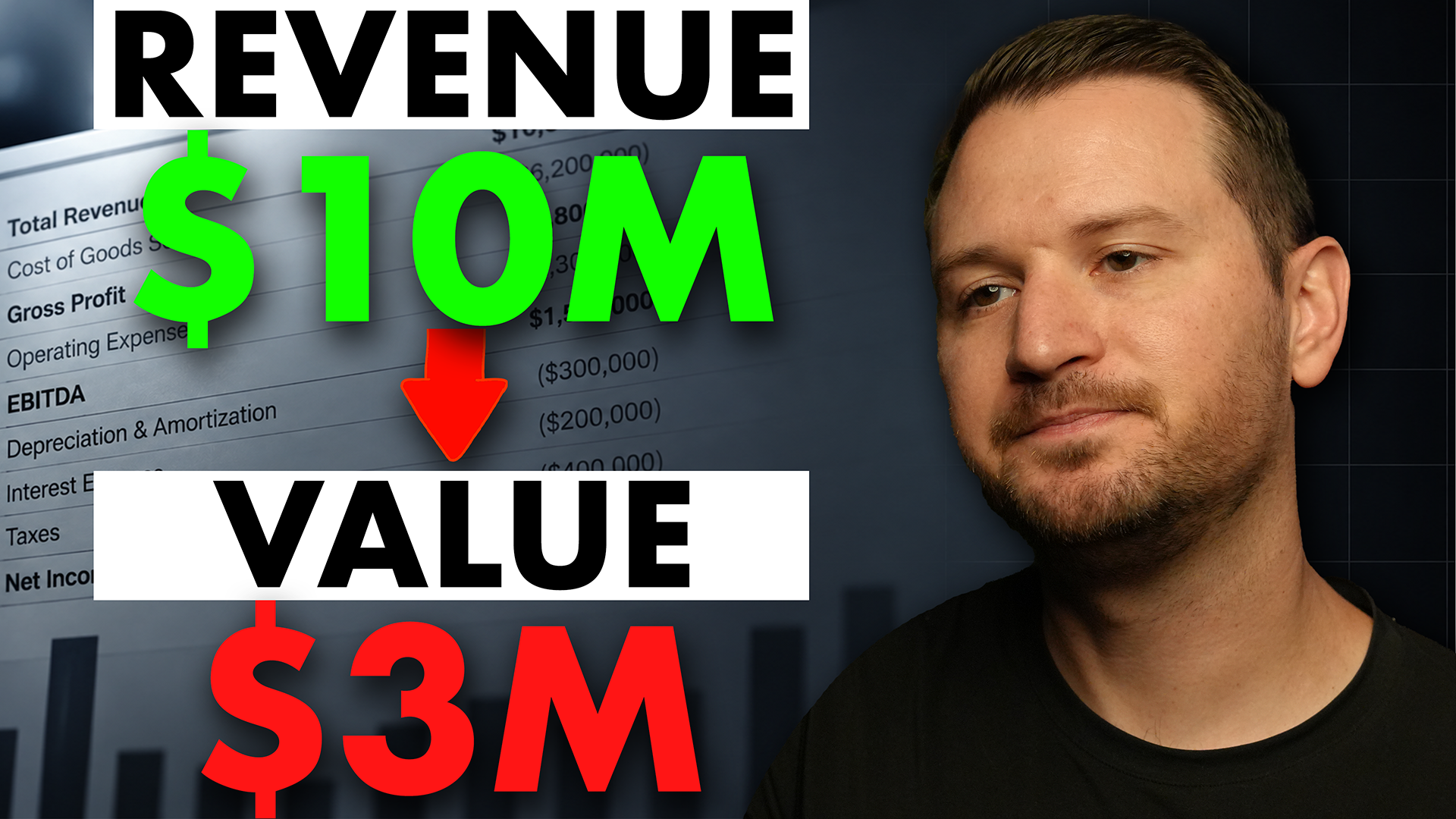
God, that's those are I mean, those are questions we deal with every day in our businesses as like as is now, which is a hard um hard answers. Um, I think to start, I'm going to say profit. Profit first, as somebody who runs multiple businesses. Revenue is great and it's it's super visible, but at the end of the day, right, revenue is not what you can utilize, it's the profit. And so running a you know $20 million HVAC um commercial business or new construction business, right, it sounds impressive on the surface and is a vanity metric. Like when you're running six percent profit, like that's a hard business. Like you're playing hard mode, and so focusing on the sides that have more profit is where I would start. I'd focus on businesses that have high profit, even if it's low revenue.
Yeah. Um I think the only downside to that uh I mean do you want to go through some like examples?
I think a great example is uh pest control, right? Like I think pest control is a is a high profit low revenue business.
I don't think I'm arguing with high profit. I think maybe a better way to word this is like what's the TAM or like what's the biggest it can get? Because something I'm trying to do, um, and I just notice this tendency in myself, is I uh am I going to like hustle and do a small project? And you and I have talked about this before. And it I even dude, I will I woke up thinking about this this morning. So like very topical for me. I'm over my coffee. Everything happens over my coffee in the morning. But um, so I was thinking about uh a project of mine that just passed a million dollars. And I was like, okay, that's really on one hand, that's really cool. Like, I like that, I think that's really fun. And on the other hand, I'm like, dude, I really need to be having more $10 million projects. And I think that I get stuck doing these smaller things and not like um focusing on bigger and bigger shit. Uh now that's not to say it's really revenue or profit. I just think it's like how big is the opportunity that I'm looking at or participating in. Um, because I I think it's it's very easy to like just complicate your life with a bunch of small shit instead of, hey, am I really like building something uh valuable?
Yeah, and that comes that comes back down to like at the end of the day, what's your goals as an individual, right? Do you want to build big things and and make a ton of money, or is this a lifestyle um that you want, right?
Because if you if you run a there's plenty of people out there running, my only my response is probably so unrelatable, but I'm just like I know it is. That's why I'm doing it actually does come down to it. I think there's like a right and a wrong answer.
And I think the right answer is like the bit the you know there's plenty of happy people out there, John, that run one million dollar businesses that push $300,000 in cash flow in you know Nebraska, and they are living like kings, they have a manager in place, they take their boat out every week. I don't think I have kids.
I just like I can't I can't understand it.
That being said, um yeah, I you know, I I do think it matters what your goals are as an individual because like you could go the other direction. Well, I kind of like Ken Gundrich's. Why don't you run infrastructure businesses? Like, yeah, if you really look at it, someone posted the other day on Twitter, it was like, hey, these aren't the people running like, and it was one of the uh like F1 um events, and it showed all of the yachts inside the harbor, and it was all these like 30, 100, 200 million dollar yachts, and it's like this isn't an you're never gonna get here in e-comm. And it's like, well, how do you get there? And the answer is infrastructure, energy, like these giant uh national corporations that are providing it's not, it's just not what generally what we're doing. Um, doesn't get you there for for most people. And so, like, that's the other end of that question is those businesses are picking up 800 million dollar contracts with the government. Why aren't you doing that?
Yeah.
If that's the I mean, like, no, that's that's a question, it's not rhetorical. It's like, why don't you focus on something like that then?
That doesn't sound interesting to me. Um, I think like but I but I do think I do think it's a reasonable question because I think like uh so we Wilson just crossed 10 million to Bibita, and we're starting to like stare down like 12 to 14 because we have a few other partnerships we're we're looking at. And as I as I'm sitting there, it's like I think I just want to do more of that. Like, yeah, what uh a hundred thousand of earnings doesn't make sense anymore, and it's similar to what like we had Ken Goodrich on the show like a year ago, and he's like, Yeah, I think a good sized business is 25 million of Ibada, which obviously is unrelatable to me, but I'm I'm kind of agreeing. I'm like, Yeah, I think that makes sense. And I think like we just careful, okay. Yeah, I go okay, okay, okay, okay. I'm moving on. All right, so recurring revenue or high-ticket jobs.
I'm in see, so I don't think that it's that simple. I think that what I would look for is recurring revenue as a base with the option for high-ticket jobs. So, like eight the reason that's HVAC.
That's yeah.
Well, the reason that HVAC's so popular with the private equity groups is because it has that. And so I would try to get as close to that as possible. Um, but I mean, doesn't mean that it's not on both sides, right? On one side you have roofing, which is only high-ticket jobs, PE loves that, and then you have pest control again. On the other side, PE loves that, which is all recurring, no high ticket. So, I mean, I think you could go into any camp, but in the middle, if there's an ability to have any kind of upsell, I would sit somewhere with the ability to upsell. I want the and I think that's why I went B to like the ability to have B2B because that's the upselling landscape. Um, but uh, I'd say if you can do both, great. If you can't do both and you're forcing me into a box, I'm going reoccurring.
Yeah, I think overall revenue is lower, but it's like it's a lot stickier, easier to budget. I think probably easier to scale, to be honest.
Yeah, um, yeah, less swings in your business that are related to sales. Um like the and that's just me personally. I'm an ops guy, so like I love ops. I'm really good at ops. I'm good at sales now too, because I have to be, but like ops is my bread and butter. And so the ability to design systems for maximum efficiency to still gain clients, to run, you know, uh lower, you know, dollar, but recurring sounds a lot better than trying to create ops for like this giant sales organization that has super swingy and and just not linear. Um, I think that I would grow faster through um recurring revenue.
Yeah, no, I think you're right. I think you're right. I think um I pretty much agree. Yeah, I think um like we've invested in a couple businesses that have recurring revenue, and every time I'm just like, what am I doing with my life? Like, this is so much easier. Uh, because I think in like plumbing HVAC roofing, you you have to go out and fight every day for like the next project, which obviously like there's also high enterprise value, like there's good to it. I'm not like shitting on it, but versus recurring revenue, like hey, that one thing you sold a year ago is still like producing for you.
Yeah, you sell once and then it stacks versus like having to go out there and fight for that sale every day. Yeah, because that's what you have to do, right? HVAC you have to fight for that sale. It's a dog fight every single day.
Yeah, it's a dog fight every day. All right, uh ease of hiring or ease of selling.
Ease of selling. I think so too. I think so too. Yeah, yeah. Ease of selling. Like I I the more that I get do business, I'm just gonna call it doing business in any field, and the more I talk to people who are running like random industries. Like I was talking to somebody who runs a man a makeup manufacturing business that like sells to influencers to do their own makeup manufacturing. Okay, what is their number one issue? Distribution, distribution, distribution, distribution talk to banks, you talk to the SBA, you talk to uh anybody in in every industry. Kind of what I've found is the issue comes down to distribution problems. And so and by distribution I mean hey, how do you get a customer to come to you? How do you acquire a customer? Yeah, how do you acquire customers? And so I'd pick an easy sales business any day where the customers are just coming in and then like, hey, I have to go find and train people, versus hey, it's a more controllable find and train a thousand people, but like, hey, I can't sell anything.
Yeah, it's a more controllable problem. Yeah, that makes sense. Uh and then cash flow or EV. Oh, that one's fucking hard. I see, I don't know. I think that this one's kind of unreasonable because it's like a stage of your life thing, right? And I think that this is a big I remember in the like 10-15 years ago, we were investing a lot in real estate, so we were like really consuming uh content on bigger pockets, and it was the same thing like, oh, do you want it wasn't called enterprise value, it's just like appreciation. So do you want cash flow or do you want appreciation? Um I I think it's like where you are in your life. Like if you're already rich, like cash flow is great, probably. Um whereas like you already got the appreciation. I don't know. I think it's just like what else is going on in your life, I think sort of determines which of those like if you have no income, then you need cash flow. Yeah.
I think, yeah, and and you're right, you're right, because like there's time there's periods in my life where like I've focused only on EV and I'm living off like ramen noodles. And hey, on paper, I run a two, I'm worth two million dollars because my business is worth that. But like I'm at home with three kids, like, hey guys, we're eating eggs and ramen tonight. Yeah. Um honestly that's not good, but yes. It is good.
Yeah, I'm I'm not gonna say I'm really sacrificing with this really good sorry meal.
The kids also really like ramen, so it's not a hard hard sell. Um, point being though, is like, yeah, I've uh it is a time in your life. I think that I don't know though, like the answer is if you were to offer me like for the rest of my life, I had to stay stagnant on one and there's no other option, it's probably cash flow. And it's probably cash flow because I could cut um everything else.
You could just do something else with it.
Yeah, that's what I was just gonna say.
Like, I have a friend that produces like five million a year of like free cash from a business that is literally worth scraps. Like if he sold it, he would get less than one times, but he produces five million a year of free cash. So then he just takes five million a year of free cash and like he buys other businesses, he buys real estate, he buys public stocks, like stocks, yeah.
So, like that's what I'm thinking is like you put that into a dividend every year. If you forced me into it, like take the cash, put it into stocks and bonds, and then that's your ends up being your kind of hey, value or or app.
Yeah, I I can definitely understand that. I think like I'm on the appreciation bucket because um it's faster too.
Appreciation's faster. If you like really grind and you grow, like you're well, I think it's the same with anything, like we're X amount.
We we bought this is back to real estate, but like I think it's the same concept. But like we bought a business, we bought up real estate. We bought a couple apartment buildings back, it was a perfect timing. It was like 2019, 2020, and then obviously real estate's better now. But we put um, it was me and my uh dad and my sister, and we all put 30 grand in, and we bought two apartment buildings. It was like not that big of a deal. And um, I mean, maybe we put 60. Anyways, like yeah, it's not the point. We we ended up eight times, we're selling it right now, and I've we've eight times e each of our money. And it like we didn't take distributions the entire time. So we've been having this exact same conversation for years of like, how should I be thinking about real estate, cash flow or appreciation? And I used to think cash flow, but then now that I'm dealing with appreciation, I'm like, actually, this is way better. And I would be open to buying real estate, not cash flowing for five years again, and then just doing a really big refinance event and then just like continuing to suck out the appreciation.
Yeah, I think that the the answer ends up being somewhere along the lines of cash flow. If you choose the cash flow method, it is less brutal, like at less pain, slower growth, like slower, like total net worth growth, whereas EV is more pain, you yeah, lots of pain for five years because you're not taking any money crazy fast, but you can get rich crazy fast. Yeah, and so like that's the end, and that's why, like, as an owner, we've talked about this a ton of times. I paid myself scraps for the last four years. Like, I'm not paying myself anything um compared to like what I was making in a W-2 because it's putting it all back into the business. Because as you grow, like that the there's an there's a multiple on the end, right? Like we sell based on a multiple, the EV is based on a multiple. And so the the tighter you can keep that, um, the expense side, like the more that your value increases at an exponential rate or at a multiple rate, I guess. Yeah. So I mean that I think that's the answer, right? It's like again, lifestyle on like, hey, you can live comfortably in Nebraska on 300k and have a boat and da-da-da-da-da. Or you can do be that same person and grind at 60k, live in it below your means, and then sell in five years and make you know 10 million or whatever
it is.
What's some underrated home service businesses you're into? Because I think the first three, like plumbing, HVAC, electrical, we're in those industries. So if we're listing 10, like I think those ones are they have to be on the list, right? Like, what's next? What comes after HVAC Plumbing Electrical? You don't need more leads, you just need to stop losing the ones that are already calling. And that is exactly what Quo fixes. Quo brings every customer conversation, whether it's calls or texts or voicemails, into one shared thread that your entire team can see. So whoever jumps in next has full context instantly. There's no more scrambling, no more crosswires, and nothing slipping through the cracks. It's gonna keep your team aligned, speeds up your response time, and makes your customer experience field dialed in every single time. If you want tighter communications and to lose fewer leads, check out quo at qo.com backslash owned. You'll get a seven-day free trial plus 20% off your first six months.
I think the obvious ones are the ones we've kind of already talked about, landscaping and pest control. Those are two that if I didn't do MEP, I would probably have chosen one of those.
Yeah.
Those are my four and five, is I love landscaping. I've seen some monstrous landscaping companies. Landscaping is sweet. And when people think about landscaping, I think they get it wrong because they think like, hey, garden or cut grass route. And I think that the answer is I've worked with like now a few of these guys. Dude, they're buying like we have a buddy that's buying like a $10 million landscaping company, and it's residential and it's recurring large ticket because they're going to these giant homes and they're doing full landscaping reworks. And it's like I was like, hey, what's like the the average order value on this AOV? And he's like, it's like 120k.
Yeah.
That's crazy. And it's it's recurring every year.
Landscaping is an interesting, it's interesting because it's kind of like HVAC, where it's exactly that. There's a recurring, like they come out and maintain the property, and then there's also like the additional work, like they're gonna do some hardscaping, they're gonna do some whatever. We're doing that right now with our landscaper. Uh, and I'm trying to buy them. Is but like they have our recurring work, and then we like we've just like, hey, can we add some bushes over here? Can we put a path here? Um, so like, yeah, what started off is like an annual contract turned into probably an extra 20 grand for them.
Yeah, yeah, yeah, yeah. So there's like there's the ticket, there's higher tickets there, there's higher tickets if you move into B and B, B2B, B2B, but
but yeah, so I think landscaping is pretty high up there, maybe number four or number five.
If you're yeah, I'm really I'm really into landscaping. We actually are trying to like get a hold of that owner, see if he wants to do something.
I think the big thing is like there's a lot of sm like the the multiple is not ridiculous yet. There's a lot of fragmentation in the market.
Yeah.
Um, and so like buying and growing it doesn't seem as difficult either.
Um no, I don't think so. Like it's it's still um, I mean, I think labor is an issue. Labor is an issue. If you go back to our like labor versus ease of selling, uh, because I do think it's easy to sell. Like I think it's easy to sell. I think you just have to figure out I think you'd have to figure out labor. But um, yeah, I think it's easy to sell. Like, we so I think I've said this on our show before, but like our our neighborhood has like basically three landscaping companies. And one of like, if you're in the neighborhood, you use one of these three landscaping companies. One of them we called because we were prepping to switch uh providers. We called like the one that we just see the most, and they just like told us no. They're like, Yeah, we don't have any room. That's this was in February.
No one tells me no.
Yeah, I'm gonna buy you. I mean, basically, that but this was in February, and I was like, Oh my god, like the season we're still 90 days out from even needing our lawn mode, and like you're just you're already saying no. So I do think there is like an ease of sale um component.
So let me ask you now. Uh so that one's probably top five.
Uh, if we've we did one, two, three, four, and you want to pick the fifth one. My issue now comes hey, are you gonna push into roofing or are you?
Dude, I actually might do restoration, to be honest with you.
Like that's a good one, yeah.
I I don't know if we've talked about I don't think I I did. I don't think we've talked about restoration much on the show, but um we five years ago launched a restoration arm. Yep, and in the past I'd say seven or eight months.
Is that considered home service though? Like a B2C home service, or is that B2B?
It's B2C. Yeah, we're working for the homeowner, we're signing the contract with the homeowner.
Yeah, that's true. Your lead gen comes from B2B for the most part, though, which is the well, it's not really.
I mean, actually, a lot of our lead gen comes from Google, Angie's list, Monero, Tucker.
If you're listening to this, Tucker, I just I just talked to a guy about this. I was like, dude, why aren't you doing B2C? This is the perfect industry, ripe. And the fact that you think that nobody does or you can't do B2C is why no one, none of your competitors are doing it and why you should be doing it. What? I'm right again. Um, I was telling, so I had this conversation with somebody who's I don't want to say like they're doing well in in restoration, but he's like, hey, we have a lead issue, we have a lead issue. And I said, Okay, are you doing aggregators? No, like their only source of leads was going to plumbing companies and talking to them. And I said, Why aren't you doing aggregators? Focus on mold. Like, mold is a super visual uh issue that homeowners don't want to touch and are afraid of, just like electrical. Like, push mold hard, it's high margin work. Like, get in there for mold. Um, get one of those mold dogs that like goes around sniffs and like hey, the dog sat at your wall, like you got mold in your wall, buddy. Uh half joking there, but on a serious note, um, like I think that there's a huge opportunity in this industry to actually go B2C, and it's crazy to hear that you are doing that.
Yeah, the business doubled. Did I tell you this?
No.
So we had the same issue that he's describing. So at one point last year, we were just like, you know what, we we're like I don't know if we're best in class, but like on a one to ten, we're seven on like being able to drive leads, like it's one of our core competencies. And this whole time we're trying to like figure out B2B with restoration, and it's like, well, why don't we just attempt the thing that we are above average at? And the bit like literally business doubled. We went from 80 grand a month to like we're knocking down 200 plus months now, dude. From November, like just from November. Yeah, it's really it's crazy. We went from two crews to we just brought on our fourth or fifth.
Um, and and not to mention, like, are you guys doing um are you guys doing any? We should do a whole episode on this, by the way.
Uh I actually think I'm gonna have Sarah on, and she she's our like GM for our the restoration business. It's gonna do two and a half million this year. It did one last year, or like 800. Like it really it exploded, but we figured out leads.
Yeah. Are you are you going to do you guys do demand generation, not demand capture with the business as well? Because I think I think there's a huge opportunity there as well.
Yeah, I think there's a big opportunity. I really I'm like I'm pretty hot on this. I mean, we've been doing it for five years, but we just figured it out. So, like the quick specs on this business, you go out and if there's a fire or water damage or storm damage or something like that, you restore it and you could do different parts of it. There's like sub niches, there's bio, which means like somebody died. Uh, there's fire, self-explanatory, water damage, backed up drain. So it really pairs really nicely with plumbing. But dude, it's 80% gross margin. 200,000 of revenue, 80% gross margin. Like it is ridiculous.
Then there's tear out, put back, yep. Uh large loss.
Well, if for if you're doing put back million dollar loss, if you're doing put back, it's much lower gross margin. Um, but yeah, so we're like one of the things we're prepping to do, and I actually talked to Jeremy about this this week, but like we want to launch restoration at all of our branches because it is it's a like at a million dollars of revenue, which is like we could do in a couple months, we it's it's 800,000 of gross profit dollars. It's crazy.
Yeah, I believe it. 80% margins on that, which is nuts. Well, gross margins.
Yeah, so it's becoming it's becoming a favorite. I love it.
Sweet. I'm actually okay with that. Uh moving down the list is somewhere somewhere high up here is going to be uh like you said, roofing pest control. Where do you rank those two? Which one goes first in your book?
Yeah, probably roofing.
Roofing just has such a high I know.
This is the same thing that we said earlier. It's like, well, do you would you rather have EV or cash flow and would you rather have recurring or one-time? But like it from what I can see, almost any almost anybody can just go build like a $10 million roofing company. Like it doesn't seem that complicated.
Um, I mean the one nice thing about roofing that I will say is that there's only one side to the business, right? And most of the people don't own their own subcrews. Totally. We had that guy that was what 20, 30 million dollars in revenue, and he didn't even have his own own installers.
Like they still the amount of roofers that we've had on this show, and we just asked them like point blank, like, hey, is it as easy as it looks? And they're all like, Yep. Yeah, like you just have to have one skill, and that skill is sales.
It's sales, and if you can get down your sales, it is that easy, actually. Yeah, it is that all right, cool man. I hate that, I hate it, but I love it. Yeah, like I I respect it. So, yeah, roofing, yeah. I do feel like pest control is a much longer um lead to actually making good money, and then on top of that, like heavy competition. Yeah, like you have national brands that are door knocking and that have the whole playbook down. So I do think um that generally pest control is lower just because there is a again a higher level of competition right out the gate. So whether you're buying a small company or you're starting from scratch, like you are going to have to knife fight your way to customers because they don't this that's the the downside of like the benefit. The benefit is like sticky customer base. The downside is like how do you get that sticky customer base now to go to you?
Yes, yeah.
Um I have one that you can do.
Which is why you have to do the dog poop pickup business because just merge them together, just merge them together. All right, what's the thing I haven't mentioned yet?
There was a business that came up for sale the other day, and I was looking at it seriously. Okay.
Trash and disposal. So, like your weekly trash pickup. That is a home service.
Yeah, yeah, yeah. So I'm I'm kind of into dumpster. I'm into that. I I looked at one of those a couple years ago, and um it was like roll-off dumpster. I don't know if they did residential trash, but they did roll off dumpster for like home projects or like cleanup or whatever.
Um I'm talking residential dumpster though, residential units, like trash cans, like $66 a month.
I think I like that.
I have such a hard time wrapping my head around the economics behind it. I love the idea because again, sticky recurring revenue. You don't change your trash service company unless they do something wildly wrong.
Oh, yeah. Yeah.
Um, like we've got to be a good thing.
Yeah, LTV is like huge.
I don't huge opportunity, right? The TAM is huge because it's whatever your city is. Um, you can go hyper local, you can focus on routes, get entire neighborhoods under contract. But again, it's like 66 bucks a month. So, like, how do you think about it?
There was a guy I listened to this podcast. Oh my god, it was probably I remember where I was when I listened to it. I was in my basement like working out, and this was like eight years ago at my old house, and somebody recommended it to me. I want to say the guy's name is Gray, and it's these two brothers down in the Carolinas, and they own this home service business that is plumbing HVAC electrical trash.
Yeah.
And I was like, at the time, I was confused, but there it was mid-20 million, which at you know is is a big business. But like at the at the time, I think we were like two million or something. So I was like, oh my god, that's completely unattainable, and we'll never get there. And I I it did actually take a lot from that interview, but um yeah, really, really interesting. So they did blend it with uh with that. I always thought the roll-off dumpsters would be a perfect add-on for like construction, landscaping, restoration, anything that like creates a lot of trash, a roll-off dumpster, like our dumpster budget's like 15 grand a month. I was gonna say, yeah, that's a long could you make it a profit center? Like, I think that's kind of a reasonable thing. I now I also think this is back to me starting random bullshit projects that don't get very big. So that's usually where I stop.
That's where I'm gonna finish the last one. So, like the last I one that I have on my list, which I there is a decent chance out of every single one of these that we've mentioned, this is probably the direction that I would go if I started over from scratch tomorrow.
Okay, great.
Drum roll. It's a business you own. Septic. Oh, yeah. Yeah, yeah. So I'd probably go septic just because, again, dirty business, route-based, optionality for high-ticket service item.
Yep.
There's some level of moat around life.
There's like zero professionalization.
Yep.
Yeah, yeah.
I think that there's a huge opportunity there, and the direction of the tailwinds of the of kind of industries, resid like real estate and everything, are all pushing towards septic getting bigger as municipalities can't keep up with city growth, and people more people are going on septic. Uh, all the data is pushing, like septic is a growing industry, and there's still no like really big players. There's a few PE companies that are starting to do roll-ups.
We've had two franchises on the show that are like launching franchises. Uh, yeah, that is that is a good one. Um, that is a good one. I like that. Uh all right, so so far we've got HVAC plumbing, electrical roofing, restoration, pest control, trash pickup. That's a new one. I don't think we've ever talked about that one. Septic pumping. Um, any more to get to our 10? The ones that I always liked, just because I think it would be I think that selling would be really easy is um either like driveways or like concrete leveling. I think that those are just like interesting businesses because when you're at someone's house doing a driveway, you just go to the next one. And like every ticket's fifty thousand dollars. You have a recurring component where you reseal it. So I I kind of like that business, but it is obviously like pretty construction-y. Do you wrap that up? There's a B2B thing with parking lots. Dude, foundations are sick.
Foundations.
I'm into I'm into foundation businesses.
I've I've seen a few. They're there, they have some good metrics.
So like I I would call foundations waterproofing, and that would be my that would sort of be my last one.
Where like foundation encapsulation, basement encapsulation. Yep, those are sweet. We have a massive company here that does that, like huge, um, rivaling some of the biggest HVAC companies in the area. Like huge they're giant.
I mean, the average ticket's $35,000, like they're big businesses.
Well, and they like touch into all the other businesses, they kind of under mine them, like they do dehumidification. So if you're doing HVAC or plumbing, like they're going to be the ones who get the dehumidification ticket. Uh the if you do if you have like radon services, well, guess what? They do the encapsulation, so you don't they'll they can technically do the radon services too. So, like they like the foundation and encapsulation businesses, they kind of steal from all the other industries, or we're stealing from them either way. Um, but point being is they just touch a lot by being under the house.
Yeah. Yeah, I agree. It opens up into plumbing, it opens up into um like a lot of other stuff. I think some honorable mentions. Uh I like duck cleaning, insulation, chimney sweeping. I think those are all like good ones, and I like that they can just sort of like branch out from there. Like you can be the chimney sweep company that starts HVAC, or you could be duck cleaning and um yeah, I just think it like really like opens up a lot. Appliance too. Like I've I've there's all these different things, but a bunch of these like they are really good accents to get into something else. I don't know that they're that good on their own, but like they can become something else.
Yeah, you've never seen a 20 or 30 million dollar appliance company, so it's really hard to get that size.
There's one here.
A $30 million appliance only company? That's crazy.
It is unusual. It's so unusual that he built a whole university around it. It's called Fred Appliance.
Oh, that's cool.
Yeah, um, they like fly people in and so I take that back. I've seen a lot of two or three million dollar uh well, you know, Hoffman's appliance business is like 11.
But that again, but it's attached to the department, yeah.
Yeah, it's attached because I think, yeah, they have like 30,000 members or something, and they just offer him applies repair. And I think as an add-on, it does make a lot of sense.
It makes a ton of sense, yeah.
Okay, interesting, interesting. All right, how do we want to rank these? Um what do you want to do here? I don't know, you know what didn't make the list garage doors.
Yeah, see, like I can't rank these, man. Like, I I think we just if you want to try ranking them, go for it. Like, I can't. I'm just like, I think I think we we close out with if you were to start again and you can't do anything that you're currently doing, no restoration, no septic, no MEP, where are you going?
I like trash. I think trash might be my favorite, to be honest.
I I really like um B2C trash or B2B trash, because like I think roll off is different than well, no, like you could do roll-off at homes, like 20 yards for construction projects or whatever. Yeah, that's true.
Uh, because like I did that for cleaning out my basement. I ordered like a 10 yard or something, and uh it was 400 bucks I had to pay on my card before they dropped it off.
Higher margins, yeah.
Yeah, yeah. I think I'm I'm just a big fan, like being inside plumbing HVAC electrical, I like the idea that I'm selling something that is resistant. It's not proof, but it's resistant. There's always gonna be some demand for it. Like humans create waste. And I think I I find something like it's same with like to be honest, like a haircut served.
Like, I'm kind of into like pools.
We did forget pools, but I'm kind of into like, okay, should I should we go buy a bunch of Great Clips franchises? Because I people are always gonna freaking get their hair cut, so uh yeah.
Not me, son, not me, never again, never again, never again.
You're out of the market, I'm out of the market. But yeah, I feel like I like businesses that are needed, and I yeah, because I've always had that luxury my whole career of like plumbing HVA electrical is needed. It's not like much of a choice, it's just who use who do you use?
Yeah, and that's that's why I think part of the reason I just is I chose septic is again when your septic's overflowing, you have to, like, there's no other option, man. Um, it's just let it go into your yard and people yell at you. Yeah, um, sweet, trash. By the way, I talked about this on the the most recent Jack Quisitions episode. I was like, hey, I've never had somebody walk into my office though and be like, hey, I see that you have a 40-yard dumpster out back. Like, you ever thought about saving a hundred bucks a month and we'll do better service? I would a hundred percent take somebody up on that. Oh, we nobody else. Do people walk into your office?
Yeah, but I also think it could it could be done very easily. Uh it could be it could be done easily.
I think that's my point, though, is like the nobody's uh at least from my my instance, like you could drive around to industrial parks and just go knock on doors and be like, hey, better deal, better service, interested, and like the sale would just be that easy. It would be that easy.
I really think trash is like good. Like I'm I'm into it. I think the downside with trash is you will be hated. By who? Like it's similar to like being in the oil industry. Like, hey, the entire world runs on gas, but you're evil because you are in the oil industry.
Your provider, yeah.
And I think as a trash company, like you are the bad guy. Like they humans create waste, the trash company just moves it to the landfill. But because you're like tied to that, I think, and that's actually what that guy said on the podcast too. He's like, honestly, people hate us, which like I'm removing trash from your home. Why, why do you hate me? You're the one that made the trash. But people like it's a very like in your people are against you.
Yeah, yeah, I could see that. Like environmental potentialists. Um sweet man. All right, so that's really interesting.
If you like what you heard, check out ownandoperated.com and make sure you check out Jackquisitions, their podcast is better than ours.
.png)
.png)

