

What if you could grow your home service business without spending another dollar on marketing?
John Wilson sits down with Brian Burton, co-host of Waste No Day and creator of Blue Collar Closer, to break down how better sales training, higher average tickets, and a stronger sales culture drive growth.
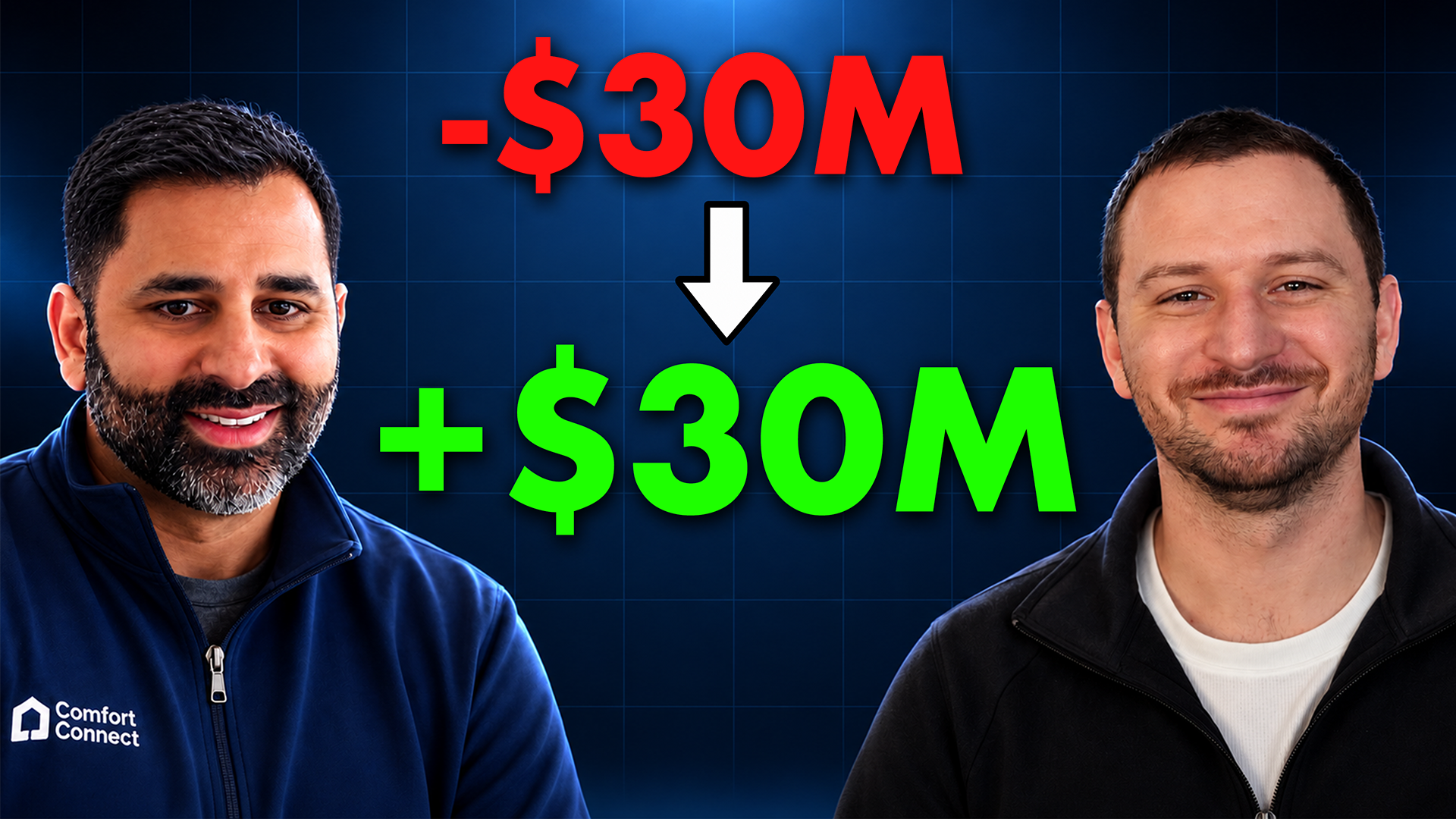
Brian shares how he helped scale a plumbing company from $2.4M to $6.2M in two years without acquisitions, and another business from $6M to $32M with 20% net profit.
Plus, why technicians struggle to close sales, how to build repeatable sales processes, and why increasing your average ticket could be more valuable than generating more leads.
━━━━━━━━━━━━━━
In This Episode:
━━━━━━━━━━━━━━
• Growing a plumbing business from $2.4M to $6.2M through organic growth
• Scaling a home service company from $6M to $32M with 20% net profit
• Why increasing average tickets can outperform spending more on marketing
• Building a sales culture that drives technician performance
• How daily role-playing and sales training improve closing rates
• Why technicians struggle to ask customers for the sale
• The GO PRO sales process and presenting multiple service options
• Performance-based pay and technician commission structures
━━━━━━━━━━━━━━
Sponsors
━━━━━━━━━━━━━━
Service Scalers
Get more high quality leads with marketing built for home service companies. Book a free strategy call with Service Scalers and see what's driving real jobs: https://www.servicescalers.com/?utm_source=oao_podcast&utm_medium=referral&utm_campaign=podcast
Quick Staffers
Hire trained HVAC and plumbing CSRs without the overhead of traditional hiring. Save $500 on your first placement with Quick Staffers: https://www.quickstaffers.com/
━━━━━━━━━━━━━━
Connect
━━━━━━━━━━━━━━
John Wilson
https://www.linkedin.com/in/johnbwilson1/
Brian Burton | Waste No Day & Blue Collar Closer
https://wastenoday.com/
https://www.bluecollarcloser.com/
━━━━━━━━━━━━━━
More Ways To Connect with OAO
John Wilson, CEO of Wilson Companies
Jack Carr, CEO of Rapid HVAC
📌 Disclaimer: Some links may include UTM parameters or affiliate relationships, meaning we may earn a commission if you make a purchase. Episodes may feature sponsors, but all opinions expressed are our own.
But hey, if you want to keep running your business negative 60 grand a year or whatever, I'm not going to. Our business when we started the show was like $3 million a year. And like this year, I think we're pacing 90.
It's a good place to be successful and have some root real room to grow. I'm wanting to understand sales more. You can leave lead generation alone for a while and increase your ticket average and grow your business like crazy without spending another dollar on marketing.
That's crazy.
And the people who are really going to shape the future of our industry understand that it's going to take money to do that.
The way that you're leading your team is unique to you. How do you think about that? I think if you have welcome back to Owned and Operated, a top 150 business and entrepreneurship podcast. I'm your host, John Wilson, and on this show we talk about my own home service business, home service industry, and how to buy and build within it. Today I'm joined by my friend Brian Burton, the co-host of the Waste No Day podcast, which is an incredible sales tool for your teams. Brian, welcome to the show. I'm pumped to talk to you about your background in plumbing, your Benjamin Franklin, Waste No Day, and Blue Collar Closer. Awesome.
Thanks, man. Great to be here. Great to finally meet you somewhat in person. We've got phone conversations and texting. Before uh you said top 150, uh what was that, management?
Business, yeah. We've been the highest we ever got was like 99. And it was a couple weeks ago. And it was like we're top hundred, but then you know, we fell down to like we're at like I think one 140 to 150 in business and entrepreneurship. Yeah.
Yeah, we hit like 95, and and we were like, well, here we are. You know, we made it. And then yeah, it's not something we checked, but like a month later, I checked again and we were like 116, and I was like, what the that was that. Well, dude, it changes every day.
Like it's kind of crazy, actually. Yeah, so it's pretty crazy.
You probably don't know it yet, but Feed Spot released their top 85 home services podcast for 2026 this morning. Oh, interesting. I'll text you the link if you want to see it. And yeah, you guys got number seven. So you can just say a top seven home services podcast now.
Oh, nice. That's cool.
I'm wondering who got I'm wondering who got one through six. Uh Tommy Mello got number one. No, no shock there, I'm sure. Yeah. We got number two, and then nice to the point was number three. I'd have to nice. Let's just pretend I'd never be on my phone during a podcast. So don't think that's what's happening right here.
Don't want to don't want to set a precedent here. It is uh it is pretty fun. Um the amount of content that's out there for the trades is uh I think pretty cool. I uh we you know one of our missions when we started the show like six years ago was to just be a resource for the trades that like I didn't have um when we were building our business a decade ago. And uh just in the mid-20 teens, you know, there just wasn't that much out there, but now it's it's awesome. Like there's a bunch of guys sharing their journey, and it's really cool. It's a fun community to be a part of.
Yeah, it is cool. And it's I mean, for us on on the mic side, I guess Nate and I were talking about this night before last. We recorded an episode. And he's like, we were just talking about the after the show, we were talking about the things we're grateful for for the show. Whenever the show just ends, because it's in the evening that we record, as as you know, as we've been trying to book you on an episode, it's 8 30 eastern when we when we record. Every time we're getting to the mic, it's like, oh, I don't want to be here right now. Like it's 5 30 for me, you know. I'm just getting home. But when when it's over, we're like, man, I'm glad we did that. You know, so yeah, so glad we got that in, and we start going over the reasons why. And he said, Yeah, we we're getting we're getting like a master's degree in sales and business from the people that we're getting to talk to. Because what you know, we were talking about some of the guests we've had on like Dr. Benjamin Hardy, who recently released the science of scaling and who not how and all of his other amazing books, and like Jocko Willink and Brian Tracy, and all the people that have been on the show, and we're like, we we really have no business having conversations with these people. Like Nate, you know, Nate's a secretary, glorified. I don't know what he does, marketing manager or something. I'm a high school dropout former drug addict, former gangbanger, like having conversations with these people, or even uh people like yourself and Tommy Mello and Ken Goodrich and all these people who I mean I'm I'm a I'm a plumber, so like my thing.
My I'm right, I'm dude. I'm in the same boat. I'm just like, how am I talking to smart people? Right.
Yeah, we're just we were just uh he doesn't feel that way as much as I do, but I you know I came from where I came from. So when I'm having a conversation with someone who's accomplished things, I'm just kind of in awe of the fact that a guy like you would give me an hour of your time. It's it's still it still makes very little sense to me, right? I don't think a guy like me, but I think uh I was talking to someone for the record, and you know, he just sold for a reported two billion dollars and he's still like, oh no, bro, I'm no buddy.
Yeah. I it I was uh this is um I'm probably for the more aspirational out there, but I there was this uh article like two or three years ago that I remember, and it was basically how to get interesting people to talk to you. It was about this exact topic. It's like, well, how do you get interesting people to talk to you? Or the other angle of it was how do you get interesting slash rich people to talk to you? And as and the idea, I think, was like, how do you get mentorship? Like how do you go out and find intelligent people to tell you the answers? Which like, you know, for the listener, half half of it is just like start a podcast, just a wrong thing. It really is. Yeah.
It really is.
White dudes look get somebody like Feed Spot to feature you in the top 10. You go, look, we're one of the we're top 10 home services pocket. Here's the link.
Oh yeah. Yeah, we uh yeah, just white dudes love talking into microphones. So like it's just it's it's easy. You can get you can get smart people to tell you. But but what one of them was hey, just do something interesting. Uh, because people get so caught up in um like, well, how do I, you know, go find a mentor, or how do I go get uh like this rich guy to explain to me like how I can be rich or like whatever it is. And and the the moral of the story is cold email isn't gonna do it, right? Like go do something fucking interesting, and then you'll have something to talk about. Yeah, and then interesting people will want to talk to you. And like it's uh I think people get caught up in that. Well, like, how do I go? Whatever. Well, dude, you're doing something interesting. Like, fuck yeah. Like of course people want to talk to you.
You're doing something cool. Get to the gym early in the morning. Yeah, that too. That's another way to have these conversations with these very, very successful men and women at the gym at 4 30 in the morning when very successful people have time to get up and and go to the gym. And it's like there aren't there aren't a lot of there aren't a lot of slackers in there at that time.
Yeah.
It's not a lot of 19-year-olds and slides, you know, in there in the squat rack at 4 30 in the morning. It's it's people in their 40s and 50s who are very successful and getting on with their day.
Yeah. No, yeah, it makes a lot of sense. Well, thanks for spending some time with me today. Uh, this is gonna be pretty cool. Um, for those that aren't totally familiar, could you just give us a little bit of your of your background just to help prime the pump here? I've wasted a lot of money on marketing agencies that made pretty reports but didn't make the phone ring. And that's why we use ServiceKillers at Wilson. They work exclusively with home service companies and focus on what actually drives leads PPC, local service ads, SEO, Google Business Profile, and everything you need to get in front of homeowners who are ready to book. The best part is that you know exactly where your money is going and what's producing real jobs. If you're ready to stop guessing and start getting better leads, head to the link below, book a free strategy call, and let them know that owned and operated sensu.
Third generation plumber. Uncle was the plumber and his uncle was a plumber. Didn't know dad, but didn't need him, turns out. So grew up in southwest Detroit with a twin brother and a and a single mom. Dropped out of high school in like '96, I think. Probably like junior year. I think I finished sophomore year and then dropped out in junior year, but it was like I wasn't seeing a whole lot of I wasn't looking down the road of my life and going, man, if I just get that diploma, everything's gonna stack up for me. It was just, it's just gangs and violence and and drugs and fights in school, you know, being uh my my brother and I being the white guys everywhere we went in Detroit, and it just wasn't it wasn't a great or safe place to keep going. So we we dropped out, got in a passenger seat of my uncle Tone's plumbing truck and went went about uh actually new construction at first, which I really, really hated being a new construction apprentice in in the winter in Michigan because I'm getting dropped off in these foundations with a pickaxe and frozen ground. I remember the literally my first day on a new construction site, they've got you know, they just got strings going where the sewer line's gonna go and blueprints that stuck to the to the foundation wall. And I just get handed a pickaxe and they're like trench from here to there, you know, like two too deep and this wide, and I'm like, cool. And I just grab this thing and I wow and I swing it as hard as I can, and it hits this frozen ground, and my hands like vibrate, and I'm like, what? And then like a piece of a piece of dirt like half the size of this AirPod case up in the air.
What?
And they just have-it was kind of a practical joke because they they had me just keep going and going and they're just picking on me. And then when it's time to actually dig the trenches, they bring the turbo heaters down and like thawed out, you know, super fast. So they were just plumbers being plumbers to the uh apprentice, which is I miss the 90s for apprentices, you know. Yeah, yeah, I think nobody's tormented that much anymore, and I don't want people to get broken by any stretch, but there were no HR departments or anything like that when I was coming up, so we came up the hard way.
Yeah, that is kind of funny. We um I my my formative stories were like one one of the stories I tell most of my apprentices was uh I I was like 18, and you know, I started plumbing like um I it was family business, so like I plumbed throughout high school and uh at 18 I was actually like a somewhat competent um technician. Uh but was what was kind of funny is I had never replaced a sump pump before. I'd just never done it. And I don't know. Uh for some reason I'd never done it. So we go to a McDonald's where were you in like Akron, Akron, Ohio.
Okay.
Yeah. So we so we go to this McDonald's, and uh we're we have to replace this sump pump. Again, never replaced it before. And uh so I disconnect the uh the flow and I haven't unplugged the pump and the pump turns on and I'm looking down the flow and I get a full like pump full of McDonald's greasy, disgusting. Like like 20 years later, I still taste that shit. And smell it.
It's it's among the worst smelled.
No, it's crazy. It's good. McDonald's water is its own thing.
I remember doing a Denny's grease trap. It was the first time I ever had the delight of that smell. And I was like, I can't. How? Like, how is how does this food and stuff like that? How does anything smell like that? I know. It's really it's an incredible. Yeah, so I I was plumbing along and doing my thing, and then I met my wife, or not met my wife, but my wife and I became entered a relationship in 2001, and then she got pregnant in 2004, and I was making 30, $32,000 a year plumbing in in and around Detroit. And her her dad, my father-in-law, he's like this big Puerto Rican dude. He would like walk up to plumbers' windows in gas station parking lots where he lived in Las Vegas, and he'd be like, How much did you make last year? And then he'd call his daughter, you know, and say, Hey, plumbers out here making 60, 70, 80,000 a year. And that's twice the money for us. Yeah, cost of living was pretty pretty high compared to Detroit, but we didn't know that part yet. So we she was pregnant and we we packed up and drove a grand Cherokee pulling a Uhaw trailer from Michigan to Las Vegas and got got there, and I had spent every dollar we had to move, even to the point where like we're staying with my in-laws, and I had to borrow gas money from my father-in-law so Monday morning I could go hit these three companies and put in applications. I mean, I didn't know how to use the internet or anything. This is 2004, so I didn't like get online and yeah, submit. And I didn't want to anyway. I wanted to go meet the people that I might be working for and see who they are. So I remember I get on my wife's mom's little computer. It's like this little foldable. Now it would you'd think it's a laptop, but it was an actual PC. And I map quested directions from their townhouse to a company, to the second company, to the third company, and back to their townhouse, and then just hit print, right? So I had the directions mapped out.
Yep.
So I went to the first company Monday morning. I I put in application, the guy offered me. I think he offered me just straight up 20 bucks an hour and said, We'll have plenty of overtime for it. And I'm like, ooh. Like, that's just immediately I'm gonna make 50, at least 50,000 because I'll work. Every minute they offer, I'll I'll work it. I want him to make money and get our get us a place. And my wife is seven months pregnant, she's sleeping on a couch. I'm sleeping on a top bunk above my little brother-in-law who just sits up all night playing Halo 2, and all I hear all night he's nice enough to keep his headphones on, at least. You know, it's his room, so I'm not gonna be like no more making noise, you know. Yeah, I was I was the guest, but I had to hurry up and get us out of there. So I'm like, I like it. He's like a plumber's plumber, you know, he's just 55 gray-haired dude. He's in boots and jeans, even though he owns the company. He's got a pickup truck we're talking next to. And I'm like, this is probably I'll probably be back, but I still need to hit the other two companies because I, you know, I told my wife I would. I don't want to tell him, I just had a piece of paper, and the only way I could get back home was by hitting all three of them. But he asked me where I was going, and I told him the next one was yes, air conditioning and plumbing. And he's like, Oh, you don't want to go there. I said, Why not? And he said, They're just gonna teach you how to rip old ladies off. And I'm like, what? I mean, I wasn't I guess I wasn't that familiar with hyperbole. I said, What? They're just ripping old ladies off. He's like, Yeah, that's what they do. I said, like, how are they still in business? Like, how are they not shut down if everyone knows that's what they do? And he's like, I don't know, but it's what they do. Everybody knows it. You don't want to go there. I'm like, all right, well, I'm going anyway, but I'll I'll give you a call back tomorrow morning and let you know what's happening. So I went over there, and that was Ken Goodrich's company. Never never heard of him. He wasn't he wasn't very known in 04.
Yeah.
And I get there and I go in the front door, and there's a lady named Mona at the front door, and I said, Is the plumbing manager around? She said, No, he's not here. What can I do for you? And I said, Well, I'd like to fill out an application and and just get a call and see what they have to offer. And she takes off, and then as I sit there, this guy, like 6'2, really fit, really charismatic, cool guy comes in. And when I say a cool guy, it was very clear to me he grew up similar to me. Like this wasn't, he had money, no question about that. But he didn't grow up with it. He he's he felt to me like he grew up hard. And I respect that. You know, this is this is something that I do like in a leader that's gonna lead me, I should say. And he said, What's up? And I just looked up and I'm like, What's up? He's like, you know, what's up? What are you doing here? Oh, um, a lady's getting me an application to fill out. And he says, Well, what do you want to be? I said, Well, I don't want to be anything, I'm a plumber. And he said, Is that all you want to be? And you know, I'm from a family of plumbers. I'm like, this is this was the wrong question to ask, you know, and I'm like, and I'm pretty sarcastic anyway. I'm like, isn't that enough? And he said, Yeah, man, there's nothing wrong with that at all, but there is more. And I and I asked him, What more is there? What are what are you fishing for? And he said, Have you ever thought about learning how to sell? And I'm like, oh, here we go. Now the other guy's words are ringing in my ears. And I said, No, man, I'm not trying to be a used car salesman. I I don't want to, I don't want to sell, I just want to plumb. And I start getting up and I'm and I'm thinking, like, I'm backing towards the door like I'm I'm gonna bail, because I don't want any part of what he's talking about. I just immediately picture like some round guy with you know male pattern baldness in a suit with penny loafers on, with a with a plumbing hat on or something. I'm like, I don't I don't want to be whatever he's talking about. And I also feel like this guy's this guy's pretty good. If he decides to sell me, he's probably going to. Like, I'm not sure I have the defense. Yeah, yeah, you gotta get out of there before he starts. Yeah, because he he just feels like a pro to me. Like, if we keep talking, I'm gonna be in because I like him, you know, and I and I just immediately he commands respect. So I'm like backing towards the door, and he's like, I'll tell you what, come in the conference room with me, 30 minutes, hear what I have to say. You don't want to join us, no problem. If you do, we'll talk more. Either way, I'm gonna give you a $50 visa gift card. I think, I think it was a visa gift card. And I borrowed gas money to get there. So I'm like, like, I could use $50, right? I said, all right, but when the time's up, I'm rolling and I'm rolling with that whatever it is he promised me, right? Like, no, no question about don't give me any crap. And he's like, I'm nobody here is gonna try to rip you off for $50. Like, I promise you. And we go in the conference room and we chat. And I don't remember verbatim what he said. I wish I did because it changed my life. But essentially what he said was he said, of all the things you recommended last year out of your truck, what percentage would you say people actually did? So he was asking me what my closing rate was, but he probably knew I wouldn't know what that meant. And I said, I don't know, maybe half the stuff I recommended. And he like chuckled a little bit like he didn't believe me. He's like, all right. He's like, well, imagine this. Imagine instead of you making the hourly wage that you made last year, you got say 10% of everything you sold and installed. Would you have made more money or less money? I'm like, probably more money, yeah. Because I think about some of the sewer replacements and repipes and stuff and water here that you just do. And our prices were super low. We we were $70 an hour. That's what we charged in in Michigan. That's why they what that's why they paid so well. Because that's all they could afford. Yeah. But I did some pretty big jobs throughout the year from from time to time. I said, Yeah, I'd I'd I'd have made more. And he said, Now what if you instead of 50% of the people you presented to going with your recommendation, 80 to 90 percent went with? Your recommendation and you got a percentage. How much more would you make then? And I was like, a lot more. And then he starts talking about their pricing. They're only four or five times what we charge easily. I mean, they what we were charging then would still be considered expensive to most companies today. We're still doing like $260 for an emergency shutoff or $235 for an emergency shutoff in 2004. So I'm like, yeah, that's we're talking real money. And he explained to me the difference between what I was thinking was a salesperson and a professional. And a professional is what he's saying is like a pref professional is just going to evaluate the entire system, not just what we're called out for. And we're going to give options to do everything the client could possibly want or need to have done with their system. And we're going to give it as option one, everything. Option two, scale back a little. And option three, only what really needs to be done today. And what you're going to find here versus Detroit is you got a lot of people with money here. And a lot of people are going to say, give me that top option. Which is, you didn't see that in the Detroit area. We didn't present options. We just told them what needed to be done. And if you didn't want to have it done, fine, because I got seven more calls today I got to go hit, and I don't want to be out all night. And that's the way it was. And he explained all these things to me. And he said, one thing he said that I remember was, I'm never going to ask you to present something that you don't fully believe in. So whatever products you're in love with you're presenting now is what you're going to present going forward. We're going to show you some things you might not know about, but we're not going to ask you to do anything you believe doesn't need to be done for your client. So yes, we're a sales-focused company. We care about the numbers, we care about the revenue, we care about a conversion rate, but we're not going to ask you to do anything that doesn't align with your values. Like, I'm not trying to build a team like that. And I believed him. I liked it. So I said, man, I feel like he was, he liked me. I really liked him. And I felt like I'm looking, I'm talking to a mentor. I'm talking to somebody who can help me hit new levels that I don't even know about in my life and all aspects of it, not just a career. And he made me feel like that. So I I bailed, I said, I'll give you a call tomorrow. Got one more company to hit. I hit that other company. I want to say a guy might even offer me 30 an hour. Oh, the first one offered me 25, and then the third one offered me 30 an hour. And I was like, oh my gosh. And overtime. It's like we got plenty of work. And I'm like, ugh. So I go home, and you know, wife comes pregnant, you know, waddling up to the door. She's like, Did you find something? I'm like, yes. I'm like, you know, high five. I got I got a job. And she said, cool. What's the hourly? I'm like, that's the best part. There isn't. Yeah. There is, yeah. There's no hourly. And she's like, what the hell are you talking about? I said, it's uh it's performance pay. So if I sell and install a $10,000 job, I get twelve hundred dollars or something like that. I think they're around 12%. And she's like, that's crazy. So there's no minimum. And I said, nope, no minimum. But he said they have work. And when they don't, when they're not busy, they fill the schedule in with these what they call maintenance calls where we go flush water heaters and do plumbing inspections. I've never done that before in Michigan. If we didn't have a call, we just sat there and twiddled our thumbs until we got one. But I I like the fact that they have something for when we're slow, and I think I'll I think I'll do well. I'll I'll do pretty well with this and and did it. I mean, the first we started there in September, and then 05, I think I made like 65,000. So I doubled my year before, and then like 85 and then six figures, and I've never gone back behind six figures since. And yeah, bailed from there in 2011, I think. And I went to Pennsylvania to go through rehab because I've been an addicted to opiates from 01 until 2011. The whole time I was in Vegas, I was I was an opiate addict. And finally just felt like I was gonna, I was gonna, I was gonna die. Because if I had like 80 milligram uh oxycontins, I was cool. But if not, I was taking like 60 hydrocodone a day. So 12 pills five times a day, just not to get dope sick. Like it wasn't even to get high at that point, it was just not to be sick. And I know that acetaminophim is like taxing my liver, and I'm just I'm committing suicide. And we had now we had two kids, so yeah, I had to go get right. So I went through this program called Teen Challenge. It's an adult facility, but my stepdad kicked an 18-year crack addiction at that place, so I never knew a crackhead who got clean in Detroit, and there were plenty of crackheads everywhere. They all they all died in their mess. So the fact that he he kicked that there told me there was hope. And I went there and did that, and then I graduated out of there, and my wife moved our herself and my two kids into my mom's unfinished basement in Stevens, Pennsylvania, in their townhouse, and just waited for me to get out of this 14-month live-in program where I just got two 15-minute phone calls with them a week, and that was that. But so she came and slept on a mattress on the floor and waited for me, and I got out and put in an application to two plumbing companies in Pennsylvania. Just the the only two companies I could find that that advertised a commission or performance pay pay scale. Because I'm like, I don't want to go make hourly, because you can't you can't pay me hourly enough to make 150 grand in a plumbing truck. But if you have calls, I'll I'll go make 150 grand. And that's what we did. So we worked at got accepted at Benjamin Franklin Plumbing in Lancaster, Pennsylvania, and then didn't even do a full year there. They promoted me to ops manager because I learned a lot from Ken Goodrich and Lance Fernandez. They would bring me into things that I didn't have business being in, like meetings that techs weren't part of, and they taught me a lot. And I had a lot of questions because I didn't understand how they were able to pay us so well, and like we all had brand new trucks and we had clean uniforms, and they cleaned the uniforms for us, you know, and they and they advertised like crazy. There were billboards all over the place, and Lance helped me understand this because we make money, like we actually make profit here, and most don't. And he would drag me into his office and hit the whiteboard all the time to break things down for him because I was asking. And ever since then, every take every team I've been in leadership on, I do the same thing. Our technicians get gross margin and net profit training all the time to understand how this thing works. And guy comes to me and says, We need this or we need that, or we should start doing this. I talk about where we're at in terms of gross margin and EBITDA, you know, and I'm I'm like, all right, you're talking about a you're talking about a price increase. Are we ready for a price increase? Now my top guys are like, heck yeah, bro, I make a percentage. Raise it. They can raise them all day. Most of the other guys, you know, your guys who aren't the top the top sales guys, they get a little more skittish when you talk about price increase. They're still convinced the the clients know what this is supposed to cost. Yeah. It doesn't matter what it costs, they think they think it's way too much. Period.
Yeah.
We were charging $70 an hour plus material marked up 50% in Detroit. And I got literally as many price complaints there as I got when I went to Yes and was charging probably closer to $300 an hour. The exact same amount of times I was called a thief and a highway robber. And why don't you wear a mask next time? And like, yeah, it's it's there's no difference. It's not the number. Yeah.
Yeah.
It's the fact that it's not free.
Yeah. I we we had the same conversation with Ark. You know, when I started, it was like 60 bucks an hour. Uh and 56.5% markup on materials. And it was like uh, and it was um, but yeah, it is it is kind of funny. It's like, guys, we used to install water heater for like 300 bucks. Yeah, like I used to install water heater for 300 bucks, and still get told we were a ripoff.
Yeah, yeah. What are you making like three? We making like a hundred bucks an hour? Man, I got I thought my doctor made money. Yeah. Meanwhile, the company never never made a profit. Not one single year in business that any of these companies actually make money, but the owner got a salary, his wife got a salary for answering the phones. His his son was the the warehouse guy, and he got paid, and a bunch of people made made uh income. And the company goes a little further into debt every year, but everybody's pretty happy, you know. So they that's how they ran it. And there's still enough of those out there where nobody's gonna nobody's gonna make wealth, nobody's gonna be changed financially, nobody's gonna set things up, literally set things up for their for their offspring to where they have. I don't know, like I maybe everybody doesn't need to be a deck of millionaire at birth, but to to be able to have options to do other things or bigger things, even in the trade, you know, and some of the guy, some of our mutual friends in the trades who have had these nine and now 10 figure exits, meaning 100 million or even up to billion dollar exits, the amount of things that these guys are able to do for their families, for their community, and even for the trade. Like Tommy, for example, he has his podcast is top five in management on Apple worldwide. Yeah, management, yeah, not home services management, not garage door management, literally in management. And you look at the names of the the shows that he's over, and you've heard you know the names of like the top 30 guys, and you can't believe his show's bigger than them, but but it is, it's bigger than them. And I'll tell you, he's not if his company wasn't making money and profitable like it is, he doesn't have the money to invest in the show to get it that big, and now he has outreach in in a way that guys in the trades have never had before. So but yeah, if you want to keep running your business going negative 60 grand a year or whatever, but by all means, yeah, do you. Yeah, I'm not going to. I I know John's not going to, and the people who are really going to shape the future of our industry understand that it's going to take money to do
that.
Today you're still wearing a Benjamin Franklin shirt. Yep. Walk me through where you're currently at today.
Yeah, we left Pennsylvania in 2023. And when we joined that, when I joined that team, they were at 6 million a year in revenue. That's HVAC Plumbing and Electrical from 1959 to 2012. When I joined, they were at 6 million in single-digit net profit. And when I left in July of 2023 to come out here to Arizona, we were tracking 32 million and 20% net, and they ended up doing that 32 million. So really, really helped blow that thing up with my thing that the thing that they probably lacked when I got there was a real sales culture, like a focus on salesmanship and communication and the lack of celebration of the big ticket, like that being the biggest thing to celebrate in a day, not the only thing to celebrate, because I'm I'm still a plumber, but the biggest thing, the thing that you need to hear about from CSRs and dispatchers and even like call center managers. It's like when someone has a breakout sales day, the whole company celebrates it. You hear about it in the hallway in the morning from people you've never even met before, right? That's the that's a sales culture. That's a culture that has people striving to get better when nobody's looking. So I built that there. I should say help helped build that there with some really cool owners who were focused enough on building this thing that they saw this guy who just graduated from drug school. Yeah, just got out of rehab, crying out loud. And within a year, they promoted me to operations manager of the plumbing division. A few years after that, they asked me to take over the electrical division. And then maybe two years after that, in 2020, they allowed me to promote operations managers in all three divisions and then made me vice president of sales of the entire tri-branded company. So now, which is really where I should have been the whole time, my focus is on the revenue. And then I have three guys reporting to me whose focus is the operations, because I'm not an operations guy. You don't, I'm a visionary if you know the EOS system at all. I'm a visionary's visionary integrator. I mean, my my quick start is like nine and a half, and my follow-through is like a one and a half. So as uh, you know, we had we've had some of the EOS people like Mike Payton, who wrote uh get a grip of the traction series on the show, and he says the integrator's job is to keep the trains running on time. That's not me. I will not I will not have trains run on time.
What train? Yeah, what train? Yeah, I'm sitting on top of it. I didn't even know we were in a train.
I'll make sure we have lots of trains, but I won't I won't make sure that they're running on time. So so once I got in that position, we really we were really able to take off because even the operations and install guys were reporting to me, and my primary focus is that we are is that we're just we're keeping install busy in all three teams, and I was able to mold salespeople to the point where we had we had the number one and number three revenue producing electricians across the entire Mr. Sparky network nationwide, three years straight. The last three years. Yeah, the number one service tech per for revenue in all of one hour, primarily maintenance. He ran like 90% maintenance calls, yeah, and then two top 10 or sorry, um one top five and one top 10 plumber in all of Benjamin Franklin plumbing nationwide. And now here last year we had two of our plumbers or uh top 10 nationwide and and Ben Franklin in revenue. And yeah, this is what I do. Not operations, not marketing. I was listening to your your recent marketing episode the other day. It was like, um, why do why do companies hit a wall in marketing after 5 million? Is that was that the title of the episode?
Yeah, I probably we've done that for like five, 10. We marketing is like a big we do a ton of work on marketing. I think I just like I'm interested in it. Just I think you're interested in sales. I think it's just like uh I mean, nothing happens till you make a sale, but nothing happens until you get a lead. Yeah, so my head almost always like naturally gravitates towards the lead.
That makes one of us.
I mean, I have to be now. Well, you need both. I mean, the the answer, the thing is you just you need you need both.
Like we have the marketing manager here whose whose obsession is getting calls on the board, but we still struggle to fill our schedule. So I I saw that one and I was like, so I got here in September of 23, and we were they were on pace to hit a million nine in 2023. And I started in September and we did 2.4. We we lost one one guy, so with less trucks, we did we beat the projection by half a million, literally by just exploding the ticket averages. That's all that's all we did. Yeah, and then um 2024 we did 4.7, 2025, we did 6.2 organically, we didn't acquire anything, and I don't know. We had 13 employees when I started, we have 16 today, total employees, and we're pushing for seven uh seven million this year.
Yeah, that's a that's a lot for 16 and all plumbing.
Yeah, there's a there's a one hour and a and a Mr. Sparky locally here, so we can't do any of that.
Yeah, yeah, that's pretty chunky. So that's like half a million a truck, basically, or a little more, like five to six hundred, seven hundred
a truck.
Yeah, well we'll well the way we run it, I'm actually looking at Titan right now, is we have six six guys run calls. Five guys run calls, sorry, five lead installers and then two apprentices. So the five, the five guys running calls to go sell the work. And if it's over, if it's over a certain number or a certain amount of time, we shoot an installer in out to do the work, and then that guy goes and hits another call and another call. I'm trying to stay around four calls a day just for the sake of assume one of the calls the guys hit in a day is just not a fit or unsellable. I hate to say that. I want a hundred percent conversion rate, but there's there's just no such thing. Or not right now. And then I need them to sell at least two calls for decent sized jobs a day if we're gonna hit our budget number, which is about 40,000 a day here in October. So those five guys go hit, and then we got five guys coming behind them, splitting apprentices and in half and fulfilling the work. But we're a one-call close company and we're trying to get that job done the same day, or at least started the same day.
Most home service companies don't stall because of demand. They stall because they run out of good people. Finding solid help fast is hard, especially in this industry. And that's where Quick Staffers comes in. They help home service companies build reliable virtual teams that actually understand how the trades work. Quick Staffers provides vetted, remote staffed who are already trained on Service Titan and use proven SOPs, the same as the ones that I use at Wilson. These are VAs you can plug in from day one to handle customer service, lead follow-up, scheduling support, and a ton more. They've been a huge help in scaling my team without the usual hiring headaches. Check them out at the link below. Yeah. What when did you start um you started podcasting and sort of sharing it? And I think it was a part of it, it was like creating this sales culture or sharing the sales culture. Uh, like when did that start? And was that the primary reason of like, hey, we're having these good conversations, how do we share it? Or I guess walk me through that part a little bit.
No, yeah, it's uh much more selfish than that. So let's go. It was December of 2020. So I don't know what nonsense uh COVID. COVID VS was being spouted out by the news at that time, but I think it was like Delta variant was the new was the new thing that was going to kill everybody. And for the second time that year, we locked our techs and installers out of the building. So we just didn't want to have one person get sick and then and then have seven CSRs out for a week. Yeah. And I think you were having to be, if you tested positive, you had to be out for like 10 days, too. So it was like as bad as it could be. And we were in one of the worst. Oh, yeah. Our governor was like fist fighting Gavin Newsome for being the most woke governor on earth and having the strictest uh COVID mandates. Oh I still one day I'd like to end up in an octagon with that guy. So second time we were locking the guys out for probably a couple weeks, and
we were the first time we got a lot of negative feedback about not having our morning meetings because our morning meetings are fun, they're loud, they're dynamic, they're very sales focused, and we do a lot of role play and we play a lot of games. Like like I told you about Blue Collar Closer, we have four AI customers in there, and it's super gamified. So you it's the role play games that we played in our shop and that we still play in this shop here. Like yeah, yeah, like the 60-second question blitz is one of them. And it's just teaching technicians how to think in questions and make sure that at least 70% of our sentences in a home end with a question mark instead of a period. Because if I'm if I'm just giving you info, your eyes are rolling, your your phone screens coming up, you know, and you're just kind of you're just in and out of the conversation. But if I'm asking you questions, you're engaged. I don't know who said it, but it's so it's so true. Uh Brent Buckley said it on the on the Waste No Day boot camp stage in July. The person being asked questions feels like they're in control of a conversation, but the person asking the questions is actually in control of the conversation. And if a client feels like they're in control, they're all ears and they're they're really engaged. So the game is to you have 60 seconds. I'm gonna start a timer to ask as many questions as you can in normal conversation, you can't make it weird, leading to interest in your product, right? So you can say, you know, it's it's 82 and sunny outside. You can say, isn't it beautiful outside? And I'm going, yeah, it is beautiful. But that doesn't count. You don't get a point for that. But you can say, how old is the home? How long have you guys been in it? Oh, cool. How many, how many people live here full time? Oh, okay, awesome. Generally speaking, about how many times a week do you guys run out of hot water?
Oh, okay.
Is it taking a long time for your master shower to turn hot, or is it like right away, like it's supposed to be, right? And each one of the things I just asked you, whoever's tallying is going to tally a point for each one of those because these are all leading toward interest in something in some kind of product. Tankless water heater is kind of what I'm where I'm leading right now. But we will do this for a random product. So you're getting ready to go, and let's say you're you're an electrician, I'll have a list on my phone's notepad of say 12 electrical products, and I'll just say, Siri, give me a number between one and 12, and Siri will say four, and we'll look at the list. And number four is whole home surge protection. All right. So we'll give you five seconds to think and then go. We hit the timer, and you have 60 seconds. And the average is probably seven to nine questions. Like I did I do this game at when I do on sites at people's companies, and I just did one in in New Jersey uh a few weeks ago. And I'll do the game with all the text, and I'll say you're it's a volunteer thing, but but whoever whoever wins, whoever gets the most legit questions is gonna get a free one-year premium uh membership to blue collar closer, right? I don't know what that is, 2500 bucks or something. So you'll actually get volunteers, right? And I think the guy who won got nine questions. The the record I want to say is like 16 that someone's ever done. Well, I I took this game, I built it with an LLM and we gamified it with the AI clients inside Blue Collar Closer. So you can actually go in there, get ready, hit start, and you'll ask a question, and the AI client will give an answer, and the whole time it's tallying your questions. But if you go, if you say, uh just the question I used earlier, if you just go, Yeah, it's beautiful outside today, isn't it? The client will go, I don't see how that's relevant to my plumbing problem.
Right?
That's funny. And they won't give you a point. So it's like you get you get the pushback you need to make sure your your questions are.
Yeah, yeah.
And I I like open-ended questions more than like yes or no or or a number question for building conversation. But as long as the sentence ends with a question mark, I'm happy in the role play and in the training because it's making all of us think that way. So we're we're gearing ourselves up to do that. And then we play this on a Friday morning, and the winner here will get like a Chick-fil-A gift card, and then we'll all go out and hit calls, and everyone's, you know, in Rilla, you can you can ask it what percentage of his sentences ended in question marks, and we're trying to get 70% or higher, and we'll see that those days we're hitting 75-80%, and we go two, three weeks without playing the game, and we're back down to the 50s and 60s.
Uh yeah, that is interesting.
Well, I gamify everything with role play because like it's the only way. So we have five days of meetings every week, all year round, pre-planned. Monday is extreme makeover Monday presentation edition. That's just me training. Tuesday is PTSD Tuesday, which is presentation training simulation day. It's roleplay. Wiser Wednesday, which you haven't done a Wiser Wednesday yet, have you? I have not. All right, we gotta get you on there. Yeah, I'll I'll uh shoot you a text. We'll get you scheduled for one. But we have a guest speaker come on every Wednesday. It's winning insights, skills, and expertise for results. That's wiser. Got it, got it. Tommy Tommy was on yesterday for the third time he's been on Wiser Wednesday, and like Brent Buckley and Phil Falaski and Dylan Moya, you know, and Jeff Cronen, like a lot of the high, high-level sales guys, and Logan Altlin, who's done over three million a year in electrical for I don't know, four or five years straight. These are these are the guy the guys we typically bring on, and like Coral Whale, who's well, I don't know, four million dollar HVAC maintenance tech. She only runs maintenance and she's cracking four million a year mostly in IAQ products.
That's crazy. Yeah, that's crazy.
Yeah, she's a she's a freak. She's just she's just amazing. She's she's uh top 10 most downloaded waste no day episode as well, because she's such a straight shooter for one. Yeah, like you know, you can ask her a question like, why are most technicians not able to do what you do? And she's like, They're they're all able to, they're just lazy. She just calls out her fellow HBAC tech. She's like, they're not willing to go in there and build a relationship like with a with a client to where you feel like family, but she's like, I'll I'll be working in a house and I'll go, I'm gonna grab something to drink out of your fridge. Do you want anything? It's like that's the kind of relationship I have. That's hilarious. That's funny. She's like, I do this at every home, and I'm on that level. And then you follow her on social media, and she's she'll post like pictures of her and her husband having dinner with a couple that was a maintenance client of hers from a couple days earlier. You know, it's like she means it, she means business, but she's like, I gotta put this time and effort and work in all around the calendar to make sure that I'm that we're on the level where if I say they need something, they do it. And if they have equipment, equipment replaced, they want me to be the person to come out and and give them that, give them that new equipment.
So dude, that's hilarious.
Yeah.
I'm I'm like, I'm thinking through like I'm trying to think of someone I trust in my house. And if they said that, I mean, I I mean I'd I'd probably like, I don't think I would care. No, I would I would laugh. I would I would think that's hilarious.
What the fuck?
Give me a Code Zero and uh stand the medicine cabin.
I'll take a spindrift, yeah. That's hilarious. That that is interesting.
Yeah, but if you think about it, like you're what what she's talking about, and it is legit, is that I'm I'm walking up that walkway to the door knowing that I'm gonna take such heavy responsibility for the relationship between me and you that at some point I'm gonna tell you I'm gonna go grab something. I'm gonna pull something out of your fridge, and you're gonna be perfectly fine with it. Now imagine what what level of relationship I have to build to be comfortable to do that here in a little bit. It's gonna be it's gonna be significant.
Yeah.
But she's going in knowing that's the relationship she's gonna build. So she puts that weight, that pressure on herself, and then goes in and and does it. Yeah, you gotta have her on the show, bro. She's a she's an awesome, awesome podcast guest.
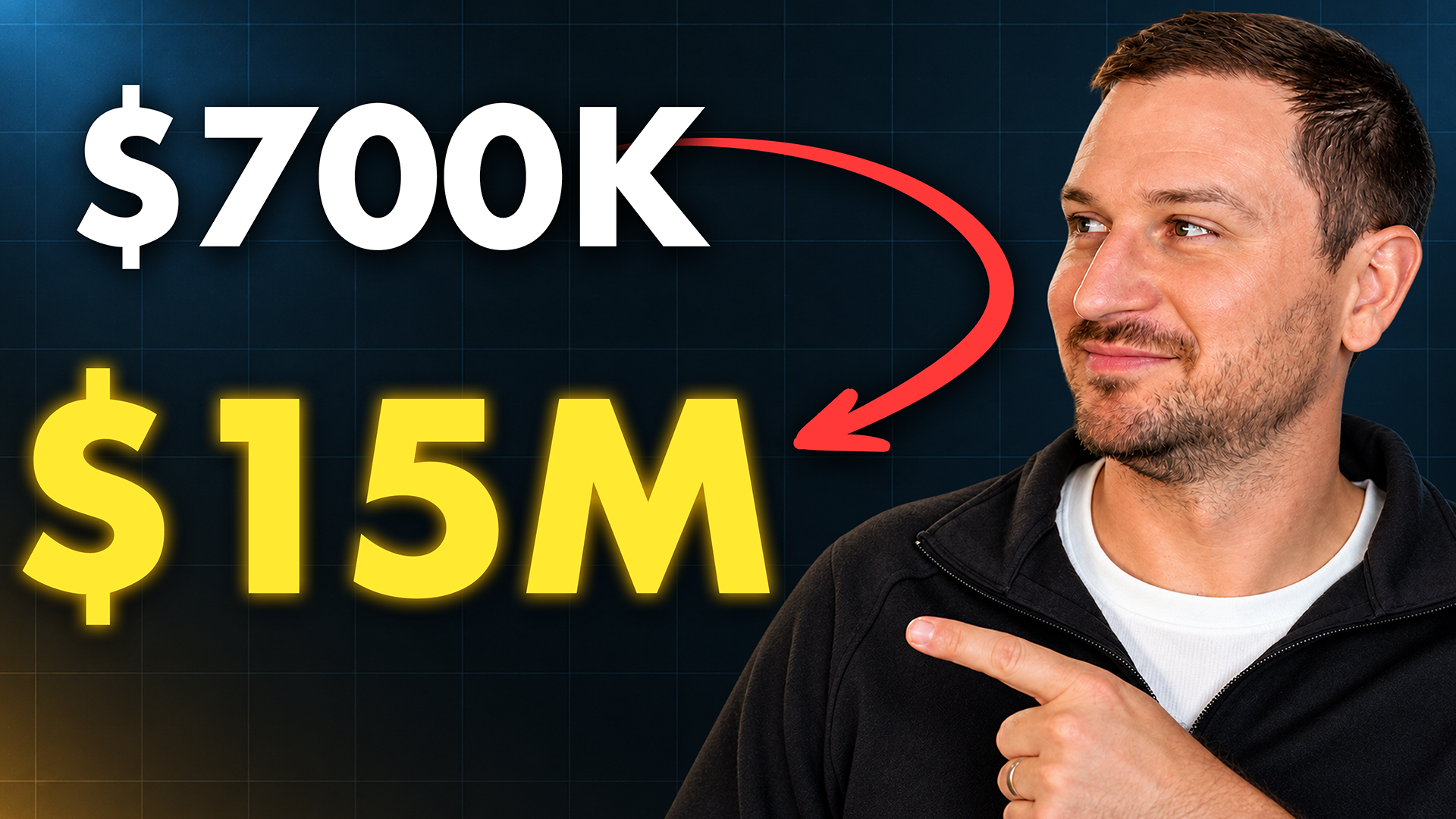
So when when the show started, it was it was selfish, right? It was I want to learn from people. The first um, I mean, I think we're on like ep, I don't even know what episode, 300 something, right? And uh the first probably 60 were with I'm gonna say private equity, but like it was private, not really like related to the trades. I was just trying to understand, like I was I was a plumber, right? Like I was a plumber that bought a small business. And uh our business when we started the show was like $3 million a year uh back in 2020, maybe four. Um, and like this year, I think we're pacing 90. And uh when we were bringing people on, it was like, how do I learn to acquire businesses? I had already bought a couple, but I was trying to level up my level up my game. And the show has sort of followed over this five and a half, six year time period, whatever my interest was in at that moment. So, you know, we've gone from the first 50, 60 episodes talking to people who built business through entrepreneurship through acquisition. So, like landscapers and roofers and softwares, like just who was buying stuff. Um, how are they buying it? How are they funding it? How'd they how'd they pull it off? And then um then it turned into like marketing, like how do you grow organically? And then it turned into how do you run multi-location? And that lasted a year or so because we knew that eventually we were gonna run multi-market. And um I back it then, it was like back to bringing on partners. And now like I'm I'm wanting to understand sales more. So I think that that's probably like a next evolution is like natural next step. What yeah, because I I think what happens like, you know, we have 340 team members across uh seven markets, and and this the sales, the there's just like a disconnect that naturally happens with an organization at that our size, where um I'm excited by like what you're saying, and like it's interesting, and I remember implementing that stuff into our business, and but like I'm not actively implementing it now, and I'm also not advancing myself and my own capability of understanding like how to drive better culture. Um, so it's definitely a gap. But then I'm I'm just like noticing more and more uh more and more in myself.
But uh Yeah, it's a it's a it's a good place to be to be successful and have some root real room to grow in your sales because you can just leave you can leave lead generation alone for a while and increase your ticket average and grow your business like crazy without spending another dollar on marketing and while bringing your marketing percentage way down, which if you're looking for a transaction at some point, private equity loves that.
Yeah.
Low marketing percentages on a growing profitable business.
A lot of what we're trying to do is like scale it. You know, how do we scale it across these different markets? And how do we um I think we're a little too far, we're a little too early to be thinking like consistency, but consistency of of training. I also think um I'm curious what your take is on this. So we're uh we're seven branches as of this morning. And as I think about um as I think about like consistency uh and like how do we bring this to bear? Like how do we train our team? How do we drive this like awesome sales culture that you're you're driving forward? Do you think that it can be programmatic? Like, hey, this is how we do things? Or because the way that I'm and I'm I'm I actually I don't know the answer. I'm really looking for an opinion. The the way I'm currently thinking about it is the GM or or whoever the responsible party is for like that group of human beings, like I think they have to have their own magic. And maybe there's like, hey, here's the one, two, three rules that we need you to follow, like minimum options, or like you know, whatever, like here's the pr here's how we're gonna measure your success.
Yeah.
But I mean, the the way that you're leading your team is unique to you leading your team. So I I I don't know. How do you think about that?
I think if you have if you have a process, like we use the GoPro process, which is essentially what I used when I was in a truck. It's what we it's what I train in on sites and boot camp and blue collar closer. If there is a process and there's accountability to at least all you can do from your seat is make sure that the process is trained a couple times a week in in the morning meetings, and everyone has access to it and has been trained fully on your process. And then the most of the accountability is conversion rate opportunity average, right? And that's the those are the main keys of accountability. But if there's like recording software that you guys are using in-house, you can just so easily get the numbers of did they offer promotional plans, the financing, did they ask the client to become an owner of the product? Why? Because the National Association of Sales Professionals, the NASP, uh, I think May of 2025, they put out an article with Richard Fenton, who wrote Go for No, which was one of the baddest little sales books on earth. It's like an hour and a half read. Their waste no day episode was longer than their than their audio book, which they and I thought was fantastic. Yeah. He he collaborated with them on this survey and article they put out that said coast to coast in the US, in all industries, on average, 15% of prospects or what we call clients, are being asked to purchase one time. So 85% of clients are never being asked to take ownership of the product a single time. And it's the and it is the biggest, it's the biggest thing keeping us from hitting our 85-90% conversion rate, in my opinion. It's number one because they're talking about real sales professionals, they're talking about life insurance and car sales and home sales. And I say real because these people have significant training in sales before they ever, yeah, before they ever hit the see a prospect. Whereas we're training up an apprentice to be a electrician or a plumber, HVAC tech or roofer or whatever, and we're just kicking them out there and saying, make sure you sell a lot. In most cases. Yeah. Yeah. So we're probably five, eight percent of our clients are ever actually being asked to take ownership of it. I believe it.
Yeah, so the R and I don't get to ride along a ton, but like in the few times I've like basically like two or three times a year, I get to go ride along. And get you, it's fun. Like it's honestly, I I think it's a good time. It's just uh, yeah, unfortunately, I I have a lot. I I haven't made the I haven't prioritized it. Um it's not that I don't have time. Everyone has time. I haven't prioritized it. Uh, but I get to go out two or three times a year, and that is consistently the it's like it's so obvious once you notice it. Yeah, you walk out of the home and it's like, oh, we didn't get the sale. And now, and you know, you give them this curbside feedback and you're like, Well, yeah, well, you didn't ask for it. Like you actually didn't ask for them to buy this. You just you just you just sort of left. Yeah, and this is what we do.
Hey, here's the options. I didn't realize it until a meant a mentor, uh a selling plumber who was kicking the crap out of me every month at Ken Gobrich's company. I was I was beating him one month. Like we both had two weeks of the month, and then he was on vacation for the third week of the month, and he gets back, and they they updated the whiteboard with all of our month to date numbers every every morning, and we're in the meeting, and I like elbow him. I'm like, this is my month, bro. Like, he took a week off, but I don't care, W is a W. That was his idea. Then I didn't tell him to take a vacation. And he's like, he looks at his wrist and he's like, according to my watch, we still got a whole lot of month left. He had a week, yeah, and I was working that week, so and I mean I was way ahead of him. Any freaking beat me, he caught me and then passed me, and I couldn't catch him. And I even worked like the weekend that week to make sure. And he was just so much better than me. And I came to him like the next week, and I'm like, bro, I need help here. I don't get it. Like, if you were me, what would you do to beat you? And he said, Man, and he complimented me and he said, You're you're kind of a natural, like people like you, people like being around you. You're a natural leader, people will follow you, they'll take your recommendation. And he said, You have a million dollar smile. He's like, I don't have that, but I'm gonna always beat you at this because I ask every person I present to to buy it, and you don't ask anybody. Now, there was no Rilla or Field Spark or C Row or any of that, yeah, and he'd never done a ride along with me. He just knew, and I'm like offended. I'm like, what are you talking about? I asked everybody to buy it. He's like, All right, tell you what, let's take a couple minutes, sell me a whole home filtration system, like a activated carbon system, right? And I'm like, all right, cool. I get my pen and my notepad, I pretend to test his water, and I write up his three options, then I slide it forward and I explain each option a little bit, and I'm like, and Mike looks at it and he goes, dude, that was freaking good, man. Like that was way better than I thought. And I'm like, thanks, thanks. And he's like, Are you gonna ask me to buy one? I was like, shit, I thought I just did that. I didn't ask him to take it. I just yeah, it's what I always did. I presented the options, I showed him each of the options, and then I backed up. And some people said, Cool, let's do that middle one, right? And then the majority of the time, people just said, these are nice. Yes, give us a couple days to think about this. If you could just go ahead and put your cell phone number on the back of your card there, so we can avoid talking to the office, and we'll just call you directly and get it scheduled. And I'm like, Yeah, no, okay. And that's what I did. And He said you had me really excited while you were showing the options. If you could get me to pick one and then commit to and then ask me to buy it right there on the spot, I'm probably going to.
Yeah.
But if you just leave me an alerts right there when I really need you to take the lead, I'm just going to tell you I got to think about it. And that's what your customers are doing. And he was right. So I had ridden with him and seen him do it, and he was pretty assertive. I mean, I was like 24, 25 at the time, and weak and very intimidated by people with money. I'm sure you've been to Detroit. It's not, there's not much money there. So being around these rich people, I was I felt like they were better than me, they were smarter than me. What right did I have to demand anything of them? You know. So I knew I needed to create a a buying question, but it had to be soft enough that I would actually do it, even on like your high-level CEO D on the disc profile people, but effective enough that it would make people say yes. So I I designed a question. Hypothetically speaking, sound good. This is how we shorten the question up, but I just go, John, hypothetically speaking, if you were to pick one of these three options today, which one do you think you'd lean toward? I mean, obviously middle option, right?
Like that's what I'm supposed to say here.
That's a that's a great option. More and more of the people I serve are choosing an option just like that one. Probably the one I would have chosen for you, frankly. I have I have most of this stuff in the truck right now. I can go ahead and get started. If there's anything I don't have, I'll have a shop tech drop it off to me and give me a hand, throwing it in. I'll have this thing back up and running before you guys go get the kids from school. Does that sound good? And then just raise the eyebrows, crack a smile, and start nodding. And there's times I felt like I nodded for a year and a half. It was probably like 90 seconds. But I would just sit there nodding with a smile until you until you said yes or no. Because and when I added the sound good part and stopped just saying, uh, do you want me just go ahead and knock it out? When I said, Does that sound good? I think I did it on accident the first time, and the and the people said that does sound good because it does sound, it sounds great. Like you had no idea what delivery actually looked like until I'm giving you all of the details, which is a very big part of it. And then I don't say a time, like I'm wearing a watch, but I'm not I'm not using it. I'm not gonna say by 2:30, I'm using an event that's gonna put a picture in your head of like I might say, I'll have it done before you guys sit down to watch your favorite show, Mobland, tonight at seven. It's what they told me earlier. So I'm using something they told me earlier, and I say, before you guys sit down to dinner. Because I'm creating an event, they're gonna see the event in their head, and now they're seeing me packing up and leaving and all these new products installed. And it sounds, it might sound like I'm doing a bunch of things that don't matter, but I pieced this question together over years and years and years. This was probably 05 that I started with asking and then eventually used hypothetically speaking, lean toward because I'm just trying to get you to eliminate two options, and I don't care which ones they are, just get rid of two of them so we can focus on one because you just made a decision. If you said probably the top option, then I'm like, great. And then I explain exactly what it'll look like to get it installed. Maybe it's tomorrow, maybe it's next week if you're a comfort advisor. I can have our install team out here Tuesday morning, they'll be here between seven and eight. They're hustlers, man. They they move a lot faster than I do. So they'll be in and out, spotless working area, everything cleaned up before your wife even gets home from work. Does that sound good? And I just wait for you to respond. And if you say that sounds great, then I'm like, all right, let's get you on the schedule. And I'll, how do you want to take care of the 50% or you know, whatever, whatever it is. We just move forward because it it does sound good. I've I've even had people say no that are sitting there nodding with me. They're nodding. Yeah, yes.
This was something I learned from our our director of uh field marketing. And he it's called uh he calls it an assumptive closed, but it's uh and he what is he called? He calls that a chicken nod. So like you just start doing the nod, almost whatever. And like I have to, whenever I'm talking to him, I I just have to like clock that in my bread brain that I'm like, he's gonna start chicken nodding at me, and I have to like I have to nod chicken nod back.
Keep yourself from doing it.
Yeah, because like if you're making eye contact with someone and you just start nodding, like they're just going to start nodding.
It's they're not doing this from boot camp stage. Yeah. And it's just like 85 people in there, and there might be 20 people in the front row, and I'll sit here and look at the whole front row. And as soon as they're all in contact with them, they start bouncing their heads. The only people who don't do it are people who have been to boot camp before and know it, and they'll just sit there smile like that's hilarious.
Yeah, he um, but he gets me with that every time. He just started it's the assumptive closed chicken nod. So he's just like, you assume you're gonna close it. Hey, that sounds good, right? Yeah, that is funny. That's funny.
I how that's the R and Go pro request ownership, and then yeah, objection discoveries after that. And that's where you you get a no, right? You did everything right, but they said no, and then now we're gonna work on bringing them back around to a yes. Yeah, and we're gonna ask a couple more times. It's gonna get in the beginning when you first start doing it, it's gonna get a little uncomfortable, especially if you're kind of naturally more go with the flow, like I was for sure. I don't want to, I didn't want to ruffle any feathers, like where I grew up. The nail that sticks out gets hammered. So I just learned to keep my mouth shut and make everybody happy. And that's what I wanted to do in a truck. So the way my process is built, it's built for that. It's built knowing that I was non-confrontational when it comes to clients, and I did not want to piss them off, but I'm still going to present everything that should be presented. I'm going to ask them to take ownership of it. If I get a no, I'm going to work very hard to ask a few more times and turn it into a yes. And I'm going to do all that, even if they don't end up purchasing, I'm not going to get kicked out and I am going to get a five-star
review. Your earlier question, I never finished because I distracted myself like I do. Uh, selfish reasons for starting waste no day was the second time we locked everybody out, we had like a revolt. They were like, no way. Because the the morning meetings are kind of what makes this place special.
Yeah.
So Nate, my co-host, just said, I'm gonna. We had been talking about maybe doing a podcast for like two years or something.
Yeah.
And he's finally just like, I'm gonna go in the conference room at nine o'clock tomorrow morning and I'm gonna record a podcast. You're welcome to join me because I was the one holding it up. Like, all right, I'll be there. And we were just gonna release it on. I think we were just gonna put it on YouTube and send all the text to the link. So once a week, we were just gonna interview one of them, bring one of them into the building, interview the tech, and then I was gonna do my sales training like I did every Monday and Wednesday morning. And we were just gonna release it to them. And Nate found Podbean, which for nearly free, you put it on Podbean, and they distribute it to all of the apps, so it immediately was just going out everywhere. And then, man, I used every sales skill I developed over my lifetime to get Tom Hopkins on the show and Tim Kennedy, and then Brian Tracy, and then Jocko, and Brian Smith, which was a cool episode. He's the founder of Ug Boots, and you wouldn't think this would fit our niche, but it's one of the coolest business stories I've ever heard, and it was like a perfect fit. And then I got I got this bookshelf right here. Every everybody on this bookshelf has been on the show.
Oh, that's cool.
Yeah, except uh I would say the Bible's there, but Nate says he's on every episode, yeah. Yeah, so we we've had all those authors on the show, and I use all the sales skills I developed to figure out how to get people like Chris Voss on the show. It's all salesmanship because we didn't have like back when we got Tom Hopkins on, he was our like 48th episode, we didn't have any kind of audience yet, you know. He helped us build an audience, but I just sold and sold and sold and get these people on. But in the beginning, it was just so we wouldn't have a mass exodus of people who were upset that we weren't having morning meetings anymore. And then as the audience started to grow, I was able to start reaching out to people and saying, hey, we have X number of people listening to this show. You have a product to sell. We don't we don't do affiliate deals or commissions or anything. We're happy to let you promote the product or your book or whatever, but just come and do an hour of training. And that's what they do. So Dr. Robert Cialdini, who wrote uh the book Influence, got to have breakfast with him down in Tempe. He's uh also the head of the psychology department for ASU.
Yeah.
So I said, uh he emailed me back and he said, I'd love to maybe have an hour Zoom conversation where we can talk about what you want to do with your podcast episode. And I said, Look, I'm in Desert Ridge, North Phoenix. You're in Tempe. I'm happy to come down to ASU and just meet you for breakfast one day. He's like, sure, let's do it. I'm like, what? Like, I've been listening to this book since like oh five, you know? This is crazy to me.
Yeah, that's well, I think that this is back to just like do something interesting, you know. Like at the beginning of our episode, it was like, you know, you get people to talk to you that are inspire you when you've got something to share that you're doing. I interesting people like to talk to interesting people.
Yeah, we just we've just been super lucky with getting cool guests on the show, and then keeping it keeping it so like we'll have like Aaron Hagan is this week's Waste O'Day episode. He's the he's the owner of the the biggest Mr. Sparky. They're gonna do 80 million this year.
That's crazy.
And it started with his dad owning a little company that he and his brother were electricians for. And then his dad retired, and his brother said, I don't want to do electrical anymore, so he rolled. And then it was just Aaron, and now he built it into this six-state 80 million dollar juggernaut, hitting mostly electrical maintenance costs and just selling club memberships and doing you know, ridiculous profit because electrical is so much more profitable than the other two. Yeah. So we still build it for so that guys like yourself and I will get something out of it in our positions, you know, with uh ownership in companies and leadership roles, but also we've never taken our eye off the ball of what how we snow days start. It's for the tech, it's for the guy running calls today.
Yeah.
Sales focused primarily owner and manager episodes here and there, but mostly for for the guys in trucks.
Yeah, I think that's I think that's cool. Um needed. I mean, I think you're doing a great service to the industry. I think our uh we're obviously like we are for the owner. I'm sure some techs listen to us, uh, but we're really for the owner, which I'm sure a lot of shows are. But just like, hey, here's often it's just like my story throughout like what we're doing. Like, here's the thing we're working on, or here's the thing we're trying, or maybe here's the thing we learned, or here's the thing we totally fucked up.
But yeah, it's great too, because the most of them are for the most of them are for the owner, but the percentage of owners who will listen to a podcast like this versus techs is much higher. It's yeah, all not all the techs in this building listen to Waste No Day, but the but owners are like thirsty for for knowledge, and it's great that we have so many because I mean you guys and Tommy and Christiano and Chad Peterman and Yeah, uh it's a good cohort. Tersh, Tersh and Josh, and the guys who put out the shows that I actually listen to, like you're all doing one a week. There's a there's some what 168 hours in a week. I mean, I don't know what I'm gonna sleep six and a half hours a night. So, and the rest of the time I want to be listening to things that are making me better behind the desk that I'm sitting behind right now. And yeah, and I you can go back four or five years and listen to listen to some of the owner shows, but it's like, dude, that's a different world. Like 2022 to 2026, yeah, owner shows it is different, it's barely the same language, so it's great that there are so many people putting out here's where I'm at now, and here's what I'm doing right now. And yeah, little six million dollar companies like ours here can learn from it and be heading in the right direction.
Yeah, I mean, I think I think it is cool. Like, I I I w the re the resource it owned and operated again is the resource that I wish that we would have had 10 years ago. Like, if somebody would have just told me that there was a podcast out there where the guy started podcasting at 3 million and was still podcasting at 90, they're dropping two up two episodes a week for five fucking years just along that whole journey. You'd be all over it. Dude, there's a roadmap to 90 million on the internet for free. Yeah, like that's insane.
Nobody's at 90 million listening to this show. So this is uh this is a blueprint.
Uh yeah, it's crazy. It's crazy.
I mean, what is it like less than one percent, probably one-tenth of one percent of home service companies are getting up to yeah. Yeah, it's it's crazy. It's nearly absolute zero of the people listening to these shows. So we should all be listening notepad in hand and helping ourselves get to the next level. I want to say something before we roll. Really appreciate you having me on. Thanks for coming on. I try to remember to say this to anytime I get on a show. I don't know why, but even still today in 2026, if John's going after a higher level guest, somebody like a big author that that we all need to hear from, like a Jim Collins or something like that. The first thing their gatekeeper does is open Apple Podcasts and looks at their reviews. And they want to see two things they want to see a lot of reviews and they want to see a high score. So I don't know how many reviews you have right now, but I guarantee not 10% of the people who are hearing my voice right now have left a review. It it takes you 10 seconds. So go to Apple, open the podcast app, click the five-star, click write review, and just say one thing from the entire time you've been listening to this show that owned and operated has helped you with. Anything, it can be the smallest tidbit, but just write a review stating that it has helped you in some way, shape, or form. And I I can promise you, you're doing a service to the show that's gonna help it get bigger guests on. Because that's what that's what they look at. So jump in there, open the app. I'm gonna do it right. I think I've already left your review, but I appreciate it.
Well, thank thanks for coming on today and spending your time with me. This was awesome.
You bet, man. It was a good time. If you want to hear from me, know more about me, yeah, boot camp, have me train your team in an on site blue collar closer, waste no day.com. Everything's right there.
All right, we'll drop a link for that too in the comments uh and make sure everybody sees it. Well, thanks for coming on and everybody leave that review. Makes my mom proud. Yeah, hook them up.