

How do you manage marketing across seven HVAC and plumbing companies generating $75 million in annual revenue?
John Wilson sits down with Cory Creekmore, Marketing Director overseeing seven home service brands, to break down the strategies behind scaling lead generation, building referral programs, and growing HVAC and plumbing businesses across multiple markets.
They discuss how smaller locations have nearly doubled in size, why marketing a $5 million company looks completely different from marketing a $25 million operation, and how a referral program is generating an estimated five referrals per branch per day.
Plus, how to allocate marketing budgets, decide between building one unified brand or keeping established local identities, and shift spending away from underperforming traditional advertising toward measurable lead generation.
Whether you're running a single HVAC or plumbing company or managing multiple locations, this episode breaks down practical ways to generate more leads, lower customer acquisition costs, and build a marketing strategy that scales.
━━━━━━━━━━━━━━
In This Episode:
━━━━━━━━━━━━━━
• How to manage marketing across 7 HVAC and plumbing businesses generating $75M
• Why marketing a $5M company is different from a $25M company
• Building a referral program generating roughly 5 referrals per branch per day
• How smaller HVAC businesses nearly doubled through better marketing
• Where to allocate marketing budgets and when traditional advertising stops making sense
• Centralizing marketing across multiple locations without losing established local brands
• How Google reviews, Local Services Ads, and AI search are changing home service lead generation
• Using local partnerships and community events to generate leads beyond digital advertising
━━━━━━━━━━━━━━
Sponsors
━━━━━━━━━━━━━━
Avoca
See how Avoca helps home service companies book more jobs with AI that handles calls, texts, follow ups, and dispatching without adding more chaos. Book a demo: https://www.avoca.ai/partners/oao
Service Scalers
Get more high quality leads with marketing built for home service companies. Book a free strategy call with Service Scalers and see what's driving real jobs:https://www.servicescalers.com/?utm_source=oao_podcast&utm_medium=referral&utm_campaign=podcast
Big Reputation
Get more from your Google Business Profile with Big Reputation. Automate reviews, improve local visibility, and turn more Google searches into inbound calls. Learn more: https://www.bigreputation.ai/oao?utm_source=oao&utm_medium=paid
━━━━━━━━━━━━━━
Connect
━━━━━━━━━━━━━━
John Wilson
https://www.linkedin.com/in/johnbwilson1/
Cory Creekmore
Marketing Director, Cassidy Services Partners
https://www.linkedin.com/in/coreycreekmore/
━━━━━━━━━━━━━━
More Ways To Connect with OAO
John Wilson, CEO of Wilson Companies
Jack Carr, CEO of Rapid HVAC
📌 Disclaimer: Some links may include UTM parameters or affiliate relationships, meaning we may earn a commission if you make a purchase. Episodes may feature sponsors, but all opinions expressed are our own.
To grow the $25 million company, you have to either move out that service area or you do tuck ins in other areas and kind of push out that way.
That's what you're missing is like you can scale branding.
I think it's important as well to keep some of the stuff intact, the teams there, or if a company's been doing something for so long, it'll almost hurt you to stop doing it. It is complicated. If it was under one unified company, it would go a lot further. And I can do a lot more with that.
What do you do when you go in and they're just doing something that is like nonsensical?
I said, look.
Welcome back to Owned and Operated a Top Hundred Business and Entrepreneurship Podcast. I'm your host, John Wilson. And on this show, we talk about the home service industry, buying businesses, building businesses, and everything in between. Before we get too deep into our guest, which this will be an awesome topic today, I want to make sure we talk about our catalyst event next May, third to the fifth. We're beginning around 100 operators into Akron, Ohio, and we're going to be unfolding basically how did we get from 1 million to 100 million. So it should be an awesome time. Look forward to seeing you there. Make sure you check out ownenoperated.com for more information. Today on the show, I'm joined by Corey Creekmore. He's the marketing director, overseeing seven HVAC and plumbing businesses, totaling around $75 million of revenue. And we're going to be diving into multi-location, referral marketing, and a ton more. Thanks for tuning in. Corey, welcome to the show. Thanks for coming on. Thank you, John, for having me.
It's an honor, man.
Yeah, this is going to be uh this is going to be a lot of fun. I I I knew that you were going to come on the show today, and I was surprised at sort of the the business as I am reading my notes here. So I would just love it if you walked through uh the business, your role in the business, um, and then we can start diving into our topics here.
Yeah, the business overall, uh Cassidy Services Partners. We have seven brands under us um actively looking as well, so growing an MA, but uh marketing director for all seven of these. And uh yeah, I've been here over a year, year and some months now at this point, but uh super fun. Um yeah, yeah. What was your background prior to that? I worked in home services two years before this, but it was in like a niche market of water filtration, and I really enjoyed that side of it a lot, and that kind of pushed me more to the I look at it as traditional home services on the HVAC and plumbing side. Before that, I was in niche B2B concrete equipment marketing, so that was a fun time. And then before that, I worked in music for eight, nine years.
Got it. Okay. And what was the um I I you know, people from that have like work through marketing, like they generally have a specialty. Was it like performance marketing or uh like mine was uh affiliate marketing? So like he drove um all of our like initial SEO and everything because like that was his background, was like affiliate marketing in the 2010s.
Mile was always lead generation, and I say that I feel like my my marketing journey has funneled me to that. Very early on, I was very lucky to have a mentor, and they always push me to worry about the leads. And I feel like in marketing in general, it's typically gonna always be about the leads. So I've always came from that perspective. So lead generation, um, lead marketing, in a sense, has kind of always been my specialty, no matter if it's traditional marketing, uh, digital social media. I've I've always kind of honed in on that. But as I grow in my marketing career, now I'm I'm looking more into the strategic partnership side of it and the activations on site and branding and looking at leads that way instead of that digital
side.
Yeah, can can you explain that a little bit more, the activations on site and just walk me through where your head's at?
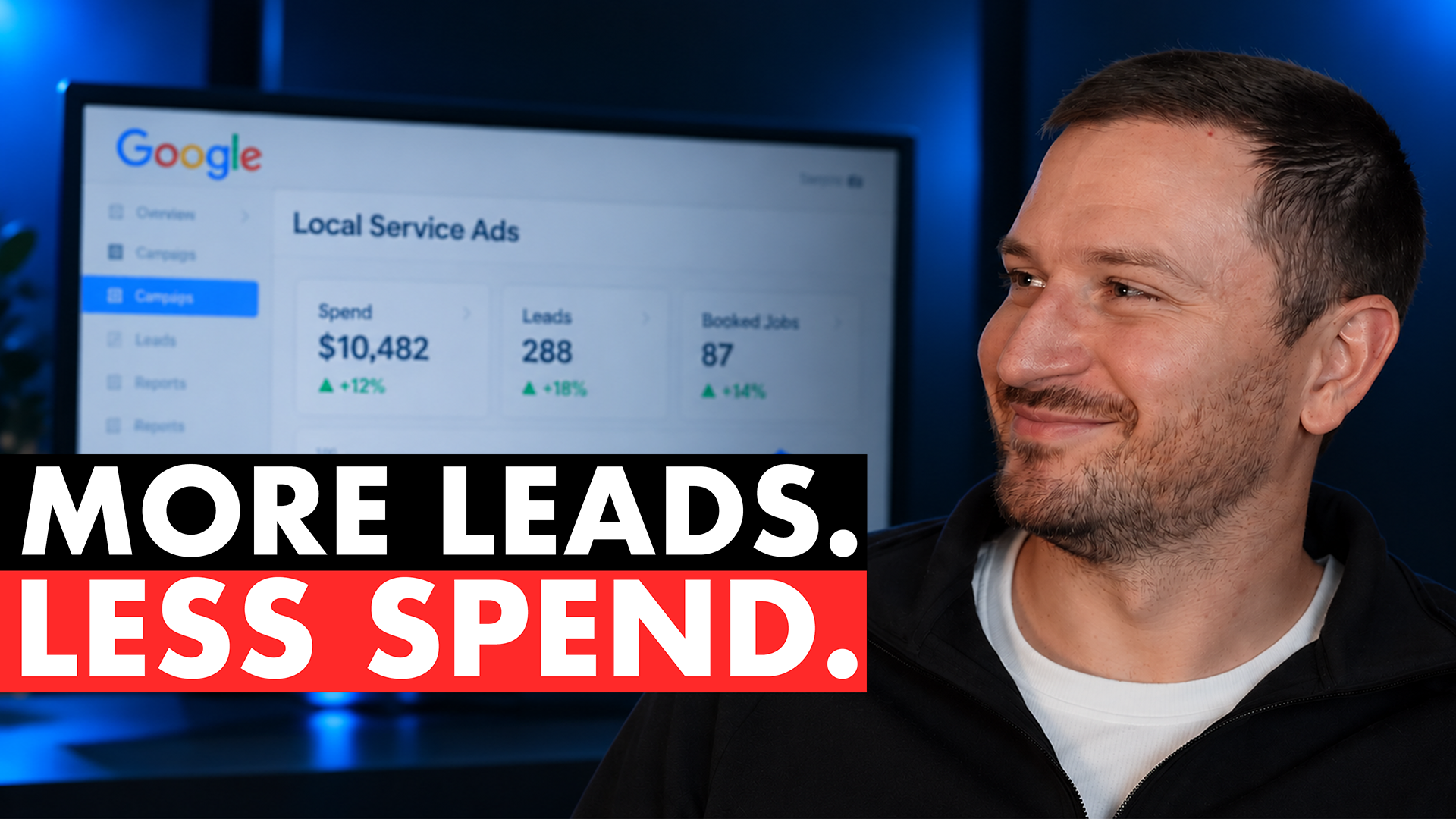
So obviously in the HVAC space in Florida, it's a very competitive market. So, me as the marketing director, I'm like, okay, how do we stand out from all these other companies, whether it be, you know, some of these larger companies, I look at as like, okay, well, if we focus a little bit on branding, it's it's a little bit harder to track at first. But if we're doing activations on site, we can track it easier that way. And you're also going to get a lower cost per lead, typically, especially in our market on digital Google ads. Obviously, you want to keep LSA. So in this space, I'm I'm looking at branding and seeing how we can be smart and separate ourselves from the competition.
How do you think about that? Because you're, I think you're in kind of like a conventional uh or maybe not conventional, I don't know who owns what, but like you're in like a roll-up structure, which I would think is optimizing around EBITDA and tends to be optimizing around EBITDA in a timeline. So, how do you think about branding with like that context?
It's I just kind of so obviously on the private equity side, I I look at it as like as long as I don't hear anything, I just kind of run with it. Um, whatever they decide six months from now, a year from now, yeah. I don't, I can't be bothered with it because I don't know what's gonna happen. Um I I still just push. Obviously, my job as the marketing director, costs per lead, get those down, and leads as a whole, bring them in. So that's my worry. So that's kind of how I look at it, anyways.
All right, so branding's a big focus for you. And what does activation mean, just so I understand it?
On-site activation, where either our our comfort advisors are on site, our CSRs, I try to get everybody from each location involved. I I feel like that brings um some happiness just involved with it, you know, whether it be at live nation shows, baseball games, things like that. Uh, get the people who are actually directly involved with the businesses there asking for form fills on, you know, what renovations people are doing with homes, things like that. We we do cool things where if a home runs hit, you'll get a free membership, we'll give away to someone local in the crowd, things like that. Um, yeah. That are that are just a little bit fun, and we get customers' information that way, and vice versa.
You've probably been pitched a dozen AI tools a day by now. And most of them sound really great until your team actually starts using it. The one that I continue to come back to is Avoka. They built their platform specifically for contractors. It handles inbound calls, follow-ups, texts, web leads, dispatching, and even CSR coaching all in one place. If you're on ServiceTight and the integration is rock solid, no duck taping together five different tools. What I also like is they're realistic about what AI can and cannot do. When a customer needs a person, Avoka has 24-7 live transfers built in, so nothing's gonna fall through the cracks. And the payoff is that contractors are seeing whole times disappear and booking rates increase by as much as 30%. If you're serious about using AI to book more jobs, check out Evoka at the link below.
What what's the like largest branch versus smallest? Our business is like uh for perspective, um we're slightly larger as of last week. And I think seven location so like very comparable, very comparable. And I'm thinking through our branches. So like we have a branch at 25, uh, 12, 2.8, what's the other one? 11 and 6.
We're roughly about the same. Some of ours are a little smaller. Our largest is around that 25 to 30, our smallest is around 3.5, but we have some that are in that 7.5 to 10 range. I think we have two. Um, and then the fourth is not lagging too far behind them, but it's roughly in that that same. And it's just the markets down here are uh, you know, especially on the west coast, and Fort Myers is one of our smallest locations, and then another one in West Palm. It's just very competitive. So navigating that is is um a little tricky, but our largest and smallest are in the same city. So coming into that as well, it's it it's two different customer bases essentially that we're going after. One has been there around since 1960, the other one uh has been around since the 90s, but they they typically will go to a um, it's a different customer market, I guess.
What what are the market like what do you see as the marketing differences like in need between like the five million and the 25 million?
The 25 million is a lot of uh customers who have been doing business with us for a while. I would say on the $5 million side, you're still in that I need to get everything phase um of whatever marketing you're gonna be doing. You're you still want to be strategic about it, but it the dollars still need to make sense. Uh on the $25 million side, obviously on the branding, I have a lot more to play with, a lot more I can do. And then I can not focus as much on our digital and other things. So there's a little bit of difference in that. And then on the customer side, it's a lot more of legacy customers. We have a VIP client list of maybe two to three hundred people. Um, they have a dedicated phone line, um, they have multiple homes, maybe they're snowbirds as well. So we we try to offer them solutions while they're not in the home, too. So there's some differences there as well.
And like marketing spend by branch, is it roughly the same, like six percent or seven percent or no?
Uh everyone's uh everyone's different. So it's I would say down here when I'm about three and a half to five percent typically. Um and I I play with it a little bit depending on on what the strategy is per branch, uh if they're in a growth heavy mode, depending on what the budget is for the month, uh how much they're gonna grow percentage-wise, things like that.
And then like technology differences. What do you mean any or like so I'm we're gonna go to the case?
So we have like I'm yeah, so I don't know.
So I'm I'm trying to imagine we have these different pain points. I'm assuming you probably do too, right? So like we have a branch right now that is uh five or six million bucks. And do that call board, like I I think we spend like one percent on marketing. Like it's just like uh honestly it's sort of a problem. Like we need to be recruiting and like and pushing and all that stuff. Yeah, uh, but then our 20, but then our 25, 30 million dollar branch, like it just takes more energy. Obviously, there's more tax, there's a hundred tax versus 20. Like, okay, got it. Um, but uh like do you feel like your 25 is still growing strong? Do you feel like you're hitting headwinds? Has it have you had to adapt how you've marketed over time? Uh because I'm just I'm trying to think through like just in my own head of like, hey, we've got these tens. What am I gonna have to think about at 15 to 20 as we move past, you know, and what's gonna change? And is it maybe like more branding?
Understood. Yeah. So we we chat or we face some challenges that way. I I feel like this year especially has been a very weird year for us in the market. Uh, the weather down here, we we faced a little bit of that. But I've I've gotten, I wouldn't say lucky in a sense of the legacy brand. I think a year before I got here, they really just started pushing Google, you know, business reviews. So I I came in a spot where there was a lot of low-hanging fruit that I could kind of take advantage of. Um, it was a customer base that rich as well. You can just kind of dig into that customer base and you know, just get some some text out through Service Titan, whatever it is, you you can get some reoccurring that way as well. So there was a lot of stuff I I feel like they there was left on the table for them. And some of our other branches that were introducing some of this to that they're smaller at some of those locations. We've seen them almost double, I would say, in size since we took them on here in about a year or so. Our location, Craig W. Kruger, they're in uh a more rural part of Florida and their customer base. You know, it could be uh it's a mix of like trailer parks, homes, things like that. Uh, but we've seen them essentially double, just kind of doing what we're doing at the $25 million company is like that low-hanging fruit that they've never really even thought about. You know, when I came on, they were doing marketing in, you know, the neighborhood magazines, newspapers, things like that. And we've kind of overhauled them a little bit.
Are the is the bigger branches easier to grow in your mind?
No, no. I feel like because it always takes so much, it's like that comparison of what does it take a car to go 200 miles an hour to 220 miles an hour? It's gonna be so much more work to get it to that point. And that's how I look at the $25 million company, unless you're doing MA, there's obviously those strategies to it. But to grow the $25 million company, you have to either A push out your service area because there's only so much if you've been in there for that while. There's only so much I feel like you can do, and you you tap out to a point. So there has to be um, you either move out that service area or you do tuck-ins in other areas and kind of push out that way. That's how I look at it.
What what tech what type of technology have you like scaled across the business inside marketing?
The refer pro. Referral pro has uh done wonders for us. I started that in April and I wanted to rank Okay of this year? Yeah, of this year. So I brought that on beforehand and Contractor Commerce as well. Not sure. I think uh you've worked with both of them before, right? Yeah, yeah, yeah. Yes. So refer pro, we both we started them around the same time. Refer pro, I I learned about them through your podcast, maybe contractor commerce as well. But in April, I wanted to have something set in place that I could have by May. So during summer months, we have something to focus on for the sales team. I've been in organizations before where referrals are a huge part of it. Um, we would get, you know, thousands of referrals a month and we didn't have one. Yeah. So I said this is perfect for that.
Yeah. And you drove that into every branch?
Every branch.
Okay. Like how did how did it go?
So I went on a uh a tour pretty much of Florida for a month, just onboarding it for everybody, showing it um how it works, everything just yeah, you have to drive it into the techs and yeah. Yeah, yeah. So it's a very um once you it it's repeatable, I I feel like. So in certain areas, others are gonna catch on a little bit more than others. For the larger organizations, I feel like it caught on a little bit less than the smaller ones because I'm having to deal with you know, 50, 60, 70 techs instead, and getting the attention of a room for an hour and a half sometimes is a little um harder. But it it's came around. Obviously, we're about six months, six and a half months in at this point. Um, it's pretty much caught on. The customers are now caught on as well. We're setting up affiliates with that too. So it's it's been really nice.
Yeah, that is really cool. What uh do you like any idea um of how many referrals per day are we? I'm trying to imagine like what that would look like.
Roughly, I would say maybe five per branch per day. That's a lot. Yeah, I think so. I how I I really instilled it with the sales guys first before I did the service text. So we don't have selling text, we have the comfort advisor model. And I told them, I said, hey, every sales call you go on, whether you sell it or you don't sell it, you might have three, four potential leads in that home that you could call on after. Um, so I really instilled it in them first and then worried about service afterwards. Um, I sales guys, you know, if if you're working off 100% commission, I'm trying to find the most possible or the best outcome for them as as I can as a marketer as well.
So yeah, that makes sense. What are the offers that you used, or like how did you drive the referral? Because it feels like um that's an important piece of the puzzle.
Yeah. So we we started off pretty strong, 25 for a membership. If they refer someone and they they end up getting a membership, that's $25 for them. Uh service over a thousand, uh, you get $100. And then if you refer someone who buys a new system, you get $250. So it's very simple.
And that's what you started at. Are you still doing the same thing?
Still doing the same thing. I I think next year we might do some different stuff. I want to get a little creative with it. Um, yeah. Whether that's I gotta see, I gotta see how we're gonna work it out. But I I wouldn't mind paying off people's systems if they refer so many people to us and they end up buying systems. We'll just pay off your system and maybe use that as a good referral tool as well.
Yeah, like do you think you'd pay it off or like win a free system?
It might be win a free system. We'll have to see. But I yeah, we're doing some raffles also next year uh through some of our partnerships and some of our uh foundations that we work with. So I yeah, I might do some cross-promotional stuff with that. We'll see. But yeah, yeah. How close are all the locations to each other? I could probably drive all up to all of them in a day. So I'm in Orlando, I'm right between the middle of all of them. Um, so you have West Palm to Delray, which is about 30, 45 minutes north, and Nissaire, Fort Pierce. That's about an hour, hour and a half. And then on the west coast, you have Brooksville, Spring Hill area, which is the furthest out there. That's the more rural one, and that's about an hour and a half north of our one in St. Pete, Florida, and then we have one in Fort Myers. So it's it's kind of along the middle of the state, but on the coast a little bit.
Yeah, I mean, you'd be able to drive out there all in the same time is is pretty cool.
Yeah.
Do you think um do you think you'll be centralizing, like you probably will never centralize brand?
I know it's been on the table. I I'd be open to it. Like when I first came in, I um I was kind of that way. I was like, why don't we just do that, centralize everything? We do have a centralized phone system now. Um we're working on central centralizing dispatch as well for all locations. Um, but as I kind of get into it a little bit, I think it's somewhat important to keep some of these brands around. You know, granted, they are smaller. Um, the one in in Fort Myers, BB, they've been around since 1970. And Atlantic uh down in Del Rey, funny story with that. So they worked at golf courses exclusively before we bought them. And they worked at golf courses exclusively just so the owner could like play for free. So they never worried about residential. So now I'm having to worry about getting them into a residential market, but they've been around since 1965. So it's like it's a legacy brand, but not as much as you would think. It's almost like a startup essentially.
Yeah, I feel like um that's something we are we we've consolidated a lot of brands. Um right now we're running six, and um I see the power, but I also like do think that leaving the brand intact is good. You know, it is really disruptive. Yeah, but it would be fun to be able to scale branding. Uh, because I I really think like that's what you're missing is like you can scale branding, and then I don't know how to measure like how important or not important that is, but like it feels up there.
I see it sometimes. Well, I when I think about that, just from the marketing dollar perspective of I'm having to split it all these ways. If it was under one unified company, it would go a lot further, and I can do a lot more with that. But I I think it's important as well to keep some of the stuff intact, the teams there. Um, you know, great people, you know, at all these locations. So it's I get the sense of of wanting their own brand and building out what they've worked at, you know, for the last 10, 20, 30, 40 years. Um, we have a guy at John C. Cassidy at our our anchor location in West Palm who's literally been there 50 years. Whoa. Yeah, as a sales guy, nonetheless. Yeah, yeah.
So we we went multi-location a couple years ago, and then we went single location, and then we went back to multi-location earlier this year. So we ended 2025 with one location, and right now we're at six or seven.
Wow.
And um, so a lot of it is like us just figuring out like what do we think, you know, like what do we think about this? Uh what is how do we deploy technology across all of them? Which ones do we need to deploy technology across all of them? And it is it is complicated. Um even like our speed delete, like our speed delete is not fast to deploy across wherever we need it, which like you kind of need to be fast because you want to activate more lead sources.
Yeah.
Um or another one was like SMS. Uh like I well, how how you said you took a month to implement refer pro, which that's all SMS. So, like, I mean that sounds pretty quick to me. Because like some of this other stuff is like months. I've wasted a lot of money on marketing agencies that made pretty reports but didn't make the phone ring. And that's why we use Service Gailers at Wilson. They work exclusively with home service companies and focus on what actually drives leads PPC, local service ads, SEO, Google Business Profile, and everything you need to get in front of homeowners who are ready to book. The best part is that you know exactly where your money is going and what's producing real jobs. If you're ready to stop guessing and start getting better leads, head to the link below, book a free strategy call, and let them know that owned an operated sensu.
Yeah. Well, a lot of it too. Like I I look at things that you can either A automate or take off some of these GMs, the office managers' plates, because they have so much that's that's going on. So much, yeah. And everything's changing on a day-to-day basis, you know, on the business side. So it's I try to think of ways to obviously make it easier on them, but also they have to get involved with it and know what's going on with it as well. But with the centralized call center as well, that kind of helps some things out, whether they're all at one location. Um, but just you know, I I felt like coming in, that was another thing too. Obviously, me being new to the companies, I wanted to show them, hey, I want y'all to be involved, being open about this is what we're gonna do for the next year. This is what the outlook is. Any changes, I'm gonna let y'all know. But yeah, no, it is some people take it on a lot easier than others. And I it's crazy nowadays, just how people still aren't comfortable with computers in some of these businesses, man. And I just don't get it, you know. But yeah, it's been fun.
Um, when you guys come in, you centralized marketing pretty like I would assume that's like a day one or day 10 operation.
Yeah, centralized marketing 100%. I pretty much came in overhauled for all seven businesses, and it didn't help. I started two months before our fiscal ended, so I had to work on a budget pretty much right from the get-go. Um so yeah, I I was pretty much overhauling everything, going in, auditing, seeing what's going on, what money's going out, who do we have contract with, etc., and and just kind of looking into all that stuff, seeing what we had legacy-wise as well. Yeah, I think that's important if a company's been doing something for so long, it'll almost hurt you to stop doing it than it would if you just, you know, spent $500, $1,000 every six months on it.
So what do you do when you go in and they're just doing something that is like nonsensical?
I I explained to them as nice as possible, uh, that your money can can be better spent elsewhere. So a lot of these companies, I remember one of the companies specifically, I won't out them, but 80% of their marketing budget was going to radio. Granted, they were doing radio two years in a row, but I said, look, if if you were to do this, this is how many leads you were going to get. And I would have to go into Service Titan, show them from their radio number how many calls came in over the year. And then I was like, we could double, if not triple this by putting that into digital markets that they maybe tried one or two times, put a couple of thousand dollars into, and it did not work out, you know, the spiel. And I said, look, just try it, just try it. And if it does not work, I will go back to doing whatever it is you were doing before if you were so comfortable with it. And obviously, you know, you you get in, build up their LSAs, get some good digital going, and it works, and then they see that, and then you just don't hear from them over time. You just start stop hearing from them.
Yeah, I feel like it's a normal. I mean, we've run into stuff where it's you know, exactly. They they've they tried this one thing that one time and it they didn't think it worked, and okay. Um but yeah, you know, I don't I never want to be like the the budget like butcher, but like some of this stuff, it's like it doesn't make sense. And like like I've walked into companies spending like 13 or 14 percent and like it's all brand. And I'm like, if you were growing 50% year over year, sure, but like you're not. So like let's let's take a step back and like figure this out.
Yeah, I I haven't seen that too much. The radio one threw me off a little bit. It it was a lot of money for this size company. I kind of looked at it and said, wow, that that's a lot. I've seen uh also you know, spending not enough money in certain areas, you know, in the budget. Um and I was like, we have we have to put more into this. So the radio one, it it all depends on the company. You have your typical radio, LSA, uh digital, you have your billboards, things like that, and you have your lead aggregators and such. Like for those smaller size companies, leave the billboards alone. I I think you need to leave the radio alone unless it's a branding thing and you you're gonna be like, okay, I'm gonna do this for the next 10 years. It makes sense. But if you're if you're looking to get into it kind of like as a first and you want to do it for a year or two, I don't think it's worth it at all.
Any what what were some big lessons on like coming into this industry and being a part of this?
Shoulder season.
So I thought Oh yeah, shoulder season in Florida's nuts, dude. Like, yeah, yeah, for sure. Well, luckily it's a bloodbath.
We have plumbing to kind of rely on as well a little bit. So typically in shoulder season, you'll do that. But yeah, shoulder season is is crazy. Um, right now we're kind of having some cold front stuff, so you're getting ready for all that. I feel like once it hits under 60, the heat automatically goes on down here. Yeah. And you get those calls. But yeah, it's crazy.
That is funny. Yeah, dude. It is it is such a learning curve. Um, and it's like the worst learning curve ever. Uh we we did um I'm pulling up my I'm pulling up my uh business BI thing. Uh so something that was kind of funny. Um so you know, we're similar scope business, but like imagine being 75% plumbing. Okay. Because that is us. Which is kind of which is kind of interesting. So like there's still seasonality and all that stuff, but like, yeah, so it's like 70 to 75% plumbing and sewer. So it's it is it's uh that's new for us this year. Like we were historically like a 50-50. Yeah. Um, but like plumbing and drain just grew so much uh that like yeah, hugely overweight in plumbing and drain. So we're we're pretty excited to go through a shoulder season, predominantly plumbing. Yeah, and drain. Just it'll be like way less dramatic.
Well, you're you're setting it yourself up well in that area for sure, because yeah, if you have that plumbing and a good solid foundation of plumbing to to kind of lean on, I guess, in that time, you're golden. You know, obviously you're still gonna get some stuff. We'll sell AC units in in December and January, but it yeah, obviously it's less and it's gonna be less volume overall.
Yeah. And your shoulder season is like probably now, I guess. It's like October to March or like Yeah, November to March typically.
October has typically been a really good month for us, and I think that's for some of the snowbirds who are coming down, people who are coming down in the market.
Awesome. Uh, what do you think? We're just a couple round out questions here. Um, what do you think like smaller operators? You've got a good scope here of like, you know, I don't remember what the smallest branch was, three to five or something, and then 25. Like, what do you think like individual operators out there should be doing with their marketing in those ranges?
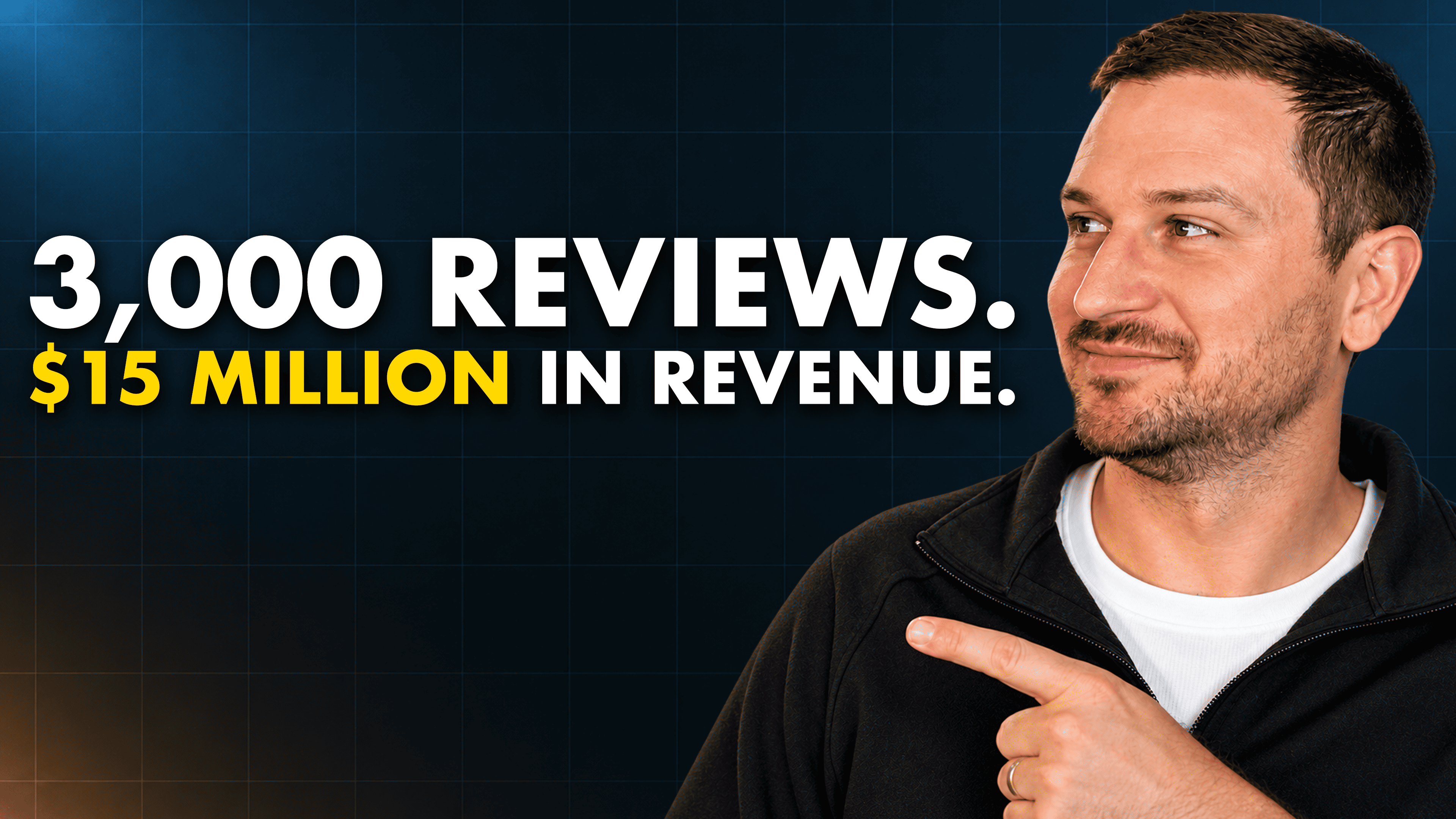
So I'm not uh sponsored or anything, John, but I think right now, as we were going forward and what I'm looking into the markets for everybody, doesn't matter if you're big, small, worrying about reviews and reviews on multiple sites outside of just Google. I think that's something that needs to be looked at and really pressed upon for the AI part of it. Um and once that really becomes more prominent, um, you'll notice that it's pulling from other review sites, not Google. So obviously a big push on that side of it. Um I'm I'm really pushing that for all companies and really just being consistent. I I think that's most of it. Just if you're gonna decide to do something, be consistent with it. Obviously, the LSAs, you want to get those built up. Those are classic digital, yeah, uh, be strategic in it. Uh, I have my own certain ways of marketing, um, especially in the competitive spaces. Get creative with it. Uh, if you're going to a marketing agency, um, ask them for longer tail keywords when it comes to what keywords you're targeting, not just AC repair near me, things like that. That's going to spend a lot of money. Really get creative with it. And yeah, that's that's really about it. But reviews are a huge one right now that I'm pushing.
I don't have the time to base it all of our Google Business profiles, so we started using Big Reputation. It keeps your profile active by managing reviews, responding quickly, and giving Google all the signals that your business is active and trustworthy. In our first 30 days, calls from our Google Business profiles jumped nearly 27%, and jobs booked through Google were up 27% too, without our team spending more time managing. You also get a clear view of what's actually happening. You get review trends, customer sentiment, and which tax and locations are getting talked about the most. So it's less busy work, it's more visibility, and it's more inbound calls. If you want your Google business profile working harder without creating another job for your team, check out Big Reputation at the link below. That is not something that we prioritize as much as we should. I know it, I know it's coming up. Um we've been pushing Google. I think we have 9,000 or 10,000 Google reviews. Um, but like we have not done much outside of the Google platform.
I think with AI, you kind of have to do that. No, you're right. You have to do that.
I I agree completely with you. It just hasn't uh I gotta prioritize it.
Yeah, no, it's really tough um getting it implemented and really upstarting that. But for the AI, and once that really becomes more prominent, we're seeing customers upload quotes through AI, how this looks. So you really want to get ahead of that as much as possible. And I think operators now are even doing a lot of stuff through cloud before that. So a lot of the operators who are, you know, maybe they're it's themselves and some techs, uh, and they're in that two and a half to three and a half million range, really focus on that and you can scale up a lot quicker than you probably think.
Well, uh, this was awesome, man. Thanks for coming on today. This was cool to talk referrals. It was cool to talk about the scope of your business. Uh, this was great.
Yeah, I appreciate it, John.
Thanks everyone for tuning in. If you like what you heard, give us a five star review wherever it is you listen to podcasts.