

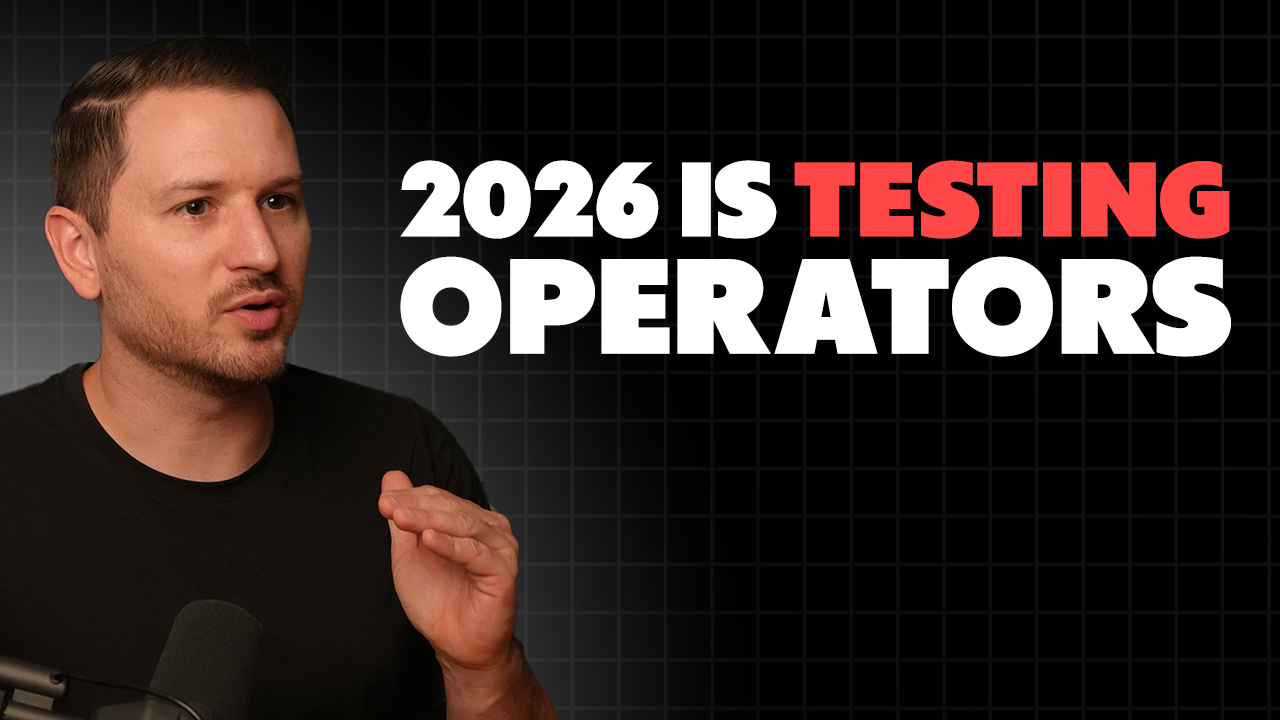
I recently spoke with Alec Stevanovski, Founder of HomePros, and we broke down what the economy is throwing at operators in 2026.
The biggest takeaway was that a lot of the data looks worse than it really is because we are still comparing today to an unusually strong stretch in the back half of 2024 and the years around it.
When you zoom out, this looks less like a collapse and more like a normalization after a distorted cycle.
Shipment Data Is Noisy, Not Always Weak
One of the key points Alec made is that shipment numbers can be misleading if you do not understand what is inside them.
Shipment data includes:
- Residential replacement
- Commercial work
- New construction
So when shipments fall, that does not automatically mean homeowner demand has fallen the same amount. The industry had a big run-up, then a dip, then a bounce, then another drop late last year. Compared to that run, almost anything will look soft.
For replacement-driven contractors, broad industry stats may not match what you are seeing in the field.
2026 Feels More Stable Because the Chaos Is Gone
Last year had multiple variables hitting at once.
- New administration uncertainty
- Tariff announcements changing constantly
- Equipment and refrigerant transitions
- Distributors and contractors still adjusting
According to Alec, most of that transition is now behind us. Distributor sales are largely tied to the new equipment standard, and there is no immediate regulatory deadline hanging over the industry.
That does not mean demand is strong. It means the environment is more predictable.
The Consumer Data Looks Strong, But Feels Tight
On paper, consumers are still spending. Total consumption continues to rise over a five year view.
But when you look closer, the picture changes.
- Disposable income is only slightly higher over five years
- Savings rates have dropped significantly
- Debt and delinquencies are rising
- Financing declines seem to be increasing in the field
This creates a strange environment where spending is up overall, but fewer homeowners feel comfortable saying yes to large tickets.
Alec pointed to the idea of a K-shaped economy. The top end is spending freely, while the middle of the market feels pressure. That lines up with what many operators are seeing in the home.
Lead Flow and Conversion Matter More Right Now
Another point from the conversation was that some contractors are still growing, but that does not mean the market is strong. In many cases, those companies simply found new ways to drive leads.
That matters because this kind of market rewards execution.
- More leads solve hesitation
- Better financing options help close deals
- Stronger sales process offsets tighter budgets
If demand is uneven, the companies that control their lead flow have the advantage.
The Signal I Am Watching Closely
One of the most interesting parts of the conversation was around financing.
Note: watch this SBA loan strategy video.
We are hearing more about:
- Financing declines
- Higher credit card delinquencies
- More mortgage stress
- Customers delaying replacement
If financing tightens, replacement demand does not disappear, but it slows down and gets harder to close.
For home service operators, that may be one of the most important signals in 2026.
Final Word
This does not look like a crash cycle, but rather a normalization cycle.
The data is mixed, the consumer is tighter, and the easy demand from the last few years is gone.
In a market like this, growth comes from operators who generate leads, convert well, and stay aggressive while everyone else waits.
.png)
.png)