


When people hear the word "offshoring," they immediately think about labor costs.
That's part of the equation, but it's not the reason we've invested so heavily in offshore talent over the last several years.
The real benefit is leverage.

Offshoring forced us to build a better business. It forced us to create systems that could operate without someone sitting next to a new employee every day. It forced us to document processes, define success, and manage teams using KPIs instead of gut instinct.
Before we built our offshore teams, training often looked like this:
- Hire someone
- Sit them next to an experienced employee
- Hope they picked things up over a few weeks
That works when you're small. It breaks when you're trying to scale (read my guide on how to scale).
To make offshore talent successful, we had to build:
- Detailed SOPs
- Training videos
- Clear job responsibilities
- Defined performance metrics
- Consistent daily and weekly check-ins
The result was better performance across the board.
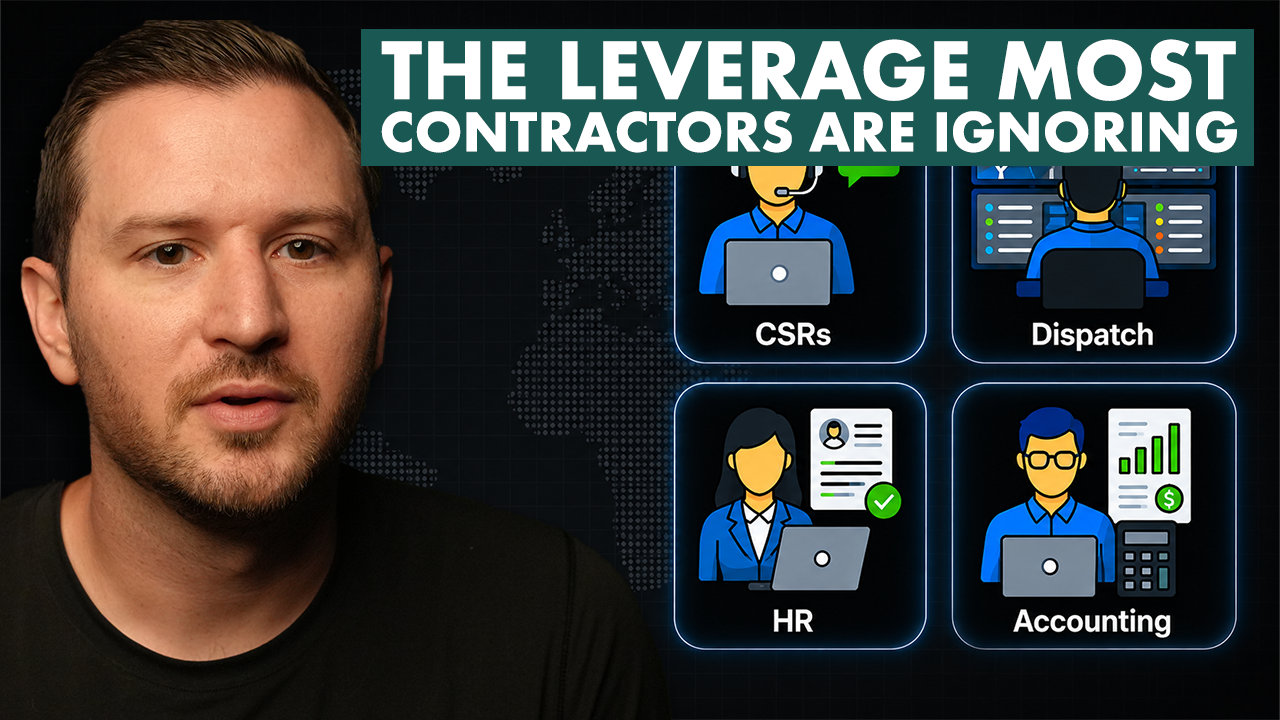
What surprised me most is that offshore talent works best in roles that already should be systemized:
- Call center operations
- Dispatch
- Install coordination
- Recruiting support
- Accounting support
- Purchasing
- Marketing coordination
- Administrative functions
These are roles where consistency matters more than creativity.
Meanwhile, we continue to keep leadership, coaching, strategy, and high-level decision-making in-house. Those positions require judgment, local context, and critical thinking.
For smaller companies, offshoring can be the fastest way to buy back owner time. Instead of answering phones at night or handling every administrative task yourself, you can focus on sales, recruiting, and growth.
For larger companies, it creates operating leverage. You can add support capacity without adding the same level of overhead, helping free up cash for expansion, acquisitions, or reinvestment into the business.
The biggest lesson from our experience is simple:
Companies with clear processes, strong training, and measurable KPIs tend to thrive with offshore teams. Companies without those things struggle regardless of where the employee sits.
My Takeaway
Offshoring changed our business because it forced us to build better systems, clearer processes, and stronger accountability across every department.
.png)

.png)