


In this episode, John Wilson sits down with Patrick Dichter, owner of AppleTree Business Services, to break down what “good accounting” actually looks like inside a growing home service business — and why financial clarity becomes a competitive advantage as you scale.
John opens up about a hard truth: he didn’t get his first clean month-end close until last year, and it made almost a decade of decision-making harder than it needed to be. Patrick walks through the real stages most home service operators go through — from “Checkbook Charlie” to outsourced bookkeeping to in-house controllers — and the exact problems that show up at each stage.
They dig into why growth eats cash even when the business is “doing everything right,” how bad accruals and broken CRM/accounting integrations quietly destroy margins, and what a simple cash forecast can do to keep you out of trouble. John also shares the painful lesson he learned in 2025: you can run a strong P&L and still get smoked on cash if you’re not thinking about the balance sheet.
If you’ve ever asked “where’s my money?” while growing, struggled to trust your gross margin, or felt like your business is flying blind month-to-month — this one is for you.
💼 Extra Special Thanks to Service Scalers!
We’ve been partnering with Service Scalers to maximize our Local Service Ads (LSAs) and optimize our Google My Business profiles, and the results have been incredible. With hundreds of thousands in sales and 900+ calls in a single week, GMBs are now our top-performing organic lead channel.
Want to learn how Service Scalers can do the same for you?
🔗Check Them Out Here
💼 Modernize is how smart contractors scale.
With inbound calls, live transfers, and branded programs, Modernize connects you to ready-to-buy homeowners. Over 9M leads delivered and $4B+ in revenue generated.
🚀 Huge Shoutout to SupplyHouse!
When it comes to fast turnaround times, SupplyHouse has our back! With 250,000+ SKUs covering plumbing, HVAC, and electrical, they make sure we get the right materials—fast and hassle-free.
💡Their Trademaster program offers free shipping, returns, and discounts, all with no membership fee. Use promo code SH5 for five percent off your first order— Code is valid through 9/30/2025.
🔗 Check them out & level up your supply game here
🎙️ Hosts & Guest
Host:
John Wilson — x.com/@WilsonCompanies
Guest:
Patrick Dichter — AppleTree Business Services
Website: appletreebusiness.com
Socials: @PatrickDichter (Twitter/X), LinkedIn
More Ways To Connect with O&O
John Wilson, CEO of Wilson Companies
Jack Carr, CEO of Rapid HVAC
📌 Disclaimer: Some links may include UTM parameters or affiliate relationships, meaning we may earn a commission if you make a purchase. Episodes may feature sponsors, but all opinions expressed are our own.
We're talking about accounting inside a growing home service business, I have clarity around gross margin. I have clarity around cash flow, and then it really becomes like an asset and a competitive advantage. Yeah, you can make real decisions and we can make them much faster. It's amazing how much cash a service business can eat, even if you're doing a lot of things right.
People are like, where's my money? Part of it is not having visibility on like better accrual based financials.
So the North Star is. I need cash It. It could be for whatever, but you do need
to set aside cash. Accounts receivable is a full contact support. You know, like you gotta be on it. You gotta be diligent, you gotta be aggressive.
Welcome back to Owned and Operated. I'm your host, John Wilson. During the day, I run a $30 million home service company in Ohio. And for fun, I run this podcast. Helping others figure out how to grow their home service business Today I'm joined on the show by Patrick Ter from AppleTree Business Services.
Today we're gonna be just exploring how good accounting can help you drive your business forward, and how important financial clarity is as you scale. It's an awesome conversation and I know you'll enjoy it. Patrick, welcome to the show,
John. Thanks for Remy. I'm excited to be here.
Yeah, this'll be, this'll be good.
This'll be good. Um, I, man, I feel like I've known you for like four or five. I met you right before you bought Apple Tree.
Yeah.
Uh, which was 21, 22. Yes. You, you bought Apple Tree, uh, and it's grown a bunch under your watch. Right. Uh, and you're doing accounting services for a bunch of different industries, I would assume, but like a lot of home service,
correct?
Yeah, so HO Home Services is probably our biggest category, so I work with a lot of hvac, plumbing, electrical. Flooring Tree services folks.
Is any specific industry like overrepresented, the tree, tree services kind of interesting. Like how many of those?
Probably three, I would say yeah. HVAC plumbing. If you were to combine those two, that's probably our biggest category.
Um,
yeah. Cool. What we're talking about today, uh, we're talking about accounting inside. Um. A growing home service business. Mm. And this is like, to me, a funny conversation. I've said this on the show before. Uh, I didn't get my first clean close, like closed end of the month books until, um, about a year ago.
Wow. Like, it was like last August. I remember it and I'm like, oh my God. This is what this is. Like That is, that is
wild. That is, uh, uh, no,
it is wild. And, uh, and as I'm saying this, that's not me bragging or advocating for it. That's me being like, Hey, you should not do that. Like, it, it, I made my life way harder.
Yeah. Um, than I should have. And something that was kind of, uh, funny when, you know, I bought the business like 10 years ago and I bought it from my, uh, dad and we had a internal bookkeeper. She, she was great. She was, you know. Awesome. Uh, but she was also like, like I just said, I've never had a clean month end close.
Like she didn't know how to do all of this stuff. I actually, until I got on like Twitter and joined the sort of SMB community, I had no idea that there was such a thing as an external bookkeeper to even do this. Mm-hmm. Otherwise, I probably should have and would've done this at like a million or $2 million.
Right. When, and I bought the business and it was a million dollars. So I had a full-time bookkeeper that didn't know how to close the books. Uh, she was great. She could deposit checks and do all that stuff, but it was sort of like, dang, that would've made my life a lot easier for the first, like, nine years of my career.
Yeah.
Might've had more, more clarity and uh, you know, but you're, you're there now, so that's good.
Well, I wanted to sort of start off with that before we got on the show. We were talking a little bit about like stages and what you're seeing across these different, um, operations. So I wanna, I wanna open up the hood a little bit.
Uh, so for. For a lot of the home service clients you're dealing with. Like what? What's the normal size? I, well may maybe you start us off like, yeah. How are you seeing stages inside accounting for home service? Are you thinking about turning up your marketing in the new year? Now is the time. Our friends at Service Scalers are making it easy.
When you sign up before December 31st, they'll cover up to $5,000 in free ad spend. To help you launch strong. That includes Google, PPC, local service ads, even Facebook ads, all managed by their team. If your home service company is ready to scale, this is the offer for you. Service Scalers handles everything.
They handle setup, management, and strategy so you can stay focused on running the jobs. Don't wait. Head to service scalers.com and tell them owned and operated sent you to get started.
Yeah. I think, you know, if we're talking about somebody who starts from scratch, right? Typically what I see is from call it.
Zero to 500 K. There's yeah. No accounting, right? This is like, yeah. Checkbook. Charlie, who's, you know, Charlie's just looking at Oh yeah. Putting balance, and he is like, how am I doing? Yeah. And then maybe he pulls in his wife or pulls in an admin. Yeah. And then that person is inside QuickBooks online, so they become the bookkeeper and.
From
whether or not they're qualified. Right, right, right. Like they just start doing the books. Yeah.
And so from 500 k to 2 million, typically you'll see bookkeeping, air quotes is, is being done. Yeah. But it's really not, it's really not accurate. Um, and so the common issues you'd see there is, um, you don't have.
Gross profit margin clarity. You don't have, um, you know, a tight month end close. Um, yeah. You don't have, you know, good depreciation schedules for trucks and equipment that you're buying, which translates to bad tax planning. Um, yeah, you, you probably have a p and l that. Is directionally accurate. Your balance sheet?
Not Yeah. Usable ish. Yeah. Yeah.
Like usable ish.
Yeah. Yeah. Usable ish. But the, the balance sheet is, is not, and then usually what happens, this is often where we work with people, they have a bad tax surprise, and then they decide to upgrade bookkeeping, or they want to go buy a building or mm-hmm. They join a coaching group or, you know, yeah.
A peer group. And they're like, your, your books aren't. Cutting it. You need to, you need to upgrade. So that's often where we'll work with somebody where they, they'll start using an outsourced firm like ours. Mm-hmm. Um, to have really trained accountants do quality bookkeeping, you know, usually from like two to 10 million revenue, um, is the range where a lot of people have outsourced it.
And then. Beyond that they, you know, when they grow past 10 million, they tend to hire in-house full-time employees. You know, um, maybe a controller and a staff accountant or staff accountant and a fractional CFO
we had a bunch of, well, yeah, the, the clarity part I think is just kind of funny. 'cause it, as you're saying this, I'm like thinking back through my own like life.
Yeah. And I'm just like, yeah, that would've, that would've been great. The perceived value
is a big evolution too. You're like. My books are just something to get my taxes done. I've got it. Yeah. Yeah. And then you're like, oh my gosh, I have clarity around gross margin. I have clarity around cash flow. Yeah.
And then it really becomes like an asset and a competitive advantage and Yes. Um, and you realize, well, you can make real decisions. You can pull those levers. Yeah.
Yeah. You can make real decisions. And I think that's what's been interesting. So again, you know, we got our first set of month end closes. Yeah.
15 months ago, 14 months ago. And, um, and so most of my career, I, I made decisions without clear financials. I mean, depending on the, uh, some, it was always like directionally accurate, but the balance sheet was usually what was messed up.
Mm-hmm.
Or it wasn't organized in a way that I could make impactful decisions.
So, you know, now we've organized it differently. So, uh, Hey, what's my marketing? And like, how do we think about that compared to my overhead? Are they different? Are they the same? Um, just like tighter closed process so we can actually get a better handle on what's real labor by month. Mm-hmm. Uh, but we can make just actually better decisions and we can make them much faster than we, uh, used to be able to make 'em.
As an example, there was a time when we were like really growing, uh, from like, uh, like three to 10 or like, I think it was like 10 to 15. We didn't have we, we thought we were operating a break even, and that was on purpose. So we were like, okay, we're gonna operate a break even and we're just gonna like go crazy and go grow a bunch.
But the problem is, if you're running a tight budget in an industry that has tight margins mm-hmm. And you think you're running a break, even turns out you were actually losing 20%. Yeah. Which is what happened to us. We found out later. Like a year later, like actually that whole time that you thought you were running breakeven, you were running like, kind of at a significant deficit, either with cash or on p and l, uh, de, you know, depending on the month, which was, you know, I would've made decisions differently.
Where were the leaky buckets you didn't realize? Was this like your, your AR was not as tight as you thought or, um,
um, so the leaky buck, uh. How accruals would for payroll would get managed was a really big difference. I was, I thought we were having an amazing month and then this month was terrible. And it's like, oh, three payrolls.
Verse two is a pretty big distinction. Yeah. So how do you manage that accrual? Uh, how do you manage work in process? Yeah. Like if I have a, if I have a $20,000 job and it starts on the last day of the month, but finishes on the first day of the next month, how do you handle that? Because there's labor in both, and if it's $20,000, there's probably six or $8,000 in material.
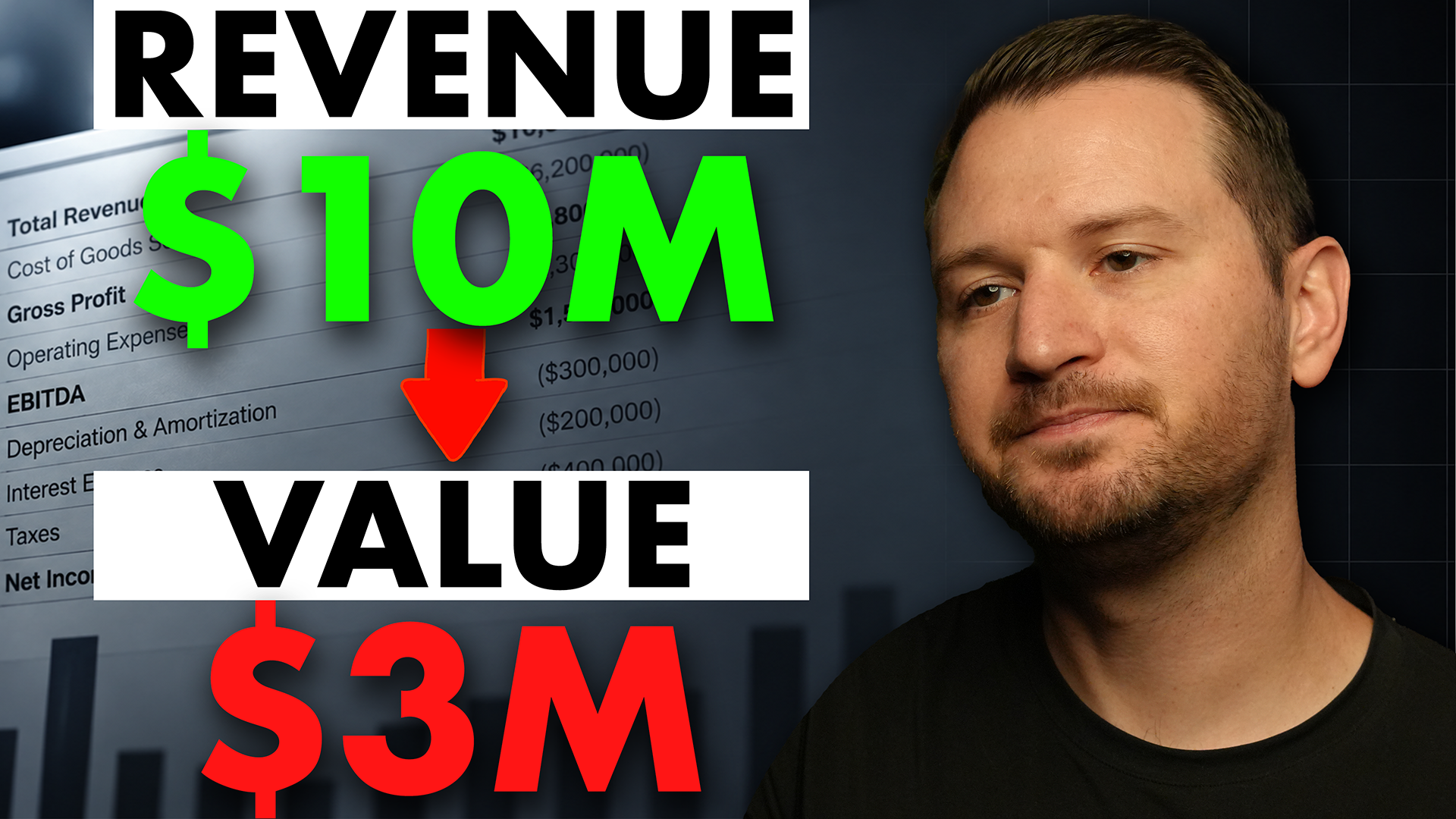
Which month did that material go in? So like, being able to manage all of these different, uh, things like, you know, now we do our, our end of month WIP process, work in process, WIP process, uh, add like $200,000 of revenue, which like, that's a big swing. That's a lot of ebitda. That's a big swing. Uh, 'cause if it's not there then like yeah, it sort of rolls forward and, but like that's a lot of like net profit that would would've shown a bad month.
Yes. So I, I think it's a lot of that stuff where like if we didn't do a good whip, like a good work in process, a good month end close, we would be making cost cutting decisions that might not even be necessary because the month actually could have been better. Mm-hmm. But we just didn't know because we were bookkeeping badly.
Yeah.
Totally makes sense. And it's also, you know, it's amazing how much cash a service business can eat. You know, even if you're doing a lot of things right. It just, it just eats cash. And I think that's another common area where people are like, where's my money? You know, like Yes. Commonly when people are growing from like, call it one to 4 million mm-hmm.
And you start to hire a PM or you start to have, you know, bigger jobs or the owner steps out and you're like. Sales are cranking. I feel like we're pricing things right. Where's all my cash? You know?
Yeah.
And um, part of it is like cash flow conversion cycles, and part of it is not having visibility on like better accrual based financials, you know, uh, depending on, you know.
The, the industry or the job size that you have?
Yeah, I mean cash. Even today, I, I think there's this sort of like, funny, I was, I was laughing at this when you said checkbook Charlie, which I think is really good. Uh, I think there's a funny evolution in these businesses where you start off like living out of your checking account
mm-hmm.
And then, uh, you start getting like better a accounting and reporting and all that stuff. And, you know, all of, all of the stuff that I've been reading. Uh, like I, I subscribe to, uh, what's his name? Um, secret CFO.
Yeah.
And I, I love his, I love his newsletters. It's just really good. And so if you really like, wanna nerd out, it's a good newsletter.
And it's kind of funny because it seems like the pendulum swings like back the other way where you become checkbook charlie again. And like we noticed that, but it's because like. Cash is so sacred as you're growing and like knowing where it's at, at all times. Yeah. It gets really, really important.
Yeah.
And the, the bigger you get, it becomes even more important to look more forward looking. I think that's the other term that I see is like when you are smaller checkbook Charlie, you can, you can weather small storm or you don't have a big payroll or you don't have like a huge monthly overhead that you're committed to, but yeah.
The, the bigger you are, you really have to be able to like look further ahead and try to have some more clarity. Yes. And then, yeah, it is sort of like, okay, the accounting's gotten more complicated, but what's the cash picture show? You know, can we, yeah. Can we survive our shoulder season? Can we, you know, um, survive a downturn?
Um, and uh, and weather the storm, you know.
Yeah. As you, as you think about that, like what do you see across the other businesses, what are the type of things that companies are doing or should be doing that they're not
to really get their bookkeeping and accounting dial in? Like for
like exactly. That problem, like 20, 25 is a challenging year.
Yeah. I'm curious if you've seen that for most of your clients, but most people in home service that I talk to and including us, like 20, 25 was tough.
Yeah. I think it's a hard year for a lot of people I'm seeing, uh, especially in B2B. Industries, sales cycles are longer, or vendors are just waiting until the last minute to decide to kick off a project.
They're stretching people out on ar, you know, they're, they're slower to pay. Um, yeah, they're vendors and so that, that just has a, you know, uh, effect on everybody when you're not able to predict your sales cycle or cash is coming in slower. Um, also seeing, you know, continued. Labor and material costs going up, but more pricing sensitivity from consumers.
So yeah, there's a lot of people who are, um, they're just not doing as well this year versus prior years. And we do a lot of work with people that are buying businesses and we see it in the financial due diligence and the quality of earnings 25 is not trending as well as, you know, prior, you know, 1, 2, 3 years.
So as the, as folks are coming in like. Cashflow forecast. Uh, what, what were, what was the other example you gave, like we're forecasting out to help drive success? Oh,
just being able to look more forward. And I think, I think the other thing that I see is when you start to understand your numbers, you realize that you can pull the levers more than you thought.
You know, you can, you can say, okay, how do we dial in our pricing to be the margin that we thought? How do we. Collect more upfront or collect bigger deposits, how do we, you know, eliminate the punch list stuff or eliminate the callbacks that drag, you know, collections longer. Um, you know, and it, it, a lot of this ties into operational decisions too, right?
Like, yeah, where do we really make better margin? How do we create production pay or commissions mm-hmm. Um, to drive those things. Um, and. I also think the time period gets shorter when you're looking at it, right? Like checkbook. Charlie might just look at his year as you get. More sophisticated with this, like you're, you're looking at quarters, months, and then weeks where you're like, okay.
Mm-hmm. How are we trending days? Yeah. I guess for you, right? Yeah. You said that before our call, like there's only so many working days this month, right?
Yeah. Yeah. I was, well, I was complaining 'cause like, there's technically 19, but like Black Friday and today feels like partial days. So like we're at 18 working days and that's less than February.
Yeah.
Like, yeah, November's gonna be rough. That'ss very low. Yeah. Uh, but yeah, working days matters a lot and like daily budget and like, are we achieving daily gross margin? And I think, uh, I, what I wanna emphasize, uh, is we, we can track a lot and we probably talk a lot about on the show of like, yeah, we know our gross margin by the day, like month to date, trailing 30.
We know our marketing spend by the day. Like we know everything. But it's also like none of that could have happened without a clean close Yes. And effective forecasting. Yeah. Dialed in on that too. Yeah. Um, and forecasting was really hard. I'd love to hear how you, like if someone today was like, how do I do this?
I'd love to hear how you. We talk about doing it, like our version of it was very simple. Um, we pulled up the bills that we tend to pay recurring, and it's about 25 or 30 lines long. We put the due dates and then we put it by week. Right? And like, that's it. It's a rolling 13 week, you know, like, and honestly, we pushed it out even farther.
It's like six to 12 months now. We just, we have all of next year's, the majority of the cash. Planned based off like a bunch of assumptions, but like the, the next two months is really the most valuable. That's what we have the most data on. 'cause that's our ap. Got it. Like, hey, this is due then.
Got it. Yeah.
If somebody is new to this, I, I think I've said like, here's how you create a cashflow forecast, like quick and dirty in under an hour. Um, yeah. Assuming you have decent books, right? You would take Yes. Your p and l outta QuickBooks online, you'd put it in Excel format. So, you know, if I was to do this for next year, I'd take my, my p and l from like.
October, I'd open up a new Excel file and then I would just drag this across for For months. Yeah, do it on a monthly basis for 2026. Yeah. And then I would look at seasonality. I'd start with revenue. I'd just start with the big items to say, does this feel directionally accurate of, you know, okay, I think we can grow a little bit here.
We're gonna be up 10% or 15%. Let's factor in the seasonality. And then, you know, if you're. If your cogs are pretty consistent, you could just drag those across on a percentage basis, and then you'd look for your big one-time expenses, right? Like, okay, we know our, our big insurance renewal hits here. Mm-hmm.
Or I need to, you know, buy this other piece of equipment there. And, um, yeah. And then the real magic, you know, you, you, you take a first draft of that, this is never gonna be perfect, but then monthly, if you can look at budgeted versus actual. It's like muscle memory, you'll start to get better and better at getting this thing dialed, right?
So
yeah,
when January finishes, you'll say, gosh, I thought we were gonna do 300 k of revenue and like, you know, 40 k of cash, you know, net profit. Um, yeah. Was I right or was I off? You know, and then you'll, you'll start to see like where those things land, and that's how I would do it if I hadn't done it the first time.
And then. If you're in a cash crunch or you really want to get more granular, you do it on a weekly basis and you're, you know, you're looking at like job deposits, cash in versus like, you know, materials, labor going out. And then weekly, you know, you're, you're looking at, um, budget versus actual and Yeah.
Yeah. What we did is the sheet was called cash out and like. That was it. So it's literally just cash out and we started with what's the next month's cash out. So all I need to know. Today's November 25th or something. So all I need to know is what's December's like, cash out requirements, when's my debt due, when's my rent due?
Like I know that I owe this vendor 'cause I'm on 30 or 60 day terms or whatever, so I know exactly what I'm gonna owe them.
Yep.
Um, so that's how we started. And I think I did it like over some coffee on a treadmill at five 15 in the morning. Like it was like it was done before I got off the treadmill.
Nice. It gave us a ton of clarity. Um, and we were in a cash crunch at the time. This was like two years ago that I first started this process and it gave us a bunch of clarity and we resolved our cash crunch and got out of it.
Nice. That's great. And you know, this is possible if you have decent bookkeeping, right?
But we could also talk about like some of the. The common blunders for bookkeeping, right? Like, yeah, I'd love it. We see, we see a lot of people still on like QuickBooks Desktop.
What makes that a blunder?
That product is going away and um, it just doesn't integrate with as many things. And if you're gonna use an outsource bookkeeper or accounting firm, it makes it really hard.
Um mm-hmm. And. QuickBooks Online is just a better product now, I dunno. Ask, ask Jack Carr about it. I think he's lived in both worlds, but we helped him get through. Oh really? Yeah. QuickBooks Online. That's funny. So, um, another common B blender is like botch CRM integrations, right? So you Yeah. Housecall Pro service tie in, you know, all of 'em will say, oh yeah, we integrate easily with QuickBooks Online, and if you don't map that properly, you're gonna, oh, it's a shit show.
Total shit show. And it's really, it's a shit show. It's almost impossible to unwind, but you're gonna have. Revenue double booked, or you're gonna have like invoices showing his revenue that didn't turn into jobs. Mm-hmm. Um, yeah, it gets, yeah, we just
moved over to Sage Intacct and that that took like, so we actually had to disconnect 'cause we, we got on ServiceTitan, we got on QuickBooks online in 2016 and ServiceTitan in 2017.
And we were a very small business. Okay. And like I said, our bookkeeping could not close the books, so we had no idea what we were doing. So a couple years ago, we actually had to disconnect them fully and do what's called a summary journal entry for the listener, where we actually didn't make them integrate at all.
Yeah. And we would just go in and every day manually say, Hey, this is how much went to ar. This is how much cash we received. This was our revenue for the day. So we did these summary daily journal entries. Because the connection was so broken and we were dumping too much data into QuickBooks Online. Like it didn't really react very well to how much information we were giving it.
Yep. Um, but yeah, so as we moved to Sage, like we were really excited to get that back, but it took like. A long time to map it properly. I mean, it was down to like the price book items, which I don't, that's not how we did it the last time. That's probably why it was an issue.
Yeah. Yeah. It gets really messy.
Ano, another common blunder is your payroll isn't integrated properly, so you don't have, you know Yeah. Like your technicians or people who should truly be in cogs mapped to, mapped to cogs. Mm-hmm. Um, or when you do your tax return, your book books don't match your tax return after a year end. Yeah. Um, so anyways, those are, those are some of the.
The, the big ones that we see.
Uh, so a lot of the people that you're working with are buyers of businesses, and I think it's because like the Twitter sphere, that's like the nature of it. Um, are most of them first time buyers or are they like continuing to be acquisitive or like what, what are you seeing?
Most are first time buyers. Yeah. So most are, you know, probably buying a. Business between like one to 7 million purchase price.
Have you, have you seen or participated in a lot of like add-on acquisitions?
Yeah, we've definitely done quality of earnings and financial due diligence for tuck-ins.
What, what do you like, when do you think it starts to make sense?
Like when do you feel like, Hey, this business has their stuff together, it's time to do an add-on. It's like, they can grow this way. This makes sense from an accounting perspective,
it, it really comes down to like their, their goals and preferences, right? Like. If somebody, oh, I'll give him a shout out. Rob.
Rob Brooks is a guy that bought an HVAC business in Florida.
Yeah.
He, he bought a small one. He's grown it really well. He is improved a lot of things. He, I tried to get Rob
on the show. What's that? I tried to get Rob on the show. Rob, I know you're listening. Come on Rob. Come on man. Um,
he strikes me as somebody that wants to run that business for 20 years and hold it.
Right. Okay. So he might not be in a rush to go do more. And if he has his organic growth dialed, like. Versus, yeah. You know, somebody who, you know, we're doing a, a roofing quality earnings right now. Like I know that guy wants to buy multiple and like, sell within five years. So I, I think part of it is people's appetite for, um, yeah, the brain damage that additional tuck-ins are.
And, um, it's also like their, their time horizon, their goals, um mm-hmm. You know, from, from an accounting perspective, I think, um. You wanna make sure you're settled in with the first one and you have like, you know, decent margin, you have a decent cash position and, um, you're, you're ready for that stair step of growth, you know?
Um, yeah, that, that's what I would see. But
I think, uh, something that we didn't do a good job of and it's become more important, uh, larger we've gotten is like cash planning around. Balance sheet. So, and we're still like active learning, right? Like, I don't think I have this figured out at all. Uh, but there's investment like OPEX investment and how do you think about that and what's the ROI on that, which, that last line is the line that I never thought that much about.
Uh, and, uh, then there's balance sheet investment and yes, it could be acquisitions, but it also could be, uh, like. Mainly the debt from acquisitions or vehicles or the debt from those, uh, vehicles. And this year, 2025, it, it really like bit me in the ass, to be honest. So we, I just wasn't thinking about it. I wasn't thinking about the non p and l.
And, you know, you'd think I would've learned by now, but I, I haven't. Uh, so like I made CapEx investments or how we thought about debt.
Like what? The new building or what?
Yeah, no, yeah. I'll give some examples, but it like. It ended up being kind of a pain point. So we, we had it, we brought on inventory, which there was good and bad.
So it was a p and l win. So we, we bought like inventory really cheap, so my gross margin jumped, but I had to, I had to bring on an inventory loan to do that, and I had to front load the cash to pay off that inventory loan faster than it took me to, uh, actually sell the inventory. Yeah. Which on, on intellectually, I knew that, I knew it would take me x amount of months to do it.
I didn't really think about that from like cash, which I should have. Hmm. Uh, another example was like vehicles forever, like through our sort of our whole like growth journey. I've really thought of vehicles as like the cash down, like what's my upfront on that vehicle, like that's what's gonna impact cash today and a little bit on the debt.
Or like the ongoing payments, but now I'm like, you know, next year we're talking about, I was, okay, I want 15 vehicles and each one costs $10,000 down. So in my head I was like, okay, there's $150,000 of CapEx. I'm like, no, this is like 1,000,003 of CapEx. Like, what are you talking about? Yeah. So, uh, and like acquisitions are similar, so would.
It's, it's like our EBITDA can support it. Uh, our EBITDA this year is like $4 million, but what ended up happening is I made these different decisions was our, uh, like. Cash out went from like 50,000 a month of debt service to like 130.
Wow.
Uh, now some of it's like very short term, like the inventory was paid off.
Yeah. So like now it's down to a hundred and the other stuff's paid off too. So I think we're gonna get back down to like 60, 70, but for like four or five months, it was 130 grand when my cash position was used to 50.
Yeah.
And like that was a big shock to the system. Yeah. Uh, which I think was just like.
Okay. Uh, so I think all that to say my stance on when you're ready for acquisitions is when you have, like, when you can really look at a balance sheet holistically. And we really drove our business off the p and l. Once we got a clean month end close, we, we drove the business off the p and l for. Two or three years and now we're running, driving the business way more.
Got it off the balance sheet than the p and l.
Got it. Yeah. Make makes sense that the evolution for these, these smaller guys that are like, you know, one to 5 million revenue. Do you have any rules of thumb in terms of like, have three months of cash on hand or six months of cash on hand or like, you know, don't.
Don't take on X amount of debt or do you have any rules of thumb that you give people in your workshops?
You're great at fixing broken shit, so why not fix your lead flow? Well, modernize gives contractors predictable high intent leads without the big marketing gambles. Break out of the feast and famine cycle and expand into new markets with a steady stream of homeowners ready to start jobs.
Now modernize is trusted by founders like myself because it actually delivers over $4 billion in homeowner projects started here in the last 12 months. Visit the link below to get started. I, I think that's like one to 10. What level of risk are you playing at?
Yeah.
And also what year is it, like how we think about cash and like balance sheet strength in 2025 is very different than 2021.
Uh, so. Yeah, we, we approach that pretty differently. Uh, we're pretty close to risk off at this point, so like, if one is like, I'm doing absolutely no risk at all. Like, we're like a three to four. Hmm. Whereas, you know, four years ago we were like a nine 10. Um, but debt was way cheaper. Liquidity was super easy to get, uh, lines of credits were just thrown at you, but like, that's just different in 2025.
Yeah. So I definitely think you need more cash on hand. Um, some companies do live with three months. I don't know of anyone very fast growing that runs it of with three months, and when I say three months, that's three months of overhead, not three months of revenue.
Yep.
But I don't know anyone like crazy fast growing that is actually running at three months of, uh, cash that is like independently owned, not PE backed or something.
Um, meaning they have less than that.
Less. Less. Got it. Yeah. I know a few guys that are pretty big that have built like a big nest egg over time. Um, but even them, like, they might have 4 million on hand, but that's, you know. That's not three months. Yeah. Like their overhead might be a million and a half or something, or 2 million a month.
Yeah. Got it.
Um, so yeah, I, I think like a month or two is conservative. I think having extra liquidity around is helpful. Like do you have a open line of credit? Do you have available credit facilities, like credit cards or whatever? Um, you know, we had some really interesting, one of the downsides of being in this industry is we share an N-A-I-C-S code, which is how the.
Federal government, like, uh, classifies plumbing, HVAC, electric with, uh, construction. So as your business grows that if you are in-home service and you share that code, it ends up being kind of a problem.
So why? Because banks three in the same bucket or what
Yeah. Banks throwing in the same bucket. So we had an instance in 2022 where we shared an N-A-A-I-C-S code and interest rates went from.
You know, 1% to nine or something in like six months, and all these construction companies went bankrupt. And because we shared this code, our, like the bank's desire for risk with that code went down to zero. Thanks. So our credit facilities got like cut in half, or like one of them got cut by like 80%. It was our fuel cards.
We went from like an $80,000 limit to 20 and we had 60 vans on the road and we're like, what do we even do here? So the ability to have like extra cards on hand is needed because you have to be able to still do something even when something's totally outta your control.
Yeah. Yikes. That's kind of scary.
Yeah, we haven't, that happened with two vendors in 2022, but we haven't had any happen since. 'cause these days we can submit clean financials. Mm-hmm. And just like, Hey, you gotta, you, you know, you gotta work with us on this. But yeah. You
think you have a big relationship given the, the size that you are.
That's interesting that wild people don't need more cash on hand. The, the one other thing I don't know if it's worth talking about for your listeners is, um, we were talking pre-show about the Profit first framework.
Oh, I'd love, yeah, I'd love it. 'cause I think that's the, how do you get cash on hand? Yeah.
I think is a big question that people have in mind. Like, okay, even if I wanted to have three months of cash on hand. How do I get there? So I'm, I'm curious what your take is and happy to share mine.
I have strong opinions about Profit First. I love the book, I love the framework. I hate it in application.
When it comes to accounting, if you're not familiar with Profit First, there's a, there's a book that basically says if you get a dollar in a revenue, you should have like seven bank accounts. And you, you spread it right away. Yeah. So that you can see where the money goes. So you give like, you know, 15% to overhead and.
15% to taxes and like 20% to payroll and you know, X percent to, um, owner comp and I'm, I'm forgetting the other buckets, but you, you basically have seven bank accounts and you force each dollar to be moved there. And then that way you can, you can know what your numbers are and save properly for taxes and make sure that you're actually profitable rather than just like, see what happens at the end of the month and then get your profit.
So. I love the framework. Love the idea. But what I typically see in application is like 90% of people read the book. They get really excited, they go open seven bank accounts, they stick with it for like a month, and then they, they don't keep up with it, and then they, they miss a loan payment or they bounce a payroll because they forgot to transfer money in, and then we're trying to.
Clean up the books. Yeah. Yeah. And, um, it's a train wreck and I do see 10% of people with it. Like, they stick with it and they're, you know, religious about it and they, they swear by it. But, um, I'm not, I'm not a huge fan of it. But,
you know, one, one of the funny things, I'm, I've read the book a long time ago.
Um. And I'm just like, I'm thinking about this, like looking at you because I'm pretty sure in the first page or two it's just like, your accountant will hate this. Your accountant's gonna hate this.
Yeah,
yeah, yeah. Yeah. So it's funny that you do, uh, have a, have such a strong opinion about it. Yeah. So my opinion, I think, uh, I think, you know, what's the North Star?
So the North Star is, I need cash. Yeah, right. Like we have to put cash somewhere to set aside. And that cash could be for distributions. That cash could be for owner comp, it could be for capital investment. It could be to weather the storm. It, it could be for whatever, but you do need to set aside cash. Um, the other stuff maybe, I think, I mean, I really think it's kind of, uh, I've, I've peaked into the hood of a lot of businesses.
Outside of industry. And if it was like, like I've seen, uh, I saw executive recruitment business that ran it, like 90% net margin. Wow. Profit first makes total sense. Yeah. You have zero cogs, you have zero vendors, you, it is a cash machine. Mm-hmm. Like that makes total sense to me. I think when you have the dynamics of seasonality and all these other dynamics, it's really important.
It's even more important to save up for cash. But I think it can, to your point, cause. Like unnecessary cash crises.
Yeah.
So what we did is we sort of adopted our own version of it is we created one account, not seven, and we created an automatic transfer. Uh, when we first started doing it, you know, it was five grand a week or two grand a week.
It was something like that. And we were a small business, like two or three. Million bucks a year. So like, you know, two grand a a week is a lot of money. Mm-hmm. Um, that's a hundred thousand dollars on a, for a business that probably had 200,000 of like net, if that. So that was a lot of money and it was a sacrifice, but it did help us build a nest egg.
Uh, so today what that looks like now is, uh, it is a daily transfer. Um, I don't remember how much it is to be honest, but. It's like a few thousand dollars. So every day a few thousand dollars gets transferred to a capital account, is what we've called it for nine years. And that capital account is used in all the ways I just said.
Is it weathering the storm during like a cashflow shortage? Like do we need it like November is a, a. 18 working day months. So like we pulled from our capital account 'cause we required excess cash. Um, so do you use it for that? Do you use it for capital investment use for owner distributions? Do you use it to go buy a company?
Uh, so that, I definitely believe in it for that, but I, I think like just the North star is how do we set aside, how do we set aside and grow our cash position.
Yeah, that's a good way to think about it. And I like the idea of just some four savings along the way. So
yeah, I think it helps. I, I do think it, it was confusing.
The, um, all the different like tax accounts, owner accounts, I can see that being Yeah. Frustrating. Yeah.
The, the one other comment I'll say is like, if you're growing quickly, it's, it's, I I see it break very fast there. 'cause again, you're, you need the cash, need cash. I mean,
cash gets consumed so fast.
Yep.
How do you think owners should manage cash as they're like scaling quickly? What do you think like some golden rules are? I think
making sure you have your. Pricing dialed in for like your, your ideal gross, gross margin, um, is thing one, you know, like Yeah. Pricing's accurately. Um, and you, you'd know better than me what their, what their margin should be if it's like a, you know, aim for, uh, 40 or 50% gross margin.
But, um, I, I think the other rule of thumb is, uh, yeah, try to have two to three months of, um, uh. Cash for rainy day fund. Mm-hmm. Um, pay your quarterly tax estimates. The other thing I see a lot of home services guys is like, you know, winter might slow down and then you know, the, a lot of 'em are paying taxes in March, April, may, and it's just like the double whammy of like shoulder season and taxes due.
So yeah, paying quarterly estimates, I think. Definitely goes a long way. So you don't have a huge tax bill, surprise, um, having a line of credit available? Yeah, I mean, those are, those are the big ones that jump out at me right away.
I think the only one I would add is, uh, a culture of collections.
Hmm.
Um, so if you, if growth consumes cash.
How do you produce your own cash? Yeah. I think that should always be the, the measurement for success is, is my growth consuming or growing my cash?
Yep.
And I, this is not me saying that I've done this perfectly. There's been plenty of times I've done this totally wrong. Um, but, uh, I, I have a good friend right now who's growing, uh, significantly this year despite, uh, headwind, I think like 40%, 50%.
He's in the 20, 30 million range, and his growth is actually growing his cash position because they have a culture of collections. So between down payments and a hundred percent cash on delivery. Like, the more they grow, the more their cash grows. Which is unusual. Yes. Uh, when, you know, versus like if I had 30 day terms, the more I grow, the more my deficit of people owing me money Yeah.
Grows and then the bigger that problem's gonna be. Yeah. So you almost get, uh, like the shorter your days to pay or days to receive pay. The healthier you are by a long shot, it really ends up limiting your growth or, or accelerating your growth depending on which side of the bucket you're on.
Yeah. One of the main reasons, uh, everyone probably prefers resi versus commercial, right?
Oh, yeah, yeah, yeah. I, I've tweeted this out before, but I've said accounts receivable is a full contact sport. You know, like you gotta be Yes on it. You gotta be diligent. You gotta be aggressive. Yes. I remember before I bought AppleTree, I worked with a cabinetry company doing. Consulting and coaching and they would, they would work a lot of builders and if they didn't submit their invoices by a certain time of the month, I dunno if it was the first or the 15th, they wouldn't get paid till the whole next month by a lot of the controllers in the, you know, uh, by these home builders.
And I remember just forcing them to like meet every week to just get their invoices out and like chase down ar and it was, uh, yeah, that culture of collections goes a long way to solve a lot of problems.
Yeah. Yeah. I mean, even now what we found is the ebbs and flows. Like we'll go through really great periods and then like we'll let up the gas a little bit and then we'll be like, oh shit, we got, Hey, our culture of collections.
Like what? What happened? And we we're in one of those right now, which is kind of funny 'cause it's like, man, we've learned this like seven times. Yeah. Like how do we, you know? Yeah. So unfortunately it's like muscle memory to kick it back into place. But it's important. Yeah. Like it, you know, if in a 10% or 15% net profit business.
There's not enough room to play to like not get your cash. Yeah.
Related to that, I see a lot of people debate like. Credit card payment fees and like, oh man, I should just take checks from people. Oh, yeah, yeah.
Do you The cost of cash? No, no. Like we don't debate it at all. Like, pay us money.
I'm with you.
I'm like, e eat the credit card fee because you, you're gonna get paid faster by so many homeowners, or they're gonna finance jobs, bigger jobs that they wouldn't have. And it's easy. It's not, it's not just apples to apples to say, if I would've gotten checks from everyone that I would've saved 3%. Yes. Like, no, you would've.
Sold less Well, and,
and what's the, what's the cost of capital? Like if, if, because you missed, you had to draw on your line of credit and my line of credit is 7% interest right now. So like, okay. So I saved 3% to pay seven. Like, how did that math work out? Like it didn't, uh, I think a better way to attack it is aggressively attack your, uh, cost of merchant services.
And even when someone tells you they can't negotiate, you can usually still negotiate it. Like ServiceTitan. We've negotiated very hard on our merchant services and, uh, we, we pay the same dollar amount comes outta my account. As when we were a $10 million business. Like monthly? Yeah. Yeah. It's like $21,000 a month in merchant.
And that's like roughly what it was when I was a third of the size because of how much we've negotiated our merchant fees.
All right. I'm gonna have to go negotiate with my, uh, the equivalent service. Titan is called Canopy. It's like a. It's a Oh yeah. ERP for accounting firms. Yeah,
you can, you can ch you can hit that thing, uh, really hard.
Hmm. Yeah. Really hard. And even now we have another vendor that we're negotiating with, uh, and against, uh, ServiceTitan, where like we can save another seven grand a month, which that's 84,000, $82,000, 84. A lot of money. $84,000. That's a lot of money.
Goes a long way.
It goes a long way. Yeah, that's a lot of money.
I want that. Yeah. In the trades every wasted minute costs you. Supply house makes it easy. With over 280,000 products from 500 plus trusted brands. Plus they have exclusive perks through their trade Master program, like better pricing. Free shipping and priority support. Get 5% off your first order@supplyhouse.com with code O-O-F-I-V-E, supply House Real people, real service.
If people are wanting to like prep their business for sale, like how do you think they can, how do you think they can get there? What do the books have to look like?
Yeah. I think this is a area where people kind of get, you know. Penny, penny, short pound, foolish, or whatever the saying is.
Yeah.
Um, I would say messy financials are probably the number one deal killer, whether you're selling to strategic buyer or a single person.
So really having, um, you know, good clean financials for a one to two year period. Um, file your tax return as soon as you can. A lot of people that are gonna do an SBA loan, the lender is looking to the most recent tax return. So, you know, if you're extending and like not filing until October 15th, it's likely gonna delay a deal that's mid-year.
Yeah. The other thing I would say is, um, just. Be ready, that it's a part-time job to go sell the business, you know? So
yeah,
having those financials ready, trying to have a, a data room, like a Dropbox or Google Drive where you have all that information and all your, your prior tax returns, those are probably the, the biggest ones.
Um, and, uh, you know, if you, if you're using a, a broker, just know that it's. It's a long process, but clean financials are gonna solve a lot of your problems. Um, yeah. Keeping, keeping them current during the sales process.
Something I've noticed this year specifically, uh, there's more people raising their hands than ever to like, Hey, I'm ready.
Mm-hmm. To sell. And I suspect it's 'cause it's, Hey, it's been a hard year. Like it's been a hard year and like next year doesn't look. Like much brighter. It's not like, oh yeah, it's totally gonna get amazing. Uh, it's more like, oh yeah, we're probably heading into a recession. Uh, so I think I see more and more people starting to tap out.
And some of the mistakes that I see is like, if you're gonna go and sell your business, are you speaking the same language as the buyer? Like, what's an add back? Uh, and like, can you talk about it intelligently? Um, do you know the difference between a balance sheet transaction and a p and l transaction?
Um, I was working on something like a year ago and someone was claiming balance sheet transactions as an add back. Hmm. It's like that's cash, like. I can't do anything with your down payment on a vehicle. Like that's irrelevant to to, yeah. You know, your p and l. Yep. Um, and it's not that that slowed it down, it's just that it's like, okay, if you don't understand that, what else?
Don't you understand?
Yeah.
Like, what, what else are we gonna miss? What else am I gonna find? If you don't understand like the difference between a cash, like a cash payment and an expense like that, that's kind of a big distinction. Um. Clean financials for sure. Uh, or, or financials at all. Like, you know, uh, like Jack's looking at, uh, businesses too, and like he and I, like once a month it'll be like, oh yeah, we got another one.
And it's like, you know, someone gives me, Hey, yeah, we did $600,000 last year, and they gimme a shoebox of paper receipts and it's like, I cannot do anything with this. Right? Like, I'll give you a dollar for your business. Like, I don't know, like, do you have a business? Is it real? Like, I have nothing to buy.
Yeah.
Yeah, I think another thing I thought of is just, you know, not being too aggressive or committing tax fraud. You know, like, oh yeah, if,
yeah,
if you know, you're like, oh yeah, we did, you know, one point mil, 1 million of, you know, seller's discretionary earnings. Uh, but our tax return shows like a hundred K that we pay taxes on usually means that you're riding off way too much and things that aren't.
Legitimate. And so for somebody who's getting bank financing, like they're not gonna be able to underwrite based on what the profitability was. And also like if you get hyperaggressive, you'll turn off a lot of, a lot of buyers.
So I have an interesting note on this that I think is kind of funny. Uh, that was totally true for us up to a certain point.
And not of like us committing fraud, but of like banks looking at us the way that you just described. Yeah. We pay our taxes. What was really interesting is about two years ago, and it must have been when we crossed a certain EBITDA threshold, but they actually stopped giving a shit. Like they care about free cash, but like we are underwritten on ebitda period.
Hmm. And it is, it was a very interesting transition because it just like switched one day where I, we were talking to somebody, I, I don't even remember who it was. And they were like, yeah, we don't care about your net profit. Like, what's your ebitda? And I'm like, what? That's
wild. It
was
wild. I, I'm always surprised that, you know, banks have very different stances, you know, um, on, on different things.
Yeah. Well,
well that, yeah. That, that we learned. Um. Yeah, that was, uh, well it came up more and more where like vendors started, like we have to, because our credit lines are so large, we submit financials to a lot of our vendors. I see. Uh, so it's like quarterly we have to submit these, or like our enterprise, we have to submit quarterly financials or Yeah, just a lot of our day-to-day vendors now.
And, um, almost nobody gives a shit at all about. Anything under ebitda.
Hmm.
And it's because it's interest depreciation, which like sort of cash sort of not. So, you know, they're trying to get their sense of like, what is free cash minus the debt. Yeah. Yeah. It was a really interesting transition and I think it happened around 2 million of EBITDAs when that like switch happened.
Or maybe it was 1 million of ebitda. But there, there was some point where they did go from like not really caring about anything other than ebitda. And I don't really know why, but it was an interesting switch reframed a lot of the conversations.
Yeah, yeah. Yeah. Those are, um, those are interesting. I, I think the other couple small comments I'll give is, uh, you know, if you're getting ready to sell a business, just know that you're, you're gonna have big tax bill and like, um mm-hmm.
And also know that working capital is a, a big landmine, you know, so what I commonly see. The buyer is, they'll send an LOI, the people will sign an LOI. They think they understand it and they don't, and four to six weeks later there's, there's some obscured language around working capital of like seller to leave working capital.
It's usually right around the same time when the sellers. Learn how much they're gonna pay in taxes that they also learn like how much working capital the, the buyer is gonna ask 'em. Right? So they're like, wait, I gotta leave four 50 k of working capital in the business and I'm gonna have a tax bill of 1.1.
Like mm-hmm. Why would I sell this thing? You know? And so, um, just being able to wrap your head around that or just know early and upfront, like if you're gonna leave working capital or not, and where those calculations come from. And, um, and you know. If you get that LOII would try to understand the tax impact quickly and do what you can, but also, like if you, if you get a huge windfall, there's only so much tax planning you can do.
Um, yeah. Depending on the deal structure.
Yeah. Agreed. Good comments. Uh, I've got a quick fire question for you.
Yep.
Um, what is one thing that you wish operators would pay attention to sooner?
Hire. A professional bookkeeper sooner.
Yeah. Well, I, I think my example is like a great one of one, I just didn't even know that.
Like you could do that. Yeah. And uh, two, like it set us back, it set us back a long time. Like how much further would we have been if we had, uh, better data. And we're making decisions now in the last two years, year and a half with like very clear data and it's allowed us to go from like surface level of did we make money this month to.
Hey, did we make money in the last hour? And how much? Mm. And like, but it started with did we make money? Yeah. And, uh, we couldn't even understand that. So I, yeah, I totally agree. Yeah. Yeah. Good comment. Thanks for coming on today. This was, uh, this was awesome. If people want to. Hear more about you, like where can they find you?
Yeah, thanks for having me on. Um, you can check us out, AppleTree Business Services, our website, AppleTree business.com. I'm pretty active online. Patrick Dicker on Twitter, LinkedIn or wherever else you wanna find us. And um, yeah, I appreciate you having me on, John. It's been great.
Awesome. Thanks Patrick.
.png)
.png)

