


In this episode of Owned and Operated, John Wilson sits down with Adam Cherup, a “disaster roofer” who’s built a niche, high-margin business installing shrink-wrap temporary roofs after hurricanes, wind events, hail, and fires. Instead of blue tarps that fail in weeks (and often aren’t covered more than once), Adam installs a manufacturer-rated wrap that can last up to a year (or longer)—buying homeowners, schools, hospitals, and commercial properties time while insurance claims and full roof replacements drag on.
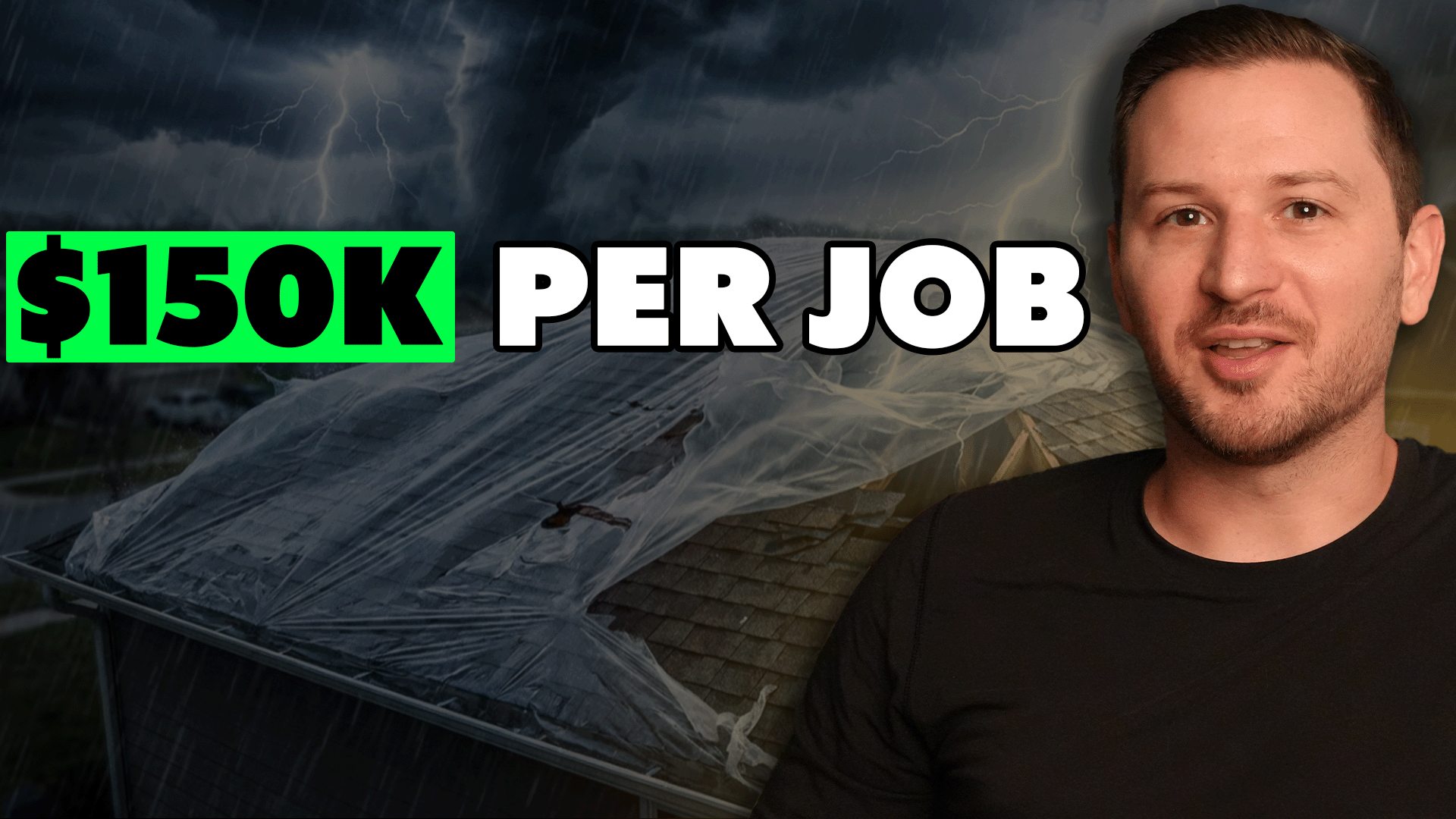
Adam breaks down the economics: 60–80% margins, typical residential jobs around $20K–$30K, and large commercial/school projects in the $150K–$350K+ range (with massive roofs reaching even higher). You’ll hear how he gets work (including a key referral partner who pre-positions before storms), why this niche is best paired with an existing roofing operation, and what makes the job uniquely difficult: travel, logistics, training crews, and negotiating with insurers who hate the sticker price—but can’t ignore the cost of “future loss.”
If you like niche business models with weirdly great unit economics, this one is basically printing money… in a disaster zone.
What You’ll Learn
- What shrink-wrap roofing is (and why it beats tarps after storms)
- Unit economics & margins: how this can hit 60–80% gross margin
- Typical job sizes: $20K–$30K homes, $150K–$350K schools, big commercial upside
- How insurance actually reacts (and how Adam gets paid ~99% of the time)
- How the work is sold: referrals, pre-storm positioning, and inbound search demand
💼Shoutout to Avoca AI!
Looking to train your call center and improve technician performance? Avoca AI helps teams identify issues, improve call quality, and drive results from start to finish.
💼 Shoutout to Quick Staffers LLC
Need trained HVAC & plumbing CSRs at a fraction of the cost? Quick Staffers LLC specializes in placing top-tier global talent with the best SOPs and scripts.
🔥 Get $1,000 off your first placement HERE
💼 Big Reputation — Stop chasing reviews and watching competitors outrank you. Big Reputation is the AI-powered review + SEO platform built for home service pros. Automate review generation, respond with AI, track local SEO, and integrate with your CRM. Setup is free, and your first month’s on the house.
🔗 Connect
More Ways To Connect with O&O
John Wilson, CEO of Wilson Companies
Jack Carr, CEO of Rapid HVAC
📌 Disclaimer: Some links may include UTM parameters or affiliate relationships, meaning we may earn a commission if you make a purchase. Episodes may feature sponsors, but all opinions expressed are our own.
OAO 277
[00:00:00] I call myself a disaster roofer. I put plastic on roofs.
This is wild.
I mean, you're going to some messed up areas. You're going to a disaster zone.
Can you walk me through like the economics of this?
The margin is way better on shrink wrap. It's upwards of 60 to 80% sometimes.
What's a normal job price?
20, 30 grand.
If you're doing the whole house, you get into the schools, you're talking anywhere from 150 to $350,000. Commercial ones, you can get up into almost a million dollar range. I'm not gonna say it's cheap.
There's something about people that make money in the weirdest ways ever.
Like printing money. Dude.
Welcome back to Owned and Operated. I am your host, John Wilson. Today I'm joined on the show by Adam Cher and we are talking a niche business breakdown, uh, which is pretty new to me and I'm excited to talk about it. Adam, welcome to the show.
Thank you. Nice to be here.
Yeah. This, uh, this will be a lot of fun.
You, you were coming on originally to talk roofing, which is super interesting. We're probably gonna talk about [00:01:00] it, but then you casually mentioned that. How did you describe it?
Uh, I put plastic on roofs.
Yeah. You put plastic on roofs. Uh, it's almost like wrapping them in between roof replacements, right?
Is that the way to think about this?
So definitely it's, it's more after a natural disaster. Let's talk like hurricane mostly. Yeah. Tornadoes I've done, uh, primarily hurricanes, big wind events where you see, uh, extensive roof damage and, you know, these people a, don't have the money. To put on a new roof right away and, and B, they're probably going to go through an insurance claim.
Yeah. Which is a nightmare. So what this product offers them, instead of blue tarps that you get to replace every 30 to 60 days, the insurance company only pays for them once.
Yeah.
Now the homeowner's paying for 'em again and again. This is a year long product that
Yeah.
Will
like as in it lasts one year.
It's guaranteed for up to a year by the manufacturer. I have seen it on my client's. Properties for over two years.
Okay.
And got a [00:02:00] letter. We were the first check that woman wrote, uh, when she paid us for that wrap.
Mm-hmm.
A year and a half, almost two years later. She was, she showed us the checkbook. We were the first check that she wrote out of her insurance payments.
Yeah.
To pay us and then paid to get a new roof put on. So,
all right. So the idea here is. Katrina. Yep. Comes through. Rips a bunch of roofs. Damages a bunch of roofs, but maybe the building is still good. Functional people are working inside it.
Yep.
You are the stop gap between the roofer, which you also do, but the stop gap between the roofer.
And the damage today. Sure. A year or two years.
Sure. So we're the people that, that you want to come in immediately and stop the water intrusion from the roof so that the dry out companies can get in there and start doing what they do. This product is gonna encompass. Mm-hmm. Either one whole section, one whole side, or more unlikely the entire property.
Uh, the entire roof, depending on, yeah, depending on the damage. Like if I don't need to do the whole roof, I can [00:03:00] not do the whole roof.
Yeah.
And save some money, but. 98% of the time you're wrapping the whole roof because something's got problems somewhere.
Yeah.
Uh, and, and
it's basically reducing the amount of loss.
It's 'cause it the time between, especially like a huge event, the time between like, hey, my, my roof is damaged. I mean, if it's a big commercial thing, it might be a year or two and like what could happen in a year to a million dollar building?
Oh, millions of dollars of damage.
Yeah.
The, it just compounds more and more so for us to be able to come out and service a building.
Yeah.
I mean, maybe in a day to, I mean, I've had projects that went on for 12 days, but that was two seven story condo buildings that had zero roof framing left, that we actually had to build a frame.
Yeah.
And then wrap the frame itself. And it was two buildings and I did those in 12 days.
Yeah,
so I mean, imagine like I did a school recently in Jamaica.
Mm-hmm.
One day.
Yeah.
So it's. Scale is there and you can wrap
because, just because of the storms that were in Jamaica. Like what, two [00:04:00] months ago?
Two months ago? Yeah. Hurricane Melissa. We spent, uh, about 45 days over there doing some work. Mm-hmm. And trying to, I met with a lot of people. You are
looking tan.
That's the benefit of Florida too. Uh, but I met with a lot of the ministry over there. Yeah. Uh, trying to convince them, hey. This is a great product to use, but not only that, hey, we need to rebuild over here in a better fashion because what you guys have doesn't work.
Yeah.
So that was kind of a hand in hand project that's actually still going on for us.
Yeah.
Yeah. That's crazy. How
did you even get into this?
Are you still missing calls after hours, or losing leads while your team sleeps? That's why we work with Avoca, AI owned and operated exclusive call center partner. They answer twenty four seven, sound like a real human. And plug straight into your CRM to book jobs.
Send quotes. And even revive old leads. There are plenty of AI call centers out there that we trust Avoca because we've seen the results firsthand. More book jobs, less wasted spend and no more missed revenue. See it in action at the link below. [00:05:00] Start winning more jobs today with Avoca.
Uh, well, let's see, probably 10 years ago I was walking around, uh, IRE, international Roofing Expo, and I saw this
because you've been in roofing for a minute.
Been in roofing for almost 20 years now. Yeah. Started out as a handyman, cleaning gutters and, and working on tile roofs, kind of fixing little things here and there, and then cleaning them was a big thing. Moved into running a roofing company with my wife. Mm-hmm. Found this shrink wrap product, uh, out of Australia.
And it was really interesting to me because I hated tarps. I hated putting up synthetic. It's just, you know, it's not a good product for after a hurricane.
Yeah.
And, uh, bought into the product. Got it. Used it a ton in Panama City after Hurricane Michael, and found a guy that he positions himself before these storms and then is.
Looking for vendors that can [00:06:00] service his clients after the storm immediately.
Oh, so like a,
so he's a referral.
You only have a couple days of notice, right?
He's a referral guy. So yeah, he would be already talking to the hospitals in the government buildings,
Hey, you know, this is coming in two days.
I've got the team that can come and fix your roof if it goes bad.
That's
great. And then I was the guy that they called, it took me about a year and a half, two years to chase that guy down.
Yeah.
But once I chased him down and followed him to a couple of tornadoes.
Yeah, yeah.
He, uh, he believed that I would follow him. And that's really where I made my business was that client.
Yeah. How much, um. It sounds like most of this is chasing random shit. I mean, you're, oh, for me, Jamaica and Panama City, and
I'm all over the place, Panama City, we went up to open an office. Mm-hmm. It started out as doing some, uh,
like Panama City in Panama, just
no, in, uh, Panama City, Florida after Hurricane Michael up in the panhandle.
So it started out, let's go do some donation work mm-hmm. On Tyle Air Force base, and that spread out into, Hey, we've got the shrink wrapping. They're not using it there, let's go [00:07:00] use it in town. Yeah. Okay. Let's open an office up here to where we lived up there and bought a house and yeah, we roofed up there for a couple of years.
Uh, we've since shut that office down and come back down to Central Florida. But the idea of traveling, it's, I mean, if you're a roofer. You can do the things I do. You gotta travel.
Yeah.
I call myself a disaster roofer. I'm not a regular,
I mean, you pretty much have to, I mean, you're really like, you're only there for like, the first month is when it all happens.
90 days is the most I'm, I'm usually around,
yeah,
within 90 days. I've usually wrapped up most of the things that. I can get my hands on.
Yeah.
Uh, as far as big projects, uh, or I've gotten a hold of those projects and they're in the pipeline.
Yeah.
So in that case, you're there for a little longer. But I only stay and reroof stuff that's in my state.
So if I go to Louisiana and do a whole school system and shrink wrap like I did,
yeah.
I'm turning that roofing over to Louisiana Roofers. I don't want it.
Yeah. Yeah.
It's too [00:08:00] much logistically to handle.
Is the, is the margin. I guess, can you walk me through like the economics of this?
The margin is way better on shrink wrap than
I would have to imagine.
I would have to imagine. It's
like
insane. I
would say it's, it's, it's upwards of 60 to Yeah, 80% sometimes depending, uh, material cost. If I buy enough of it is next to nothing, uh,
because it's like plastic sheeting, like what I would
wrap, like it's, it's a big roll of plastic.
Yeah.
Is what it is. It's about a 330 pound roll of plastic, uh, covers.
2,800 square feet.
Yeah.
So you're covering that, that role, big, that role. Yep. And then you can take another roll and connect them together by welding the plastic together.
Mm-hmm.
So, and there's obviously a secret method, the secret sauce as you say, and you know, it's not a big secret, but yeah, there is a way to do that.
Uh, so that, and that also is so we can go back. And if the insurers don't say, Hey, we didn't like your pictures. I wanna look at the [00:09:00] damage. All right, no problem. I can cut that plastic open, peel it back. They can do their thing. I can close it back up and weld a sheet over top of it.
Yeah.
To make it watertight again.
Yeah. How much of the business is this now? I.
30%.
Mm-hmm.
20, 30% depending on when a storm hits. No storms. It's very low percentage because it's really storm driven.
Yeah. Yeah.
So,
I mean, even just like tornadoes, 'cause I mean there's tornadoes always.
Tornadoes are rough because we have to travel really far for
really,
and the swath is very, very, I
guess think is not far from
fourth.
The swath is very narrow now. It's two hours.
Yeah.
Uh, so on a tornado, the swath is wide as this table. On a hurricane, it's generally the state or a very wide a hundred mile region. Yeah. That you can cover a lot of
Yeah, yeah.
Lots of
roofs
and it's lots of roofs and there's lots of tornadoes inside that hurricane.
Yeah. So, uh, I've, I've never had great, great success chasing the tornadoes other than it showed the client that I have, that I'm willing to go where he asked me to go.
Yeah. [00:10:00]
And that's what paid him.
Tornadoes is probably like damaged far more that, like more structural than a wrap, you know, it doesn't matter.
Oh yeah. The house is in shambles, I guess.
Correct. Yeah. I mean, I can sayt, I can save a wall or a window. Yeah. Or some siding, but like what
hail would, would
ha Oh yeah. Hail, hail damage. Yep. This is great for hail damage. Yeah. We get, we get hail damage in Florida, so
windstorms probably
wind, hail and, and hurricanes.
Yeah, I'd say are the big, it's
interesting,
the big ones fires. We can wrap over a fire. This stuff won't carry a flame. So, uh, if you got a, a roof that's totally ripped. Ripped off from the fire. We can cover you up so you can get your house rebuilt until it's
wild.
It's some, it's some cool stuff. Yeah. And, uh,
what's a normal job price on this?
I would say your average house 20, 30 grand if you're doing the whole house. I mean, it's like, it's rapid. It's like paying for a new roof. I'm not gonna say it's cheap. Yeah.
Yeah. But
you, you're gonna get what you pay for.
Yeah.
Because you're getting a year of my service. You're getting a year of that [00:11:00] product knowing it's good by the manufacturer.
UV written that protected
the home for a year between now and roofing? Oh, absolutely. I mean, some of those roofing things, it can take, it takes a long time. I,
some of the projects we get on there, it's eight, nine months before you're
even touching it. Yeah, absolutely. Yeah, that makes sense. I, I was talking to, um, I had somebody on, uh, Paul, he, he came on like maybe a year ago and he's, he's storm chasing commercial roofs.
Uh, just the replacement. Um, and you know, we were, in my mind at the time, storm chasing was. You know, you go down there and fix the roof and he is like, oh, no. That shit is, that takes like years. So they chase a storm and if it's a big enough storm, they establish an office and that office is open for like three to five years.
Mm-hmm.
And I'm like, dog, that I had no idea. I thought like, you know, you just go fix the roof.
No.
Uh, so yeah, this, this definitely
not in Florida either.
Yeah. Yeah. This is, this is wild. Uh, alright. So you found out about the product.
Yep.
Uh, did you tell me what the average job size was? You [00:12:00] said 20, 30
grand.
When I, when I start, when I started out, you know, it was anywhere from 20 to 25, 30 square houses.
Yeah.
I've really moved away from doing houses and I'm really focusing on, uh, schools, churches. Sure. Hospitals, yeah, sure. Large commercial loss because it's just, I can move my team there and we, when we travel for this, we basically travel as a city.
We bring campers in. And a cook and a big generator to run everything. And that's curious. I talked to the clients and I said, Hey, I'm gonna be here for three or four days. I wanna set my campers up in your parking lot and hook your wa a water hose up to your spigot.
Mm-hmm.
That's all I need. Are you okay with that?
That means I've got bathrooms. Mm-hmm. Sleeping food. We get up, we go to work, we come down, you go back to work, you come down, you go to sleep. Mm-hmm. These guys have nothing to do other than eat, sleep and work. They get to bank a ton of [00:13:00] money. I'm paying for the food. How do you go wrong?
That was like fun.
Yeah. Yeah. It's, it is like, uh, camping on steroids. Yeah. Yeah. For me, it's like being back in the Marine Corps and being out in the field, so. Uh, I enjoy it. Uh, it's a lot. It's a lot. What's
the average dollar amounts of these projects?
You get into the schools and, and the stuff like that. You're talking anywhere from 150 to $350,000.
So
to wrap it. And then like, are the roof replacement, is it basically equal to that? Another 200 to 400
commercial ones? They get up there a little bit more. You can get up into almost the million dollar range on some of these replacements depending on what you're doing. And. If you're replacing coping metals and stuff like that.
Mm-hmm. So
does insurance like this?
I won't say that they like it. They're becoming a lot more accepting of it.
I mean, it prevents future loss,
which
seems pretty important.
They hate the sticker price of it.
Oh yeah. So you really have, oh yeah. I mean, you're telling me a hundred grand. I'm like, that's,
you really gotta work out with the insurance company.
A fine line of. A fair [00:14:00] price.
Yeah.
Now what I like to tell my clients is, hey, they're gonna tell you you have a mitigate your, uh, you have to mitigate your loss that's on you as part of your insurance. So give them a bill.
Mm-hmm.
They've given you a bill every month for how many years and you've never filed a claim.
Just give them my bill and say, Hey, I had to mitigate my loss. Mm-hmm. This is what it cost me. Pay me back.
Mm-hmm.
I've gotten fairly good, like almost 99% success rate with that.
Yeah.
There's always one or two that you gotta go to court for, but it is what it is. That's
what
hire lawyers.
Yeah. Yeah.
So
that's interesting.
Alright, so big ticket price.
Big ticket price,
but much less material involved.
You're using plastic itself
in labor.
Furring strips to wrap it in.
Yeah.
And nails or screws to secure it with
Yeah.
Propane to heat it with. Four items.
Are people doing this with houses? Probably. Oh, the
house. Oh yeah. Oh yeah.
Yeah. All the time.
You get a $5 million house. You're gonna wrap it? Yeah.
I've done a 5 million house. I've done a really [00:15:00] expensive slate tile roof house before that.
Yeah.
Right after a hurricane in Louisiana and uh, lake Charles area.
Yeah.
So
what was the hardest part to starting this
training? Everybody to learn how to do it and accept what it's that,
and installing a temporary roof,
that's, that's
a culture shock.
The heat, the heating aspect of it is the hardest part to learn because. In the beginning, you wanna apply too much heat, you wanna shrink it so much that it's super, super tight. But what you don't realize is you're thinning the material.
Yeah.
And now you're, man, why am I having to go back? And the other ki, the other team that I worked with when I learned how to do this, they're not going back to their jobs.
Well, you find that fine line as you start to go down the road a few times and realize, oh, okay, I see the difference now.
Yeah.
Finding a better product than the first product I used. That was a huge difference. So yeah. The product that we use now, I've been using for probably five years now.
Mm-hmm.
Uh, and I, I wouldn't buy a different product.
I just don't [00:16:00] believe in the other products at this point. Yeah, yeah.
Hmm.
Yeah. If I could find another product that did it all that this one did and was the same price or cheaper, great. They're out there. But I just, there's little things that when you've used different products, you. Sure. You know, you find, you find what you like for your companies.
We find what we liked and, and we go with it. So,
mm-hmm. It's no secret that my office here in Nashville is almost completely empty. So how do I support my team as well as have great growth metrics? Well, the answer is international contractors with quick staffers. So Quick Staffers is a premier staffing agency, which will place top tier talent in your business built by the trades.
Or the trades. So if you need a CSR, they'll be placing a CSR that is highly trained in your business that knows ServiceTitan and can book calls effectively. Day one. Call one. Affordable, reliable, and trained in all of the industry best practices. Quick [00:17:00] staffers can help you cut that overhead, boost conversions, and scale your business fast.
So don't waste another lead. Visit quick staffers.com and transform your business today.
I mean, the other big thing is like, how do you get to work? So it sounds like that one dude was super helpful to you. So find the guy that storm chasing before you.
So I found that guy and I guess we kind of found each other.
It's romantic
and, and yeah, he was my, he was my bromance crush for a little while. That's nice. Uh, um.
Slid into his dms. Hey, bro, you got leads.
Hey, you know, I mean, I, I slid into the line next to him in a conference. I was like, Hey, Steve, same
thing.
My name's Adam. I fucking you around for a little while.
I'd really like to work with you. That's cool. And I mean, that's essentially how it happened.
Yeah.
Um, I did know about his company. I knew what he did.
Yeah.
And, and I had seen him speak at a conference and Yeah. Yeah. So it wasn't lost on me. So I knew that it was a good way to position myself to get more work.
Uh, and I did. And I got a ton of work. And then out of that. [00:18:00] I got called to fix other people's work that didn't do it as good. Yeah. This all was taking place up in Panama City, Florida.
Mm-hmm.
And after that, I guess. Really unbeknownst to me, I kind of became the shrink wrap guy.
Mm-hmm.
Because all of a sudden people started calling me.
Yeah.
And most recently,
I mean, you said some people were finding you just like searching for it, which that was my next one is like, are people looking for this on the internet? And Yeah,
they definitely are.
So you could put this on TikTok. This would, this would, this would do be
a hit? Yeah,
this would do numbers.
It would be a hit. So a guy found me that he's like, Hey, I heard you're the man to do shrink wrapping. I wanna bid on,
oh yeah,
on shrink wrap from the Tampa Bay Ray Stadium when their roof blow off.
Oh shit.
From Hurricane Ian, I think.
Oh, yeah.
And I was like, cool, let's bid it up, man. Here, we'll get some numbers.
I, it was just a random phone call. I never
How, how do you even
never met
a stadium?
One section at a time. Just like,
is there a [00:19:00] roof? There was a roof.
Was there is? It's gone now. I mean, it was gone, but there was
a roof.
There was a roof. The, the Tampa ray baseball stadium had a, uh, a canvas style roof.
That's crazy.
So it got all destroyed.
Yeah, that's probably like a $50 million roof.
Yeah, every bit of it.
Oh yeah,
every bit it would've, it would've been 30 million at least for us, just to wrap it. And I think to replace it, we were bidding somewhere in the hundreds.
That's crazy.
So it came down to one other contractor and us, unfortunately they went with the other guy.
'cause they had done it before. Yeah. They ended up not temping it in at all. And just went straight to reconstruction, which I think was like a $5 million project.
That's crazy. Alright, so, so people are looking for this. The average ticket's pretty big.
Yeah.
Um, work can be complicated. Definitely. You get travel, like that's a big, that's it.
I mean, you're going to some. Messed up areas. You're going to a disaster zone. Yeah. You gotta realize you're gonna live in a, in a rough segment and
yeah,
you're making do with what you can find. But
yeah,
it is what it is, you know?
Yeah.
It's what we do.
Yeah. Yeah. That's [00:20:00] funny. Um, man, what else do I wanna know about this?
So pe so people are looking, so it could be possible to start, do you think it's best paired with a roofing company? 'cause then you can do construction. Oh yeah. Yeah.
You gotta be a roofing company because you gotta understand roofing to put this product on.
Yeah,
you gotta understand water shedding and how that roof's gonna flow.
And you gotta understand, you know, if I put it here, how am I tying it into this? Roofs aren't just up and over anymore. Architects have gotten involved recently and
mm-hmm.
Put all kinds of dumb crap on roofs for no reason. But, um, yeah, I mean, it, it, it's definitely gotta be paired with a roofing company.
Mm-hmm. It's not something you're gonna sustain solely on its own because in that case there is a lot of cost. Right. Because now you're, you're, you're having all your roofing company costs onto that, which draws your margin down.
Yeah.
My roofing companies, it's just I'm taking some techs from my roofing company that I've already trained, or roofers that I've already trained, they can go with [00:21:00] me.
Yeah.
I've got ones that'll travel. Mm-hmm. Let's go.
Yeah. Uh, what do you think about um, I'm imagining this shrink wrap thing and, uh, we've gone to Tampa a few times and like stayed. And when we're down there they do this termite fogging. And that reminds me a little bit of this. Obviously that's like more, but they like
where they tent the house.
They tent the house.
Yeah. That's a really, really good question.
I mean, that's just feels like if you have roughly the, I mean that's a similar skillset, similar. Do you think you could do it?
Could
I and those things are crazy.
I don't think the product would work. Yeah, like the tent would work. 'cause the tents are so heavy and thick to get the gas
in.
Yeah. It's a full pen.
Yeah, it's, yeah.
If you're listening, you should Google it. It's so, it was wild. Like you'd walk by a house and there's just like a fucking tent on top of the float.
It's Dr. White style man.
Crazy man.
Walter White's in there doing his thing now. Yeah. Getting, uh, but yeah, it's like, it's a really bad problem.
We almost had to do it to our house recently.
Termites,
termite. We almost had to tenant
specifically in Florida.
Yep.
Yeah, we saw a few. I, that's not a thing up here. I mean, there are termites, but I've never seen a. [00:22:00] There's a house tent,
all different kinds of 'em down there, subterranean, wood, and this, that and the other.
And there's, you call your pet pest guy. That's all I can tell you. If you're listening, call the pest guy. Call truly Nolan. That's who dope does. So. Uh,
alright, so, so you don't think the same skillset applies, like you couldn't get into termite foggy?
Nah, it's, nah, it's a different skillset for sure.
Yeah.
Yeah.
I don't wanna mess with the poisons either.
Yeah. I'm, I'm imagining you getting into this, like, anything that involves ridiculous wraps, like you're the shrink wrap.
I'm the shrink wrap guy,
so apparently that's, that's what I got told. So it's gonna do boats and cars.
So they definitely do boats.
You'll see boats that are going down highway
boat. Yeah. Yeah. I remember you saying
it's very. Very similar. The materials composite is different.
Yeah.
Uh, we can't use that stuff on the roof
and they're just using that to protect it on the drive. I think
doing it on the drive, people are winterizing their boats like that.
Uh, yeah. In colder areas. Uh, I noticed it in California by Bear Mountain. A lot of boats get wrapped around there. 'cause the lake Yeah.
[00:23:00] There's a boat placed down the road and they're all wrapped up.
Probably all wrapped up. Yep. So it's a big, that's actually a, a real business is shrink wrapping boats. Like people just do that.
That's crazy. Yeah. What else? Can you shrink wrap.
Everything. Like if I can wrap plastic around it and put heat to the plastic without damaging thunder,
well, what else? Okay, so what else do people shrink wrap?
I mean, I've seen it from,
I guess cars maybe. I dunno.
Maybe, yeah. I mean, I see bags on cars more these days when they're traveling or, or like a,
I'd be afraid
to heat car, a film coat, a film coat, uh, something that's sticking to it more like a sticker.
Yeah.
Uh, on all the high end stuff now, like the stickers you peel off your TV almost.
Yeah.
So I think the PPE film has taken away from that. Yeah. As far as what I would be able to do with it. But as far as like tile roofs, metal roofs. That's the only way you can protect those roofs after a storm.
Yeah.
You're not putting a tarp up there on a tile roof.
Yeah.
I mean, what are you gonna secure it with? [00:24:00]
Yeah. Yeah.
Sandbags now you gotta project tile on top of the roof that's gonna come off.
Yeah.
I literally was standing at a guy's house quoting him a shrink wrap job, and he had loose tiles holding his tarps down and one almost came off and hit him in the head.
Wow.
While we were standing there and I was like, you really need to not do that.
Yeah.
People will do what they gotta do to get by, but
yeah,
it's the real, it's the real answer to stuff like that.
Yeah.
A metal roof or a tile roof. The only way. That you're gonna be able to do something right, is to wrap it.
Yeah.
Because you're encompassing the whole roof at that point.
Yeah.
So
this is hilarious. Um, yeah, this is super funny. This, this reminds me a little bit of lining. So our industry has sewer lining.
Okay.
And, uh, now it does count as a permanent installation. That might be the difference. But, you know, you can, uh, when you're replacing a sewer, if it's in a certain type of.
Distress, you know, if it has root intrusion or, um, like some holes in the pipe like it fell through or [00:25:00] something, uh, you can clean that out and basically put a sock through it. And then you use this UV tool
mm-hmm.
To harden the, uh. The lining and it like stretches out up to actual size and it becomes the new pipe.
Ah, I've seen that.
Yeah. It's really interesting. Know
what you're talking about. But
I've seen there's some cases it won't seen it on, won't work. Yeah, yeah. You've seen it on YouTube or, uh, TikTok probably. But um, but yeah, the, there's some cases it won't work. Like if there's a belly in the line or, you know, similar to your stuff has areas it won't work too.
But it is interesting. It's really interesting technology. Yeah, we, we've been doing more and more of that. We missed all the regular roofing stuff, but honestly, like this is totally
regular roofing's boring.
It's totally different. Like we've never done anything like
this Is, this is way cooler.
Yeah, this is, yeah.
This and the commercial stuff that I do is the cool, the wrap stuff is the coolest stuff I get to do.
Yeah. '
cause like I said, it's disaster roofing. Like who else is gonna go
Yeah.
We literally walk on shit that doesn't have a roof sometimes.
Yeah.
The school that we just [00:26:00] did was. So a metal roof. But a metal roof that was on a metal building.
Yep.
And it just has beams going across that are eight feet apart. And these panels are just, and then there's cutouts for skylights, right?
Yeah.
Well half of the front of the front half of the building. 'cause it's just a gable like this long like this. This whole half, there was no metal. So you had to get the roll back from the backside?
Yeah.
From the middle, and then stretch it from the inside on ladders to the edge where you had to roll our wood and then secure it into the metal frame.
Yeah.
And then try to heat all that from underneath or on top reaching as far as it can.
Yeah. Yeah.
Without falling through. Oh yeah. Oh yeah. And then we got video of the kids when we went back to check it, and the kids were actually back in school.
Under
Like your kids or like the
school kids? No, the Jamaican school kids. Okay. That go to that school.
Oh, this was two months [00:27:00] ago.
This is like a month and a half, two months ago.
Yeah.
And within two days of me finishing.
Yeah.
There was kids back in that school.
That's crazy.
Yeah.
I mean, the speed makes sense.
Oh yeah.
Yeah.
I was shocked.
I mean, hospitals office
case shocked that they didn't have me do more schools over
there. Yeah. Yeah.
There's a
who, who pays for shit in Jamaica, like how does that even work?
Private clients mostly. Uh, most the, the ones that I've gotten paid so far were all private clients. If I go back and do the schools like I want to do,
yeah,
it'll be the government.
Yeah. It'll be straight, straight paid from the Jamaican government. I got $6 million in bids out over there.
Yeah. Yeah.
That's, I'm praying that two of one or one of them hits the whole trip. Pays, pays off,
and
the whole trip pays off.
And you got to go to Jamaica.
I got to go to Jamaica,
which isn't bad. I bet you saw a beach like a month.
I bet you saw a beach.
I did see a beach. I actually got in the ocean once.
Hell yeah. Hell yeah. That's funny. Well, I appreciate you diving into this with me. Yeah. This, this is definitely a new one. It's a good niche, uh, business model breakdown. This [00:28:00] was a lot of fun. Cool. Um, normally at the end of these, we rate how hard it would be to start.
Okay. Uh, so one is like, you know, my 5-year-old could start it and 10 is like. Very hard. Um, and I'm curious what your rating is 'cause you actually went through it.
Yep.
Like,
gimme your guess first.
Yeah. I'm, I'm gonna, I'm gonna, I honestly think like a seven and a half, eight. Like, I think it's kind of tough.
I think, um, the lifestyle is, I mean, that's a lot of traveling. That's a big part of it.
You're a lot of time away from your family,
a lot of time away from the family. Um, it's best in ca it's best class, best in class if you have a roofing company too. Mm-hmm. So like the, you know, that already ups the difficulty 'cause how many people have that?
Um, there's not a lot of investment from the sound of it.
Ah, you're only investing in what you need.
Yeah. Yeah.
So you
can,
but I think the pre product of like ideally a roofing company does make it a little bit more challenging.
Yeah, for sure.
Yeah. I think seven and a half, eight. I think [00:29:00] leads would be really interesting.
Like, how do you get. People to, to get TikTok. I'm telling you, it's gonna be huge.
I've never, I've never thought about
it. You should do this.
It's going. It's gonna happen
this year. Oh my God. Yeah. It's gonna be hilarious. It would blow up. You're
gonna steal my son for a couple hours. It would
blow up. It's gonna be awesome,
but he's gonna help me out.
Yeah, so. So I think seven and a half, eight. I think the investment is not humongous. I think that leads could get a little bit weird. Like you had to go get this personal relationship.
Yeah.
And then lifestyle's really tough. You gotta travel some. And it's best if you have a roofing company. So like hard but not impossible, your team's doing the work.
Big reputation makes sure that Google knows it. Some of the key areas they help are if you have multiple Gs, they can post on every single one of them every day. They can send reviews by your closest GP to wherever the job was completed. And they have built, built-in SEO heat maps that show exactly where you rank on the map pack in real time.
There's no more manual updates, no more missed opportunities, just results. Get started free@bigreputation.ai and unlock [00:30:00] 15 free SEO scams today.
I would, I would a hundred percent agree with you. I was gonna say eight on land, and that's me going through it. I
should have said two just to piss you off. Oh dude, this
is the easiest.
It is not. It's not. And you know what I'm gonna say, go get 'em, man. Come do it with me because it'll just make me that much better. Yeah, yeah. So it's all good. It's not gonna bother me. Uh, I, I love petition, but yeah, it's, seven's
a good one,
I think in between seven and eight. I think you hit it right on the head.
I mean, it's. Having the roofing company was a big portion of it.
Ah, yeah. I can
see having those connections to, to the people Yeah. That could provide leads.
Yeah.
Or that had that infrastructure to where they, that it's really a networking thing.
Oh yeah.
And can you get the networking and, and my goal was to get bigger contractors than me.
Mm-hmm. To want to use me. For that portion of it. And that's where I,
I mean, does ServPro send these leads? 'cause I would imagine like if they're first on site, you
can to partner with ServPro In my local area. Yeah, because they're [00:31:00] individually owned.
Yes.
So it's, you have to partner with that individual ServPro by you.
And I found it very difficult. They were not as receptive to it. They wanted to do their own thing.
I would imagine. I mean, 'cause I could see them doing this, you know, you see, see some of those, you see some of those disaster sites and ServPro pulls up semis. It's crazy.
ServPro Belfor, they all do. But you know what, A lot of 'em don't do what I do.
They gotta rap
and, and, and that's okay. I'm good. I'm good with it. Don't do what I do. I like doing what I do. Yeah.
Yeah. Oh man. That's funny. Well, thanks for coming on today. This was good.
Awesome. Thanks for having me. Appreciate it.
You like what you heard? Sure. You, uh, give us a, like a sub and five stars wherever it is you listen to shows.
.png)
.png)

