

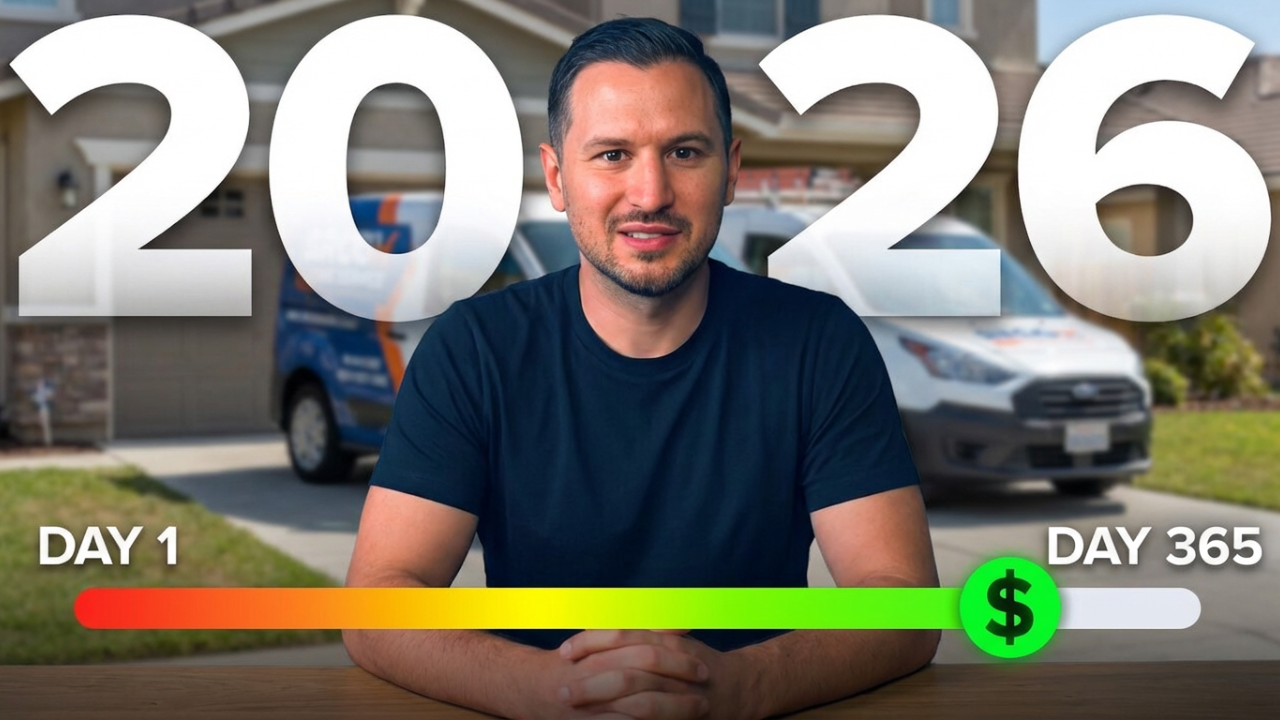
If you want to play the game on hard mode… randomly pick an industry and hope it works.
In this episode of Owned and Operated, John Wilson and Jack Carr break down exactly how they’d build a home service business in 2026—and why the old 2016–2020 playbook is dead. They go deep on research-first market selection, avoiding late-stage consolidation traps, picking “boring” services with clean SKUs, and building a business that can win even when weather, competition, and ad platforms don’t cooperate.
In this episode, we cover:
- Research, Research, Research: Why “randomly picking a trade” is hard mode—and how to find unmet demand in a specific market.
- The 2016–2020 Playbook Is Irrelevant: Why advice from the late 2010s doesn’t match today’s competitive reality.
- Consolidation & Multiples: How consolidation changes outcomes—and why “gold mine” industries can cool off before you’re big enough.
- Pick the Right Industry (Fragmented + Big TAM): What to look for in a winning service category in 2026.
- Boring Businesses Win: Drain cleaning, duct cleaning, leak detection, jetting, water filtration, septic, turf—simple offerings, repeatable operations.
🔥 What You’ll Learn:
- How to choose a home service niche in 2026 using market demand + consolidation timing, not vibes.
- The fastest path to “easy leads” (and why competing in stacked markets is an uphill fight).
- A practical framework for building a saleable business—even if you don’t plan to sell.
- Why multi-location forces better systems (and reduces dependence on a few A-players).
- Where the next marketing edge is coming from as attention shifts and platforms evolve.
Shout Out to FieldPulse 🚀
FieldPulse is an incredible Field Service Management platform that helps you save hours each week while keeping your operations running smoothly. If you're looking to streamline your processes, stay competitive, and focus on what truly matters, FieldPulse is a game-changer!
📅 Book your demo
💼 Extra Special Thanks to Service Scalers!
We’ve been partnering with Service Scalers to maximize our Local Service Ads (LSAs) and optimize our Google My Business profiles, and the results have been incredible. With hundreds of thousands in sales and 900+ calls in a single week, GMBs are now our top-performing organic lead channel.
Want to learn how Service Scalers can do the same for you?
🔗Check Them Out Here
💼 Big Reputation — Stop chasing reviews and watching competitors outrank you. B
More Ways To Connect with O&O
John Wilson, CEO of Wilson Companies
Jack Carr, CEO of Rapid HVAC
📌 Disclaimer: Some links may include UTM parameters or affiliate relationships, meaning we may earn a commission if you make a purchase. Episodes may feature sponsors, but all opinions expressed are our own.
OAO 279
[00:00:00] If you want to play the game on hard mode, you are gonna go and randomly pick something like I did
if I were building a home service business in 2026. Here's how I would do it.
If you can find something right out the gate that has a need that's not being met, then you're automatically starting with a.
There's gonna be more consolidation, which means multiples go down because somebody told you, Hey, roofing is a gold mine right now. By the time you build a big enough business, it might not be a gold mine anymore.
It is research, research, research.
So the playbook that existed from 2016 to 2020 is irrelevant.
I don't like that.
Oh my gosh.
Welcome. Back to owned and operated. I'm your host, John Wilson. I'm here with my co-host, Jack Carr. We're here, it's Wednesday, January 14th. It's 50 degrees. We sell hvac. So we're all grumpy.
Great intro. Nothing gets great intro. People walked into a [00:01:00] hook just like I, I'm John, it's 50 degrees.
Hey, it's John.
I'm John. It's 50 degrees. I'm crying every day today. What's
going on? I'm, I'm ready. I'm ready. Let's bring energy.
Me too. I'm ready to go. All right. I'm ready to go. Today what we're talking about is if I were building a home service business in 2026. Here's how I would do it.
Oh, sweet. Yeah, I'm ready.
Fuck yeah.
Let's full send this thing.
Yeah.
Okay. If you, Jack, were to build a home service business 2026, uh, using 2018 playbooks, how do you feel like you'd, do you think you'd win? You think you'd get crushed? What do you think?
I think that I knowing, see the nice part about having done this is I know where the grass is actually greener.
Yeah.
Like I know what would've worked a lot better from the get go. And so I, I want to go into the, the way back time machine. Yeah. To where I bought an HVAC company in the middle of [00:02:00] Middle Tennessee. Yeah. If you were going to start, this is a generalized topic, right? So
yeah.
If you were to start a home service business, the first place that I think you start is on research, right?
It is research, research, research. Because if you want to play the game on hard mode, you are gonna go and. Randomly pick something like I did. Yep. In a highly competitive city where it is going to be a difficult climb, there is much easier fish in in the sea to go after. And research is the number one thing.
Like, let's go ahead and figure out. Yeah. Less about your skillset, less about any, like not including your skillset, not including anything. To start, it's like what's the job market look like? What's the business market look like? Mm-hmm. In that specific region. 'cause if you can find something right out the gate that has a need that's not being met, then you're automatically starting with a win.
Yeah. Like you don't have to generate [00:03:00] leads. The leads will instantaneously flow to you making life and the business easier.
Yeah.
So what, what do I mean by that? I mean, right. I got lucky in the sense that my HVAC company was in the middle when I bought it, of a suburb of Nashville that is very wealthy.
Mm-hmm. And has almost no competition. So lucky, a hundred percent lucky.
Yep.
And as we expanded out, it became increasingly difficult to to go against other competitors in the Nashville region because I'm going against a hundred million dollar companies. That being said, when we expanded plumbing, we expanded our plumbing profile.
When we did that, we looked at. The suburbs around our suburb. Yeah. Farther south away from Nashville. And we were able to rank number two in plumbing in a 50,000 person market within two weeks.
Yeah.
Like we were able to generate calls within two weeks, no money, uh, to put into it like just organic traffic.
Mm-hmm. [00:04:00] Instantaneously and like that is so much easier than having to fight uphill to get. Leads. So that's my soapbox to start.
Have you ever bought enterprise level software and realized that managing it really just became a full-time job? Well, that's pretty much exactly why my restoration business switched over to Field Pulse.
We were tired of software that promised efficiency, but came with endless training sessions, onboarding and frustrated techs, and using it began to feel like it was a job all on its own field. Pulse was built for owner operators who don't want more dashboards, they need scheduling. Invoicing and job tracking, and they needed all to live in one place without the chaos or the learning curve.
Field Pulse is simple to roll out. It's easy for your team to actually use, and it was 75% cheaper than the other titans of software we were using right now. If you book a demo with Field Pulse, you'll get an exclusive partner offer. It's 20% off an eligible annual subscription and 50% off. Premium support for your first year.
If your [00:05:00] software upgrade has turned into a time suck, it might be time to make the move, book a demo with Field Pulse and see if it's a better fit. My like, uh, and we'll, we'll dive a lot deeper. I think the only thing that I would add that I think is especially interesting in our, in like plumbing, HVAC electric, is what is the amount of information available and how recent is that information?
So when I think about like everybody who's, uh, like big platforms today that's creating content like nine figure businesses or near nine figure businesses, the playbook that they ran three years ago, four years ago, eight years ago, in our example here, 2018, this is a different playbook today and you cannot.
There's a lot of content that was created at the back end of the teens, but hey, in the back end of the teens, like Heartland and Apex and Wrench Group, all these guys were just getting started. So the playbook that [00:06:00] existed from 2016 to 2020 is irrelevant to what's now. Uh, today's playbook and today's com competitive environment.
I was talking to. Um. I was talking to somebody yesterday and he, he on like the market, uh, for uh, like plumbing, HVAC businesses. Mm-hmm. Are they still aggressively trading? Like what's the vibe at the moment? And his vibe was one. Yeah. They're still aggressively trading like 20, 26 is off to like just a roaring start apparently.
Eventually you do run out, like you're gonna run out of like the big meaningful targets and there's just not that many left anymore. Now granted, there's people coming up, they're growing, they're whatever. But I think, you know, that's a totally different experience than eight years ago where it was a very fragmented market.
We're now approaching like. Unfragmented. Uh, which is kind of interesting. Yeah.
Which I was talking to someone about that yesterday and I think that's the goal. Um mm-hmm. Is like, you need to find that [00:07:00] 2018 industry. So what's your view on industry and model when you're thinking about this? 'cause home service right, is a big bucket.
You can go pest control, you can go roofing and like, I mean, pest control and roofing outside of the HVAC, plumbing, electrical box. Yeah. They're massively different models of business. One is a sale, big ticket. Marketing big ticket and one is route based. Lots of, lots and lots. Mm-hmm. Small tickets on subscription.
So like where, where's your view on if you're thinking about starting a business, where are you going and why?
I would probably try to avoid the things that are currently in the process of heavy consolidation. So like plumbing, HVAC electric is nearing the end of their end of consolidation. So, you know, my note on that is like if you're thinking about raising money or if you're thinking about partnering with a firm, then like you should probably do it in the next two years because they are like, the big firms are starting to trade.
There's gonna be more consolidation. Which means multiples go down. There's other firms like, uh, [00:08:00] roofing or water, mit, like water, mit. I was talking to a buddy this morning and, uh, they bid a really significant price on a water, mit, like a 9 million EBITDA water mitigation company, which is like Spro and you know, like damage happens to a home and restoration.
Um, yeah, restoration. Yeah. And they bid it 11 times. Mm-hmm. And they got blown out of the water. It wasn't even close. They, like, the company ended up trading for like 17. Um, which is crazy. So know that's, I, I sent
you that, that pest control. I sent you that pest control one a couple months ago on from Twitter, and it was like, oh, we had an 18 x exit on, 1 million in even.
And I'm going
so crazy.
We've messed up. HVAC is the wrong industry.
Yeah,
yeah. Build a million dollar, you know Yeah. Pest control route and then sell that for 18 x. Like that's wild.
Yeah. No, I, I, I agree. Um, so yeah, I think like if I wasn't already in plumbing, HVAC electric, I would probably go for something that's not being consolidated.
Uh, so the example that somebody gave me yesterday was, Hey, [00:09:00] back in the like 2010s and early two thousands, a lot of the wholesalers were being consolidated and um, like some people held out, some people sold some people whatever, but like, eventually. You basically either got bought by Ferguson or run out of business.
Like there's still some independence that are like big. There's a couple family owned ones that are really big, but they were also big a decade ago. Um, but like it is a, a lot of consolidation and it's still happening. Even now. There's just not that much more and they're also just not worth that much. So that's the problem is if you're starting to build today because somebody told you like, Hey, roofing is a gold mine right now.
Well, by the time you build a big enough business. It might not be a goldmine anymore. Like it, the, the consolidation could have already gone and like it could have gone. Yeah. Now it won't be worth nothing, but it's not gonna be worth a $18.
You're assuming though, that the goal of the build is to sell. So like all this, I
am assuming
advice is, is somewhat negligible if you're a buy and hold, Hey, I want to [00:10:00] run a roof.
Well,
I mean, net worth, like, what's your net worth? Right. So like it, the value of whatever it is that you're working on matters.
It does, but I'm just saying that like from a cashflow perspective, there's some people that just, Hey, I wanna pull a million dollars a year out of a roofing business and call a day.
Yeah. Like that's a, that's still incredibly wealthy. Whether their net worth is 10 million or 20 million if they're pulling a million in cash, right.
Yeah.
Um, but I don't disagree. I do think that that's something that you should, a, again, it's the advice build, like you're going to sell whether you're going to sell or not.
Yeah. Keep leaning on. Yeah, I think so. I think so.
And, and so
from there, but yeah. So how, how late in the consolidation stages is it? Mm-hmm. So like if, if, uh, water mitigation is in its first year. Well, you've got six, seven years to build something valuable. And speaking of marketing, hot wa,
water mitigation is on the rise in terms of like,
yeah, dude, it's crazy.
Recently I've heard more and more like the internet is starting to swirl around water mitigation.
It's,
yeah, it's, it's funny. The crazy thing, so I have some buddies who are [00:11:00] in water are in restoration, and I've been talking to them and they're, it's all B2B, it's all like this. Yeah. I'm going, why guys? I understand the model.
I understand why you do this. Yeah. And the way you do it. But like mold for example is such a visual product. Mold, right. Or a visual issue.
Yeah.
That like you could do. Direct to consumer education and you can
crush well. And the, the prices, the prices are crazy too.
And it's
crazy. Yeah. It, it's always been funny.
So we've had a water, yeah, we've had a water mitigation department since 2020. Um, and it's a really. Profitable part of the business. Um, but you know, as whenever we thought about like, it, it was never a hot market Yeah. For, for water mitigation. So it's just, it's really funny 'cause we've been, like, we've been in, um, we've obviously been in a really hot market for plumbing, HVAC electric, and then now we have like mold remediation, which is suddenly like, you know, the next thing and we're like, all okay.
Sure.
Do you feel, do you feel that electrical is, is [00:12:00] considered a hot market?
No, I, I don't, and I honestly, I think it should be, uh, but I don't think it is. But I, I think electrical, electrical would be a great one because people do not think about it.
I love electrical. I think
that every, even plumbing, like you could separate HVAC and plumbing pretty cleanly.
Yeah. Like HVAC was like 2016 to 2021, but like, hey, plumbing's been like the hot chick at the bar for the last four or five years, and I think electric could become the next thing.
I like electrical man. I just love electrical. It's my background, which is part of the reason. But the other reason is again, if you do that research, like look up HVAC companies in your area and then look up residential service or residential.
Yeah. Electrical companies and there will be one or two.
Mm-hmm.
And they'll have like 16 reviews. Like Yeah. It's like the market is so much easier, um, from a, from a marketing perspective to Yeah. To pull those in. And most of the contractors are doing new construction, like
Oh, totally. Yeah. It's a lot of project stuff.
Alright. So if we're starting today, so [00:13:00] that's how we'd select industry. So we'd be really thoughtful about like, Hey, how much information is there? How big is the opportunity? Or the tam, the total addressable market. Um, how, like at what point of consolidation are we super early? Is it not consolidated at all or is it very consolidated?
Mm-hmm. Like it's, it's tougher. Like you want a, it's called fragmented, so you want a fragmented industry, which, um, arguably. Uh, there's still a lot of businesses out there, like total number of businesses. Maybe there's like a hundred thousand plumbing HVAC companies, uh, but the biggest 300 are now all owned by the same 15 firms, right?
So, uh, there's a lot of them, but it's, it's really not as fragmented as it looks anymore. So you want fragmented with a high total addressable market. And, uh, ideally s. Whether or not you wanna sell today, it, it doesn't really matter. I, I do think building with the idea of like, Hey, if you get sick, what can your family do with this asset?
Is important.
Is important. [00:14:00] Yeah.
So, uh, you, and the only reason you wanna think about that is, is the company eventually saleable to someone? Is there a eventual buyer for a $2 million roofing company or MIT company, or whatever it is, landscaping, whatever it is. You want to know that there's an institutional level buyer.
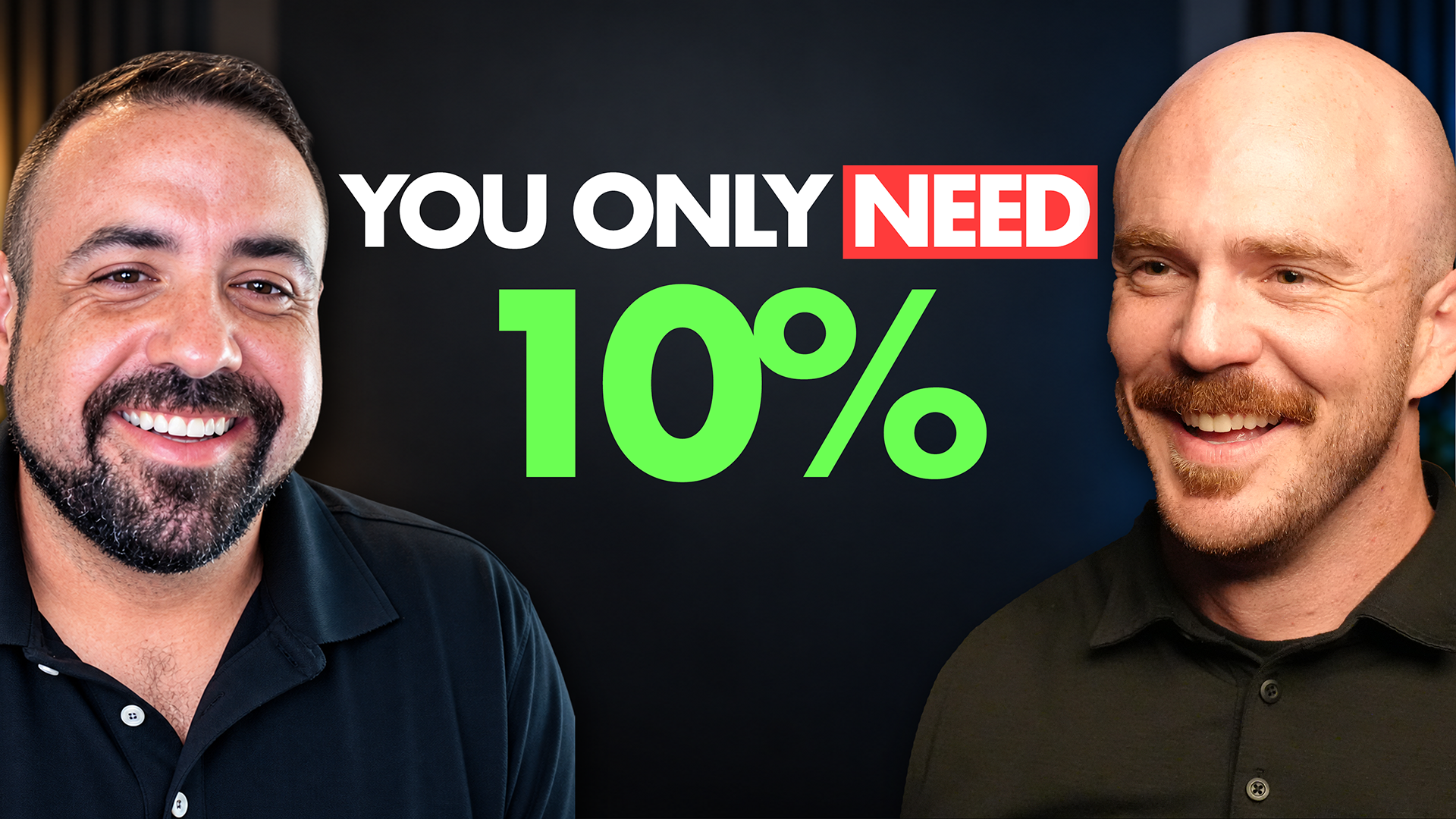
At the end of whatever your journey is, even if you don't think you're gonna sell one day, someone of businesses only do two things. They either sell or they shut down. So eventually it's gonna sell. So just have that in mind. If I, if I were starting today, something I liked a lot, uh, and I've talked about this so many times, but it'd be picking one boring service with like five total things that we do.
I just think that sounds amazing. Uh, like a Zoom drain franchise or like, you know, we had, uh, Ken Goodrich, uh, and he's from, uh, ghetto, but he's doing generator, this electrical generator roll up. Um, so they're just like installing generators or, uh, like we've always [00:15:00] joked about like the water heater guy, like just being the water heater guy.
Uh. I would pick something boring. Duck cleaning is another one. Boring that I could like run five or 10 total services that are like very tangential. Um, and just do as many locations as possible. And scale via location instead of like service expansion, which is how we scaled, is service expansion.
IDI don't like that.
Oh my
gosh. I mean, I've never done it, so like it again to me and I've, I've had this conversation with a few people.
Yeah.
Even on this podcast like that sounds like my nightmare is to do. Oh my god, that sounds amazing. Do well. So, okay. How hard is it for everyone out there to get one? Like the question we always get, Jack, how did you hire a good gm?
Yeah, well, newsflash for everyone who doesn't know my story, I didn't hire a good gm. I just did. I think,
yeah.
I love my new gm. Uh, so if he's listening, I, I love the new gm, but my old GM kind of you love you back, stab me on the way [00:16:00] out. Um, so all that being said is like. Now, how do you go and you find 10 good managers to run, run 10 locations?
Like that's what sounds really difficult to me. Um, and so that's why I don't like it. That being said, from like a opportunity standpoint, like it probably is one of the best models. Mm-hmm. It just sounds like a nightmare to me. Um, yeah. Just because like again, you, you can run in this. This cross section where operational efficiency meets revenue, and you can kind of cap at that point like, Hey,
yeah,
this, this business runs super well with a manager, a CSR dispatcher and five technicians.
It does 3 million in offshoots, 30% net like, and if you can recreate that in 10 spots, yeah. Yeah. Like that is truly like an awesome opportunity.
Yeah.
Like the headache though for me is like, how do you find 10 good managers? Um,
and I'm sure it's
possible.
It's just like, yeah. I, I do think that part's hard.
Yeah. I, I do think that part's hard. Well, that, that's the next one is like. [00:17:00] As you're thinking about it, the org chart is the neck. It's the big problem. So if you talk to any multi-unit operators, which if you haven't been paying attention, we're suddenly a multi-unit operator ao, um, org chart. Uh. Like who's the manager?
Who's the leader, is the most consistent, uh, problem. So if, if you, if you listen back, like if you've been a long time listener, uh, like we interviewed, um, Chad Peterman and we interviewed Tommy and we interviewed uh, Chris and this was all about a year ago. And we were really like honing in on how do we go multi-location 'cause we were prepping to go multi-location.
We now are, uh, and the the big thing that everyone just kept saying over and over again is who's the leader? Who's the leader? Who's the leader? Like, who's that person that's running that location? Um, so I think all that to say, just like any other part of our business where we have to develop a deep expertise, like, well, how do you drive the lead?[00:18:00]
How do you make the sale? How do you, whatever, if if the capacity constraint is the leader for the branch, then that has to be something that we, that's what you good at need to start solving. I mean, that's the thing that you become really good at because that's gonna be now the capacity. And for us, that's not the capacity constraint yet.
Like we have some great, uh, leaders of our new branches, but, um, it will be, uh, now the what I've. So I, I think the way I'm thinking about it is almost the opposite of how you're thinking about it. We're like, oh man, how do we find all these managers? Definitely. I think that's gonna be hard. Um, when that time comes, I think that's gonna be really challenging and I don't wanna like downplay it of just hire somebody, you know, it, it's obviously not that easy.
Um, I do think in general and like a scale of like if, if hiring a leader is really hard and we already accept that, that's like an eight out of 10 difficulty hiring the right person, maybe a nine out of 10 difficulty. Even inside that there's layers, right? So hiring someone to run a [00:19:00] $50 million branch.
Is much more complicated than hiring someone to run a $2 million branch. Uh, and there are far less leaders capable of running a 50 $50 million, uh, branch than than a two. There's a lot of people out there that could run a really effective two to $4 million branch. Mm-hmm. Um, so I think that's a part of like, hey, as, as you're thinking about your opportunity and as I'm thinking about the opportunity and like, Hey, I wanna have one service.
Five to 10 total service skews spread geographically. That's a part of why I'm thinking that way is it's really hard to hire amazing operators that can run $30 million or $40 million. That's hard. I'm not saying it's not hard to hire someone to run a two to five, but there's just more of 'em. Uh, so I can go out there and recruit.
Yeah, I can. And, and it's a really good, uh, like, you know, that ops manager position or branch manager position. Is a [00:20:00] perfect stepping stone for, Hey, I'm, I'm a, I'm a plumber. I've invested in myself. I want to take the next step in my career. And I see that as like a leadership position. Mm-hmm. A two to $5 million branch is like perfect for that because it's a very frontline focus.
Like there's not layers of leadership. Yeah. Right. Like you're dealing directly with your field team. Um, so. Even if there's not people that are like perfectly suited, there's a lot of people that are wanting to change their career path and go into leadership instead of like mm-hmm. Continue to develop their trade.
So I think you have a lot of talent is I, uh, I guess my long version. For too long, I was letting the wrong marketing agencies set my money on fire, and their marketing looked pretty good. On paper, the reporting was attractive, but at the end of the day, it just wasn't driving leads. That's why I started using service scalers at Wilson Service.
Scalers is a marketing agency built specifically for home service companies. They focus on the channels that actually drive leads, like targeted PPC, local service [00:21:00] ads, SEO, Google Business Profile, so that you're showing up. In front of your customers that are actively searching, they'll help you see exactly what's working, so you stop wasting ad dollars on low quality leads.
Right now they're doing something crazy and they're giving the opportunity for one entrepreneur to get up to 12 months of marketing on them, so that's up to a hundred thousand dollars in services for the right operator. If you are serious about tightening up your marketing and 2026 and want to see what this could look like for your business, go to service scalers.com and book a free strategy call and let 'em know that I sent you.
I don't disagree. I think anything that everything you said there is, is applicable and Yeah. Again, especially if you have the back of house management covered. Yeah. Like that also supports the frontline leader. Mm-hmm. And a branch manager to be able to be, uh, forward specific, specifically if there's a cap on total revenue.
Like that person, yeah, he has some p and l responsibility, but they're not.
Yeah.
They're not worrying about insurance. They're not worrying about like a lot of the back of house HR [00:22:00] items.
Yeah.
They're just following processes and procedures and then being really good managers. Yeah. Um, so, but how does that, I mean, let's, let's circle this back to, um, I know we kind of went off on a tangent, but how does, if you were starting a business in 2026, like you're just, you're keeping an eye on like the type of business still to make sure that you could Yeah.
Go and, and do this kind of strategy.
Yeah, I mean, so, uh, like I'll pick on some of the examples we've already used, um, and may maybe introduce some new ones too. Uh, so like, I think duct cleaning, um, concrete leveling would be interesting. Um, like garage installation, just like standing up garages. I think that's kind of interesting.
So it's all these, um, like generally high ticket, uh. Uh, services,
secondary, tertiary vision. This is, yeah,
that's hundred percent. I'm interested you name, I can
secondary and tertiaries.
Well, 100% because it's proof installation. All I can think about is like, who's the eventual buyer [00:23:00] for this thing? Like e eventually, whether I sell it to my kids or sell it to my employees or sell it to a third party, uh, all of those are preferable to shutting it down, right?
Which is the only other option you either sell or shut down. So, um, who's the eventual buyer? So like duct cleaning, you could build a really big duct cleaning business and then sell that to an HVAC rollup, and that would be a huge win. Um, chimneys would be another one. You could sell that to an HVAC.
Rollup. Plumbing. Rollup.
Chimneys.
Yeah, chimneys. Good tur. So I would find something tangential that could eventually be sold to somebody that currently trades for very low water filtration only that could go to a big plumbing company, uh, wells. Yeah. The water filtration, well drilling.
Weld drilling.
Yep.
Uh, weld drilling's a little hard because you have to have a lot of licenses for it, but
Yep. Um, uh, septic pumping is a good one. Pumping, I mean, stic drains and septic pumping pump, that's like sort of an offshoot of plumbing. So I, that's where I would be building where it's like, Hey, how do we just do drain cleaning and drain replacement and then do that like rotor rotter style across, [00:24:00] you know, a bunch of $2 million branches and just.
Leak. It's not that hard to get a plumbing company to $2 million. It's like four costs. Like
American leak is your only, is your only comp competition in leak detection.
Totally leak detection. Yeah.
What I find interesting about, and a
plumbing
company
would buy that, an HVAC company would buy that. Like, yeah, a
hundred percent.
Yeah.
What I find interesting about all those businesses you name though too is like, the model is interesting in the sense that there, those are almost all like your customer is B2B. Yeah. Uh, it can be B2C, right? Yeah. But like a lot of those are subbed out businesses, so like Yeah. Water filters are generally B2C.
Yeah. Like there's a bunch of companies doing it, but like duct cleaning, sometimes it can be B2B. Uh, leak detection can be B2B. Mm-hmm. Like you're, you're the sub for large companies. A jetting. Jetting is a great one. Like I'm only a jetter. You can work directly for the restaurants. Yeah. Or you can sub to plumbers.
You could do municipalities. Yeah. I mean, there's a big drain company that, uh, local to us, we've talked to them about acquiring them and. [00:25:00] They like jet municipalities and restaurants and they have service contracts with like, uh, all these gas stations and TPAs and all that stuff, but it's an 80% fricking gross margin drain cleaning business.
Like it's incredible. And they do $7 million of revenue a year. Like it's a crazy business. Yeah.
I love jetting.
Yeah, no, it's great. It's great. So yeah, so that, that's a great place to start. But I think like how could it be a little bit tangential, but close enough to something that someone's gonna buy it?
Fake turf would be another one. I mean, that'd be a huge add-on for some giant landscaping company. Hey, do you want. Do you want fake turf? Uh, all of the people that put this in are probably your ideal customer for planting or indoor plants or like whatever other tertiary stuff you have.
Yeah, a hundred percent.
Yeah. The, the downside though, which we've talked about before is it's, it's very hard. I, I know you, you just gave an example of like Yeah. Drain cleaning, going to 7 million. Yeah. Um, or jetting.
Yeah.
But for a lot of these companies, like the cap on, um,
I actually
think that's great.
Actually think that's kind of hard.
It is. So I'm, [00:26:00] I'm, I think I'm kind of into this. So
back to your strategy though, it's like you have to do multi-location.
I think it's multi-location. 'cause I think what'll happen, um, if, if you unpack that, that I'm, I'm doing air quotes problem, another layer. To me I see that as like a feature, not a flaw.
Mm-hmm.
Um, so I know, I know for us, as we were really growing from like 10 to 20 million, uh, it was a very. A player driven growth. Like we, if this guy performed, we did well. If this guy did not perform, we did not do well. Um, which as you're building, it doesn't, like, you don't think about it like that, but then, but then you're in it and you're like, okay, well really, I have like a couple A players driving the business and what happens if I lose them?
And how do you keep 'em? And then how do you prevent that per the personality that comes with that from ruining the rest of your culture? Uh, [00:27:00] and what we sort of backed into over time is we don't need, we don't need that one guy or, or girl or whatever to, to be the freaking boss and drive the performance.
What we need is a scalable system, and we need, like, can we make it so our business can thrive with a ton of B players? A couple of A's instead of like one or two a's, and just driving everything. So we started really focusing on like how consistent is our training? How consistent is our performance? Yeah.
Will an average, uh, will an average team member do 40 grand a month of revenue? Will they book on average this amount of calls? And really trying to back into like, yes, we want those A players, but if they're not present. Can we still thrive? And I think that multi-location helps to drive that a little bit further, um, because you're no longer, like, you have to build a system that scales based on whatever talent you have available in that location.[00:28:00]
And it's gonna be very like, consistent training. Are we following our KPIs? Are we like consistently driving the behavior and performance that we want? So to me, I, I see that as a really good thing. That you have to figure out how to actually run a business instead of hiring two A players that are 50% of your sales.
No, I mean, that, that goes along with what we've talked about over the last three years. Here. It's like, you know, the mm-hmm. One of the best things that, that we've, I still, the hill I'll die on is don't buy a business without marketing. Zero marketing is not a benefit. Yes. It again, any of these, these, uh, features that you have to, you're forced to build the muscle to be really good at.
Yeah.
Like that's the benefit is that you guys are really, really good at marketing. Mm-hmm. Like, that's the win. 'cause then you just turn the knob instead of the, the switch.
Yeah.
Um, sweet. So, okay. And, uh, we spent a lot of time on like pick. I, I do think that's the most important though. It's like [00:29:00] you get ahead early on by.
Yeah. Picking the industry is really important in the right industry.
Yeah.
Um, and notice we didn't talk about, you know, you being a plumber or you being an electrician. Like
Yeah.
I think that it's somewhat agnostic.
Well, I don't think, I think that's irrelevant. Yeah. I think it's irrelevant. I think like, um, it might help you in the first week, but, uh.
I, I don't, I don't think it long-term matters. I think, um, the way I've said it is, uh, as we've trained is the, the trade itself is obviously important. We have to do a good job at whatever it's that we're doing. Um, but you can hire really talented people to solve that one problem. And then once you figure that problem out, well, you have six other problems you have to figure out, can you run good clean accounting?
Can you run hr? Can you run marketing? Can you run a call center like. Can you run the rest of the business aside from that one part of it, which is the trade? And if you could, if you know the other six steps, then the seventh one, which is the trade is somewhat [00:30:00] interchangeable. Yeah.
So then what, what is before, uh, we run outta time?
What's, what's like the, the next deep dive step that you would take is like, okay, you picked. Your trade, uh, you know, uh, drain lining. I love that one. I think that's a new hot one by the way. Like go into a market that is starting to have tons of drain lining. Yeah. Buy the trailer a hundred K. Yeah. And get trained up on how to do really, really good drain lining and then sub out to, uh, plumbers and B2C.
And then what's the next step? The next step is probably that you're hiring your first employee.
Yeah. Like who's gonna lead it?
Yeah. And who are you looking for?
Like be, because if you can figure out the rest of it, like my goal would be who is, you know, we just talked for a second ago, like, hey, the trade is like, you know, you have to know how to do the rest of the stuff, but you can figure out the rest of the stuff.
Someone does have to be a trade expert and ideally that's your first hire. So that way when you do go get the lead book the call. [00:31:00] Sell it, all that stuff. You do have someone that knows the craft, uh, that you're doing. So if, if it were me and it's a something new, uh, I would be looking for a partner that understands what industry we're in and has ideally done this before.
And
most of these, you will actually need somebody to hold licensure for you. Um, so like, oh yeah, this is, this is perfect opportunity. That's, you go out and find someone who's hungry, who wants mm-hmm to be a business owner, but maybe doesn't have the business acumen.
I mean, that's one of the most common questions I've gotten over the years is how do you solve the licensing thing?
Uh, and the answer is you hire someone, like you hire someone, like we, we we're actively buying a business out of state right now, and they have licensing and like, uh, and if they didn't, we'd go hire like, but that, that's how you solve it is the seller carries the license. You go put it on Indeed license holder.
Um, but you can hire license holders. Yeah. If, if you don't personally have it though, that's really the only path.
Alan from Person Hunter Bacon [00:32:00] and I talked about this a lot and, and not only that, like I know we're talking about starting a,
well, I think SBA is
really, but if you're gonna go buy a business right.
Um, instead of start one from scratch. Yeah. I mean, you needed a license in both cases, but like in terms of coming off as a real buyer, like go get that ahead of time. Go partner with someone ahead of time. Yeah. And then go out and find the deal. Like that's, I think where the. Like importance that you start this process early on.
So you've identified your business and then you go find Yeah. The Allstar, you go find the Allstar. It's probably, yeah, for you, if it's a brand new thing, it's probably a little bit of equity, A nice paycheck based on Yeah. You know, actually going out and making money. Um, right. So generating revenue and then, uh, working with that person, day one, get the license, get the equipment, get started, and then they're running the, the technical side while you run the business.
I think it's a good partnership for a lot of people.
Yeah. No, I, I, yeah, I think that, I think that makes sense.
And then go market. Go knock [00:33:00] doors, get out.
I mean, yeah. The reality is if you're a home service business, you're a, you're a marketing and sales business. And that took me like six years to come to term with terms, with, um, but like once we came to terms with it, we.
I don't know, quadrupled or whatever, but that's what we are, we're a marketing and sales business. We have to get the lead. We have to sell the lead, and uh, the rest of it, it sort of comes down the
wash. I idealistically though, like that's why we spent 30 minutes talking about picking the right industry is mm-hmm.
If you pick the right industry, like the marketing becomes so much easier. It's $15 cost per lead instead. So much easier instead of $600 cost per leads. Yeah.
Yeah. Or can you activate it with cold calling or canvassing or like, what are all the levers you have at your disposal? Um, I think it would be fun to build a business on the back of canvassing.
Like canvassing has been a really big part of what we've done in 2025 and like in 2026. It's now one of our most strategic resources. And it would be fun to like build something just on the back, like windows or roofing or like pest control I guess. But like, you could do [00:34:00] anything where like, how do you deploy like a hundred canvassers?
I just think that'd be hilarious. Like, sounds so much fun.
My wife bought us pest control from a canvasser. Yeah. And I got home. I was like, whatcha doing?
Yeah,
don't do that.
No, it's, it's so, it's so good. Well, I, I like that you can just literally control it. There's no Google. It doesn't matter what meta ads, like if people are clicking on buttons, like you can just control it.
And that is a really like intoxicating idea.
Oh,
garage. Uh, like driveway is, we talked about that. Yeah. Uh, you know, concrete, leveling, turf, all of that stuff. As I was coming, you know, duck cleaning, I guess not, but like all of the other ones I'm like. You could, you could run canvassing at this. Yeah.
So John saying, the second step is after you get your killer, you go start marketing and you just start knocking doors.
Just start. Just start knocking doors. Hell yeah. What's the worst they, hell yeah. They flame your business online and you only have two rooms anyway.
Yeah. Come up with a second [00:35:00] brand. I don't know. Restart the new brand. Yeah, fake brand for when you're canvassing. That's right. Yeah. That's funny. Um, alright.
Winners in 2026. Uh, if you're actively running a business, I, I think the best way to win here is to focus up on ebitda. Um, 2026 is, uh, 25 was an interesting ride, obviously for hvac. We complained about it a couple episodes ago. Um, it was tough and like going in 26, it's 50, 60 degrees when it should be 20.
In most of the, like every, everywhere. Tennessee, no.
Everywhere. Like
dude, I have friends texting me every day. Reno. Do I have a friend in Columbus? He's like, dude, the word, I don't even wanna look at where we are month to date, because we are so far off budget and this is a $60 million business. Like this is a good size established business with a marketing engine sales engine.
And they're just like, dude, I don't know, like, I don't know, 60 degrees. And I'm like, yeah, 60. Yeah. This is crazy. So just focus up on ebitda. You know, I was, I was talking to someone this [00:36:00] morning, um, and I was, I was like, Hey, how's 20? How'd 25 go? And he's like, yeah, dude. Big, like, big year, big year. Um, like EBITDA was up, whatever.
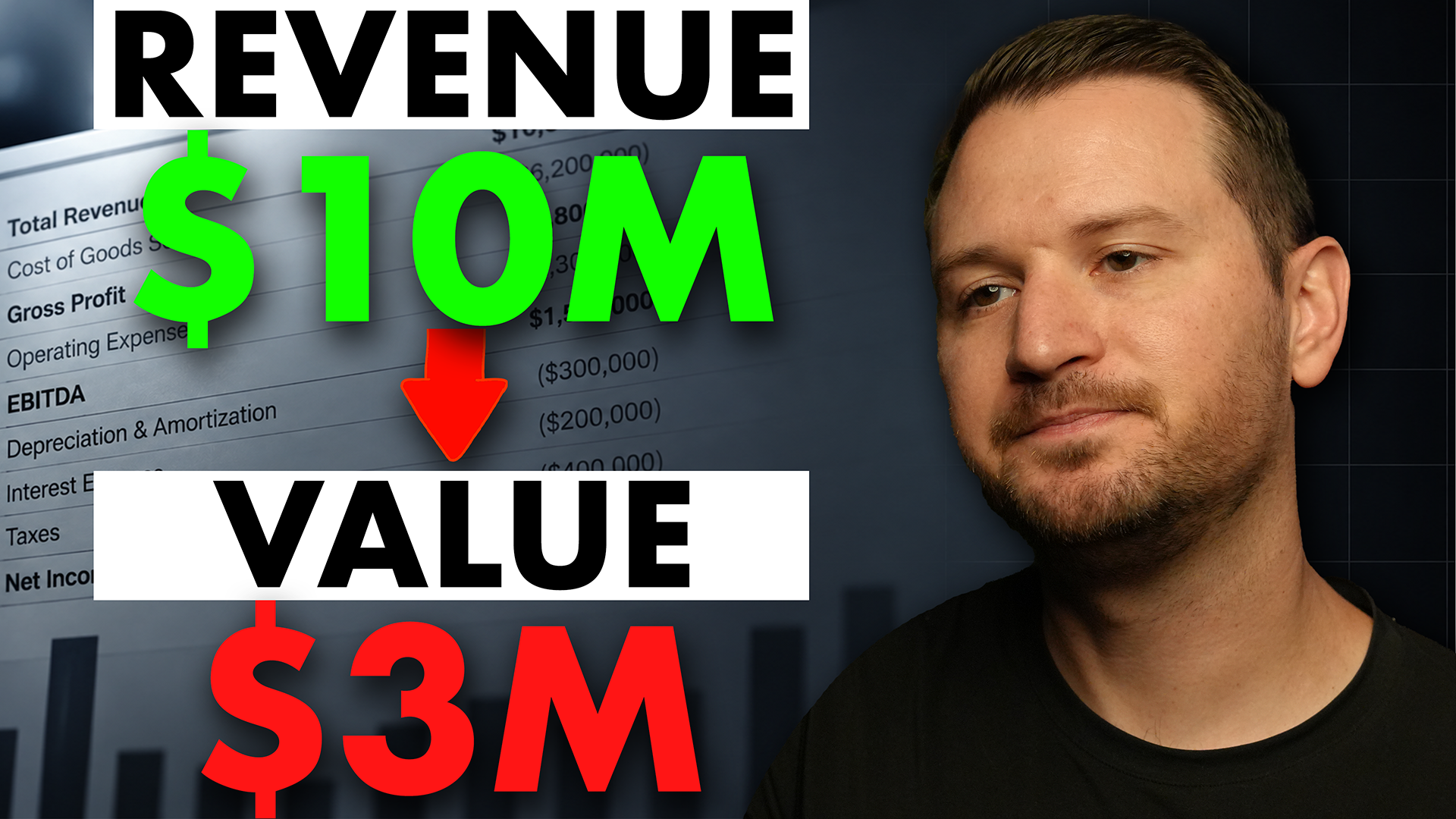
And, uh, and what I think is hilarious and, uh, Tommy Mellow said this on a podcast on this show like two years ago or something, but he was like that. As I got into better and better rooms. Nobody talks about revenue. Like literally nobody. The only people that talk about revenue are like owner operators like me, like you and, um.
I'll ask these. I'll, I was like, Hey, what'd you guys do last year? And they'll gimme their ebitda. I'll ask them what their revenue is and they actually don't know. That's
actually kind of cool. Yeah.
Yeah. Well, I, I think it's like, I think
you're gonna do the,
their eyes on the price
revenue for vanity.
So it was, was kind
sanity.
You know his
son needs. I mean, it's more just like that's yes. Yeah, but that's the only language that the people that, Hey, you're gonna pick the right industry, or maybe you're already in it. You're gonna build, you're [00:37:00] gonna hire the right people, you're gonna spread multiple locations, you're gonna do all that stuff.
At the end of the day, the people that are your eventual partners or buyers or investors or whatever, they don't even know what your revenue is. They don't particularly care. They want to know what's dream to. As Wilson has grown into a regional powerhouse, I have stopped having the time to be able to babysit our Google business profiles, and that's why we started using big reputation.
It turns my Google business profile into a dependable lead engine without pulling me back into the weeds within the first 30 days of using big reputation. Call volume from our Google business profiles went up nearly 27% jobs booked from Google also went up 20%. Without us spending any more time to manage it, it helps us keep our profile active.
Manages reviews, responds fast and shows Google a business that's trusted, alive and worth ranking. You also get real visibility into what is happening, your review volume, your sentiment trends. Which tax locations or [00:38:00] teams customers are actually talking about. There's no more guessing, so it's less babysitting, it's more signals to Google.
And most importantly, it's more inbound calls. If you want Google working for you without becoming another job, check out big reputation.ai.
Yeah, I think it's revenue's important though in the beginning because Right. Growth is really where the revenue shoots up. 'cause I mean, you, if you, if you
well that company, the water make company.
That ended up trading for 16, they did 20 million of
revenue. I'm saying if I talked to John four years ago, like revenue was important.
Yeah.
Because your EBITDA was nothing. Yes. 'cause you're putting all your EBITDA back into marketing. Yeah. And growth per, you know, so like,
yeah. Yeah.
I just wanna be clear, like yes, EBITDA is extremely important, especially in hard markets like.
This year. And that's what I'm wanna
clarify. Well, yeah, no, what, what I was saying was like, if you're already in it and you're in 2026 Yeah. How to win.
Don't disagree.
Focus on bonds.
Don't, it's focused on being tight, it's focused on, 'cause again, your revenue doesn't matter this year. Yeah. If your business goes under because you're running negatives.
Yeah.
Um, that being [00:39:00] said, like off years, like focusing on growth, like Yeah. It's a, it's a revenue game, not a EBITDA game. Um, but. Yeah, it's a hard year. I mean, it, it's definitely starting as a hard year, um, for a lot of people.
Mm-hmm.
60, it's, it was 60 degrees yesterday in Tennessee. It's 45 today,
it's 50
here.
So that is a very good point though, is the winners, I think. And the other part is like, I think Winters got scrappy
well, and this, and the people that are gonna eventually take Jan, like they, they only speak one language and it isn't revenue. He literally didn't know how much revenue. Like it was, it was really, it was kind of funny.
I was like, Hey, what's your smallest brand? He said, I 800. And I was like, oh, for revenue. That's really small. And he said, of ebitda. And I was like, okay, what's the revenue? He's like, actually, I'm not sure.
Don't even know.
Don't even know. It's irrelevant. It's irrelevant.
So they're focusing on ebitda. What else I'm doing?
I, I think that they're, people are getting scrappy in marketing. It's, I think that's where the, a lot of the change from the playbook that you talked about mm-hmm. From 18 to now is like the first big change that we ran into. Yeah. [00:40:00] Was the failure of LSA on and off. Uh, like that changed the market circa 20 22, 20 23.
But I think right now the market is drastically changing again from a. Standpoint of marketing, it's a lot of people are getting scrappy. There's different attention. Mm-hmm. Right? Because marketing, a lot of a marketing is, is being in the right place at the right time. And I think people's attention is changing.
Um, like people are now going to TikTok and they're, they're watching TV while they're scrolling, TikTok. And so how do you grab someone's attention? It's not the TV anymore, maybe it's TikTok. Um, and so like, how do you work the algorithms? How do you, yeah. Be in the right place at the right time. How are you where everyone else isn't?
Um, and canvassing? I mean, you just spent 10 minutes on canvassing, but like canvassing, nobody is doing it in HVAC and plumbing. Um,
yeah,
because it's hard. It's hard. It's very hard. But
like in, in their
defense is really
hard.
[00:41:00] But
it took us a lot of work.
So like that's where I think the people are winning is when they get scrappy and they go think a little bit outside the box.
Um, and they focus like,
yeah,
what if I can knock on your door and steal your attention from your phone? 'cause I'm talking to you face to face.
Yeah.
So,
yep.
I think that's a big win. Yeah. If you're in the industry right now or you're starting focus on attention, focus on being scrappy with your marketing.
Well, thanks everybody. Make sure you comment below. I'd love to hear how you would win in 2026 and hit that. Subscribe and like, thanks.
.png)
.png)

