


In this episode of Owned and Operated, John Wilson is joined by Sam Preston (CEO of Service Scalers) to break down how smart home service operators should budget for marketing in 2026. They explain why one-size-fits-all marketing budgets don’t work, how to reverse-engineer spend from the number of leads you actually need, and why most companies don’t have a lead problem—they have an execution problem.
This conversation goes deep on gross profit–based budgeting, flexible marketing spend, and the exact frameworks operators use to decide what to scale, cut, test, or deploy in emergencies.
What you’ll learn in this episode:
- Why marketing budgets should be based on gross profit, not revenue
- How to calculate marketing spend by backing into daily lead requirements
- The difference between budgeting for a new business vs. a 10-year-old company
- The 4 (plus 1) marketing budget buckets every operator should use
- A simple kill vs. scale framework to test marketing channels without guesswork
💼 Extra Special Thanks to Service Scalers!
We’ve been partnering with Service Scalers to maximize our Local Service Ads (LSAs) and optimize our Google My Business profiles, and the results have been incredible. With hundreds of thousands in sales and 900+ calls in a single week, GMBs are now our top-performing organic lead channel.
Want to learn how Service Scalers can do the same for you?
🔗Check Them Out Here
If you’re trying to grow profitably in HVAC, plumbing, electrical, or any home service trade in 2026, this episode will help you stop guessing—and start budgeting with intention.
💼 Big Reputation — Stop chasing reviews and watching competitors outrank you. Big Reputation is the AI-powered review + SEO platform built for home service pros. Automate review generation, respond with AI, track local SEO, and integrate with your CRM. Setup is free, and your first month’s on the house.
💼Shoutout to Avoca AI!
Looking to train your call center and improve technician performance? Avoca AI helps teams identify issues, improve call quality, and drive results from start to finish.
🔗 Connect
John Wilson: https://x.com/WilsonCompanies
Sam Preston: https://www.linkedin.com/in/sampreston/
OAO 280
[00:00:00] Today we are talking, budgeting for marketing in 2026.
Yeah. Let's, uh, let's talk about that money.
So if you're a new business, like you should expect to spend differently than a 10-year-old business.
And then ultimately it comes down to the magic answer of how many leads do you need? 'cause if you can back into that.
That's when you really win.
I'm always convinced that companies don't have a lead problem. Something else is broken out there in the chain.
The more channels you have driving leads, the safer your business is. And one of the best things that you can do when you have a budget is not manage it yourself.
It's really challenging. Just like. Put a number on it.
How would you advise them? Consult them on what to spend?
I have a long and technical answer, and I have a short answer. Which would you prefer?
Welcome back to Owned and Operated. I am your host, John Wilson. Today we're diving deeper in our series [00:01:00] Clicks to Calls with Sam Preston, the CEO of service. Scalers. Welcome back to the show.
Thank you. Excited to be back and, uh, excited to talk about money today.
Yeah, yeah, yeah. Today's today, uh, today we're talking about money.
Uh, if you have, if you're a new listener to this series or to the show, and we've been getting a ton, a ton recently. This show's been doing really well, so we're excited about that. Make sure you listen to the past couple from our click to Call series. We talked to LSAs, we talked Google Business Profiles, uh, we talked some entry level stuff.
We talked some advanced stuff. So, uh, really informative, uh, content. So make sure you listen to the past couple episodes today. We are talking, budgeting for marketing in 2026. We're talking that cash. Mm-hmm. Those stacks, those racks, baby. That grand. That's what we're talking about.
Let's, yeah. Let's, uh, let's talk about that money.
Uh,
yeah.
Because that's, we're here to do, right? Like we're trying to make money and then keep as much of this money as we possibly can.
That is what we're trying to do. Yeah.
[00:02:00] Uh, so let's talk about how to do that. Yeah. And what's the problem with
this? I actually, I have like a fun. I have a fun, um, I don't know actually how useful this is gonna be to a number of our listeners.
Uh, like as in like my quick opinion, but I've had a revelation recently for marketing, uh, budgeting for marketing, okay. And two different revelations. Uh, and then we'll actually dive into like the real content here. Okay. Revelation one. I think that marketing budget should not be a percentage of revenue.
I think that it should be a percentage of gross profit.
Okay,
so that's a big like, whoa, you know, because everyone says like, Hey, how much are you spending on marketing? Ah, 8%, 10%. Here's my issue. If there's a company that's a 40% gross margin business and they're spending 10% on marketing, that is a very different marketing budget than someone that is 60% [00:03:00] gross margin.
Also spending 10% of revenue, very, very different and uh, I think it just has to be approached differently. The reason I'm starting to get passionate about this is, uh, we have, I'm, we're, we're acquiring businesses right now and we just bought two. Let's go. And we're looking at more and we ke I keep running into these businesses that have like 45% overhead.
And I'm like, how do you have 45% overhead? And they're like, well, the, the, this book or this blog, or this guru, or this whatever, told me I had to have. 15% for salaries and 10% for marketing and 3% for rent. And I'm like, yeah, but that's if you're a 60 plus percent gross margin business and you're a 46% gross margin business, so your net profit is one.
So, uh, so that, that's one of my big, like new counter takes is I think that budgeting for sg and a opex, like marketing [00:04:00] salaries, fleet should be based on gross profit. I am not. Revenue because just businesses are so different. If you're a 40% margin business, if you're 50, if you're 60, very different budgeting.
Definitely, definitely. And, uh, just asking for a friend, what is gross profit for? Tho those people that may not know.
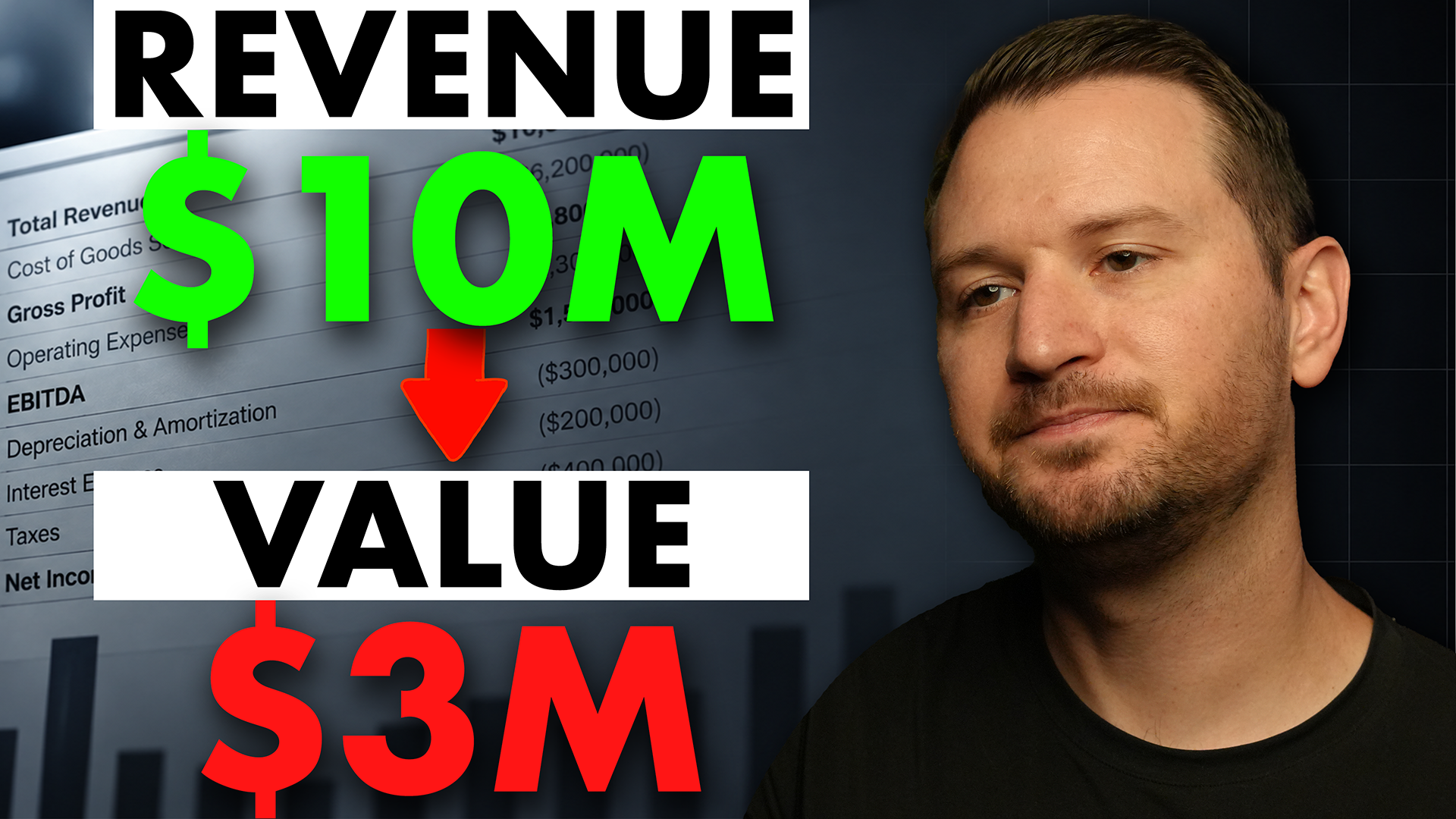
Okay. Nice. Uh, so yeah, so gross, gross, uh, profit or gross margin. So, um, if I do $10 of revenue
mm-hmm.
Uh, and it costs like my labor, so the plumber to go out and do that cost $2 and the material to install that job was another $2.
And I spent $1 on. Permits, then I had $5 of gross profit or a 50% margin, because five is half of 10. Uh, so that's gross margin and that is the cost of performing the work that you sell. So the labor, the materials, the permitting, the [00:05:00] subcontractors. A tool rental, uh, all of that goes into grow the cost of goods sold, which is the name for it.
So you subtract cost of goods sold from revenue, and you achieve, uh, gross profit or gross margin depending on which way you're looking at it. And then underneath gross profit is overhead. And overhead is things like. Marketing expense, office wages, software, fuel for your trucks, rent for your office. Uh, I'm trying to think what else benefits, payroll tax.
There's a lot that gets baked into, uh, overhead. Yeah, and it's, it's kind of a confusing bucket. Um, we've, we've done some work on this, like content on this in the past. It costs a lot to run a business. Uh, it costs a lot to run a business and like a, a, a normal business that I look at a sort of a smaller sized contractor, their overhead might be 40%.
Like that's a pretty real number. I see. That often might [00:06:00] even be more. I see a lot of 40, 45%. Um, but they might only be achieving a 50% gross margin. So that contractor might be at a five to 10% net. Yeah. And 10% is considered. I think everyone thinks they're at 10%, but when they dive in, they might actually only be at two or three.
So, um, so yeah, that's, that's how the p and l breaks down. So marketing is, uh, inside overhead and, and so that's my other, uh, sort of like, you know, well, going back to my example. If you were a 10% of revenue marketing business, in my example of $10, you would spend $1 on marketing.
Right?
Now, if you're at 50% margin, that could work out perfectly fine.
But what if you're at 40% and you're still spending $10? You have $3 left to to get net profit salaries, fleet fuel, rent, everything out. [00:07:00] I like this idea of budgeting off gross profit because, um, if you were, if you said, Hey, 20% of my gross profit is going to go towards marketing, then 20% of $4 is different than 20% of $5, and it'd be a less of a dollar amount.
That would still allow you to have a healthy net profit at the end of the. So super long explanation and maybe not very helpful to many people unless you're an absolute nerd. Uh, but this is how I'm starting to budget. All of our overhead is off of gross profit, not revenue.
That sounds like a very mature way to do that.
Me meaning when you're a smaller company, it, it's probably more of just like. Throw some marketing dollars out there. Get Yeah. Get some leads in. Probably close those deals. Just make it happen. Yeah. And then as you mature, getting a bigger company, you're like, okay, well I need, I need to mature this. I can't just keep throwing a random 10% out Yeah.
Into my marketing budget.
Yeah.
I need to figure out what numbers are we can actually use to scale this so [00:08:00] that we're profitable and taking money back home, which is what we're trying to do. Yeah.
My other, uh, thought that probably nobody cares about unless you're really into accounting, is I think that.
Overhead should be a separate bucket from marketing. And I think that the p and l should be divided a little bit where marketing is not really a fixed cost. So as we start talking about budgeting for marketing, um, it, it's really challenging to just like, put a number on it, right? Like, oh yeah, 10 grand a month or 15 grand a month, or five grand a month.
Who knows, right? Like so much of our volume comes from demand base lead sources. Yeah. Which means that, hey, in February, if I'm budgeting $10,000 a month, but no one's looking for me, yeah, I might spend one. And that's not a good thing. Like, that's a, that means I didn't get any calls and I'm really mad about it.
So it's really hard to set a budget for marketing. Like, so we have like a rough guideline, but I like separating it from office salaries, which office salaries is [00:09:00] $200,000 a month. Like that's what it is. It's a fixed cost. Um, rent is a fixed cost. Fleet is a roughly a fixed cost, but marketing is like, it's its own animal.
So I like separating it out. So you just look at it a little bit differently than your fixed cost. And those are my two budgeting accounting nerd. We'll get into the marketing stuff here, but like accounting nerd. There you go.
No, I absolutely agree. I think the, the problem with the fixed cost marketing idea Yeah.
Is that things change. Uh, yeah. You know, for example, in my own business, we launched Google Ads. Uh, again, for me to get my own leads. Yeah. And it's actually working out better than I expected, and so Oh, nice. You're like,
yeah.
Well, I want to kind of increase the amount, even though like we just had this 2026 budget and we're like, okay, this is what we're gonna spend on Google.
Sure. As a paid media, it's already like, well, it's working, so I wanna throw more money at it.
Yep.
Which is a great problem to have. But on the flip side, if it wasn't working out at some point I want to pull that money and [00:10:00] try a different paid media or a different, you know, avenue to, uh, use that budget.
So I think it's important to have at least a baseline of what you know, you want to spend. And then know that that's going to flex based off of, um, you know, market demand, what's going on, uh, what's working, what's not working, things like that.
For too long, I was letting the wrong marketing agencies set my money on fire, and their marketing looked pretty good.
On paper, the reporting was attractive, but at the end of the day, it just wasn't driving leads. That's why I started using service scalers at Wilson Service. Scalers is a marketing agency built specifically for home service company. They focus on the channels that actually drive leads, like targeted PPC, local service ads, SEO, Google Business Profile, so that you're showing up in front of your customers that are actively searching.
They'll help you see exactly what's working, so you stop wasting ad dollars on low quality leads. Right now they're doing something crazy and they're giving the opportunity for one entrepreneur to get up to 12 months of marketing on. So that's up to a hundred thousand dollars in [00:11:00] services for the right operator.
If you are serious about tightening up your marketing in 2026 and want to see what this could look like for your business, go to service scalers.com and book a free strategy call and let 'em know that I sent you. Alright, cool. Well, let's dive in. Uh, so marketing budgets in 2026, uh, feels a little bit different to me.
I'm curious what you're seeing.
Yeah, I mean, I, I think there was. Early 2025. A lot of hype went really strong and I think market kind of struggled, uh, back half of, yeah, uh, 20, 25. And so big time we started seeing a lot of people pulling back their budgets and getting a little, um, uh. Just nervous to spend the money.
Yeah. That is not the, that's not what we're seeing. Early January. People are starting to get aggressive. They're tired of the slog of 2025. They were wanting to spend more, uh, and try to make things happen, which is cool. Like, that's,
yeah,
that's how I like to play. I, I play my business aggressive. Uh, so I tend to [00:12:00] like to play aggressive with other people's businesses.
Um. So we're seeing a lot of growth. We're seeing, uh, a lot of clients going, Hey, how can we spend more money in a productive way? Not just Right. You know, let's, let's not like light fire, uh, light money on fire, but like, how do we spend this so we can get a good return?
I, I think I've, I mean that's, that was our own experience too.
Like we cut down on some branding, uh, over the summer, um, because we weren't filling the board. So it's like, okay, well, I mean, branding is, is good and like I'm a believer in it. Uh, but I also think branding is dealing is you're solving six to 12 months from now as problems, whereas like if your house is on fire today, like you need to solve it today.
So we started, uh, so we rolled back some branding, but we, you know, enhanced our, uh, lead gen efforts. Um. Yeah, I, I agree with what you're saying. So marketing budget as a whole dropped, uh, but we really focused in on the lead this January. Um, I don't think much has changed [00:13:00] for us. I, the weather's tough, the weather is tough, but, uh, I don't think it's changed like how we think about spend.
But it is 50 degrees in January. I mean, that's a challenging way to sell hvac. Yeah.
Yes. I guess the, the, the first question coming into 2026 and what you're going to spend, you're saying I'm doing it based off of gross profit. Um, so if somebody was to come to you and say, Hey, I've got a, call it a $5 million business or $10 million business.
Mm-hmm. Uh, plumbing, hvac, electrical. And we want to spend, uh, next year, how are we coming up with that number? Is it just the 10%? Are we going a off a percentage of gross profit? Like how, how would you advise them? Consult them on what to spend?
Uh, I have a long and technical answer for this, and I have a short answer.
Which would you prefer?
Start, start with short and let's see if we wanna dive in more.
Okay. All [00:14:00] right. Um, so like the short answer is what does it take to fill your board?
Yeah.
So, uh, that's how we look at marketing budget. The long and technical answer is like, what's your cost per lead? How many appointments do you need a day?
How many of those appointments come from organic resources? On average? How many of those appointments come from recurring customers on average? Do you have memberships? Like there's a lot of things that funnel into how many leads a day and how many will just get taken care of. But the short answer is how many do you lead a day, need a day?
And, uh, it can change quite a bit. Yeah, so there's a company that we bought that is 10 years old, and there's a company that we bought that is two years old, and unsurprisingly, one of them has more clubs, more recurring customer base, more organic. It's a 10-year-old business. It just has been around longer.
It has more club memberships to call it, it, it has more reviews, [00:15:00] you know, it's just been around longer, so, yeah. Um, so if you're a new business, like you should expect to spend differently than a 10-year-old business. Sure. Because one of them just, uh, has more. So the way we're thinking about a, a good way to think about it is how do you raise your floor?
Mm-hmm. Uh, so if my, if I need, I'm gonna use 10 again. If I need 10 leads a day. To fill up. My plumbers say it's like, uh, I dunno, two plumbers and five appointments each. If I need 10 leads a day, how do I, how do I reduce that amount? Yeah. Uh, and we think of it as raising the floor. So maybe the floor is, uh, four.
Mm-hmm. So I can always get four leads a day by. Texting my customers or emailing them and reminding them that they have a service agreement appointment [00:16:00] or, um, outbound calling.
Mm-hmm.
Or direct mail or whatever it is. But we've raised the floor from, I no longer need 10. I now need six because my floor is now four appointments a day.
Mm-hmm. Uh, and then. You, you can continue to back into it, but, uh, I, I think that's a good place to start for most people is how many leads a day do we need? Which you'd be surprised how many people don't actually know that, that answer. The, the company we just, uh, one of the companies we just bought, um, they didn't know, they didn't know how many appointments they needed today.
Uh, they should have gone to the Breaking five workshop or the, uh, marketing, uh, workshop that you guys were about to host, but they didn't know how many appointments they needed a day. And how are you supposed to hit a target if you don't know what the target is?
It can't.
Yeah, you can't, you can't. Yeah.
Just simply are, are unable to. Yeah. I mean, maybe you hit it accidentally, but, um,
I'm blind. Not finds a squirrel every once in a while. [00:17:00]
Yeah. That's funny. Uh, but yeah, it was, it, it was interesting 'cause we started like unpacking it. It's like, well, how many leads do you, you need a day? And, and the reason they didn't know and to, to bring this out of just marketing into operations, they didn't know because their service guys also did install.
And, uh, this is something we talk about a bunch at at our workshops, but it's really hard to hit a target. You don't know what it is. So if you have guys flexing in between stuff a ton, um, it's easier to hit 10 leads a day every single day than it is to hit ten one day, six, the next 10 the next day, four, the next, uh, because then you just know you need 10 a day and you can create that new floor like, okay, I need 10 a day.
I can always get four from outbound calling, and I just need to buy six.
Yeah.
Amazing.
Yeah.
There are a lot of places that you can get six leads a day. Yeah. If it's consistent and you can build the discipline into your business. Yeah. Um, so anyway, so that's how we think about it is how many leads [00:18:00] do we need a today?
How many will we expect from organic, existing customers, memberships, all of those other things. And if you don't have any of that, that's fine too. Then you don't, your floor is whatever. I need 10 leads a day and I have no floor. So it's 10 leads a day. And then how much does a lead cost? 70 bucks. Okay.
$700. A day is gonna go towards paying for those leads, assuming a hundred percent book rate.
Yeah, no, I, I love that When I'm, when I'm talking to a company and I'm trying to help them figure out what their budget is gonna be for that year, I really kind of, yeah. Break it down into four buckets. Bucket number one is what worked for you last year?
Oh, yeah. Okay. So, hey, like, did Google ads spend work for you? Did LSA, was it GBP spend? What worked for you last year? Bucket number two is what was wasted spend. Last year. Mm-hmm. So we tried, uh, PPC and it just wasn't a good cost per release for us. Didn't kick. Yeah. You know, we gotta figure that out 'cause we wanna eliminate waste.
Uh, coming into 2026, we wanna spend our money really, really [00:19:00] well. Third bucket is going to be discovery. What do we want to try this year? Any healthy business, if you're just like, depending on the past things that worked, you're putting risk inside your business that you just shouldn't. So we wanna figure out what the, that third bucket is of what can we test out?
Maybe it's TikTok ads this time, or a billboard or something, you know, pizza box QR codes. Yeah. Uh, but find, find the small budget where you can just go test things. You're willing to lose it all kind of. Bucket. Um, and then that fourth bucket is going to be emergency situations. What happens when your cardboard is like in the red and you don't know what you're gonna spend?
Yeah. This is, I don't plan on spending this, but if it does happen, where, where am I putting my money next? Yeah. Um. And the only other bucket that you might think of, and this I can throw in honorable mention five, is where you investing. So there might be something that didn't work, like let's say you wanna [00:20:00] go, you know, social content or branding or SEO.
Yeah, it was a main lead driver for you last year, but you're like. I know if I continue to invest my money here, it will pay dividends in the future. So, uh, four buckets turning into five. Those are the five buckets that you want to take a look at to see how much am I gonna spend, um, over this next year.
And then ultimately comes down to the magic answer of how many leads do you need? 'cause if you can back into that, that's when you're really winning.
I'm always convinced that companies don't have a lead problem. Uh, I think it's kind of interesting. I'll, I'll dive into, I'll dive into someone's like, maybe, maybe we're like, they called 'cause they're looking for help or, um, I don't know, like we're trying to buy 'em or whatever, but, uh, everyone thinks they have a lead problem, but then you, you end up digging a little bit deeper and like that's.
That's not the issue, right? So this, this, this, uh, this one company that they [00:21:00] didn't know how many leads a day they needed. We just, we just took 'em over like a week ago. And, um, they didn't know how many leads a day they needed, but they're convinced that they had a lead problem. So we spend a little bit of time and we're like, all right, first off, you don't know how many leads a day you need, so how do you know if you missed it?
Right?
Mm-hmm.
I don't know. You and you don't know either. Like nobody knows. Mm. Um, because yeah, if you don't know what the target is, then like you can't win or lose you. Just whatever happens, happens. Uh. Um, and the other one was they actually had an abundance of leads, but they couldn't book 'em for shit.
Mm-hmm. So their call center was just not booking the damn lead. Yeah. And so, you know, call Center was reminded that that is literally the only reason that they're employed. Mm-hmm. And suddenly they started booking more and more leads. 'cause like, that's the one thing that call center has to do, is book the lead.
Uh, another example, this was two years ago, but I, there was someone, uh. Uh, I don't remember his name. He's out in Phoenix. Um, I think [00:22:00] he, I think he turned it around, which is really cool. But he was, he was really struggling for a minute there, uh, new franchisee and he was like, dude, I just can't get leads for anything.
And we, and we opened it up and I was like, how many appointments have you run? Like, let's talk about this. Let's, let's see what you got cooking. He, his guys were running like four or five appointments a day. And I'm like, dude, that's. That's a lot. Yeah. Like you are currently running more than my guys are running every day, like what else is going on?
And his average ticket was $150.
Mm.
In his trade it should be like $800. Like it should be four or five times that of the amount that it was. So, um, again, often I do, I think most people don't actually have a lead problem. Something else is broken out there in the chain. Yeah. Hey, like if your revenue's not up, it's not leads, it's.
You are not selling stuff or you're not booking the appointments. Uh, like we doubled the booking rate from some of the lead aggregators at that company last week just by installing one singular standard operating procedure, which [00:23:00] is outbound. The outbound, these leads from this lead aggregator and they booking rate on those went from like.
15 to 30, um, a huge win. And all it took was five phone calls a day. Uh, which is crazy, but they were convinced they didn't have any leads.
Absolutely. Definitely see this, uh, all the time. Um, when you're talking about like, Hey, I just need more leads. Like, well, what are you doing with the leads that you have now?
Yeah, let's make sure that your SDRs are actually calling. Uh Yep. Or actually like receiving and trained, uh, yeah. On the phone, uh, to get that appointment. You mentioned the event that we're having early March, it's called Book Loaded. Well, we, we have that a domain marketing, we'll be talking about all the different things, training you on all the different services.
But I'm trying to get Jack there to come in and like teach like, well what do you do after the lead happens? Like how do you, oh, how do you sell the appointment in a way? Yeah. That it actually helps you close more deals.
Yeah. [00:24:00]
Yeah. Because it's so important.
No, yeah. I, I totally agree. Uh, it, it, it was really eye-opening, seeing, um, 'cause they, they were just so convinced they had a lead problem and we opened it up and we just showed 'em.
It's like, Hey, there's actually 50 leads here that you guys just haven't even contacted yet. Like, you have 50 leads and you're telling me you don't have any leads. Like, I, that's not what's happening. It was, it was crazy. So how much, uh, how much are you imagining or how you, you're talking to these clients about budget, like.
What they're doing, these four or five, uh, sort of boxes. Uh, how much are companies spending? Like, I know how much we spend, but how much, how much is a normal company? Spending,
you know, uh, we don't get into your, uh, cle clever, uh, math equation of gross profit. We, we, mm-hmm. We stick with the basics 10%. And yeah, that changes, uh, for, you know, depending on the client.
But yeah, if you are a, uh, a million dollar client, then, uh, or 83 a month, then we want to see that you're spending [00:25:00] a grand a month on your marketing. Yeah. Um, and as much of that is going into driving leads. Uh, and so you just, you scale that up. So, uh, if you're a $10 million company, then we wanna see that you're, uh, you know, you're spending 80 grand a month, um, generally speaking, right?
There are reasons why you should spend more, reason why you have to spend less. But it's like, it's just a good, like, baseline rule, and then you gotta figure out from there what's your actual number.
We have never spent 10% regularly. So we have crossed 10%. Um, it's normally like not on purpose. Uh, maybe it was like a super, and this, this is back to my point of like, it's really hard to budget for 'cause budget can flex.
Yeah. So our leads budget per month is $90,000. Uh, which like really is not that much, uh, for like a two to two and a half million dollar, uh, month business. Yeah. Uh, 90 grand's [00:26:00] like not crazy. We tend to feel tight. The closer it gets to a lot more. Yeah. Um, and that's where we came up with that. Like, Hey, should I really be basing this off gross profit versus, uh, revenue?
So we're, we're, uh. We're like 49 to 51% gross margin a month. Like we're a pretty consistent machine. Um, on slow months. We're 48 on good months, we're 52. Um mm. Okay. But like, we're, we're really consistent. And when we start carving out 10% of revenue, that's 20% of our gross profit. That's a lot. Of money. Um, so it feels pretty tight.
As Wilson has grown into a regional powerhouse, I have stopped having the time to be able to babysit our Google business profiles, and that's why we started using big Reputation. It turns my Google business profile into a dependable lead engine without pulling me back into the. Leads. Within the first 30 days of using big reputation call [00:27:00] volume from our Google business profiles went up nearly 27%.
Jobs booked from Google also went up 20%. Without us spending any more time to manage it, it helps us keep our profile active. Manages reviews, responds fast and shows Google a business that's trusted, alive and worth ranking. You also get real visibility into what is happening, your review volume, your sentiment trends.
Which tax locations or teams customers are actually talking about. There's no more guessing, so it's less babysitting, it's more signals to Google, and most importantly, it's more inbound calls. If you want Google working for you without becoming another job, check out big reputation. Dot ai.
Let me ask you this.
Is this, you know, when you talk marketing budget, are you including yeah, your marketing manager, your call center team to call past clients? Are you counting agency fees? Like, what are you counting in that bucket?
Yeah, and that's a really good distinction. So like how, how do we break it down? Um, so our, our channels that we break down our [00:28:00] budget, so we have, uh, personnel.
And personnel is like my director of marketing. We have, um, someone, our social media coordinator, agency fees
mm-hmm.
Direct spend. Mm-hmm. And direct spend is like LSA,
ads, lead, aggregators, modernize, you know, that type of thing. Uh, and that's, I think that's 90,000 a month is what we expect to spend.
Some months we do way better. Some months it's like we spent 60 and it was good, or 60, it was bad. And some months we've spent like 130. Um, so it's definitely like, it's a moving target, uh, on purpose. But we roughly, as we put together an annual budget, we're like, ah, 90. Um, so
nine is including all of that?
No, no. That is lead gen. Directly, there's direct lead cost that's
leads in direct that makes more sense to me. Um, yeah, I would assume if you're the size of company you are at and you're spending 10%, that's including all those other [00:29:00] factors.
Yeah. So we're like seven and a half is typically where we land.
Um, but we also have a canvassing team that does events and they do. Now we just signed a retail partnership, so we're like inside a store helping generate leads, which is awesome. And that's inside marketing budget. 'cause that's a direct lead cost that individual is driving us leads. So, and that's I think 35,000 a month.
Yeah. Um, I'm trying to think what else. Software, there's some marketing specific softwares in there that we believe are, uh, driven by marketing. Contractor commerce is one of 'em. Like, it, you know, sits on the website. Our website costs are in there. Um, yeah. So, yeah, so, uh, salaries, field, field, uh, marketing, salaries, software is direct leg gen.
Uh, branding is its own bucket, so radio, tv. Um, so that's how we break it down. On an average month, I think in December we spent, um, I wanna say [00:30:00] 140, maybe 150,000. Mm-hmm. Um. And, uh, 90, uh, uh, ish of that was direct lead costs.
I think that makes sense. That I, that feels about right. Um, when I'm talking to other companies out there Yeah.
About what they're spending, I think that makes, that's right up there.
Yeah. And I think I, you know, just putting this out for the listener, I would stay tuned. 'cause I think, uh, Sam, and i's next conversation we're gonna be talking about, when do you hire. An internal marketing manager or coordinator, like, and what does that position look like?
So, um, obviously a chunk of my marketing budget is an internal, like my director of marketing and like, what's the roles and responsibilities there? My, uh, social media coordinator and like, how do we think about that? So stay tuned, make sure you check out the next one.
It's gonna be a good one.
Uh, but that's my, yeah, that's my channel level breakdown.
So direct leads. Canvassing in person, some branding activities, people, agencies, software. Um, yeah, so that's how we get to [00:31:00] 150 grand a month. Cool. So much money. Oh my God. Like, I try not to, I try not to think about it as the amount of money that it is, but it's definitely, it's definitely a lot of money.
There's definitely, uh, a disillusionment, if that's even a word. I'm gonna use it though. Uh,
yeah.
Between like what you're spending in your business and then like what you spend in your personal life and suddenly you look at that like, you know, thousand dollar item in your personal, I
had to stop managing our personal budget.
That's not that
much money. If you're wondering, if you're wondering. I did same because it was, it was very, um. What's a lot of money really changes.
Yes.
It's like, ah, that's only $200,000. And person's like, no, no. Shut up.
Uh, yeah. I get on my wife's phone to get on Amazon and buy stuff. Uh, yeah. 'cause, you know, and just, uh, it's healthier.
I'm too optimistic. I'm like, ah, we're good. We're gonna be fine. Yeah. She's the, uh, weeds detailed person and [00:32:00] yeah. Uh, saves me from. That's funny. Hurting myself. So,
well, let's talk about, um, you know, that that's our channel. Let's talk about, uh, budgeting and like testing. Yeah. How are we, how are we budgeting for testing for growth?
We talked a little bit about emergency situations. How are you thinking about. How are you thinking about that?
Yeah, so, uh, discovery, budget, discovery budget's going to be, first off, this is, uh, if you're small, it's pretty much your entire budget is, let's, let's see what works. What works. Yeah. Let show some money out there.
Let's try LSA. Let's try Google ads. Try Facebook
ads, ads, and, and the answer is like, you don't know if, if you knew what worked, you wouldn't be. Right. Like, uh, in a, in a respectful way. 'cause you would've already scaled that channel.
So, uh, if you're smaller, that's, that's everything you're doing. You're trying to find one, you're trying to scale as much as possible.
Mm-hmm. And then as soon as you can't scale in that single channel, uh, anymore, then you're moving some money over to, uh, a different budget. Yeah. Um, for. Uh, the, I would say like medium size companies, you probably [00:33:00] have one or two channels that are working and so now you're gonna go check, try out a third channel or a fourth channel.
Yeah. And so, uh, one thing that you want to be careful of, and I try to, you know, warn people off, is don't spread that budget too thin.
Oh yeah.
So if you only have LSA going and you're like, oh, I wanna try out Google ads and SEO mm-hmm. And, uh, and Facebook ads, it's like that's, you know, are you spending enough in each one to actually make a difference?
So, mm-hmm. Be careful trying to do too many things. Because you might, like, if you go into Facebook ads and you spend a thousand dollars a month it, you might as well just throw that back into what you're doing. LSA, yeah. So find out what you are already spending, try to maximize that channel and then move on to the next one.
Is kind of the approach I like to do, um, and [00:34:00] with the caveat of as the more channels you have driving leads, the safer your business is from the algorithm, making a switch specifically with what we're seeing in the market. SEO is like, we're seeing updates to the algorithm multiple times a year now.
Mm-hmm. This used to be once every couple years. We're seeing this happening a lot. Uh, yeah. And every single time it happens, we see a change.
A, a dip. Yep.
Yeah. And well, sometimes it's dips, sometimes it increase.
Oh, okay.
Well it just, things change and somebody was gonna lose number one spot, and one of our clients moves into the number one spot and they're like, you did a great job.
We're like. Yeah.
Yeah.
Thank you Google.
Totally.
Yes, we did. We did, we did. You
are correct.
But also sometimes we, we drop a spot and we're inclined like, what the heck happens? It's like Google. Uh, so I mean, as long as you're doing the right things, uh, you should be fine. You can get that place back, but we're making changes all the time.
So just be careful with how you're doing that in your budget. Now that makes sense. Now, the third level. You've got, [00:35:00] you're, you're a decent size. You have a handful of different channels that are already working. Now you have a discovery budget, and this kind of goes into two different buckets. One is a new channel, which you should always be trying to find a new channel.
Mm-hmm. To drive you leads. And the second is discovery budget inside those channels. Um, I just talked about how Google Ads is working for us right now, uh, for a marketing agency, right? We're spending more and we're gonna increase that budget, but we also have different campaign ideas that we want to test out.
Uh, yeah. Per services. So we're gonna go after, uh, cli, you know, home service companies that are looking specifically for SEO. We just wanna see does that campaign work out? And if it doesn't, we're gonna kill that one. And we're gonna try Google Ads and then Facebook ads. Yeah, you can do the same thing on yours.
So maybe you have a Google Ads campaign that's working really well on, uh, installs and now you just wanna try a service campaign to see if you can. Turn those into an install. Um, yeah. And so that's how [00:36:00] you would go about trying to use a budget to discover something. You're willing to risk it all. This is one of those, you're like, I don't actually know if this is gonna work.
We're gonna test it out. Yeah. And if it works phenomenal. You just got yourself another channel where you can drive enough leads to make sure you're hitting your daily lead goal. If it doesn't work, great. We're gonna kill that. It's a good thing. 'cause we know we can rule that out and we're gonna keep trying something else.
Mm-hmm. Until we find that next channel. Uh, 'cause there's always another channel. There's always another way that you can get more leads.
I'm curious how you guys think about it, but the, so we have like a measurement for it works first, it doesn't work. Mm-hmm. Um, which I, this is just like how we validate testing 'cause we're constantly testing.
So, uh, it, it is really like kill versus scale is, is the approach. So, uh, in the first, and there's a couple different ways to do it. Uh, we have a episode with, uh, AJ from, um, uh, premier Home Pros, where they say their version and [00:37:00] their version is, Hey. Does this source give me a hundred leads?
Mm,
yes. No.
Pretty binary, right? Black or white? Uh, did I get a hundred leads from this source? Yes. No, that's step one. Step two is did I sell a single lead that I got, again, very binary. Mm-hmm. Yes. No, I got a hundred leads and I sold some amazing third and final step for kil versus scale. Is, was it a positive ROI hmm.
So I spent $10,000 on those a hundred leads and I sold a hundred thousand dollars worth of stuff. So I got a 10 times return on my investment. I would scale that if I sold $10,000 and I broke even, I would not scale that. The way we think about ROI is like five times as, uh, acceptable. Mm-hmm. Eight times as great.
Mm,
[00:38:00] mm-hmm.
Uh, and like kill anything below five basically. Um, five, six is like, sort of on the bubble, like we don't love it, but we'll, we'll keep doing it. So that's kill over scale. So, uh, a hundred leads. Did we sell a lead? Was the ROI positive and like step one, two, and three And that, and that's a good way to like, validate Yes, this test was successful.
This marketing channel is a scalable marketing channel.
Yeah. No, I, I, I actually really like that. I've not heard that before. Um. But that is a solid Well, I, I like how binary that is because that's a solid way to figure out. Yeah.
It's very, very, yes. No, this,
no.
Yeah. It's very, yes. No, and I think the more, um, there's obviously like a lot of people are way more creative than I am and like just marketing geniuses.
Like I'm not that I want put in an e, uh, energy or dollars or something, and I want to have a rough idea of the, like, what I should expect to get out of it. And it's, it is just more of a math equation to me. Um, so that's a part of why I like it. [00:39:00] But other people are just way more creative and maybe they're like super better at this than I'm, uh, but I like mine pretty clear Cut.
And I
think the last thing you mentioned real quick was the emergency budget. This is budget that you will spend, but you should plan on not spending kind of thing you hope. I
would say emergency budget or steps. And we actually had to use one earlier this morning. I can, I can walk through that, but yeah.
What's your thoughts on emergency budget?
My thoughts on emergency budget is, uh, you should have different layers. There are definitely, yeah, excuse me, different levels. So like, Hey, we have no leads on the board, or we have a.
We
have an okay day, but this is kind of a rough day. Or we're at like 90% capacity, right?
Like there, there's somewhere in between those and based on the severity of the lead drought that you're in that day is how much you should be willing to spend to fill your board.
Yeah, that totally tracks with me. Um, the way that we laid this [00:40:00] out about two years ago, uh, was we put this, uh, it's kinda like a matrix together.
Um, and, uh, well, we're members of Nexar and Nexar has a concept called the three day call board, which was really helpful for us. Um, but uh, even before that we had this matrix. And this matrix, the way that it works is we, we put all of the ways that we could ever possibly put a call on the board. And I mean, all of 'em, it ended up being like 90 freaking things.
Like I can call my mom and ask her if, you know, like our technicians could ask for referrals. Uh, we could offer a coupon when they call in so many different ways.
Mm-hmm.
And, um, what we then did is we organize them to what could I do today that will make an impact today? [00:41:00] Versus what can I do today that will make an impact next week?
And anything in that spectrum, and that is what really drove the behavior here, was understanding, hey, I have 90 levers.
Yeah,
but if my board is fucked and it's five in the morning and I don't have shit for 8:00 AM. I don't have 90 levers.
Yeah.
I probably have three.
Yeah.
And what are those three?
Yeah.
Uh, so just really getting granular on here's everything we could possibly do.
Here's the time period it takes for that to work. And sometimes there's budget and sometimes there's not. What, what I've tended to find is the shorter the time period. The less budget.
Yeah.
Uh, because budget doesn't work. Yeah. Like if I kick off PPC today, maybe I'll get results today, but it'd probably take a day or two.
Right? Yeah. Like it takes PPC takes a second. Um, [00:42:00] if I pick up the phone and call my customers, I will get a result today. Yeah. If I have someone go knock doors, I will get a result today. Uh, so, so sometimes it's emergency budget, sometimes it's emergency action. So, so we actually had that today. We had a software that, uh, was disconnected last night, and that software, uh, broke a few of our lead channels.
Uh, it was kind of on purpose, so like we expected it, but uh, we still had to play catch up. So this morning at 6:00 AM we're, Hey, the board looks rough. Like one should have caught this yesterday. Yeah, what the hell? Uh, two, what are we gonna do this morning at seven in the morning to make an impact for 9:00 AM Like, yeah, we can, we can mess with budgets, we can try to buy more leads, we can increase emergency budget.
We did all those things. Uh, but we also. Went on an aggressive outbounding and SMS campaign and we filled our board by
2:00
PM Are you still missing [00:43:00] calls after hours, or losing leads while your team sleeps? That's why we work with Avoca AI owned and operated exclusive call center partner. They answer twenty four seven, sound like a real human, and plug straight into your CRM to book jobs, send quotes, and even revive old leads.
There are plenty of AI call centers out there. But we trust Avoca because we've seen the results firsthand. More book jobs, less wasted spend, and no more missed revenue. See it in action at the link below. Start winning more jobs today with Boca.
The other things that I can think of that you can do, uh, obviously you can't start a PPC campaign, expect more leads to come in, but you can't increase that budget.
Um, yeah, and I would do that around 20 to 30%. I probably wouldn't do it anymore. Yeah, you're not going to get the result of that. You're just gonna spend, uh, it'll be wasted.
I'm a, we're a big fan of like on off. So like, Hey, if we need leads, it's on. If we don't need leads, it's off. With PPC, what do you think about like, modulating, so, hey, I don't need leads today, but I don't, you know, campaigns take a second to learn.
So like, learn themselves [00:44:00] and like learn behavior. So like what if you reduced budget to like a dollar a day, so that way the campaign was still going, it'll still active. All the learning was still there. Yeah. Like is does that actually make sense or am I just being stupid?
That week since on LSA, not PPC, uh, P.
Okay. I was asking specifically about PPC.
Yeah, so PPC, it doesn't work. Um, okay. I would rather That's bummer. It, it, that in that situation, you just have a better lead source and that's where you should put your money. Okay. If you have. If you already have a PPC budget, you're spending five, 10 grand a month.
Yeah. And you're like, Hey, we need more leads. You can definitely increase that or decrease that. You know, depending on how full your board is, by 20 to 25% is what, what I would do personally. But if you don't already have that, going from like a dollar to, obviously 20% of a dollar is just not gonna be enough, but a dollar to a thousand, a lot of that's just gonna be wasted spend, and you're in that critical time where you just need leads right now, not [00:45:00] wasted spend.
So yeah, I don't think that's a great idea.
What's your wrap ups here? What's the big takeaways that the audience should, should walk away with?
The big takeaway that you should walk away with is have a budget, you know, you, you need to go into, or
like a direction
with something. Yeah. Some sort of direction of this is what I wanna spend, uh, my personal opinion.
It should be based off what's worked for you, where you wasted your money, uh, what opportunities that you wanna discover or take risks on what's gonna invest. Uh, what, where you can invest for the future and, uh, what you can do in emergency situations. Yeah. That should be the highlight of the budget. And then adjust from there.
Pivot. Yeah. Make changes based on what's working and not working on the market, in the market in your different channels. Mm-hmm. And, you know, do whatever's going to whatever it's gonna take to make sure that you can fill your call board and you have enough leads today.
Yeah. I love it. I think my big two takeaways.
Uh, and I think you said [00:46:00] this too, but how many deal, how many did you need a day? Like you just actually do need to know that number. And if you don't, it's probably not a marketing problem. You probably have some operational stuff. You just have to tighten up like. Business units on your board or uh, departments or however you're thinking about that, honestly, feel free to comment below if you feel like you need more help on that.
Maybe we can do a video on that. Um, sure. But not knowing your number a day really. You can't hit a target. You don't know.
Yeah.
Uh, and then the second one is budget budgets are not one size fiddle. I understand the simplification of 10% of revenue. I think that you should be a little thoughtful about your, your normal gross margin, the type of business that you're in.
How old or new is the business before a blanket spending? Because, uh, you could be underspending, you could be overspending, [00:47:00] uh, but it's really, you know, my budget at 7%. Is very different mm-hmm. Than a company that starts tomorrow that has no customer base. No. You know, they don't have 7,000 Google reviews or whatever the hell we have.
Yeah. Uh, it is just very different. So one, it's not one size fit all. I, I think like, make some accommodations for where you are in your journey.
Agreed. And one of the best things that you can do when you have a budget is not manage it yourself. Go hire yourself. Yeah. A marketing manager, which is what we're gonna be talking about next.
Studio time. Next time.
Stay tuned.
Stay tuned. Yeah. We'll tell you how to hire them, what to be looking for. How to manage 'em. Yeah. What they should be doing in order to get the most outta your marketing. So you can spend that 7%, uh, and uh, grow like crazy in 2026.
Awesome. Uh, thanks everyone for tuning in.
Make sure you give us a, like a subscribe, drop a comment with any questions, and uh, give us a five star wherever it's you're listening to podcast. Peace, [00:48:00] peace.
.png)
.png)

